What Is ESS Testing?
Environmental Stress Screening(ESS) is a production-level reliability screening method designed to detect latent defects.
Unlike design validation tests, ESS focuses on manufacturing quality issues such as:
Solder joint defects
Component weaknesses
Assembly inconsistencies
Material flaws
ESS testing is widely adopted in mission-critical systems where failure can lead to significant financial or safety risks.
ESS Testing Process (Step-by-Step)
A well-designed ESS testing process ensures defect detection without damaging good products.
Typical ESS process:
Define stress levels (temperature, vibration)
Set cycle duration and ramp rates
Perform temperature cycling or vibration
Monitor performance in real time
Identify and remove failed units
Approve qualified products for shipment
Common stress types:
Temperature cycling (-70°C to +180°C)
Random vibration
Combined environmental stress
ESS vsHALT Testing:
| Feature | ESS Testing | HALT Testing |
|---|---|---|
| Purpose | Detect defects | Find design limits |
| Stage | Production | R&D |
| Stress Level | Controlled | Extreme |
| Goal | Improve yield | Improve design |
Benefits of Environmental Stress Screening:
Implementing Environmental Stress Screening delivers measurable business value:
✔ Reduce Early Failures
Eliminates infant mortality before shipment
✔ Improve Reliability
Ensures consistent product performance
✔ Lower Warranty Costs
Reduces returns and repairs
✔ Enhance Brand Trust
Critical for global B2B buyers
✔ Meet Industry Standards
Supports compliance with:
IEC 60068
ESS Standards and Requirements
To achieve effective ESS testing:
Avoid overstressing products
Use controlled ramp rates
Define product-specific stress limits
Monitor data continuously
ESS Testing Equipment and Chambers:
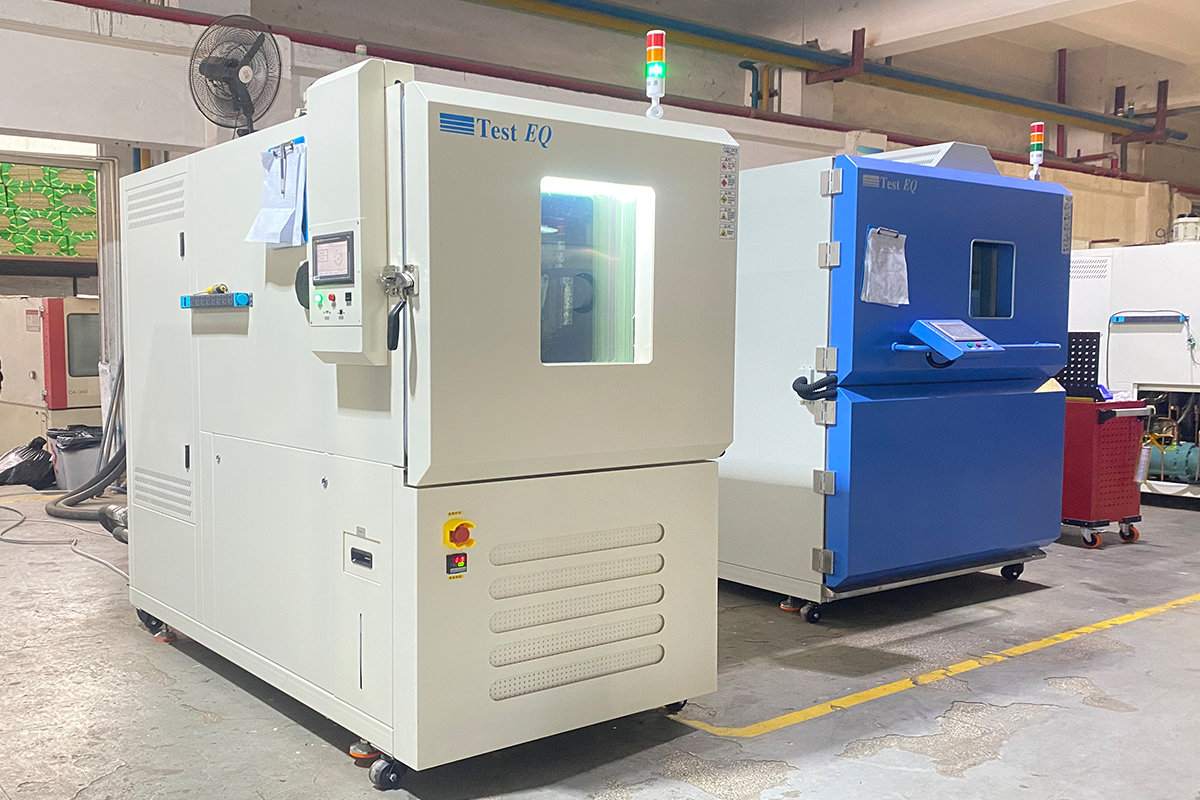
High-performance ESS chambers are essential for accurate screening.
Typical equipment includes:
Temperature cycling chambers
Vibration test systems
Combined environmental chambers
Key features:
Fast ramp rates
High temperature uniformity
Precise control systems
Data logging & monitoring
How to Design an Effective ESS Profile:
A poorly designed ESS can damage products instead of improving quality.
Best practices:
Base stress on real failure mechanisms
Start with moderate stress levels
Gradually increase screening intensity
Validate with pilot testing
Why Choose TestEQ ESS Solutions?
TestEQ provides advanced Environmental Stress Screening equipment tailored for high-end industries.
Key advantages:
High ramp rate thermal technology
Custom ESS chambers (Temp + Humidity + Vibration)
MIL & IEC compliant systems
Proven use in aerospace and defense labs
Intelligent monitoring system
FAQ:
ESS testing is used to identify manufacturing defects and improve product reliability before shipment.
What is the difference between ESS and burn-in testing?
ESS uses environmental stress, while burn-in uses extended operation time.
How long does ESS testing take?
Typically ranges from several hours to a few days depending on product complexity.