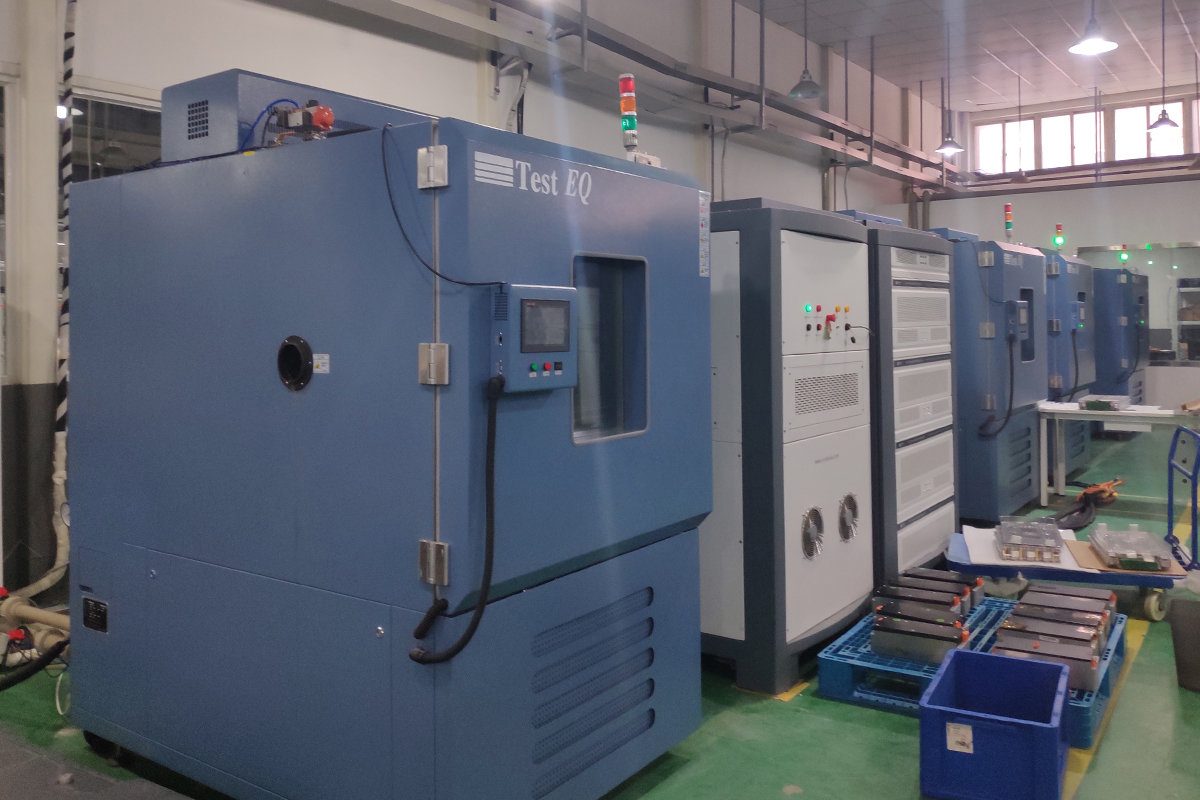
What Is JEDEC JESD22 Thermal Cycle Testing?
JEDEC (Joint Electron Device Engineering Council) defines standardized methods for semiconductor reliability testing. Within this framework, JESD22-A104 is the most widely used standard for thermal cycling.
Key Objectives of JESD22 Thermal Cycling:
Evaluate resistance to temperature-induced mechanical stress
Detect early-life failures in semiconductor packaging
Validate product reliability under long-term environmental conditions
Ensure compliance with automotive and industrial standards
Thermal cycling differs from thermal shock testing. While thermal shock involves rapid transitions between extreme temperatures, thermal cycle testing focuses on gradual, controlled temperature changes, making it more representative of real operating environments.
JESD22-A104 Test Method Overview:
The JESD22-A104 standard outlines strict guidelines for performing thermal cycling tests. These parameters ensure repeatability and comparability across laboratories.
Core Test Parameters:
1. Temperature Range
Typical ranges include:
-40°C to +125°C (automotive standard)
-55°C to +150°C (high-reliability applications)
2. Ramp Rate
Usually between 5°C/min to 15°C/min
Controlled ramping prevents unrealistic stress conditions
3. Dwell Time
10 to 15 minutes at each temperature extreme
Ensures thermal equilibrium within the device
4. Number of Cycles
500, 1000, or even 2000 cycles depending on application
Higher cycles = higher reliability validation
5. Failure Criteria
Electrical parameter drift
Package cracking
connect fatigue (e.g., solder joints)
Why Thermal Cycle Testing Is Critical for Semiconductor Reliability:
Thermal expansion mismatch between different materials (silicon, copper, epoxy) creates mechanical stress during temperature changes. Over time, this stress leads to:
Solder joint fatigue
Wire bond failure
Delamination
Microcracks in packaging
Thermal cycle testing helps engineers predict these failures before products reach the market.
Key Benefits:
Improved Product Reliability
Identify weak points early in the design phaseReduced Warranty Risk
Prevent costly field failuresFaster Certification
Meet JEDEC, IEC, and MIL standards efficientlyBetter Supplier Qualification
Enable procurement teams to compare component durability
Thermal Cycle Testing vs Thermal Shock Testing:
Understanding the difference between these two tests is essential for proper test selection:
| Feature | Thermal Cycling | Thermal Shock |
|---|---|---|
| Temperature Change | Gradual | Rapid |
| Purpose | Long-term reliability | Extreme stress resistance |
| Standard | JESD22-A104 | JESD22-A106 |
| Application | Automotive, electronics | Military, aerospace |
For most semiconductor reliability validation, thermal cycling is the preferred method because it better reflects real-world conditions.
Choosing the Right Thermal Cycle Test Chamber:
Selecting the appropriate equipment is critical to achieving accurate and repeatable results.
Key Features to Consider:
1. Precise Temperature Control
High accuracy (±0.5°C) ensures compliance with JESD22 requirements.
2. Uniform Temperature Distribution
Prevents inconsistent stress across samples.
3. Programmable Profiles
Supports complex cycling sequences and automated testing.
4. Data Logging & Monitoring
Real-time tracking for validation and reporting.
5. Reliability & Stability
Long-duration testing (1000+ cycles) requires robust system performance.
TestEQ Thermal Cycling Solutions for JESD22 Compliance
TestEQ provides advanced thermal cycling test chambers designed specifically for semiconductor reliability testing.
Why Engineers and Labs Choose TestEQ:
Wide temperature range: -70°C to +180°C
High ramp rates for flexible testing conditions
Excellent temperature uniformity and stability
Fully programmable control systems
Compliance with JEDEC, IEC, and MIL standards
TestEQ systems are widely used in:
Semiconductor manufacturing
Automotive electronics testing
Aerospace and defense labs
Third-party reliability testing laboratories
For procurement teams, TestEQ offers a strong balance of performance, cost-efficiency, and long-term reliability, making it a competitive alternative to international brands.
Applications of JESD22 Thermal Cycle Testing:
Thermal cycling is used across multiple industries where reliability is critical:
Automotive Electronics (ECUs, sensors, power modules)
Consumer Electronics (PCBs, IC packages)
Aerospace Systems (high-reliability components)
Renewable Energy (inverters, power semiconductors)
5G & Telecommunications Equipment
Conclusion: Ensuring Reliability with JESD22 Thermal Cycling:
JEDEC JESD22 thermal cycle testing is a cornerstone of semiconductor reliability validation. By simulating real-world temperature fluctuations, it allows engineers to detect failures early, improve product design, and ensure long-term performance.
For companies aiming to meet global standards and reduce risk, investing in a high-performance thermal cycling test chamber is essential.
FAQ
1. What is the JEDEC Thermal Cycle Testing Standard (JESD22)?
The JEDEC Thermal Cycle Testing Standard (JESD22) defines accelerated reliability test methods used to evaluate how semiconductor devices, electronic components, and solder joints perform under repeated temperature
changes. It helps engineers identify failures caused by thermal stress, material expansion mismatch, and long-term fatigue before products enter mass production.
2. Why is JESD22 thermal cycling important for semiconductor reliability?
JESD22 thermal cycle testing is critical because semiconductor packages experience continuous temperature fluctuations during real-world operation. Thermal cycling helps detect issues such as:
Solder joint cracking
Package delamination
Bond wire fatigue
PCB interconnect failure
Seal leakage and material deformation
By simulating years of field operation in a shorter period, manufacturers can improve product reliability, reduce warranty risk, and meet automotive, aerospace, and telecom qualification requirements.
3. What temperature ranges are commonly used in JESD22 thermal cycle testing?
Typical JESD22 thermal cycling conditions include:
-40°C to +125°C
-55°C to +150°C
Custom high-stress profiles for automotive and military electronics
The exact temperature range, dwell time, and transition rate depend on the semiconductor application, package type, and target reliability standard.
4. What is the difference between thermal cycling and thermal shock testing?
Thermal cycling gradually transitions products between hot and cold temperatures to simulate real operating environments, while thermal shock testing rapidly transfers samples between extreme temperatures with
minimal transition time.
Thermal cycling focuses more on long-term fatigue reliability, whereas thermal shock emphasizes sudden thermal stress resistance and material integrity.
5. How do environmental test chambers support JESD22 thermal cycle testing?
Advanced environmental test chambers provide:
Precise temperature uniformity
Fast and repeatable ramp rates
Stable dwell control
Automated cycling programs
Long-duration continuous operation
For semiconductor reliability labs, high-performance thermal cycling chambers help ensure repeatable JESD22 compliance testing while improving test efficiency and data consistency.
6. What devices and components are commonly tested using JESD22 thermal cycling?
JESD22 thermal cycling testing is widely applied to semiconductor packages and electronic components, including:
Integrated circuits (ICs)
Microprocessors and controllers
Automotive semiconductor devices
Power modules and semiconductor packages
MEMS components
Electronic assemblies with solder interconnects
The test helps manufacturers evaluate package reliability, interconnection durability, and resistance to temperature-induced mechanical stress during the product lifecycle.
7. How is a JESD22 thermal cycling test performed?
A typical JESD22 thermal cycling test procedure includes:
Preparing semiconductor samples according to the qualification requirements
Setting high and low temperature limits and dwell times
Exposing samples to repeated temperature cycles inside a thermal cycling chamber
Monitoring failures through electrical testing and physical inspection
Analyzing results to evaluate reliability performance
The number of cycles, temperature profile, and inspection methods depend on the specific JEDEC qualification requirement and device application.
8. How do you choose the right thermal cycling chamber for JESD22 testing?
Selecting a thermal cycling chamber for JESD22 testing depends on several factors, including:
Required temperature range and cycling speed
Test sample size and fixture requirements
Temperature uniformity and control accuracy
Number of test cycles and continuous operation capability
Data recording and remote monitoring requirements
For semiconductor reliability laboratories, a dedicated thermal cycling chamber with precise temperature control and stable repeatability helps achieve reliable test results and efficient qualification processes.
Internal Linking Module
Recommended Equipment
Designed for high-acceleration reliability testing and ESS (Environmental Stress Screening), this thermal cycling chamber supports rapid temperature change rates up to 25°C/min. It is widely used in automotive electronics, aerospace components, and semiconductor reliability validation to detect early-life failures under extreme thermal stress conditions.
A comprehensive guide covering rapid thermal cycling chamber design, performance parameters, and test standards. It helps engineers understand how fast ramp-rate thermal cycling systems improve product reliability screening efficiency and meet industry qualification requirements for electronics and battery testing.
Recommended Standards
IEC 60068-2-14 defines thermal cycling test procedures used to evaluate how components and assemblies withstand repeated temperature changes. It specifies temperature limits, dwell time, transition rates, and test severity levels for electronics, automotive, and industrial equipment reliability validation.
AEC-Q100 is a key qualification standard for automotive integrated circuits, focusing on temperature cycling stress tests to ensure semiconductor reliability under harsh automotive operating environments. It is widely adopted by IC manufacturers and Tier-1 automotive suppliers.
Recommended Resources
This resource explains how JEDEC standards are applied in semiconductor reliability testing using environmental test chambers. It covers thermal cycling, HAST, and failure analysis methods used in IC qualification and production screening.
A technical comparison between thermal cycling and thermal shock testing, explaining differences in ramp rates, stress mechanisms, applications, and test objectives. This guide helps engineers select the correct environmental testing method for product validation and reliability assurance.
CTA
Validate Semiconductor Reliability with TestEQ Thermal Cycling Chambers
TestEQ provides advanced thermal cycling test chambers designed for semiconductor, automotive electronics, aerospace, and reliability testing laboratories. Our systems support JESD22 thermal cycling requirements, rapid temperature change testing, and customized reliability validation solutions.
Achieve more accurate failure detection, improved test repeatability, and long-term testing stability with TestEQ’s engineering-proven environmental testing technology.
Need a thermal cycling chamber for your reliability test program? "Contact TestEQ engineers today" for technical consultation and customized solutions.