Product Overview:
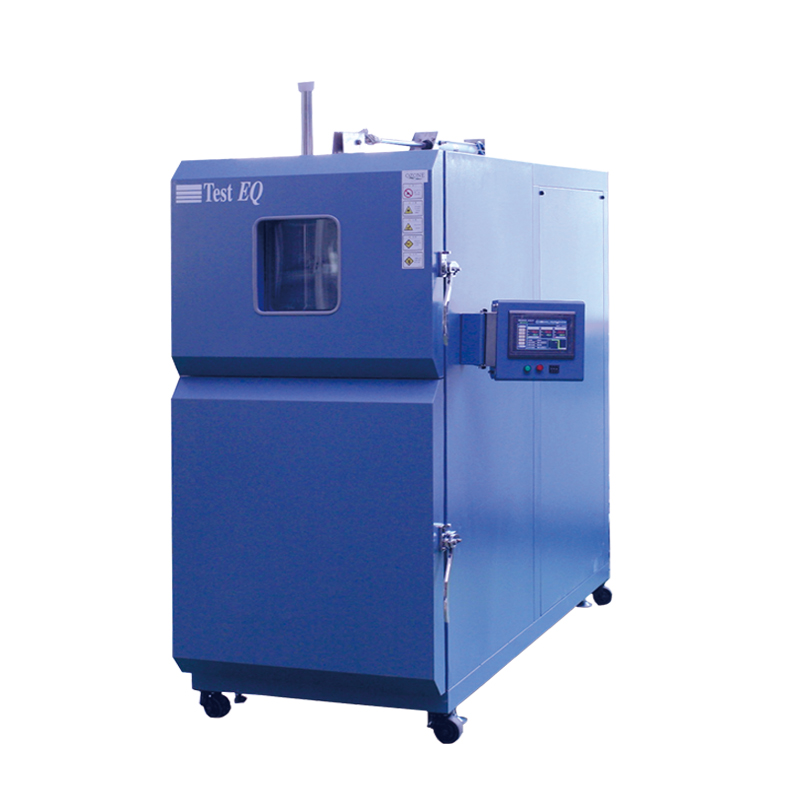
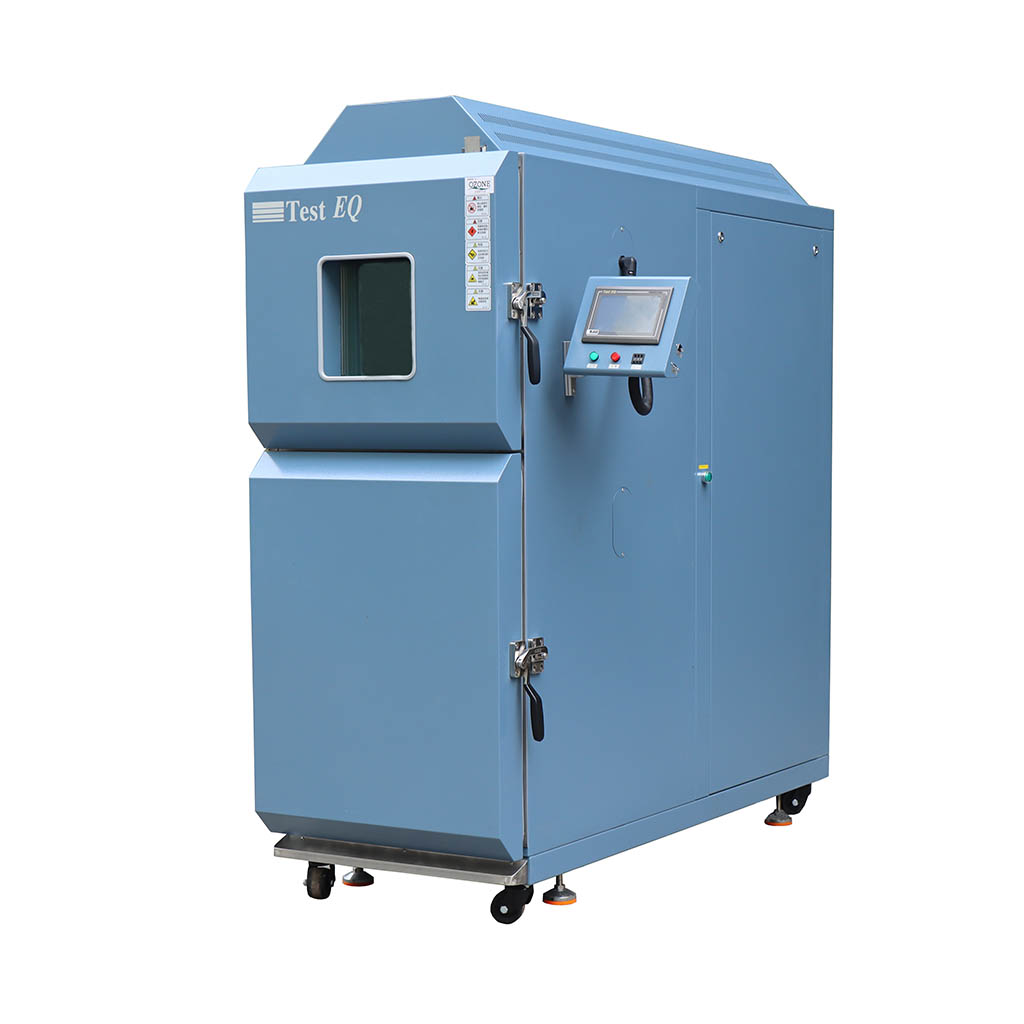
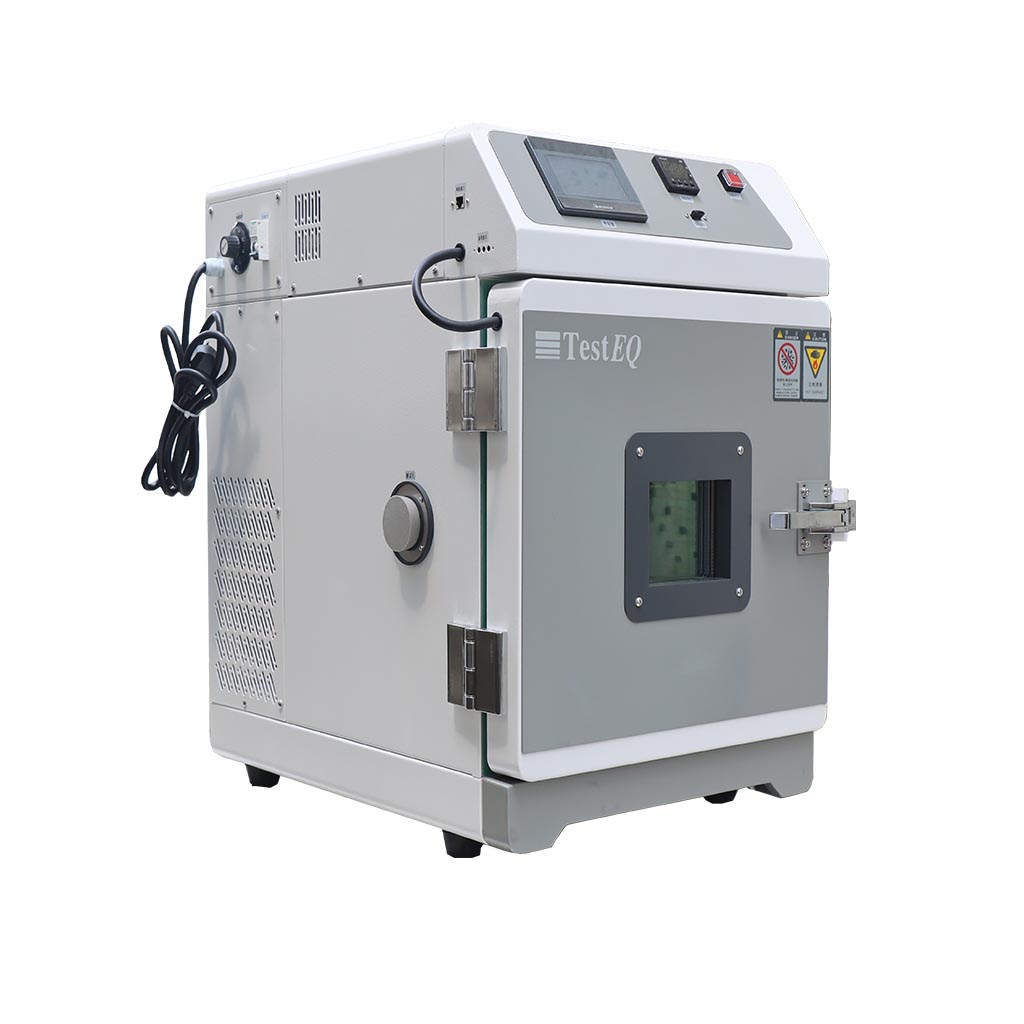
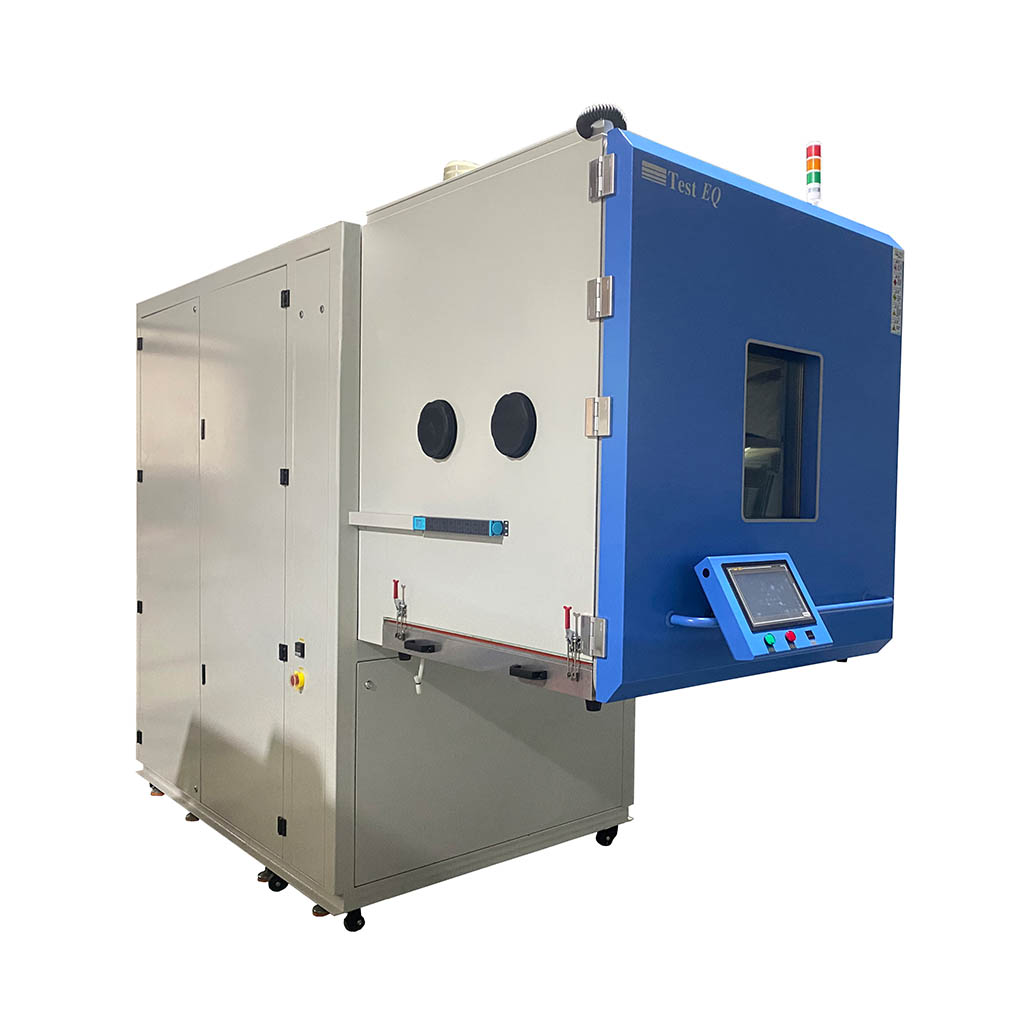
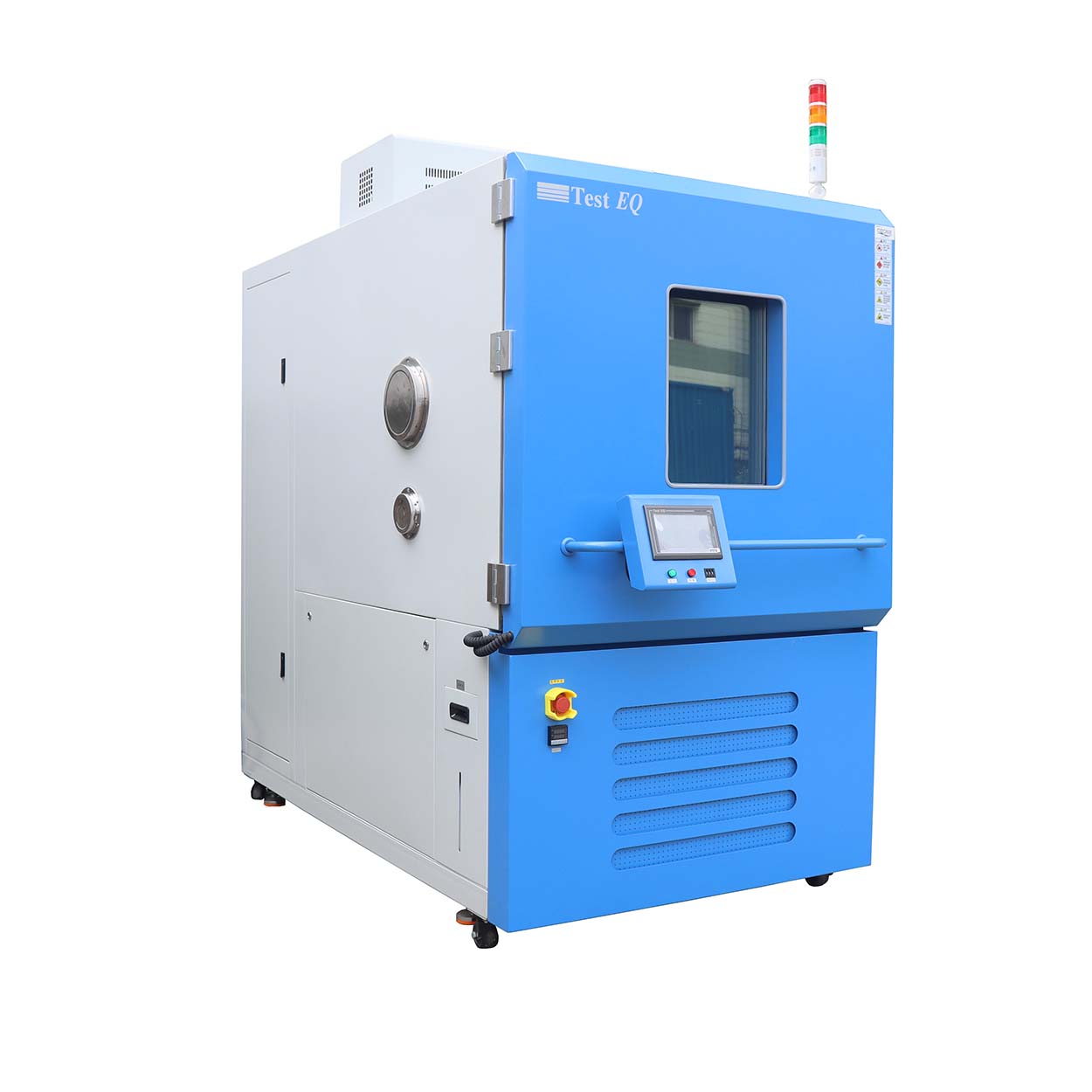
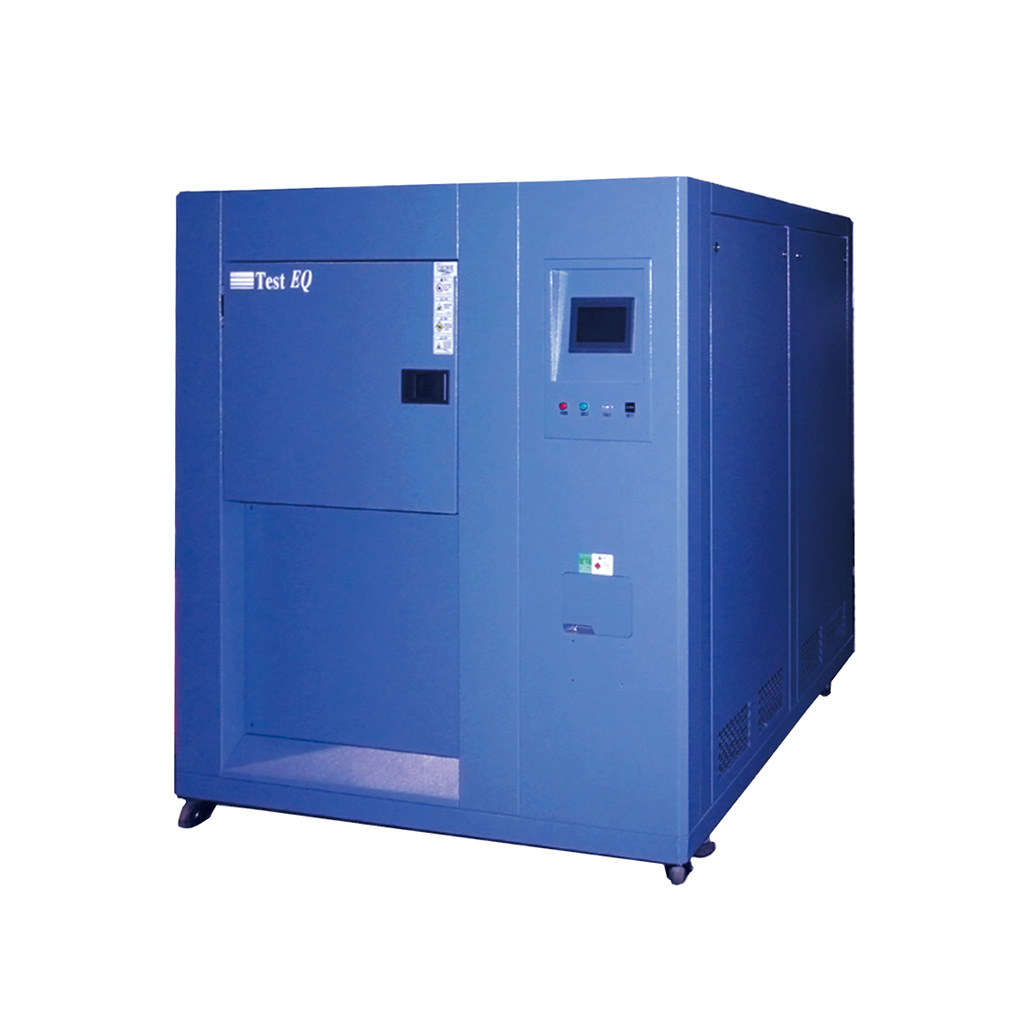
The Two-Zone Thermal Shock Test Chamber is designed for high-intensity reliability testing where test specimens are rapidly transferred between a high-temperature zone and a low-temperature zone.
Unlike gradual thermal cycling systems, the two-zone configuration enables instant thermal exposure changes, allowing engineers to evaluate material fatigue, solder joint integrity, and structural reliability under extreme temperature differentials.
This system is widely used in semiconductor, automotive electronics, aerospace, and defense industries for accelerated life testing and failure analysis.
Working Principle:
The two-zone thermal shock system operates by alternating the test sample between:
A mechanical basket system rapidly transfers the specimen between both zones, creating instant thermal stress without intermediate temperature transition.
This mechanism is ideal for detecting:
Thermal expansion mismatch failures
Material fatigue under extreme gradients
Micro-cracks in solder joints and IC packages
Two-Zone vs Three-Zone Thermal Shock
| Feature | Two-Zone | Three-Zone |
|---|
| Structure | Hot + Cold zones | Hot + Cold + Test zone |
| Transfer Method | Basket movement | Airflow switching |
| Speed | Faster transition | More stable testing |
| Application | Electronics, PCB | High-precision validation |
| Cost | Lower | Higher |
Why Choose This System:
More efficient than traditional thermal cycling systems
Faster failure detection in ESS testing
Reduced test time for high-volume validation
Flexible configuration for different product sizes
Proven reliability for industrial-grade testing environments
Optional Configurations:
Vertical lift or horizontal sliding transfer system
LN2-assisted ultra-low temperature module
Multi-basket testing system
Remote monitoring & data logging system
Custom chamber volume design
FAQ:
What is a two-zone thermal shock test chamber?
It is a thermal testing system that rapidly transfers samples between hot and cold zones to simulate extreme thermal stress conditions.
What is the difference between two-zone and three-zone thermal shock chambers?
Two-zone systems use direct transfer between hot and cold chambers, while three-zone systems include a test zone for improved stability.
What industries use two-zone thermal shock testing?
It is widely used in semiconductor, automotive, aerospace, and electronics manufacturing industries.
What standards does it comply with?
It supports MIL-STD-810, IEC 60068, and JEDEC reliability testing standards.
Why is two-zone faster?
Because it uses a mechanical basket transfer system instead of airflow transition, reducing cycle time significantly.