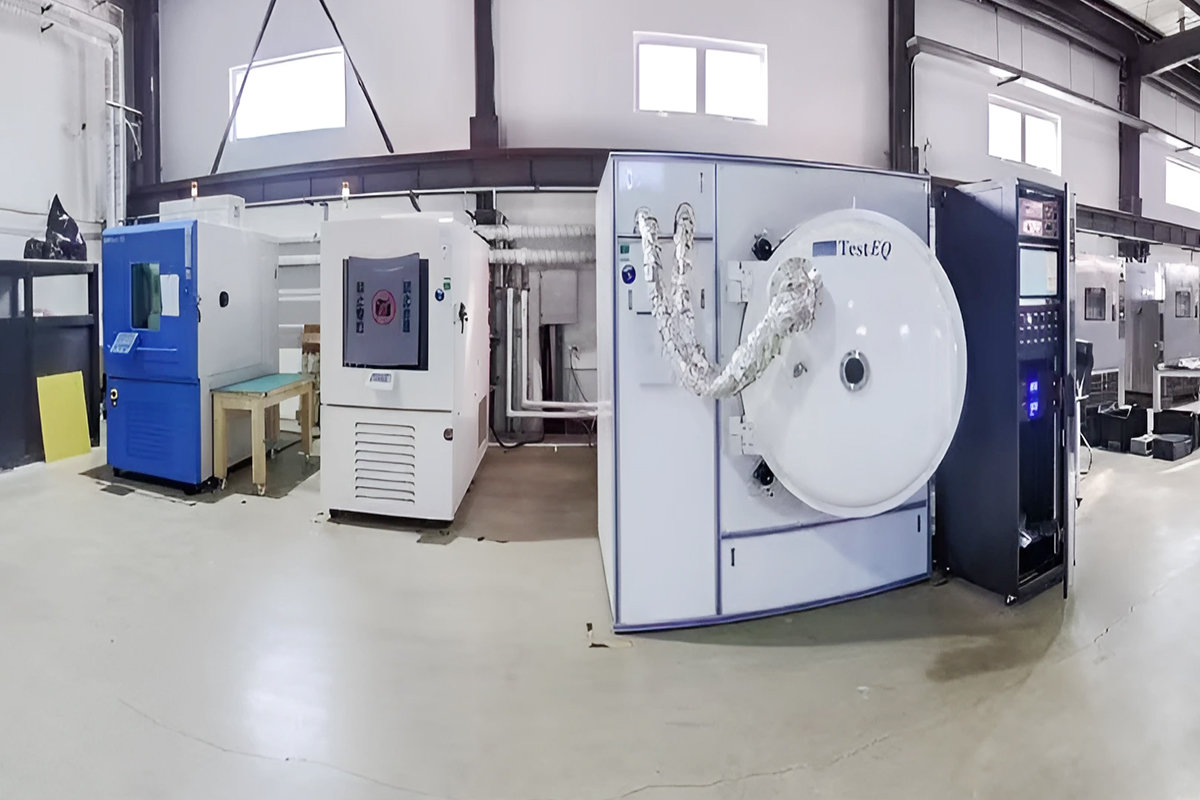
What Is IEC 60068 Environmental Testing Standard?
IEC 60068 is a series of international environmental testing standards developed by the International Electrotechnical Commission (IEC).
The series provides standardized test methods for evaluating how electrical, electronic, electromechanical, and other products perform when exposed to environmental stresses.
Typical environmental conditions include:
• Low temperature and cold exposure
• High temperature and dry heat
• Damp heat and humidity
• Temperature change and thermal cycling
• Vibration
• Mechanical shock
• Salt mist and corrosion
• Combined environmental stresses
IEC 60068 testing is widely used in automotive electronics, EV systems, aerospace, semiconductor manufacturing, telecommunications, consumer electronics, industrial equipment, and other reliability-critical applications.
Why IEC 60068 Testing is Important
IEC 60068 testing helps manufacturers:
Validate product reliability before mass production
Simulate real environmental conditions
Reduce field failure rates
Meet international certification requirements
Improve product design for harsh environments
This standard is widely used in industries such as:
Automotive electronics
Aerospace and defense
Semiconductor and IC manufacturing
Consumer electronics
Industrial equipment
IEC 60068 Standard Structure Explained
The IEC 60068 series can generally be understood through three major groups:
IEC 60068-1 — General and Guidance
IEC 60068-1 provides general considerations and terminology for environmental testing.
IEC 60068-2 — Environmental Test Methods
IEC 60068-2 contains the primary environmental test methods used to expose products to controlled environmental stresses.
Important methods include:
IEC 60068-2-1 — Cold
IEC 60068-2-2 — Dry Heat
IEC 60068-2-6 — Sinusoidal Vibration
IEC 60068-2-14 — Temperature Change
IEC 60068-2-27 — Shock
IEC 60068-2-30 — Damp Heat, Cyclic
IEC 60068-2-38 — Composite Temperature/Humidity Cyclic Test
IEC 60068-2-52 — Salt Mist, Cyclic
IEC 60068-2-78 — Damp Heat, Steady State
IEC 60068-3 — Supporting and Measurement Guidance
The IEC 60068-3 series provides supporting information related to environmental testing, including measurement methods, chamber performance, and test condition verification.
This distinction is important when selecting an environmental test chamber because achieving the target temperature is not sufficient by itself. Chamber stability, uniformity, recovery, airflow, loading conditions, and measurement accuracy can all influence test repeatability.
Most Common IEC 60068 Environmental Test Methods
IEC 60068-2-1 — Cold Test
IEC 60068-2-1 evaluates product performance and resistance under low-temperature conditions.
Typical applications include:
• Automotive electronics
• Electronic components
• Batteries
• Aerospace equipment
• Industrial electronics
Recommended equipment: Low Temperature Test Chamber or Temperature Cycling Chamber.
[Internal Link: IEC 60068-2-1 Cold Testing]
IEC 60068-2-2 — Dry Heat Test
IEC 60068-2-2 evaluates product performance under elevated temperature conditions.
The test is commonly used for electronic components, semiconductor devices, automotive electronics, and industrial equipment.
Recommended equipment: High Temperature Test Chamber or Temperature Test Chamber.
IEC 60068-2-6 — Sinusoidal Vibration
IEC 60068-2-6 evaluates the resistance of products to sinusoidal vibration.
Applications include:
• Automotive components
• Aerospace equipment
• Electronic assemblies
• Industrial equipment
Recommended equipment: Vibration Test System or Combined Environmental Test System.
IEC 60068-2-14 — Temperature Change
IEC 60068-2-14 evaluates product resistance to controlled temperature changes.
The test is particularly relevant when thermal expansion and contraction may cause:
• Solder joint fatigue
• Material cracking
• Delamination
• Seal failure
• Electrical malfunction
Recommended equipment: Temperature Cycling Chamber, Rapid Temperature Change Chamber, or Thermal Shock Chamber depending on the specified test method and transition requirements.
For detailed requirements, see:
IEC 60068-2-14 Temperature Change Test Guide
IEC 60068-2-30 — Damp Heat, Cyclic
IEC 60068-2-30 evaluates product resistance to cyclic temperature and humidity conditions.
It is commonly used to identify moisture-related degradation, condensation effects, corrosion, insulation deterioration, and other humidity-related failures.
Recommended equipment: Temperature Humidity Chamber.
IEC 60068-2-38 — Composite Temperature/Humidity Cyclic Test
IEC 60068-2-38 is used for cyclic temperature and humidity testing where combined climatic stress is required.
It is particularly relevant to:
• Electronic components
• Automotive electronics
• Semiconductor devices
• Industrial products
Recommended equipment: Programmable Temperature Humidity Chamber.
IEC 60068-2-52 — Salt Mist, Cyclic
IEC 60068-2-52 evaluates corrosion resistance under cyclic salt mist exposure.
Typical applications include automotive components, metal parts, coatings, connectors, and products exposed to corrosive environments.
Recommended equipment: Cyclic Corrosion or Salt Spray Test Chamber.
IEC 60068-2-78 — Damp Heat, Steady State
IEC 60068-2-78 evaluates product resistance to sustained high humidity at a controlled temperature.
The method is commonly used for electronic components, electrical products, sensors, and industrial equipment.
Recommended equipment: Temperature Humidity Test Chamber.
Main Test Categories in IEC 60068
The correct environmental test chamber depends on the applicable IEC 60068 test method, temperature range, humidity requirements, specimen size, temperature change rate, vibration requirements, and test profile.
Temperature Humidity Test Chamber
Used for IEC 60068 humidity, damp heat, temperature, and climatic testing.
Typical applications include:
• Electronics
• Automotive components
• Semiconductor devices
• Sensors
• Industrial products
Thermal Shock Test Chamber
Used when products must be exposed to rapid transitions between high and low temperature zones.
Thermal shock testing is different from conventional temperature cycling because the specimen is exposed to rapid environmental transitions.
Rapid Temperature Change Chamber
Used for applications requiring controlled and repeatable rapid temperature transitions.
Important chamber specifications include:
• Temperature range
• Temperature change rate
• Linear ramp performance
• Temperature uniformity
• Recovery performance
• Test load
• Chamber volume
Vibration Combined Test System
For applications requiring environmental and mechanical stresses to be evaluated together, a combined test system can integrate temperature, humidity, and vibration conditions.
Walk-in Environmental Chamber
Large environmental chambers are used for automotive systems, battery modules, aerospace equipment, industrial products, and other large test specimens.
TestEQ can customize chamber dimensions, temperature range, humidity control, airflow, loading configuration, and test profiles according to laboratory or production requirements.
How to Select an Environmental Test Chamber for IEC 60068 Testing
Selecting an IEC 60068 environmental test chamber should begin with the applicable test method rather than simply selecting the largest temperature range.
Engineers should evaluate:
1. Applicable IEC 60068 Test Method
Identify the exact part and test method specified by the product specification, customer requirement, or qualification plan.
2. Temperature Range
Define the required minimum and maximum temperatures based on the test procedure.
3. Temperature Change Rate
For temperature-change testing, specify whether the requirement is based on chamber air temperature, specimen temperature, or another defined measurement condition.
4. Humidity Range
For damp heat testing, verify the required temperature and relative humidity range, control accuracy, and stability.
5. Test Volume
Chamber capacity should be selected according to the specimen size, quantity, fixture configuration, and required airflow.
6. Uniformity and Stability
Temperature uniformity and stability directly affect test repeatability, especially when multiple specimens are tested simultaneously.
7. Data Recording and Monitoring
For qualification and reliability laboratories, programmable profiles, data recording, alarms, and test traceability can simplify validation and reporting.
IEC 60068 Applications by Industry
Automotive and EV
IEC 60068 environmental testing can be applied to:
• ECUs
• Sensors
• Automotive electronics
• Battery components
• Connectors
• Power electronics
Aerospace
Environmental qualification may include:
• Avionics
• Communication equipment
• Control electronics
• Aerospace components
• Mission-critical electronic systems
Semiconductor
Environmental testing can support reliability evaluation of:
• IC packages
• Semiconductor components
• Electronic modules
• PCB assemblies
• Sensors
Consumer Electronics
Common applications include:
• Smart devices
• Electronic assemblies
• Connectors
• Displays
• Communication products
Industrial Equipment
IEC 60068 testing can help evaluate:
• Industrial controllers
• Power electronics
• Sensors
• Automation equipment
• Electrical assemblies
IEC 60068 vs Other Environmental Testing Standards
IEC 60068 is a broad environmental testing series rather than a single test procedure.
Other standards may address specific industries or qualification requirements.
IEC 60068 vs MIL-STD-810
IEC 60068 provides international environmental test methods for a broad range of electrical and electronic products.
MIL-STD-810 is primarily associated with military and defense environmental engineering and testing.
IEC 60068 vs ISO 16750
IEC 60068 provides general environmental test methods.
ISO 16750 focuses specifically on environmental conditions and testing for road vehicles and automotive electrical/electronic equipment.
IEC 60068 vs JEDEC JESD22
IEC 60068 covers broad environmental testing.
JEDEC JESD22 provides semiconductor device reliability test methods and is commonly used in IC and semiconductor qualification.
Does IEC 60068 Require a Specific Environmental Test Chamber?
IEC 60068 does not define one universal chamber configuration for every test.
The required equipment depends on the specific IEC 60068 test method and the conditions defined by the applicable product specification.
For example:
• Cold testing → Low Temperature Test Chamber
• Dry heat testing → High Temperature Test Chamber
• Temperature change → Temperature Cycling or Rapid Temperature Change Chamber
• Damp heat → Temperature Humidity Chamber
• Vibration → Vibration Test System
• Combined environmental testing → Combined Test System
Therefore, chamber selection should be based on the complete test profile rather than temperature range alone.
TestEQ IEC 60068 Environmental Testing Solutions
TestEQ designs and manufactures environmental simulation systems for reliability laboratories, research institutes, manufacturers, and industrial testing facilities.
Our IEC 60068-related solutions can include:
• Temperature Humidity Test Chambers
• Thermal Shock Test Chambers
• Rapid Temperature Change Chambers
• Temperature Cycling Chambers
• Vibration Test Systems
• Combined Environmental Test Systems
• Walk-in Environmental Chambers
• Altitude Test Chambers
• Customized Environmental Test Systems
TestEQ supports customized chamber dimensions, temperature ranges, humidity requirements, temperature transition rates, test profiles, monitoring systems, and laboratory configurations.
For complex applications, our engineering team can review the applicable IEC 60068 test method and recommend a suitable chamber configuration.
Why Choose TestEQ for IEC 60068 Testing?
TestEQ designs and manufactures advanced environmental simulation systems for laboratories, research institutes and industrial manufacturers worldwide.
Advantages include:
✔ Wide temperature ranges for IEC 60068 testing
✔ High-precision temperature and humidity control
✔ Custom chamber sizes for laboratory and production applications
✔ Programmable multi-step test profiles
✔ Compliance with international environmental testing standards
✔ Global technical support and commissioning services
TestEQ solutions are widely applied across automotive, aerospace, semiconductor, electronics and renewable energy industries to support reliable environmental qualification testing.
Conclusion
IEC 60068 remains one of the most important environmental testing standards for verifying product reliability under real-world operating conditions. By following standardized laboratory procedures, manufacturers can improve product quality, reduce failure risks and accelerate global market acceptance.
Whether your application involves electronics, automotive systems, aerospace components or semiconductor devices, selecting reliable environmental testing equipment is essential for obtaining accurate, repeatable and internationally recognized test results.
TestEQ provides customized environmental test chambers designed to support IEC 60068 compliance while helping manufacturers achieve dependable product qualification and long-term reliability.
FAQ:
1.What is IEC 60068?
IEC 60068 is a series of international environmental testing standards used to evaluate the reliability and environmental resistance of electrical and electronic products.
2.Is IEC 60068 mandatory?
IEC 60068 is not universally mandatory by law. However, specific IEC 60068 test methods may be required by product specifications, OEM qualification programs, customer requirements, or market-access programs.
3.What products are tested according to IEC 60068?
Typical products include automotive electronics, semiconductor components, electronic assemblies, aerospace equipment, sensors, communication products, industrial electronics, and consumer electronics.
4.Which IEC 60068 standard is used for temperature cycling?
IEC 60068-2-14 addresses temperature change testing. The exact test procedure and conditions depend on the applicable product specification and test method.
5.Which chamber is used for IEC 60068 testing?
The chamber depends on the test method. Temperature humidity chambers, thermal shock chambers, rapid temperature change chambers, temperature cycling chambers, vibration systems, and combined environmental test systems may be used.
6.What is the difference between IEC 60068-2-14 and thermal shock testing?
IEC 60068-2-14 defines temperature-change test methods. The required equipment depends on the specified procedure. Some applications use a rapid temperature change chamber, while others require a dedicated thermal shock chamber with separate hot and cold zones.
7.How do I choose an IEC 60068 test chamber?
Start with the exact IEC 60068 test method, then define temperature range, humidity range, transition rate, specimen size, test volume, uniformity, stability, test cycles, and data-recording requirements.
8.Can TestEQ customize an IEC 60068 environmental test chamber?
Yes. TestEQ can customize chamber dimensions, temperature range, humidity control, temperature transition performance, monitoring systems, test profiles, and other configurations according to the application and laboratory requirements.
.
Internal Linking Module
Recommended Equipment
Designed for IEC 60068 temperature and humidity testing, providing precise environmental simulation for electronics, automotive, aerospace, and reliability laboratories. Supports cyclic humidity, steady-state humidity, and thermal cycling validation.
Engineered for rapid temperature transition testing according to IEC 60068-2-14. Ideal for evaluating solder joint reliability, material expansion stress, and thermal fatigue resistance.
For controlled high-rate temperature transition and thermal cycling applications.
Related Standards
Detailed requirements, test methods, chamber selection, and engineering considerations for temperature-change testing.
A detailed guide to cyclic temperature and humidity testing.
Guidance for composite temperature and humidity cycling.
Guide to steady-state humidity testing and chamber requirements.
Technical Resources
Learn how to select the right environmental test chamber based on temperature, humidity, thermal shock, altitude, vibration, and reliability testing requirements. This guide helps engineers and laboratories match chamber types to international testing standards and product validation needs.
Understand the relationship between IEC 60068, MIL-STD-810, ISO 16750, and JEDEC standards for temperature, humidity, and vibration combined testing applications.
Practical guidance on chamber performance verification, calibration, uniformity, stability, and repeatability.
CTA:
Need IEC 60068-Compliant Environmental Test Solutions?
If you are planning IEC 60068 qualification testing, TestEQ can help you determine the appropriate environmental test chamber based on your test method, product size, temperature range, humidity requirements, temperature change rate, and testing objectives.
"Contact TestEQ for Technical Consultation" and customized IEC 60068 environmental testing solution.
Request a technical recommendation for:
• IEC 60068 test chamber selection
• Temperature and humidity requirements
• Temperature change rate
• Chamber size and loading
• Test profile programming
• Laboratory or production testing systems
• Customized environmental simulation solutions