Why Thermal Cycling Testing Matters:
Thermal cycling is critical for assessing product reliability over time. When materials expand and contract under temperature variation, mechanical stress builds up at interfaces, solder joints, and structural components.
Key benefits include:
• Detecting early-life failures and latent defects
• Evaluating thermal fatigue resistance
• Ensuring product compliance with global standards
• Improving long-term durability and safety
For manufacturers and laboratories, complying with IEC 60068-2-14 is often a prerequisite for market entry and customer qualification.
IEC 60068-2-14 Test Methods Explained:
The standard defines several test methods depending on the severity and application scenario:
Method Na – Gradual Temperature Change
Used when the specimen experiences slow transitions between temperature extremes. It simulates natural environmental changes.
Method Nb – Rapid Temperature Change (Thermal Shock)
Applies fast transitions between high and low temperatures. This method introduces higher stress levels and is ideal for detecting structural weaknesses.
Method Nc – Controlled Air-to-Air Cycling
Focuses on controlled cycling conditions within a chamber, ensuring repeatability and accuracy for laboratory testing.
Each method specifies parameters such as:
Temperature range (e.g., -70°C to +150°C)
Dwell time at each extreme
Transition rate between temperatures
Number of cycles
Selecting the correct method depends on product application, material properties, and required reliability level.
Key Technical Requirements:
To meet IEC 60068-2-14 compliance, testing systems must achieve precise control and repeatability. Critical performance factors include:
• Temperature uniformity to ensure consistent exposure
• Rapid ramp rates for dynamic thermal stress simulation
• Accurate dwell time control at extreme temperatures
• Stable airflow design to minimize gradients
• Data acquisition and monitoring systems for traceability
Any deviation can lead to unreliable test results, making equipment performance a decisive factor.
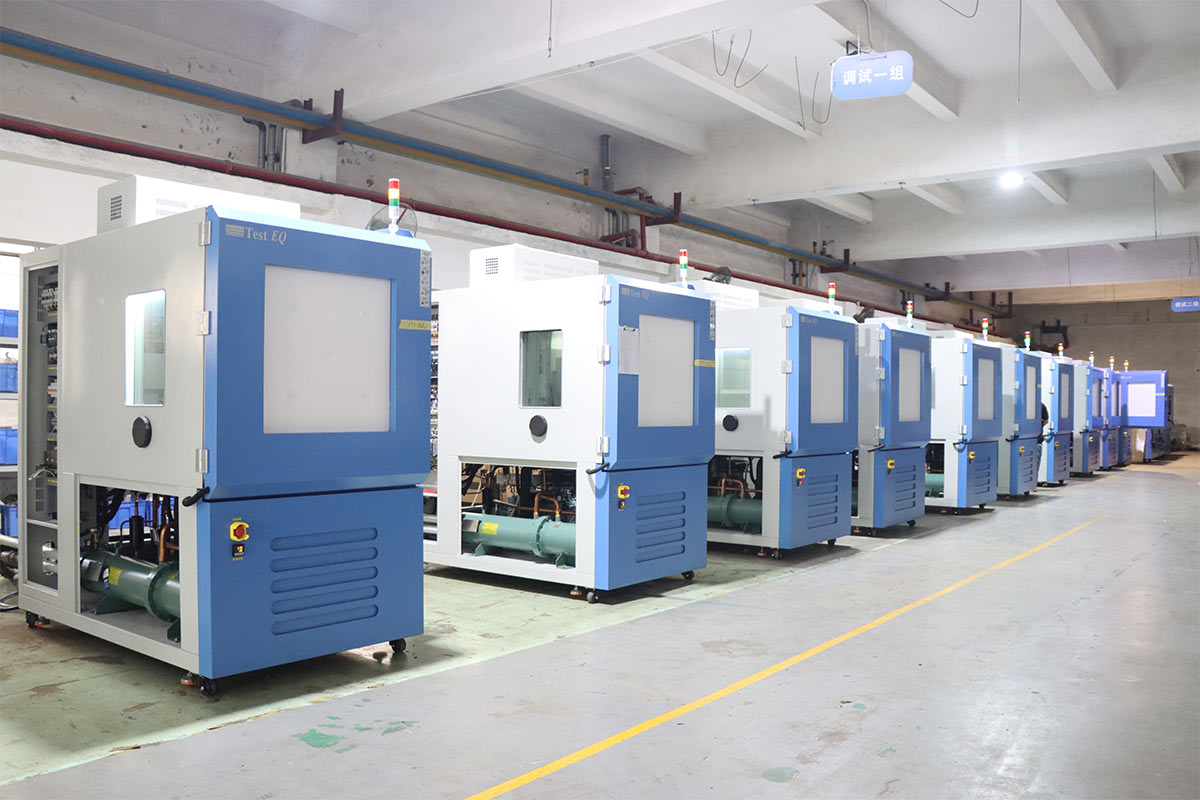
TestEQ Thermal Cycling Chamber Solutions:
TestEQ provides advanced thermal cycling chambers engineered to meet IEC 60068-2-14 requirements across multiple industries.
Core advantages include:
• High-performance temperature control systems for precise cycling
• Optimized airflow design ensuring uniform temperature distribution
• Fast temperature transition capabilities for demanding test profiles
• Intelligent control systems with real-time monitoring and data logging
• Customizable chamber sizes for components, modules, or full systems
Our chambers are designed not only for compliance but also for long-term stability and operational efficiency in high-frequency testing environments.
Applications Across Industries:
IEC 60068-2-14 testing is essential for a wide range of applications:
• Electronics: PCB reliability, solder joint fatigue, semiconductor validation
• Automotive: EV battery systems, sensors, control units
• Aerospace: avionics, communication modules, structural components
• Energy: solar inverters, power electronics, storage systems
By simulating real-world thermal stress, manufacturers can significantly reduce failure risks and improve product lifecycle performance.
How to Choose the Right Thermal Cycling Chamber:
When selecting a thermal cycling chamber, engineers and procurement teams should consider:
• Required temperature range and ramp rate
• Sample size and chamber capacity
• Compliance with IEC standards
• Long-term stability and maintenance cost
• Supplier experience and technical support
TestEQ supports customers from requirement analysis to system deployment, ensuring the right solution for each testing scenario.
FAQ:
Q1: What is IEC 60068-2-14?
A: It is an international standard defining temperature change and thermal cycling test methods.
Q2: What is the difference between Method Na and Nb?
A: Na uses gradual transitions, while Nb applies rapid temperature changes (thermal shock).
Q3: What is the purpose of thermal cycling testing?
A: To evaluate material fatigue and reliability under repeated temperature changes.
Q4: What equipment is required for IEC 60068-2-14?
A: A temperature cycling chamber capable of precise control, ramp rates, and uniformity.
Conclusion:
IEC 60068-2-14 thermal cycling testing plays a critical role in modern product validation. As industries demand higher reliability under extreme conditions, precise and compliant testing solutions become essential.
TestEQ combines engineering expertise with advanced environmental simulation technology to deliver reliable, standard-compliant thermal cycling chambers. Whether for R&D validation or production quality assurance, we help ensure your products perform under the most demanding thermal conditions.