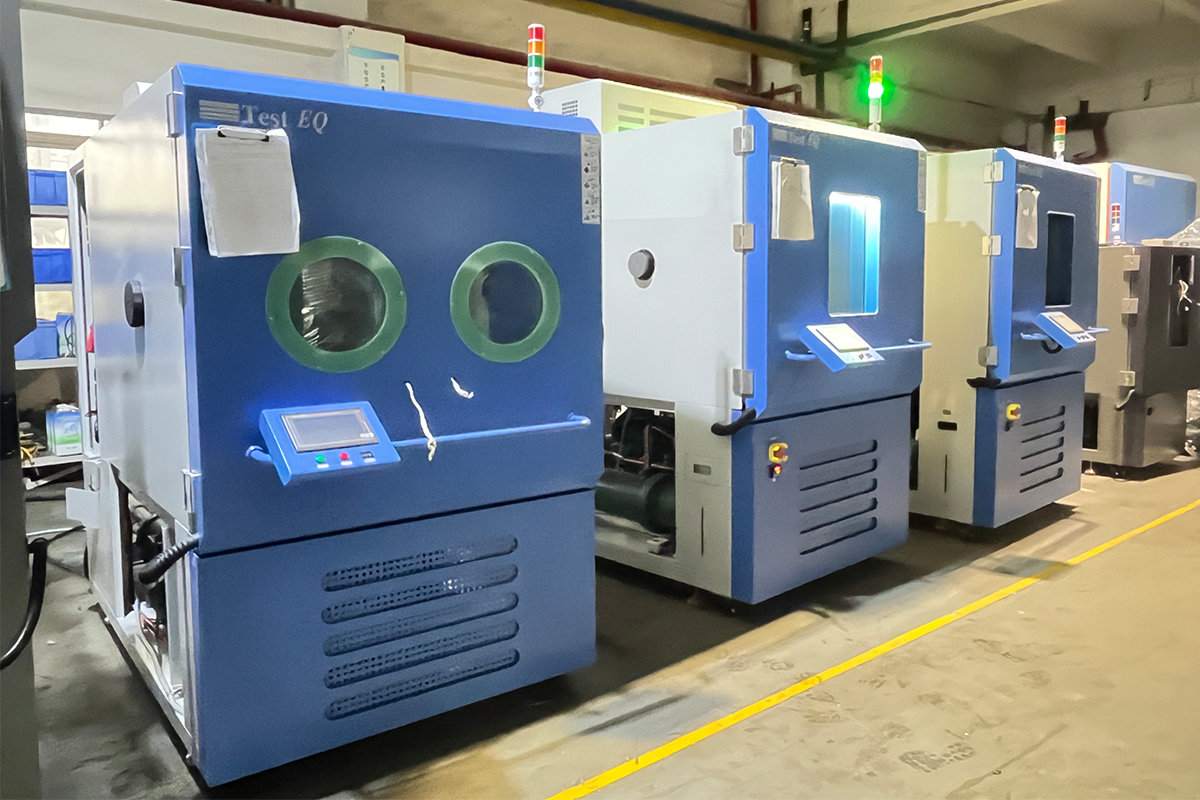
What is a Thermal Vacuum Test Chamber?
A thermal vacuum test chamber is a testing device that simulates the space environment throughvacuuming and temperature control . Its main features include:
• High vacuum environment (typically up to 10⁻³ ~ 10⁻⁶ mbar)
• Extreme temperature range (-150°C to +150°C or higher)
• No convective heat transfer, only radiative heat transfer
This allows it to realistically reproduce the environmental conditions of outer space, characterized by "no air and extreme temperature fluctuations."
The core role of TVAC testing:
For engineers, TVAC testing is not only for verification, but also a key means of discovering potential failures:
1. Thermal Design Verification
Evaluate the equipment's heat dissipation capacity under non-convection conditions to avoid overheating failure.
2. Material reliability testing
Test the outgassing , shrinkage, and performance changes of materials in a vacuum .
3. Electronic system stability
Verify the stable operation of the power supply, communication module, and control system in extreme environments.
TestEQ Thermal Vacuum Chamber Technical Advantages:
TestEQ TVAC equipment is designed for high-reliability testing and meets the requirements of aerospace applications:
✔ High vacuum system
• Vacuum level: up to 10⁻⁵ mbar
• Multistage vacuum pump combination (mechanical pump + molecular pump)
✔ Precise temperature control system
• Temperature range: -150°C to +150°C
• Control accuracy: ±1°C
• Supports hot plate/radiant plate control
✔ Thermal radiation simulation design
It employs a blackbody coating and radiation screen structure to realistically simulate the heat exchange process in space.
✔ Data monitoring and recording
It supports full-process data recording, meeting the verification and auditing requirements of aerospace projects.
Application Industries:
Thermal Vacuum Test Chambers are widely used in:
• Aerospace : Satellites, payloads, space electronic equipment
• Defense and military industry : High-reliability communication equipment and navigation systems
• Semiconductor Industry : High-end Chip Packaging and Testing
• Research institutions : Space environment simulation research
For procurement decision-makers, TVAC equipment is not only a testing tool, but also a key hurdle to entering the aerospace supply chain.
How to choose the right TVAC equipment?
In actual procurement, it is recommended to focus on the following parameters:
1. Does the vacuum level meet the test standards?
2. Temperature range and uniformity
3. Cavity size and load capacity
4. Temperature change rate and control method
5. Does it support customization (space projects typically require customization)?
Choosing an experienced vendor (such as TestEQ) can significantly reduce project risks.
Core Thermal Vacuum Test Standards:
ECSS-Q-ST-70-02
NASA-STD-7001
ISO 14644
ASTM E595
FAQ:
Q1: What is the difference between a thermal chamber and a thermal vacuum chamber?
Ordinary temperature test chambers operate in an air environment, while TVAC operates in a vacuum environment, mainly relying on radiative heat transfer, which is closer to the real space environment.
Q2: What vacuum level is required for space simulation?
Typically, a strength of 10⁻³ mbar or higher is required, while high-end aerospace testing may require 10⁻⁵ mbar or even higher.
Q3: What industries use thermal vacuum testing?
This mainly includes aerospace, defense, research institutions, and the high-reliability electronics industry.
Q4: How long does a TVAC test take?
Depending on the testing standards, the timeframe typically ranges from several hours to several days, with aerospace-grade verification potentially taking even longer.
CTA:
"Get Your Custom Thermal Vacuum Test Solution"
Contact TestEQ engineers today for tailored TVAC chamber design, technical consultation, and quotation.