
Introduction
As semiconductor devices become smaller, faster, and more highly integrated, product reliability challenges continue to increase across automotive electronics, AI computing, telecommunications, aerospace, and industrial control systems. Even minor defects can lead to costly recalls, system instability, or field failures.
For semiconductor manufacturers and testing laboratories, reducing product failure rates is no longer only a quality issue — it is directly linked to yield improvement, customer trust, and long-term market competitiveness.
Environmental reliability testing has become one of the most effective methods for identifying hidden weaknesses before products reach the market.
Why Semiconductor Products Fail
Semiconductor failures are often caused by a combination of thermal, mechanical, electrical, and environmental stresses. Common failure mechanisms include:
Solder joint fatigue
Package cracking
Delamination
Thermal expansion mismatch
Moisture penetration
IC bonding failure
PCB warpage under temperature cycling
Material degradation during long-term operation
Many of these problems cannot be detected through standard electrical testing alone. Failures frequently appear only after repeated exposure to temperature changes, humidity, vibration, or altitude stress conditions.
This is why environmental simulation testing is critical during semiconductor validation and reliability verification.
Key Testing Methods to Reduce Failure Rates
Thermal cycling testing repeatedly exposes semiconductor components to extreme high and low temperatures to simulate real operating conditions.
This process helps engineers identify:
Early material fatigue
Solder cracking
Packaging weaknesses
Connection instability
Expansion coefficient mismatch issues
For automotive-grade semiconductors and power electronics, thermal cycling reliability has become a core qualification requirement.
2. Rapid Temperature Change Testing
Rapid temperature change testing creates aggressive thermal stress conditions by changing temperatures at high ramp rates.
Compared with conventional testing, fast temperature transitions can accelerate the detection of latent defects, especially in:
BGA packaging
Semiconductor modules
Chipset assemblies
High-density PCBs
AI server electronics
High ramp rate environmental chambers are particularly valuable for shortening product development cycles while improving screening efficiency.
3. Temperature and Humidity Testing
Humidity remains one of the major causes of semiconductor reliability failure.
Moisture can penetrate semiconductor packaging materials and eventually lead to:
Corrosion
Insulation degradation
Leakage current increase
Delamination
Electrical instability
Temperature humidity testing helps evaluate long-term reliability under high humidity storage and operational conditions.
4. Environmental Stress Screening (ESS)
ESS testing is widely used to detect manufacturing defects before shipment.
By applying controlled thermal and environmental stress, ESS helps manufacturers remove weak units early in production, reducing downstream warranty risks and field failures.
For semiconductor manufacturers with high-volume production, ESS can significantly improve outgoing product reliability.
Why Environmental Test Chamber Stability Matters
In semiconductor testing, inaccurate chamber performance can produce misleading reliability data.
Critical factors include:
Temperature uniformity
Ramp rate stability
Humidity control accuracy
Sensor precision
Airflow consistency
Long-duration operational reliability
A poorly controlled chamber may hide actual defects or create false failure results, increasing engineering risk.
This is why advanced semiconductor manufacturers increasingly choose high-stability environmental simulation systems designed specifically for precision reliability testing.
TestEQ Environmental Testing Solutions for Semiconductor Reliability
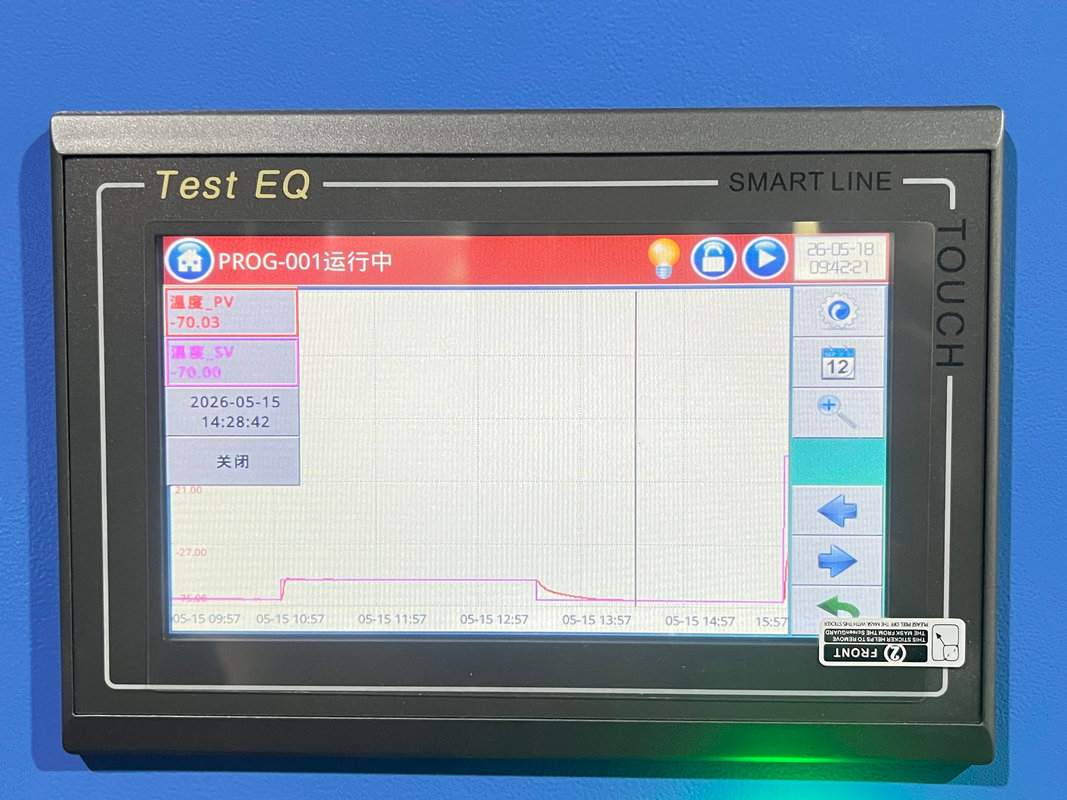
TestEQ Official Website designs advanced environmental test chambers for semiconductor reliability validation, accelerated life testing, and product quality improvement.
TestEQ solutions are widely used for:
Semiconductor thermal cycling testing
Rapid temperature change testing
Temperature humidity reliability testing
ESS screening
Customized semiconductor testing systems
Key advantages include:
Fast linear ramp rates up to 25°C/min
High temperature control stability
Long-term continuous operation reliability
Custom chamber solutions for semiconductor applications
Support for automotive, aerospace, telecom, and AI electronics industries
For engineers and laboratories seeking more reliable test results, stable environmental simulation systems can directly improve failure analysis accuracy and product qualification efficiency.
Conclusion
Reducing semiconductor product failure rates requires more than electrical inspection alone. Advanced environmental reliability testing allows manufacturers to identify hidden defects earlier, improve validation accuracy, and strengthen long-term product reliability.
As semiconductor technologies continue evolving toward higher power density and greater integration, precision environmental testing will remain a critical part of modern reliability engineering.
Manufacturers that invest in accurate and stable testing systems can reduce risk, improve product quality, and accelerate time-to-market in increasingly competitive industries.
Internal Linking Module
Recommended Equipment
High-precision vibration testing equipment is suitable for semiconductor reliability verification and life assessment, accelerating the discovery of potential defects and improving product reliability.
Test chambers that can precisely control temperature and humidity help laboratories simulate extreme conditions, ensuring the stability and lifespan of semiconductor devices in real-world use.
Recommended Standards
defines a semiconductor temperature cycling test method for evaluating the mechanical and electrical reliability of devices under repeated thermal stress, and is a fundamental standard for IC packaging verification.
an International Electrotechnical Commission standard, is widely used for environmental adaptability testing of industrial electronics and semiconductors, and is suitable for rapid temperature change and environmental stress assessment.
Recommended Resources
A practical guide that provides in-depth analysis of the causes of semiconductor failures and offers preventative measures that laboratory and engineering teams can implement.
This paper introduces various methods for accelerating reliability testing, helping purchasing and R&D departments select appropriate equipment and shorten product verification cycles.
FAQ
1. Why is thermal cycling testing important for semiconductor reliability?
Thermal cycling testing helps identify hidden weaknesses caused by repeated expansion and contraction of semiconductor materials under extreme temperature changes. It is widely used to detect solder fatigue, package cracking, bonding instability, and material mismatch issues before products enter mass production.
For automotive electronics, AI servers, power modules, and telecom devices, thermal cycling reliability testing is often a mandatory qualification process.
2. What is the difference between thermal cycling and rapid temperature change testing?
Thermal cycling testing focuses on repeated exposure to high and low temperatures over longer dwell periods, while rapid temperature change testing emphasizes fast temperature ramp rates to create accelerated thermal stress.
Rapid temperature change chambers are especially effective for detecting latent defects in high-density semiconductor assemblies and reducing product validation time.
3. How does humidity affect semiconductor products?
Humidity can penetrate semiconductor packages and PCB assemblies, leading to corrosion, insulation degradation, leakage current increase, and long-term electrical instability.
Temperature humidity testing helps engineers evaluate product durability under harsh storage and operating environments, especially for automotive, aerospace, and outdoor electronics applications.
4. What ramp rate is recommended for semiconductor environmental testing?
The required ramp rate depends on the application and testing standards. Standard semiconductor testing may use 3°C/min to 5°C/min, while accelerated reliability testing and ESS applications often require 10°C/min to 25°C/min linear ramp rates.
Higher ramp rates help shorten testing cycles and improve defect screening efficiency.
5. Why is chamber temperature uniformity critical in semiconductor testing?
Poor temperature uniformity can create inconsistent stress conditions inside the chamber, leading to inaccurate test data or false failure analysis results.
High-precision semiconductor reliability testing requires stable airflow design, accurate sensor control, and consistent temperature distribution throughout the test area.
6. Can environmental testing reduce semiconductor field failure rates?
Yes. Environmental reliability testing helps manufacturers identify hidden product weaknesses during development and production stages before products reach customers.
By combining thermal cycling, humidity testing, ESS screening, and rapid temperature change testing, manufacturers can significantly improve product reliability, reduce warranty claims, and lower long-term operational risks.
CTA
Improve Semiconductor Reliability with Advanced Environmental Testing
Looking to reduce semiconductor product failure rates and improve reliability validation accuracy?
TestEQ Environmental Test Chambers provide high-performance environmental simulation systems designed for semiconductor manufacturers, reliability laboratories, automotive electronics suppliers, and advanced R&D
teams.
Typical Applications
Semiconductor packaging validation
AI server electronics testing
Automotive electronics reliability testing
PCB and module stress testing
ESS screening and accelerated life testing
Aerospace and telecom component validation
Request a Customized Testing Solution
Whether you need a standard environmental chamber or a fully customized semiconductor testing system, TestEQ can help optimize your reliability testing process and improve product qualification efficiency.
"Contact TestEQ today to discuss your semiconductor environmental testing requirements."