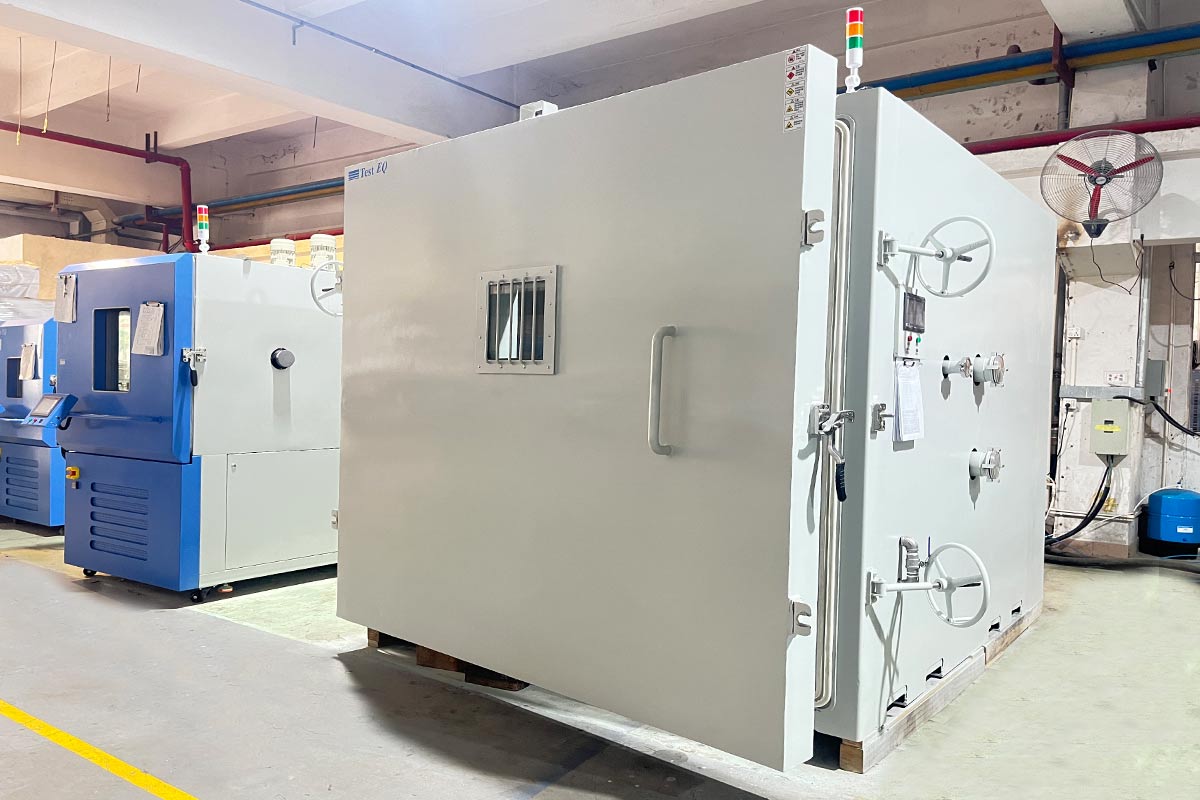
How Does a Temperature Altitude Chamber Work?
A temperature altitude chamber combines three core systems into one integrated platform:
1. Temperature Control System
Uses refrigeration and electric heating modules to create controlled hot and cold environments, typically ranging from -70°C to +180°C depending on chamber design.
2. Vacuum / Altitude Simulation System
A vacuum pump reduces internal chamber pressure to simulate altitude conditions. Lower pressure corresponds to higher simulated altitude, often up to 100,000 ft (30,000 m) or more.
3. Intelligent Control & Monitoring System
PLC or touchscreen controllers manage temperature, pressure, ramp rates, dwell times, safety interlocks, and test profiles with real-time monitoring and data logging.
By combining these systems, the chamber can reproduce harsh flight, transportation, or mountain-environment conditions for product validation.
Why Use a Temperature Altitude Chamber?
Products operating in aviation, defense, or high-elevation environments may experience failures due to pressure differentials, thermal expansion, outgassing, seal leakage, insulation breakdown, or battery instability.
A temperature altitude chamber helps detect these risks before products reach the field.
Common Testing Objectives
• Verify electronic reliability at low pressure and extreme temperatures
• Test battery swelling/leakage under altitude stress
• Validate aerospace component performance during simulated flight
• Detect enclosure seal failures and pressure leakage
• Evaluate material deformation and thermal expansion behavior
• Ensure compliance with customer or military qualification requirements
Typical Applications of Temperature Altitude Chambers:
Aerospace & Aviation
Used for testing avionics, sensors, connectors, cockpit electronics, communication modules, and aircraft components under simulated flight conditions.
Automotive & EV Battery Testing
Evaluates battery packs, BMS systems, sensors, and automotive electronics exposed to transport or mountain-elevation environments.
Defense & Military Equipment
Supports MIL-STD environmental qualification of tactical electronics, radar components, and mission-critical hardware.
Consumer Electronics
Tests smartphones, wearables, drones, and sealed electronics for shipping and altitude transport reliability.
Research Laboratories
Used by universities and laboratories for material science, thermal-vacuum, and reliability research.
Key Specifications to Consider When Buying a Temperature Altitude Chamber:
Choosing the right chamber requires balancing testing requirements, compliance standards, and long-term operating costs.
Temperature Range
Typical industrial range:
-40°C to +150°C
-70°C to +180°C for advanced aerospace applications
Altitude / Pressure Range
Common simulation capability:
Sea level to 100,000 ft equivalent
Custom higher-vacuum designs available
Temperature Ramp Rate
Fast ramp rates improve test efficiency but increase equipment cost. Typical options:
1°C/min to 15°C/min
Chamber Volume
Available from benchtop units to walk-in custom systems depending on DUT size.
Vacuum Pump Capacity
Determines pressure pull-down speed and altitude simulation efficiency.
Safety Features
Critical for battery and electronic testing:
Over-temperature protection
Pressure relief valves
Explosion-proof options
Redundant sensors
Emergency stop system
Relevant Test Standards for Temperature Altitude Chambers:
Many industries require testing to recognized environmental standards. Common standards include:
IEC 60068-2-14 – Temperature Change / Thermal Shock
MIL-STD-810 Method 500 – Low Pressure (Altitude)
RTCA DO-160 – Environmental Conditions for Airborne Equipment
ASTM D6653 – High Altitude Package Testing
UN 38.3 – Battery Transport Testing
Selecting a chamber aligned with these standards improves qualification efficiency and customer acceptance.
Why Engineers Choose TestEQ Temperature Altitude Chambers:
TestEQ provides engineering-grade temperature altitude chambers designed for high-reliability environmental simulation in demanding industrial and aerospace applications.
Core Advantages of TestEQ Systems
Advanced European-origin refrigeration technology
High vacuum stability and precise altitude control
Uniform temperature distribution across test workspace
PLC/HMI intelligent programmable controller
Customizable chamber dimensions and performance ranges
Compliance-ready designs for IEC / MIL / RTCA testing
Global technical support and commissioning assistance
Our chambers are engineered for long service life, repeatable performance, and reduced maintenance costs—making them ideal for laboratories and manufacturers requiring dependable qualification equipment.
How to Select the Right Temperature Altitude Chamber for Your Project:
Before purchasing, procurement and engineering teams should confirm:
Required minimum/maximum temperature range
Maximum simulated altitude / pressure level
Test specimen size and weight
Heat load generated by DUT
Applicable qualification standards
Required ramp rates and recovery times
Safety / explosion-proof requirements
Data logging and automation integration needs
Providing these parameters early allows manufacturers like TestEQ to recommend the most cost-effective and technically suitable configuration.
FAQ :
What is the difference between an altitude chamber and a temperature altitude chamber?
An altitude chamber simulates low-pressure conditions only, while a temperature altitude chamber combines altitude simulation with controlled heating and cooling for combined environmental stress testing.
What industries use temperature altitude chambers?
Common industries include aerospace, defense, automotive, EV battery manufacturing, electronics, and research laboratories.
How high can a temperature altitude chamber simulate?
Most industrial systems simulate up to 100,000 ft, with custom high-vacuum configurations available for specialized aerospace applications.
Conclusion:
A temperature altitude chamber is essential for validating product reliability in low-pressure and extreme-temperature environments. Whether you are qualifying aerospace electronics, EV battery systems, defense hardware, or sensitive electronic assemblies, accurate altitude and thermal simulation helps reduce field failures and accelerate certification.
If your project requires a high-performance temperature altitude chamber engineered for precision, repeatability, and global standards compliance, TestEQ can provide customized solutions tailored to your exact testing requirements.
CTA:
"Need help selecting the right temperature altitude chamber?"
Contact TestEQ today for expert engineering consultation, technical specifications, and custom chamber recommendations.