What Is Reliability Testing?
Reliability testing is a systematic process used to evaluate how a product performs over time under specific environmental and operational conditions. These testing methods simulate real-world stress factors such as temperature, humidity, vibration, and pressure.
Core Objectives of Reliability Testing Methods:
• Identify potential failure modes early
• Improve product durability and lifecycle performance
• Ensure compliance with international standards
• Reduce warranty and maintenance costs
Reliability testing is widely applied in product design validation, qualification testing, and mass production screening.
Main Types of Reliability Testing Methods:
To achieve comprehensive validation, multiple reliability testing methods are typically combined.
1. Environmental Reliability Testing
Environmental testing is one of the most widely used reliability testing methods. It evaluates how products respond to environmental stress conditions.
Common Environmental Testing Methods:
Repeated temperature changes to simulate expansion and contraction effects.
Evaluates moisture resistance, corrosion behavior, and insulation performance.
Rapid temperature transitions to detect material and structural weaknesses.
These methods are critical for electronics, automotive components, and aerospace systems.
2. HALT (Highly Accelerated Life Testing)
HALT is an advanced reliability testing method used during product development. It applies extreme stress levels beyond normal operating limits.
Key Advantages:
• Rapidly identifies design weaknesses
• Reduces development time
• Improves product robustness
HALT is especially effective for high-reliability industries where failure is not acceptable.
3. HASS (Highly Accelerated Stress Screening)
HASS is a production-level reliability testing method used to screen manufacturing defects.
Key Benefits:
• Detects early-life failures
• Ensures batch consistency
• Reduces field failure rates
HASS is commonly used after HALT to ensure that improvements are effectively implemented in production.
4. Accelerated Life Testing (ALT)
Accelerated Life Testing is a core reliability testing method used to estimate product lifespan by applying higher-than-normal stress conditions.
Applications:
• Lifetime prediction modeling
• Component durability validation
• Failure rate analysis
ALT helps companies make data-driven decisions about product warranties and lifecycle expectations.
5. Mechanical and Vibration Testing
Mechanical stress is a major cause of product failure. Vibration testing simulates transportation, installation, and operational conditions.
Test Types:
• Random vibration testing
• Sine vibration testing
• Mechanical shock testing
This method is essential for automotive, aerospace, and industrial equipment.
6. Altitude and Pressure Testing
Altitude testing evaluates product performance under low-pressure conditions, making it critical for aerospace and high-altitude applications.
Reliability Testing Standards and Compliance
Reliability testing methods must align with international standards to ensure product acceptance in global markets.
Common Standards:
• IEC environmental testing standards
• MIL-STD reliability testing standards
• ISO quality and reliability frameworks
Compliance ensures that testing results are recognized across industries and regions.
How to Choose the Right Reliability Testing Method:
Selecting the correct reliability testing method depends on:
• Product application and usage environment
• Required certification and compliance standards
• Expected product lifecycle
• Failure risk tolerance
In most cases, a combination of environmental testing, accelerated testing, and screening methods provides the best results.
TestEQ Reliability Testing Solutions:
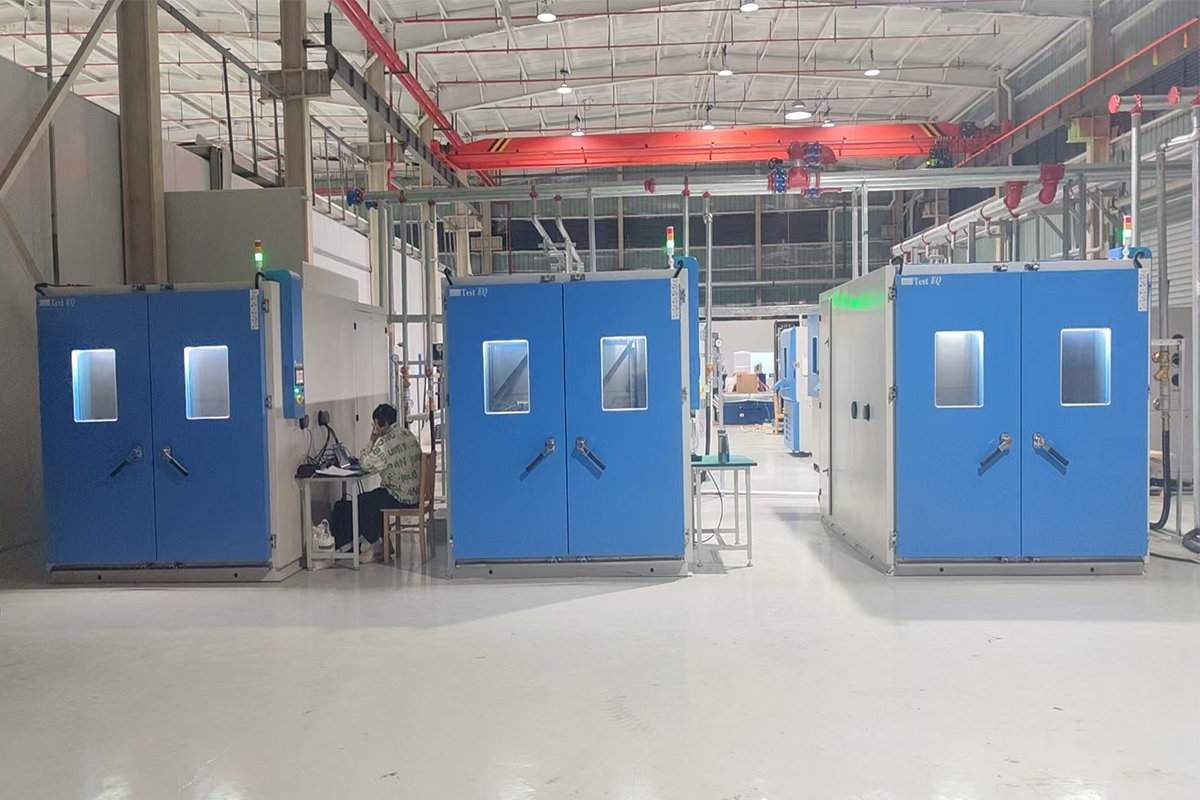
TestEQ provides advanced reliability test chambers designed to support a full range of reliability testing methods.
Key Capabilities:
• Wide temperature and humidity control ranges
• Fast thermal ramp rates for accelerated testing
• High precision and uniformity
• Custom solutions for aerospace, automotive, and electronics
Our systems support HALT, HASS, thermal cycling, and environmental testing, enabling complete product validation workflows.
Future Trends in Reliability Testing:
The future of reliability testing methods is evolving with technology advancements:
• AI-driven failure prediction
• IoT-enabled real-time monitoring
• Increased use of accelerated testing methods
• Integration with digital twin systems
Companies that adopt these innovations will gain a significant advantage in product reliability and market competitiveness.
Conclusion:
Reliability testing methods are the foundation of modern product validation. By combining environmental testing, accelerated life testing, HALT, and HASS, companies can significantly improve product performance and reduce failure risks.
For engineers, laboratories, and procurement teams, implementing the right reliability testing strategy is essential for achieving long-term success.
Call to Action:
"Looking to enhance your reliability testing capabilities?"
Contact TestEQ to explore high-performance reliability test chambers tailored to your industry and application needs.