Why ESS Testing Matters in Semiconductor Manufacturing
ESS testing is designed to accelerate environmental stress conditions in order to expose hidden manufacturing defects, weak solder joints, material inconsistencies, and premature component failures.
In semiconductor and electronics industries, ESS chambers are widely used for:
Semiconductor package reliability validation
Automotive electronics qualification
PCB and control module screening
Power semiconductor stress testing
Failure analysis and reliability engineering
Burn-in and temperature cycling evaluation
Compared with conventional environmental testing, ESS testing places greater emphasis on rapid temperature transitions, repeatability, and continuous operation stability.
For industries such as EV electronics, aerospace, and industrial automation, unstable ESS performance may lead to inaccurate qualification results and costly field failures.
Key Factors When Choosing an ESS Chamber
1. Temperature Ramp Rate Performance
One of the most important ESS chamber specifications is the temperature change rate.
For semiconductor testing, faster ramp rates help accelerate thermal stress between materials with different expansion coefficients. This is essential for identifying solder fatigue, package cracking, and bonding failures.
Typical semiconductor ESS applications require:
5°C/min for standard reliability testing
10–15°C/min for automotive electronics
20–25°C/min for high-acceleration stress screening
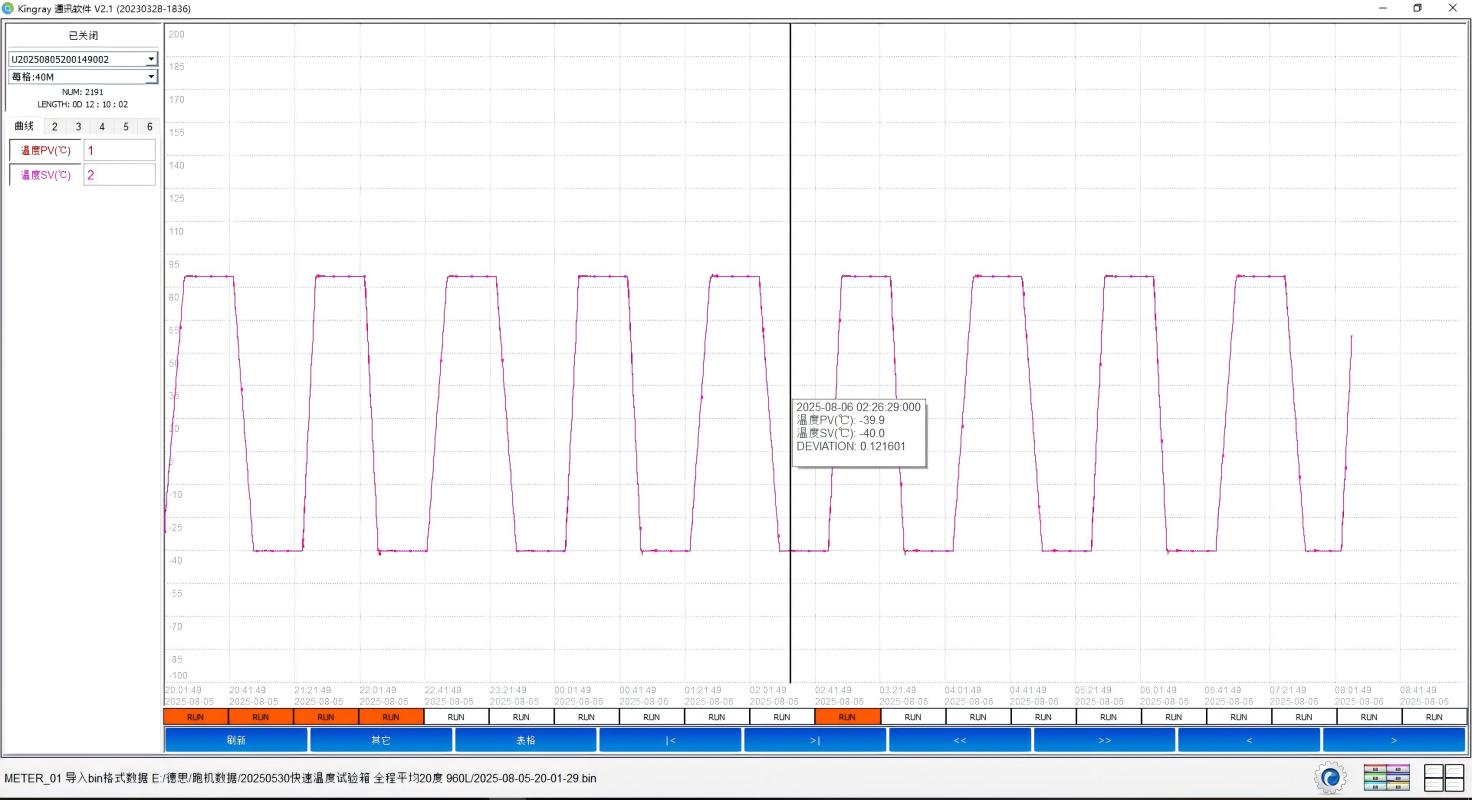
However, the actual usable ramp rate depends on the test load, fixture design, and airflow efficiency — not only the empty chamber specification.
When evaluating suppliers, engineers should confirm:
Loaded ramp rate performance
Real test data under full load conditions
Temperature overshoot control
Long-duration cycling stability
2. Temperature Uniformity and Stability
Poor chamber uniformity can create inconsistent stress conditions across semiconductor samples.
For semiconductor qualification laboratories, temperature uniformity directly affects:
Test repeatability
Reliability correlation
Failure consistency
Compliance with international standards
A high-quality ESS chamber should provide:
Stable airflow circulation
Optimized duct design
Precise PID control
Low temperature fluctuation during cycling
For semiconductor modules and automotive electronics, stable chamber conditions are often more important than achieving extremely fast ramp rates.
3. Chamber Reliability for Continuous Operation
ESS chambers often operate 24/7 under aggressive thermal cycling conditions.
Low-quality refrigeration systems or unstable control architectures may lead to:
Compressor failures
Sensor drift
Refrigeration overload
Unexpected downtime
Inconsistent screening results
For semiconductor manufacturers, downtime during validation or production screening can significantly increase project costs.
When selecting an ESS chamber supplier, procurement teams should evaluate:
Refrigeration system durability
Compressor brand and redundancy
Electrical safety design
Service response capability
Spare parts availability
Preventive maintenance support
4. Compliance with Semiconductor and Automotive Standards
Different semiconductor applications may require compliance with specific international standards.
Common standards include:
JESD22 temperature cycling testing
AEC-Q100 reliability testing
IEC 60068 environmental testing
MIL-STD thermal cycling methods
A professional ESS chamber supplier should understand how these standards relate to chamber configuration, sensor placement, and thermal control performance.
5. Automation and Data Management
Modern semiconductor laboratories increasingly require automated testing and traceable data management.
Advanced ESS chambers may support:
Ethernet and remote monitoring
MES/SCADA integration
Data export and report generation
Multi-step programmable profiles
Alarm history logging
User permission management
For large-scale semiconductor production environments, automation can significantly reduce operator workload and improve test consistency.
Why Semiconductor Manufacturers Choose Custom ESS Chambers
Standard ESS chambers may not always meet the requirements of advanced semiconductor applications.
Custom ESS systems are often required for:
Large DUT loads
Multi-layer PCB testing
Power module screening
Wafer-level reliability evaluation
Automated production line integration
Custom engineering may include:
Specialized airflow structures
Reinforced shelving systems
LN2-assisted rapid cooling
Cable port optimization
Robotic handling interfaces
For high-volume semiconductor manufacturing, customized ESS chambers can improve both screening efficiency and operational stability.
Choosing the Right ESS Chamber Supplier
Beyond technical specifications, supplier engineering capability is equally important.
A reliable ESS chamber manufacturer should provide:
Application engineering consultation
Thermal simulation support
Custom chamber design capability
Global technical service
Long-term spare parts support
Validation assistance
For semiconductor and automotive electronics industries, selecting an experienced environmental test chamber partner can reduce qualification risk and improve long-term testing consistency.
Conclusion
Choosing the right ESS chamber for semiconductor testing requires balancing ramp rate performance, thermal uniformity, reliability, automation, and long-term operational stability.
As semiconductor devices continue to evolve toward higher power density and greater integration, environmental stress screening becomes increasingly critical for ensuring product reliability and reducing field failures.
TestEQ provides engineered ESS chamber solutions designed for semiconductor, automotive electronics, and industrial reliability testing applications — including customized rapid temperature change systems for demanding validation environments.
Internal Linking Module
Related ESS & Semiconductor Testing Resources
FAQ
1. What is an ESS chamber used for in semiconductor testing?
An ESS (Environmental Stress Screening) chamber is used to expose semiconductor devices and electronic assemblies to rapid temperature changes and environmental stress conditions. The goal is to identify latent manufacturing defects, weak solder joints, material inconsistencies, and early-life failures before products enter the market.
2. What ramp rate is recommended for semiconductor ESS testing?
The required ramp rate depends on the application and reliability standard:
5°C/min for standard electronics testing
10–15°C/min for automotive electronics qualification
20–25°C/min for highly accelerated stress screening
For accurate evaluation, engineers should focus on loaded ramp rate performance rather than empty chamber specifications.
3. Why is temperature uniformity important in ESS chambers?
Temperature uniformity ensures all semiconductor samples experience the same thermal stress conditions during testing. Poor uniformity can lead to inconsistent test results, inaccurate reliability analysis, and reduced repeatability between validation cycles.
4. Which standards are commonly used for semiconductor ESS testing?
Common semiconductor and electronics reliability standards include:
JESD22 temperature cycling standards
AEC-Q100 automotive electronics testing
IEC 60068 environmental testing
MIL-STD thermal cycling methods
The selected ESS chamber should support the thermal performance and control requirements specified in these standards.
5. Can ESS chambers be customized for semiconductor applications?
Yes. Many semiconductor manufacturers require customized ESS chambers for:
Large DUT loads
Power semiconductor modules
Automated production screening
Multi-layer PCB testing
Wafer-level reliability evaluation
Custom options may include LN2 cooling, robotic interfaces, reinforced airflow systems, and ultra-fast temperature ramp configurations.
6. How do I choose a reliable ESS chamber supplier?
When selecting an ESS chamber supplier, consider:
Engineering and customization capability
Semiconductor testing experience
Temperature control performance
After-sales technical support
Spare parts availability
Long-term operational reliability
A professional supplier should also provide application guidance and support for reliability validation projects.
Suggested CTA
Need a Custom ESS Chamber for Semiconductor Reliability Testing?
TestEQ provides high-performance ESS chambers with linear ramp rates from 5°C/min to 25°C/min, engineered for semiconductor, automotive electronics, and industrial reliability applications.
"Contact TestEQ for customized ESS testing solutions and technical consultation."