
Test EQ

Standard
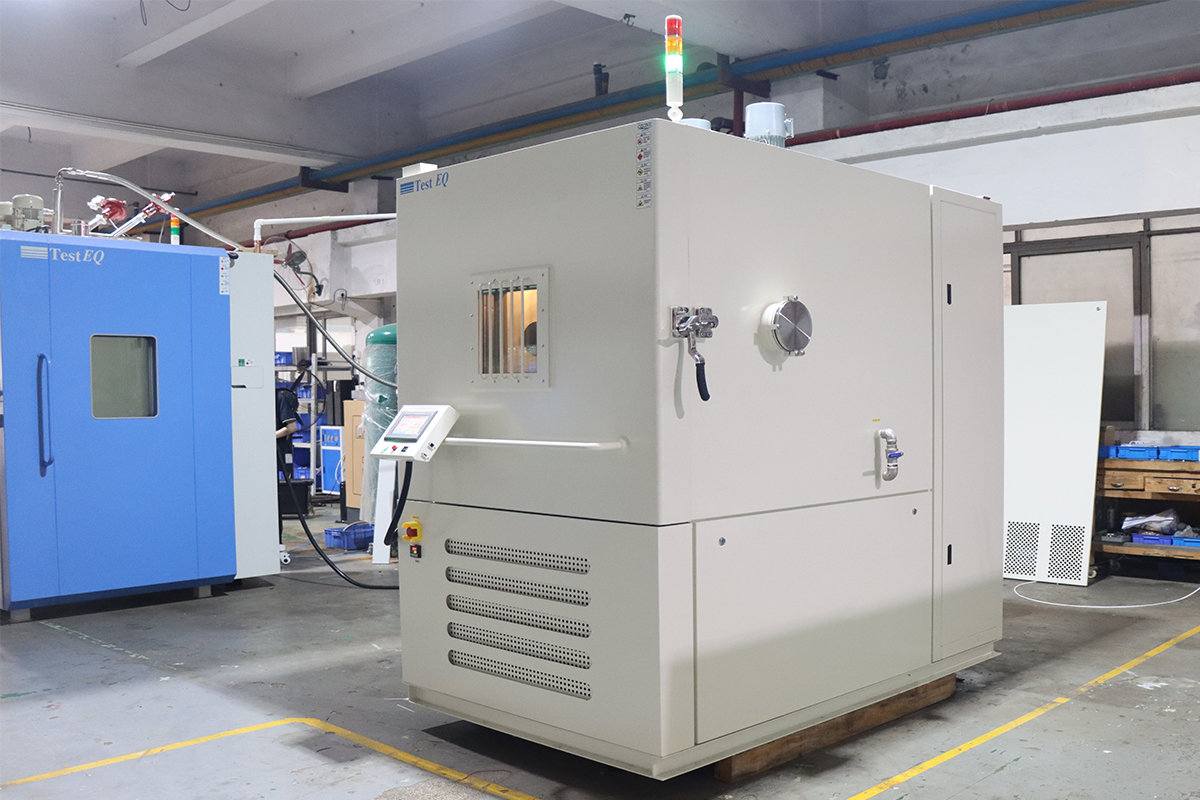
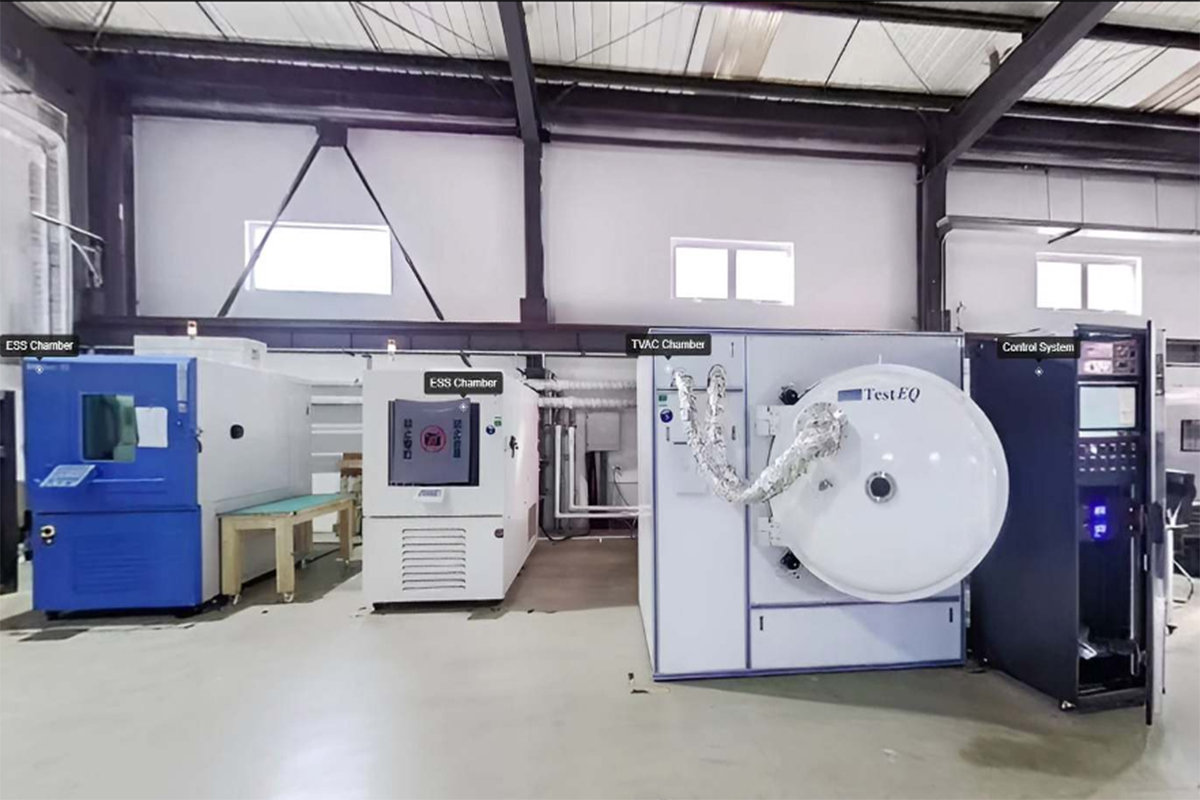
  • Thermal Vacuum Chamber vs Altitude Test Chamber: Which Test System Do You Need?
    Thermal Vacuum Chamber vs Altitude Test Chamber: Which Test System Do You Need?
    Thermal vacuum chambers and altitude test chambers are both used to simulate challenging environmental conditions, but they serve different testing objectives. This guide explains the key differences between thermal vacuum testing and altitude simulation, including pressure, temperature, applications, standards, and equipment selection. Learn how engineers, laboratories, and procurement teams can choose the right test system for aerospace, avionics, satellite, electronics, and other high-reliability applications.
    27

    2026-07

  • AEC-Q100 vs AEC-Q101: Key Differences Explained for Automotive Reliability Testing
    AEC-Q100 vs AEC-Q101: Key Differences Explained for Automotive Reliability Testing
    AEC-Q100 and AEC-Q101 are two critical automotive semiconductor reliability qualification standards, but they apply to different component categories and testing requirements. AEC-Q100 focuses on integrated circuits (ICs), while AEC-Q101 is designed for discrete semiconductor devices such as MOSFETs, diodes, and power components.This guide explains the key differences between AEC-Q100 vs AEC-Q101, including test scope, applications, reliability requirements, and environmental testing methods. Engineers, semiconductor manufacturers, automotive suppliers, and reliability laboratories can use this comparison to select the right qualification approach and optimize automotive component validation.TestEQ provides advanced environmental test chambers, thermal cycling chambers, temperature humidity chambers, and customized reliability testing solutions to support AEC automotive qualification, EV semiconductor development, and electronic component reliability testing.
    24

    2026-07

  • How Does an ESS Chamber Detect Product Failures?
    How Does an ESS Chamber Detect Product Failures?
    An ESS chamber detects latent product failures by applying controlled environmental stress and monitoring how the test specimen responds. Instead of waiting for weaknesses to appear during field operation, Environmental Stress Screening (ESS) accelerates the discovery of manufacturing defects, marginal components, assembly problems, and other early-life failure mechanisms.The basic principle is:Controlled Stress → Physical Failure Mechanism → Observable Abnormality → Failure AnalysisFor engineers, the chamber itself does not “diagnose” every failure automatically. Its primary function is to create a repeatable environmental condition that can precipitate latent defects while the product is monitored for electrical, functional, mechanical, or thermal abnormalities.
    20

    2026-07

  • ESS Chamber vs Burn-in Chamber: Key Differences and How to Choose the Right Reliability Testing Solution
    ESS Chamber vs Burn-in Chamber: Key Differences and How to Choose the Right Reliability Testing Solution
    In modern electronics, semiconductor, automotive, aerospace, and battery industries, reliability testing is essential to identify early failures before products enter the market.Two commonly used reliability testing solutions are ESS Chamber (Environmental Stress Screening Chamber) and Burn-in Chamber.Although both methods apply controlled environmental stress to improve product reliability, their testing objectives, stress mechanisms, and applications are different.Choosing the correct testing equipment can significantly improve failure detection efficiency, reduce warranty risks, and shorten product development cycles.TestEQ provides advanced environmental reliability testing systems designed for electronics, automotive components, EV batteries, semiconductor devices, and aerospace applications.
    17

    2026-07

  • CTE Mismatch in Electronics: Thermal Stress, Failure Mechanisms and Testing Methods
    CTE Mismatch in Electronics: Thermal Stress, Failure Mechanisms and Testing Methods
    CTE mismatch is one of the major causes of thermal stress and reliability failures in electronic products. When materials with different Coefficients of Thermal Expansion (CTE) are combined, repeated temperature changes can generate mechanical stress, leading to solder cracks, delamination, package failures and electrical performance degradation.This technical guide explains CTE mismatch failure mechanisms, thermal cycling test methods, related reliability standards, and how environmental test chambers help engineers validate electronic product durability in automotive, semiconductor, aerospace and high-reliability applications.
    13

    2026-07

  • What Is Explosive Atmosphere Testing? Standards, Methods and Test Chamber Requirements
    What Is Explosive Atmosphere Testing? Standards, Methods and Test Chamber Requirements
    Why Explosive Atmosphere Testing MattersModern industries such as electric vehicles, lithium batteries, aerospace, chemical processing, oil & gas, and industrial electronics increasingly operate in environments where flammable gases, vapors, or combustible dust may exist.Explosive atmosphere testing is a specialized safety evaluation method used to verify whether equipment, components, and materials can maintain reliable operation under potentially hazardous atmospheric conditions.Unlike conventional environmental testing, explosive atmosphere testing combines temperature, humidity, pressure, gas concentration, ignition risk, and safety control requirements to simulate extreme operating environments.For manufacturers and laboratories, selecting the correct Explosive Atmosphere Test Chamber is critical for achieving product certification, improving reliability, and reducing safety risks.TestEQ provides advanced environmental simulation solutions designed for demanding reliability and safety validation applications.
    10

    2026-07

  • Temperature Cycling vs Temperature Shock: Key Differences and Selection Guide
    Temperature Cycling vs Temperature Shock: Key Differences and Selection Guide
    Temperature Cycling and Temperature Shock are two accelerated reliability testing methods used to evaluate electronic and material performance under thermal stress.The key difference is that Temperature Cycling uses controlled temperature ramps to simulate long-term fatigue, while Temperature Shock exposes samples to sudden extreme temperature transitions to trigger rapid failure detection.
    06

    2026-07

  • Thermal Cycling vs Temperature Cycling: What's the Difference?
    Thermal Cycling vs Temperature Cycling: What's the Difference?
    Thermal Cycling and Temperature Cycling are often used interchangeably in environmental reliability testing. In most engineering applications, both terms describe repeated exposure of a test specimen to programmed high and low temperature conditions.The important difference is usually not the name of the test, but the temperature profile, ramp rate, dwell time, number of cycles, test objective, applicable standard, and chamber performance requirements.For engineers and procurement teams, this distinction matters when selecting a thermal cycling chamber or defining a reliability test specification.In simple terms:Thermal Cycling and Temperature Cycling usually refer to the same general testing concept: repeatedly changing the temperature of a product between defined limits.However, Thermal Shock is a different test method because it creates much more abrupt temperature transitions, typically by moving the test specimen between hot and cold zones.This guide explains the terminology, test methods, standards, chamber requirements, and equipment selection considerations for thermal cycling and temperature cycling.
    03

    2026-07

  • Thermal Cycling Test Procedure: Step-by-Step Guide for Reliable Environmental Testing
    Thermal Cycling Test Procedure: Step-by-Step Guide for Reliable Environmental Testing
    Electronic components, automotive systems, aerospace assemblies, batteries, and semiconductor devices all experience repeated temperature changes throughout their service life. These temperature fluctuations create expansion and contraction stresses that can eventually lead to solder joint fatigue, material cracking, seal leakage, and mechanical failure.A well-designed thermal cycling test procedure enables manufacturers to evaluate product durability before mass production, helping engineers reduce warranty costs, improve reliability, and comply with international qualification standards.At TestEQ, our environmental test chambers are engineered to deliver precise temperature control, uniform airflow, and repeatable cycling performance for laboratories, manufacturers, and third-party testing organizations.
    29

    2026-06

  • How Thermal Cycling Testing Prevents Thermal Stress Cracking
    How Thermal Cycling Testing Prevents Thermal Stress Cracking
    Thermal stress cracking is one of the most common causes of premature failure in electronic components, automotive assemblies, aerospace equipment, batteries, and industrial materials. Repeated heating and cooling create expansion and contraction cycles that gradually weaken materials, leading to microscopic cracks that eventually cause functional failure.Thermal Cycling Testing is designed to reproduce these temperature changes under controlled laboratory conditions, allowing engineers to identify weak points before products reach customers.At TestEQ, our thermal cycling chambers provide precise temperature control, rapid transition capability, and customizable test profiles that help manufacturers improve long-term product reliability while reducing warranty costs.
    26

    2026-06

  • TVAC vs Environmental Test Chamber: How to Choose the Right Simulation System for High-Reliability Testing
    TVAC vs Environmental Test Chamber: How to Choose the Right Simulation System for High-Reliability Testing
    TVAC vs Environmental Test Chamber: Engineering-Level Comparison for Reliability TestingIn high-reliability industries such as aerospace, semiconductor manufacturing, defense systems, and advanced electronics, both TestEQ systems and TVAC (Thermal Vacuum Chamber) systems are widely used.However, they serve fundamentally different engineering purposes.Misunderstanding these two systems often leads to incorrect test selection, over-specification, or under-testing risk, which can directly impact product qualification and mission reliability.
    25

    2026-06

  • What Is a Temperature Altitude Test Chamber and Why Is It Important for Reliability Testing?
    What Is a Temperature Altitude Test Chamber and Why Is It Important for Reliability Testing?
    As products are increasingly deployed in aircraft, satellites, electric vehicles, telecommunications systems, and high-altitude environments, manufacturers must verify performance under both temperature extremes and reduced atmospheric pressure.A Temperature Altitude Test Chamber is a specialized environmental simulation system designed to reproduce the combined effects of temperature variation and altitude (low-pressure conditions). By accurately simulating real-world operating environments, engineers can identify potential failures before products reach the market, significantly improving reliability, safety, and regulatory compliance.For industries where product failure is unacceptable, temperature altitude testing has become an essential part of the qualification process.
    23

    2026-06

Ask For A Quick Quote

We will contact you within 1 working day, please pay attention to the email with
the suffix "@test-eq.com".

We will contact you within 1 working day, please pay attention to the email with the suffix "@test-eq.com".

Company
Name*
Phone
E-Mail*
Nation
Message
By selecting the ‘I agree’ button, you consent to the processing of your personal data for marketing purposes and for the sending of commercial information by TESTEQ Company through telephone, e-mail, newsletters, text messages such as sms, chat and social networks.
I AGREE
By submitting your personal data, you declare that you have read the Privacy Policy of the website.

P.IVA: 91441900MAECQJHY37 Guangdong Test EQ Equipment Co., Ltd. | All Rights Reserved