
Test EQ

Standard
  • EV Battery Environmental Testing Standards Explained
    EV Battery Environmental Testing Standards Explained
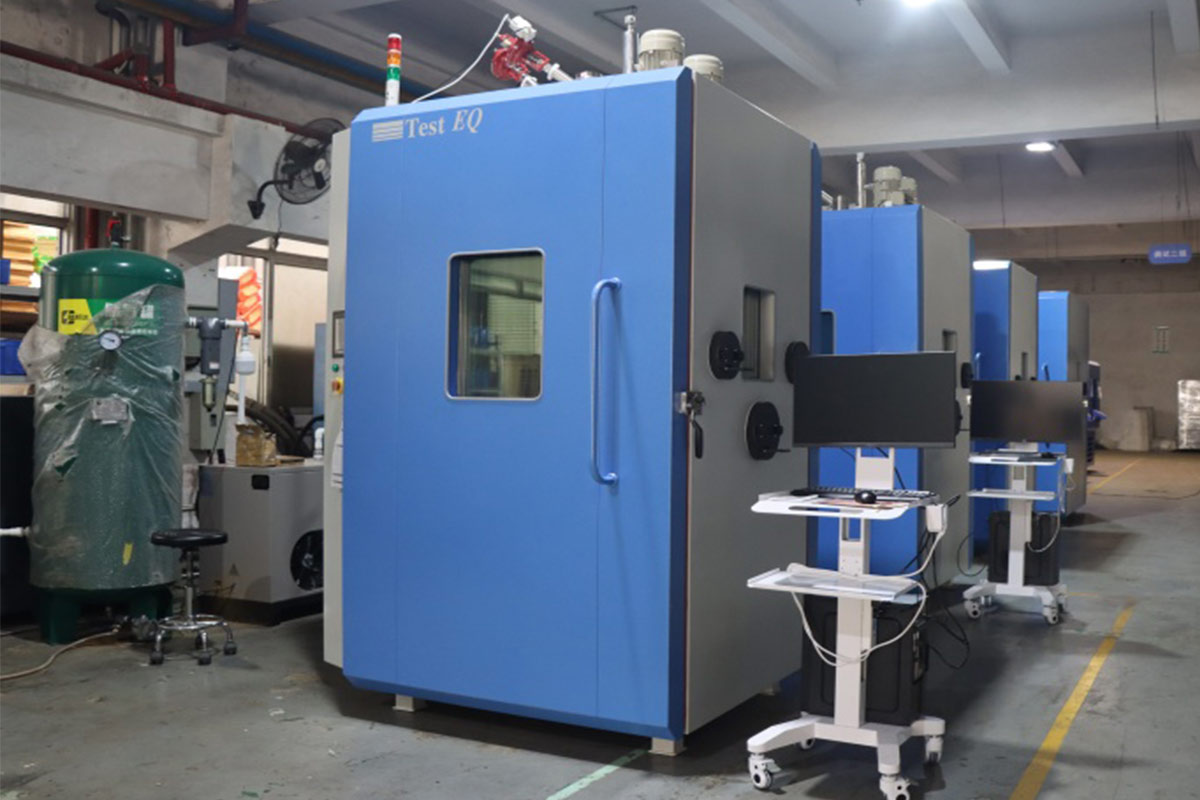
    As global EV battery safety requirements continue to evolve, manufacturers and testing laboratories face increasing pressure to comply with international environmental testing standards. This article explains the most important EV battery testing standards, including UN 38.3, IEC 62660, SAE J2464, and ISO 16750, while exploring how advanced environmental test chambers help engineers validate battery safety, thermal reliability, and long-term durability under extreme conditions.
    11

    2026-05

  • How to Select Temperature Change Rate (5°C/min to 25°C/min) for Environmental Test Chambers
    How to Select Temperature Change Rate (5°C/min to 25°C/min) for Environmental Test Chambers
    Selecting the correct temperature change rate is a critical decision in environmental reliability testing, directly affecting test accuracy, failure detection efficiency, and overall equipment investment. This guide explains how to choose between 5°C/min to 25°C/min based on industry standards, product characteristics, and real test conditions. It is designed for engineers, procurement teams, and laboratory managers who need to balance compliance requirements, testing efficiency, and total cost of ownership when specifying thermal cycling or rapid temperature change chambers.
    04

    2026-05

  • Battery Thermal Cycling Testing Failure Mechanisms: Causes, Analysis, and Reliability Improvement Strategies
    Battery Thermal Cycling Testing Failure Mechanisms: Causes, Analysis, and Reliability Improvement Strategies
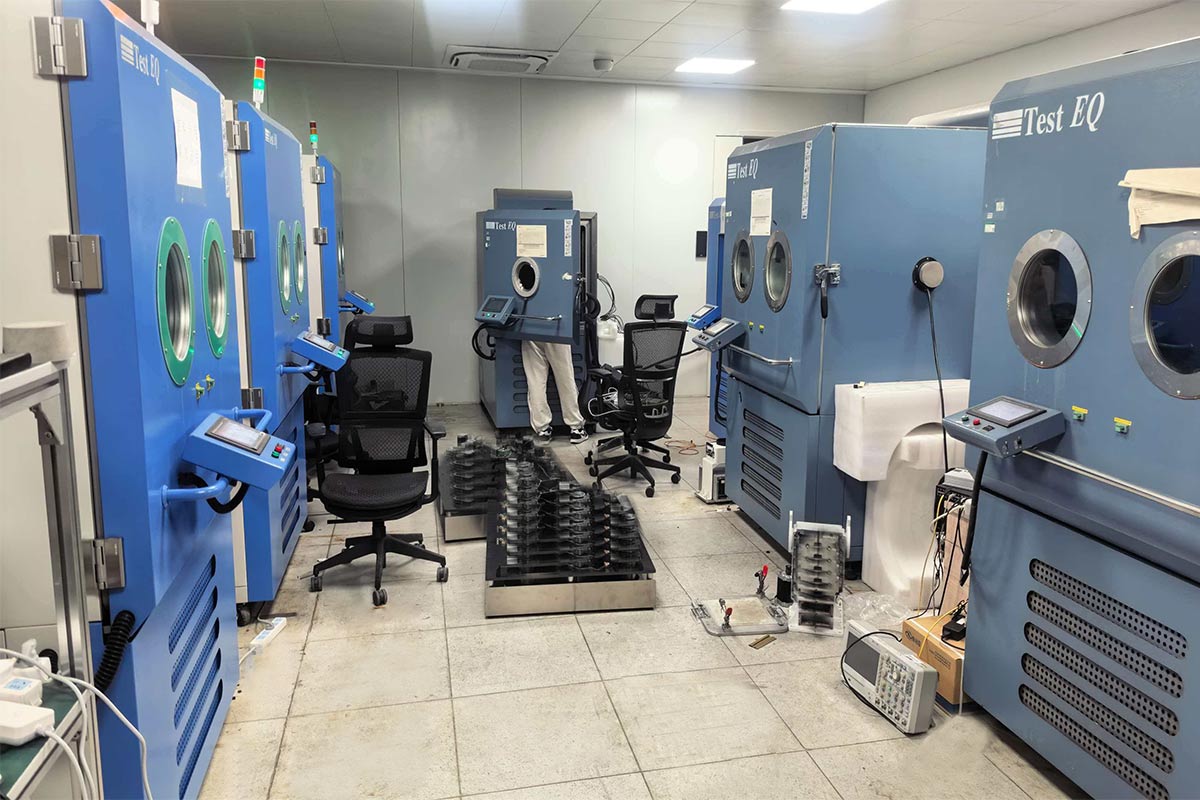
    Battery Thermal Cycling Testing Failure Mechanisms: Causes, Analysis, and Engineering SolutionsBattery reliability is one of the most critical challenges in electric vehicles (EV), energy storage systems (ESS), aerospace, and advanced consumer electronics. Among all validation methods, battery thermal cycling testing is essential for predicting long-term performance and identifying failure risks under extreme temperature fluctuations.This article explains the key battery thermal cycling testing failure mechanisms, their root causes, and how advanced environmental testing systems from TestEQ help engineers and laboratories improve product reliability and shorten development cycles.
    30

    2026-04

  • Salt Spray Testing: Complete Guide, Standards, and Chamber Selection
    Salt Spray Testing: Complete Guide, Standards, and Chamber Selection
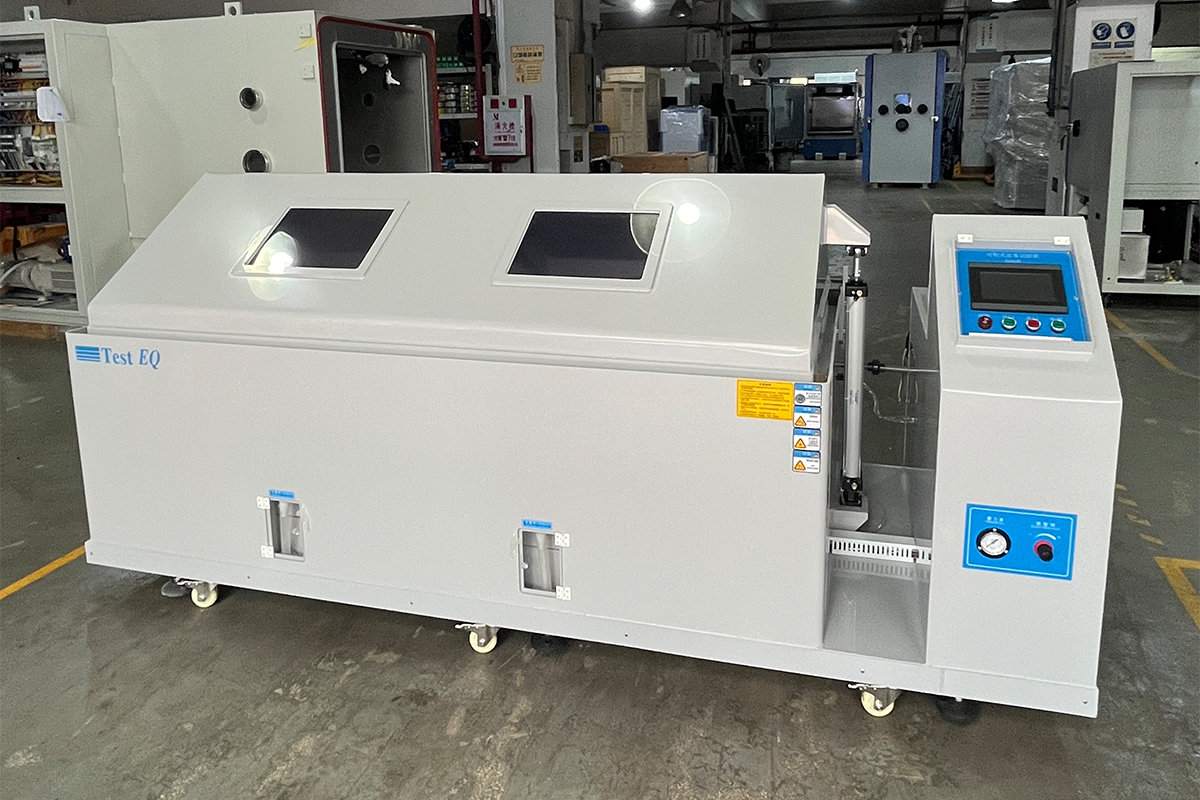
    What is Salt Spray Testing?Salt spray testing (also known as salt fog testing) is an accelerated corrosion testing method used to evaluate how materials, coatings, and metal components perform in corrosive environments.By exposing samples to a controlled salt mist environment, engineers can simulate years of real-world corrosion (such as coastal or road salt exposure) within days or weeks. This makes salt spray testing a critical tool in product validation and supplier qualification.
    27

    2026-04

  • What Is a Temperature Humidity Vibration Test Chamber? (THV Chamber Guide)
    What Is a Temperature Humidity Vibration Test Chamber? (THV Chamber Guide)
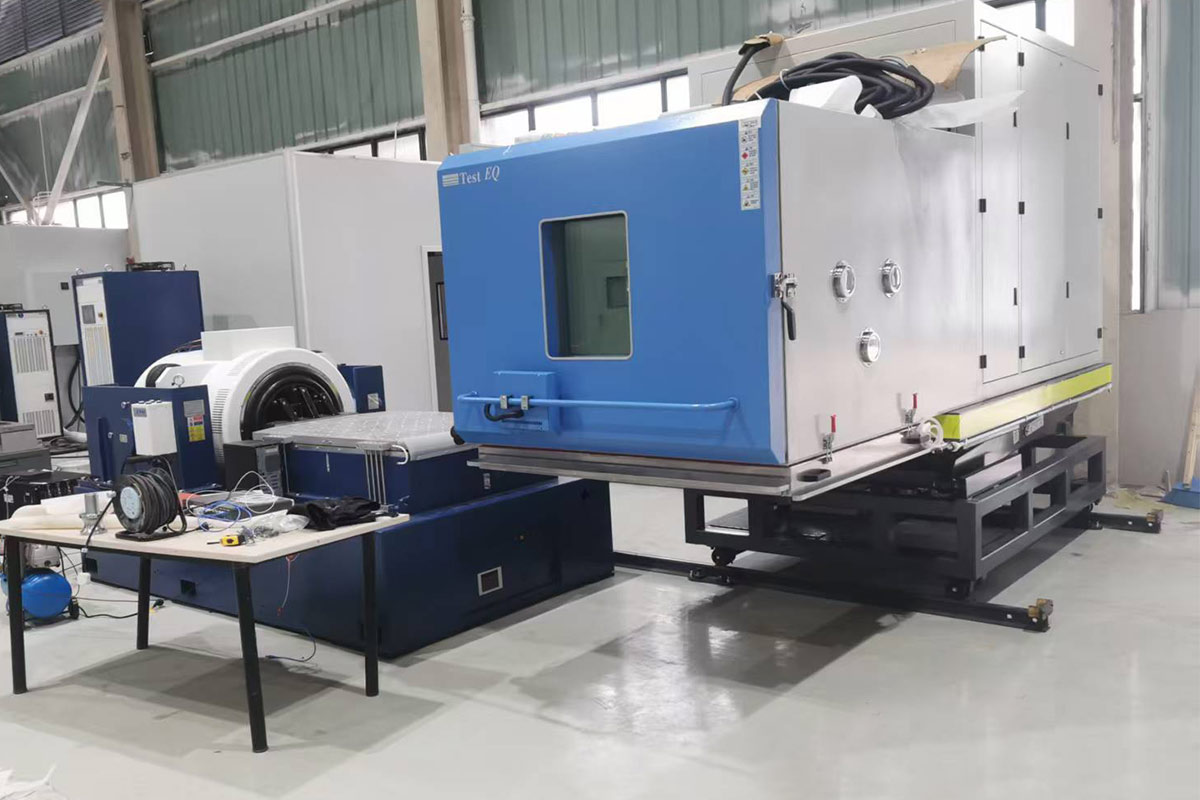
    Temperature Humidity Vibration Test Chamber (THV Chamber) integrates temperature, humidity, and vibration in a single system to simulate real-world conditions for reliability testing. Widely used in automotive, aerospace, electronics, and battery validation to improve product durability and compliance with international standards.
    20

    2026-04

  • HALT vs HASS Testing: Key Differences and Reliability Applications
    HALT vs HASS Testing: Key Differences and Reliability Applications
    HALT vs HASS Testing: Choosing the Right Reliability Test Approach.In high-reliability industries such as aerospace, automotive, semiconductor, and electronics, unexpected product failures can lead to significant costs, safety concerns, and production delays.HALT (Highly Accelerated Life Test) and HASS (Highly Accelerated Stress Screening) are two advanced reliability testing methods designed to identify weaknesses, improve product robustness, and reduce field failures.However, many engineers and procurement teams still face an important question:Should we use HALT testing, HASS testing, or both?This guide explains the key differences between HALT and HASS, including testing objectives, application stages, equipment requirements, and how to select the right reliability testing solution for different product development and production needs.
    17

    2026-04

  • Thermal Cycling Test Procedure: Step-by-Step Method for Reliability Testing
    Thermal Cycling Test Procedure: Step-by-Step Method for Reliability Testing
    A thermal cycling test procedure defines how a product, component, material, or assembly is repeatedly exposed to controlled high and low temperatures to evaluate reliability under thermal stress.A properly designed thermal cycling test does more than alternate between hot and cold temperatures. Engineers must define the temperature range, ramp rate, dwell time, cycle count, DUT configuration, chamber loading, monitoring method, and acceptance criteria according to the applicable test standard and product requirements.This guide explains how to perform thermal cycling testing, how to build a reliable test profile, what parameters should be controlled, and how to select a suitable thermal cycling chamber.For a general explanation of thermal cycling principles, applications, and failure mechanisms, see the related guide:What Is Thermal Cycling Test? Principles, Applications & Failure Mechanisms
    13

    2026-04

  • What Is a Temperature Altitude Chamber? Applications, Working Principle & Buying Guide
    What Is a Temperature Altitude Chamber? Applications, Working Principle & Buying Guide
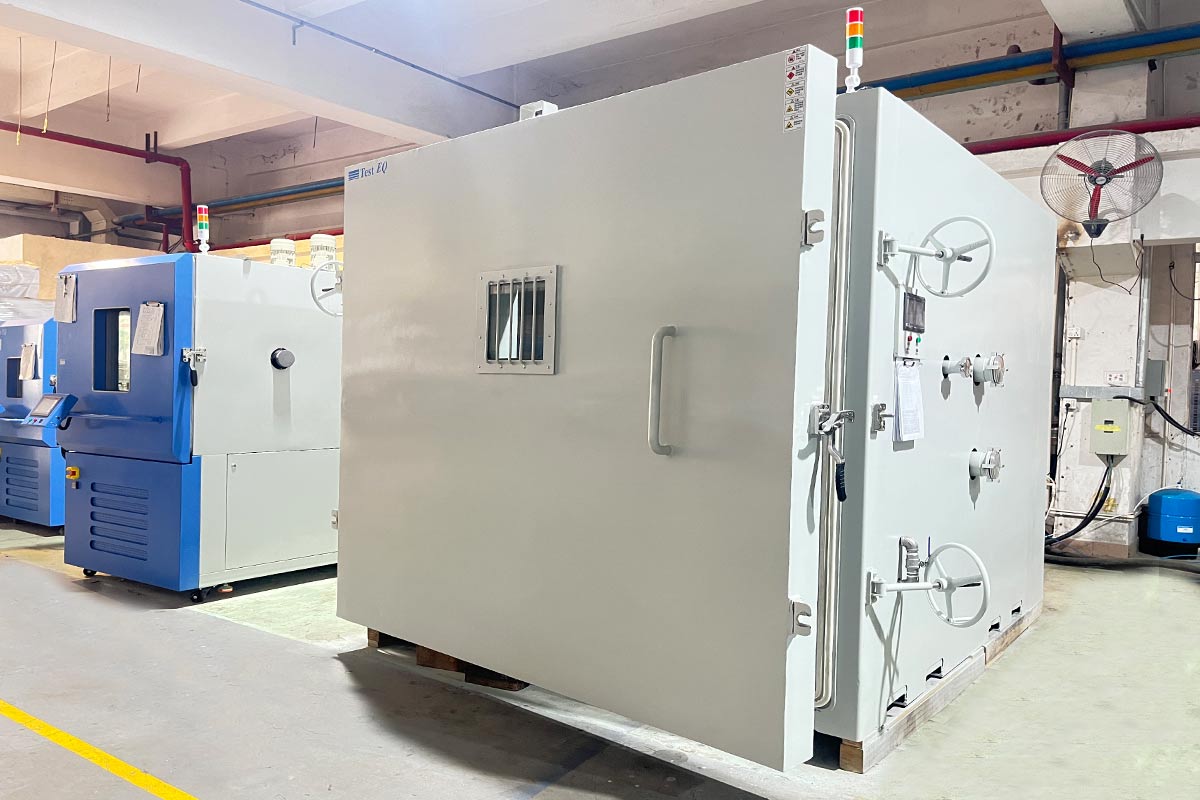
    A temperature altitude chamber is a specialized environmental testing system used to simulate extreme altitude conditions combined with controlled temperature environments. It allows engineers to evaluate whether products can maintain reliability and performance under high altitude, low pressure, and temperature stress conditions.Unlike conventional temperature chambers that only control temperature and humidity, a temperature altitude chamber integrates atmospheric pressure simulation with thermal control. This combination enables testing under realistic operating environments found in aerospace, aviation, automotive, semiconductor, defense, and electronic applications.By reproducing altitude-related environmental stresses in a laboratory, engineers can identify potential failures before products are deployed in real-world conditions.
    10

    2026-04

  • Reliability Testing Methods: Types, Standards, and Industrial Applications
    Reliability Testing Methods: Types, Standards, and Industrial Applications
    Reliability testing methods are essential for validating product performance, durability, and compliance in modern engineering industries. From electronics and automotive to aerospace and energy systems, reliability testing ensures that products perform consistently under real-world and extreme conditions.With increasing global quality standards and competitive pressure, companies must implement advanced reliability testing strategies to reduce failure rates and accelerate product validation.
    07

    2026-04

  • HAST Test Chamber: Complete Guide to Highly Accelerated Stress Testing
    HAST Test Chamber: Complete Guide to Highly Accelerated Stress Testing
    HAST (Highly Accelerated Stress Test) is an advanced reliability testing method used to evaluate the moisture resistance and long-term durability of semiconductor devices, electronic components, and automotive electronics under accelerated temperature, humidity, and pressure conditions.This guide explains how HAST test chambers work, key testing parameters, JESD22-A110 requirements, common failure mechanisms, and how to select the right HAST testing solution. TestEQ provides high-performance HAST test chambers designed for semiconductor, EV electronics, and reliability validation applications, helping manufacturers improve product quality and accelerate reliability testing.
    03

    2026-04

  • What Is Thermal Vacuum Testing? Principles and Test Procedure
    What Is Thermal Vacuum Testing? Principles and Test Procedure
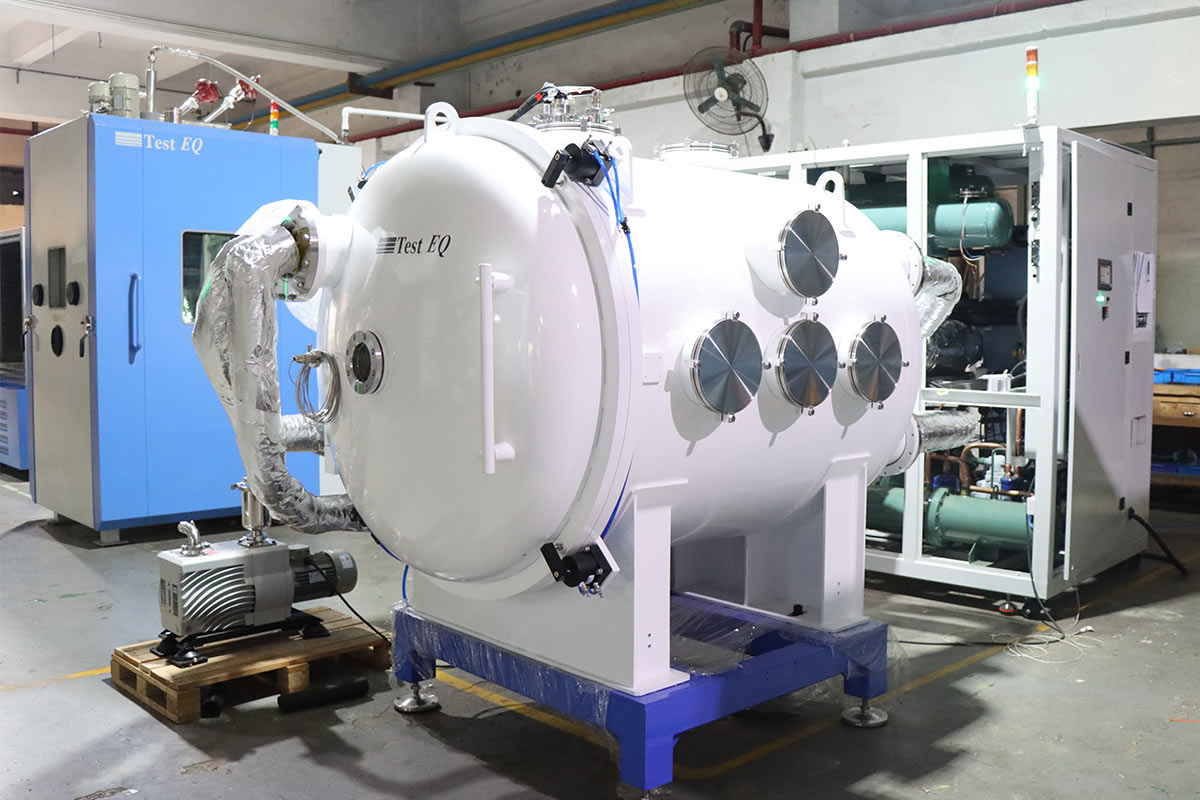
    Thermal vacuum testing is an environmental qualification method used to evaluate how a product behaves when exposed to controlled vacuum and temperature conditions similar to those encountered in space.The test is particularly important for satellites, spacecraft components, aerospace electronics, optical instruments, sensors, materials, and other mission-critical hardware.Unlike conventional temperature testing, thermal vacuum testing significantly reduces convection around the test article. Heat transfer is therefore dominated by radiation and conduction, creating a thermal environment that can reveal failure mechanisms not observed during normal atmospheric testing.
    30

    2026-03

  • What Is a HALT-HASS Test Chamber? Equipment, Features and Selection Guide
    What Is a HALT-HASS Test Chamber? Equipment, Features and Selection Guide
    A HALT-HASS test chamber is a specialized reliability testing system designed to expose product weaknesses and latent manufacturing defects by combining controlled environmental and mechanical stresses.Unlike a conventional environmental chamber that primarily controls temperature and humidity, a HALT-HASS system can integrate rapid temperature changes, vibration, monitoring, fixtures, and data acquisition into a single test platform.The equipment is commonly used by reliability engineers, product development teams, quality engineers, and manufacturers working with electronics, automotive components, aerospace systems, industrial equipment, and other reliability-critical products.
    27

    2026-03

Ask For A Quick Quote

We will contact you within 1 working day, please pay attention to the email with
the suffix "@test-eq.com".

We will contact you within 1 working day, please pay attention to the email with the suffix "@test-eq.com".

Company
Name*
Phone
E-Mail*
Nation
Message
By selecting the ‘I agree’ button, you consent to the processing of your personal data for marketing purposes and for the sending of commercial information by TESTEQ Company through telephone, e-mail, newsletters, text messages such as sms, chat and social networks.
I AGREE
By submitting your personal data, you declare that you have read the Privacy Policy of the website.

P.IVA: 91441900MAECQJHY37 Guangdong Test EQ Equipment Co., Ltd. | All Rights Reserved