What Is a TVAC (Thermal Vacuum) Chamber?
A TVAC chamber is a specialized environmental simulation system that creates a controlled high-vacuum and thermal environment around a test payload.
A typical TVAC system includes:
Vacuum chamber vessel
Vacuum pumping system
Thermal shroud
Cold plate
Heating system
Cooling system
Temperature sensors
Vacuum measurement
Payload fixtures
Electrical feedthroughs
Data acquisition
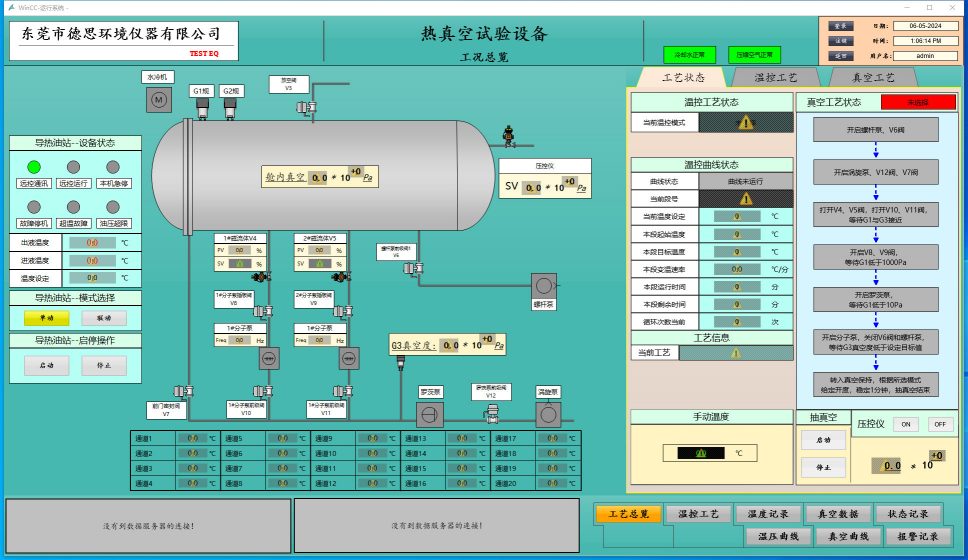
Automated control
The configuration depends on the size and type of payload, required vacuum level, temperature range, thermal load, test duration, contamination requirements, and qualification objectives.
Why Thermal Vacuum Testing Is Important
Space hardware cannot be repaired easily once launched.
A single component failure may lead to:
Satellite mission loss
Communication interruption
Navigation errors
Scientific payload failure
Significant financial losses
TVAC testing helps verify whether a product can withstand:
Extreme Temperature Conditions
Spacecraft surfaces may experience temperatures below -150°C in shadow and above +150°C under direct solar radiation.
Vacuum Effects
Vacuum environments can cause:
Material outgassing
Seal degradation
Lubricant evaporation
Mechanical deformation
Thermal Cycling Stress
Repeated temperature transitions can produce:
Solder fatigue
Material cracking
Delamination
Connector failures
Thermal vacuum testing identifies these risks before launch.
How Does a TVAC Chamber Differ From a Standard Environmental Chamber?
The most important difference is the pressure environment.
A conventional environmental chamber normally controls temperature and humidity at atmospheric pressure. A TVAC chamber removes most of the gas inside the chamber and controls temperature under vacuum.
| Test Capability / Parameter | TVAC Chamber | Environmental Test Chamber |
|---|---|---|
| Pressure Environment | High vacuum / controlled vacuum environment | Atmospheric pressure |
| Temperature Control | Yes — controlled heating and cooling under vacuum | Yes — controlled heating and cooling at atmospheric pressure |
| Humidity Control | Typically not required for high-vacuum testing | Commonly available for temperature-humidity testing |
| Heat Transfer | Primarily radiation and conduction | Primarily convection and conduction |
| Space Environment Simulation | Yes — simulates vacuum and thermal conditions relevant to space environments | No — primarily simulates terrestrial environmental conditions |
| Thermal Shroud | Available for radiative thermal control and thermal balance testing | Generally not used |
| Satellite Testing | Highly suitable for spacecraft, satellite components and payloads | Limited suitability |
| Outgassing Evaluation | Possible under controlled vacuum conditions | Generally unsuitable because testing is performed at atmospheric pressure |
| Thermal Balance Testing | Suitable for evaluating thermal equilibrium and heat-transfer behavior | Limited applicability |
| Typical Applications | Satellites, spacecraft, aerospace electronics, optical payloads and space hardware | Electronics, automotive components, consumer products and general environmental reliability testing |
Key Difference: A TVAC chamber combines controlled vacuum and thermal conditions to reproduce critical aspects of the space environment, while an environmental test chamber generally operates at atmospheric pressure and is primarily used for temperature, humidity and other terrestrial environmental tests.
Main Components of a TVAC Chamber
Vacuum Vessel
The vacuum vessel provides the sealed test environment.
Its size and construction depend on:
Payload dimensions
Required working volume
Vacuum level
Door configuration
Port requirements
Internal fixtures
Thermal shroud arrangement
For aerospace applications, the vessel should be designed around the actual payload rather than selecting chamber size only by external dimensions.
Vacuum Pumping System
The vacuum system removes gas from the chamber and establishes the required pressure.
Depending on the application, a TVAC system may incorporate:
Mechanical pumps
Dry pumps
Roots pumps
Turbomolecular pumps
Cryogenic pumping
The pumping architecture should be selected according to chamber volume, target pressure, pump-down requirements, payload outgassing, cleanliness, and test duration.
Thermal Shroud
The thermal shroud controls the radiative thermal environment surrounding the payload.
This is one of the most important differences between a TVAC system and a conventional temperature chamber.
Thermal shrouds can be configured for:
Heating
Cooling
Thermal cycling
Multi-zone control
Thermal balance testing
Cold Plate
A cold plate provides controlled conductive thermal coupling for selected test articles.
Cold plates can be useful for:
Electronic assemblies
Instruments
Batteries
Thermal-control components
Dedicated thermal balance applications
Heating and Cooling System
Depending on the required temperature range and thermal load, TVAC chambers may use:
Electrical heating
Mechanical refrigeration
Gaseous nitrogen
Liquid nitrogen
Combined cooling systems
The appropriate technology should be selected based on actual thermal load rather than temperature range alone.
TVAC Chamber Specifications
There is no single specification suitable for every TVAC application.
The main engineering parameters include:
| Parameter | Engineering Consideration | Why It Matters |
|---|---|---|
| Chamber Volume | Payload size, fixture dimensions, and required thermal clearance | Ensures the test article fits correctly and allows adequate thermal radiation space |
| Vacuum Level | Required operating and qualification pressure | Determines whether the chamber can reproduce the required vacuum environment |
| Pump-Down Time | Chamber volume, vacuum system configuration, and pumping capacity | Affects test preparation time and overall laboratory throughput |
| Leak Rate | Required vacuum level, chamber design, and cleanliness requirements | Helps maintain vacuum stability and improve test repeatability |
| Temperature Range | Required hot and cold temperature limits | Determines whether the chamber can reproduce the specified thermal environment |
| Thermal Load | Heat generated or absorbed by the payload and fixtures | Directly affects cooling capacity, temperature stability, and thermal recovery |
| Thermal Shroud | Single-zone or multi-zone configuration and required temperature control | Provides controlled radiative heating and cooling around the test article |
| Cooling Method | Mechanical refrigeration, GN₂, LN₂, or combined cooling | Determines achievable temperature range, cooling performance, and operating requirements |
| Payload Fixture | Standard or application-specific custom fixture | Provides secure payload mounting while minimizing unwanted thermal conduction |
| Feedthroughs | Electrical, instrumentation, RF, optical, or other interface requirements | Allows power, signals, data, and specialized interfaces to pass through the vacuum boundary |
| RGA | Optional residual gas analysis and contamination monitoring | Helps identify residual gases, outgassing, and potential contamination sources |
| Data Acquisition | Required sensors, channels, sampling rates, and data logging | Enables real-time monitoring, test traceability, and post-test analysis |
| Thermal Balance | Optional thermal balance configuration and measurement requirements | Supports spacecraft and payload thermal design verification |
| Automation & Control | Test recipes, automated sequences, monitoring, alarms, and data logging | Improves test repeatability, reduces operator workload, and supports complex qualification profiles |
The right TVAC chamber should be selected based on the complete test system rather than a single specification. Chamber volume, vacuum performance, thermal load, cooling method, thermal shroud design, payload interfaces, and control requirements should be evaluated together to ensure stable and repeatable testing.
Common Thermal Vacuum Test Parameters
Typical TVAC testing conditions include:
| Parameter | Typical Range |
|---|---|
| Temperature | -180°C to +150°C |
| Vacuum Level | 10⁻³ to 10⁻⁶ mbar |
| Temperature Uniformity | ±2°C to ±5°C |
| Thermal Cycling | User-defined |
| Test Duration | Hours to Weeks |
Actual specifications depend on mission requirements and industry standards.
How to Select the Right TVAC Chamber
Choosing a TVAC chamber should start with the test payload rather than the equipment catalog.
1. Define the Payload Size
Determine:
Maximum payload dimensions
Payload weight
Mounting position
Required working clearance
Fixture dimensions
Cable routing requirements
The usable chamber volume should be larger than the payload itself to allow thermal control hardware and fixtures.
2. Define the Required Vacuum Level
Different applications require different vacuum levels.
The specification should identify:
Target operating pressure
Ultimate pressure
Pressure stability
Leak-rate requirement
Pump-down time
Do not select a vacuum system solely by its advertised ultimate vacuum. The actual chamber performance depends on chamber volume, seals, internal surfaces, fixtures, payload outgassing and pumping speed.
3. Calculate the Thermal Load
Thermal load is critical when selecting cooling and heating systems.
The design should consider:
Payload heat dissipation
Fixture heat capacity
Thermal shroud size
Required temperature
Temperature transition time
Test article operating state
A chamber capable of reaching a certain temperature without load may perform differently when a high-power payload is operating inside the chamber.
4. Select the Thermal Shroud
The thermal shroud should be selected according to the required radiative environment.
Consider:
Number of thermal zones
Temperature range
Surface configuration
Sensor quantity
Heating capacity
Cooling capacity
Thermal balance requirements
5. Select the Cooling Technology
Cooling technology should match the temperature range and thermal load.
Mechanical refrigeration can provide controlled cooling for many applications.
GN₂ and LN₂ can provide lower temperatures and high cooling capacity for specific aerospace applications.
6. Define Payload Interfaces
A TVAC chamber may require:
Electrical feedthroughs
Thermocouple connections
Power connections
RF interfaces
Optical windows
Vacuum instrumentation
Communication interfaces
These interfaces should be defined before chamber manufacturing.
7. Consider Contamination Requirements
For optical payloads and sensitive aerospace hardware, vacuum cleanliness can be critical.
Consider:
Material selection
Internal surface treatment
Vacuum compatibility
Outgassing
RGA capability
Cleaning procedures
8. Plan for Future Testing
Research laboratories and aerospace organizations may need to test different payloads over the life of the chamber.
A modular chamber configuration can provide greater flexibility for:
Different fixtures
Additional feedthroughs
New instrumentation
Different thermal loads
Future test programs
TVAC Chamber Applications
Satellite Subsystems
TVAC chambers can be configured for satellite electronics, communication modules, sensors, power systems, antenna components, and payloads.
Spacecraft Components
Spacecraft hardware can require controlled vacuum and thermal conditions during environmental qualification and development.
Aerospace Electronics
Electronic assemblies can be monitored under controlled vacuum and hot/cold conditions.
Optical Instruments
Optical payloads may require vacuum compatibility and thermal stability evaluation.
Research and Development
Universities, government laboratories and aerospace R&D organizations use TVAC systems for space-environment research and experimental payload development.
High-Reliability Electronics
Selected electronic and semiconductor applications can use thermal-vacuum environments to evaluate performance under demanding conditions.
TVAC Chamber Manufacturer Selection
When evaluating a TVAC chamber manufacturer, procurement teams should review more than product specifications.
Important evaluation criteria include:
Engineering Capability
Can the supplier design the vacuum, thermal and payload systems around the application?
Customization
Can the supplier modify chamber dimensions, fixtures, feedthroughs and thermal systems?
Vacuum Performance
Does the manufacturer provide documented vacuum performance and leak-rate requirements?
Thermal Performance
Are temperature uniformity, thermal load and cooling capacity clearly defined?
Instrumentation
Can the supplier integrate data acquisition, RGA and other monitoring equipment?
Documentation
For aerospace projects, consider documentation such as:
Technical drawings
Factory acceptance testing
Calibration documentation
Vacuum test records
Temperature uniformity records
Electrical documentation
Operating manuals
After-Sales Support
Long-term technical support is important for aerospace qualification programs and research laboratories.
TVAC Chamber vs Thermal Vacuum Test Chamber
The terms TVAC chamber and thermal vacuum test chamber are closely related, but the search intent can be different.
TVAC chamber generally refers to the equipment and system configuration.
Thermal vacuum test chamber often refers to the equipment in the context of a specific testing application.
For equipment selection, engineers and procurement teams should focus on chamber architecture, vacuum performance, thermal control, payload configuration and customization.
For test planning, the focus should instead be on test procedure, test conditions, qualification requirements and acceptance criteria.
TVAC Chamber for Thermal Balance Applications
A TVAC chamber can be configured for thermal balance testing when engineers need to evaluate the thermal behavior of spacecraft or payload hardware.
A suitable configuration may include:
Multi-zone thermal shroud
Cold plate
Temperature sensors
Controlled heaters
Vacuum monitoring
Data acquisition
Automated temperature profiles
The number of zones and sensors should be determined from the spacecraft thermal model and test objectives.
TVAC Chamber Standards and References
The applicable requirements depend on the spacecraft, payload, mission and customer qualification program.
Commonly referenced frameworks may include:
NASA environmental and thermal-vacuum requirements
ECSS space engineering standards
MIL-STD-1540
MIL-STD-810
ASTM E595 for material outgassing
Customer-specific aerospace qualification specifications
The exact test standard should be confirmed before finalizing the chamber configuration.
Why Choose TestEQ Thermal Vacuum Chambers?
TestEQ provides engineered environmental simulation systems for aerospace, electronics, research and high-reliability applications.
TVAC configurations can be developed around:
Payload dimensions
Required vacuum level
Temperature range
Thermal load
Cooling method
Thermal shroud
Payload fixture
Instrumentation
RGA
Data acquisition
Automation
Qualification requirements
For projects requiring non-standard chamber sizes or specialized interfaces, TestEQ can develop a customized TVAC configuration based on the application.
Conclusion
TVAC and Thermal Vacuum Chambers play a critical role in validating products intended for aerospace, satellite, defense, and high-reliability applications. By accurately reproducing vacuum and thermal conditions encountered in space, these systems help engineers identify potential failures, improve reliability, and reduce mission risk.
As demand for satellites, space exploration, and advanced electronics continues to grow, thermal vacuum testing remains one of the most important tools for ensuring product performance and mission success.
Frequently Asked Questions (FAQ)
1. What is the difference between a TVAC chamber and a regular thermal chamber?
A TVAC chamber combines controlled temperature conditions with a vacuum environment, allowing engineers to simulate the thermal and pressure conditions encountered in space. A conventional thermal chamber primarily controls temperature at atmospheric pressure and cannot reproduce vacuum-related effects such as reduced convection, outgassing, or low-pressure operation.
2. What industries use TVAC chambers?
TVAC chambers are commonly used in aerospace, satellite manufacturing, defense, space electronics, semiconductor reliability testing, optical systems, universities, research laboratories, and advanced technology development. The required chamber configuration depends on the payload, test objectives, thermal load, and applicable qualification requirements.
3. What vacuum level should a TVAC chamber achieve?
The required vacuum level depends on the test objective, payload, outgassing characteristics, mission requirements, and applicable test specification. Engineers should evaluate the required ultimate pressure, pump-down performance, leak rate, vacuum stability, and pumping configuration rather than selecting a chamber based only on its nominal vacuum rating.
4. What chamber size do I need for a TVAC system?
TVAC chamber size should be determined by the dimensions and quantity of test articles, payload fixtures, thermal shroud clearance, instrumentation, feedthroughs, and required working space. Engineers should also consider future testing requirements when selecting the chamber volume to avoid unnecessary limitations during later qualification programs.
5. Can a TVAC chamber be customized?
Yes. TVAC chambers can be customized for chamber dimensions, vacuum pumping systems, temperature range, thermal shroud configuration, payload fixtures, electrical and instrumentation feedthroughs, optical ports, control systems, and data acquisition requirements. TestEQ develops custom TVAC chamber configurations according to the customer's test objectives and technical specifications.
6. Can a TVAC chamber be integrated with other environmental test requirements?
Depending on the project, thermal vacuum testing may be part of a broader environmental qualification program that also includes vibration, thermal cycling, thermal shock, altitude simulation, or other reliability tests. These requirements can be considered during system design to ensure appropriate chamber interfaces, instrumentation, fixtures, and test workflows.
7. What types of products are commonly tested in a TVAC chamber?
Typical test articles include spacecraft components, satellites, CubeSats, aerospace electronics, optical instruments, sensors, communication systems, power electronics, and other high-reliability assemblies. Chamber configuration should be selected according to the product dimensions, thermal load, operating temperature, vacuum requirements, and instrumentation needs.
8. How does a TVAC chamber control temperature in a vacuum?
Because convection is greatly reduced under vacuum, a TVAC chamber primarily manages thermal conditions through radiation and conduction. Thermal shrouds, heaters, cooling systems, cold plates, fixtures, temperature sensors, and control algorithms are configured to establish and maintain the required thermal environment around the test article.
9. What should engineers consider when selecting a TVAC chamber?
Key considerations include chamber working volume, required vacuum level, leak rate, temperature range, thermal uniformity, thermal load, pumping system, thermal shroud design, payload fixtures, feedthroughs, instrumentation, control software, safety functions, calibration, and future expansion requirements.
10. Can TestEQ provide a custom TVAC chamber?
Yes. TestEQ provides custom thermal vacuum chamber solutions for aerospace, satellite, electronics, semiconductor, research, and other high-reliability applications. System configurations can be developed around chamber size, vacuum performance, temperature requirements, thermal load, payload fixtures, feedthroughs, instrumentation, and application-specific testing requirements.
Internal Linking Module
Recommended Equipment
Explore TestEQ Thermal Vacuum Chambers designed for aerospace, satellite, semiconductor and space simulation testing with customizable chamber sizes, temperature ranges and vacuum configurations.
Evaluate product durability under repeated thermal stress and qualification programs often used alongside TVAC testing for aerospace and electronics reliability validation.
Recommended Standards
Learn how thermal vacuum testing requirements are applied to spacecraft and aerospace hardware qualification, including vacuum, thermal conditioning and functional verification considerations.
Understand JEDEC thermal cycling requirements widely used for semiconductor reliability verification before aerospace and high-reliability deployment.
Learn thermal shock qualification methods used to evaluate resistance to rapid temperature changes in mission-critical products.
Related Resources
A comprehensive introduction to thermal vacuum testing principles, chamber structures, applications and qualification requirements
Discover how thermal shock testing identifies hidden reliability risks in aerospace, automotive, semiconductor and electronic products.
CTA
Need a Custom TVAC Chamber?
Choosing the right TVAC chamber requires matching the equipment architecture to the payload and qualification requirements.
TestEQ can help configure:
Chamber volume
Vacuum system
Thermal shroud
Cooling technology
Payload fixture
Feedthroughs
Instrumentation
RGA
Data acquisition
Thermal balance capability
Automation
Request a Custom TVAC Chamber Solution
Provide your payload dimensions, required vacuum level, temperature range, thermal load and applicable standards. TestEQ engineers can recommend a suitable TVAC chamber configuration for your project.
"Contact TestEQ today" to discuss your chamber size, vacuum level, temperature range, and customization requirements.