



Opening:
With its outstanding technological innovation capabilities and significant contributions in the field of environmental testing equipment, TestEQ was officially approved to establish the "Environmental Test Chamber Engineering Research Center" in December 2025. This research center will focus on the research and industrialization of high-precision environmental simulation equipment, especially playing a crucial role in technological breakthroughs and standardization construction of extreme environment testing equipment. As a national high-tech enterprise and a provincial specialized and innovative enterprise, TestEQ has cumulatively obtained 32 patents and 1 software copyright. Its non-standard complex test equipment and low-pressure comprehensive test chambers, etc., occupy an important position in the domestic market.
About TestEQ Environmental Test Chamber Engineering Research Center
TestEQ has been recognized for its engineering and research capabilities in environmental simulation and reliability testing equipment. The company has established the Environmental Test Chamber Engineering Research Center to support the research, development, engineering validation, and industrialization of advanced environmental test systems.
The research center focuses on the development of high-precision environmental simulation equipment for applications where products must operate reliably under extreme temperature, humidity, pressure, and other environmental conditions.
By combining engineering research with practical equipment development, TestEQ works to improve the accuracy, repeatability, stability, and adaptability of environmental testing systems used by industrial manufacturers, research institutions, and testing laboratories.
What Does an Environmental Test Chamber Research Center Do?
An environmental test chamber research center focuses on the technologies required to reproduce controlled environmental conditions for product reliability and qualification testing.
Typical research areas include:
• Temperature and humidity control
• Rapid temperature change and thermal cycling
• Thermal shock testing
• Low-pressure and altitude simulation
• Combined environmental testing
• Customized environmental simulation systems
• Intelligent chamber monitoring and control
• Energy-efficient refrigeration and thermal management
These technologies help engineers evaluate how products respond to environmental stress before they are deployed in real-world operating conditions.
Environmental simulation is particularly important for aerospace, defense, automotive, semiconductor, electronics, energy, and scientific research applications where environmental failures can result in significant reliability and development risks.
TestEQ's Environmental Test Chamber R&D Capabilities
TestEQ develops environmental test equipment for both standardized testing requirements and complex, application-specific testing conditions.
Temperature and Humidity Test Systems
Temperature and humidity chambers are used to evaluate product performance under controlled climatic conditions. These systems can support reliability testing, accelerated environmental testing, material evaluation, and product qualification.
Depending on the application, systems can be configured for a wide range of temperature and humidity conditions and can be integrated with monitoring and data acquisition systems.
Rapid Temperature Change and Thermal Shock Systems
Rapid temperature change and thermal shock testing are used to accelerate thermal stress and identify potential weaknesses in products and materials.
TestEQ develops thermal cycling and thermal shock systems for applications including electronics, semiconductor devices, automotive components, batteries, and aerospace equipment.
For demanding applications, the chamber design can be engineered around temperature transition rate, working volume, specimen heat load, recovery performance, and test profile requirements.
Altitude and Low-Pressure Environmental Simulation
Altitude and low-pressure test systems reproduce reduced atmospheric pressure and high-altitude environmental conditions.
These systems are used for aerospace equipment, aviation components, electronics, communication equipment, and other products that must maintain reliable operation at different altitudes.
TestEQ also develops combined environmental simulation systems that integrate temperature, humidity, and pressure conditions for more complex reliability testing requirements.
Customized and Non-Standard Environmental Test Systems
Not every reliability test can be performed using a standard chamber configuration.
Complex applications may require customized working volumes, special temperature ranges, rapid transition rates, low-pressure conditions, explosion-proof structures, special specimen interfaces, or combined environmental stresses.
TestEQ's engineering team works with customers to define the required environmental profile and develop customized test chamber configurations according to the application, specimen characteristics, test standards, and laboratory requirements.
Environmental Test Chamber Technology and Innovation
Environmental test chamber performance depends on the interaction between refrigeration, heating, airflow, insulation, control algorithms, sensors, and specimen heat load.
The engineering development of environmental simulation equipment therefore requires more than simply achieving a specified temperature range.
Key technical considerations include:
• Temperature uniformity
• Temperature fluctuation
• Temperature recovery
• Ramp rate
• Humidity stability
• Airflow distribution
• Heat load management
• Long-term operating stability
• Data traceability
• Safety and monitoring systems
TestEQ's research and engineering activities focus on improving the performance and reliability of environmental simulation equipment for demanding industrial applications.
The company has developed environmental test systems covering temperature, humidity, pressure, thermal shock, rapid temperature change, and other environmental stress conditions.
Engineering Research for Extreme Environment Testing
Extreme environment testing is increasingly important as products become more compact, powerful, and complex.
Modern products may need to withstand:
• Extreme high and low temperatures
• Rapid temperature transitions
• High humidity
• Low atmospheric pressure
• Combined environmental stresses
• Long-duration reliability testing
For these applications, the environmental test chamber must provide stable and repeatable environmental conditions throughout the test.
A well-designed environmental simulation system allows engineers to reproduce controlled conditions and collect reliable test data for product development, failure analysis, reliability qualification, and quality verification.
Environmental Test Chamber Applications
Aerospace and Defense
Aerospace and defense products are often exposed to significant variations in temperature, altitude, pressure, vibration, and other environmental stresses.
Environmental test chambers can support reliability verification and environmental qualification for components, electronics, avionics, and specialized equipment.
Automotive and EV
Automotive and electric vehicle components require reliable operation across a wide range of environmental conditions.
Environmental testing can be applied to batteries, electronic control units, sensors, connectors, power electronics, and other vehicle components.
Testing programs may include temperature cycling, thermal shock, humidity exposure, and combined environmental simulation.
Semiconductor and Electronics
Semiconductor and electronic products are sensitive to thermal stress, humidity, and temperature changes.
Environmental test chambers are widely used in reliability testing, accelerated stress testing, thermal cycling, and product qualification.
Test requirements may be developed according to relevant JEDEC, IEC, or customer-specific reliability specifications.
Research Institutions and Testing Laboratories
Universities, research institutions, independent laboratories, and corporate R&D centers use environmental simulation equipment to study product behavior under controlled environmental conditions.
Customized systems may be required when standard commercial chambers cannot reproduce the required test profile or specimen configuration.
Environmental Test Chamber Standards and Testing Requirements
Environmental testing requirements vary according to the product, industry, application, and qualification program.
Common standards and testing frameworks associated with environmental testing include:
• IEC 60068 Environmental Testing
• MIL-STD-810 Environmental Engineering Considerations and Laboratory Tests
• JEDEC JESD22 Reliability Test Methods
• ISO 16750 Road Vehicles – Environmental Conditions and Testing
• RTCA DO-160 Environmental Conditions and Test Procedures for Airborne Equipment
The applicable test method should always be selected according to the specific product qualification requirements and the latest applicable edition of the relevant standard.
TestEQ provides environmental test chamber solutions designed around the required test conditions, working volume, temperature range, transition rate, humidity range, pressure conditions, and specimen load.
Why the Research Center Matters to Environmental Test Equipment Development
The development of environmental test chambers requires continuous engineering improvement because testing requirements are becoming increasingly demanding.
A dedicated environmental test chamber engineering research center helps connect:
Research → Engineering Development → Prototype Validation → Equipment Manufacturing → Application Support
This approach enables environmental testing equipment to evolve with the requirements of aerospace, automotive, semiconductor, electronics, energy, and scientific research industries.
For customers, the value of engineering capability is not limited to the chamber itself. It also affects the ability to understand complex test requirements, develop customized solutions, validate system performance, and support long-term operation.
TestEQ's Engineering and Manufacturing Capabilities
TestEQ provides environmental simulation and reliability testing systems for industrial and research applications.
The company's product portfolio includes:
• Environmental test chambers
• Temperature humidity chambers
• Thermal shock chambers
• Rapid temperature change chambers
• ESS chambers
• Altitude and low-pressure chambers
• Thermal vacuum chambers
• HALT/HASS test chambers
• Walk-in environmental chambers
• Combined environmental test systems
• Customized non-standard test chambers
TestEQ's engineering team works with customers to develop test systems based on product requirements, environmental conditions, applicable standards, specimen characteristics, and laboratory infrastructure.
For complex testing applications, customers can provide the required temperature profile, humidity conditions, pressure range, temperature transition rate, working volume, and test standard for technical evaluation.
Frequently Asked Questions
1.What is an Environmental Test Chamber Research Center?
An Environmental Test Chamber Research Center focuses on research and engineering development related to environmental simulation equipment, including temperature, humidity, pressure, thermal cycling, thermal shock, and customized reliability testing systems.
2.What does an environmental test chamber research center develop?
Research activities may include temperature and humidity control, refrigeration systems, rapid temperature change technology, thermal shock systems, low-pressure simulation, intelligent control, data monitoring, and customized environmental testing solutions.
3.Why is environmental chamber research important?
Environmental chamber research helps improve the accuracy, repeatability, stability, safety, and energy efficiency of equipment used to evaluate product reliability under controlled environmental conditions.
Which industries use environmental test chambers?
Environmental test chambers are widely used in aerospace, defense, automotive, EV batteries, semiconductor, electronics, renewable energy, industrial manufacturing, research institutions, and third-party testing laboratories.
4.Can TestEQ provide customized environmental test chambers?
Yes. TestEQ provides engineered-to-order environmental test chambers for applications requiring customized temperature ranges, humidity conditions, pressure levels, rapid temperature transitions, working volumes, or combined environmental stresses.
5.Which standards can environmental test chambers support?
Depending on the test configuration, environmental test chambers may be designed for testing programs based on IEC 60068, MIL-STD-810, JEDEC JESD22, ISO 16750, RTCA DO-160, and customer-specific requirements.
6.How can I select the right environmental test chamber?
The selection should consider the required temperature range, humidity range, temperature change rate, working volume, specimen heat load, pressure conditions, test standard, and required measurement and monitoring functions.
7.How does TestEQ support complex environmental testing projects?
TestEQ can support complex environmental testing projects by evaluating the required test conditions, product characteristics, chamber configuration, environmental profile, and applicable testing standards. The engineering team can help define key parameters such as temperature range, humidity, pressure, ramp rate, working volume, and specimen heat load before recommending a suitable environmental simulation system.
8.Can an environmental test chamber be integrated with external test equipment?
Yes. Depending on the application, an environmental test chamber can be designed or configured to work with external measurement, monitoring, data acquisition, or test systems. Integration requirements may include electrical interfaces, communication protocols, specimen fixtures, feedthroughs, and synchronized test control. These requirements should be defined during the engineering design stage to ensure compatibility with the customer's existing laboratory or production testing system.
Internal Linking Module
Recommended Environmental Test Equipment
Explore TestEQ environmental test chambers designed for temperature, humidity, thermal shock, rapid temperature change, and other reliability testing applications.
Explore environmental test chambers for controlled temperature and humidity testing across electronics, automotive, aerospace, semiconductor, and industrial applications.
Learn about temperature and humidity chambers designed to simulate controlled climatic conditions for product reliability and environmental testing.
Discover thermal shock chambers designed to expose products to rapid temperature transitions and evaluate thermal stress and reliability performance.
Related Environmental Testing Standards
Review major international environmental testing standards that define test methods and environmental conditions for product qualification and reliability evaluation.
Explore the IEC 60068 series covering environmental testing methods including cold, dry heat, damp heat, temperature change, vibration, shock, and other environmental stresses.
Learn how MIL-STD-810H addresses environmental engineering and laboratory testing for equipment exposed to demanding operational and environmental conditions.
Explore JEDEC JESD22 reliability test methods used for semiconductor and electronic component qualification, including temperature, humidity, thermal cycling, and accelerated stress testing.
Technical Resources & Environmental Testing Guides
Explore technical resources covering environmental testing methods, equipment selection, reliability engineering, and common test challenges.
Learn the key factors engineers should consider when selecting an environmental test chamber, including temperature range, humidity, working volume, heat load, and test requirements.
Understand the key differences between thermal cycling and thermal shock testing, including temperature transition rates, test mechanisms, applications, and chamber selection.
Learn how differences in coefficients of thermal expansion (CTE) can create mechanical stress during temperature changes and contribute to reliability failures.
Request an Environmental Test Chamber Engineering Evaluation
If your project requires a standard environmental test chamber or a customized environmental simulation system, TestEQ can evaluate your testing requirements and recommend a suitable configuration.
Provide your required test standard, temperature range, humidity range, pressure conditions, temperature transition rate, working volume, and specimen information to begin a technical evaluation.
"Get a Custom Environmental Test Chamber Solution"
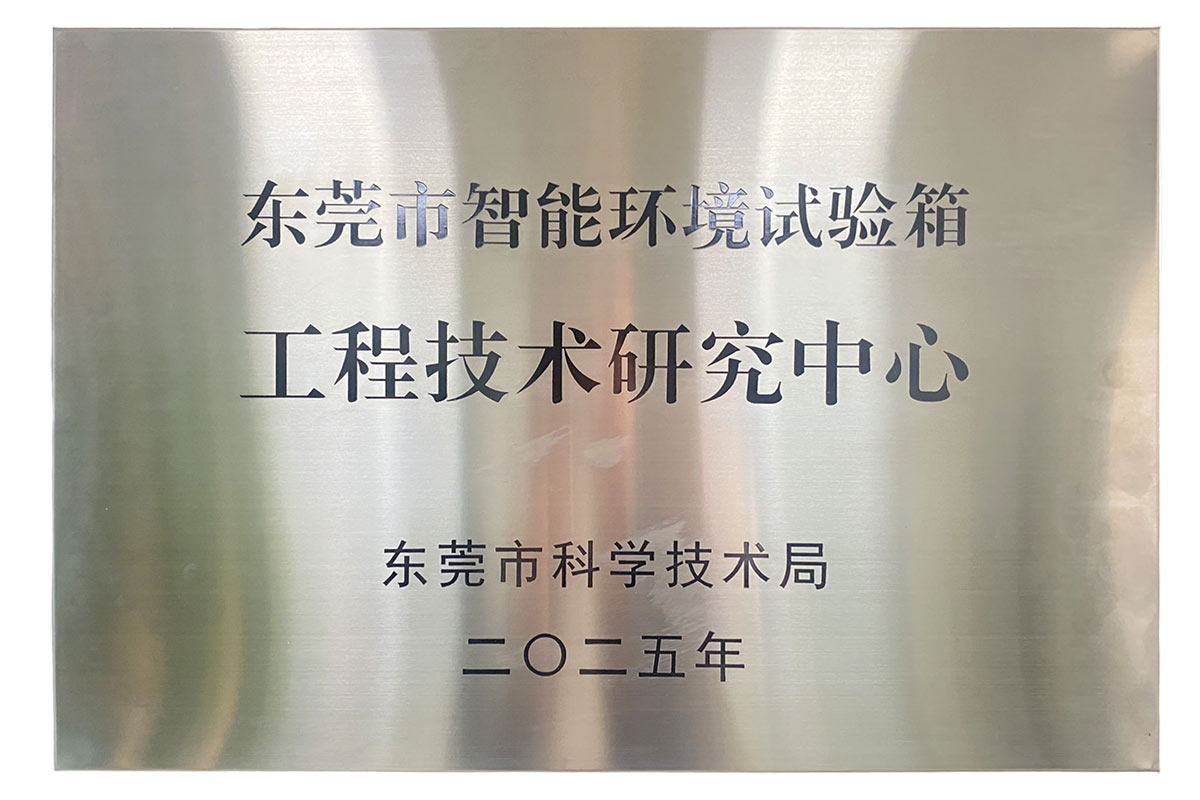
Dongguan Engineering Technology Research Center – 2025 Recognition Announcement
https://dgstb.dg.gov.cn/xxgk/zfxxgk/zfxxgkml/qt/xmgs/content/post_4469837.html
