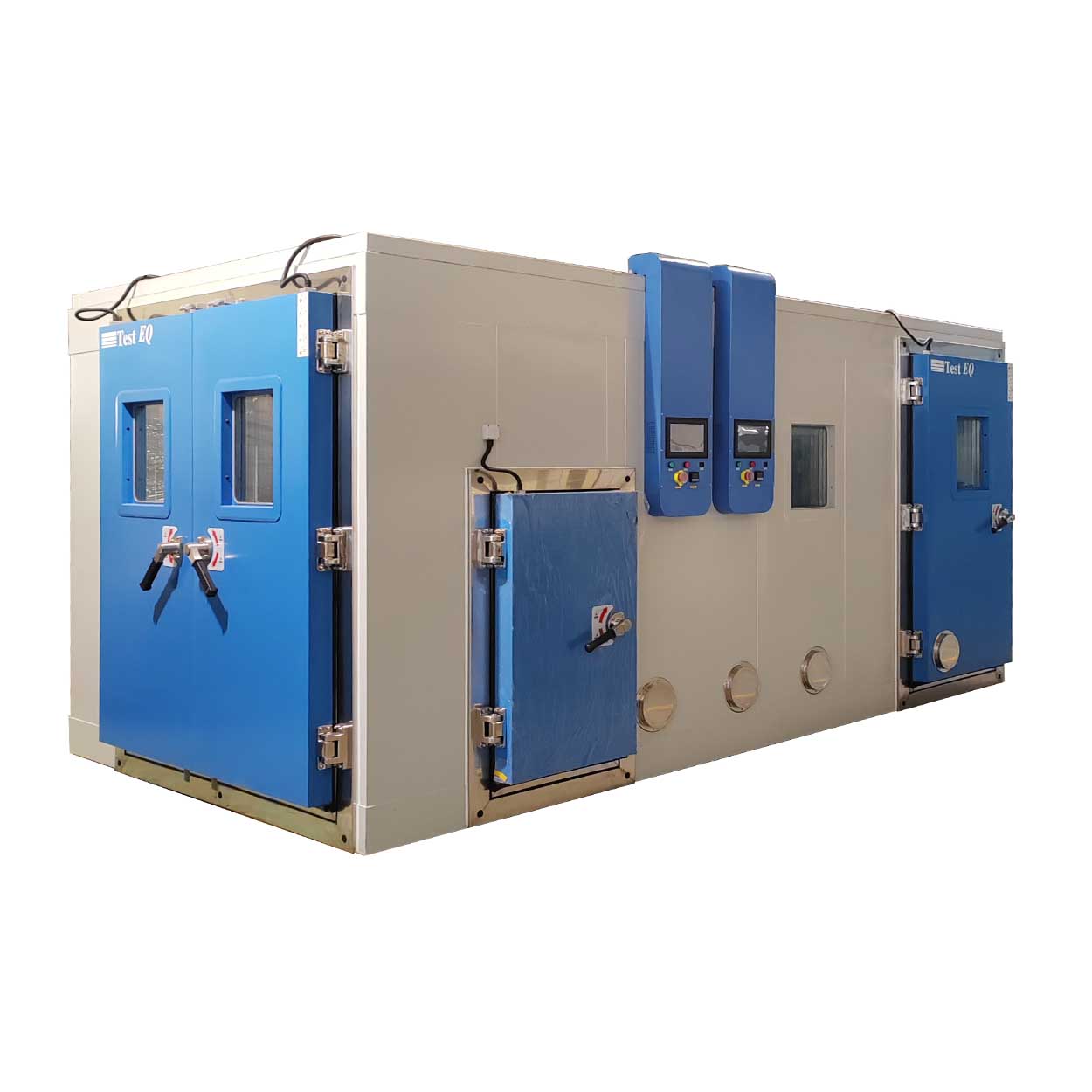
Thermal Vacuum Test Chamber for Space Qualification:
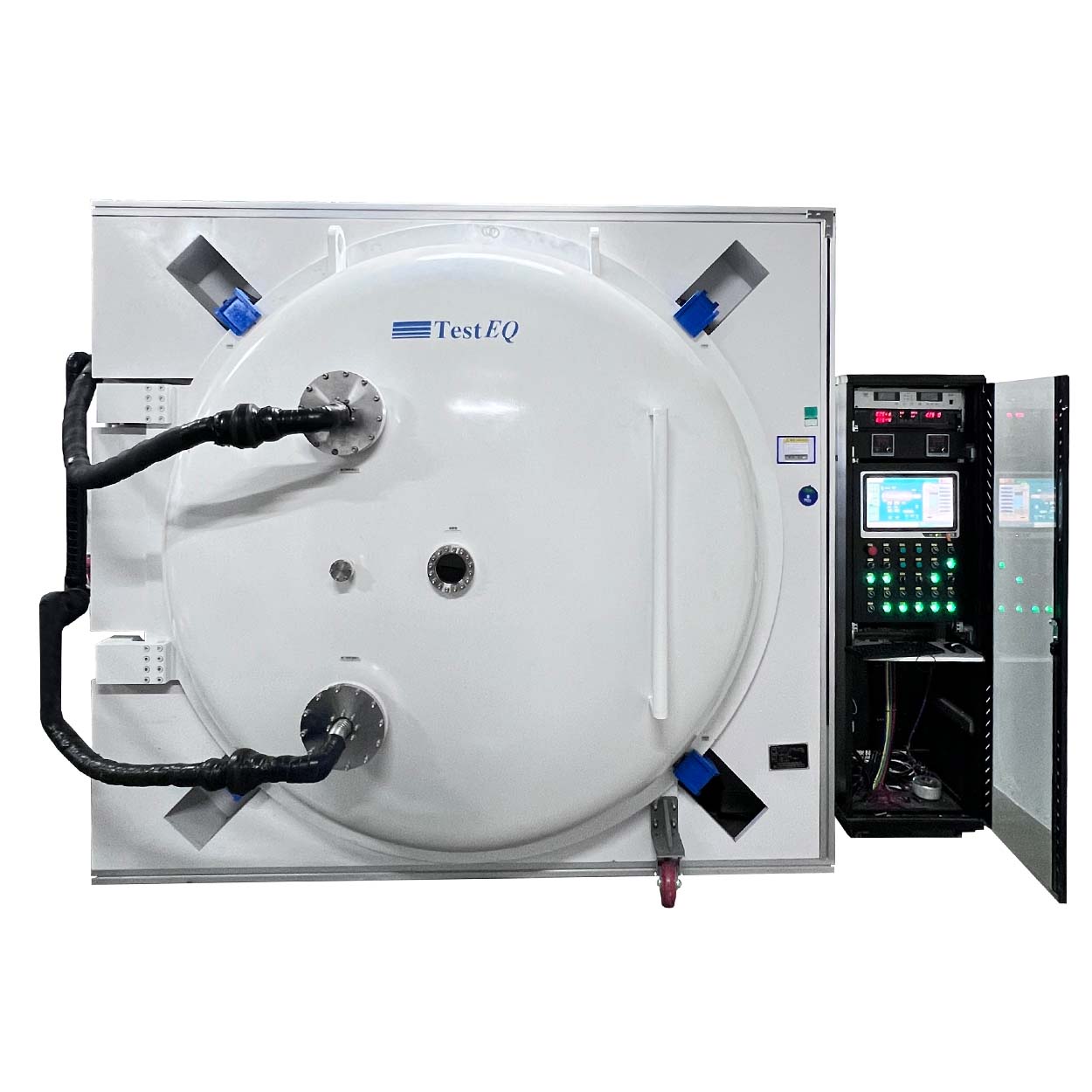
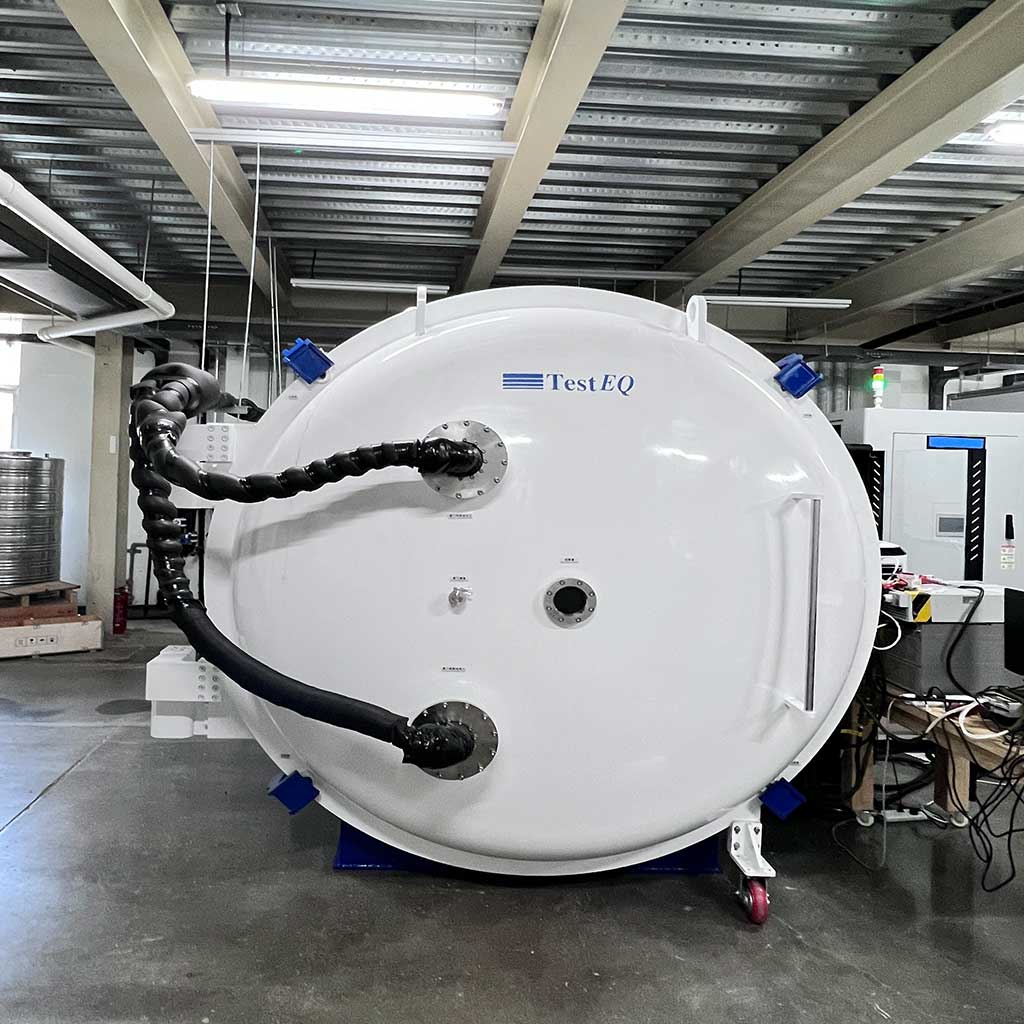
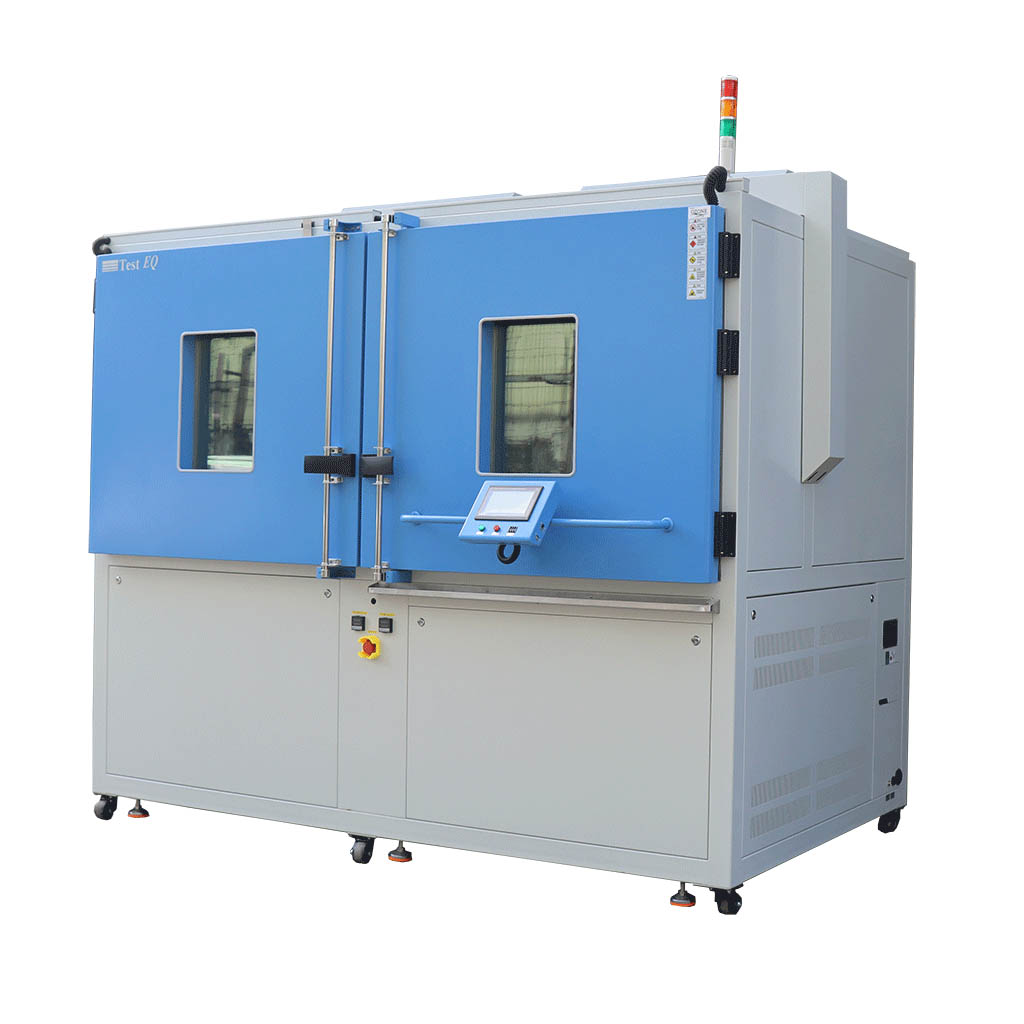
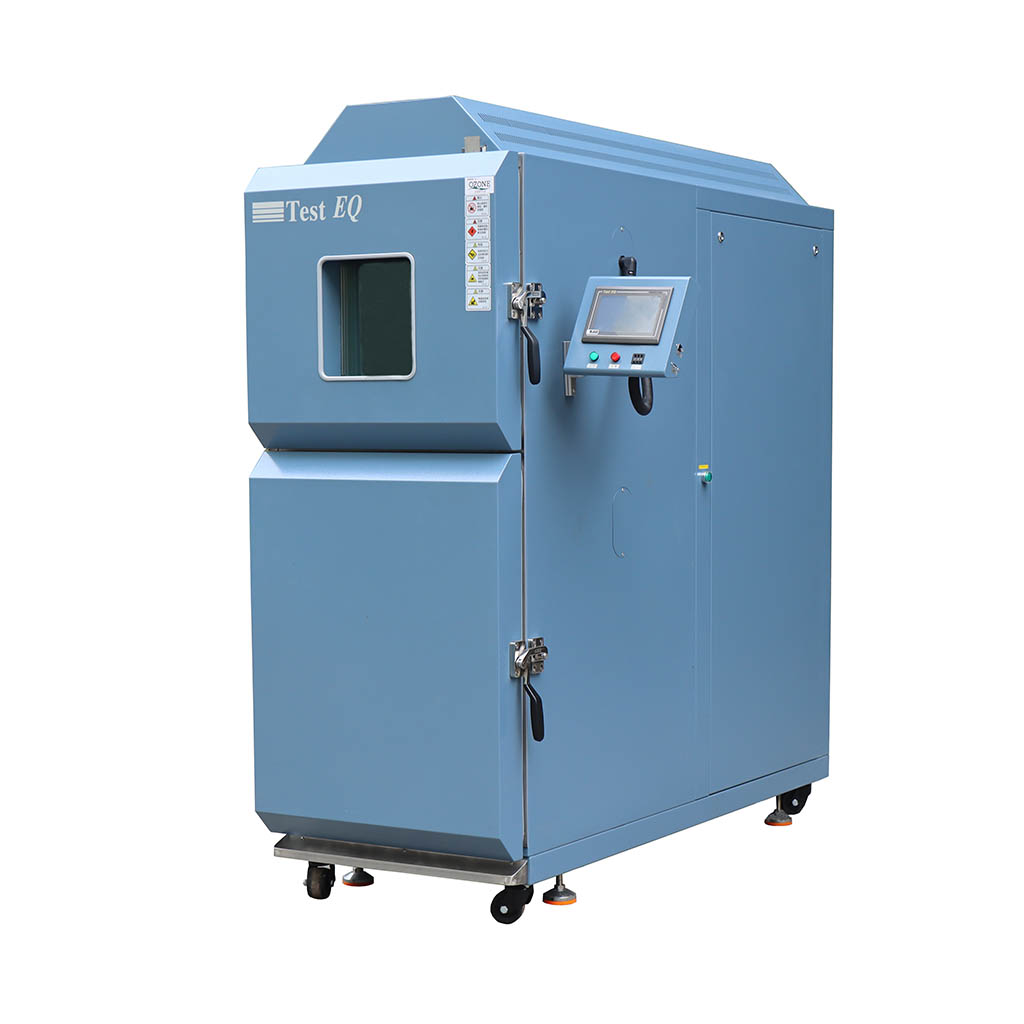
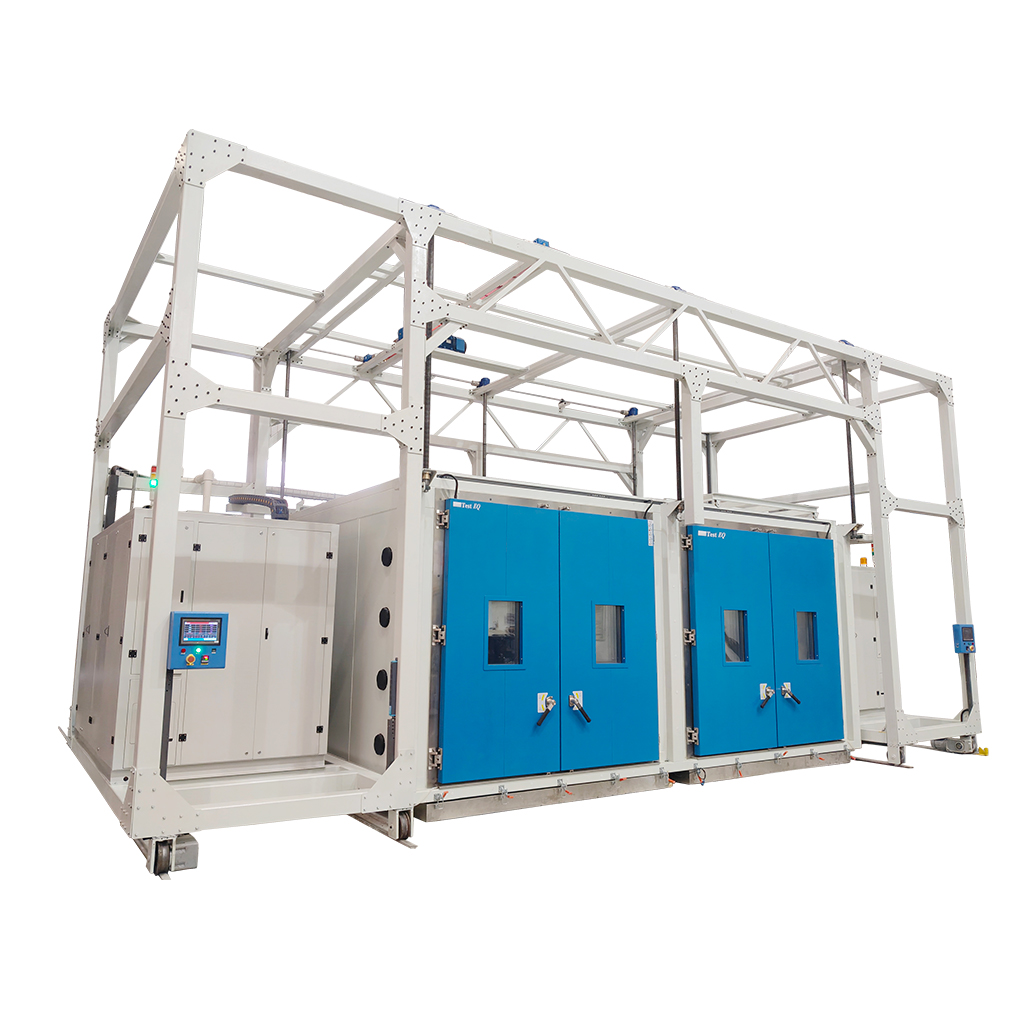
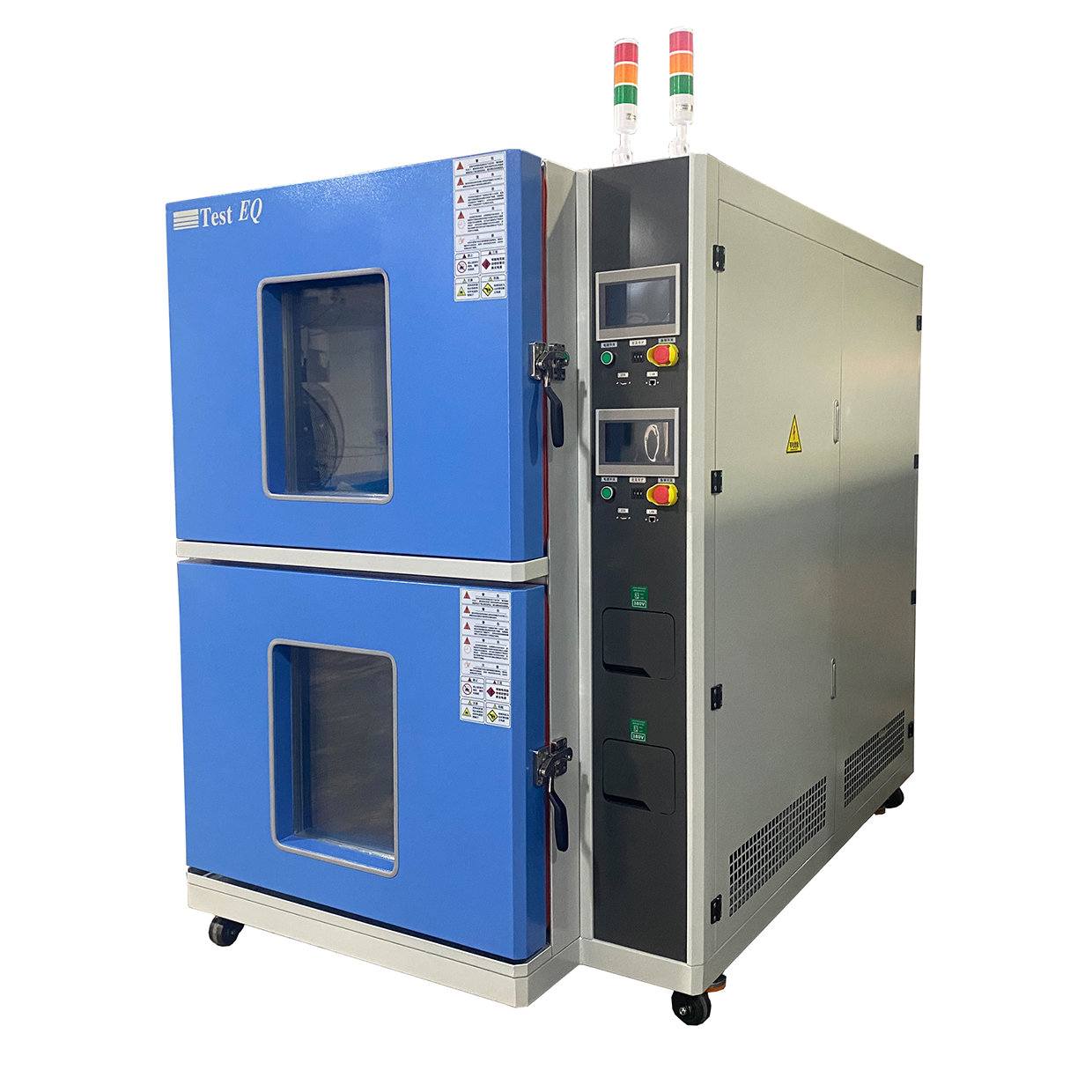
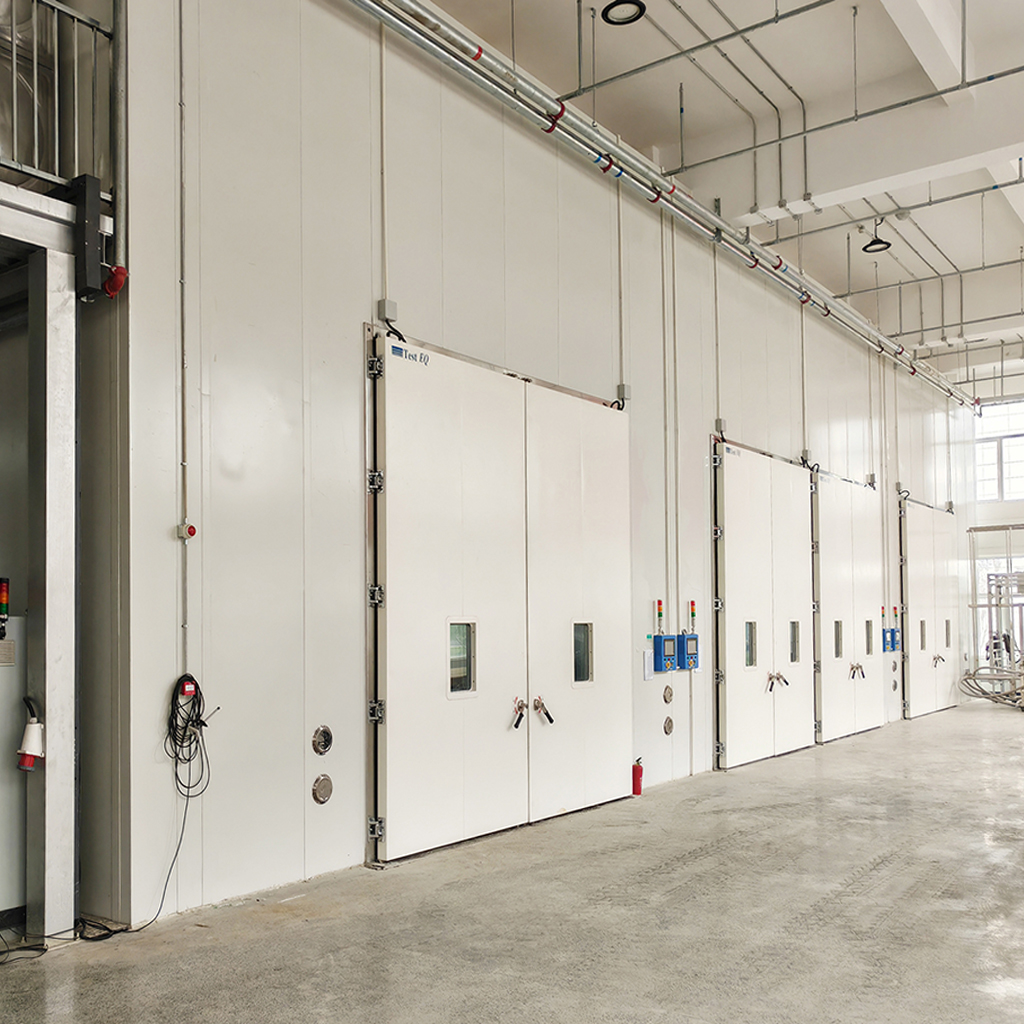
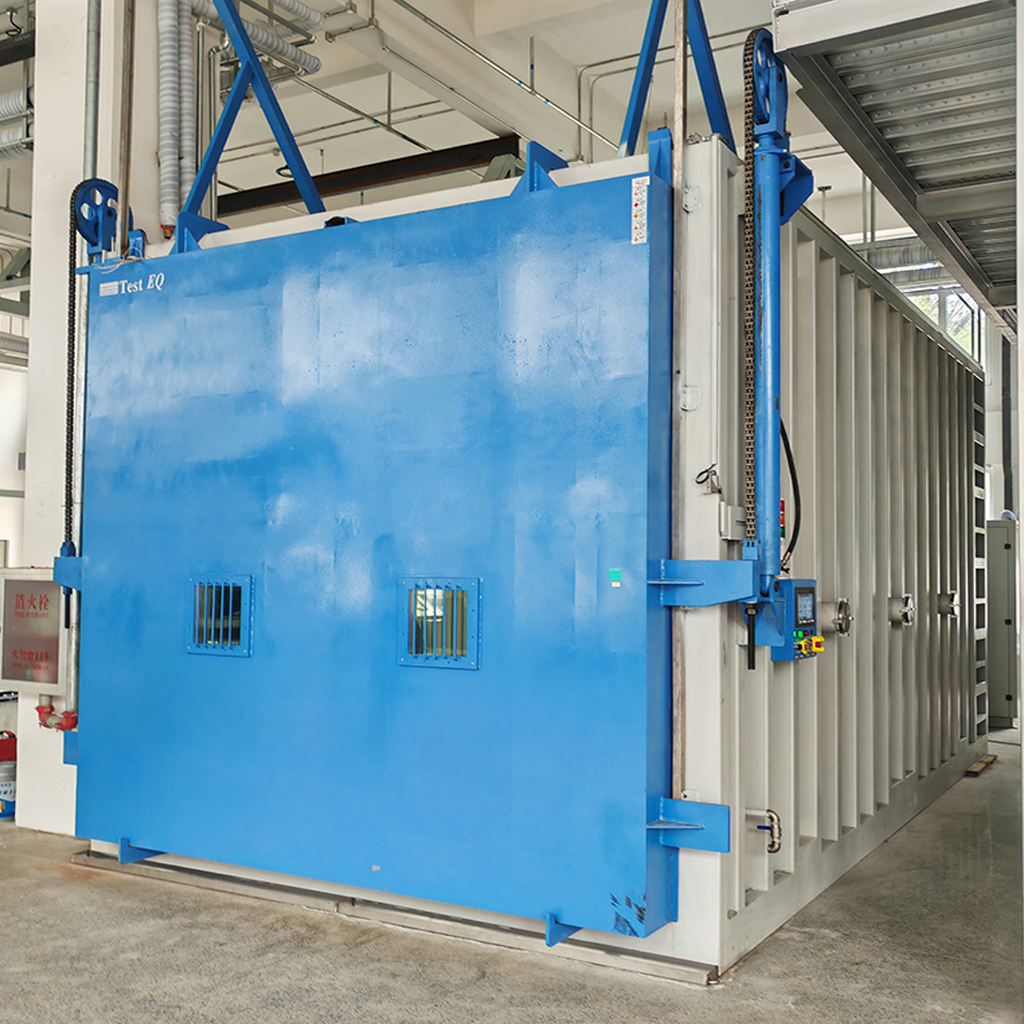
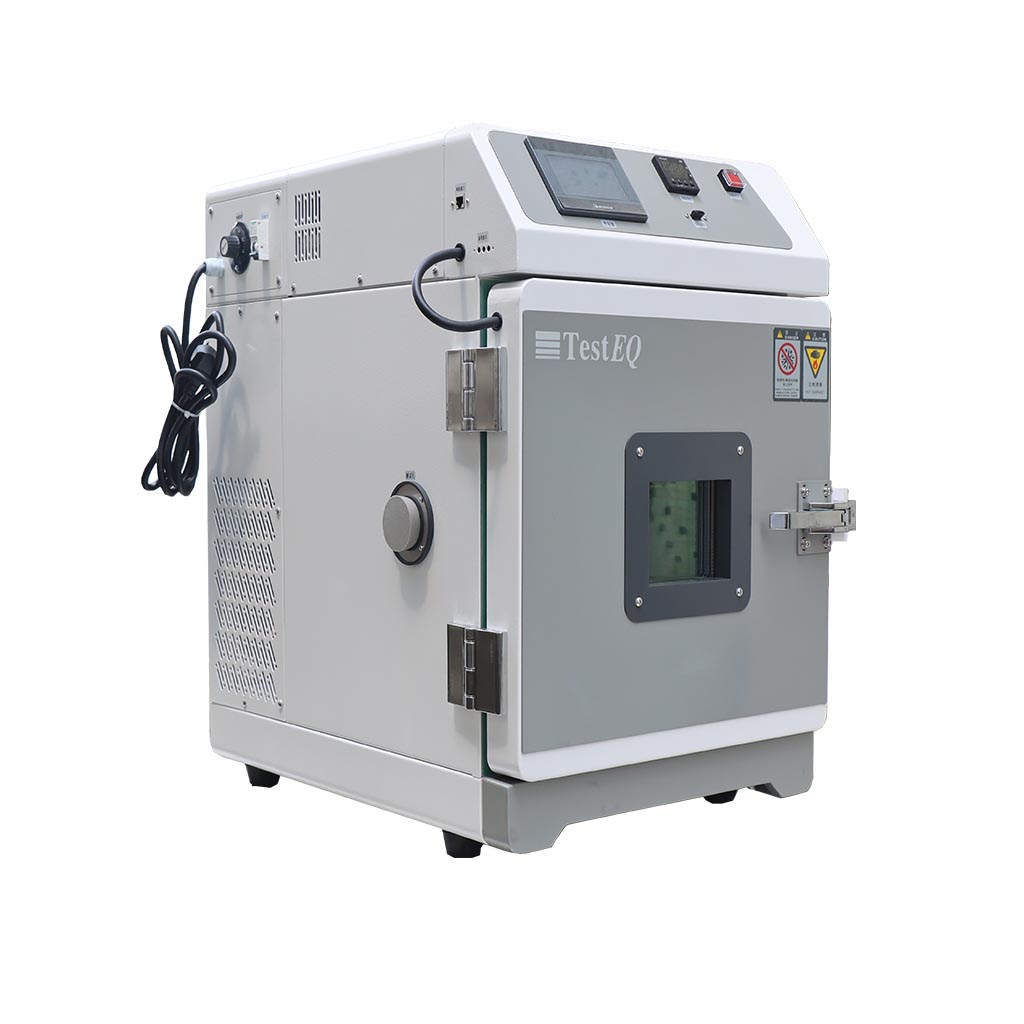
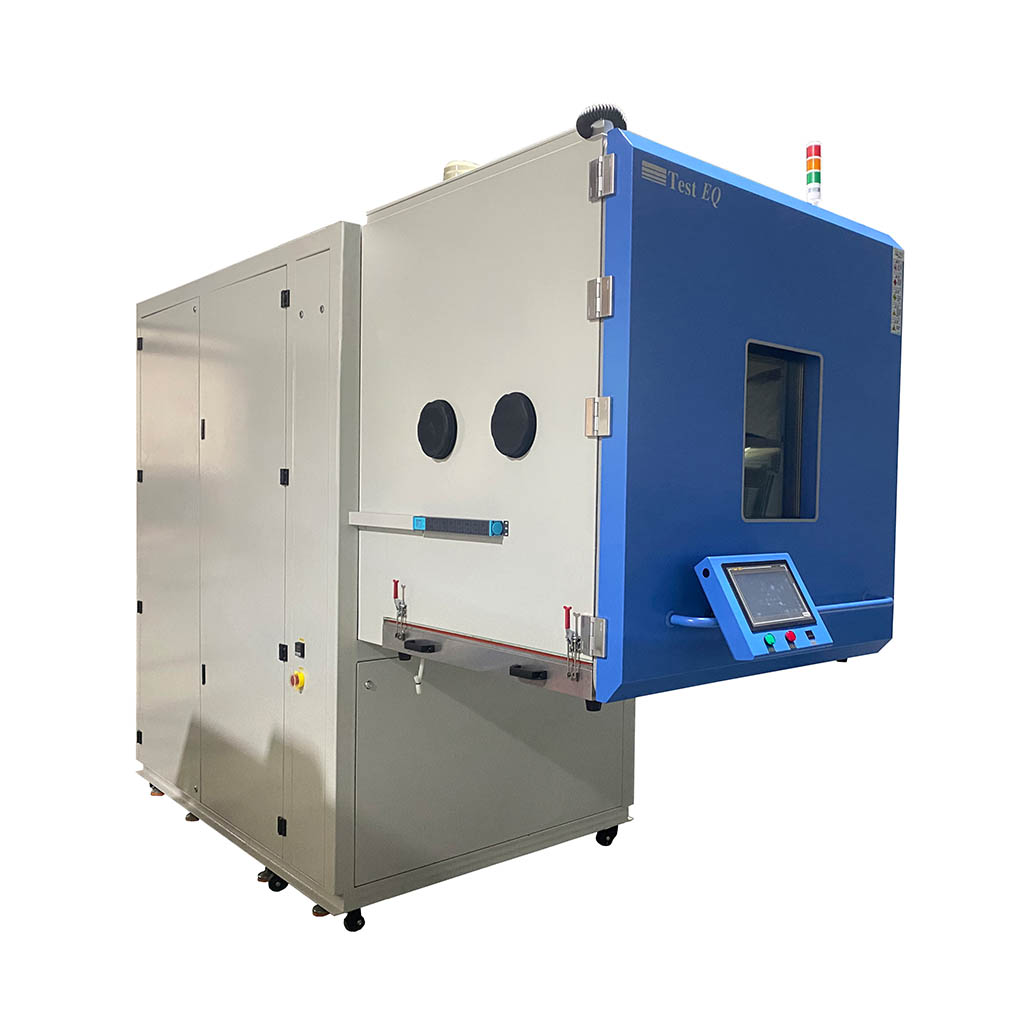
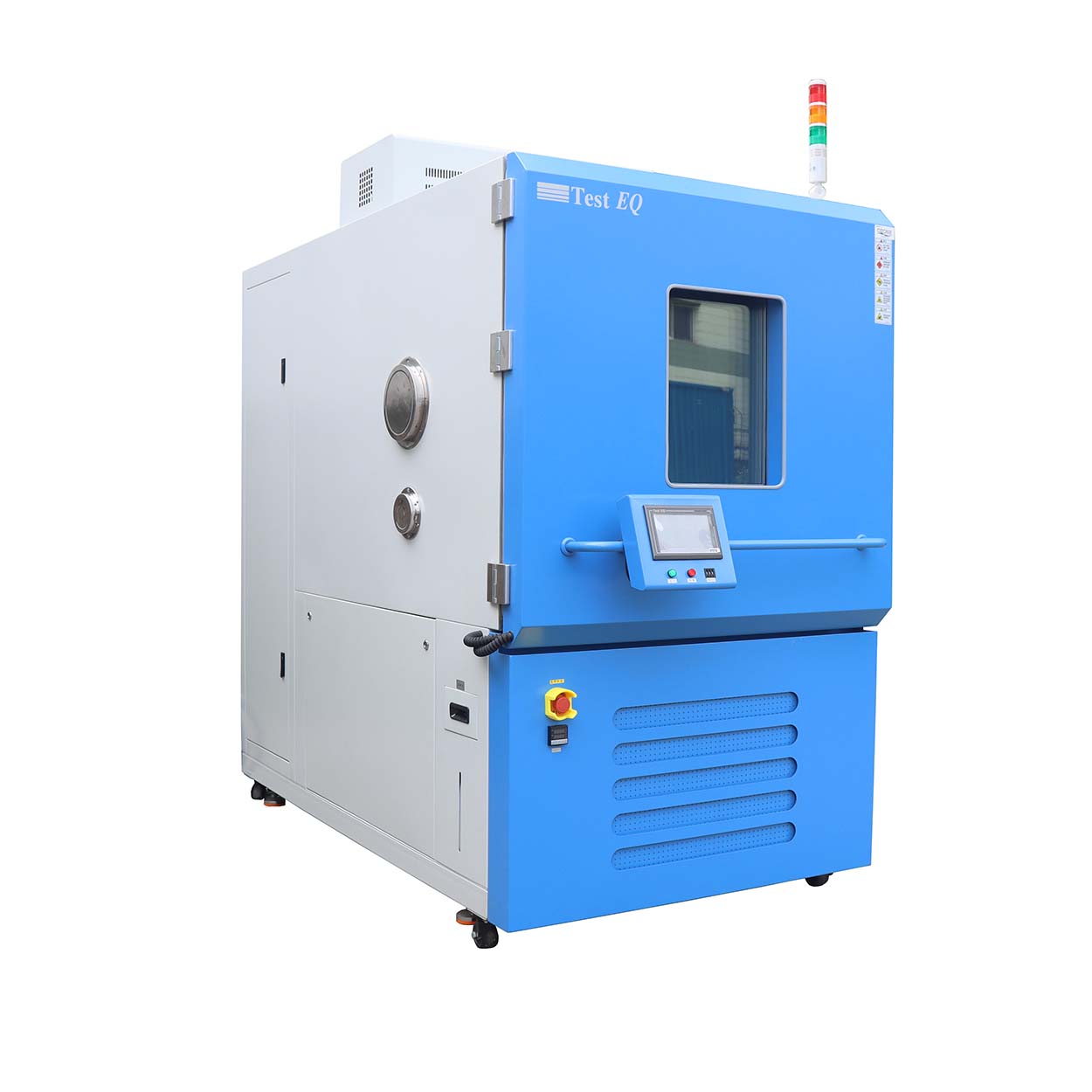
TestEQ Thermal Vacuum Test Chambers are engineered for thermal vacuum testing of satellites, spacecraft components, aerospace electronics, optical instruments, sensors, materials, and other high-reliability products. The systems help engineers reproduce critical space-like environmental conditions for product development, performance evaluation, and qualification testing.
By combining controlled temperature profiles with a high-vacuum environment, a thermal vacuum test enables engineers to evaluate thermal performance, functional stability, vacuum compatibility, outgassing behavior, structural integrity, and potential failure mechanisms before deployment or qualification. This controlled environment helps identify defects and performance risks that may not be detected under conventional atmospheric testing.
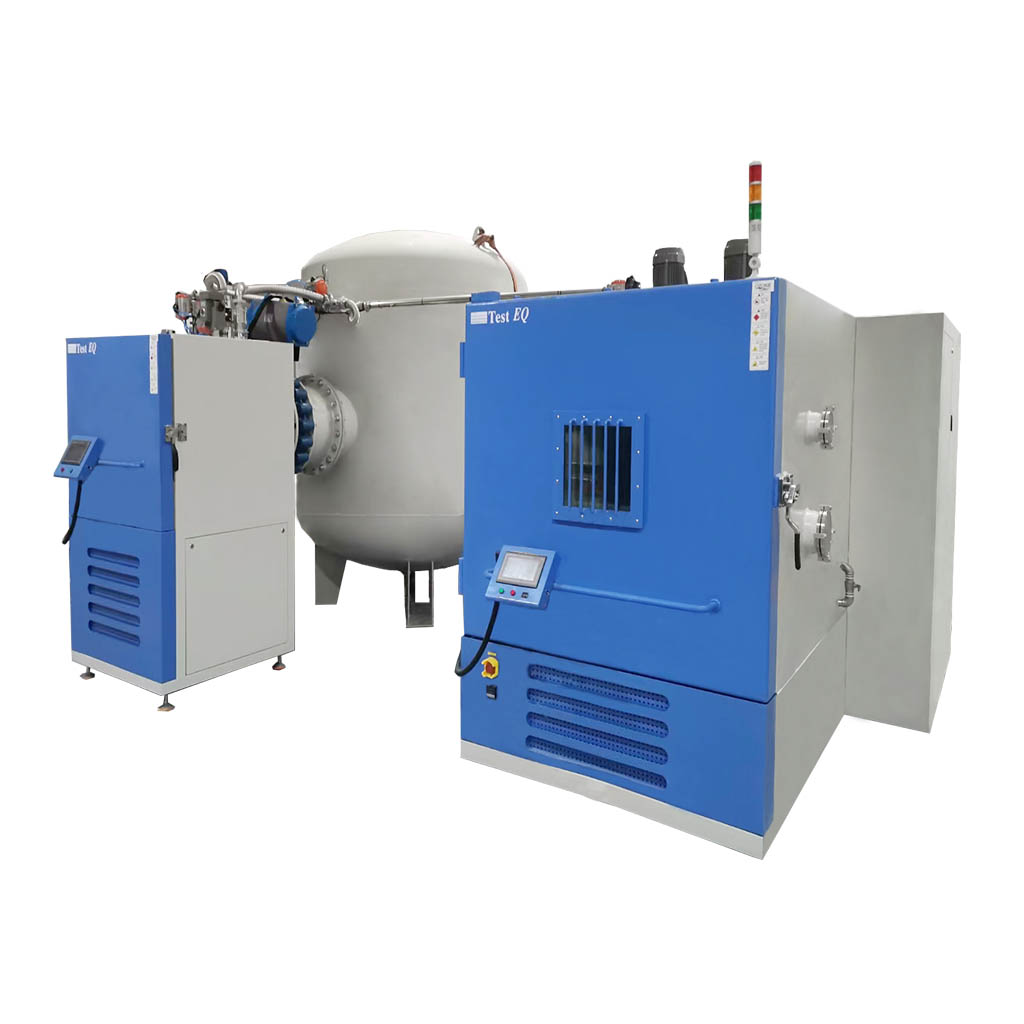
TestEQ provides configurable thermal vacuum test systems featuring high-vacuum capability, programmable thermal profiles, thermal shrouds, cold plates, customized payload fixtures, temperature monitoring, data acquisition, and optional residual gas analysis (RGA). System configurations can be engineered according to payload size, temperature requirements, vacuum conditions, thermal control methods, and test objectives.
Thermal vacuum testing is widely used in the aerospace, satellite, spacecraft, defense, optical, semiconductor, and high-reliability electronics industries, particularly during design verification, environmental qualification, and pre-deployment testing.
Under high vacuum, convection is greatly reduced, so heat transfer occurs primarily through radiation and conduction. As a result, components can experience thermal behavior and heat dissipation conditions that differ significantly from conventional atmospheric environmental testing, making thermal vacuum testing an important part of space hardware qualification.
A TVAC test can help engineers evaluate whether a product can:
Operate reliably under vacuum
Withstand hot and cold thermal conditions
Maintain required thermal performance
Tolerate repeated thermal cycling
Maintain electrical and mechanical functionality
Avoid excessive material outgassing
Maintain structural and dimensional stability
Meet customer or program-specific qualification requirements
What Is a Thermal Vacuum Test Chamber ?
A Thermal Vacuum Test Chamber is an environmental simulation system that creates a controlled vacuum and thermal environment around a test article.
The chamber typically integrates a vacuum vessel, vacuum pumping system, thermal shroud or cold plate, heating and cooling systems, instrumentation, and a control system.
Depending on the application, the system can be configured for:
Thermal vacuum qualification
Thermal vacuum acceptance testing
Thermal balance testing
Thermal cycling under vacuum
Vacuum compatibility testing
Outgassing-related evaluation
Aerospace electronics testing
Satellite subsystem testing
Spacecraft component testing
The final configuration should be selected according to the payload, required vacuum level, temperature range, thermal load, test profile, and applicable qualification requirements.
Working Principle:
The chamber combines:
Vacuum pumping system (to achieve ultra-low pressure)
Thermal shroud or cold plate (for temperature control)
Heating system (for high-temperature simulation)
Under vacuum conditions, heat transfer occurs mainly through radiation instead of convection, accurately replicating space environments where air is absent.
Thermal Vacuum Testing Process:
A typical thermal vacuum test procedure consists of several controlled stages.
Test Article Preparation
The spacecraft component, electronic assembly, optical instrument, sensor, material or other test article is installed inside the chamber.
Custom fixtures can be designed according to payload dimensions, weight, mounting points, electrical connections and thermal interfaces.
Instrumentation and Functional Verification
Temperature sensors, pressure sensors and other monitoring instruments are connected before the test.
Where required, electrical and functional interfaces can be integrated so that the test article can remain operational during thermal vacuum exposure.
Chamber Pump-Down
The vacuum pumping system reduces chamber pressure to the specified test level.
The pump-down process depends on chamber volume, target pressure, payload outgassing characteristics, vacuum system configuration and cleanliness requirements.
Vacuum Stabilization
The chamber is held at the required pressure while engineers verify vacuum stability, leak performance and instrumentation status.
Thermal Conditioning
The thermal shroud or cold plate establishes the required hot or cold environment around the test article.
Thermal Cycling
The test article is exposed to programmed hot and cold conditions under vacuum.
Temperature ramps, dwell periods, cycle counts and operating conditions are defined according to the qualification program.
Functional Monitoring
Electrical, mechanical and thermal parameters are monitored throughout the test.
Engineers can identify abnormal temperature behavior, electrical instability, sensor drift, communication errors, structural changes or other potential failure mechanisms.
Post-Test Inspection
After completion, the test article is returned to controlled conditions and inspected for functional degradation, contamination, deformation, leakage or other abnormalities.
Thermal Vacuum Test Parameters and Engineering Considerations
Thermal vacuum test conditions should be defined according to the product, mission profile and qualification program.
| Test Parameter | Engineering Consideration |
|---|
| Vacuum Level | Required operating or qualification pressure |
| Temperature Range | Hot and cold qualification limits |
| Thermal Ramp | Defined according to the test profile |
| Thermal Dwell | Sufficient time for thermal stabilization |
| Thermal Cycles | Based on qualification requirements |
| Thermal Load | Payload heat dissipation |
| Pressure Stability | Required throughout the test |
| Functional Operation | Active or passive test article operation |
| Thermal Balance | Required for selected spacecraft programs |
| Outgassing | Considered for vacuum-sensitive materials |
| RGA Monitoring | Optional for contamination-sensitive applications |
This approach allows engineers to define a TVAC test around actual mission and product requirements instead of selecting a chamber based only on nominal temperature range.
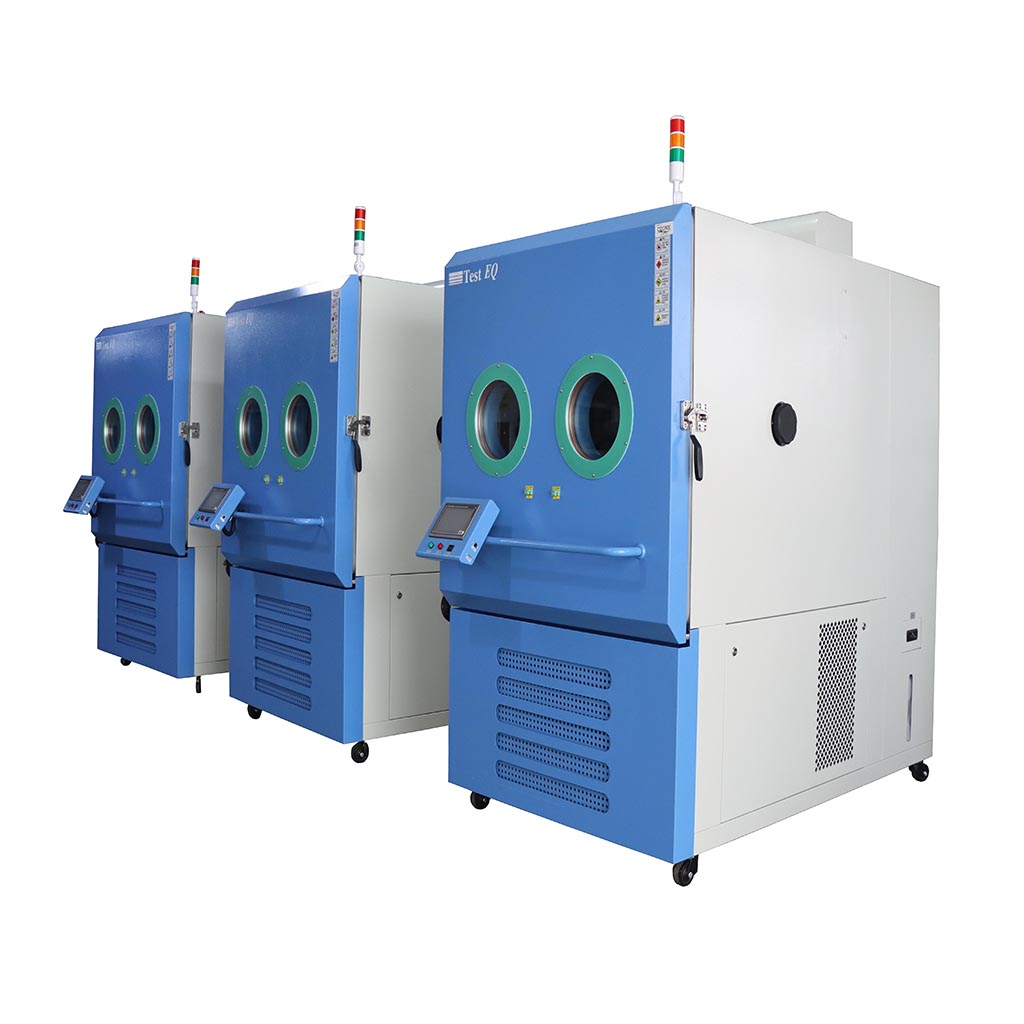
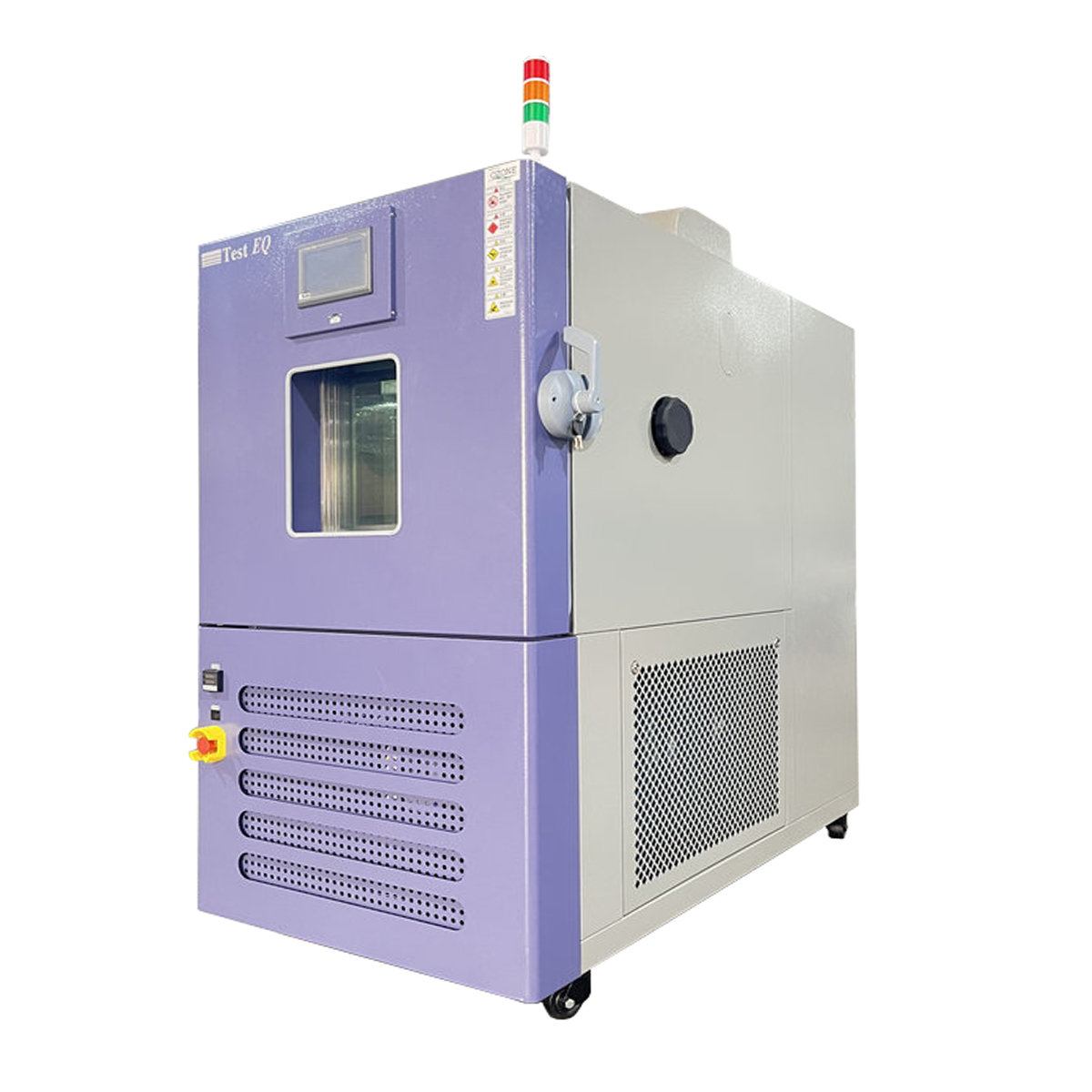
Thermal Vacuum Chamber vs Thermal Cycling Chamber:
| Feature | Thermal Vacuum | Thermal Cycling |
|---|
| Environment | Vacuum + temperature | Air environment |
| Heat Transfer | Radiation | Convection |
| Application | Space & aerospace | Electronics |
| Standard | ECSS / MIL-STD-1540 | JESD22/IEC60068 |
Thermal Vacuum Test Chamber vs. Environmental Test Chamber
| Feature | Thermal Vacuum Test Chamber | Environmental Test Chamber |
|---|
| Temperature Testing | Yes | Yes |
| High Vacuum | Yes | No |
| Space Simulation | Yes | No |
| Thermal Cycling | Yes | Yes |
| Outgassing Evaluation | Yes | Generally No |
| Thermal Balance | Yes | Limited |
| Satellite Testing | Yes | Limited |
| Spacecraft Qualification | Yes | Limited |
| Reduced Convection | Yes | No |
The defining advantage of a thermal vacuum test chamber is the ability to combine thermal exposure with controlled vacuum, allowing engineers to evaluate hardware under space-like environmental conditions.
Thermal Vacuum Testing for Satellites and Spacecraft
Thermal vacuum testing is an important part of spacecraft and satellite environmental qualification.
Typical test articles include:
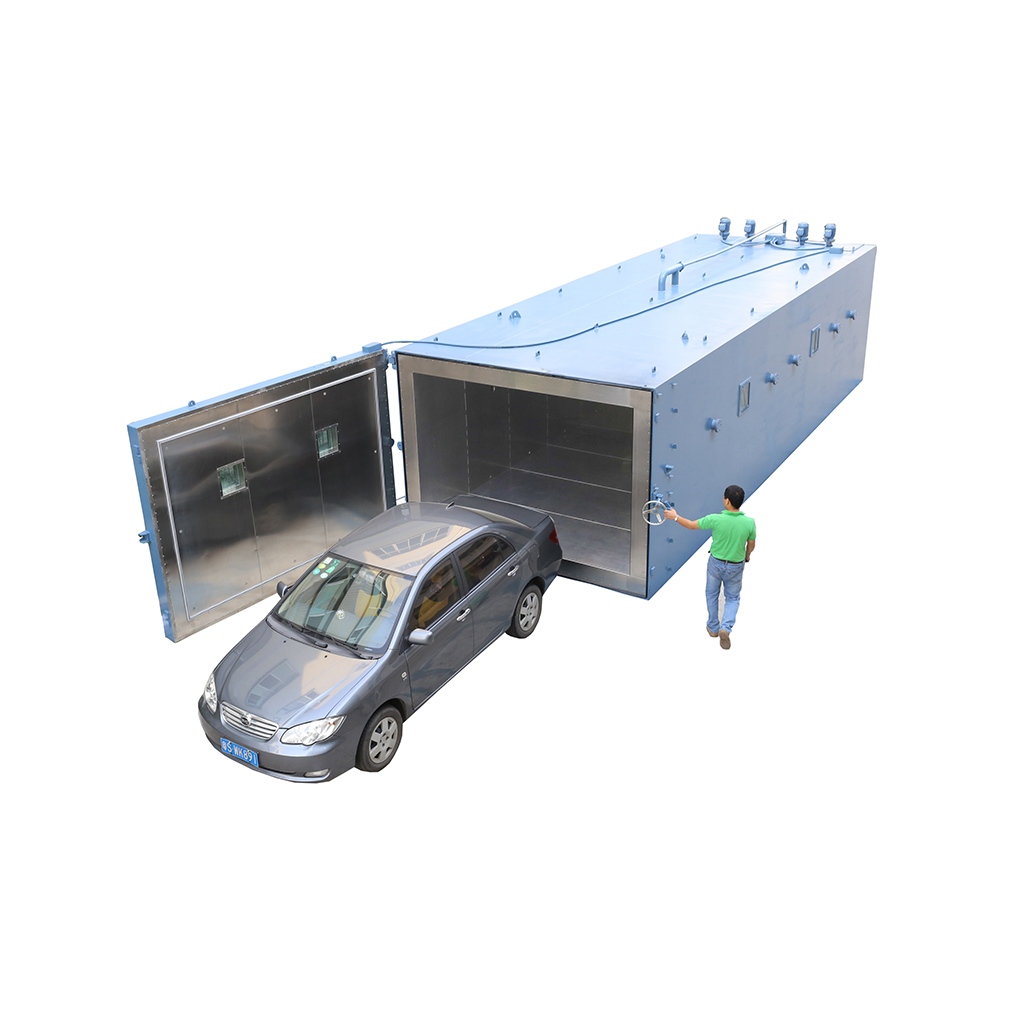
For larger payloads, TestEQ can develop customized chamber dimensions, thermal shroud configurations, fixtures, feedthroughs and instrumentation according to project requirements.
What Does Thermal Vacuum Testing Detect?
TVAC testing can expose failure mechanisms that may not be identified during normal atmospheric temperature testing.
Thermal Stress
Repeated hot and cold exposure can create differential thermal expansion between materials and assemblies.
Potential problems include:
Solder-joint stress
Connector failure
Mechanical deformation
Seal degradation
Structural movement
Vacuum-Related Performance
Reduced pressure can change the behavior of materials, components and thermal-control systems.
Testing can reveal:
Vacuum compatibility problems
Leakage
Electrical instability
Thermal-management problems
Mechanical behavior changes
Outgassing
Some materials can release volatile substances under vacuum.
Potential consequences include:
Thermal Management
Because convection is greatly reduced under vacuum, engineers can identify inadequate heat-transfer paths, local overheating and other thermal-control problems.
Common Failure Modes Identified During Thermal Vacuum Testing
Thermal Vacuum Testing (TVAC) is designed to identify potential reliability issues that may occur when products operate in space-like environments. By combining high vacuum conditions with extreme thermal cycling, engineers can evaluate thermal performance, material stability and system reliability before deployment.
Common failure modes detected during TVAC testing include:
Vacuum Outgassing and Contamination
Failure Cause
Materials such as adhesives, coatings, plastics and insulation components may release volatile substances under vacuum conditions.
Potential Impact:
Optical contamination
Reduced thermal control performance
Surface deposits on sensitive components
Degraded spacecraft reliability
TVAC Detection Method
Engineers monitor pressure stability, residual gas behavior and contamination indicators during vacuum exposure.
Thermal Expansion and Mechanical Stress
Failure Cause
Different materials have different coefficients of thermal expansion (CTE). Repeated hot and cold cycles can create mechanical stress between connected components.
Potential Impact:
Cracks in solder joints
Connector failures
Seal deformation
Structural damage
TVAC Detection Method
Thermal cycling between hot and cold conditions is used to evaluate mechanical durability and thermal design margins.
Electronic Performance Failure
Failure Cause:
Electronic components may experience abnormal behavior when exposed to extreme temperatures and vacuum environments.
Potential Impact:
Sensor malfunction
Power instability
Communication errors
Component shutdown
TVAC Detection Method
Functional monitoring is performed during thermal plateaus and temperature transitions.
Thermal Control System Failure
Failure Cause
Poor thermal design may prevent components from maintaining required operating temperatures in vacuum conditions where convection is unavailable.
Potential Impact:
Overheating
Excessive cooling
Thermal imbalance
Reduced mission lifetime
TVAC Detection Method
Temperature sensors and thermal monitoring systems verify heat transfer performance during testing.
Vacuum Leakage
Failure Cause
Leaks from chamber seals, test fixtures or hardware interfaces can prevent achieving the required vacuum level.
Potential Impact:
TVAC Detection Method
Vacuum pressure monitoring and leak detection are used to verify chamber integrity.
How Thermal Vacuum Testing Helps Prevent Failures
A properly designed TVAC test system allows engineers to identify hidden reliability risks before products enter real operating environments.
Typical applications include:
Satellites
Space electronics
Aerospace components
Optical instruments
Avionics systems
Battery systems
By reproducing vacuum and extreme temperature conditions, Thermal Vacuum Chambers help
Why Choose TestEQ for Thermal Vacuum Testing?
TestEQ provides engineered environmental simulation systems for aerospace, electronics, semiconductor and high-reliability applications.
Our TVAC systems can be configured according to:
The system can be developed as a standard configuration or customized for a specific aerospace testing program.
Optional Configurations
Liquid nitrogen cooling (LN₂ boost to -190°C)
Solar radiation simulation system
Multi-zone thermal control
Large-scale customized chambers
Remote monitoring & data acquisition system
How to choose a thermal vacuum chamber?
Before purchasing a TVAC test system, engineers and procurement teams should define:
Payload Dimensions
Determine the maximum payload size, fixture requirements and usable chamber volume.
Required Vacuum Level
Specify target pressure, ultimate vacuum, pressure stability and leak-rate requirements.
Temperature Range
Define the required hot and cold limits together with the payload's thermal load.
Thermal Cycling Profile
Specify temperature ramps, dwell periods, cycle count and test duration.
Thermal Balance Requirements
If thermal balance testing is required, thermal shroud design and multi-zone temperature control should be considered from the beginning.
Instrumentation
Define temperature sensors, pressure measurement, electrical monitoring, RGA and data acquisition requirements.
Applicable Standards
Identify ECSS, NASA, MIL-STD or customer-specific qualification requirements before final chamber configuration.
Thermal Vacuum Test Standards
Depending on the program and customer requirements, thermal vacuum testing may reference standards and specifications such as:
• ECSS environmental testing requirements
• MIL-STD-810 environmental testing methods
• MIL-STD-1540 space vehicle test requirements
• ASTM E595 outgassing testing
• NASA project-specific environmental test requirements
• Customer-specific spacecraft qualification procedures
The applicable test method should always be confirmed against the specific spacecraft, component, mission and qualification program.
FAQ:
1.What is a thermal vacuum test chamber?
A thermal vacuum test chamber is an environmental test system that combines controlled temperature conditions with high vacuum to simulate important aspects of the space environment. It is used to evaluate the thermal performance, functional stability, vacuum compatibility, and reliability of aerospace and other high-reliability products.
2.What is thermal vacuum testing used for?
Thermal vacuum testing is used to evaluate satellites, spacecraft components, aerospace electronics, optical instruments, sensors, batteries, and other products under combined vacuum and extreme temperature conditions. The test helps identify thermal, mechanical, electrical, and vacuum-related problems before qualification or deployment.
3.What vacuum level is required for thermal vacuum testing?
The required vacuum level depends on the test article, mission requirements, and applicable qualification specification. Aerospace thermal vacuum testing may require high-vacuum conditions in the approximately 10⁻⁶ to 10⁻⁷ mbar range, while some applications may specify different pressure levels. The required vacuum level should be defined according to the applicable test program.
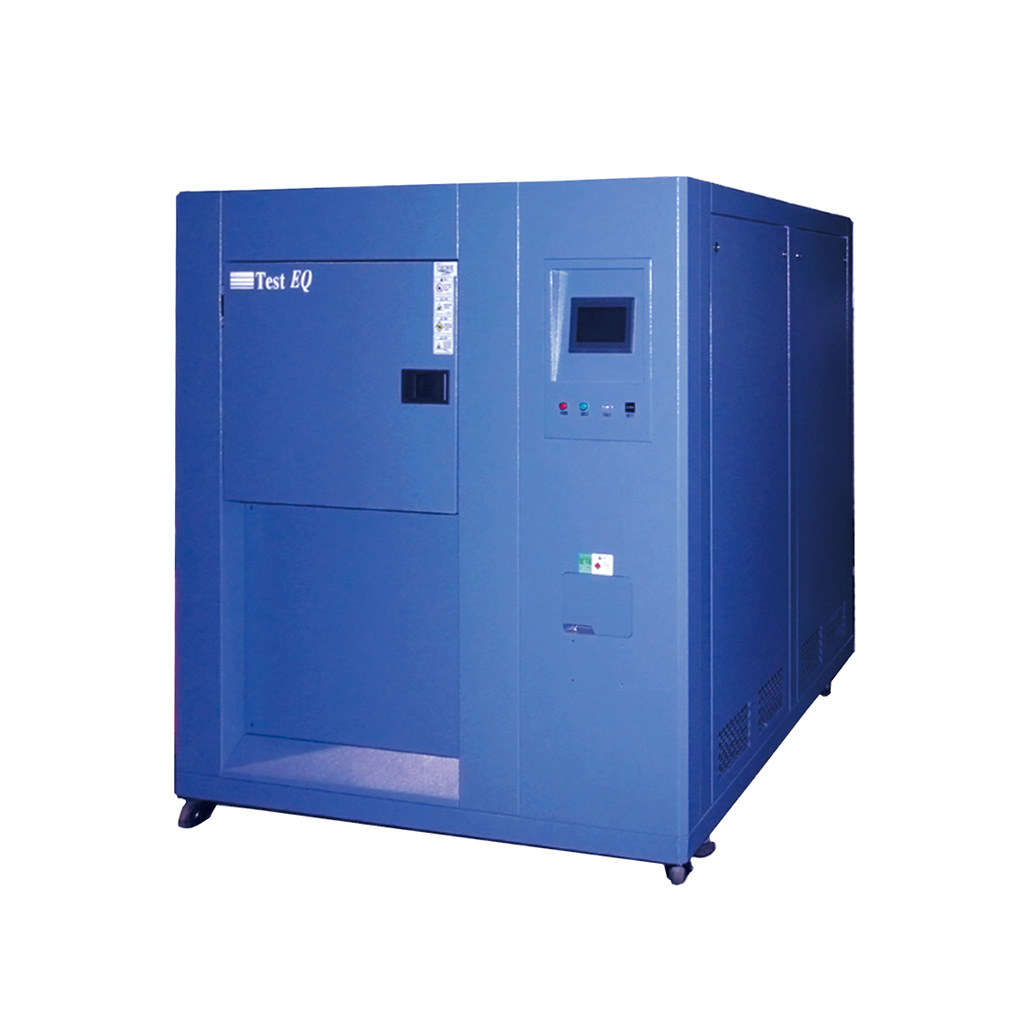
4.What is the difference between thermal vacuum testing and thermal shock testing?
Thermal vacuum testing combines controlled temperature conditions with a vacuum environment to simulate space-related thermal and pressure conditions. Thermal shock testing focuses primarily on rapid transitions between different temperature zones and does not normally involve a high-vacuum environment. The two tests are designed to identify different types of reliability risks.
5. What standards are commonly used for thermal vacuum testing?
Thermal vacuum testing may be performed according to aerospace, space, and defense requirements such as ECSS environmental testing standards, MIL-STD-1540, NASA environmental test requirements, ASTM E595 for material outgassing evaluation, and customer-specific spacecraft qualification specifications. The applicable requirements depend on the product, mission, and qualification program.
6. How does a thermal vacuum test chamber control temperature in a vacuum environment?
A thermal vacuum test chamber typically uses a thermal shroud, cold plate, heating system, or cooling system to control the thermal environment around the test article. Because convection is greatly reduced under vacuum, heat transfer occurs primarily through radiation and conduction. The thermal system is therefore designed according to the required temperature range, thermal load, and test profile.
7. What products can be tested in a thermal vacuum test chamber?
Thermal vacuum test chambers can be used for satellites, spacecraft components, aerospace electronics, avionics, optical instruments, sensors, batteries, solar-related hardware, electronic assemblies, materials, and other high-reliability products that must operate under vacuum and extreme temperature conditions.
8.What is a typical thermal vacuum test procedure?
A typical thermal vacuum test procedure includes test article installation, instrumentation, chamber pump-down, vacuum stabilization, thermal conditioning, hot and cold exposure, thermal cycling, functional monitoring, and post-test inspection. The exact sequence, temperature profile, vacuum level, dwell time, and number of cycles depend on the applicable qualification requirements.
9.What failures can thermal vacuum testing identify?
Thermal vacuum testing can help identify thermal-management problems, electrical instability, material outgassing, mechanical deformation, connector or solder-joint stress, vacuum compatibility issues, and other performance problems that may not appear during conventional atmospheric environmental testing.
8. How do I choose the right thermal vacuum test chamber?
Selecting a thermal vacuum test chamber requires evaluating the required vacuum level, temperature range, chamber volume, payload dimensions and weight, thermal load, thermal cycling profile, instrumentation, functional monitoring requirements, and applicable aerospace or customer-specific test standards. The chamber should be configured around the actual test program rather than temperature range alone.
Internal Linking Module
Recommended Equipment
Designed for custom chamber configurations, vacuum systems, thermal shrouds, cooling systems, payload fixtures and aerospace test integration.
Ideal for evaluating thermal fatigue, solder joint reliability, electronic component durability and accelerated life testing under fast temperature transitions.
Related Standards
European Space Agency thermal vacuum testing standard used for spacecraft environmental qualification, thermal balance verification and mission reliability validation.
Master NASA, ECSS, and MILT VAC thermal vacuum test standards. Explore requirements, test methods, and aerospace-grade chamber solutions from TestEQ. Boost reliability and compliance.
Learn how MIL-STD-810 environmental testing evaluates product durability through temperature, vibration, shock, humidity, and altitude testing to improve reliability in military, aerospace, and industrial applications.
Technical Resources
A complete guide covering TVAC chamber principles, vacuum generation systems, thermal shrouds, temperature control methods and common aerospace testing applications.
Learn how TVAC and thermal vacuum chambers simulate space environments for satellites, spacecraft and aerospace electronics. Discover testing principles, industry applications, key specifications and practical selection criteria for mission-critical reliability validation.