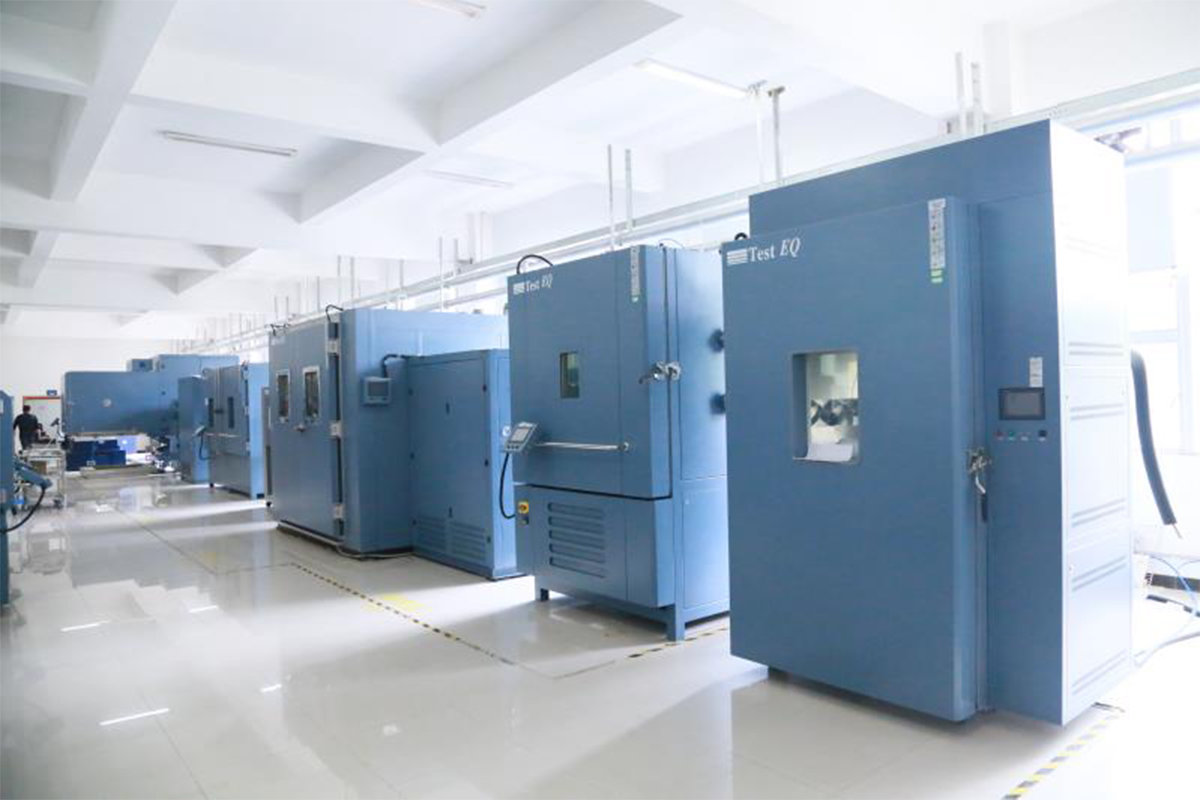
What is ASTM B117?
ASTM B117, formally titled Standard Practice for Operating Salt Spray (Fog) Apparatus, describes the apparatus, procedure, and conditions used to create and maintain a salt spray test environment.
The method is commonly used to compare the corrosion resistance of metallic materials and coated specimens exposed to controlled salt fog. Typical applications include evaluating protective coatings, plated components, fasteners, painted surfaces, and other corrosion-sensitive products.
ASTM B117 primarily establishes a controlled exposure environment. It does not, by itself, prescribe a universal exposure duration for every product or define one acceptance criterion for all materials. The required test duration and the interpretation of results must be established by the relevant product specification, customer requirement, or qualification program.
Important: ASTM B117 salt spray exposure is a comparative corrosion test method, not a direct conversion tool for predicting years of outdoor service life.
What Does ASTM B117 Evaluate?
ASTM B117 is commonly specified in quality assurance and product qualification programs where corrosion resistance is an important performance requirement.
Typical applications include:
Metal coatings and plating: Comparing the corrosion performance of plated or surface-treated components.
Paints and protective coatings: Evaluating coating degradation and visible corrosion after specified exposure.
Fasteners and hardware: Assessing corrosion-related performance of screws, bolts, brackets, and related components.
Automotive components: Testing selected coated parts, connectors, brackets, and other components when required by an OEM or supplier specification.
Electronic enclosures and connectors: Evaluating corrosion resistance where metallic surfaces or protective finishes are exposed to corrosive conditions.
Industrial metal products: Supporting incoming inspection, coating process verification, supplier qualification, and quality control.
The appropriate specimen preparation, exposure period, and acceptance criteria depend on the product and the applicable technical specification. Passing an ASTM B117 exposure does not automatically establish suitability for every service environment.
Why ASTM B117 Testing Matters
Corrosion failures can cause:
Product reliability reduction
Electrical failure risks
Structural degradation
Warranty cost increases
Premature coating failure
Connector and terminal oxidation
Customer quality complaints
ASTM B117 salt spray testing helps manufacturers validate product durability before market release, improving reliability confidence and reducing field failure risks.
Industries using ASTM B117 include:
Automotive
Aerospace
Electronics
Military & defense
Marine equipment
Industrial coatings
Fasteners & hardware
Renewable energy systems
Medical devices
ASTM B117 Test Requirements and Operating Controls
ASTM B117 testing relies on controlling the test environment and verifying that the apparatus operates within the applicable requirements.
The following table summarizes important items that laboratories should review. It is an engineering overview, not a substitute for the current ASTM standard.
| Control item | What engineers should verify |
|---|---|
| Salt solution | Preparation, concentration, water quality, and solution handling against the applicable procedure |
| Chamber temperature | Required temperature condition, measurement location, stability, and monitoring |
| Solution pH | Applicable pH limits and the specified measurement procedure |
| Fog collection | Collection rate, collection area, collection period, and uniformity at the prescribed locations |
| Compressed air and atomization | Air supply condition, pressure regulation, humidification or saturation arrangements, and consistent fog generation |
| Specimen placement | Orientation, spacing, support materials, and prevention of unintended contact or dripping |
| Exposure duration | Test duration defined by the applicable product specification or customer requirement |
| Records and maintenance | Operating logs, calibration status, solution checks, maintenance records, and deviations |
Temperature and Salt Solution
Neutral salt spray testing commonly uses a 5% sodium chloride solution and a nominal chamber temperature of 35°C. However, laboratories should verify the required values and tolerances against the applicable edition of ASTM B117 and their governing test specification before configuring a test.
The correct preparation and handling of the salt solution are essential. Contamination, incorrect preparation, unsuitable water, or uncontrolled solution conditions can compromise comparability between tests.
Fog Collection and Distribution
Fog collection is a critical operating check. Laboratories should follow the standard's specified collection arrangement and verify the required collection rate at the prescribed locations.
A chamber should not be accepted solely because it produces visible salt fog. Engineers should evaluate whether the apparatus can maintain the required operating conditions and support repeatable test execution.
Specimen Positioning and Exposure
Specimens must be positioned according to the applicable procedure. Orientation, spacing, support materials, specimen dimensions, and the presence of adjacent samples can affect exposure conditions.
Exposure duration must be established by the governing specification or qualification plan. A longer test does not automatically make the result more representative of real-world corrosion.
How Is an ASTM B117 Salt Spray Test Performed?
A typical laboratory workflow includes the following steps. The exact procedure must follow the current standard and the laboratory's approved test instructions.
Define the test requirement. Confirm the applicable standard edition, product specification, specimen type, exposure duration, and acceptance criteria.
Prepare the specimens. Document specimen identification, surface condition, coating details, preparation, and any required pre-test inspection.
Prepare the apparatus. Check chamber cleanliness, solution preparation, temperature control, atomization, air supply, collection equipment, and relevant monitoring instruments.
Load and position the specimens. Use the specified orientation and spacing to avoid unintended interference with salt fog exposure.
Run and monitor the test. Maintain the required operating conditions, record relevant observations, and document interruptions or deviations.
Complete the exposure and evaluate specimens. Follow the applicable procedure for specimen removal, post-exposure handling, inspection, and reporting.
Compare results against the acceptance criteria. Evaluate the observed condition using the criteria specified for the product or test program.
The laboratory should retain sufficient records to demonstrate that the test was performed under the intended conditions. Where the results are used for supplier qualification or customer acceptance, traceability and consistent evaluation criteria are particularly important.
What Does ASTM B117 Not Tell You?
A common mistake is to treat salt spray exposure hours as a direct equivalent of outdoor service years.
ASTM B117 provides a controlled corrosive environment for comparative evaluation. Corrosion performance in natural environments is influenced by multiple interacting factors, including wet-dry cycles, temperature changes, ultraviolet exposure, atmospheric pollutants, coating damage, and the characteristics of the substrate.
Consequently, salt spray results alone generally cannot establish an exact service-life prediction. Correlation with field performance should be supported by relevant long-term exposure data or other appropriate validation.
ASTM B117 also does not automatically determine whether a specimen passes or fails every product qualification program. Acceptance limits and inspection criteria should come from the applicable industry, OEM, customer, or material specification.
ASTM B117 vs ISO 9227 Salt Spray Testing
ASTM B117 and ISO 9227 are both widely referenced in salt spray corrosion testing, but they should not be treated as automatically interchangeable.
| Comparison point | ASTM B117 | ISO 9227 |
|---|---|---|
| Main purpose | Defines practice for operating salt spray apparatus | Specifies methods for neutral salt spray, acetic acid salt spray, and copper-accelerated acetic acid salt spray |
| Common use | Material and coating corrosion evaluation | Material and coating corrosion evaluation |
| Test selection | Determined by the applicable product or customer specification | Determined by the required ISO 9227 test method and product specification |
| Acceptance criteria | Usually defined by the governing product or qualification specification | Usually defined by the governing product or qualification specification |
| Interchangeability | Must not be assumed | Must not be assumed |
When customers require both standards, engineers should confirm the applicable editions, operating conditions, specimen requirements, and documentation for each test. A chamber configuration suitable for one method should not be assumed to satisfy every other corrosion test without verification.
For broader equipment and method selection, see the Salt Spray Testing Guide & Chamber.
Common Products Tested Under ASTM B117
Manufacturers use ASTM B117 chambers for testing:
Zinc plated parts
Aluminum alloys
Powder coatings
Painted surfaces
Electronic connectors
Automotive components
Fasteners and bolts
Stainless steel products
PCB protective coatings
Military equipment housings
Outdoor electrical cabinets
For global OEM suppliers, ASTM B117 compliance is often mandatory during supplier qualification and reliability validation processes.
TestEQ ASTM B117 Salt Spray Chambers
TestEQ designs and manufactures advanced salt spray corrosion chambers optimized for ASTM B117 compliance and industrial laboratory reliability.
Key Features
Stable salt fog atomization system
Uniform chamber distribution design
Corrosion-resistant chamber structure
Intelligent PID temperature control
Long-term continuous operation capability
Automatic water replenishment system
Programmable touchscreen controller
Low maintenance industrial design
Custom chamber sizes available
OEM and laboratory customization support
Our systems are widely used by automotive suppliers, electronics manufacturers, coating laboratories, universities, and third-party testing organizations.
Why Engineers Choose TestEQ
High Repeatability
Engineers require stable and repeatable corrosion testing data. TestEQ chambers are designed for consistent fog collection performance and uniform environmental conditions.
Reliable Long-Term Operation
Many ASTM B117 tests run continuously for hundreds or thousands of hours. TestEQ systems are engineered for industrial-grade durability and stable operation.
Flexible Customization
We support customized chamber volumes, automation integration, remote monitoring, special fixtures, and multi-standard corrosion testing configurations.
Global Technical Support
TestEQ supports international customers with technical consultation, installation guidance, operation training, and after-sales engineering support.
ASTM B117 vs Other Corrosion Standards
Many industries combine ASTM B117 with additional cyclic corrosion standards for more realistic environmental simulation.
Common related standards include:
IEC 60068 corrosion testing
ISO 9227 salt spray testing
JIS Z 2371 corrosion testing
SAE cyclic corrosion testing
MIL-STD environmental corrosion standards
Selecting the correct corrosion standard depends on industry requirements, coating systems, and product application environments.
How to Select an ASTM B117 Salt Spray Test Chamber
For laboratory managers, quality engineers, and procurement teams, equipment selection should begin with the actual test requirements rather than a generic chamber size or feature list.
1. Confirm the Required Test Method
Specify ASTM B117 and any additional customer or industry requirements. If the laboratory also conducts ISO 9227, cyclic corrosion, or other corrosion tests, identify those requirements separately and confirm which operating modes the equipment supports.
2. Select the Chamber Capacity
Review specimen dimensions, fixture arrangements, batch quantity, spacing, and loading frequency. The usable test area matters more than the external dimensions of the chamber.
3. Evaluate Temperature Control and Monitoring
Confirm the required operating range, control stability, sensor arrangement, monitoring method, and calibration provisions. Verify performance against the acceptance requirements in the intended test program.
4. Review Fog Generation and Collection
Ask how fog distribution is evaluated and how collection measurements are performed. Request relevant technical documentation or test evidence where available. Uniformity should be demonstrated against the applicable procedure rather than inferred from the presence of an atomizer alone.
5. Check Materials and Long-Term Maintainability
Salt solutions and corrosive exposure place demands on the chamber structure, seals, tubing, fixtures, and other wetted components. Review material compatibility, cleaning access, drainage, consumables, and maintenance requirements.
6. Confirm Documentation and Support
For production laboratories and third-party testing facilities, consider operating instructions, maintenance documentation, calibration support, training, spare parts, and after-sales service.
Before requesting a quotation, provide the intended standard and edition, specimen dimensions, required capacity, exposure duration, additional test methods, site utilities, and any automation or data-recording requirements.
TestEQ Salt Spray and Corrosion Testing Equipment
TestEQ supplies environmental testing equipment for industrial and laboratory applications, including salt spray and corrosion testing systems.
When evaluating an ASTM B117 chamber, buyers should confirm the proposed configuration against the requirements of their test program. Relevant points include usable chamber capacity, temperature control, fog generation and collection arrangements, corrosion-resistant construction, operating records, and maintenance access.
For applications that involve multiple corrosion methods, the project specification should identify each required test procedure. Additional operating modes or customized chamber configurations should be confirmed in the approved technical proposal rather than assumed from a general product description.
Explore TestEQ's environmental testing equipment range to identify the appropriate product category and discuss your application with the engineering team.
Applications in Automotive & Electronics Industries
ASTM B117 testing is heavily used in EV systems, automotive connectors, battery housings, sensors, and electronic assemblies where corrosion resistance directly impacts product reliability and safety.
With increasing environmental exposure requirements in electric vehicles and outdoor electronics, accelerated corrosion testing has become essential during product development and supplier qualification.
Frequently Asked Questions About ASTM B117
1. What Is ASTM B117 Salt Spray Testing?
ASTM B117 is a standard practice for operating salt spray (fog) apparatus to evaluate the relative corrosion resistance of metallic materials and coated specimens under controlled conditions. It is commonly used in coating qualification, metal finishing, automotive component testing, and industrial quality control. The applicable product specification determines the required exposure duration and acceptance criteria.
2. What Temperature Is Required for ASTM B117 Testing?
Neutral salt spray testing under ASTM B117 commonly uses a nominal chamber temperature of 35°C (95°F). Laboratories must verify the applicable temperature requirements, tolerances, and monitoring procedures against the current standard edition and the governing test specification. Proper temperature control helps maintain consistent test conditions.
3. What Salt Solution Is Used in ASTM B117?
ASTM B117 neutral salt spray testing commonly uses a sodium chloride solution prepared at a concentration of 5% by mass. Water quality, solution preparation, pH, and handling must be controlled according to the applicable standard. Laboratories should not rely on concentration alone to establish compliance; the full solution preparation and operating requirements must also be followed.
4. How Many Hours Does an ASTM B117 Salt Spray Test Take?
ASTM B117 does not establish one universal exposure duration for every product. The required test period may vary according to the material, coating system, customer specification, and qualification program. Commonly specified durations can range from tens to hundreds of hours, but the correct duration must come from the applicable requirement rather than a general rule.
5. What Are the Acceptance Criteria for ASTM B117?
ASTM B117 describes how to operate salt spray test apparatus; it does not provide a universal pass/fail limit for every coating or component. Acceptance criteria may include visible corrosion, blistering, coating degradation, or other specified conditions, depending on the governing product or customer specification. The inspection method, evaluation area, and allowable defects should be defined before testing begins.
6. Can ASTM B117 Salt Spray Results Predict Outdoor Service Life?
No. ASTM B117 results should not be directly converted into a specific number of outdoor service years. Natural corrosion depends on factors such as temperature fluctuations, humidity, wet-dry cycles, pollutants, ultraviolet exposure, material properties, and coating damage. Salt spray testing is useful for controlled comparison and qualification, but service-life predictions require appropriate supporting evidence and, where relevant, correlation with field exposure.
7. What Is the Difference Between ASTM B117 and ISO 9227?
ASTM B117 defines a practice for operating salt spray (fog) apparatus, while ISO 9227 covers neutral salt spray (NSS), acetic acid salt spray (AASS), and copper-accelerated acetic acid salt spray (CASS) methods. Their requirements and method structures are not automatically interchangeable. Laboratories should confirm the specified standard, edition, test method, and acceptance criteria before using results for customer qualification or compliance.
8. How Do I Choose an ASTM B117 Salt Spray Test Chamber?
Select a chamber based on the required test method, usable specimen capacity, temperature control, fog generation and collection arrangements, corrosion-resistant construction, monitoring provisions, and maintenance requirements. Also consider specimen dimensions, batch quantity, exposure duration, and laboratory workflow. Before purchasing, request technical documentation showing how the proposed configuration supports your specific test requirements.
9. Can One Salt Spray Test Chamber Support ASTM B117 and Other Corrosion Tests?
Some salt spray chambers can support more than one test method, but capability depends on the equipment design, materials, control functions, and required operating conditions. ASTM B117, ISO 9227, and cyclic corrosion methods should not be assumed to use identical procedures. Buyers should identify all required standards in the RFQ and obtain written confirmation of the supported methods and any additional configuration requirements.
10. What Information Should I Provide When Requesting an ASTM B117 Chamber Quotation?
To help a manufacturer recommend a suitable configuration, provide the required standard and edition, specimen dimensions, quantity per batch, exposure duration, required operating conditions, and any additional corrosion test methods. Include laboratory space constraints, available utilities, monitoring or data-recording needs, and documentation requirements where applicable. These details help the supplier evaluate chamber capacity, configuration, and project-specific requirements before preparing a quotation.
Recommended Internal Links
Recommended Products
Designed for controlled salt fog exposure to support corrosion resistance evaluation of coated metals, plated components, fasteners, and industrial products.
Designed for applications requiring programmed combinations of corrosive exposure and other environmental phases. Confirm supported methods and test profiles against the applicable specification.
Related Standards
IEC 60068-2-11 Salt Mist Test Standard
Learn about IEC 60068-2-11 salt mist testing methods, requirements, and applications for evaluating corrosion resistance of materials and components in harsh environments.
ISO 9227 Salt Spray Corrosion Testing
Explore ISO 9227 corrosion testing procedures, test conditions, and differences from ASTM B117 for reliable salt spray evaluation of coatings and metal components.
Related Resources
Discover how salt spray testing helps identify corrosion risks, improve material selection, and enhance long-term reliability for automotive, electronics, and industrial products.
A practical guide to selecting the right corrosion test chamber based on testing standards, chamber performance, sample requirements, and industry applications.
Call to Action
Request an ASTM B117 Salt Spray Test Chamber Quotation
Need a salt spray test chamber for ASTM B117 corrosion testing?
TestEQ helps manufacturers, quality laboratories, and engineering teams evaluate salt spray testing equipment based on their specimen dimensions, testing requirements, laboratory capacity, and applicable standards.
Before selecting a chamber, our team can discuss your application requirements, including temperature control, salt fog generation and collection, chamber capacity, corrosion-resistant construction, and maintenance considerations.
"Request a Technical Consultation or Quotation"
Contact TestEQ to discuss your ASTM B117 testing requirements and identify a suitable salt spray test chamber configuration.
To help us evaluate your application, please provide:
Applicable standard: ASTM B117 edition and any additional customer or industry requirements
Specimen details: Material, dimensions, quantity, and fixture requirements
Testing requirements: Exposure duration, operating conditions, and acceptance criteria
Chamber capacity: Required usable test space and expected sample loading
Additional requirements: Other corrosion test methods, monitoring, documentation, or customization needs
Contact TestEQ today to discuss your salt spray testing application and request a solution tailored to your laboratory or production requirements.