What Is IEC 62619?
IEC 62619 is an international safety standard titled Secondary cells and batteries containing alkaline or other non-acid electrolytes — Safety requirements for secondary lithium cells and batteries, for use in industrial applications.
The 2022 second edition addresses the safe operation of industrial lithium cells and battery systems. It considers both intended use and reasonably foreseeable misuse, with the objective of reducing hazards such as fire, explosion and electrolyte leakage.
Unlike a general battery performance standard, IEC 62619 focuses on safety. It includes requirements relating to individual cells, battery systems, protection functions and relevant misuse tests.
The standard is particularly important when manufacturers need to demonstrate that battery products are designed and evaluated for their intended industrial application.
Key distinction: IEC 62619 is not a universal certification for every lithium battery. The applicable standard depends on the product, end use, system configuration and any specialized standard that takes precedence.
What Products Does IEC 62619 Apply To?
IEC 62619 applies to secondary lithium cells and batteries intended for industrial applications, including stationary and certain motive applications.
Typical application areas include:
• Energy storage systems: Lithium battery systems used for stationary electrical energy storage.
• Telecommunications: Backup battery systems supporting communication infrastructure.
• UPS systems: Rechargeable batteries used for uninterruptible power supplies.
• Industrial vehicles: Batteries for forklifts, golf carts and automated guided vehicles.
• Railway applications: Applicable industrial lithium battery systems used in railway vehicles.
• Marine applications: Relevant lithium battery systems for marine equipment.
The exact scope must be confirmed against the standard and the end-use application. Lithium batteries used for road-vehicle propulsion may instead fall under specialized requirements such as IEC 62660.
For equipment procurement, the first step is to identify whether the test specimen is a cell, cell block, battery module or complete battery system. This affects the required chamber dimensions, electrical interfaces, instrumentation and test safety arrangements.
IEC 62619 Battery Safety Test Requirements
IEC 62619 includes several categories of safety evaluation. The applicable tests depend on the test specimen, battery design and relevant clauses of the standard.
1. Electrical and Abuse Testing
Relevant tests include external short-circuit, overcharge and forced-discharge testing, as well as other specified misuse evaluations. These procedures assess battery behavior under defined abnormal electrical conditions.
Such tests require suitable electrical test equipment and protective arrangements. An environmental chamber alone cannot perform the complete electrical abuse test program.
2. Mechanical Testing
Specified evaluations can include impact and drop tests, depending on the specimen and applicable requirements.
These tests assess whether mechanical stress creates hazards such as fire or explosion. They generally require dedicated mechanical test apparatus rather than a temperature chamber.
3. Thermal Abuse Testing
Thermal abuse testing evaluates cell or cell-block behavior under a defined elevated-temperature condition.
The test setup must control and measure the specified conditions and safely accommodate the specimen. Temperature instrumentation, independent monitoring and emergency response provisions should be defined during test planning.
4. Internal Short-Circuit and Propagation Considerations
IEC 62619:2022 includes provisions concerning internal short-circuit evaluation and thermal propagation at the battery-system level.
These evaluations can require specialized test fixtures, instrumentation and protective facilities. The precise procedure must follow the applicable standard clauses and the laboratory's approved test plan.
5. Battery Management System Safety
Battery-system safety also depends on protection functions. IEC 62619 addresses BMS-related requirements, including control of overcharge voltage, overcharge current and overheating.
Engineers should distinguish between environmental control performed by a chamber and electrical protection performed by the battery system, test equipment and external safety controls.
IEC 62619 Environmental Test Conditions
Environmental conditions can influence battery behavior, heat generation and the repeatability of safety evaluations. The required conditions should be taken from the applicable test clause rather than assumed to be identical for every battery.
When an environmental chamber is part of the test setup, engineers should assess the following parameters:
• Temperature range: The minimum and maximum required test temperatures.
• Temperature stability: The ability to maintain the specified setpoint during the test.
• Temperature uniformity: Variation across the defined working space.
• Ramp rate: The required heating or cooling rate, if specified.
• Specimen size: The dimensions and weight of the cell, module or battery system.
• Heat load: Heat released by the DUT and associated powered equipment.
• Instrumentation: Thermocouples, voltage/current monitoring and external data acquisition.
• Cable access: Feedthroughs for measurement, communication and power connections.
• Safety integration: Interlocks, alarms, shutdown interfaces and suitable exhaust provisions where required.
A chamber's empty-space temperature rating does not automatically demonstrate that it can maintain the same conditions around an operating battery system. Actual performance should be assessed under the intended test load.
IEC 62619 Thermal Abuse and Temperature Testing
Temperature-related testing is important because lithium battery behavior can change significantly as cell temperature rises. Elevated temperatures can affect internal reactions, protection mechanisms and the potential for hazardous failure.
IEC 62619 includes a defined thermal abuse test for cells or cell blocks. This should not be confused with general environmental temperature cycling or long-term battery life testing.
For laboratory planning, identify whether the project requires:
• Controlled temperature exposure
• Environmental temperature conditioning
• Temperature cycling for product development
• Thermal abuse testing using the applicable standard procedure
• Independent temperature measurement
• Continuous monitoring of the specimen
• Integration with external battery test equipment
These activities are not interchangeable. A temperature-cycling chamber may support environmental conditioning, but a complete thermal abuse or propagation test can require specialized fixtures, monitoring and safety infrastructure.
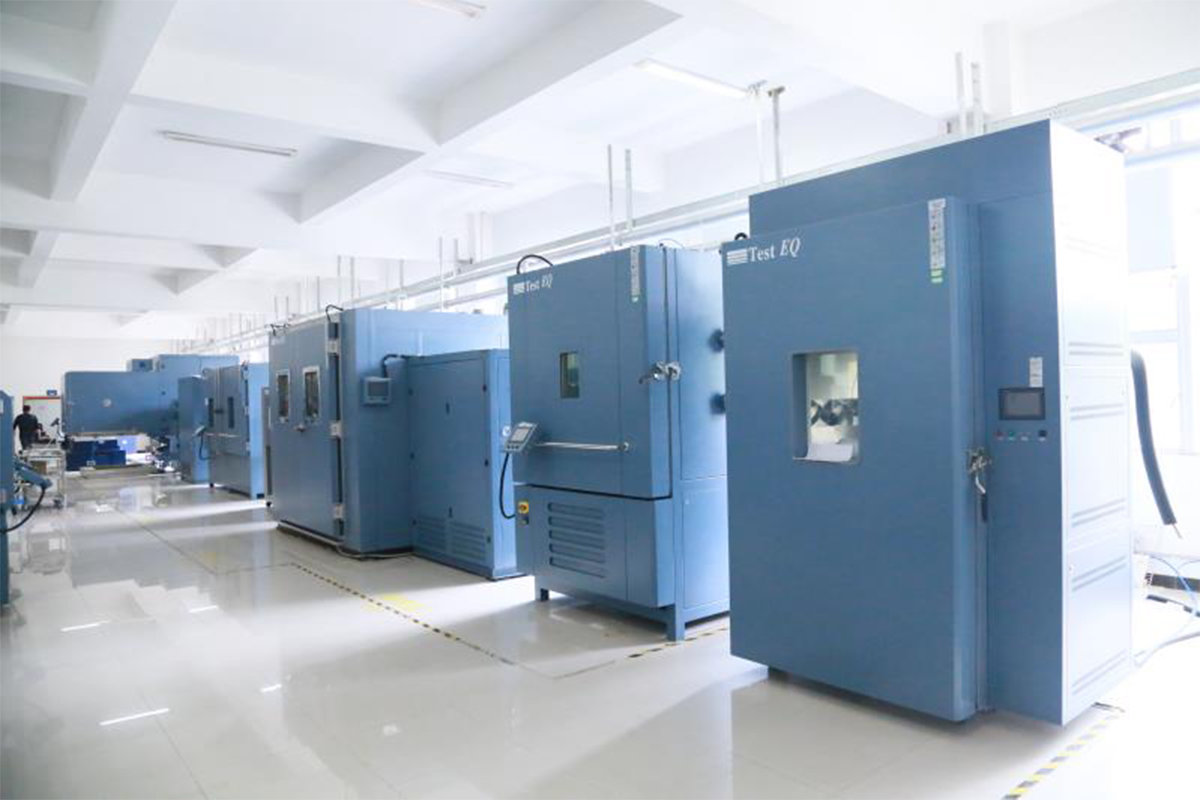
TestEQ can configure environmental chambers around specified temperature conditions and specimen requirements. The complete test arrangement must be assessed separately to determine whether additional abuse-test equipment is needed.
Battery Test Chamber Requirements for IEC 62619
A battery environmental test chamber should be selected according to the intended test procedure, rather than the standard number alone.
Temperature Control
Confirm the required temperature range, stability, uniformity and ramp rate. Request performance specifications for the actual working space and anticipated DUT load.
Working Volume and Load Capacity
The chamber must accommodate the specimen, fixtures, sensors and cable routing without compromising airflow or measurement access.
For larger battery systems, assess the usable internal dimensions, door opening, floor loading and handling method.
Heat-Load Management
If the battery is powered or charged during testing, estimate the heat generated by the DUT and connected equipment. Cooling capacity should be evaluated against this load and the required temperature profile.
Electrical and Instrumentation Interfaces
Depending on the test setup, the chamber may need cable ports for thermocouples, voltage/current measurements, BMS communication or external data acquisition.
Power feedthroughs must be specifically engineered for the electrical ratings and safety requirements of the application.
Safety and Laboratory Integration
Battery tests can involve hazardous energy and potentially dangerous failure modes. Depending on the risk assessment, the laboratory may require independent over-temperature protection, interlocks, emergency shutdown, gas or smoke detection, exhaust provisions and remote monitoring.
These features must be specified and validated for the intended application. A standard environmental chamber should not be assumed to provide complete battery abuse-test protection by default
How to Select an IEC 62619 Test Chamber
Before requesting quotations, prepare a technical specification covering the DUT and the actual test procedure.
Recommended RFQ checklist:
Battery type: cell, cell block, module or battery system
DUT dimensions and weight
Required temperature range
Temperature stability and uniformity
Required temperature ramp rate
Charging and discharging conditions, if applicable
Estimated DUT heat load
Required chamber volume
Cable ports and electrical interfaces
Sensor and data-acquisition requirements
Safety interlocks and emergency interfaces
Applicable IEC 62619 clauses and internal test procedures
Installation space and utility requirements
A useful procurement comparison should evaluate the complete configuration, including environmental performance, integration requirements, safety provisions, maintenance access and service support.
Do not compare suppliers solely by the lowest attainable temperature or the nominal chamber volume. A system that matches the temperature range but cannot accommodate the DUT, its heat load or the required interfaces may not meet the laboratory's needs.
IEC 62619 vs IEC 63056 vs IEC 62660 vs UN 38.3
These standards address different aspects of battery safety, application-specific requirements or transport testing.
Standard | Primary Scope | Typical Application |
|---|---|---|
IEC 62619 | Safety of secondary lithium cells and batteries for industrial applications | Industrial batteries, UPS systems, stationary energy storage, and selected motive applications |
IEC 63056 | Additional safety requirements for lithium cells and batteries used in electrical energy storage systems | Stationary electrical energy storage systems |
IEC 62660 Series | Requirements for lithium-ion cells used for electric road-vehicle propulsion | EV cell performance, reliability, and safety evaluations, depending on the applicable part |
UN 38.3 | Lithium battery transport testing under the UN transport framework | Lithium batteries prepared for transport |
The appropriate standard depends on the product and its intended use. IEC 62619 itself notes that a specialized IEC standard can take precedence when its requirements conflict with IEC 62619, giving the IEC 62660 series for road vehicles as an example. (IEC official publication)
UN 38.3 serves a different purpose: it addresses transport-related testing, not a replacement for the industrial battery safety evaluation in IEC 62619.
Before finalizing a test plan, confirm the current edition, applicable national adoption, end-use requirements and any additional regulatory or customer specifications.
What Battery Test Chambers Does TestEQ Provide?
TestEQ provides configurable environmental simulation equipment for industrial battery development, environmental conditioning and reliability testing.
Depending on the required test profile, potential configurations include:
• High- and low-temperature environmental test chambers
• Temperature cycling chambers
• Rapid temperature change chambers
• Temperature-humidity chambers
• Customized chambers for battery modules and larger assemblies
• Systems with specified cable ports and instrumentation interfaces
The final configuration depends on the test specimen, temperature profile, working volume, heat load and laboratory integration requirements.
For tests involving electrical abuse, thermal abuse, internal short circuits or propagation, the laboratory must separately assess specialized test equipment and protective infrastructure. TestEQ environmental chamber capabilities should be matched to the specific scope of supply rather than assumed to cover every IEC 62619 test.
Why Choose TestEQ for IEC 62619 Battery Testing?
Selecting a battery test chamber requires more than matching a temperature range. The system must accommodate the DUT, required test conditions, heat load and laboratory integration requirements.
TestEQ supports battery testing projects with:
Application-Specific Engineering: Customized chamber dimensions, temperature ranges and performance configurations based on actual test requirements.
Temperature Control Expertise: Environmental simulation solutions for high/low-temperature exposure, temperature cycling and rapid temperature changes.
Flexible System Integration: Configurable cable ports, sensor connections and interfaces for external battery test equipment.
Support for Different DUT Sizes: Chamber solutions for battery components, modules and larger assemblies, subject to project requirements.
B2B Project Coordination: Technical specification review to help engineering and procurement teams define suitable chamber configurations before quotation.
TestEQ focuses on matching environmental test equipment to the actual application rather than offering a one-size-fits-all solution.
Planning an IEC 62619 battery testing project? Contact TestEQ to discuss your test conditions and chamber requirements.
Applications
IEC 62619-related battery safety and environmental evaluation can support engineering programs for:
• Stationary energy storage batteries
• Telecommunications backup power
• Uninterruptible power supplies
• Industrial lithium battery modules
• Forklifts and automated guided vehicles
• Railway and marine battery systems
• Battery development and validation laboratories
• Industrial battery manufacturers and system integrators
The appropriate test configuration varies with the battery architecture, intended application and test program.
FAQ
1.What is IEC 62619?
IEC 62619 is an international standard specifying safety requirements and tests for secondary lithium cells and batteries used in industrial applications, including stationary applications.
2.Which batteries are covered by IEC 62619?
Examples include batteries for stationary energy storage, telecommunications, UPS systems, forklifts, golf carts, AGVs, railway vehicles and marine applications, subject to the standard's scope.
3.Does IEC 62619 include thermal abuse testing?
Yes. IEC 62619:2022 includes a thermal abuse test for cells or cell blocks. The exact procedure and acceptance criteria must be taken from the applicable standard clauses.
4.Is an environmental chamber sufficient for IEC 62619 testing?
Not for the entire test program. An environmental chamber can support specified temperature-conditioning or environmental tests, but electrical, mechanical and specialized abuse tests may require separate equipment and safety infrastructure.
5.How do I select a battery chamber for IEC 62619?
Define the DUT dimensions, temperature profile, heat load, required working volume, instrumentation, electrical interfaces and safety requirements. Then match the chamber specification to the intended test procedure.
6.Is IEC 62619 the same as IEC 62660?
No. IEC 62619 addresses industrial lithium battery safety, while the IEC 62660 series addresses lithium-ion cells for electric road-vehicle propulsion.
7.Does IEC 62619 replace UN 38.3?
No. UN 38.3 addresses lithium battery transport testing. IEC 62619 addresses safety requirements for industrial lithium cells and batteries.
8.Can TestEQ customize a battery environmental test chamber?
TestEQ can configure environmental chamber solutions according to the required temperature conditions, DUT dimensions, working volume and integration needs. The final scope should be confirmed against the specific test program.
Internal Linking Module
Related Standards
Explore related battery safety and environmental testing standards to identify the requirements applicable to your battery system.
Learn about UN 38.3 lithium battery transport testing requirements, including the applicable tests used to evaluate battery safety during transportation.
IEC 62660 — Electric Vehicle Battery Testing
Understand the testing requirements for lithium-ion cells used in electric road vehicle propulsion, including performance, reliability and safety evaluations.
Explore EV battery assembly safety evaluation, simulated abuse conditions and environmental testing considerations for electric vehicle battery systems.
Related Battery Test Chambers
Explore TestEQ environmental simulation equipment for battery development, temperature conditioning and industrial reliability testing.
Designed for controlled environmental testing of battery components, modules and industrial products across specified temperature conditions.
Supports programmed temperature cycling to evaluate environmental stress and temperature-related performance changes in battery components.
Suitable for applications requiring controlled rapid heating and cooling to assess temperature-transition effects on materials and components.
Related Resources
Explore practical technical guidance to support battery test planning, equipment selection and environmental reliability evaluation.
Learn how thermal cycling works, which parameters matter and how to plan temperature cycling tests for reliability evaluation.
Compare temperature transition profiles, test objectives and chamber selection considerations for different environmental testing applications.
Review key equipment selection factors, including temperature range, working volume, temperature uniformity, DUT heat load and instrumentation requirements.
CTA
IEC 62619 Battery Test Chamber Engineering
Need a Battery Environmental Test Chamber?
TestEQ provides customized environmental test chambers for industrial lithium battery testing, including temperature conditioning, thermal cycling and high/low-temperature testing.
Our engineers can configure the system according to your battery dimensions, temperature range, heat load, test profile and instrumentation requirements.
Contact TestEQ to discuss your IEC 62619-related testing needs and receive a chamber configuration tailored to your application.
"Request a Custom Battery Test Chamber →" Final chamber specifications depend on the applicable test procedure and laboratory safety requirements. Specialized battery abuse testing may require additional equipment and protective systems.