Opening:
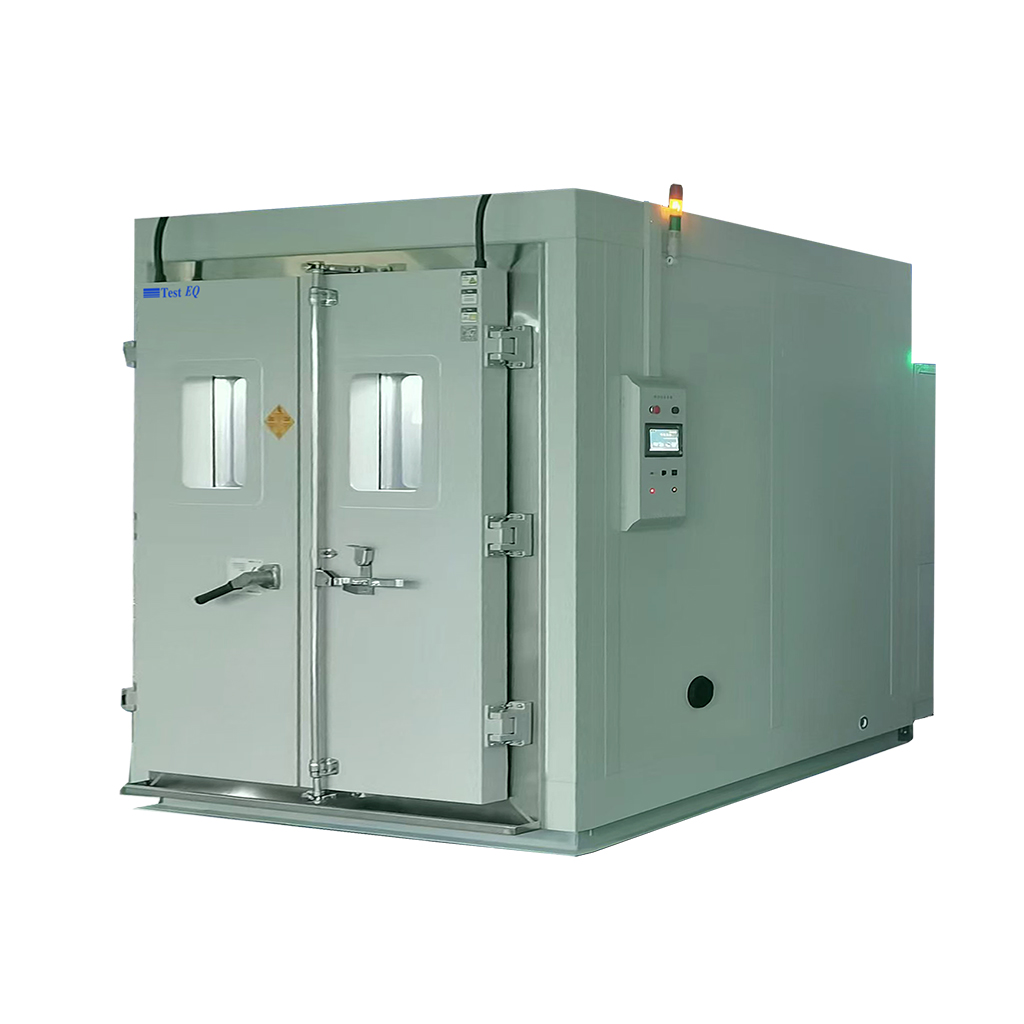
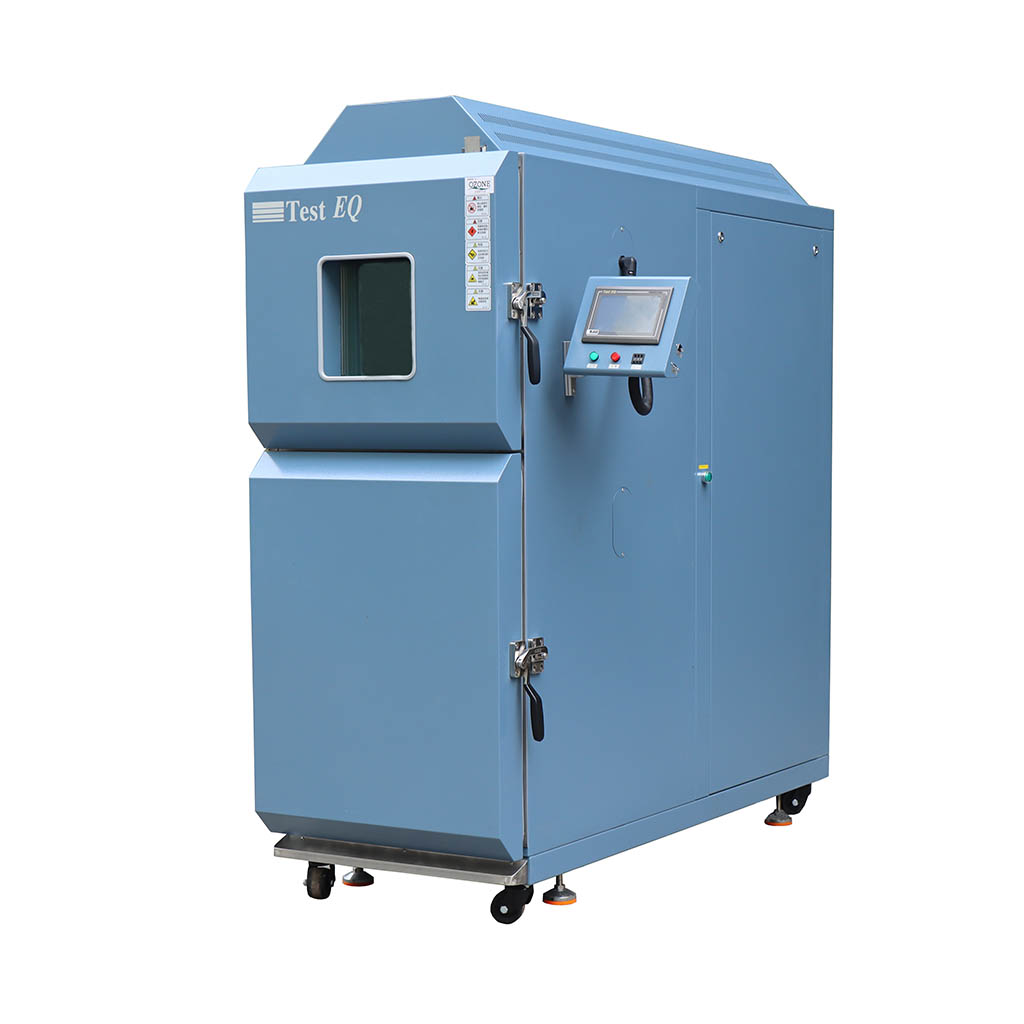
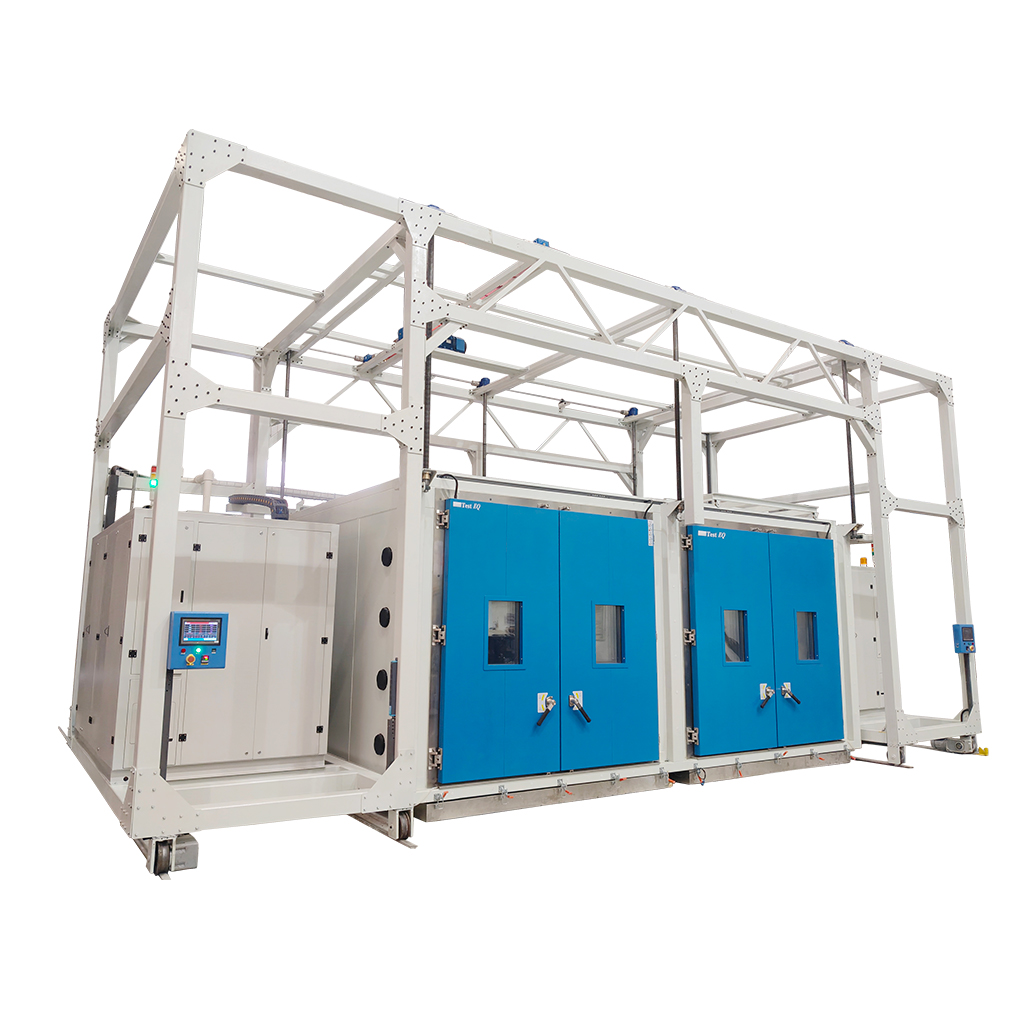
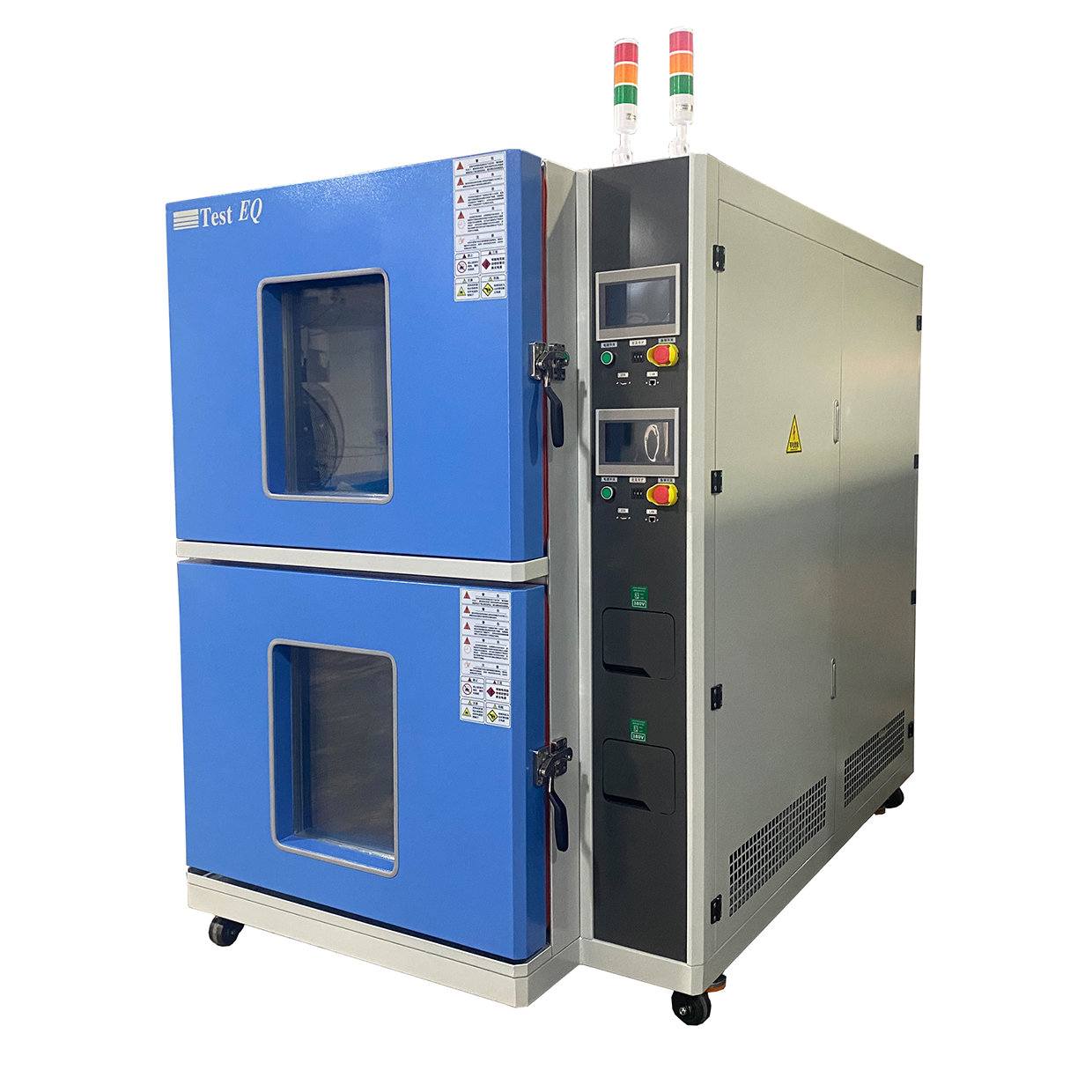
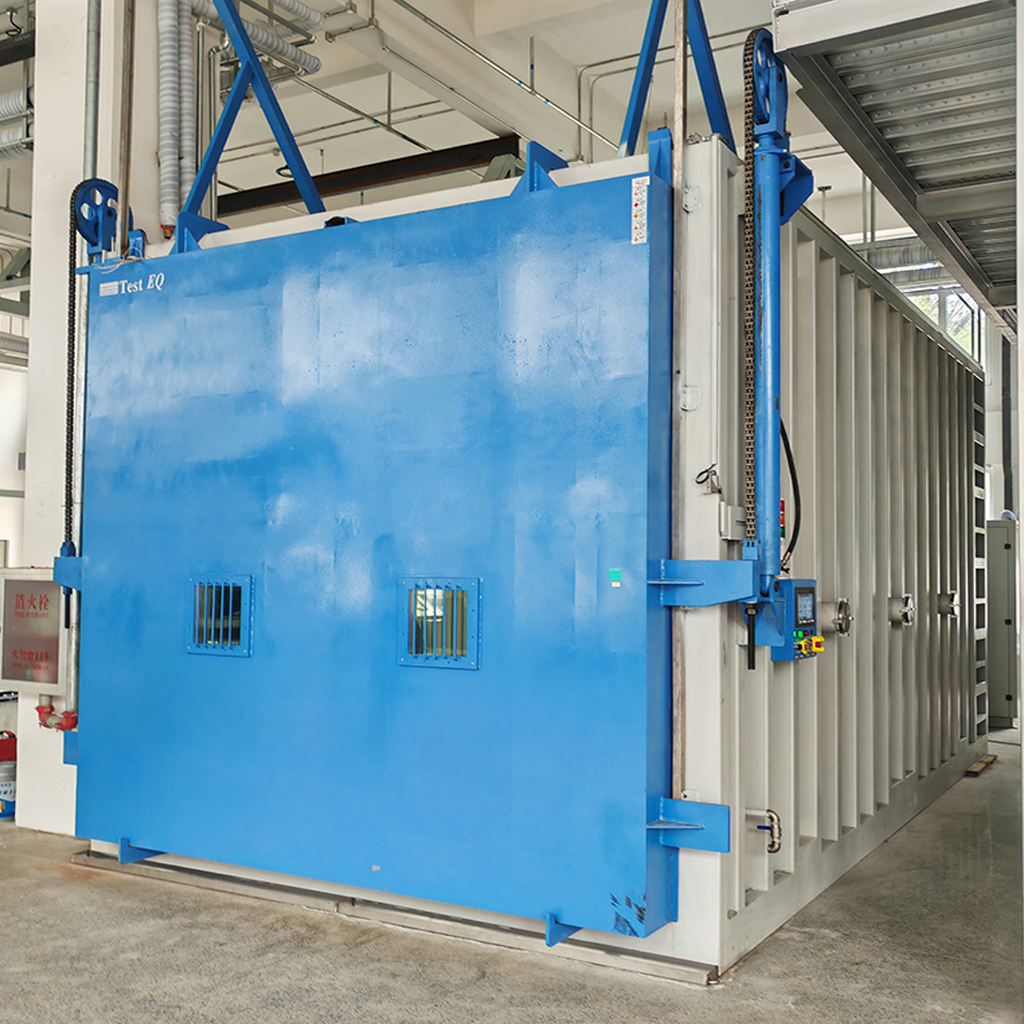
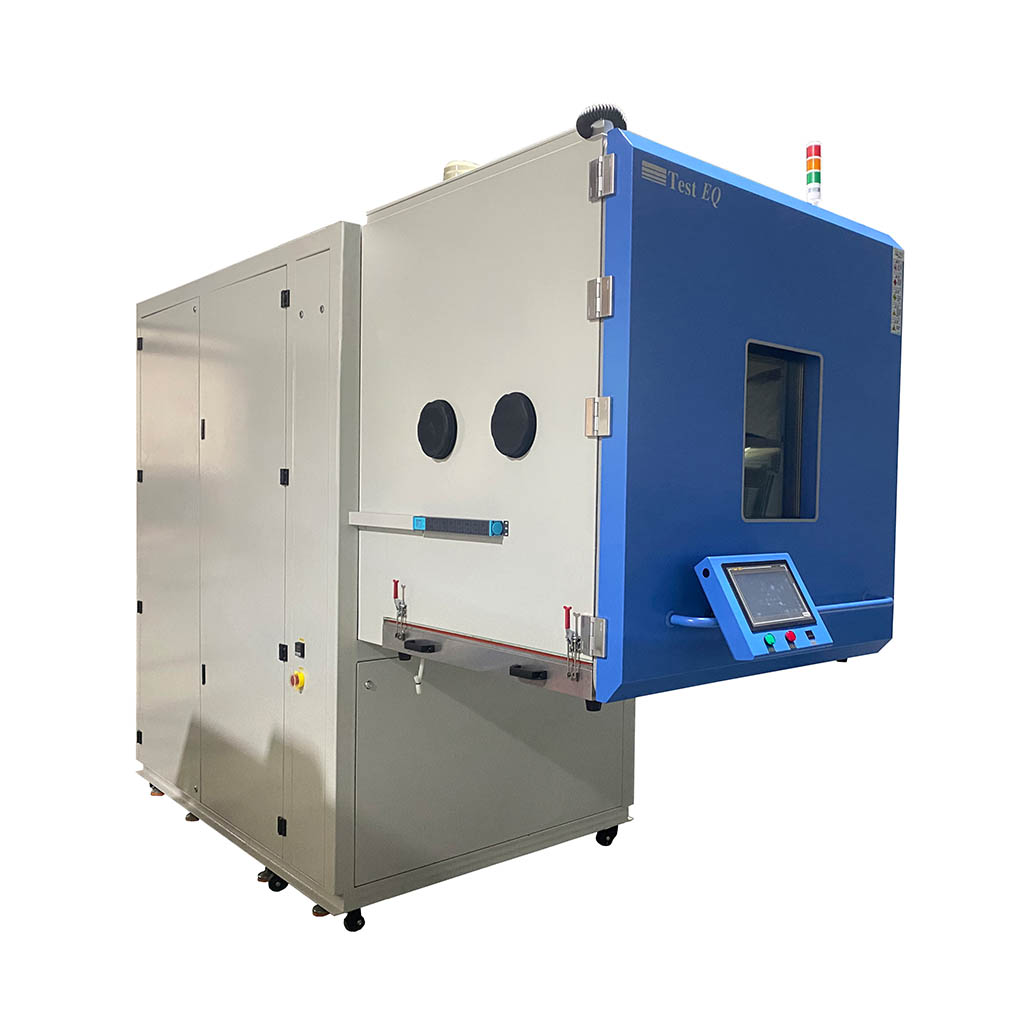
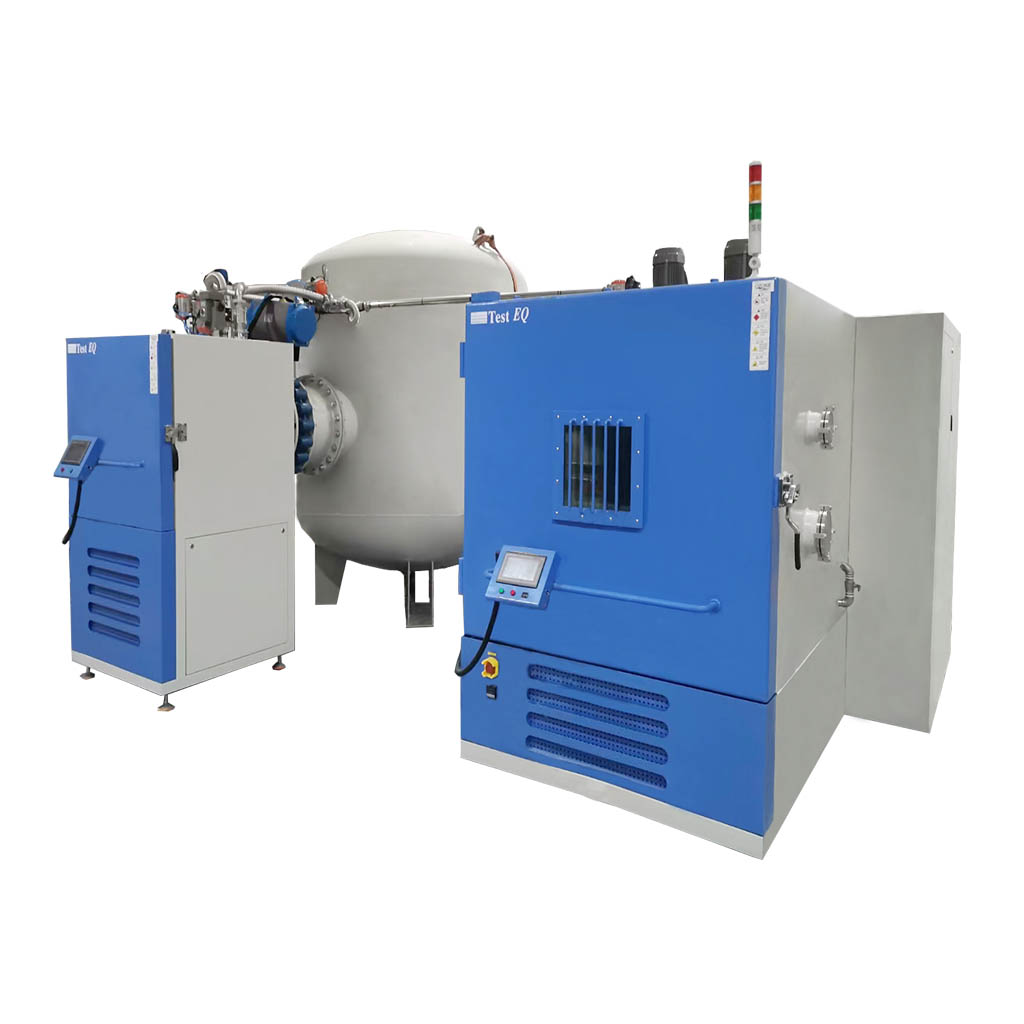
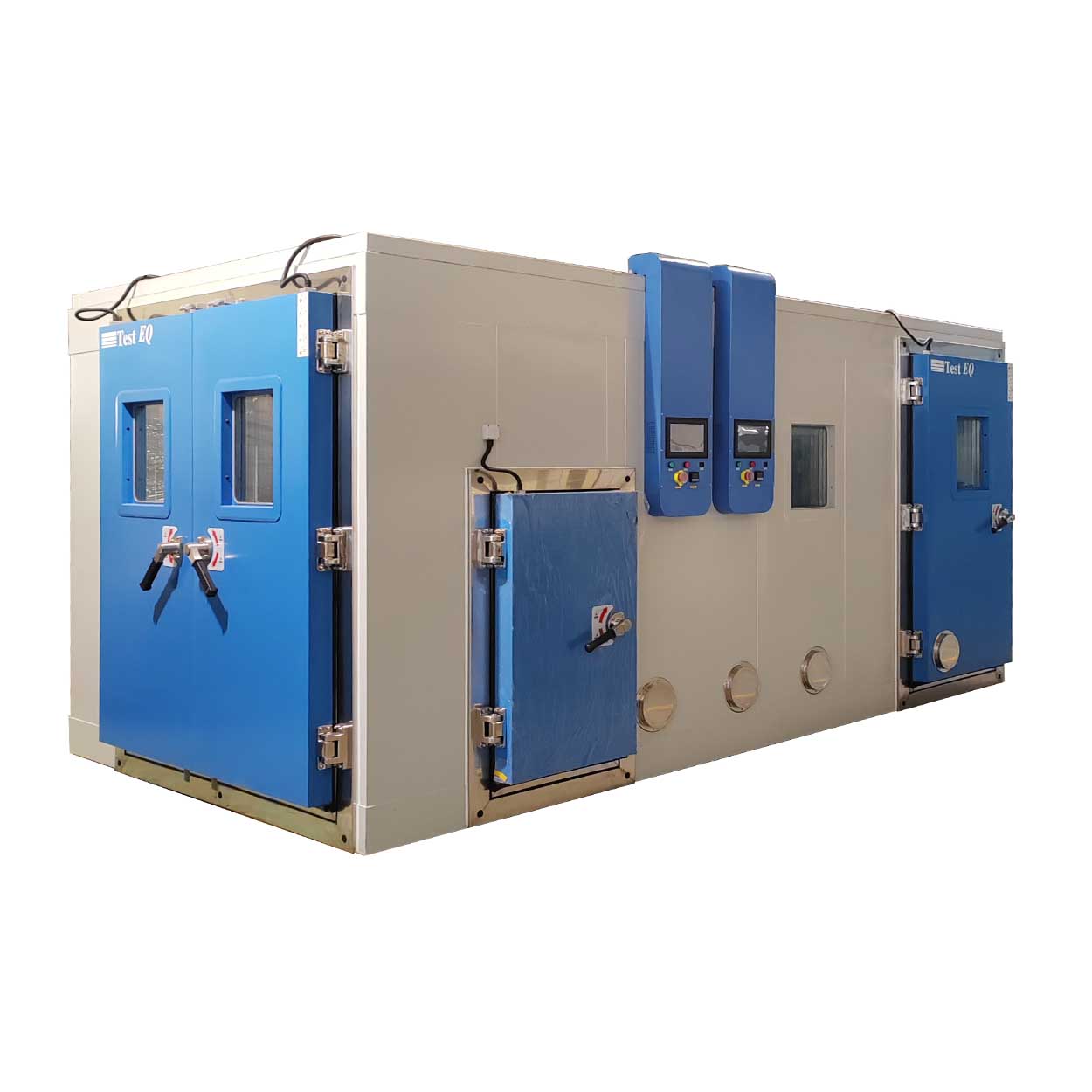
The Walk-In Salt Spray Chamber is a large-scale corrosion testing solution developed for evaluating oversized components, assemblies, and complete products under controlled corrosive environments.
Designed for automotive, aerospace, EV battery, marine, and industrial applications, this system enables manufacturers to validate coating performance, material durability, and corrosion resistance throughout product development and quality assurance processes.
Supporting Neutral Salt Spray (NSS), Acetic Acid Salt Spray (AASS), Copper Accelerated Acetic Acid Salt Spray (CASS), and cyclic corrosion testing, the chamber provides reliable simulation of harsh environmental conditions.
What Is a Walk-In Salt Spray Chamber?
A Walk-In Salt Spray Chamber is an environmental corrosion testing system that creates a controlled salt mist atmosphere to accelerate corrosion processes on large-scale products and assemblies.
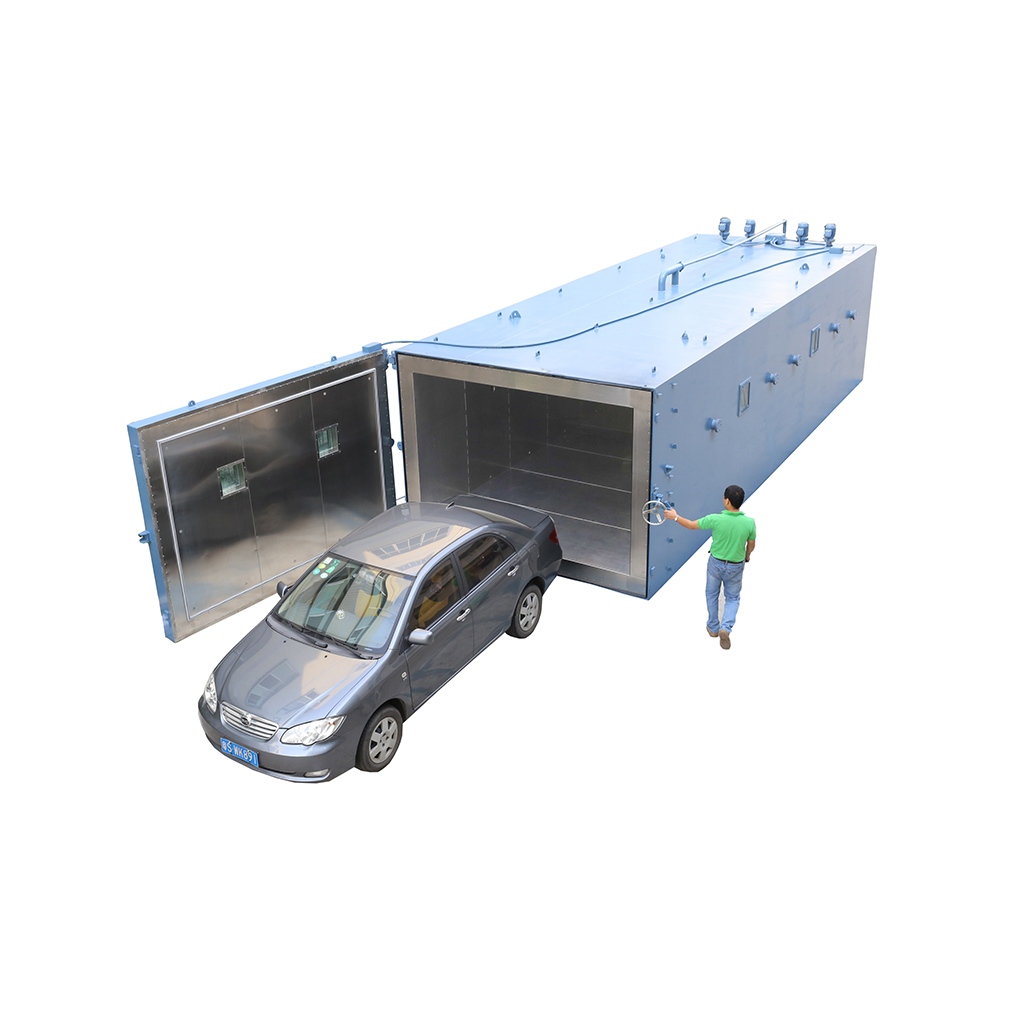
Compared with traditional laboratory salt spray chambers, walk-in systems are designed for testing oversized parts that cannot fit inside standard chambers, such as vehicle body structures, battery enclosures, aerospace components, and industrial equipment.
The chamber controls critical parameters including temperature, salt concentration, spray distribution, humidity, and exposure duration to reproduce real-world corrosive environments and evaluate long-term material reliability.
Engineering Challenges in Large Walk-In Salt Spray Testing
Compared with conventional salt spray chambers, walk-in systems face additional engineering challenges, including airflow uniformity, salt fog concentration stability, condensate drainage, chamber sealing, corrosion resistance of structural components, and temperature-humidity synchronization. TestEQ addresses these challenges through optimized nozzle layouts, corrosion-resistant chamber materials, and programmable control algorithms to maintain repeatable corrosion test conditions.
Composite & Cyclic Corrosion Testing:
This system supports advanced corrosion testing methods beyond traditional salt spray:
Composite Salt Spray Chamber Functions
Salt spray + humidity + drying cycles
Simulates real-world environmental corrosion conditions
Improves correlation with outdoor exposure testing
Cyclic Corrosion Test Chamber Capability
Programmable corrosion cycles (spray, dry, wet)
Accelerated corrosion simulation
Widely used in automotive OEM standards
These functions make it a true cyclic corrosion test chamber, not just a traditional salt fog tester.
Why Choose a Walk-In Salt Spray Chamber
Compared with standard salt spray chambers, the walk-in design offers:
Testing of large assemblies or full vehicles
Higher throughput for batch testing
More realistic corrosion simulation
Flexible test configurations for complex products
How Does a Walk-In Salt Spray Chamber Work?
Walk-In Salt Spray Chamber vs Standard Salt Spray Chamber
| Feature | Walk-In Salt Spray Chamber | Standard Salt Spray Chamber |
|---|
| Test Object | Large assemblies | Small samples |
| Application | Vehicle parts, battery packs, aerospace structures | Coatings and material samples |
| Capacity | Several m³ or customized rooms | Fixed laboratory volume |
| Testing Mode | Batch and full-size testing | Sample testing |
| Customization | High | Limited |
Walk-In Salt Spray Chamber for EV Battery and Automotive Testing
Electric vehicles require advanced corrosion validation because battery packs, connectors, chassis components and electronic systems are exposed to moisture, road salt and changing environmental conditions.
A walk-in salt spray chamber enables manufacturers to evaluate:
- Battery enclosure corrosion resistance
- Vehicle body coating durability
- Connector corrosion reliability
- Metal protection performance
- Long-term environmental durability
Why Choose TestEQ
Extensive experience in large environmental test systems
Advanced corrosion-resistant structural design
Stable and uniform salt fog distribution system
Custom engineering for automotive & aerospace standards
Turnkey solutions including installation & training
Optional Configurations
Fully automated cyclic corrosion programs
Multi-zone environmental simulation (salt + humidity + drying)
Large-volume customized chambers (vehicle-level testing)
Remote monitoring & data logging system
Acid-resistant upgraded materials (CASS testing)
Compliance Standards:
This chamber complies with major international standards:
ISO 9227 – Corrosion tests in artificial atmospheres – Salt spray tests
ASTM B117 – Standard Practice for Operating Salt Spray Apparatus
ASTM G85 – Modified Salt Spray Testing
IEC 60068-2-52 – Salt mist cyclic testing
MIL-STD-810H Method 509 – Salt Fog Testing
SAE J2334 – Automotive Cyclic Corrosion Test
JIS Z2371 – Corrosion testing standard
IEC 60068-2-11 – Environmental testing
FAQ:
1.What is a walk-in salt spray chamber?
A walk-in salt spray chamber is a large corrosion testing system that allows operators to enter the chamber and test oversized products under salt fog conditions.
2.What is the difference between NSS, ASS, and CASS?
NSS: Neutral salt spray test
ASS: Acetic acid salt spray
CASS: Copper-accelerated acetic acid salt spray (more aggressive)
3.What is a composite salt spray test?
A composite salt spray test combines salt spray, humidity, and drying cycles to simulate real environmental corrosion conditions.
4.What is cyclic corrosion testing?
Cyclic corrosion testing alternates between spray, drying, and humidity conditions to accelerate corrosion and better simulate real-world exposure.
5.How to choose a large salt spray chamber?
Key factors include:
Chamber size
Test standards
Material resistance
Control system
Application requirements
6. What products can be tested in a walk-in salt spray chamber?
A walk-in salt spray chamber is designed for testing large components and assemblies, including automotive body parts, EV battery enclosures, aerospace structures, marine components, metal coatings, and industrial equipment.
The large testing space allows engineers to evaluate corrosion resistance of products that cannot fit into conventional salt spray chambers.
7. Which corrosion testing standards are supported by a walk-in salt spray chamber?
Walk-in salt spray chambers can be designed to comply with various international corrosion testing standards, including ASTM B117, ISO 9227, ASTM G85, IEC 60068-2-52, and MIL-STD-810H Method 509.
The applicable standard depends on the product type, industry requirements, and customer validation procedures.
8. What are the advantages of a customized walk-in salt spray chamber?
A customized walk-in salt spray chamber provides flexible solutions for large-scale corrosion testing requirements, including customized chamber dimensions, testing configurations, monitoring systems, and integration with customer laboratory environments.
This allows manufacturers to perform reliable corrosion evaluation for complex products and production validation programs.
Internal Linking Module
Recommended Products
Simulate alternating salt spray, humidity, drying, and temperature cycles to evaluate long-term corrosion resistance under realistic service conditions. Ideal for automotive, aerospace, and coated component testing.
Perform constant and cyclic temperature-humidity testing to assess product reliability under controlled environmental conditions. Suitable for electronics, batteries, plastics, and industrial components.
Recommended Standards
Learn the requirements, test procedures, and evaluation methods defined by ASTM B117 for neutral salt spray corrosion testing used across multiple industries.
Related Resources
Discover how cyclic corrosion testing better simulates real-world environmental exposure by combining salt spray, humidity, drying, and temperature cycles.