Introduction
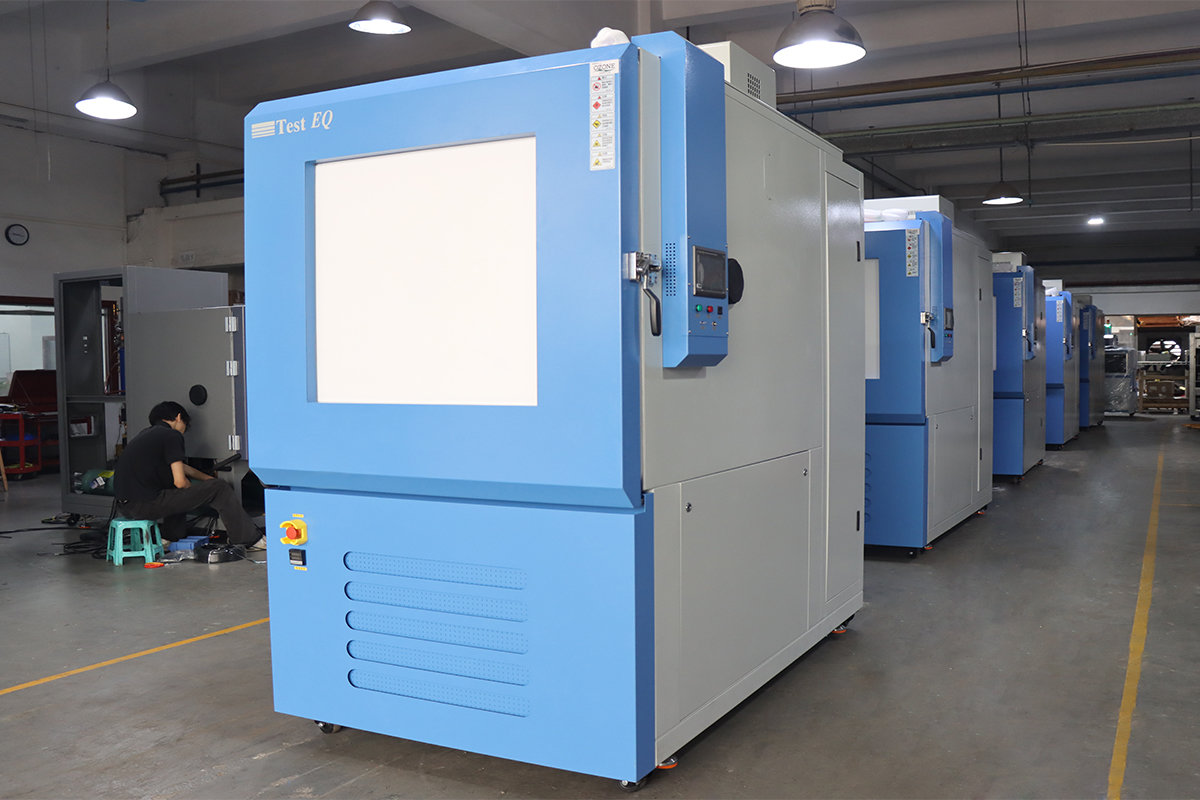
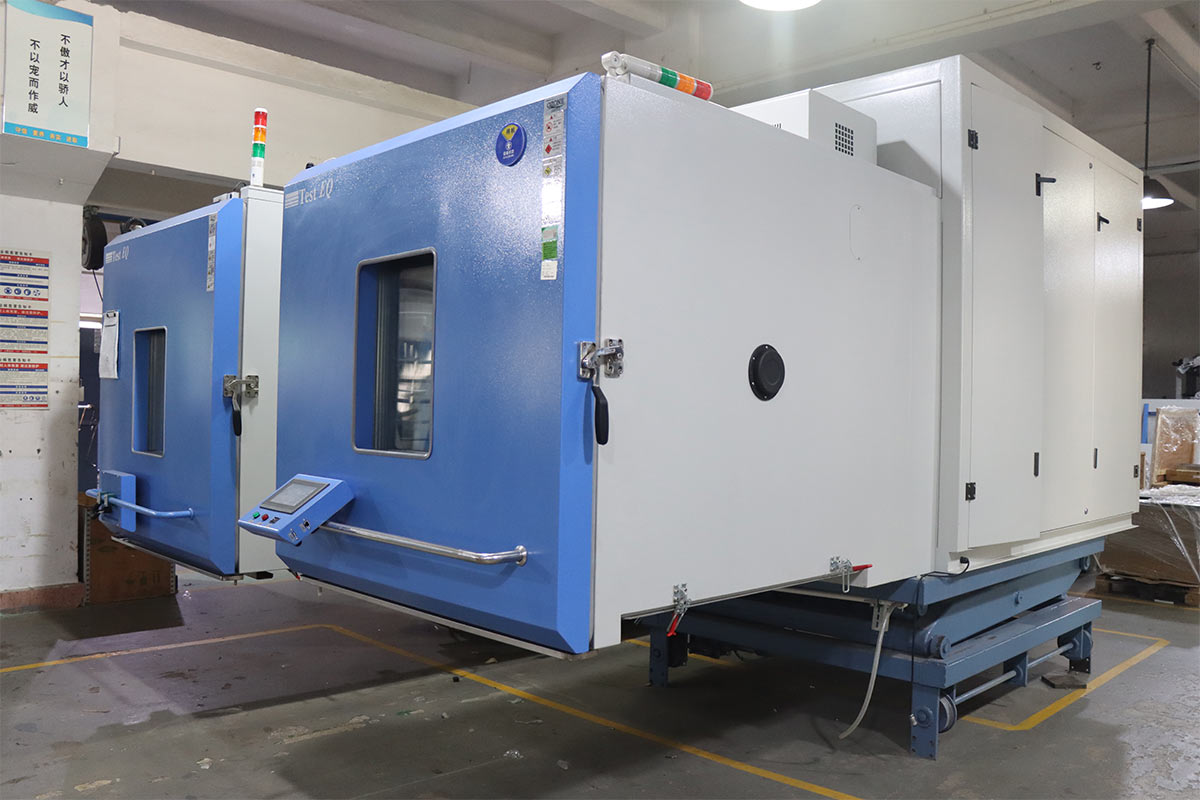
A three-combination test chamber is an advanced environmental reliability testing system that combines temperature, humidity, and vibration testing within a single synchronized platform.
By applying multiple environmental stresses simultaneously, this system helps engineers evaluate product durability, identify potential failure mechanisms, and improve reliability before mass production.
Three-combination test chambers are widely used in aerospace, automotive, electric vehicle, semiconductor, and high-reliability electronics industries where products must withstand complex operating environments.
TestEQ develops customized three-combination test chambers designed to meet international reliability testing requirements, including IEC 60068, MIL-STD-810H, and automotive qualification standards.
What Is a Three-Combination Test Chamber?
Unlike conventional environmental chambers that evaluate temperature, humidity, or vibration separately, a three-combination test chamber reproduces multiple stresses at the same time.
The system typically consists of three synchronized subsystems:
• Temperature control system – simulates thermal cycling, high temperature, and low temperature conditions.
• Humidity control system – evaluates moisture-related degradation, corrosion risks, and insulation reliability.
• Vibration system – applies mechanical stress to identify structural and electronic failures.
The combined environment provides a more realistic simulation of actual operating conditions, helping engineers detect hidden weaknesses in products such as battery systems, aerospace electronics, automotive components, and semiconductor devices.
How Does a Three-Combination Test Chamber Work?
A three-combination test chamber works by integrating temperature, humidity, and vibration control systems into one synchronized testing platform.
During testing, the chamber creates a controlled environment while the vibration system applies mechanical stress to the test sample. The temperature and humidity systems adjust environmental conditions according to the test requirements.
The three systems work together to simulate real operating conditions and evaluate product reliability under multiple stresses.
The main working processes include:
1. Temperature Control
The temperature system creates high and low temperature conditions to evaluate thermal stress resistance.
It simulates conditions such as:
High temperature exposure
Low temperature operation
Temperature cycling
This helps identify failures caused by thermal expansion, contraction, and temperature changes.
2. Humidity Control
The humidity system controls moisture conditions inside the chamber.
It evaluates how products perform under:
High humidity environments
Moisture exposure
Condensation risks
Humidity testing helps detect corrosion, insulation problems, and material degradation.
3. Vibration Simulation
The vibration system applies controlled mechanical vibration to the test specimen.
It simulates:
Transportation vibration
Vehicle operating vibration
Aerospace mechanical stress
This helps engineers identify structural weaknesses, connection failures, and component fatigue.
4. Synchronized Environmental Testing
The key advantage of a three-combination test chamber is that temperature, humidity, and vibration can be applied at the same time.
This provides a more realistic simulation compared with separate single-factor tests.
By combining multiple environmental stresses, engineers can:
Detect hidden product failures
Improve reliability design
Reduce development risks
Verify product performance before mass production
Why Three-Combination Testing Is Important
Many products do not fail because of one environmental factor alone. In real applications, temperature changes, humidity, and mechanical vibration often occur together.
A three-combination test chamber helps manufacturers reproduce these complex conditions and improve the reliability of products used in demanding environments.
Common applications include:
Electric vehicle battery systems
Automotive electronics
Semiconductor devices
Aerospace components
Defense equipment
Three-Combination vs Four-Combination Environmental Test Chamber
| Feature | Three Combination | Four Combination |
|---|---|---|
| Temperature | Yes | Yes |
| Humidity | Yes | Yes |
| Vibration | Yes | Yes |
| Altitude | No | Yes |
| Aerospace simulation | Good | Excellent |
Why Three-Combination Testing Requires Multiple Standards
Unlike single environmental chambers, three-combination systems must simulate:
• Thermal stress (hot/cold cycling)
• Humidity aging (moisture + condensation)
• Mechanical vibration (random + sinusoidal load)
Each standard defines one part of the physics, not the full system.
Standard Comparison Table
| Standard | Industry | Focus | Role in Three-Combination Testing |
|---|---|---|---|
| IEC 60068 | Electronics | Environmental stress testing | Defines temperature/humidity/vibration methods |
| MIL-STD-810H | Military / Aerospace | Rugged reliability | Simulates extreme combined field conditions |
| ISO 16750 | Automotive | Electrical reliability | Validates ECU & EV environmental durability |
| JEDEC Solid State Technology Association | Semiconductor | Device qualification | Ensures chip-level reliability |
How to Select a Three-Combination Test Chamber
Selecting the right three-combination test chamber requires evaluating testing requirements, product applications, industry standards, and long-term operating needs. Engineers should consider the following key factors:
1. Define Testing Requirements
Determine the required environmental conditions, including:
Temperature range
Humidity range
Temperature change rate
Vibration frequency and acceleration
Test cycles and duration
The chamber should accurately simulate the environmental stresses experienced by the product during operation.
2. Confirm Applicable Testing Standards
Different industries follow different reliability standards. Common standards include:
IEC 60068 for electronic and environmental testing
ISO 16750 for automotive components
MIL-STD-810H for aerospace and defense applications
JEDEC JESD22 for semiconductor reliability testing
Selecting equipment that meets required standards ensures reliable and repeatable test results.
3. Evaluate Temperature and Humidity Performance
Temperature and humidity control directly affect testing accuracy. Key specifications include:
Temperature stability
Humidity accurac
Uniformity performance
Recovery time
High-precision control helps identify failures caused by thermal stress and moisture exposure.
4. Check Vibration System Compatibility
A three-combination chamber must work effectively with the vibration system. I
Frequency range
Acceleration capability
Payload capacity
Fixture compatibility
Proper integration ensures accurate simulation of mechanical stress.
5. Review Control and Data Management Features
A modern three-combination test chamber should provide:
Programmable test profiles
Real-time monitoring
Data recording
Alarm protection
Remote operation capability
These functions improve testing efficiency and data traceability.
6. Consider Energy Efficiency and Operating Cost
Long-term reliability tests can consume significant energy. Engineers should evaluate:
Re
Thermal balance technology
Heating and cooling optimization
Maintenance requirements
Energy-efficient systems help reduce laboratory operating costs while maintaining testing performance.
7. Choose an Experienced Manufacturer
A reliable manufacturer should provide:
Customized chamber design
Engineering support
Standard compliance guidance
Installation and after-sales service
For complex applications such as EV batteries, aerospace, automotive electronics, and semiconductors, manufacturer experience is essential for achieving accurate reliability testing results.
TestEQ Three-Combination Test Chamber Solution
TestEQ designs customized temperature, humidity, and vibration integrated testing systems for high-reliability applications.
With experience in environmental simulation technology, TestEQ supports customers in selecting suitable chamber configurations based on:
Product characteristics
Testing standards
Environmental conditions
Reliability objectives
From automotive electronics and EV battery validation to semiconductor and aerospace applications, TestEQ provides reliable three-combination testing solutions to help manufacturers improve product durability and accelerate qualification processes.
TestEQ Engineering Advantage
TestEQ designs advanced three-combination test chambers with:
• High-precision environmental synchronization control
• Fast thermal response systems (low inertia design)
• Vibration integration platform with stable load coupling
• IEC / MIL / ISO / JEDEC compliance-ready profiles
• Custom engineering for aerospace, EV, semiconductor R&D
Built for engineers who need failure detection before product launch, not after.
Application Industries
• Aerospace & defense electronics
• Electric vehicle battery & BMS systems
• Semiconductor packaging & IC validation
• 5G communication hardware
• Automotive ECU & power electronics
• High-reliability R&D laboratories
Why Choose TestEQ
Precision engineering for temperature, humidity, and vibration integration in one system
Strong customization capability for aerospace, automotive, and semiconductor testing needs
Stable long-term performance ensuring repeatable and reliable test results
Compliance-ready design aligned with IEC, MIL-STD, ISO, and JEDEC standards
Professional global support team focused on reliability testing solutions for engineers
FAQ
Q1: Is there a single standard for three-combination test chambers?
No. They are governed by multiple standards including IEC 60068, MIL-STD-810H, ISO 16750, and JEDEC depending on industry applications.
Q2: Why are multiple standards needed?
Because no single standard covers temperature, humidity, and vibration simultaneously. Each defines different environmental stress conditions.
Q3: What is the most important standard?
IEC 60068 is the most widely used foundation for environmental testing, while MIL-STD-810H is critical for military-grade applications.
Q4: Which industries require three-combination testing?
Aerospace, automotive, semiconductor, telecom, and high-reliability electronics industries.
Q5: What is the advantage of TestEQ systems?
TestEQ chambers provide synchronized environmental stress control, ensuring IEC/MIL/ISO-compliant reliability testing with high repeatability.
Q6: What factors should be considered when selecting a three-combination test chamber?
Selecting a three-combination test chamber requires evaluating temperature range, humidity control capability, vibration performance, test volume, product size, and required test profiles.
Engineers should also consider equipment reliability, control system capability, energy efficiency, and customization options to ensure the chamber meets long-term testing requirements.
Q7: How does a three-combination test chamber improve product reliability testing?
A three-combination test chamber simulates multiple environmental stresses simultaneously, allowing engineers to identify potential failures that may not appear during individual testing.
By combining temperature, humidity, and vibration conditions, manufacturers can evaluate product durability, material performance, and component reliability under more realistic operating environments.
Q8: What is the difference between sequential testing and combined environmental testing?
Sequential testing evaluates temperature, humidity, and vibration stresses separately, while combined environmental testing applies these stresses simultaneously.
Combined testing provides a more realistic simulation of actual operating conditions and can help reduce testing time by identifying complex failure mechanisms caused by interacting environmental stresses.
Internal Linking Module
Recommended Equipment
is a simultaneous reliability testing system simulating triple environmental stresses of temperature, humidity, and vibration, suitable for automotive, semiconductor, and avionics verification.
can simultaneously simulate multiple stress conditions, including temperature, humidity, vibration, and electrical loads, for accelerated life testing and failure analysis of high-reliability products.
Related Standards
the International Electrotechnical Commission's fundamental environmental testing standards, covers single and combined environmental testing methods for temperature, humidity, vibration, etc.
military-grade environmental adaptability testing standard used to simulate complex environmental conditions such as extreme temperatures, vibrations, and shocks.
Technical Resources
provides an in-depth analysis of the working principles, synchronous control technology, and industry applications (automotive/aerospace/semiconductor) of three-combination test chambers.
provides an interpretation of IEC/MIL/ISO standards and comparative analysis of testing methods.
CTA
Need a Three-Combination Environmental Test Chamber Solution?
Selecting the right temperature, humidity, and vibration testing system requires a clear understanding of your product requirements, industry standards, and reliability objectives.
TestEQ provides customized three-combination environmental test chambers designed for automotive electronics, EV batteries, semiconductor devices, aerospace components, and other high-reliability applications.
Our engineering team can help you evaluate:
- Applicable testing standards, including IEC 60068, MIL-STD-810H, ISO 16750, and JEDEC requirements
- Temperature, humidity, and vibration test conditions
- Chamber configuration and customization options
- Reliability testing solutions for your specific application
Contact TestEQ engineers today to discuss your environmental testing requirements and receive a customized testing solution.
"Contact TestEQ Engineering Team"