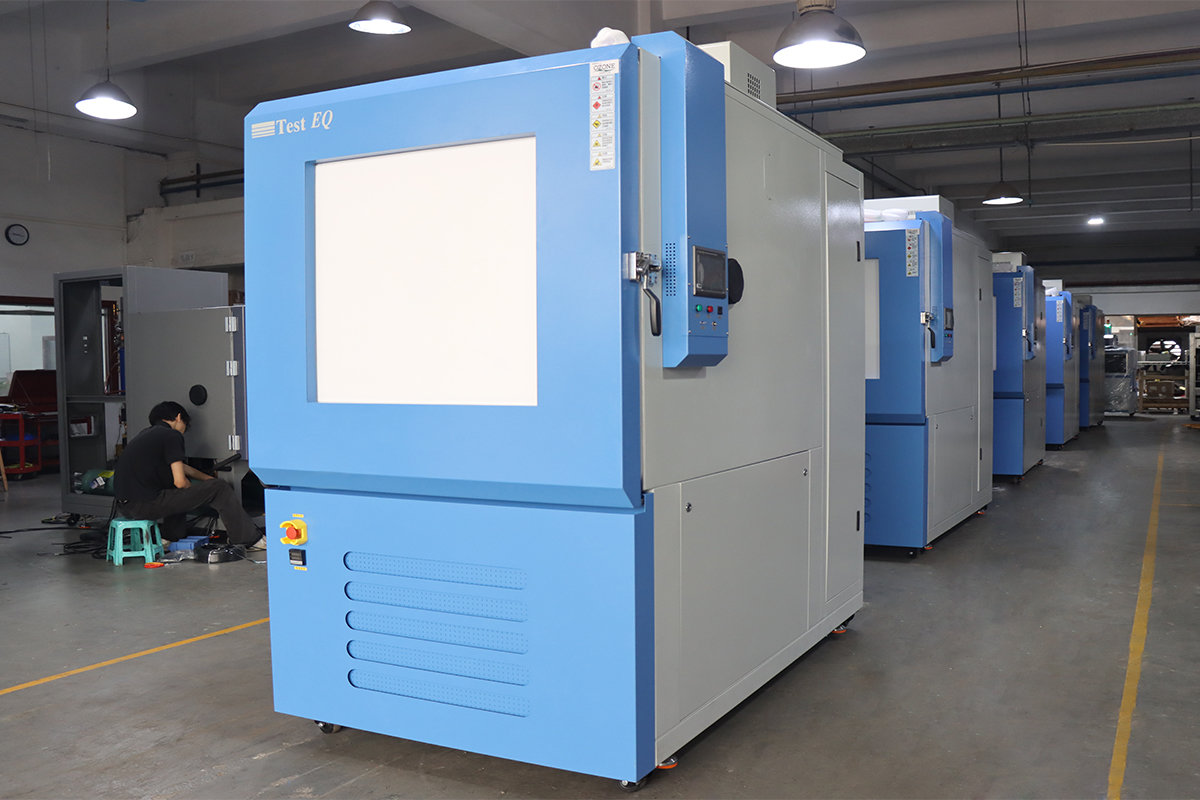
What is MIL-STD-810H Testing?
MIL-STD-810H is a widely recognized military standard that defines test methods for evaluating equipment performance under harsh environmental conditions.
Unlike basic laboratory testing, MIL-STD-810H focuses on real-world simulation, including:
• Extreme high & low temperature exposure
• Rapid thermal cycling
• Humidity and condensation stress
• Low pressure / altitude simulation
• Mechanical vibration and shock
These tests are essential for defense, aerospace, automotive electronics, and industrial product development.
TestEQ MIL-STD-810H Environmental Test Chamber Advantages
1. Multi-Stress Integrated Simulation
TestEQ chambers combine temperature, humidity, vibration, and altitude functions in a single platform, reducing test time and improving correlation with field performance.
2. High Precision Control System
Advanced PLC + touchscreen control ensures ±0.5°C temperature accuracy and stable humidity regulation for repeatable test results.
3. Modular Engineering Design
Supports customization for walk-in chambers, compact lab units, and large-scale aerospace testing systems.
4. Compliance with Global Standards
Designed to support MIL-STD-810H, IEC, ASTM, and other international environmental testing protocols.
5. Industrial-Grade Reliability
Built for continuous operation in R&D labs, production QA lines, and certification testing centers.
MIL-STD-810H vs IEC 60068
| MIL-STD-810H | IEC 60068 |
|---|---|
| Military | Industrial |
| Mission profile | Standardized laboratory tests |
| Customized procedures | Fixed procedures |
| Aerospace | Electronics |
| Defense | Consumer products |
Application Industries
• Aerospace & Defense Systems
• Automotive Electronics & EV Batteries
• Semiconductor & PCB Manufacturing
• Communication & 5G Devices
• Industrial Equipment Validation
• Research Laboratories & Certification Institutes
Why MIL-STD-810H Testing Matters
Modern products must survive not only controlled laboratory environments but also unpredictable real-world conditions. MIL-STD-810H testing ensures:
• Reduced field failure rate
• Improved product lifecycle reliability
• Faster certification approval
• Higher customer trust and brand reputation
For procurement teams and engineers, it is a critical risk mitigation tool before product launch.
Common Failure Modes Detected by MIL-STD-810H Testing
for instance:
Connector loosening
PCB cracking
Seal leakage
Corrosion
Battery swelling
LCD failure
Sensor drift
TestEQ Engineering Strength
TestEQ specializes in high-end environmental simulation systems including thermal shock, rapid temperature change, altitude simulation,and combined stress screening chambers.
Our engineering team focuses on:
Thermal dynamic simulation accuracy
Energy-efficient refrigeration systems
Long-term stability testing design
Custom aerospace-grade solutions
We support global customers from prototype development to full-scale production validation.
FAQ
1. What tests are included in MIL-STD-810H environmental testing?
MIL-STD-810H environmental testing covers a wide range of environmental stresses, including temperature, humidity, altitude, vibration, shock, rain, dust, and other operational conditions. The specific test methods are selected according to the product’s intended use, lifecycle requirements, and mission environment. Each method defines the test procedure, severity level, and acceptance criteria for evaluating product durability.
2. What is the difference between MIL-STD-810G and MIL-STD-810H?
MIL-STD-810G focuses more on individual test methods, while MIL-STD-810H introduces improved guidance for real-world simulation, combined environments, and more flexible test design. MIL-STD-810H is more widely adopted in modern aerospace, defense, and high-reliability electronics testing.
3. What environmental test chamber is required for MIL-STD-810H testing?
MIL-STD-810H does not require one specific chamber type. The required environmental test equipment depends on the selected test methods, such as temperature, humidity, altitude, thermal shock, or vibration testing. Common systems include temperature humidity chambers, thermal shock chambers, altitude test chambers, and combined environmental simulation chambers. TestEQ designs customized test solutions according to MIL-STD-810H requirements and application conditions.
4. Can a single environmental chamber perform combined temperature, humidity, and vibration testing?
Yes. Advanced MIL-STD-810H environmental test chambers, such as TestEQ systems, can integrate temperature, humidity, and vibration modules. This allows simultaneous or sequential multi-stress testing, reducing test time and improving correlation with real operational conditions.
5. How do I choose the right MIL-STD-810H test chamber size for my lab or production line?
The selection depends on your test sample size, throughput requirements, and test standards. Small chambers are suitable for component-level testing, while walk-in chambers are used for large equipment such as automotive parts or aerospace systems. TestEQ provides customized configurations based on your application and space constraints.
6. Why is MIL-STD-810H testing important for product reliability and procurement decisions?
MIL-STD-810H testing validates how products perform under extreme real-world environments before mass production or deployment. For procurement teams, it reduces field failure risk, ensures compliance with defense or industrial requirements, and supports supplier qualification decisions in aerospace, automotive, and electronics industries.
7. Is MIL-STD-810H testing mandatory for military and aerospace products?
MIL-STD-810H is not a mandatory certification standard for all products, but it is widely used as a qualification and verification guideline for military, aerospace, defense, and high-reliability electronic systems. Many organizations require MIL-STD-810H testing to evaluate product durability, environmental resistance, and operational reliability before approval or deployment.
8. How long does MIL-STD-810H environmental testing take?
The duration of MIL-STD-810H testing depends on the selected methods, test conditions, number of cycles, and product requirements. Simple temperature or humidity tests may take several hours to days, while combined environmental tests involving temperature, vibration, altitude, or shock can require longer validation periods. A detailed test plan is usually developed based on the product mission profile and application environment.
Internal Linking Module
Recommended Equipment
MIL-STD-810H testing typically requires multi-stress simulation such as temperature cycling, humidity, and rapid environmental transitions. The following chambers are commonly used for 810H compliance verification and rugged reliability testing.
Ideal for combined temperature-humidity cycling, condensation simulation, and long-term stability testing under MIL-STD-810H Method 501/502/507 conditions.
Designed for extreme temperature transition stress testing, simulating rapid thermal change required in MIL-STD-810H Method 503 (thermal shock validation).
Standards Reference Module
MIL-STD-810H is often combined with international environmental standards to define full test coverage for aerospace, automotive, and defense reliability validation programs.
Widely used international baseline standard for temperature, humidity, vibration, and climate testing across industrial and electronics sectors.
Defines environmental stress requirements for automotive electronic components, often used alongside MIL-STD-810H for Tier-1 supplier validation.
Technical Resources Module
These technical resources help engineers understand test methodology differences, chamber selection logic, and compliance interpretation for MIL-STD-810H projects.
A complete overview of Temperature Humidity Bias (THB) testing, including standards, test procedure, and applications in electronic component reliability validation.
Step-by-step guide for selecting the correct chamber type based on test standard, sample size, and application industry.
Call to Action
Need a Reliable MIL-STD-810H Environmental Testing Solution?
MIL-STD-810H requires precise simulation of temperature, humidity, thermal shock, vibration and combined environmental stress. Selecting the right test chamber is critical to ensure compliance, reduce validation risk, and improve product reliability in defense, aerospace, automotive, and electronics applications.
Reviewed by the TestEQ Reliability Engineering Team, with more than 15 years of experience in designing environmental simulation systems for aerospace, defense, EV batteries, semiconductor manufacturing and industrial reliability testing. TestEQ solutions support compliance with MIL-STD-810H, IEC 60068, JEDEC JESD22 and other international testing standards.
Contact TestEQ engineering team for:
• Technical consultation
• Customized chamber design
• Quotation within 24 hours
• Project-based solution support