Design and Performance Breakthrough of Industrial-grade Rapid Temperature Variation Test Chamber
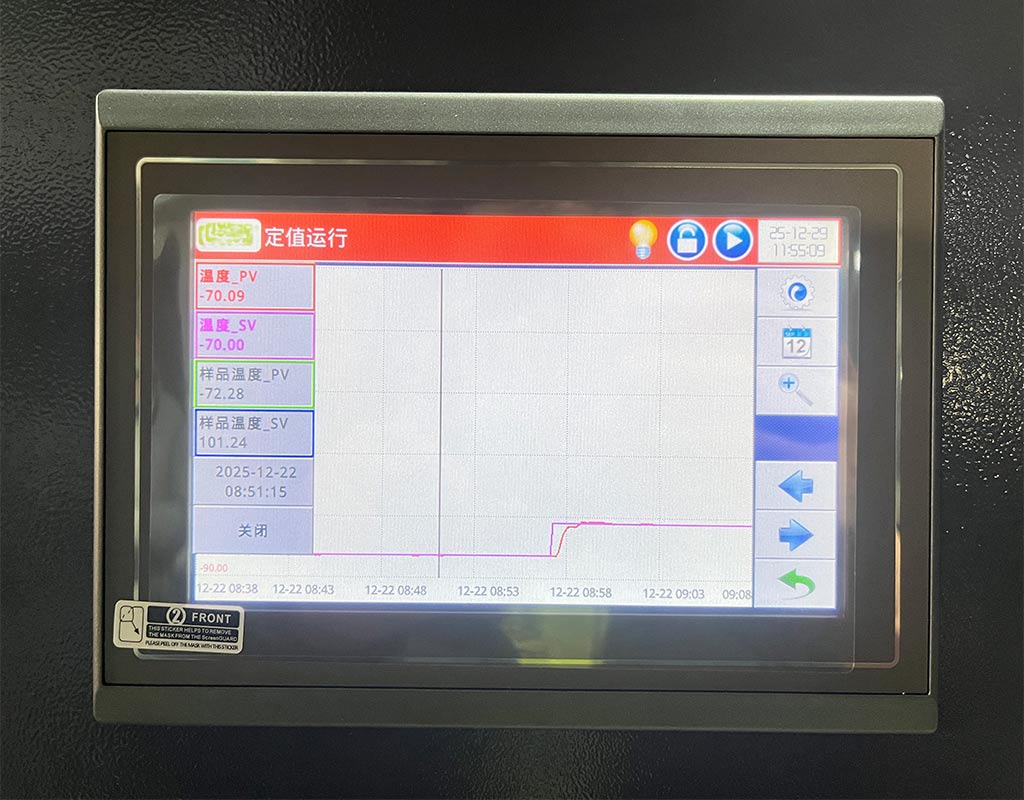
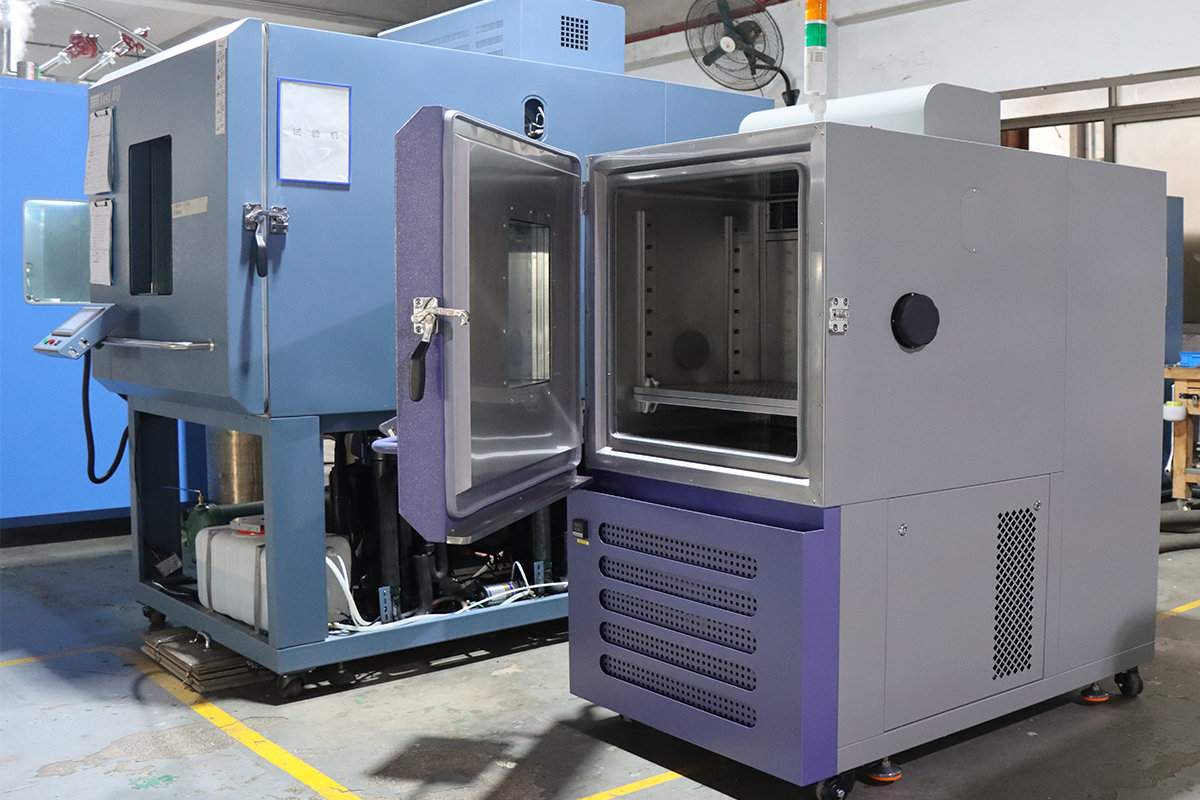
The rapid temperature variation test chamber adopts a modular design, with a volume ranging from 150L to 1000L. The inner liner is mostly made of stainless steel to resist corrosive environments. The internal temperature fluctuation can be controlled within ±0.3°C, and the humidity deviation is ±2%RH. It is equipped with a visual window, cable ports, and multiple layers of shelves for real-time monitoring and batch testing. The equipment optimizes the temperature control response speed through PID algorithm and combines the data recording function to generate a complete test report, providing a basis for product failure analysis. It has integrated Internet of Things technology, supporting remote monitoring and fault warning, further reducing the cost of manual intervention.
Application cases of rapid temperature variation testing in the semiconductor and new energy fields
The semiconductor industry relies on rapid temperature variation test chambers for thermal cycling tests of chip packaging (as per the JEDEC standard) to assess the reliability of solder joints. By simulating 1000 cycles from -40°C to 125°C, it is possible to predict the performance degradation of the device over a 10-year usage period in advance. Battery manufacturers use such equipment to verify the charging and discharging efficiency of battery cells under extreme temperature differences. For example, CATL uses a temperature variation rate of 15°C/min to accelerate the screening of batches with insufficient low-temperature activity of the electrolyte. This highlights the economic value of the equipment in improving product yield.
International standards and certification system
With the updates of standards such as ISO 16750-4 and MIL-STD-810G, the rapid temperature variation test chambers need to meet more stringent testing specifications. For example, the test requirements for vehicle electronic components specify that the equipment should achieve a temperature variation rate of 20°C/min within the range of -40°C to 85°C, and the temperature uniformity throughout the process should be ≤ 2°C. To address this trend, TestEQ has enhanced performance by improving the air duct design (such as multi-blade centrifugal fans) and the refrigeration system (duplex compressors). At the same time, it uses environmentally friendly refrigerants for the EU RoHS directive (rapid temperature variation test chambers) to reduce the carbon footprint.