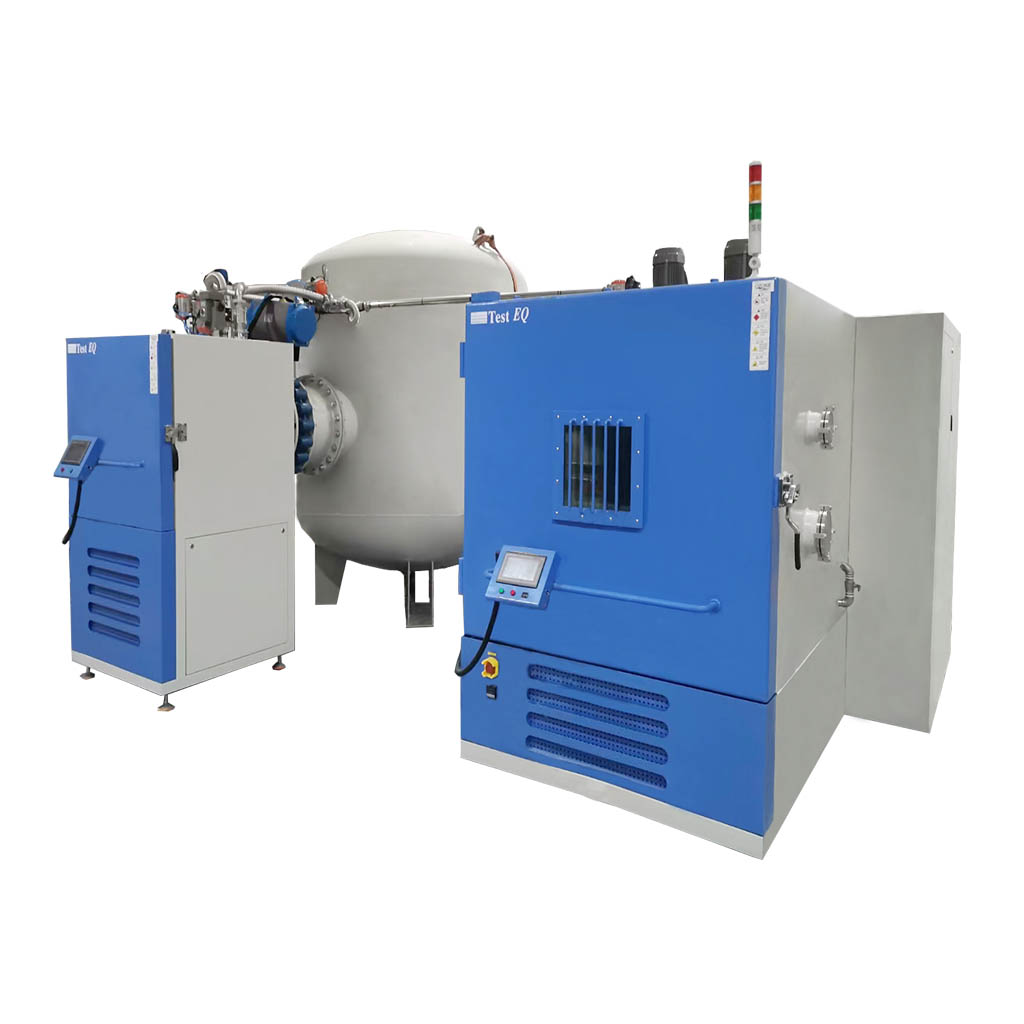
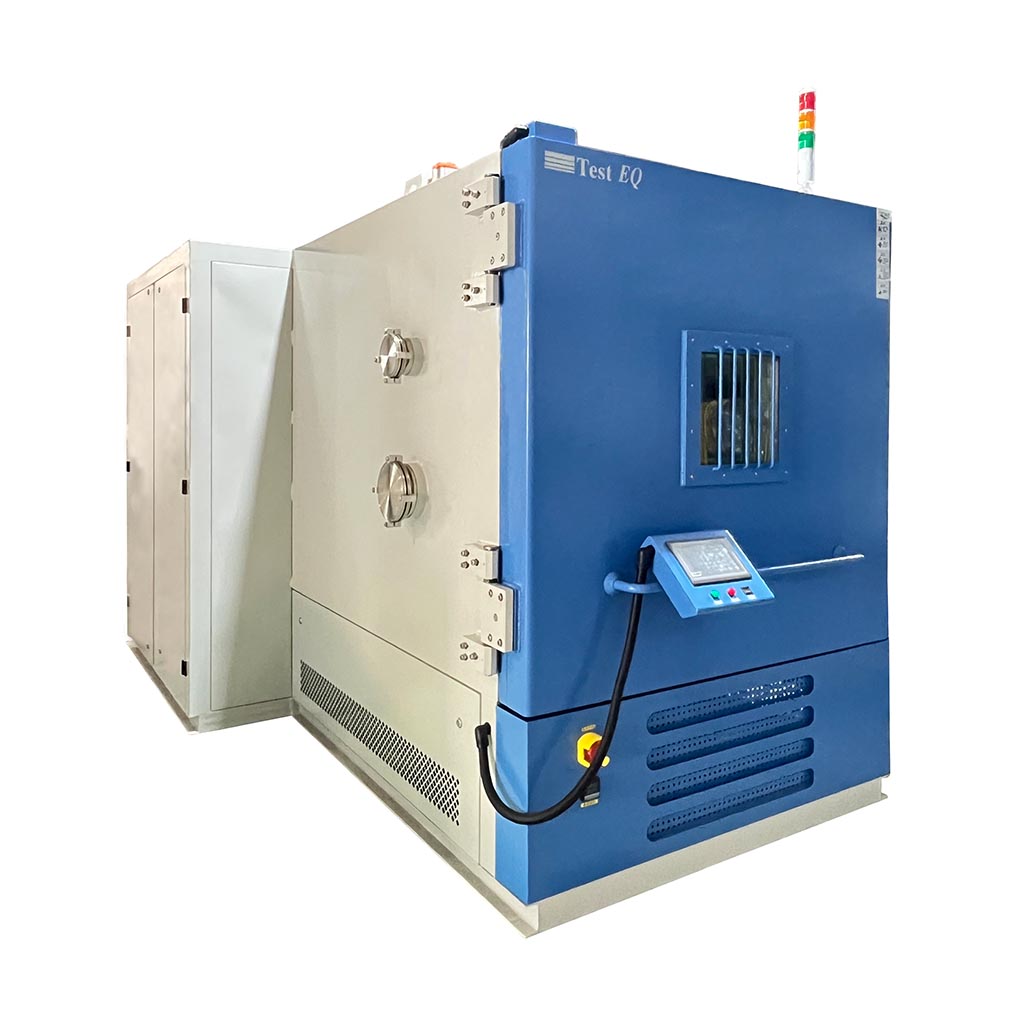
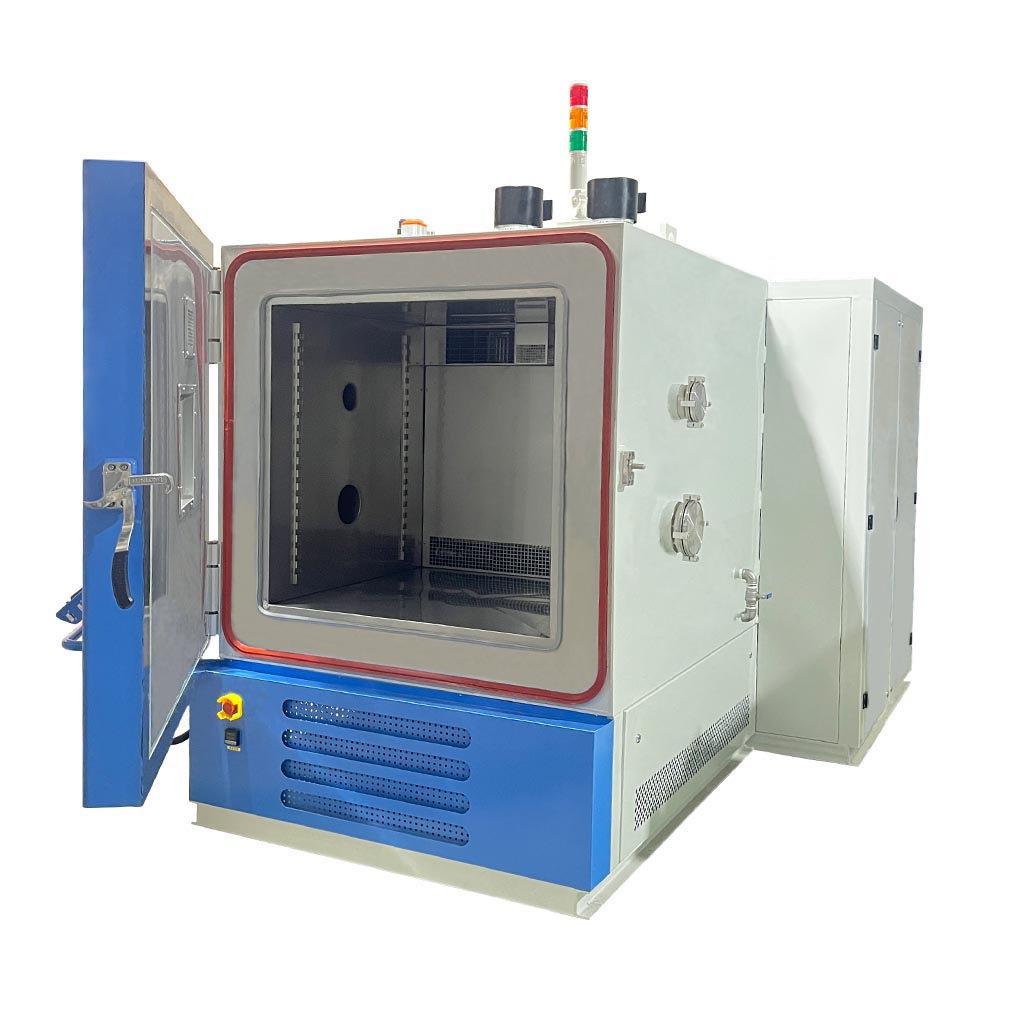
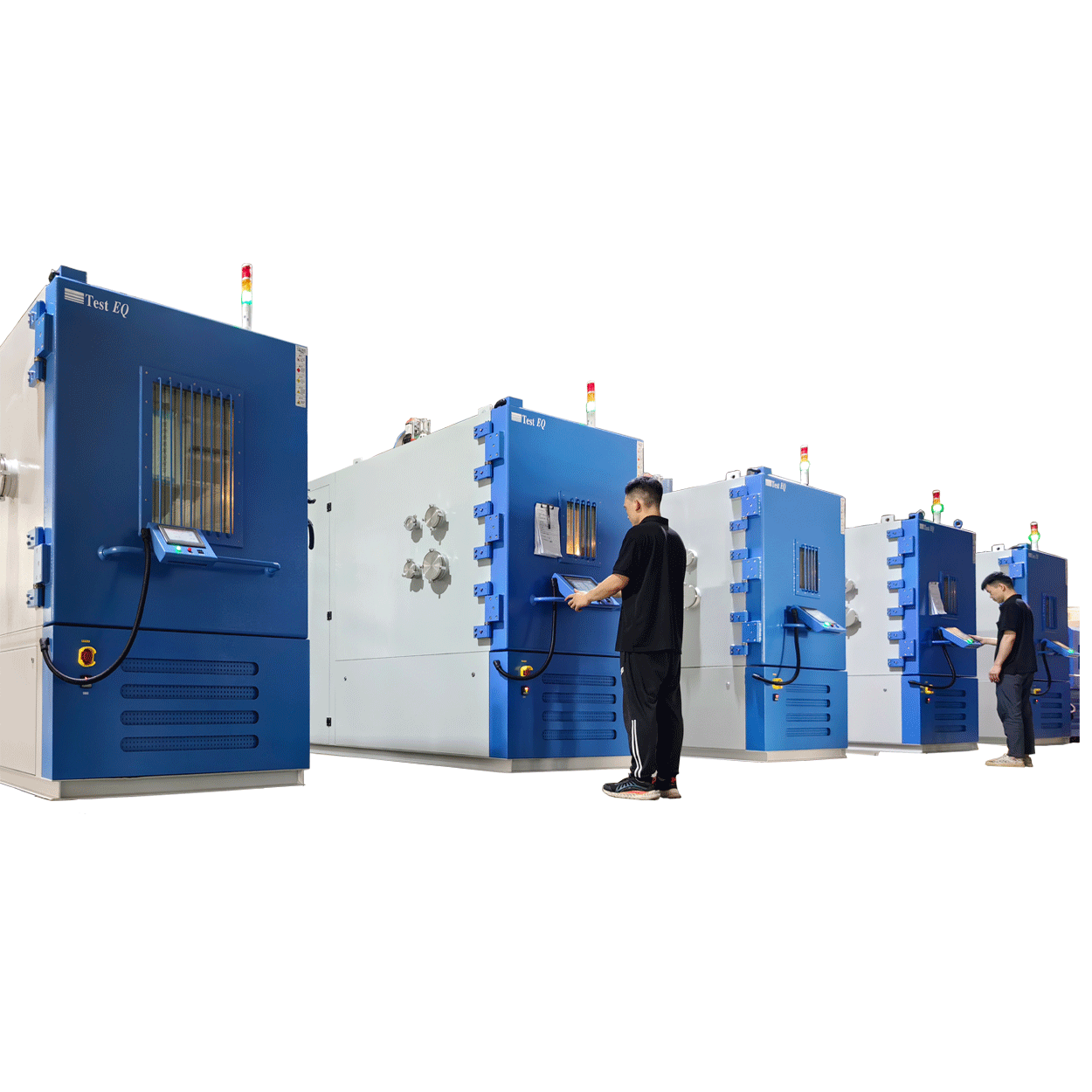
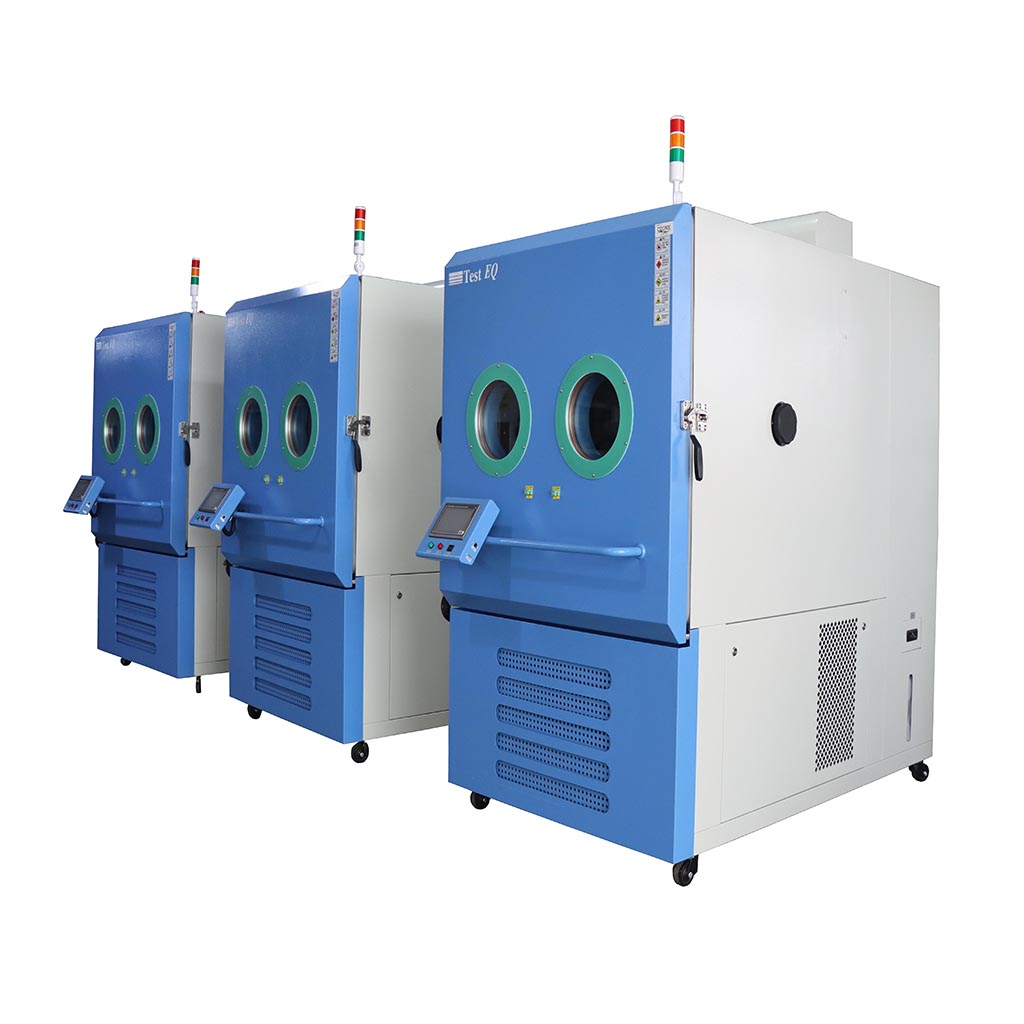
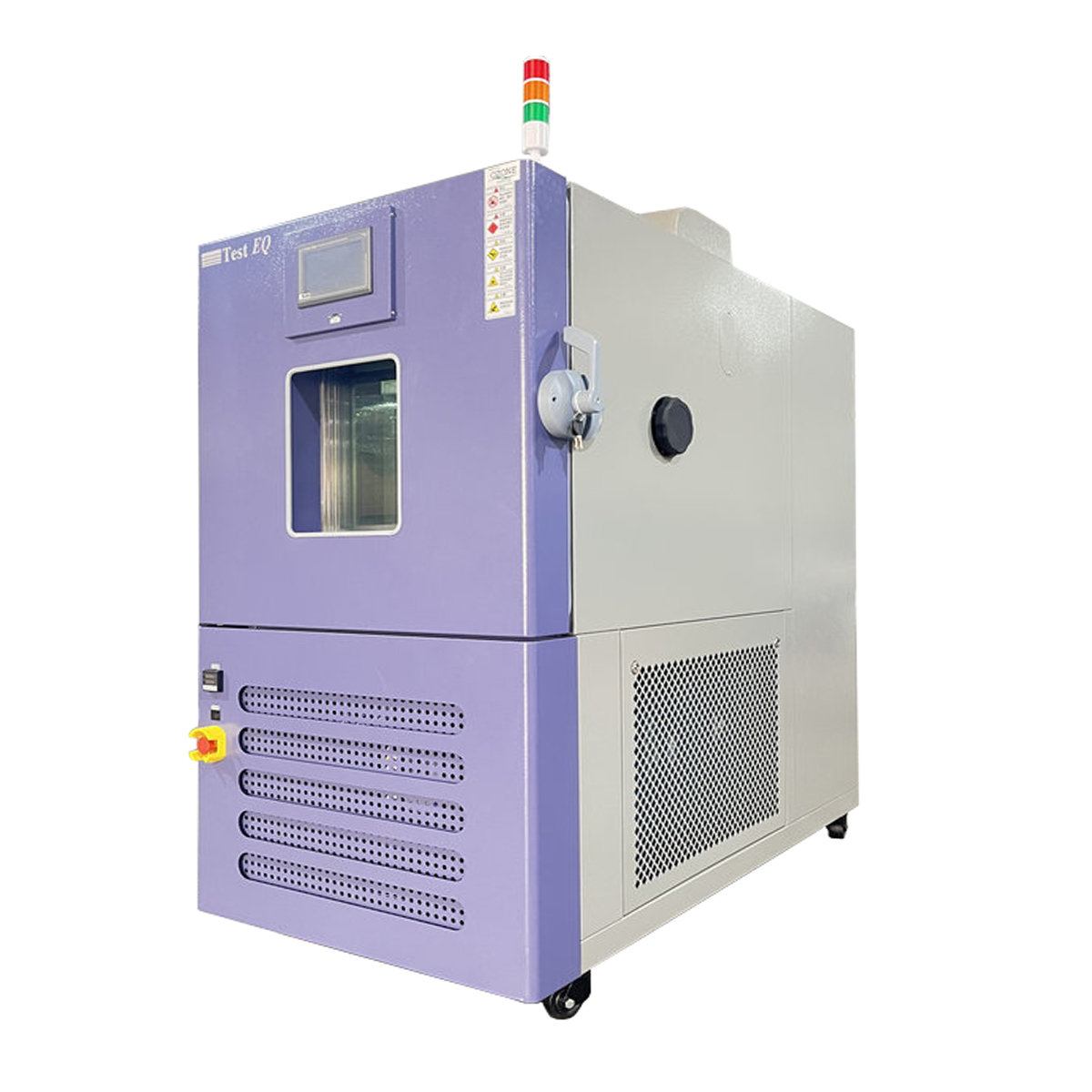
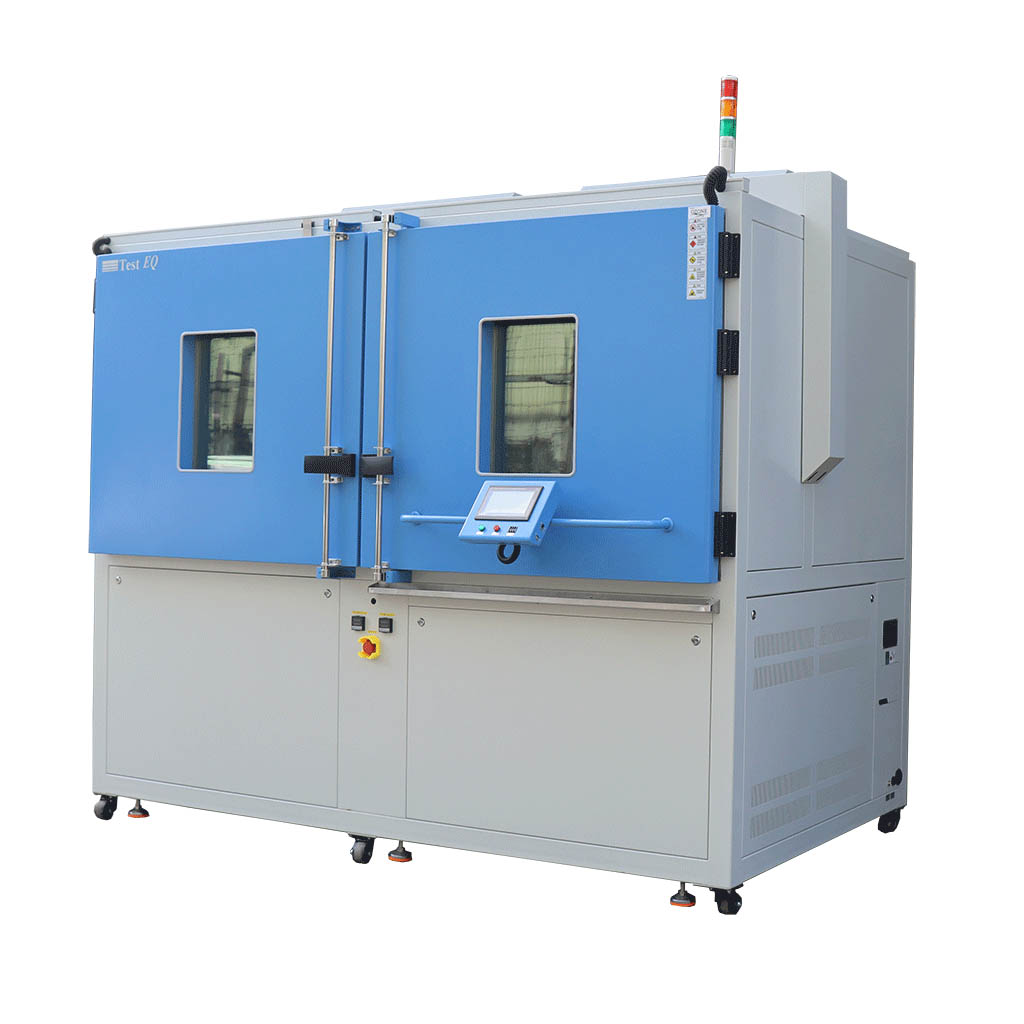
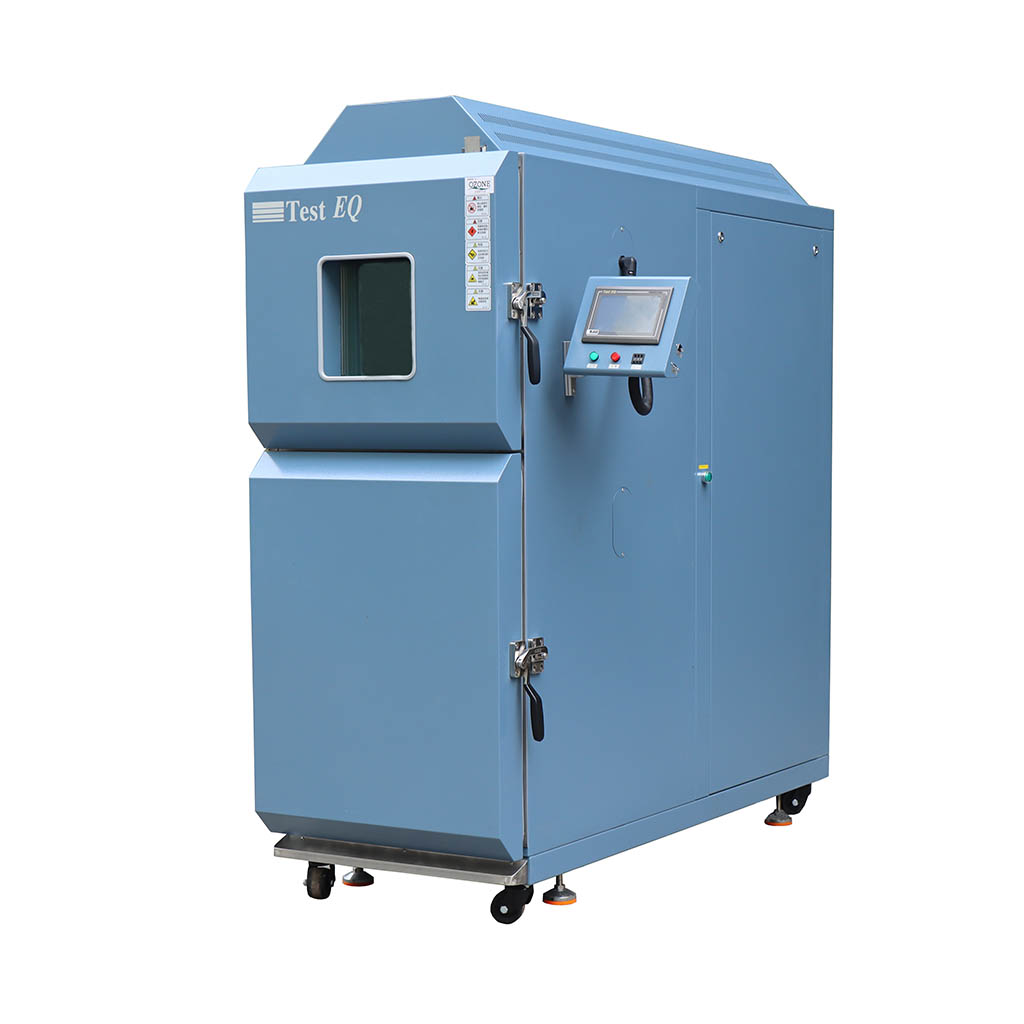
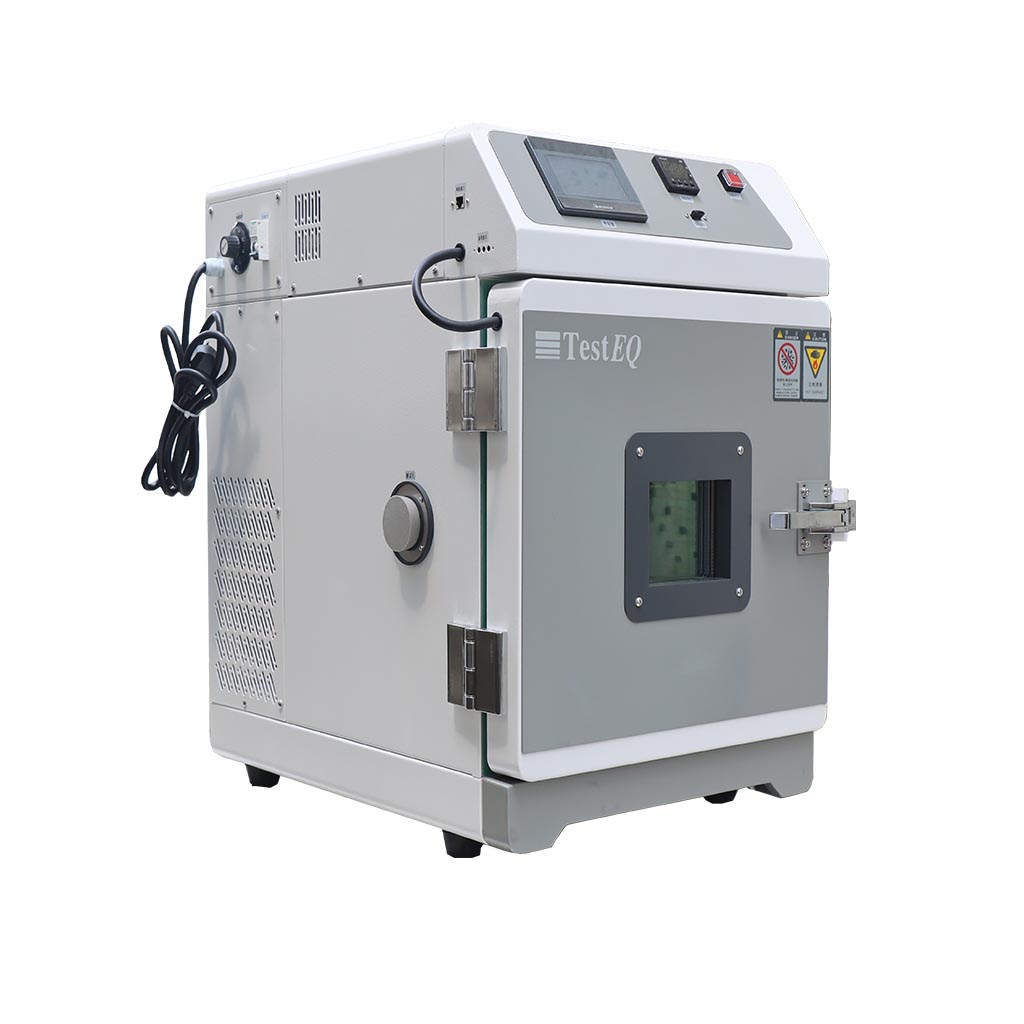
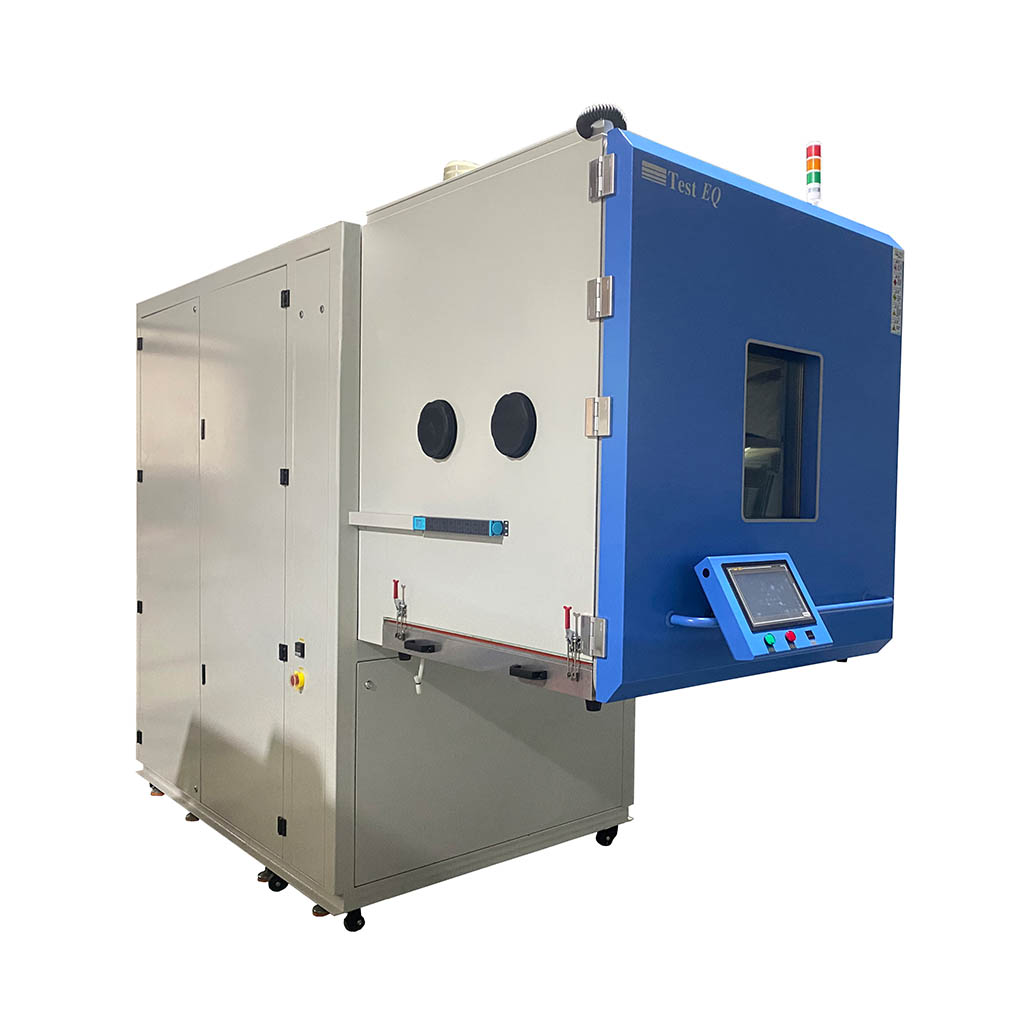
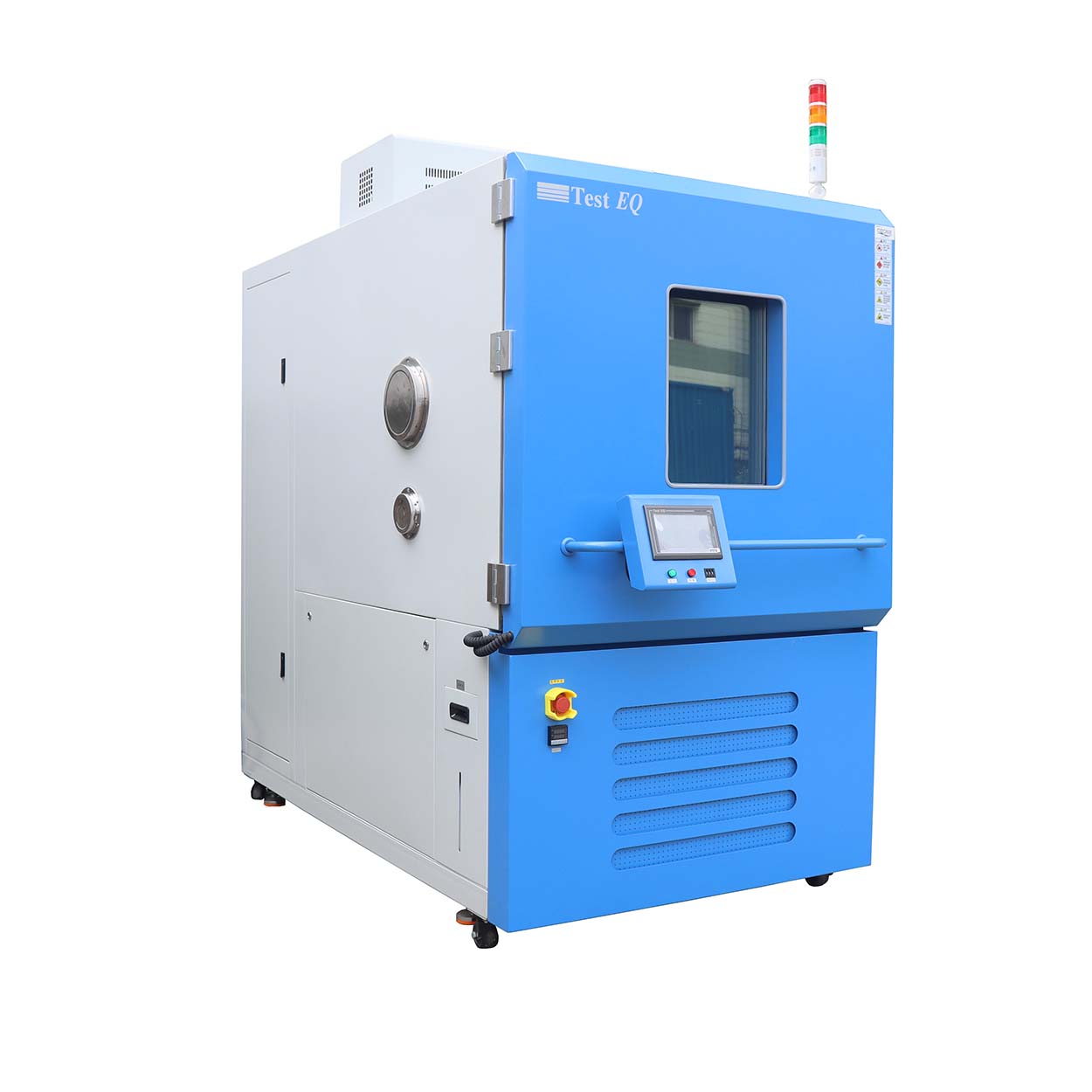
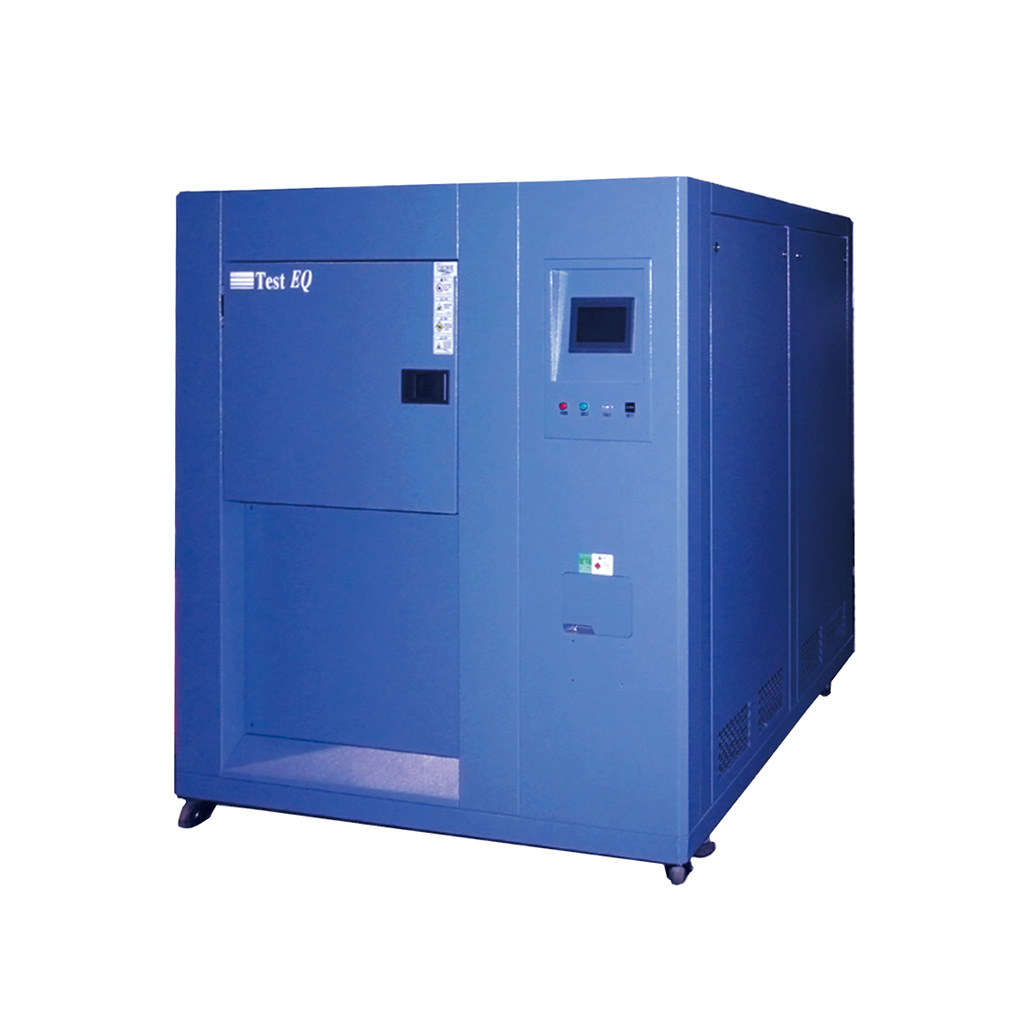
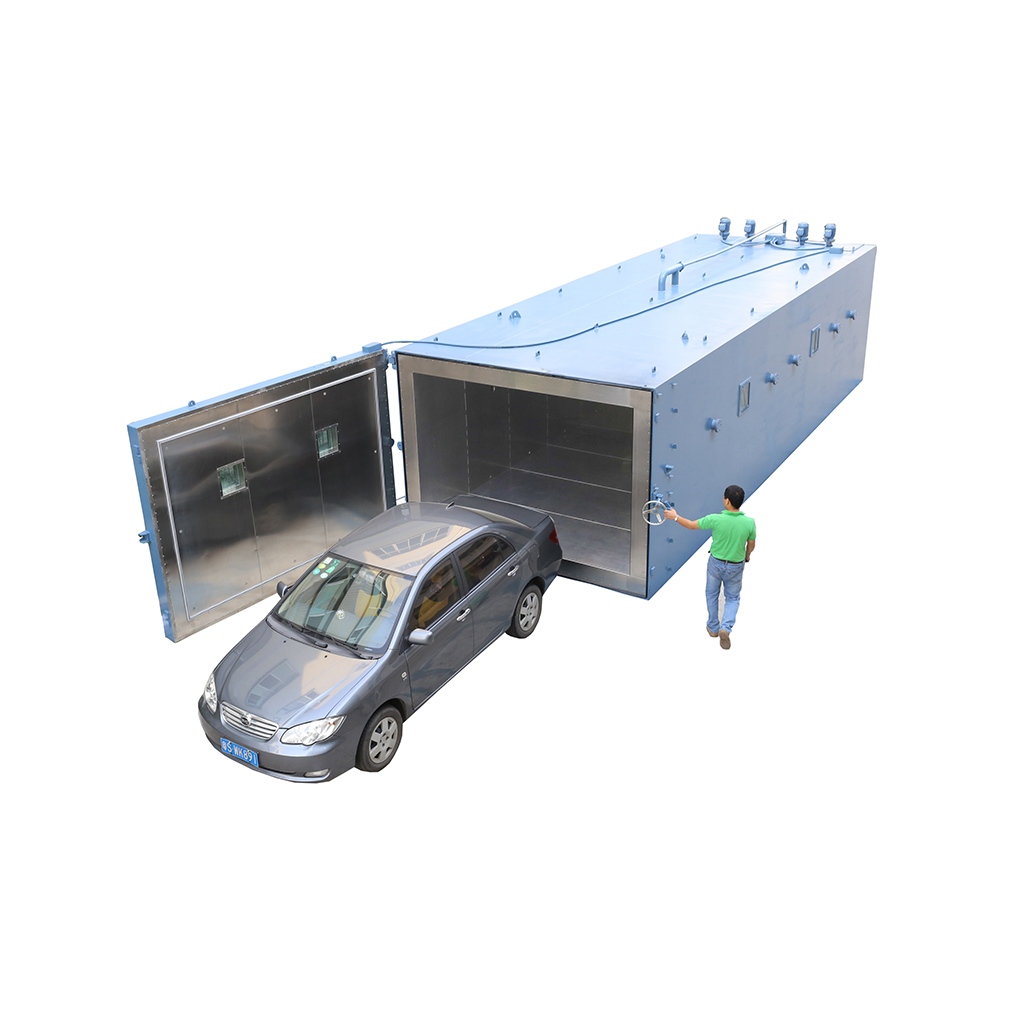
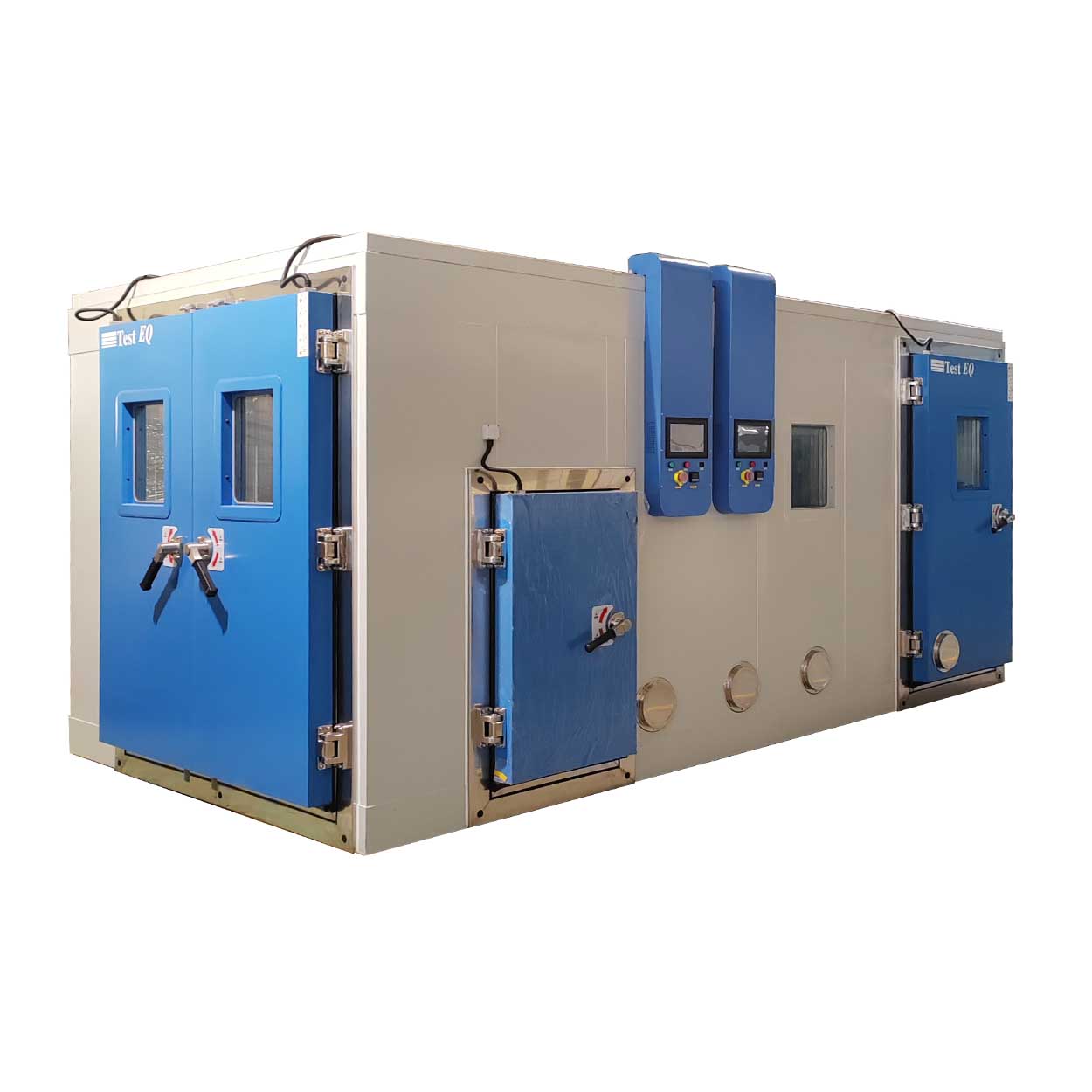
Altitude Test Chamber for High-Altitude and Low-Pressure Testing
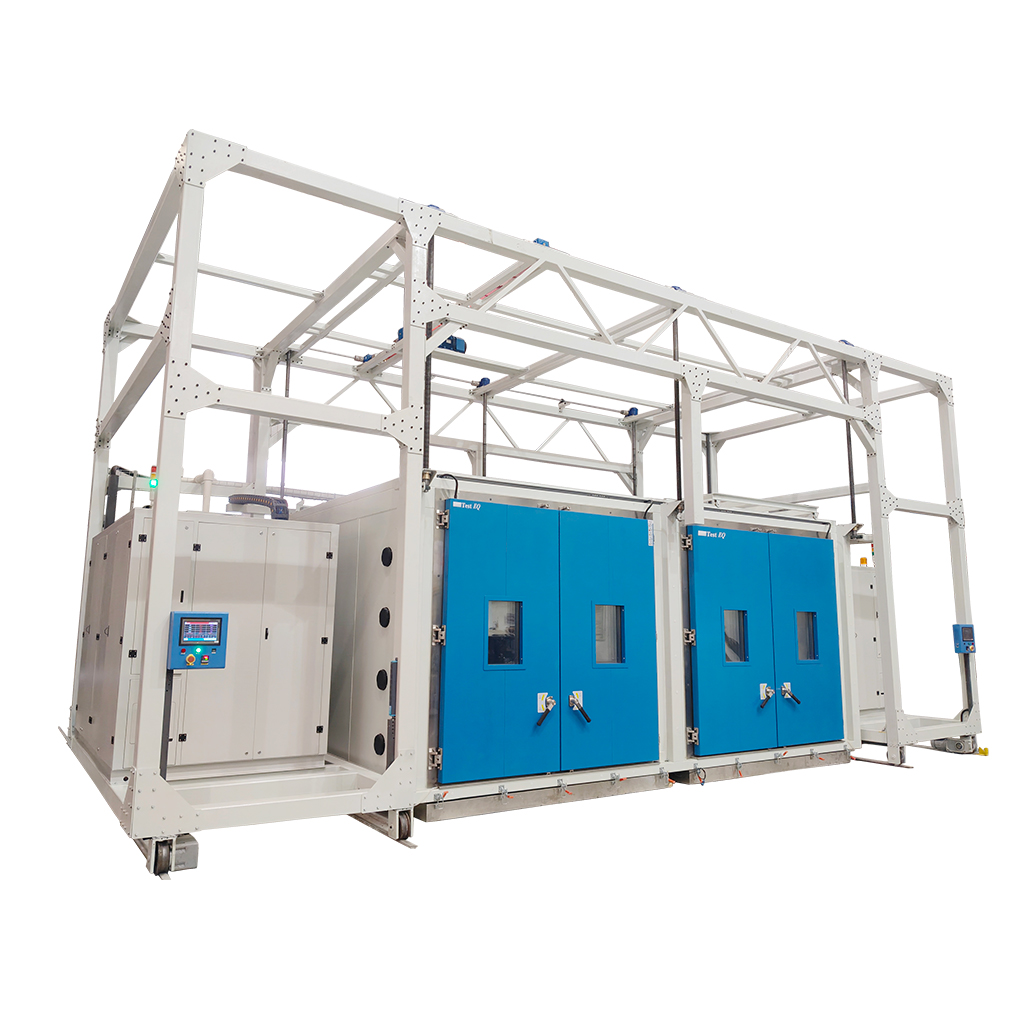
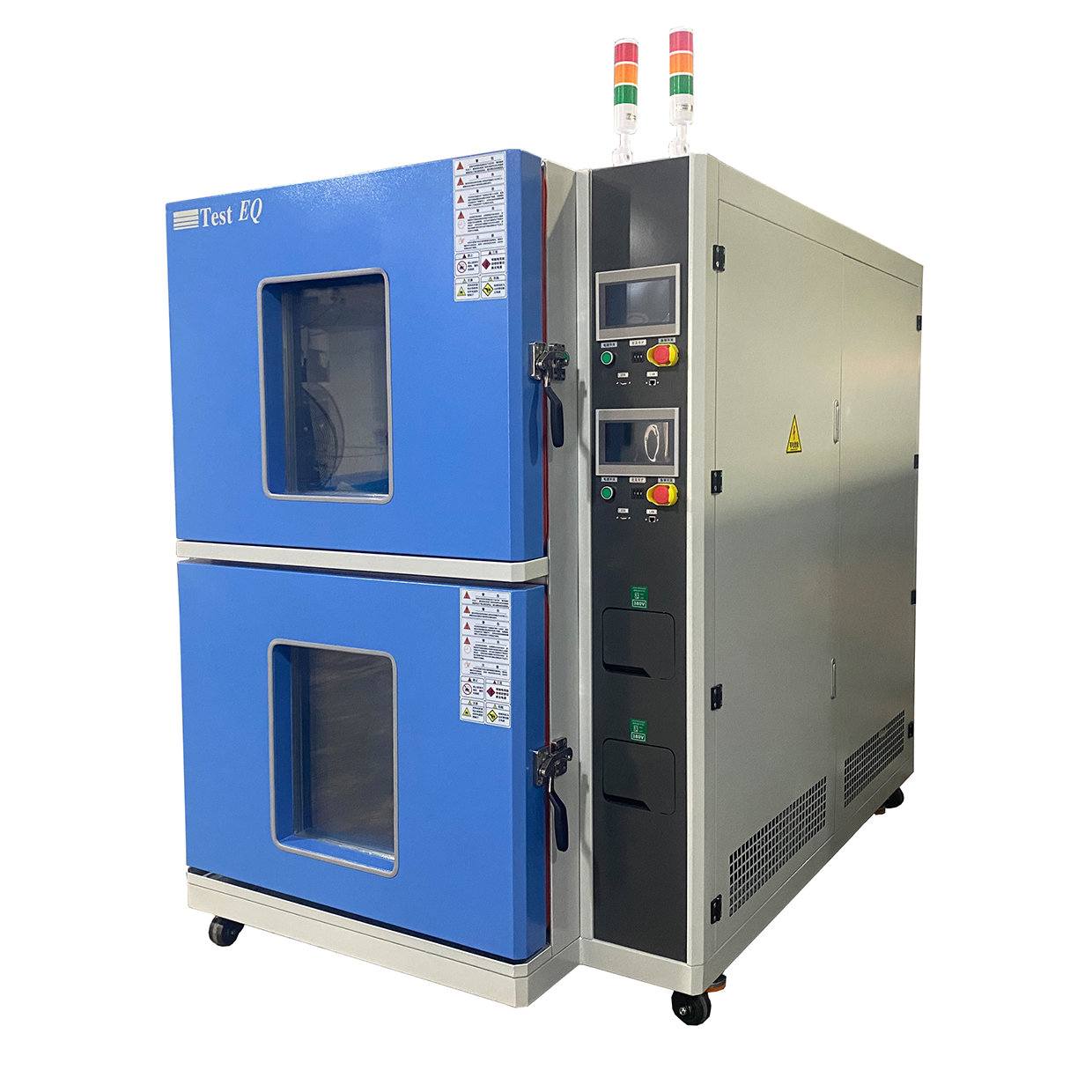
An altitude test chamber is an environmental testing system used to reproduce reduced atmospheric pressure and high-altitude conditions in a controlled laboratory environment.
TestEQ altitude test chambers are designed for aerospace, avionics, defense, automotive electronics, batteries, communication equipment, electronic components and other products that require reliable performance under reduced atmospheric pressure.
By controlling chamber pressure and, when required, temperature, engineers can reproduce defined altitude conditions and evaluate product operation, structural integrity, sealing performance, electrical behavior and thermal performance.
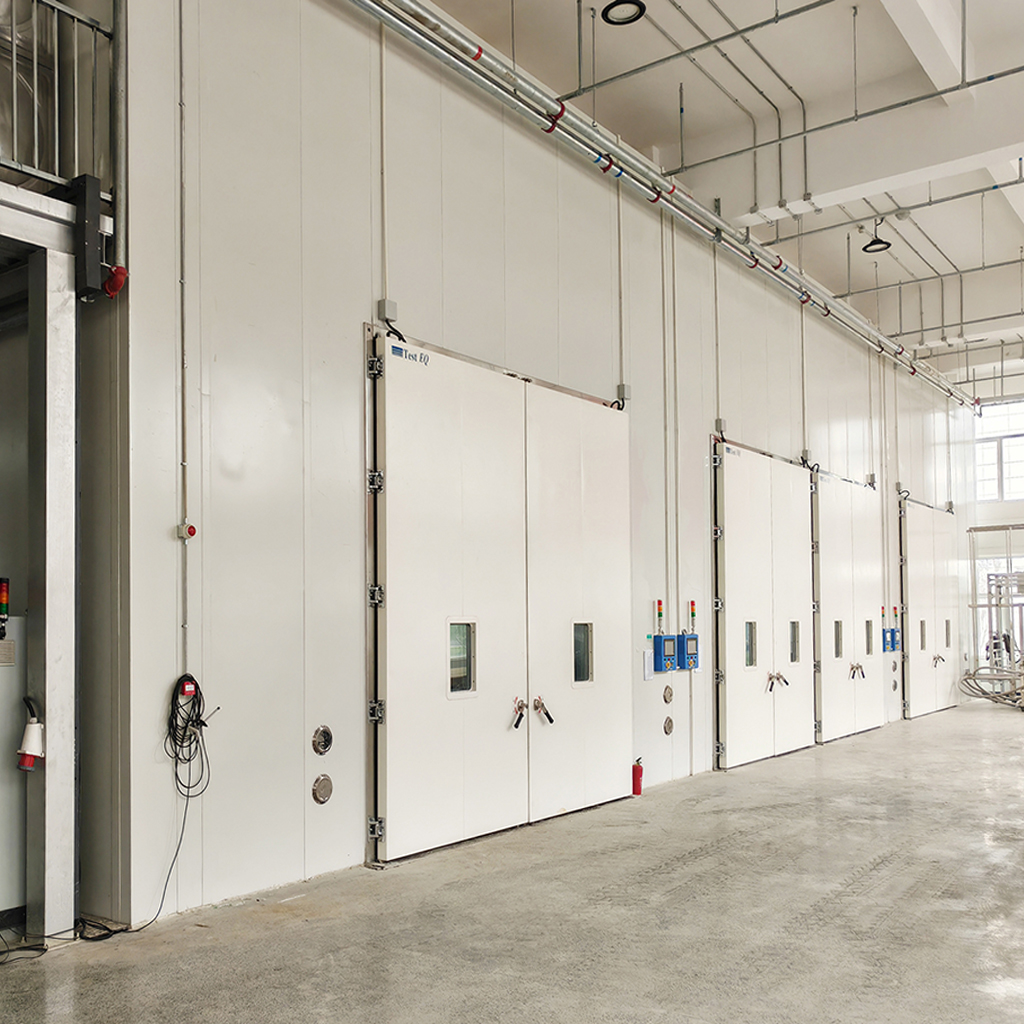
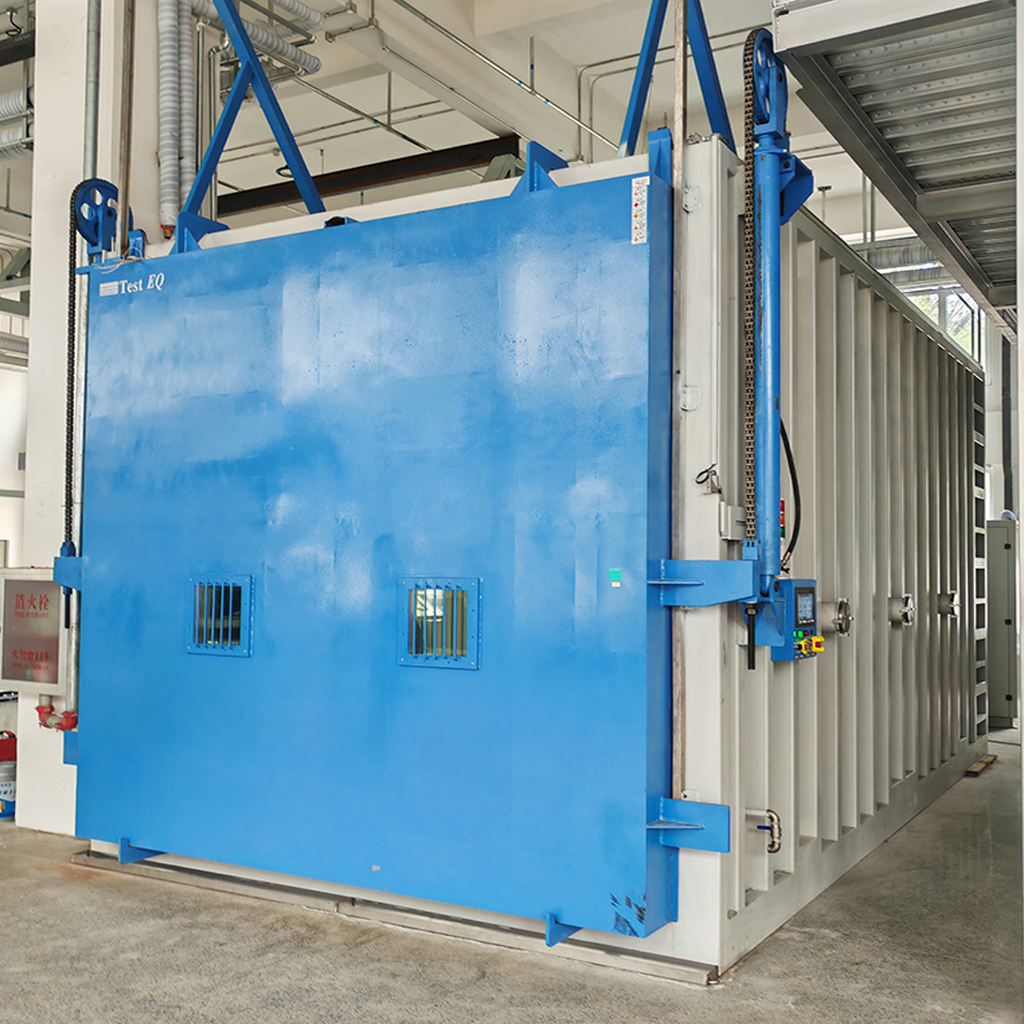
TestEQ provides standard and customized altitude test chamber configurations, from compact laboratory systems to larger chambers for specialized qualification and research programs.
What Is an Altitude Test Chamber?
An altitude test chamber simulates atmospheric pressure conditions associated with high elevations by reducing the pressure inside a sealed test chamber.
Altitude is normally represented as a pressure-altitude condition, while the physical parameter controlled by the chamber is absolute air pressure.
This distinction is important when defining an equipment specification. The required test pressure should be established from the applicable test standard, product operating environment and qualification plan rather than selecting a chamber only from a nominal altitude number.
Depending on the configuration, an altitude test chamber can control and record:
• Absolute chamber pressure
• Equivalent altitude
• Temperature
• Pressure transition rate
• Test duration
• Programmable pressure profiles
• Product operating status
• Test data and alarms
IEC 60068-2-13:2021, for example, defines low-air-pressure environmental testing and relates selected air-pressure levels to approximate altitude conditions. The applicable pressure and exposure duration should be defined by the relevant product specification or test program.
What Does an Altitude Test Chamber Test?
Altitude testing helps engineers evaluate how products behave when atmospheric pressure is reduced.
Typical evaluation areas include:
Sealing and Leakage
Reduced external pressure can expose weaknesses in seals, gaskets, housings, pressure-sensitive components and enclosed assemblies.
Electrical Performance
Low-pressure environments can affect insulation, electrical clearances, heat dissipation and the operating behavior of electronic equipment.
Thermal Performance
Lower air density changes convective heat transfer. Products that depend on air cooling may therefore behave differently at altitude.
Mechanical Integrity
Pressure differences between an enclosure and the surrounding environment can create mechanical stress in sealed or partially sealed structures.
Battery and Energy Systems
Altitude conditions may be incorporated into battery and energy-system qualification when reduced pressure is relevant to the intended application.
Functional Operation
The test can verify whether a product continues to operate correctly during simulated ascent, high-altitude operation and return to normal pressure.
Core Advantages:
Simulates high altitude low pressure from sea level to 100,000 ft (or higher)
Wide temperature control range for thermal simulation
Stable pressure and temperature regulation system
Accurate and programmable altitude profiles
Designed for continuous long-term testing
Compliant with MIL-STD, IEC 60068, DO‑160, and other international standards
Customizable chamber size and control modes
Working Principle:
The altitude test chamber creates a low-pressure environmentusing vacuum pumps and pressure control systems while simultaneously controlling temperature with refrigeration and heating systems. Programmable profiles allow staged or continuous altitude simulations, helping replicate real-world flight conditions.
This dynamic simulation is crucial for validating product performance under pressure variations and thermal stress.
Altitude Test Chamber vs. Thermal Vacuum Chamber
| Engineering Factor | Altitude Test Chamber | Thermal Vacuum Chamber |
|---|
| Primary Purpose | Simulate high-altitude and reduced-pressure conditions | Simulate deep vacuum and thermal-vacuum environments |
| Pressure Level | Reduced atmospheric pressure | Much deeper vacuum |
| Temperature Testing | May combine temperature and pressure control | Controlled temperature under vacuum |
| Typical Applications | Aircraft, avionics, automotive electronics, batteries and general high-altitude testing | Spacecraft, satellites, aerospace and thermal-vacuum qualification |
| Test Objective | Evaluate product performance under simulated altitude | Evaluate performance under vacuum and thermal-vacuum conditions |
| Typical Standards | IEC 60068-2-13, MIL-STD-810 Method 500, RTCA DO-160 | Aerospace and space-specific thermal-vacuum requirements |
| Key Selection Factor | Required absolute pressure and simulated altitude | Required vacuum level, thermal range and heat-load conditions |
Which Chamber Should You Choose?
• High-altitude or reduced-pressure testing → Altitude Test Chamber
• Temperature + reduced-pressure testing → Temperature Altitude Chamber
• Deep vacuum or space thermal-vacuum testing → Thermal Vacuum Chamber
Engineering Note: Equipment selection should be based on the required absolute pressure, temperature range, test article, heat load, applicable standard and test duration, rather than the equipment name alone.
Altitude Chamber vs Temperature Chamber:
| Feature | Altitude Test Chamber | Temperature Chamber |
|---|
| Primary Focus | Pressure & altitude simulation | Temperature control |
| Typical Use | Aerospace, aviation testing | Electronics, materials testing |
| Standards | DO‑160, IEC 60068 | JESD22, MIL‑STD |
| Test Conditions | Low pressure & temp | Temp range only |
Altitude Test Chamber Applications and Validation Cases
Customer:
Aerospace / Satellite Manufacturer
Challenge:
Validate electronics under 8,000m altitude equivalent environment
Solution:
TestEQ temperature altitude chamber
Result:
Verified reliability under low pressure and temperature cycling conditions
Why Choose TestEQ for Altitude Testing?
TestEQ develops environmental test systems for reliability qualification, product validation and engineering research.
Altitude testing systems can be configured according to:
Required pressure range
Chamber volume
Temperature requirements
Pressure transition profile
Test standard
Product loading method
Data acquisition requirements
Laboratory installation conditions
For projects requiring temperature, pressure and other environmental stresses in the same system, TestEQ can develop a customized configuration around the actual test profile.
How to choose an altitude test chamber?
1. Define the Required Pressure Range
Specify the minimum absolute pressure required by the test method rather than relying only on an altitude value.
2. Define the Test Volume
Consider the dimensions, quantity and fixture arrangement of the test articles.
3. Determine Temperature Requirements
If the product must be evaluated under both low pressure and controlled temperature, a combined temperature-altitude configuration may be more appropriate.
4. Confirm Pressure Transition Requirements
Some qualification programs require controlled depressurization or defined pressure transition profiles.
5. Identify the Applicable Standard
Confirm the exact standard, method, category and revision before requesting a quotation.
6. Consider Measurement and Traceability
Pressure and temperature data should be monitored and recorded at a sufficient rate for engineering analysis and qualification documentation.
7. Plan for Future Testing
A modular chamber configuration can provide greater flexibility when future products require different pressure, temperature or test-volume conditions.
Supported Altitude Testing Standards:
The applicable standard should be confirmed before the chamber configuration is finalized.
Common references include:
• IEC 60068-2-13 — Low air pressure environmental testing
• MIL-STD-810 Method 500 — Low-pressure testing
• RTCA DO-160 Section 4 — Temperature and altitude testing for airborne equipment
• Applicable national or industry-specific environmental test specifications
IEC 60068-2-13:2021 specifically covers specimens that may experience low air pressure during transportation, storage or service.
RTCA DO-160 Section 4 addresses temperature and altitude conditions for airborne equipment, with the actual category and test conditions determined by the applicable aircraft installation and qualification requirements.
Frequently Asked Questions About Altitude Test Chambers:
1.What is an altitude test chamber?
An altitude test chamber is a controlled environmental testing system that reproduces reduced atmospheric pressure corresponding to a specified high-altitude condition.
2.What conditions can an altitude test chamber simulate?
It can simulate low-pressure (vacuum) environments, wide temperature ranges, and programmable altitude profiles for ascent and descent scenarios.
3.What products require altitude testing?
Aerospace equipment, avionics, electronic components, batteries, automotive electronics, sensors, communication equipment and other products that may experience reduced atmospheric pressure can require altitude testing.
4.Which standards are commonly used for altitude testing?
Common references include IEC 60068-2-13, MIL-STD-810 Method 500 and RTCA DO-160 Section 4. The applicable method depends on the product and qualification program.
5. What is the difference between an altitude test chamber and a thermal vacuum chamber?
An altitude test chamber is mainly designed to simulate high-altitude atmospheric conditions by controlling pressure and temperature, while a thermal vacuum chamber provides a deeper vacuum environment for space simulation and thermal balance testing. The suitable system depends on the application requirements, test altitude level, and vacuum performance needed.
6. Can an altitude test chamber simulate temperature and pressure changes simultaneously?
Yes. A temperature altitude test chamber can simultaneously control temperature and low-pressure conditions to reproduce real high-altitude environments. This capability allows engineers to evaluate product reliability during altitude changes, thermal cycling, and extreme environmental conditions.
7. How high an altitude can an altitude test chamber simulate?
The simulation altitude depends on the chamber design and customer requirements. Advanced altitude test chambers can reproduce conditions equivalent to thousands of meters above sea level and can be customized for aerospace, aviation, defense, and electronic component testing applications.
8. How do I choose the right altitude test chamber for my application?
Start with the required absolute pressure, equivalent altitude, chamber volume, temperature range, pressure transition profile, applicable standard and test article. These parameters determine the appropriate chamber configuration.
Internal Linking Module
Recommended Equipment
Combined temperature and low-pressure simulation chamber designed for aerospace electronics, batteries, and reliability qualification under extreme environments.
Large-capacity altitude chamber supporting temperature, humidity and pressure control for aerospace systems, satellites, and defense equipment testing.
Related Standards
Learn the requirements of MIL-STD-810 altitude testing and how to simulate low-pressure environments up to 100,000 ft for product qualification.
Understand environmental qualification requirements for avionics equipment, including altitude, temperature, vibration and pressure testing.
Technical Resources
Comprehensive guide explaining how temperature altitude chambers work and how to select the right system for aerospace, electronics and battery testing.
Explore the critical specifications, pressure control methods and performance factors when choosing an altitude test chamber.