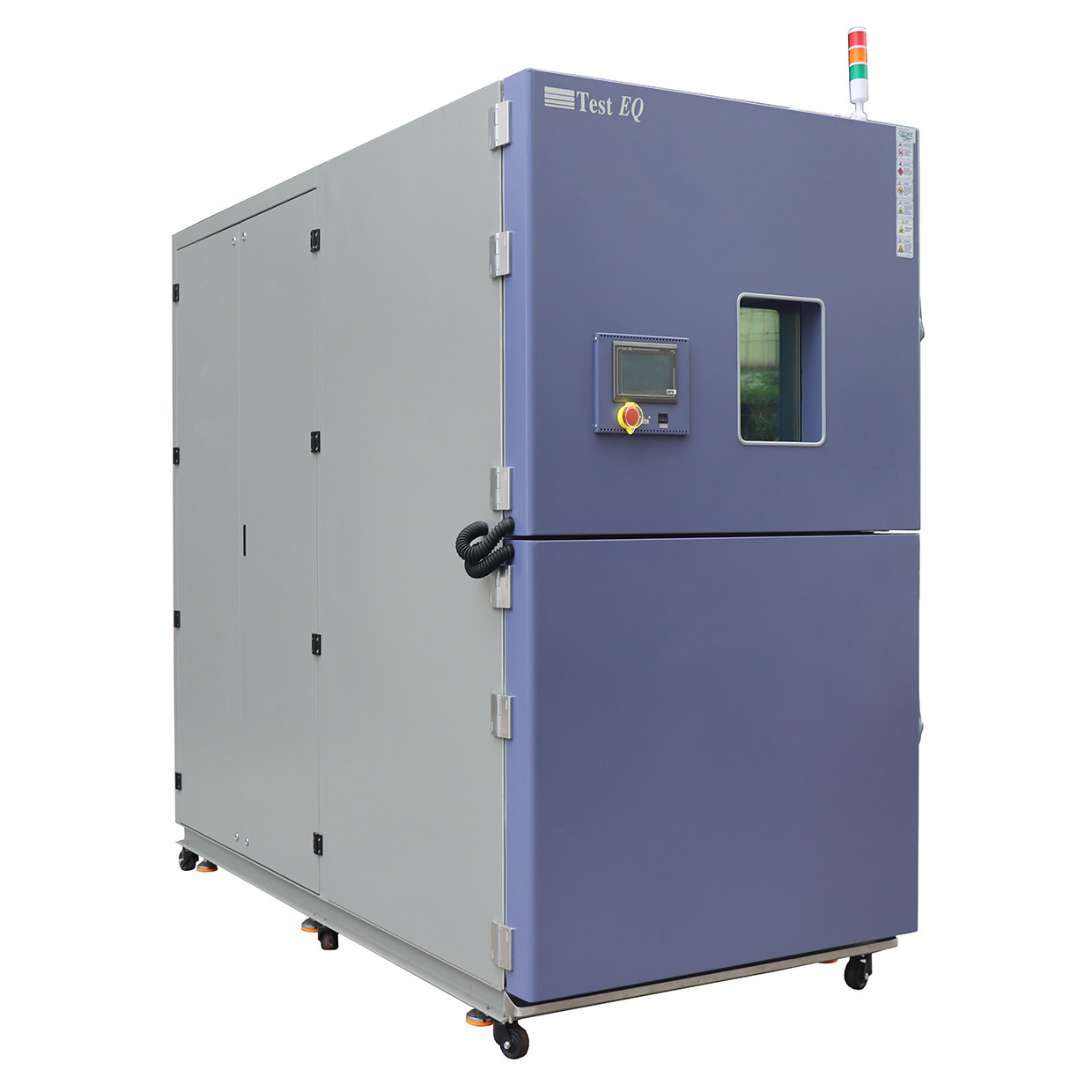
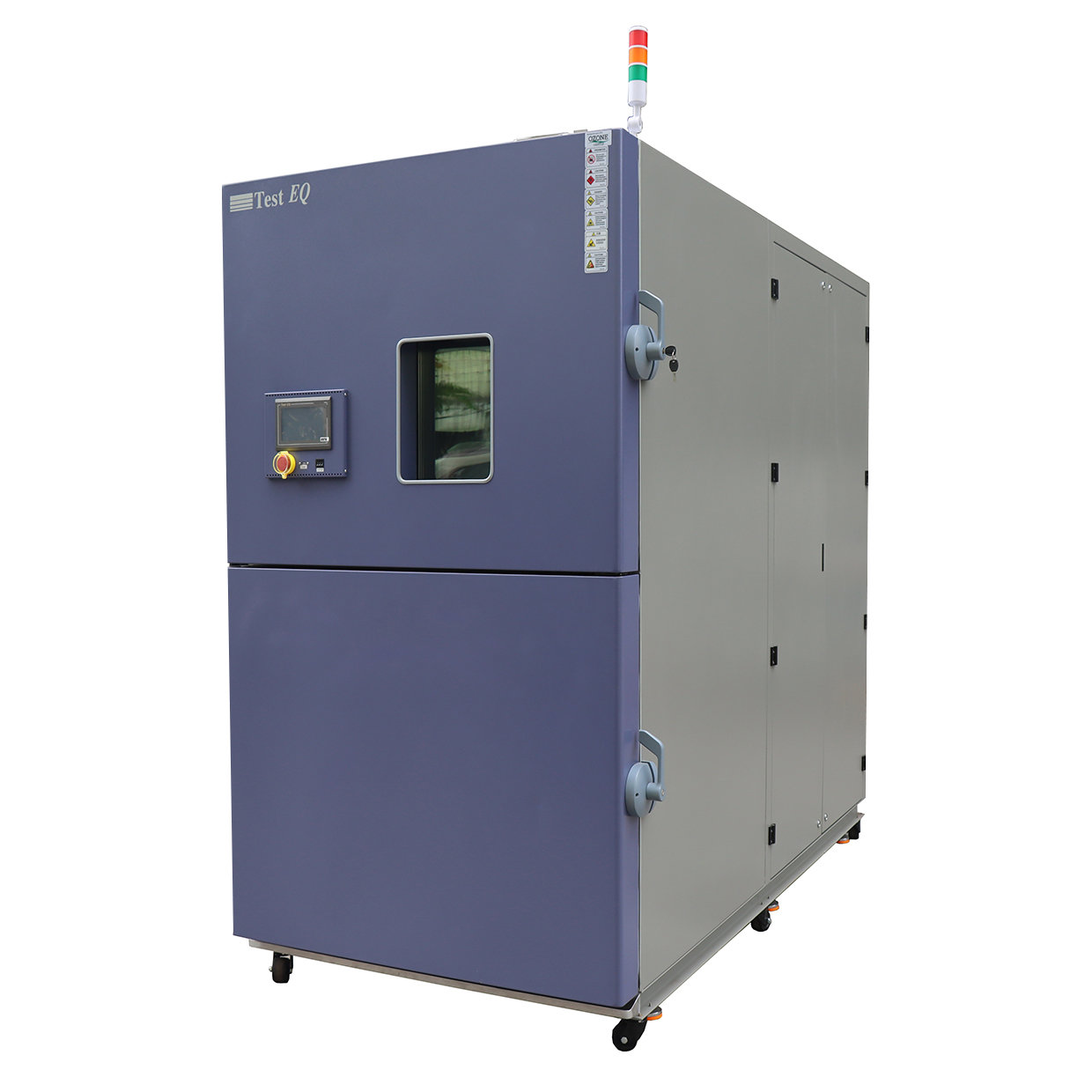
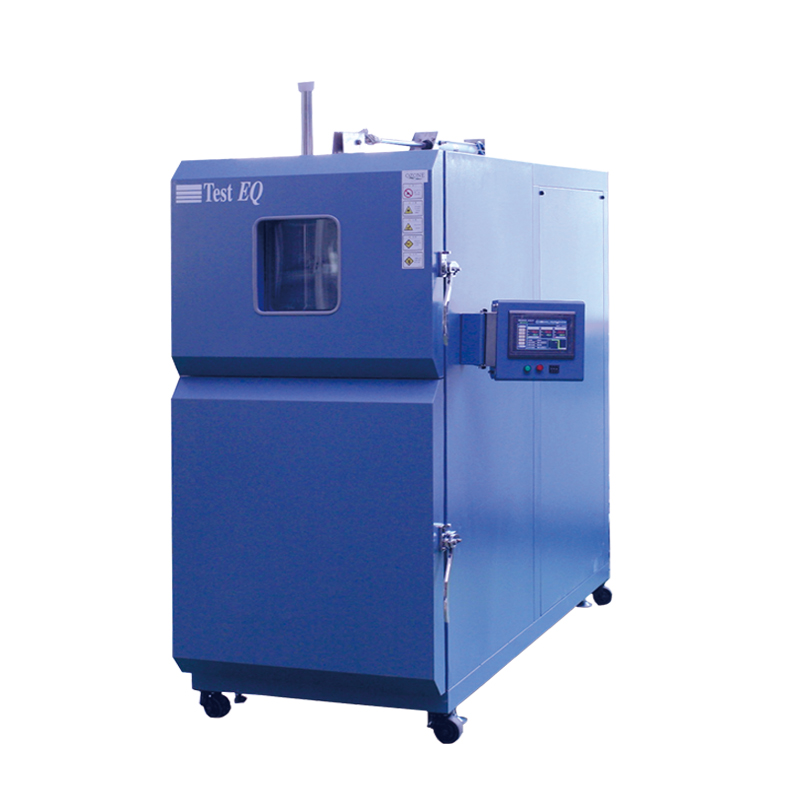
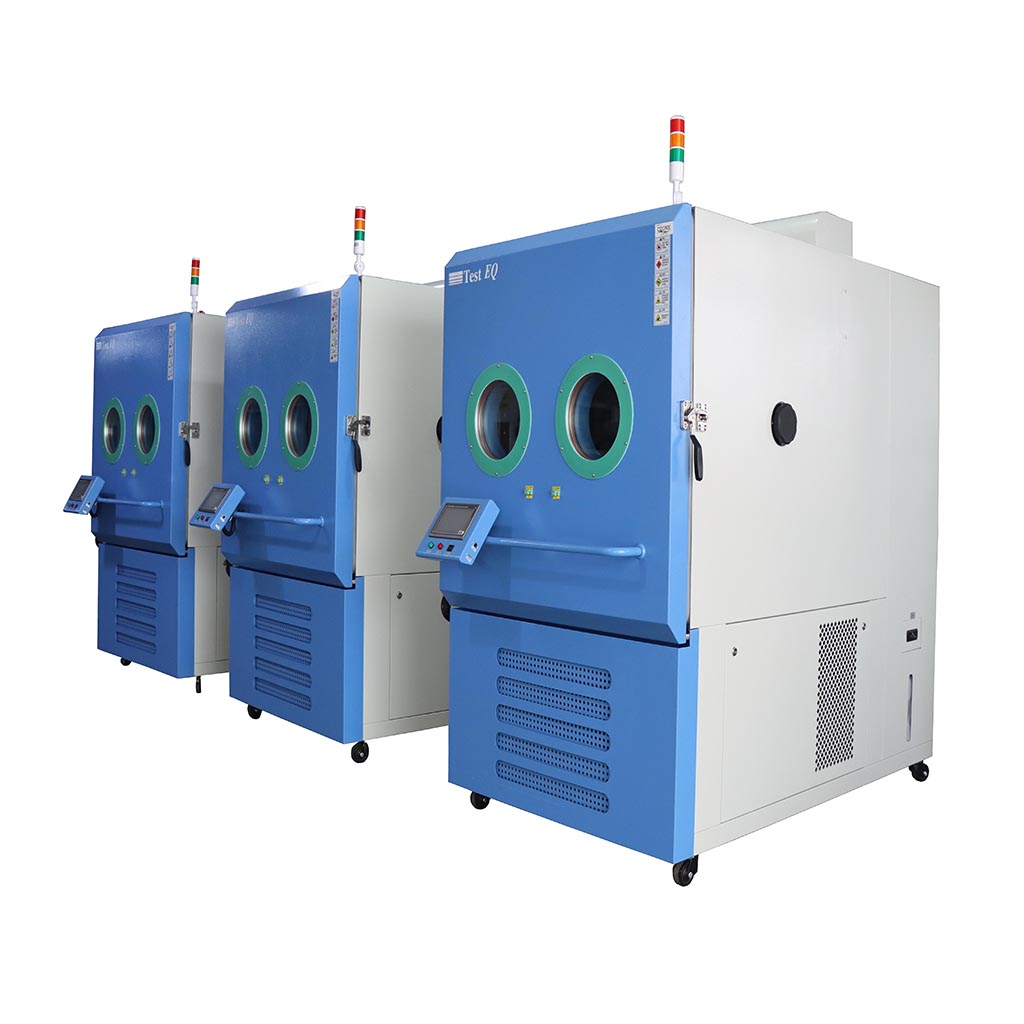
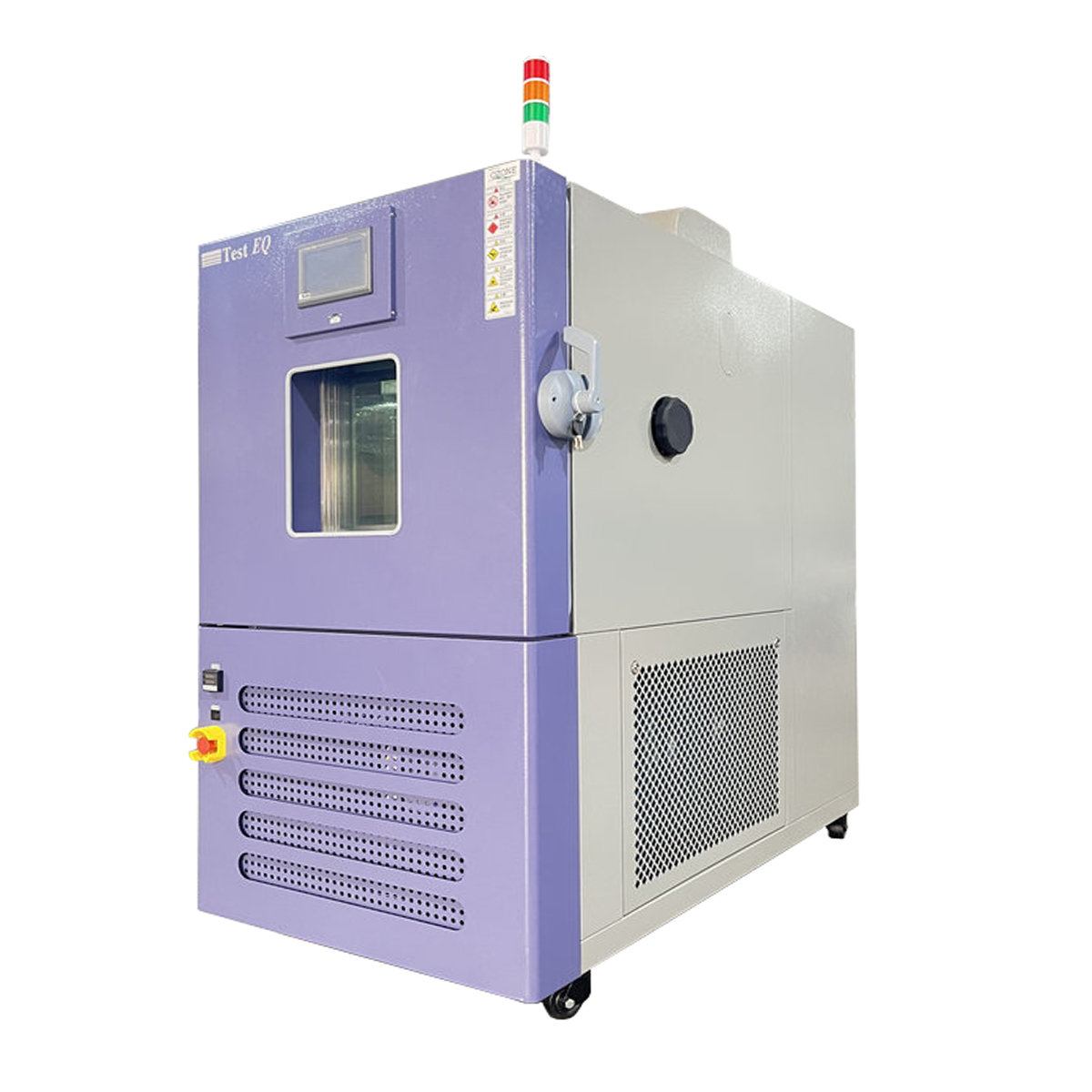
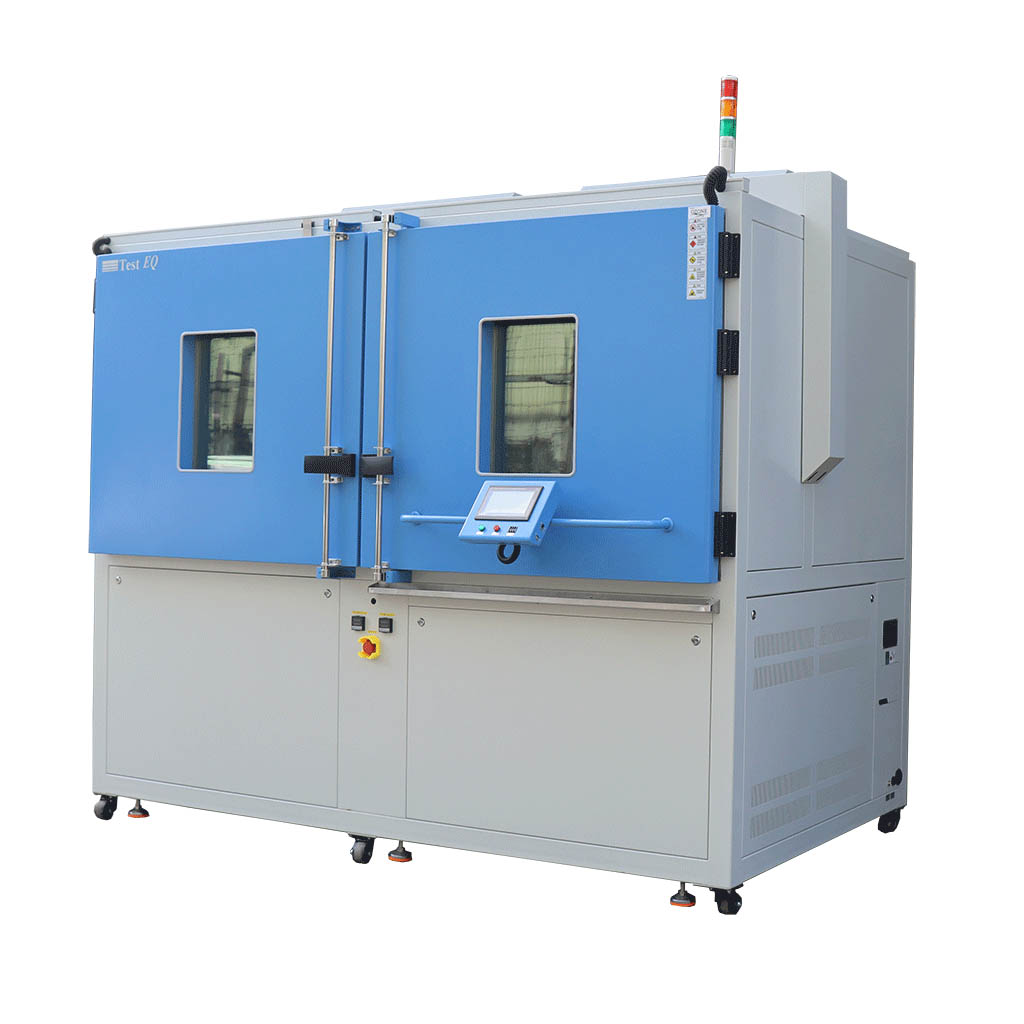
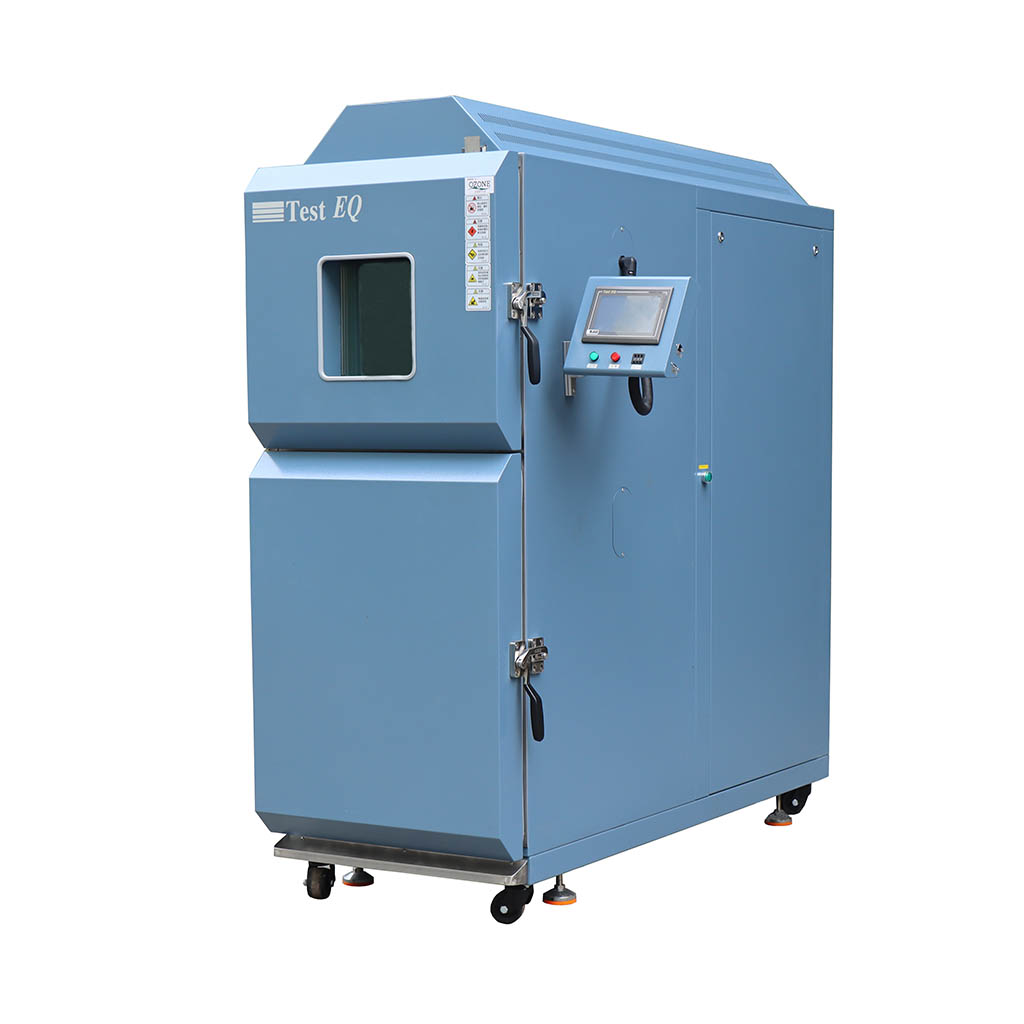
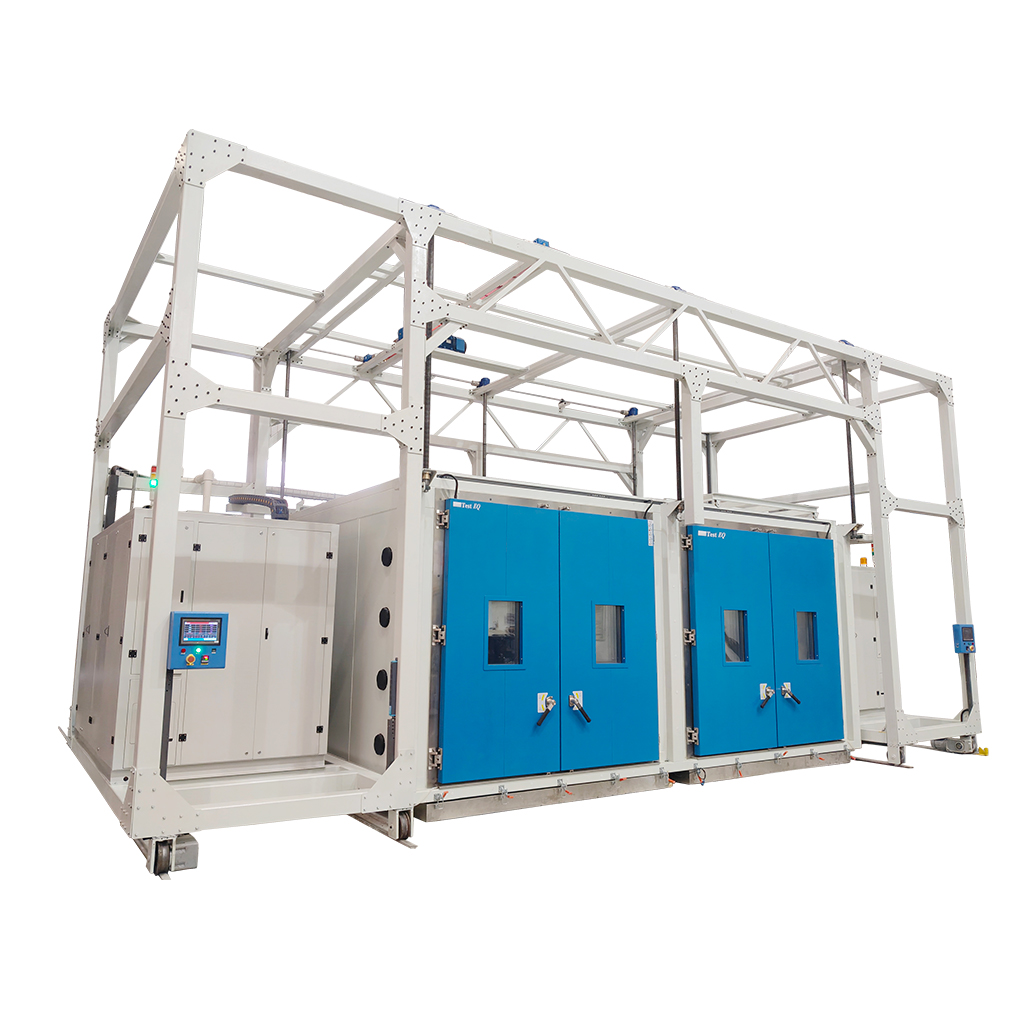
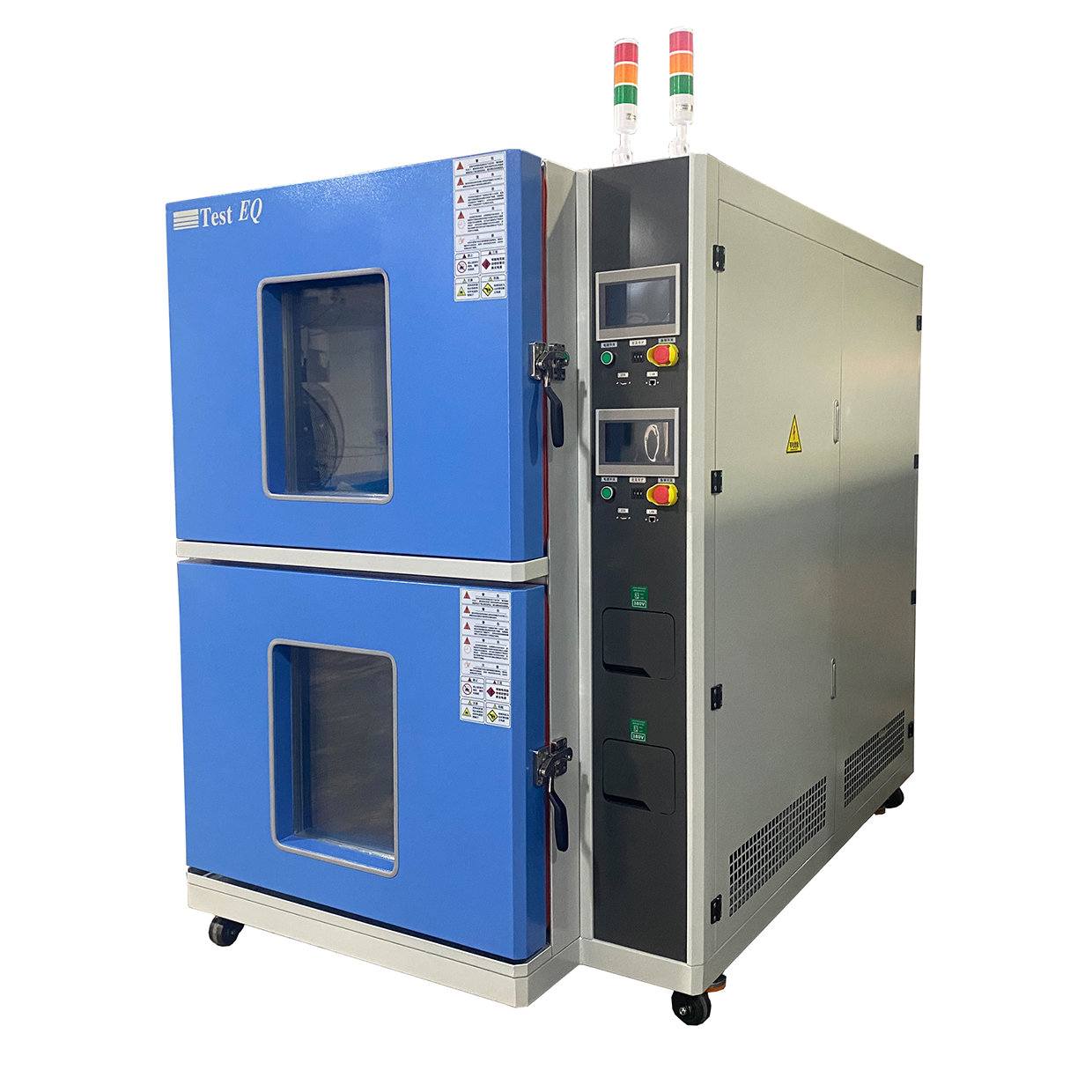
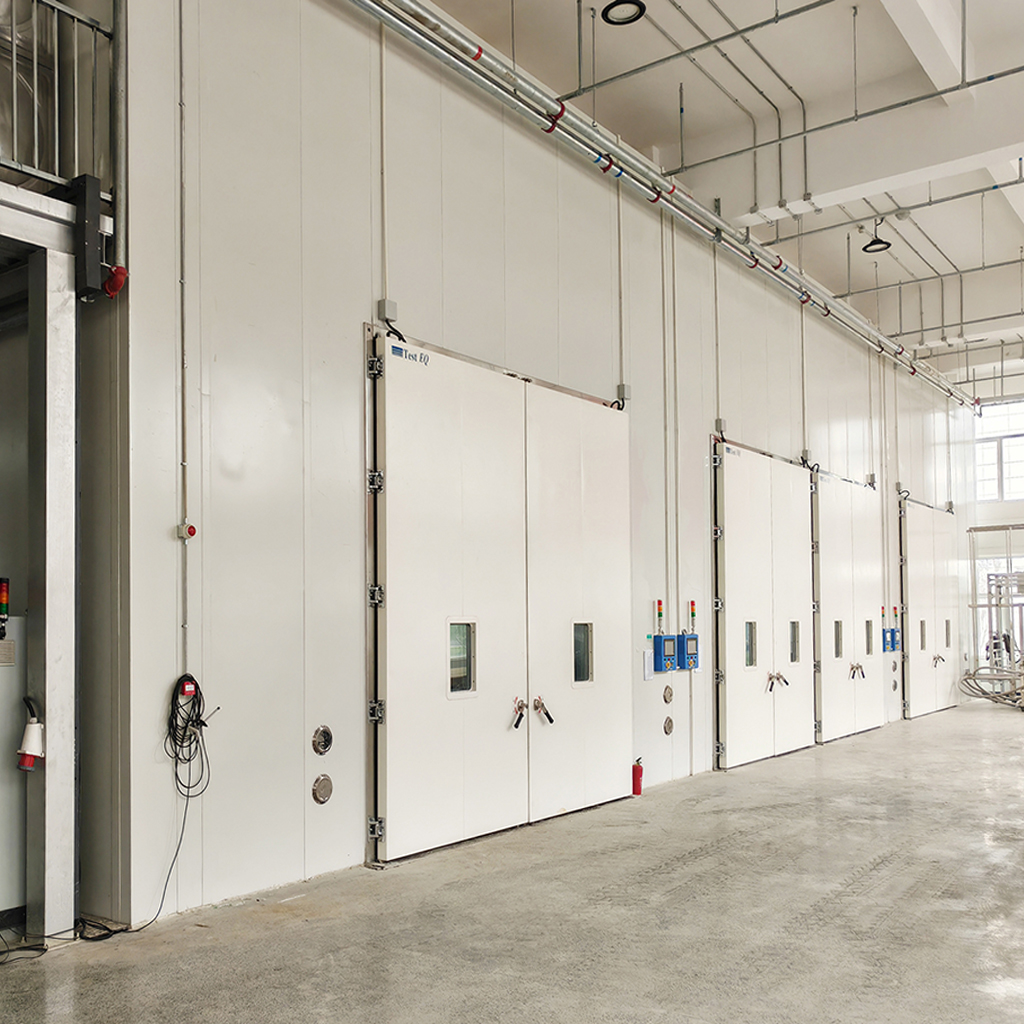
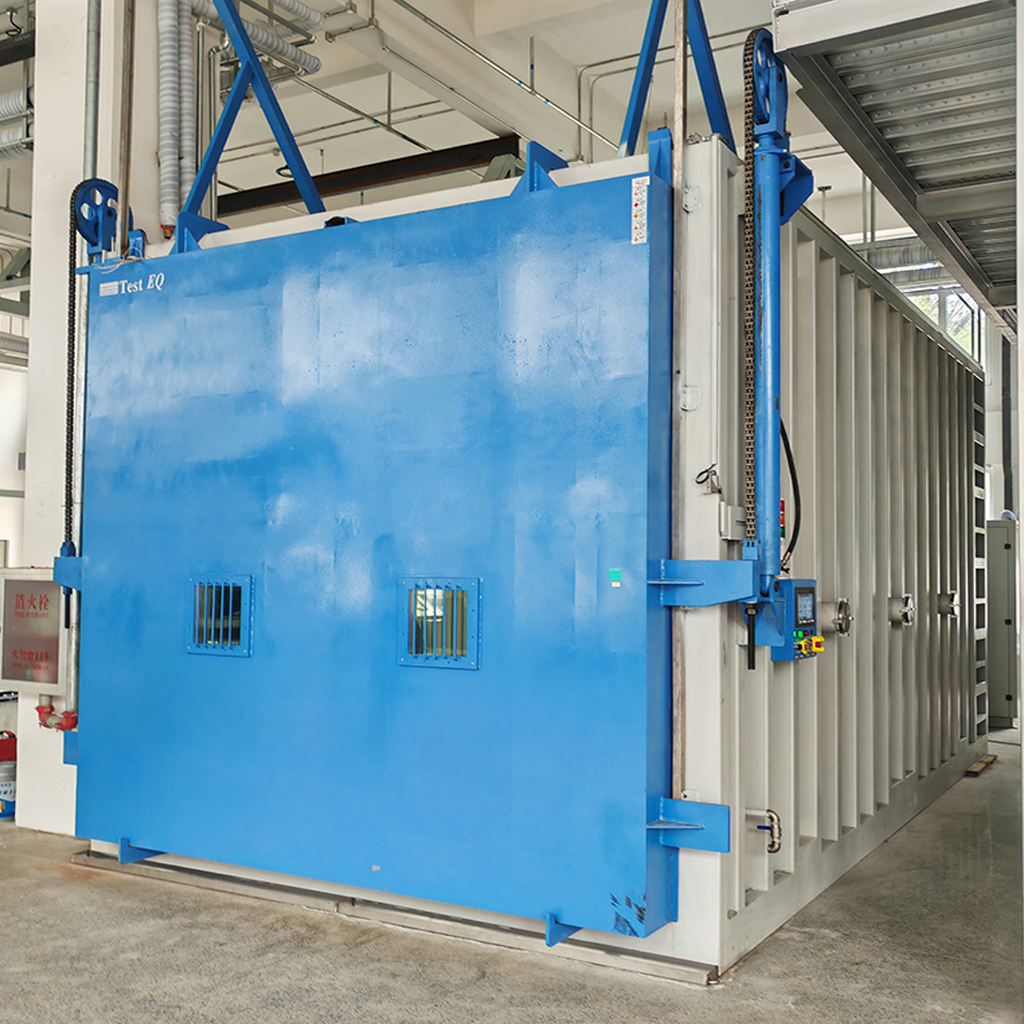
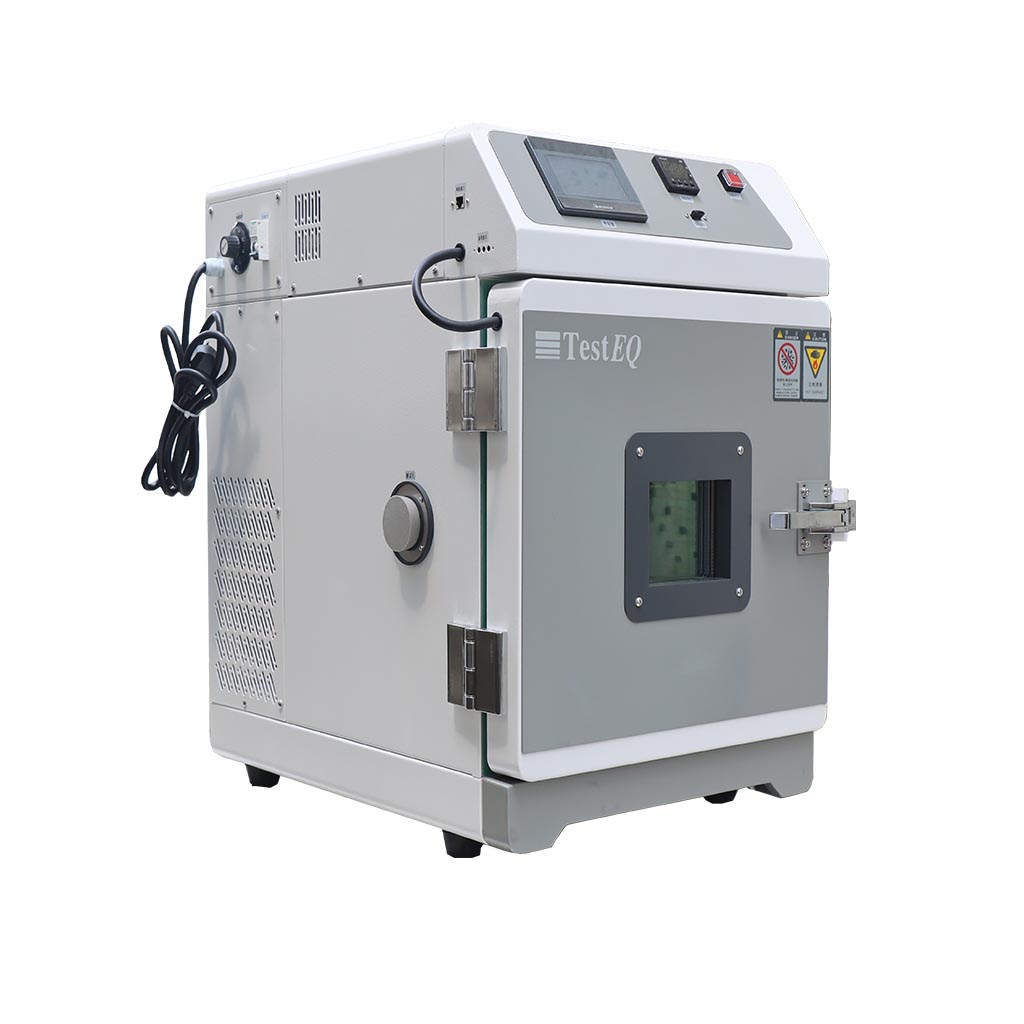
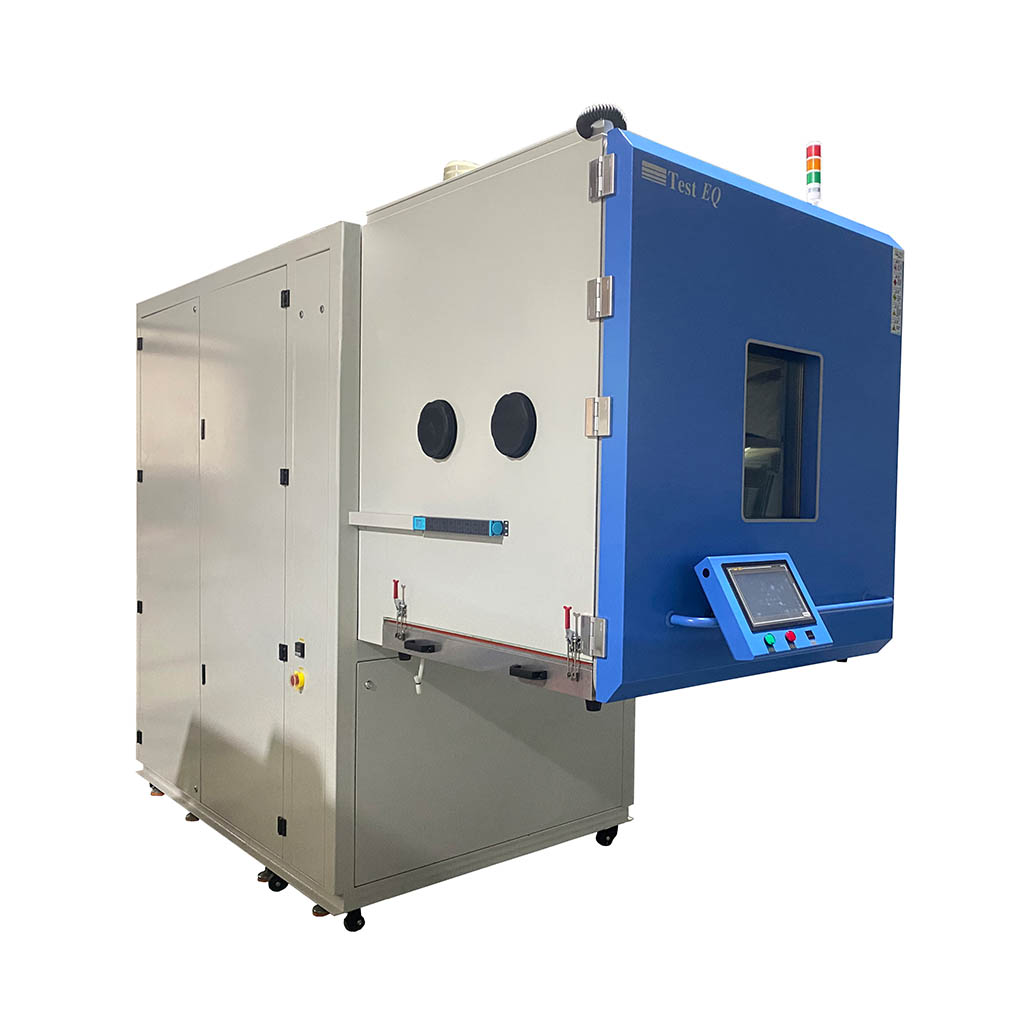
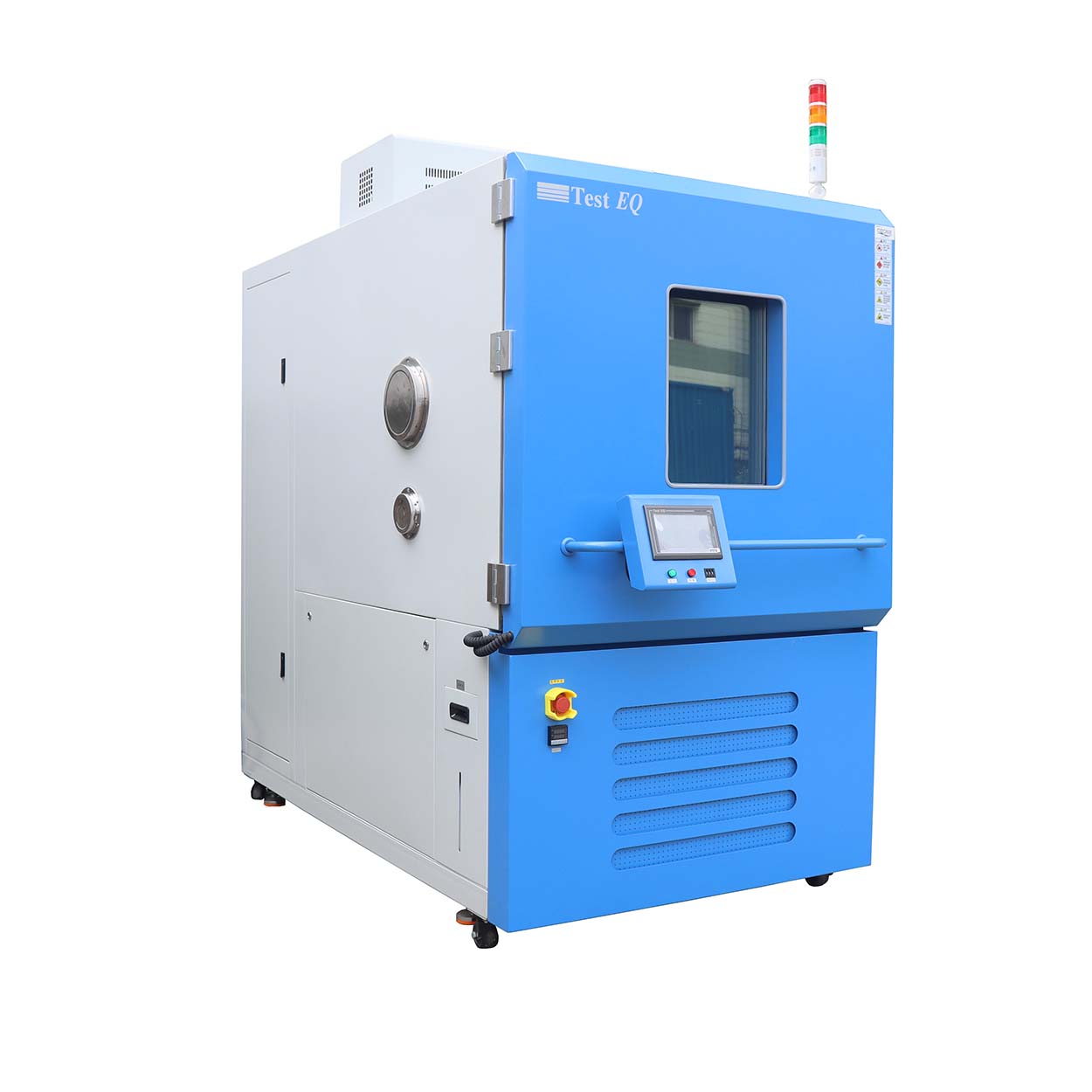
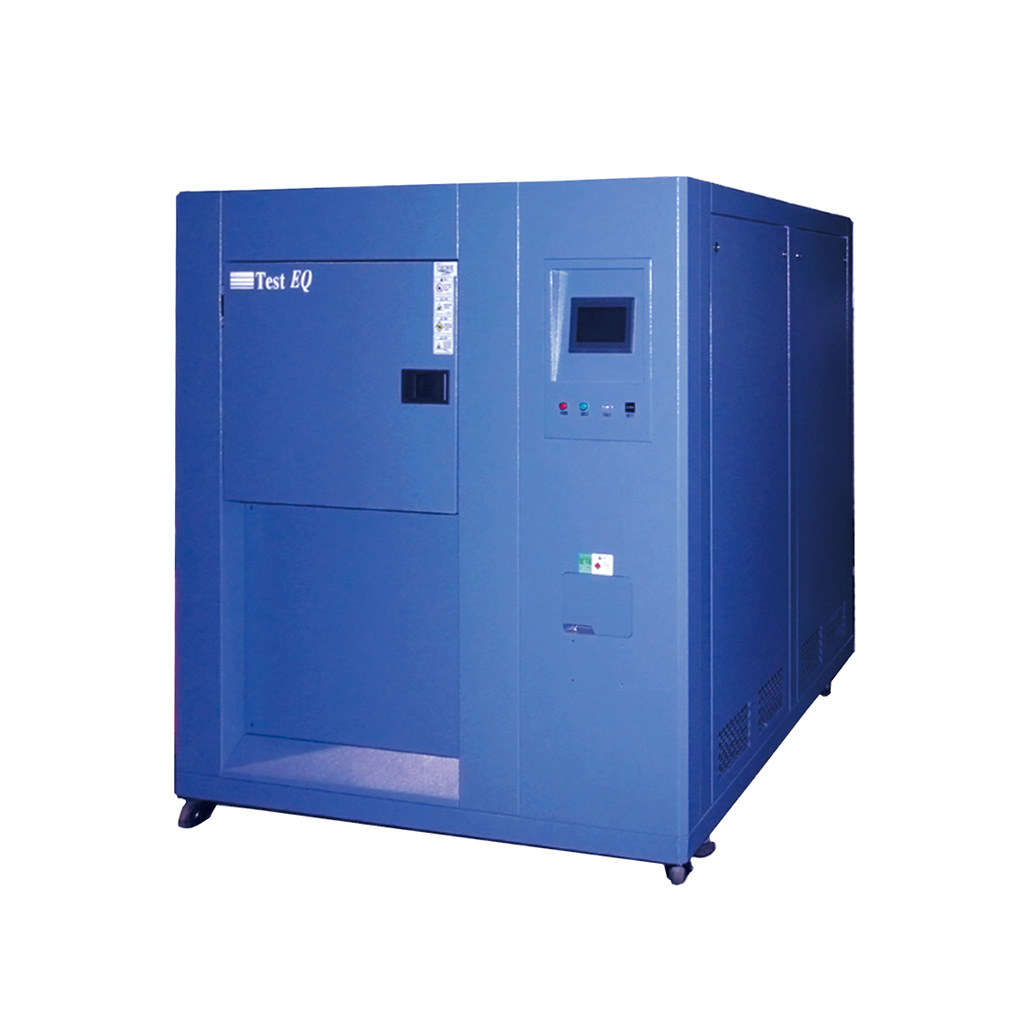
Two-Zone Thermal Shock Test Chamber
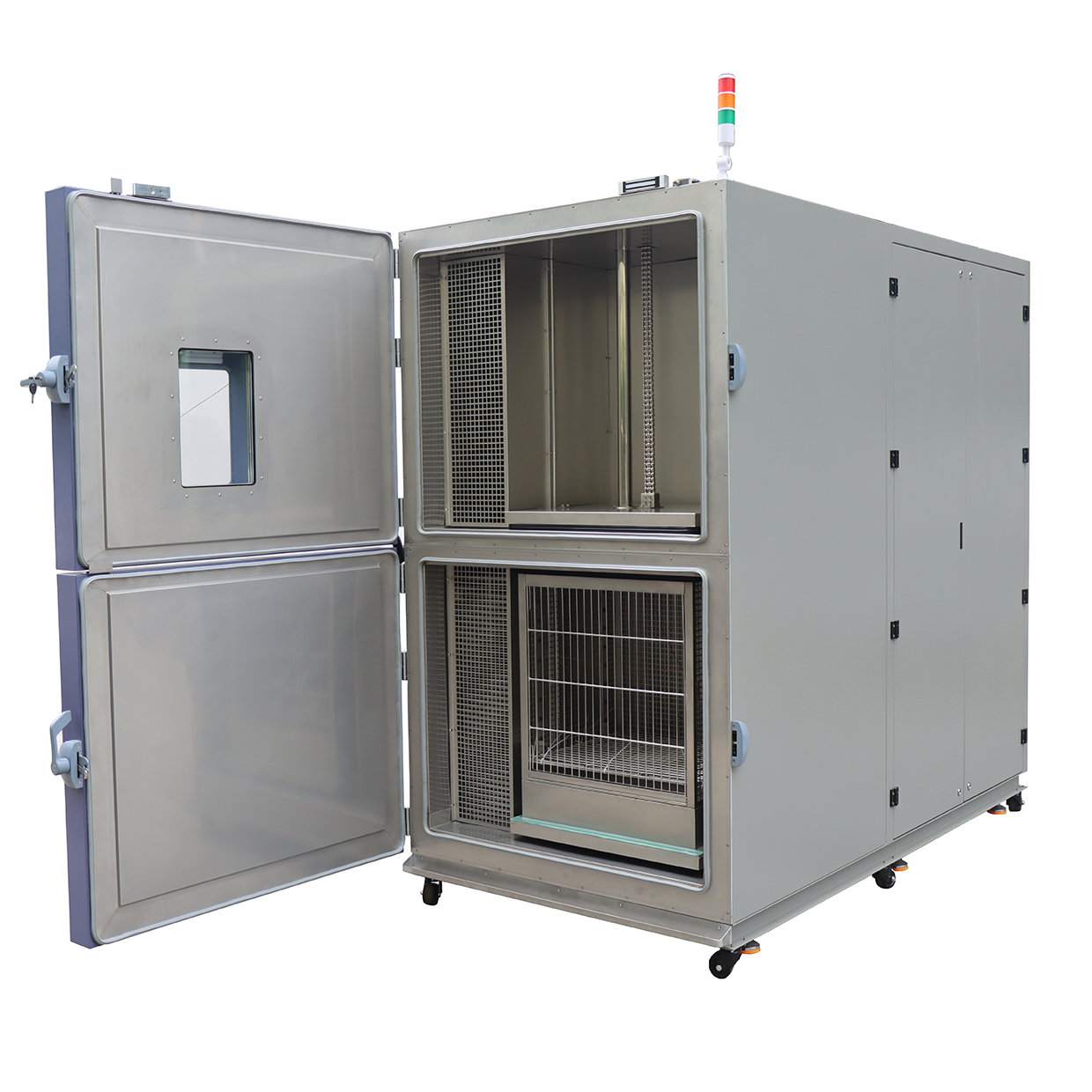
A two-zone thermal shock test chamber uses separate high-temperature and low-temperature zones. A test basket transfers the specimen between the hot and cold zones to create rapid temperature transitions.
This configuration is widely used for electronic components, semiconductor devices, automotive electronics and general environmental reliability testing.
TestEQ two-zone systems can be configured according to the required temperature range, specimen dimensions, thermal mass, cycle count and test procedure.
What Is a Two Zone Thermal Shock Test Chamber?
A two zone thermal shock test chamber is an environmental test system that uses separate hot and cold chambers to expose products to rapid temperature changes.
Unlike a temperature cycling chamber that gradually changes temperature inside one test space, a two-zone thermal shock chamber moves samples between two controlled temperature zones, creating a sudden thermal transition within seconds.
This testing method is commonly used to verify product durability against thermal expansion, contraction stress, and temperature-induced reliability failures.
Two Zone Thermal Shock Chamber Working Principle:
The two-zone thermal shock system operates by alternating the test sample between:
A high-temperature chamber
A low-temperature chamber
Movable test basket
Transfer mechanism
Temperature control system
Monitoring and safety syste
A mechanical basket system rapidly transfers the specimen between both zones, creating instant thermal stress without intermediate temperature transition.
Operation process:
Test samples are preloaded into the basket
The basket rapidly moves between hot and cold zones
Transfer time is typically<10 seconds
Thermal stress is applied through sudden temperature gradient exposure
This rapid switching creates high thermal shock stress, simulating real-life operational failure conditions in electronic components.
Advantages of a Two-Zone Configuration
Rapid mechanical transfer between hot and cold zones
Straightforward chamber architecture
Suitable for repeated thermal shock cycles
Efficient for component-level testing
Suitable for many electronics reliability programs
Available in different chamber volumes and configurations
Two-Zone vs Three-Zone Thermal Shock Chamber
| Requirement | Two-Zone | Three-Zone |
|---|
| Hot zone | Yes | Yes |
| Cold zone | Yes | Yes |
| Dedicated test zone | No | Yes |
| Specimen movement | Basket transfer | Stationary |
| Mechanical transfer | Required | Not required for each transition |
| Typical use | General component testing | Precision and sensitive testing |
The best configuration should be selected based on the test standard and specimen characteristics rather than assuming that one architecture is universally superior.
Who Should Choose a Two-Zone Chamber?
A two-zone configuration may be appropriate when:
Rapid transfer is a key requirement
Test specimens are suitable for basket movement
The laboratory performs component-level reliability testing
Multiple thermal shock cycles are required
A compact and practical configuration is preferred
Failure Mechanisms Analysis
Thermal shock testing is used to identify critical failure modes such as:
PCB solder joint fatigue
Coefficient of thermal expansion (CTE) mismatch
Microcrack propagation in semiconductor packaging
Material delamination under thermal stress
Insulation breakdown in high-power components
These failure mechanisms are essential for predicting product lifecycle reliability in harsh environments.
TestEQ Engineering Solution
TestEQ provides customized two-zone thermal shock test chambers designed for high-precision environmental simulation and industrial-grade reliability validation.
Engineering advantages:
Custom chamber sizing
Rapid temperature transition optimization
Energy-efficient cooling system design
Multi-industry testing adaptation
Long lifecycle industrial operation design
Why Choose This System:
More efficient than traditional thermal cycling systems
Faster failure detection in ESS testing
Reduced test time for high-volume validation
Flexible configuration for different product sizes
Proven reliability for industrial-grade testing environments
Optional Configurations:
Vertical lift or horizontal sliding transfer system
LN2-assisted ultra-low temperature module
Multi-basket testing system
Remote monitoring & data logging system
Custom chamber volume design
Applicable Test Standards
The two-zone thermal shock test chamber is compliant with international testing standards:
IEC 60068-2-14 (Environmental Testing – Change of Temperature)
MIL-STD-810H (Method 503 Temperature Shock)
JESD22-A104 (Temperature Cycling Test)
MIL-STD-883 (Microelectronics Test Method Standard)
GJB150 Environmental Testing
These standards ensure repeatability, comparability, and global acceptance of test results.
FAQ:
1.What is a two-zone thermal shock test chamber?
It is a thermal testing system that rapidly transfers samples between hot and cold zones to simulate extreme thermal stress conditions.
2.What is the difference between two-zone and three-zone thermal shock chambers?
Two-zone systems use direct transfer between hot and cold chambers, while three-zone systems include a test zone for improved stability.
3.What industries use two-zone thermal shock testing?
It is widely used in semiconductor, automotive, aerospace, and electronics manufacturing industries.
4.What standards does it comply with?
It supports MIL-STD-810, IEC 60068, and JEDEC reliability testing standards.
5.Why is two-zone faster?
Because it uses a mechanical basket transfer system instead of airflow transition, reducing cycle time significantly.
6. What temperature range can a two-zone thermal shock test chamber achieve?
A two-zone thermal shock test chamber can typically provide a wide temperature range for reliability testing, with high-temperature zones reaching approximately +150°C to +200°C and low-temperature zones reaching below -60°C depending on the chamber configuration. The temperature capability can be customized according to specific test requirements and industry standards.
7. How do you select the right two-zone thermal shock test chamber for your application?
Selecting the right thermal shock chamber depends on several factors, including test specimen size, temperature range, transfer time requirements, load conditions, and applicable testing standards. Engineers should evaluate chamber performance, temperature recovery capability, control accuracy, and long-term reliability before choosing a system.
8. What products are commonly tested with a two-zone thermal shock chamber?
Two-zone thermal shock chambers are commonly used for reliability validation of electronic and mechanical components, including semiconductor packages, PCBs, automotive sensors, connectors, battery components, and aerospace electronics. These tests help identify failures caused by thermal expansion, contraction, material mismatch, and solder joint fatigue.
Internal Linking Module
Related Products
A thermal shock test chamber (hot-cold impact test chamber) is used to expose samples to rapid temperature transitions between extreme high and low temperatures, simulating thermal stress conditions for reliability evaluation of electronic components, materials, and assemblies.
A three-zone configuration with separate hot, cold, and test zones, allowing the specimen to remain stationary during temperature transitions. Suitable for precision testing and applications where specimen movement should be minimized.
A thermal shock testing solution designed for semiconductor packages, PCB assemblies, connectors, sensors, and automotive electronic components.
An ESS chamber designed for environmental stress screening to detect latent defects in electronic products by applying rapid temperature and humidity variations during production testing.
Related Standards
A globally recognized series of environmental testing standards defining procedures for temperature, humidity, vibration, and thermal shock reliability testing of electronic equipment.
A military environmental test method used to evaluate equipment exposed to rapid temperature changes. The applicable test profile should be defined according to the equipment lifecycle and test requirements.
A semiconductor reliability test method used to evaluate component performance under repeated temperature cycling. It is particularly relevant to semiconductor packages and electronic components.
Related Articles
A technical comparison explaining the differences between thermal shock and thermal cycling testing methods, including stress intensity, application scenarios, and failure mechanisms.
A practical guide covering temperature range, transfer time, specimen size, thermal mass, chamber configuration, applicable standards, and other factors when selecting a thermal shock test chamber.
A practical guide to selecting the right thermal shock chamber for automotive components based on temperature range, transition time, specimen size, and applicable reliability standards.