Project Overview: Multi-Chamber Environmental Testing for a Huawei Laboratory
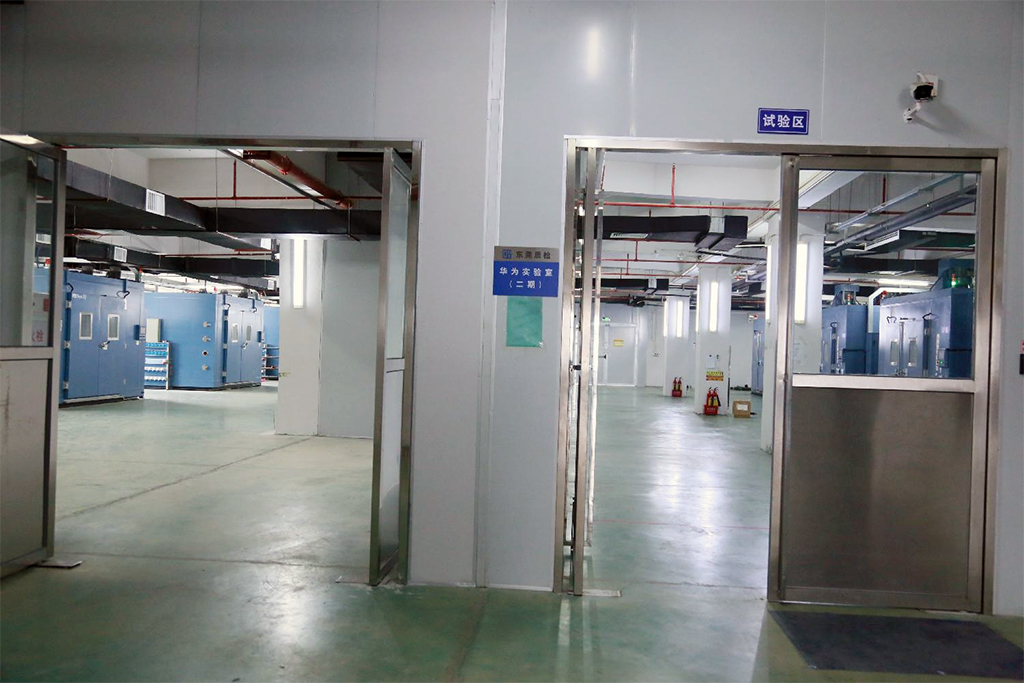
TestEQ delivered 12 walk-in climate chambers, each with a nominal chamber volume of 12 m³, for a Huawei laboratory project. The systems were specified for controlled temperature and humidity testing of telecommunications equipment, electronic assemblies, and related products requiring environmental reliability evaluation.
This project demonstrates an important consideration in laboratory infrastructure planning: deploying multiple environmental test chambers requires more than selecting individual units. Chamber specifications, laboratory layout, installation access, airflow management, monitoring requirements, and long-term maintenance must be considered together.
For laboratories planning a similar installation, the appropriate solution depends on the dimensions of the test specimens, environmental test profiles, loading conditions, and available facility infrastructure.
Project at a Glance
• Project application: Laboratory environmental testing
• Project reference: Huawei laboratory project
• Equipment supplied: 12 walk-in climate chambers
• Nominal chamber volume: 12 m³ per chamber
• Specified temperature range: −70°C to +150°C
• Specified humidity range: 20%–98% RH
• Temperature fluctuation: ≤ ±0.5°C
• Temperature uniformity: ≤ ±2°C
• System configuration: PLC-based control with touchscreen operation
• Integration scope: Laboratory layout planning, installation and commissioning, and centralized monitoring integration
The specifications above refer to the reported project configuration. Actual performance depends on the individual chamber configuration, test conditions, and applicable acceptance criteria.
Why Walk-In Climate Chambers Are Used in Telecommunications Testing
Telecommunications equipment and electronic assemblies may experience changing ambient temperatures and humidity during manufacturing, qualification, storage, transportation, and operation.
Environmental testing allows engineers to evaluate product behavior under controlled conditions and investigate potential reliability weaknesses before equipment is released into service.
A walk-in climate chamber is particularly useful when the test specimen is too large for a conventional cabinet chamber, when multiple assemblies must be tested together, or when the laboratory requires a dedicated environmental testing space.
Typical applications include:
• Telecommunications cabinets and communication equipment
• Electronic assemblies and printed circuit board assemblies
• Control units and power electronics
• Large product assemblies and multiple test specimens
• Temperature and humidity exposure for product reliability evaluation
The required test profile should be established from the product specification, qualification plan, and applicable test standard. A chamber's maximum temperature range alone does not determine whether it can reproduce the required test conditions.
Technical Specifications of the 12 m³ Walk-In Climate Chambers
The following table summarizes the reported specifications of the chambers supplied for this project.
Parameter | Reported Project Specification |
|---|---|
Quantity | 12 units |
Nominal Internal Volume | 12 m³ per unit |
Temperature Range | −70°C to +150°C |
Relative Humidity Range | 20%–98% RH |
Temperature Fluctuation | ≤ ±0.5°C |
Temperature Uniformity | ≤ ±2°C |
Control Interface | PLC-Based Controller with Touchscreen |
Air Circulation | Forced-Convection Air Circulation |
Chamber Construction | Modular Insulated-Panel Structure |
These values should be evaluated against the intended test profile and the acceptance criteria agreed upon for the specific installation.
Temperature Range and Control Performance
The specified operating range of −70°C to +150°C supports testing across a broad range of low- and high-temperature conditions.
When evaluating a chamber for a real laboratory application, engineers should distinguish between temperature range, temperature fluctuation, temperature uniformity, and temperature recovery time.
• Temperature range defines the operating limits under specified conditions.
• Temperature fluctuation describes temperature variation over time at a defined measurement point.
• Temperature uniformity describes temperature differences between measurement locations within the usable workspace.
• Temperature recovery time describes how quickly the chamber returns to the specified condition after a disturbance, such as opening the door or introducing a test load.
These metrics are not interchangeable. Their definitions, measurement locations, stabilization periods, and loading conditions should be stated in the technical specification and verified during acceptance testing.
Humidity Control and Test Repeatability
The reported humidity range is 20%–98% RH. For laboratory qualification, the usable humidity range must be considered together with the temperature setpoint because the achievable humidity conditions depend on the relationship between temperature and moisture content.
Engineers should confirm the required temperature-humidity combinations, control tolerance, stabilization time, and sensor calibration requirements before finalizing the equipment specification.
For repeatable test results, the acceptance procedure should define the measurement locations, test duration, stabilization criteria, and allowable deviations under the agreed operating conditions.
Engineering Considerations for Multi-Chamber Laboratory Integration
Installing 12 walk-in climate chambers in one laboratory creates several engineering requirements that may not arise with a single standalone unit.
1. Laboratory Layout and Installation Access
The chamber footprint is only one part of the space calculation. The laboratory plan should also account for door clearance, equipment transportation routes, service access, electrical connections, drainage where required, ventilation, and maintenance space.
Before manufacturing, the supplier and laboratory team should confirm the available floor area, ceiling height, building access, and installation sequence.
2. Airflow and Test-Load Configuration
The actual test load affects how air circulates through the chamber and how quickly the specimen reaches the target environmental condition.
Engineers should consider specimen dimensions, fixture design, loading density, heat dissipation, and the placement of sensors. Test specimens should be arranged according to the validated loading configuration rather than simply maximizing the number of products in the chamber.
Where temperature uniformity is critical, the acceptance plan should specify measurement locations and the conditions under which uniformity will be evaluated.
3. Control, Monitoring, and Data Traceability
A multi-chamber laboratory benefits from a clear approach to operating each chamber and reviewing test records.
Depending on the project requirements, the control and monitoring architecture may need to support:
• Independent test-program configuration for each chamber
• Display of operating conditions and alarm status
• Recording and retrieval of temperature and humidity data
• Identification of individual chambers and test runs
• Defined user access and operating procedures
• Maintenance and calibration records
Centralized monitoring should be specified according to the required functions, network architecture, data retention policy, and integration interfaces. These capabilities should be confirmed for the actual system rather than assumed from the presence of a touchscreen controller.
4. Installation, Commissioning, and Acceptance
A reliable installation process should include more than equipment delivery.
For a multi-chamber project, the implementation plan should define equipment placement, utility connections, commissioning checks, control-system verification, operator training, and the documentation required for handover.
Where required by the qualification plan, temperature and humidity mapping, sensor verification, and loaded-condition testing should be included in the acceptance criteria.
The final acceptance procedure should be agreed upon before shipment so that the equipment, measurement methods, and expected performance are aligned with the laboratory's requirements.
How to Specify a Walk-In Climate Chamber for Your Laboratory
A successful chamber selection begins with the test requirement, not a catalogue model.
Before requesting a quotation, engineering and procurement teams should prepare the following information.
1. Test specimen dimensions and quantity
Provide the dimensions, weight, fixture arrangement, and number of specimens to be tested simultaneously.
2. Required temperature and humidity conditions
Specify the minimum and maximum temperatures, required humidity conditions, operating sequences, dwell times, and any required transition rates.
3. Test profile and applicable standards
Provide the qualification plan or relevant standard, including the applicable revision and test method where known. The chamber should be configured to meet the actual test requirements; the presence of a standard in a product description does not automatically establish compliance.
4. Performance and acceptance criteria
Define the required temperature fluctuation, uniformity, humidity tolerance, recovery time, measurement locations, and loading conditions.
5. Laboratory infrastructure
Confirm available installation space, electrical supply, heat rejection and ventilation requirements, access routes, and maintenance clearance.
6. Control and data requirements
Specify independent operation, centralized monitoring, data export, alarms, user permissions, and any required interfaces with laboratory information or facility systems.
7. Service and lifecycle requirements
Consider calibration, preventive maintenance, spare parts, operator training, technical support, and expected operating hours.
A complete specification helps suppliers propose an appropriate configuration and allows procurement teams to compare quotations on a consistent technical basis.
Why Consider TestEQ for a Customized Environmental Testing System?
TestEQ designs and manufactures environmental test chambers and customized reliability testing systems for industrial and research applications.
For projects involving multiple chambers or non-standard laboratory requirements, the equipment configuration should be developed around the intended test profile, workspace dimensions, facility constraints, monitoring needs, and acceptance criteria.
Depending on the project scope, engineering discussions can cover:
• Walk-in chamber dimensions and internal layout
• Temperature and humidity operating requirements
• Airflow and test-load considerations
• Chamber control and monitoring architecture
• Installation and commissioning planning
• Performance verification and technical documentation
The appropriate configuration depends on the application and must be confirmed through a project-specific technical review.
Additional customer references may be available upon request, subject to confidentiality and non-disclosure requirements.
Frequently Asked Questions About Walk-In Climate Chambers
1. What Is a Walk-In Climate Chamber Used For?
A walk-in climate chamber is an environmental testing system designed to expose large products, assemblies, or multiple specimens to controlled temperature and humidity conditions. It is commonly used for telecommunications equipment, electronic assemblies, automotive components, industrial products, and reliability testing applications. Engineers use these chambers to evaluate product performance under specified environmental conditions and identify potential weaknesses during qualification and validation.
2. What Were the Specifications of the Walk-In Climate Chambers Supplied for the Huawei Laboratory Project?
The reported TestEQ project involved the delivery of 12 walk-in climate chambers, each with a nominal internal volume of 12 m³. The specified temperature range was −70°C to +150°C, with a reported humidity range of 20%–98% RH. The reported temperature fluctuation was ≤ ±0.5°C, and temperature uniformity was ≤ ±2°C. These specifications should be interpreted according to the actual chamber configuration, measurement conditions, and project acceptance criteria.
3. How Do You Choose the Right Walk-In Temperature Humidity Chamber?
Selecting a walk-in temperature humidity chamber requires evaluating the test specimen dimensions, required workspace, temperature and humidity profiles, loading conditions, performance tolerances, and applicable test standards. Engineers should also consider airflow, temperature recovery time, sensor placement, installation space, utility requirements, and maintenance access. Providing these details to the manufacturer helps ensure that the proposed chamber configuration matches the laboratory's actual testing requirements.
4. What Is the Difference Between Temperature Fluctuation and Temperature Uniformity?
Temperature fluctuation describes changes in temperature over time at a defined measurement point, while temperature uniformity describes temperature differences between multiple measurement locations within the usable workspace. These are separate performance indicators and should not be used interchangeably. For reliable qualification testing, engineers should confirm the measurement method, sensor locations, stabilization period, loading conditions, and acceptance criteria before evaluating chamber performance.
5. Can a Walk-In Climate Chamber Operate at Both −70°C and +150°C?
A walk-in climate chamber can be configured for a specified operating range of −70°C to +150°C when the refrigeration system, heating capacity, insulation, airflow design, control system, and other components are engineered for those conditions. However, the achievable performance depends on the actual configuration, ambient conditions, specimen heat load, and operating profile. Buyers should verify the required temperature range and performance under the intended test conditions rather than relying on the nominal temperature limits alone.
6. What Should Engineers Consider When Installing Multiple Walk-In Climate Chambers in One Laboratory?
A multi-chamber installation requires coordinated planning for chamber layout, floor loading, transportation access, door clearance, electrical supply, heat rejection, ventilation, and maintenance space. Engineers should also assess simultaneous operating loads, laboratory environmental conditions, control and monitoring requirements, and service access. For projects involving multiple chambers, confirming these requirements before manufacturing helps reduce installation conflicts and supports more efficient commissioning.
7. Can Walk-In Climate Chambers Support Independent Testing and Centralized Monitoring?
Depending on the selected control architecture, multiple walk-in climate chambers can be configured for independent test-program operation and may support centralized monitoring. Required functions can include temperature and humidity monitoring, alarm reporting, historical data recording, test identification, and data export. Buyers should specify the required communication interfaces, data retention policies, user permissions, and integration requirements in advance, then confirm that the proposed system supports those functions.
8. Which Standards Should Be Considered When Selecting a Walk-In Environmental Test Chamber?
The applicable standards depend on the product being tested and the purpose of the test. Commonly relevant frameworks may include IEC 60068 for environmental testing, JEDEC methods for semiconductor and electronic component evaluation, and applicable telecommunications or customer-specific qualification requirements. The exact standard, revision, test method, and environmental profile should be identified before equipment selection. A chamber's stated operating range alone does not establish compliance with a particular test standard.
9. What Information Should Procurement Teams Provide When Requesting a Walk-In Climate Chamber Quotation?
Procurement teams should provide the required chamber quantity, internal workspace dimensions, specimen size and weight, temperature and humidity limits, test profiles, performance tolerances, applicable standards, and installation location. Additional information may include utility availability, monitoring interfaces, documentation requirements, commissioning expectations, warranty conditions, calibration needs, and after-sales support. A complete technical specification allows suppliers to prepare more comparable quotations and helps buyers evaluate total project suitability rather than purchase price alone.
10. How Can TestEQ Provide a Customized Walk-In Climate Chamber Solution for a Laboratory Project?
TestEQ designs and manufactures environmental test chambers and customized reliability testing systems. For a walk-in climate chamber project, the engineering review can consider workspace dimensions, required temperature and humidity conditions, specimen loading, airflow, control architecture, laboratory infrastructure, and performance acceptance criteria. To discuss a project-specific configuration, buyers can submit their test requirements, specimen dimensions, chamber quantity, applicable standards, and installation constraints to TestEQ for technical evaluation and quotation.
Internal Linking Module
Related Resources
Explore technical guides and environmental testing resources to understand test requirements, evaluate chamber performance, and plan laboratory reliability testing.
Learn how to evaluate temperature range, humidity control, chamber capacity, test loads, and customization requirements when selecting an environmental test chamber.
Explore how controlled temperature and humidity conditions support environmental qualification, reliability evaluation, and repeatable laboratory testing.
Related Products
Explore TestEQ environmental testing equipment for temperature and humidity control, large-scale specimen testing, and customized reliability testing applications.
Explore customized walk-in chamber solutions for large products, multiple test specimens, and laboratory environmental testing applications.
Learn about temperature and humidity testing equipment, operating ranges, control requirements, and configuration options for environmental reliability laboratories.
Discover temperature cycling solutions for evaluating the environmental reliability of electronic assemblies, automotive components, and industrial products.
Related Standards
Review relevant environmental testing standards and test methods to help engineers define qualification requirements and specify suitable environmental test equipment.
Understand the cold-test method used to evaluate the ability of products and components to withstand low-temperature conditions under specified test procedures.
Learn about dry-heat testing and its role in evaluating product performance under specified high-temperature environmental conditions.
Explore steady-state damp-heat testing for assessing the effects of high humidity and temperature on products and components under specified conditions.
CTA
Request a Customized Walk-In Climate Chamber Solution
Planning a new environmental testing laboratory or expanding your existing testing capacity?
TestEQ designs and manufactures customized walk-in climate chambers for temperature and humidity testing, electronics reliability evaluation, and industrial environmental simulation.
Whether you need a single chamber or a multi-chamber laboratory installation, our engineering team can help evaluate your testing requirements and develop a suitable configuration based on your application, workspace dimensions, test profile, and performance specifications.
Discuss Your Project with TestEQ
To help us evaluate your requirements, please provide:
• Test application: Product type and intended environmental testing purpose
• Chamber requirements: Required internal dimensions, volume, and quantity
• Temperature and humidity: Operating ranges and test profiles
• Performance criteria: Temperature uniformity, fluctuation, recovery time, and applicable standards
• Laboratory conditions: Available installation space, utilities, and monitoring requirements
Contact TestEQ to discuss your project and request a customized technical proposal for your walk-in climate chamber system.
Looking for a reliable environmental test chamber manufacturer?
"Contact TestEQ" to explore a solution tailored to your laboratory and product reliability testing requirements.