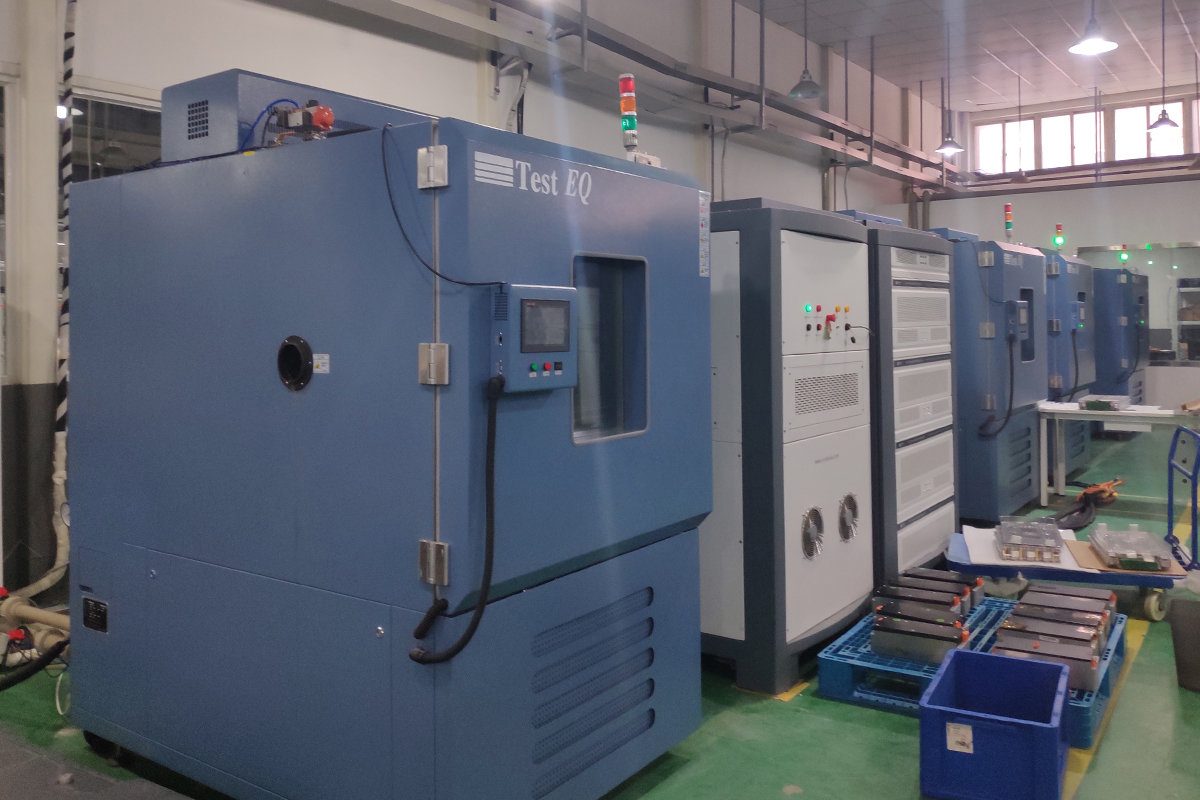
Purpose of IEC 60068-2-2
The objective of this standard is to determine whether a specimen can continue to operate or maintain its specified characteristics after prolonged exposure to dry heat.
Typical evaluation includes:
Heat resistance of electronic assemblies
Material dimensional stability
Plastic deformation
Seal integrity
Electrical performance verification
Mechanical property changes
Product aging assessment
The test may be performed on complete products, subassemblies, or individual components depending on the qualification requirements.
Typical Test Conditions
Although test parameters are determined by product specifications, IEC 60068-2-2 commonly includes:
| Parameter | Typical Value |
|---|---|
| Temperature Range | +40°C to +200°C |
| Exposure Time | 2 h, 16 h, 72 h or longer |
| Humidity | Dry Environment |
| Air Circulation | Forced Air |
| Temperature Uniformity | Controlled throughout chamber |
| Sample Status | Operating or Non-operating |
The exact severity level should always follow the applicable product standard or customer specification.
Test Equipment Requirements
A compliant Dry Heat Test Chamber should provide:
Accurate temperature control
Excellent temperature uniformity
Stable airflow distribution
Reliable long-duration operation
Fast recovery after door opening
Automatic safety protection
Data logging and traceability
For laboratories performing qualification testing, temperature calibration and chamber validation are equally important to ensure repeatable results.
Typical Applications
IEC 60068-2-2 is widely used for qualification testing of:
Semiconductor devices
PCB assemblies
Electronic components
Automotive ECUs
Battery management systems
Aerospace electronics
Communication equipment
Sensors
Industrial controllers
Medical electronics
The standard is frequently combined with humidity, thermal cycling, thermal shock, vibration, and altitude testing for comprehensive environmental reliability verification.
Why Choose TestEQ Dry Heat Test Chambers?
TestEQ designs environmental test chambers for laboratories, manufacturers, and research institutions requiring stable high-temperature performance.
Key advantages include:
Temperature range up to +200°C
Excellent temperature uniformity
Intelligent PID temperature control
High-precision programmable controller
Long-term continuous operation
Custom chamber sizes available
Integration with thermal cycling and humidity testing systems
OEM and customized environmental simulation solutions.
Whether your project involves electronic qualification, automotive validation, aerospace components, or semiconductor reliability, TestEQ can provide customized environmental testing solutions tailored to your testing requirements.
Frequently Asked Questions
1.What is IEC 60068-2-2?
IEC 60068-2-2 specifies dry heat environmental testing methods used to evaluate the resistance of products to elevated temperature exposure.
2.What products require IEC 60068-2-2 testing?
Electronic components, automotive parts, aerospace equipment, semiconductor devices, industrial electronics, and communication products commonly require this test.
3.What is the difference between dry heat and damp heat testing?
Dry heat testing evaluates product performance under elevated temperature without humidity, while damp heat testing combines temperature and humidity to assess moisture-related degradation.
4.Can TestEQ customize dry heat test chambers?
Yes. TestEQ provides standard and custom environmental test chambers with various chamber sizes, temperature ranges, controller options, and automation features to meet customer-specific testing requirements.
5.Can IEC 60068-2-2 be combined with other standards?
Yes. Many qualification programs combine IEC 60068-2-2 with IEC 60068-2-1, IEC 60068-2-14, JESD22 standards, MIL-STD, ISO 16750, and other environmental reliability tests.
Internal Linking Module
Recommended Products
Designed for precise temperature and humidity simulation, the Temperature Humidity Chamber is ideal for IEC 60068 environmental testing, reliability verification, product qualification, and accelerated aging tests across electronics, automotive, medical, and semiconductor industries.
When products require rapid temperature transition testing beyond standard dry heat exposure, the Rapid Rate Thermal Cycling Chamber provides programmable temperature change rates up to 25°C/min, making it suitable for semiconductor, aerospace, EV battery, and electronic reliability testing.
Recommended Standards
Learn how IEC 60068-2-1 evaluates product performance under low-temperature conditions. It is commonly paired with IEC 60068-2-2 to assess complete thermal durability and environmental resistance.
Discover the requirements of IEC 60068-2-14 for rapid temperature change testing. Thermal shock testing complements dry heat testing by evaluating product reliability under sudden temperature transitions.
Related Resources
Learn the most common causes of temperature ramp instability in environmental test chambers, including refrigeration performance, airflow distribution, controller tuning, thermal load, and chamber design. Discover practical solutions to improve temperature accuracy, testing consistency, and long-term equipment reliability.
This practical buying guide explains how to choose an environmental test chamber based on temperature range, humidity control, chamber size, testing standards, industry applications, and long-term operating costs.
Call to Action
Looking for a Reliable IEC 60068-2-2 Dry Heat Test Chamber?
TestEQ specializes in designing high-performance environmental test chambers for global manufacturers, laboratories, and research institutes. From standard dry heat chambers to fully customized environmental simulation systems, our engineering team delivers precise temperature control, long-term reliability, and tailored solutions for demanding applications.
"Contact TestEQ today" to discuss your testing requirements, request technical specifications, or receive a customized quotation for your next environmental testing project.