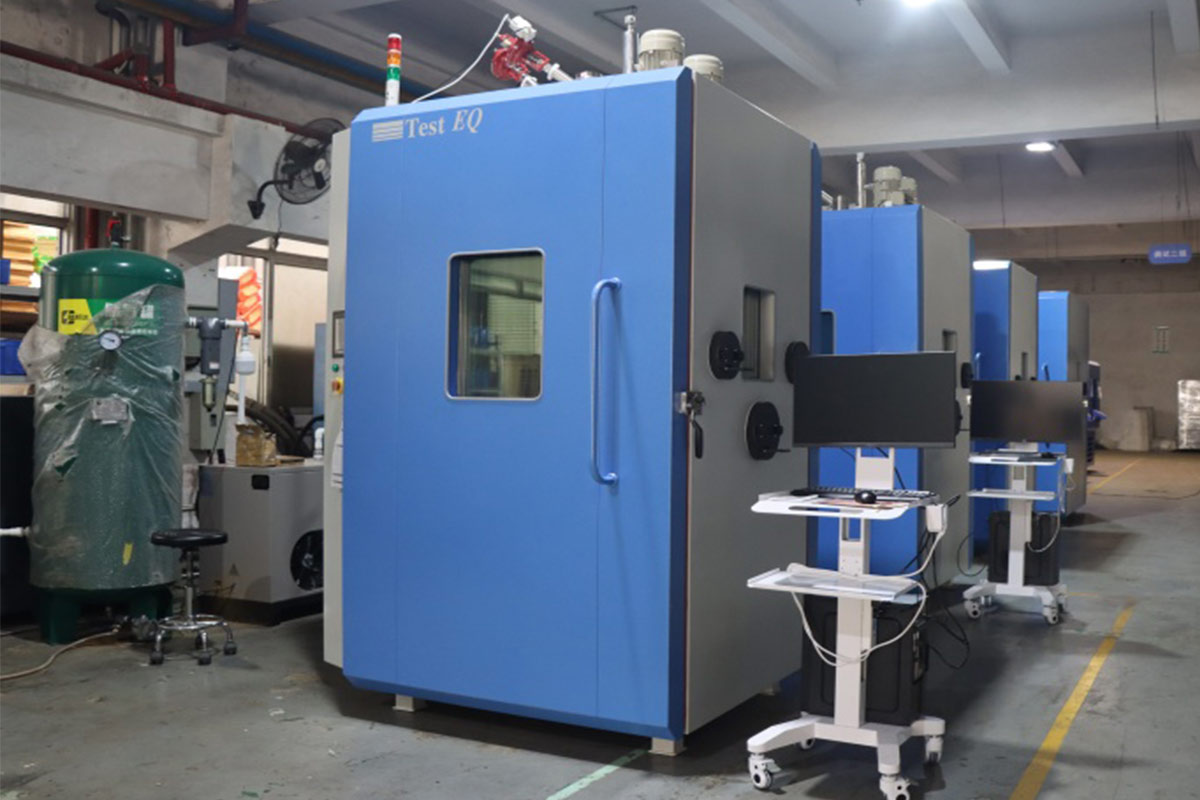
What is HALT Testing? (Design Validation Stage)
HALT is a destructive, discovery-driven test method used during product development.
It intentionally pushes products beyond operational limits to uncover:
Weak components
Design flaws
Failure mechanisms
Key Principle
? Find the failure before the customer does
Technical Characteristics
Step-stress testing
Combined temperature + vibration
No pass/fail criteria
Focus on margin discovery
Engineering Value
HALT allows teams to:
Increase design margins
Reduce unexpected field failures
Shorten development cycles
What is HASS Testing? (Production Screening Stage)
HASS is a non-destructive screening process applied during mass production.
It uses stress levels derived from HALT to detect:
Manufacturing defects
Process variations
Early-life failures
Key Principle
? Eliminate defective units before shipment
Technical Characteristics
Controlled stress limits
Pass/fail criteria
High repeatability
Inline or batch testing
HALT vs HASS: Deep Technical Comparison
| Parameter | HALT | HASS |
|---|---|---|
| Objective | Discover failure limits | Screen defects |
| Stage | R&D | Production |
| Stress Level | Extreme / beyond spec | Controlled / within margin |
| Result | Failure data | Pass/fail decision |
| Risk to Product | High | Low |
| Output | Design improvement | Quality assurance |
Engineering Insight:
HALT defines the limits. HASS uses those limits.
Use HALT if:
New product development
Design validation required
High reliability is critical
Unknown failure modes
Use HASS if:
Product is already validated
Entering mass production
Need to reduce defect escape rate
Require consistent quality output
Best Practice: HALT + HASS Combined Strategy
The most effective companies do not choose—they integrate.
Standard Reliability Flow:
HALT → Identify limits
Redesign → Improve robustness
HASS → Screen production
This closed-loop system significantly reduces:
Warranty cost
Field returns
Brand risk
Equipment Requirements
To perform effective HALT and HASS testing, chambers must support:
Ultra-fast temperature ramp rates (≥ 60°C/min)
Wide temperature range (-70°C to +180°C)
Multi-axis random vibration
Uniform stress distribution
Learn more about:
/rapid-temperature-change-test-chamber
Industry Standards & References
HALT and HASS methodologies are widely referenced in reliability standards such as:
NASA guidelines
IEC reliability standards
MIL-STD testing frameworks
Common Mistakes
Using HASS without HALT baseline
Applying excessive stress in production
Treating HALT as pass/fail testing
Ignoring failure analysis
? These mistakes directly lead to increased failure rates and wasted testing investment.
Why TestEQ
TestEQ provides engineered HALT & HASS testing solutions designed for real industrial environments.
Our Advantages:
High ramp rate technology
Stable vibration systems
Customizable chamber design
Proven reliability in aerospace & automotive
? We don’t just provide equipment—we help you build a reliability strategy.
FAQ
What is the main difference between HALT and HASS?
HALT is used to find design weaknesses, while HASS is used to detect manufacturing defects.
Can HASS be performed without HALT?
No. HASS requires stress limits defined during HALT testing.
Is HALT destructive?
Yes. HALT intentionally pushes products beyond limits to identify failure points.
What industries use HALT and HASS?
Aerospace, automotive, electronics, defense, and medical devices.
What equipment is required for HALT testing?
Specialized environmental chambers with rapid temperature change and vibration systems.
CTA
"Ready to Implement HALT & HASS in Your Testing Process?"
Contact TestEQ today to get a customized solution for your application.
? Improve reliability. Reduce failures. Accelerate time-to-market.