What is Thermal Cycling Testing?
Thermal cycling testing is a reliability test method used to evaluate how materials, components, and assemblies perform under repeated temperature changes. By exposing a device under test (DUT) to alternating high and low temperatures, engineers can simulate real-world environmental stress such as day–night cycles, seasonal variation, or operational heating and cooling.
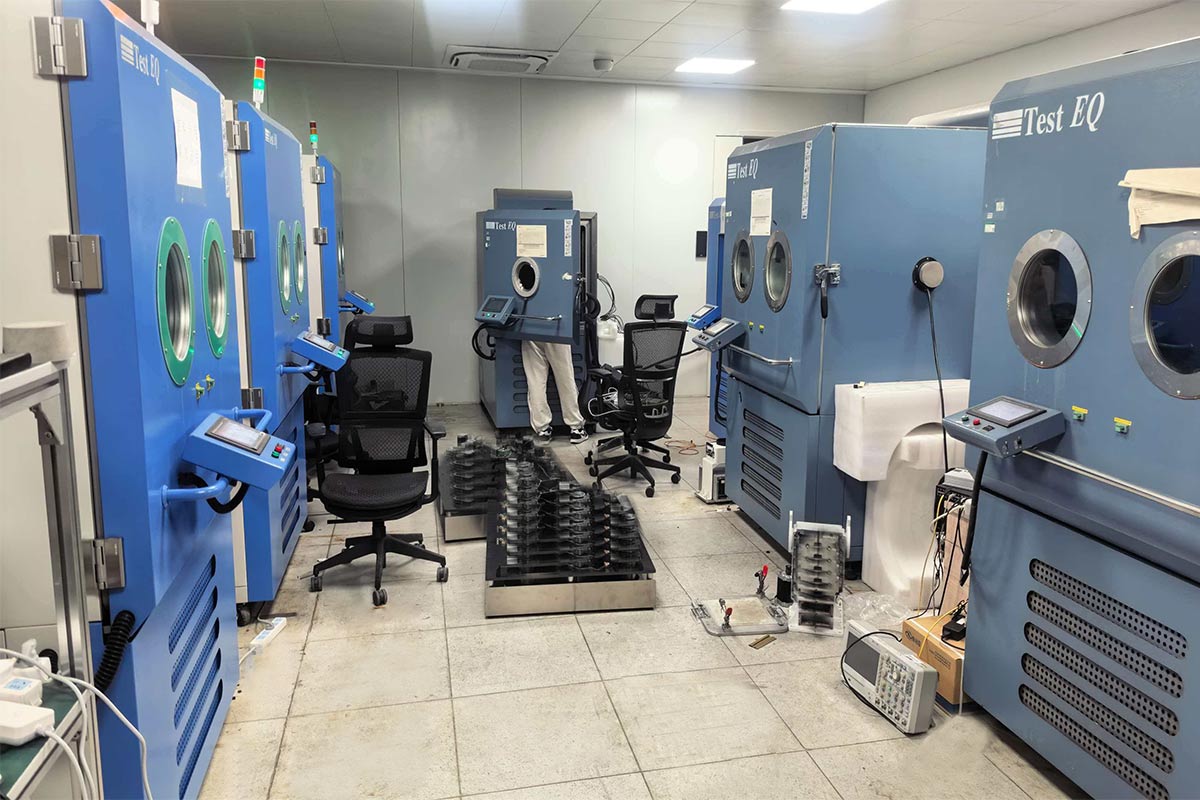
A thermal cycling test is typically conducted using a thermal cycling chamber, which precisely controls temperature transitions and dwell times to replicate actual field conditions.
This method is widely used in:
• Electronics and PCB reliability testing
• Automotive ECU validation
• Aerospace component qualification
• Battery and energy system testing
Thermal Cycling vs Thermal Shock Testing:
Although often confused, thermal cycling and thermal shock testing serve different purposes:
• Thermal Cycling Testing involves gradual temperature transitions with controlled ramp rates. It focuses on long-term fatigue and material expansion mismatch.
• Thermal Shock Testing exposes the DUT to rapid and extreme temperature changes (within seconds), typically using a two-zone or three-zone chamber.
In practical applications:
• Use thermal cycling to simulate real operating environments
• Use thermal shock to simulate extreme stress and sudden failure conditions
Key Test Standards:
Thermal cycling testing is governed by multiple international standards depending on the application:
• IEC 60068-2-14 – Environmental testing for temperature change
• MIL-STD-810 – Environmental engineering considerations and laboratory tests
• JESD22-A104 – Temperature cycling for semiconductor devices
These standards define test parameters such as temperature limits, cycle counts, and dwell times to ensure repeatability and comparability.
Thermal Cycling Test Profile Design:
A well-designed test profile is critical for obtaining meaningful results. Key parameters include:
1. Temperature Range
Defines the upper and lower limits, such as:
• -40°C to +125°C (automotive)
• -55°C to +150°C (military/aerospace)
2. Ramp Rate
The speed of temperature change, typically:
• 1°C/min to 15°C/min
Higher ramp rates accelerate stress but may reduce correlation with real conditions.
3. Dwell Time
The duration the DUT remains at extreme temperatures:
• Usually 10 to 30 minutes
Ensures thermal stabilization across materials.
4. Number of Cycles
Ranges from:
• 100 cycles (basic validation)
• 1000+ cycles (accelerated life testing)
At TestEQ, engineers help customers design optimized test profiles based on product structure, material properties, and failure risk targets.
Thermal Cycling Chamber Requirements
Selecting the right thermal cycling chamber directly impacts test accuracy and reliability.
Key requirements include:
High Temperature Uniformity
Ensures all DUT surfaces experience consistent thermal conditions.
Precise Temperature Control
PID-based control systems maintain stable ramp and dwell performance.
Programmable Profiles
Allows flexible multi-step cycling programs.
Reliability & Continuous Operation
Long-duration cycling tests require stable refrigeration and heating systems.
TestEQ thermal cycling chambers are engineered with:
• European-origin refrigeration technology
• High-performance airflow design
• Stable long-cycle operation capability
Common Failures in Thermal Cycling Testing
Thermal cycling reveals a wide range of failure modes, including:
• Solder Joint Cracking
Caused by repeated thermal expansion mismatch
• Material Fatigue
Especially in polymers and composite materials
• Seal and Gasket Failure
Due to contraction and expansion over cycles
• PCB Delamination
Resulting from internal stress accumulation
Understanding these failures helps engineers improve product design and material selection.
How to Choose a Thermal Cycling Chamber:
When selecting a thermal cycling chamber, consider:
• Required temperature range
• Ramp rate performance
• Chamber size and DUT dimensions
• Compliance with test standards
• System reliability for long-term cycling
For advanced applications, working with an experienced manufacturer like TestEQ ensures not only equipment supply but also complete testing solution support, including fixture design, test profile optimization, and validation guidance.
Conclusion:
Thermal cycling testing is a critical method for evaluating product durability under real-world temperature variations. By following proper standards, designing accurate test profiles, and using high-performance chambers, engineers can significantly improve product reliability and reduce field failures.
If you are planning a thermal cycling test project, the engineering team at TestEQ can help you define the right solution for your application.
CTA
"Need a Reliable Thermal Cycling Testing Solution?"
Talk to TestEQ engineers today for:
• Custom chamber design
• Test standard consultation
• Fast technical proposal
Get Your Solution Within 24 Hours