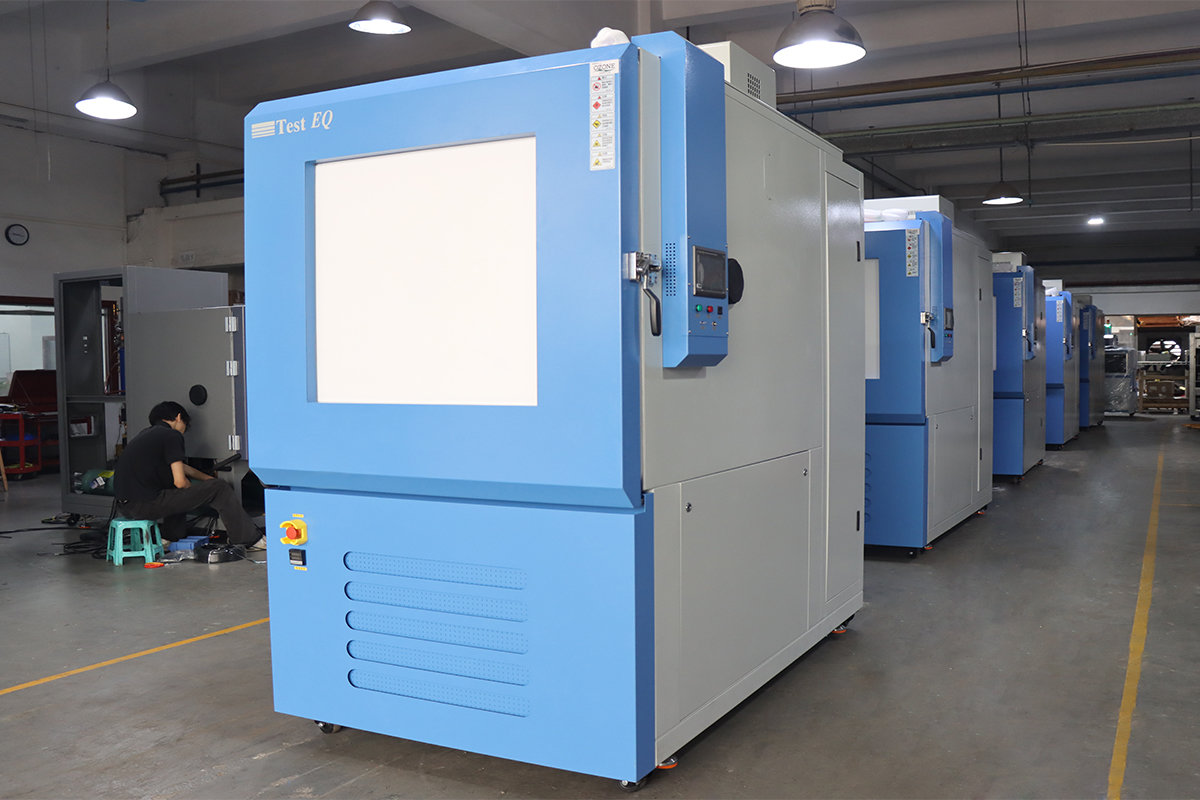
What Is DO-160 Altitude Testing?
DO-160 altitude testing determines whether airborne equipment can operate correctly or withstand environmental conditions associated with aircraft altitude and atmospheric pressure.
At higher pressure altitudes, reduced atmospheric pressure can affect equipment through changes in:
• Heat transfer and cooling performance
• Electrical insulation and arcing behavior
• Mechanical stress on sealed components
• Pressure differentials within enclosures
• Fan and motor performance
• Component thermal behavior
• Structural integrity
Typical applications include:
• Avionics and flight-control electronics
• Aircraft communication and navigation equipment
• Cockpit displays and instrumentation
• Aerospace sensors
• Electronic control units
• Power electronics
• Aircraft cabin equipment
• Unmanned aircraft systems
• Aerospace connectors and assemblies
The required altitude condition should be determined from the equipment installation environment and applicable DO-160 category rather than from a generic altitude specification.
RTCA DO-160 Section 4: Temperature and Altitude
RTCA DO-160 Section 4 addresses environmental testing associated with temperature and pressure altitude for airborne equipment.
Depending on the applicable equipment category and qualification plan, Section 4 can involve conditions associated with:
• Temperature and altitude
• Operating altitude
• Loss of cooling effects
• Decompression
• Overpressure
The important engineering parameter for an altitude chamber is absolute pressure. Altitude is a pressure-altitude representation, while the chamber physically controls pressure.
For applicable DO-160G categories, altitude conditions can extend to approximately 70,000 ft pressure altitude. The actual test condition depends on the applicable category and qualification requirements.
When translating a DO-160 requirement into chamber specifications, engineers should consider pressure range, pressure stability, transition rate, temperature capability, EUT size, heat dissipation, instrumentation, feedthroughs, and safety protection.
DO-160 Altitude Test vs. Decompression Test
Altitude testing and decompression testing are related but evaluate different environmental effects.
Altitude Test
An altitude test evaluates equipment performance while exposed to a specified reduced atmospheric pressure corresponding to the applicable pressure altitude.
The EUT may need to operate throughout the exposure while engineers monitor functional performance and environmental parameters.
Key evaluation areas may include:
• Electrical operation
• Thermal performance
• Cooling effectiveness
• Mechanical integrity
• Pressure-related component behavior
• Equipment performance during exposure
The chamber therefore needs to maintain a stable low-pressure condition for the specified test duration.
Decompression Test
A decompression test evaluates the equipment response to a rapid reduction in pressure.
In this case, pressure transition behavior becomes a major engineering consideration.
The test system must be capable of producing the required pressure change in a controlled and repeatable manner while allowing the EUT to be monitored.
A chamber that can reach a low final pressure is not necessarily suitable for decompression testing. Engineers should evaluate both the final pressure capability and the chamber's pressure-transition performance.
DO-160 Overpressure Testing
Overpressure testing evaluates equipment under pressure conditions above normal atmospheric pressure when required by the applicable DO-160 category.
This condition is particularly relevant to equipment installed in pressurized aircraft environments.
DO-160G Section 4 specifies applicable overpressure conditions for relevant equipment categories. The chamber must therefore be designed to operate safely across its specified pressure range rather than being optimized only for vacuum operation.
For an overpressure-capable altitude test system, engineers should evaluate:
• Maximum operating pressure
• Pressure control accuracy
• Pressure stability
• Chamber structural design
• Safety interlocks
• Pressure relief and protection systems
• EUT fixture and feedthrough requirements
The final pressure and test duration should always be established from the applicable DO-160 category and approved qualification plan.
Key Parameters for DO-160 Altitude Testing
Before purchasing an altitude test chamber, engineers should convert the qualification requirement into measurable equipment specifications.
1. Pressure Range
The chamber must achieve the required absolute pressure for the applicable pressure altitude.
Sufficient operating margin is recommended so that the chamber does not operate continuously at its physical limit.
2. Pressure Transition Rate
For decompression or other dynamic pressure tests, transition rate can be as important as final pressure.
The system should provide repeatable and programmable pressure transitions where required.
3. Temperature Capability
Some DO-160 Section 4 programs require temperature and altitude conditions to be evaluated together.
The chamber should therefore maintain the required temperature while controlling reduced pressure.
4. EUT Heat Dissipation
Reduced pressure changes the surrounding heat-transfer environment.
This can affect natural convection, forced-air cooling, fans, motors, and power electronics.
For high-power EUTs, thermal analysis should be completed before finalizing chamber specifications.
5. EUT Dimensions and Load
Working volume should accommodate the EUT, fixtures, cables, sensors, and required clearance.
Large aerospace assemblies may require a customized altitude chamber rather than a standard laboratory system.
6. Instrumentation and Data Logging
A qualification system should continuously monitor critical environmental parameters such as:
• Absolute pressure
• Chamber temperature
• EUT temperature
• Pressure transition
• Test duration
• EUT operating status
Reliable data acquisition simplifies qualification reporting and improves test repeatability.
How to Select a DO-160 Altitude Test Chamber
Selecting a chamber based only on its maximum altitude can result in an unsuitable system.
A better approach is to define the complete test requirement first.
Pressure capability:
Verify that the system can reach the required pressure-altitude condition with sufficient margin.
Pressure stability:
Confirm that pressure remains within the required limits throughout the exposure.
Pressure transition:
If decompression testing is required, evaluate the actual pressure-change performance rather than only the final pressure.
Temperature performance:
For combined temperature-altitude testing, confirm that temperature control remains stable under reduced pressure.
EUT cooling: Consider the heat dissipation characteristics of the equipment under reduced atmospheric pressure.
Feedthroughs:
Define power, communication, thermocouple, RF, pneumatic, and other required connections before chamber design.
Safety: Vacuum and pressure operation requires appropriate structural protection, interlocks, alarms, emergency shutdown, and pressure protection.
For complex aerospace qualification programs, a customized system can provide better alignment between the chamber configuration and the actual EUT and test profile.
DO-160 Altitude Testing for Aerospace Qualification Laboratories
For aerospace qualification laboratories, repeatability, traceability, and test control are as important as achieving an extreme pressure condition.
A suitable DO-160 altitude testing system should support:
• Programmable pressure profiles
• Stable temperature control
• Automated test sequences
• Environmental data logging
• EUT monitoring
• Safety alarms and interlocks
• Calibration and measurement management
• Custom electrical and signal feedthroughs
• Laboratory workflow integration
The chamber should also be evaluated according to the laboratory's expected test volume.
A research laboratory performing occasional qualification tests may require a different configuration from a production laboratory conducting repeated aerospace equipment qualification.
Engineers should distinguish between chamber capability and compliance determination. A chamber reproduces the required environmental condition; final compliance depends on the applicable DO-160 category, test procedure, EUT performance requirements, instrumentation, and qualification documentation.
Common Engineering Mistakes
Selecting a Chamber Based Only on Altitude
Altitude is not the only requirement. Pressure stability, transition performance, temperature, EUT load, and monitoring capability can directly affect test quality.
Ignoring Absolute Pressure
Altitude is represented through pressure altitude. Engineers should verify the actual absolute pressure produced and measured by the system.
Treating Decompression as a Normal Altitude Test
A chamber reaching the required low pressure does not automatically mean it can reproduce the required decompression profile.
Ignoring EUT Cooling
Reduced pressure can change heat transfer and cooling performance. High-power equipment requires particular attention to thermal behavior.
Defining the Chamber Before the Test Category
The applicable DO-160 category and qualification plan should be established first. Chamber specifications should then be developed from those requirements.
Overlooking Feedthrough Requirements
Aerospace EUTs often require power, communication, monitoring, and signal connections during environmental exposure. These should be included during chamber design rather than added later.
Why TestEQ: DO-160 Altitude Test Chamber Solutions
TestEQ provides environmental simulation systems designed for aerospace, electronics, semiconductor, automotive, and other demanding reliability-testing applications.
For DO-160 altitude testing, TestEQ can develop chamber configurations around the actual qualification requirements, including pressure range, temperature range, EUT dimensions, pressure transition requirements, monitoring, and laboratory integration.
Depending on the application, system configurations can include:
• High-altitude pressure simulation
• Temperature and altitude combined testing
• Controlled decompression testing
• Overpressure testing
• Programmable environmental profiles
• EUT power and signal feedthroughs
• Pressure and temperature data acquisition
• Safety interlocks and protection
• Custom chamber dimensions
• Laboratory integration
For aerospace equipment with unusual dimensions, high heat loads, specialized electrical interfaces, or customized pressure profiles, TestEQ can provide an engineering-based chamber solution rather than a one-size-fits-all configuration.
FAQ
1.What is RTCA DO-160 altitude testing?
RTCA DO-160 altitude testing evaluates airborne equipment under specified pressure-altitude and temperature conditions to determine whether the equipment can operate or withstand the applicable aircraft environment.
2.What section of DO-160 covers altitude testing?
Altitude testing is addressed by DO-160 Section 4, Temperature and Altitude.
3.What is the difference between DO-160 altitude and decompression testing?
Altitude testing evaluates equipment at a specified pressure-altitude condition, while decompression testing evaluates the equipment response to a rapid reduction in pressure.
4.Does DO-160 altitude testing require a vacuum chamber?
A controlled pressure or altitude test chamber is generally required when the qualification program must reproduce specified reduced-pressure conditions. The exact chamber configuration depends on the applicable DO-160 category and test plan.
5.Can temperature and altitude be tested simultaneously?
Yes. Suitable environmental simulation systems can control temperature and absolute pressure simultaneously when required by the applicable DO-160 test program.
6.What altitude can a DO-160 altitude chamber simulate?
The required pressure-altitude range depends on the applicable equipment category. For applicable DO-160G Section 4 conditions, altitude testing can extend to approximately 70,000 ft.
7.How do I select a DO-160 altitude test chamber?
Define the applicable DO-160 category and test profile first. Then evaluate pressure range, pressure transition rate, temperature range, EUT dimensions, heat dissipation, instrumentation, feedthroughs, safety requirements, and laboratory workflow.
Internal Linking Module
Related Test Equipment
Simulate controlled pressure-altitude conditions for aerospace, avionics, and airborne equipment qualification testing.
Perform controlled temperature and environmental testing for aerospace, electronics, automotive, and reliability applications.
Combine controlled temperature and vacuum conditions for aerospace components, electronics, and space-related environmental testing.
Related Testing Standards
Explore RTCA DO-160 environmental qualification requirements for airborne equipment, including temperature, altitude, vibration, humidity, and other test conditions.
Review military environmental testing methods for altitude, temperature, humidity, vibration, shock, and other demanding conditions.
Explore IEC 60068 environmental testing methods covering temperature, humidity, thermal shock, vibration, and reliability evaluation.
Related Testing Resources
Learn how altitude test chambers simulate reduced atmospheric pressure and how chamber performance affects aerospace qualification testing.
Learn how to select an environmental test chamber based on temperature range, pressure, EUT size, performance requirements, and laboratory needs.
Understand how thermal vacuum testing combines temperature and vacuum environments to evaluate aerospace and electronic equipment under simulated space conditions.
Conclusion
RTCA DO-160 Section 4 altitude testing provides an important environmental qualification method for airborne equipment exposed to reduced pressure, decompression, temperature-altitude conditions, or overpressure.
For engineers and test laboratories, successful testing requires more than reaching a specified altitude. Absolute pressure control, pressure-transition performance, temperature stability, EUT thermal behavior, instrumentation, safety, and test repeatability should all be considered when selecting an altitude testing system.
TestEQ can help translate the applicable DO-160 requirements into practical chamber specifications and develop a standard or customized altitude test chamber around the EUT, test profile, and laboratory requirements.
CTA
Need a DO-160 Altitude Test Chamber for Your Qualification Program?
Planning an RTCA DO-160 Section 4 altitude test? TestEQ provides standard and customized altitude test chamber solutions for aerospace equipment qualification, including temperature-altitude, decompression, and overpressure testing.
Share your key testing requirements with our engineering team:
• Required pressure-altitude range
• Temperature range
• Decompression or pressure transition requirements
• EUT dimensions and heat load
• Required electrical or signal feedthroughs
• Test standards and qualification requirements
TestEQ can help you translate your DO-160 testing requirements into practical chamber specifications and recommend a suitable system for your laboratory or aerospace application.
Request a DO-160 Altitude Test Chamber Solution →