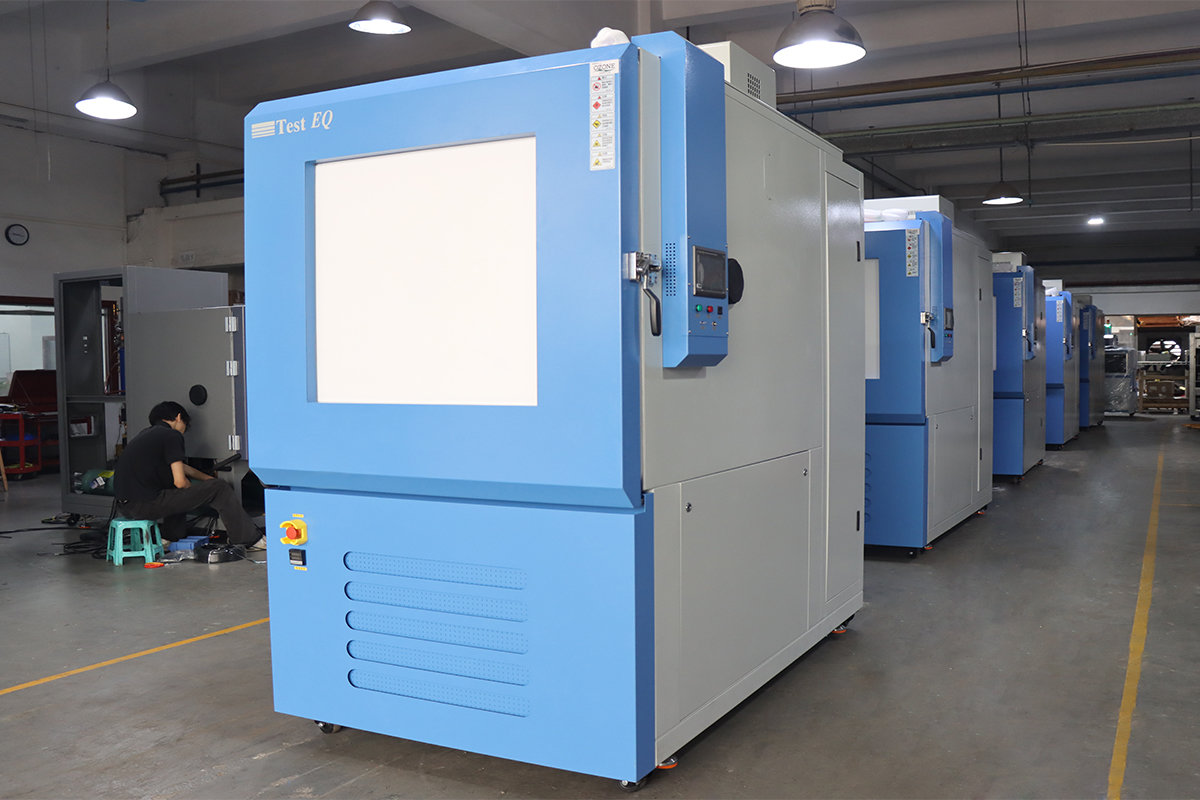
MIL-STD-810 and ESS
MIL-STD-810 is not a single Environmental Stress Screening test standard. It provides environmental engineering guidance and laboratory test methods that can be tailored to a product's life-cycle environment. An ESS program may incorporate applicable MIL-STD-810 methods—such as temperature, temperature shock, humidity, vibration, or shock—when those stresses are relevant to the product's failure mechanisms and reliability objectives.
For ESS chamber selection, engineers should define the test profile first and then specify temperature range, transition rate, test load, uniformity, recovery, airflow, instrumentation, vibration compatibility, and continuous-operation requirements.
What Environmental Stress Screening (ESS)?
Environmental Stress Screening is a controlled reliability screening process used to expose latent defects that may otherwise remain undetected during conventional production inspection.
ESS is particularly relevant when manufacturing defects or marginal components can become failures after products are placed into service.
Examples of potential defects include:
• Weak solder or interconnects
• Marginal electronic components
• Connector instability
• Assembly defects
• Mechanical looseness
• Wiring or cable problems
• Material or interface weaknesses
• Manufacturing process variation
The objective of ESS is not simply to demonstrate that a product can survive an extreme environment.
Instead, an effective screening program is designed to apply appropriate stresses that can reveal latent defects without unnecessarily damaging properly manufactured units.
Is MIL-STD-810 an ESS Standard?
Not exactly.
MIL-STD-810 provides environmental engineering guidance and laboratory test methods. It does not establish one universal ESS profile that applies to every product.
An ESS program may use applicable MIL-STD-810 environmental methods when those stresses are relevant to the product's expected environment and failure mechanisms.
This distinction is important because two products can reference MIL-STD-810 while requiring different environmental test programs.
For example, an electronic communication device may require temperature cycling and vibration screening, while another product may require humidity, altitude, shock, or a combination of environmental exposures.
The test program should therefore be tailored to the product rather than copied from a generic chamber specification.
MIL-STD-810 Tailoring: The Starting Point for ESS Test Planning
Tailoring is one of the most important concepts for engineers working with MIL-STD-810.
A practical engineering workflow is:
Product → Life-Cycle Environment → Environmental Stress → Failure Mechanism → Test Method → Test Parameters → Test Plan → Acceptance Criteria
The objective is to reproduce meaningful environmental stresses rather than selecting the most severe available chamber conditions.
During tailoring, engineers should consider:
• Where the product will operate
• How the product will be transported and stored
• Expected temperature extremes
• Expected humidity exposure
• Mechanical vibration environment
• Shock exposure
• Altitude or pressure conditions
• Product configuration during exposure
• Known failure mechanisms
• Manufacturing process risks
• Reliability objectives
• Required screening throughput
The resulting ESS profile should be documented in the test plan and approved by the responsible engineering or customer organization.
What Is the Relationship Between MIL-STD-810 and ESS Testing?
MIL-STD-810 defines environmental engineering test methods used to evaluate equipment reliability under harsh conditions.
Environmental Stress Screening (ESS) is a manufacturing reliability screening process that applies controlled environmental stresses to detect latent defects before products are delivered.
ESS programs may include temperature cycling, vibration, humidity and combined environmental stresses depending on product requirements.
MIL-STD-810 Environmental Methods Relevant to ESS
Different MIL-STD-810 methods can be incorporated into an ESS or broader reliability program when justified by the product requirements.
| MIL-STD-810 Method | Environmental Stress | Possible ESS Relevance |
|---|---|---|
| Method 501 | High Temperature | Thermal stress and high-temperature screening |
| Method 502 | Low Temperature | Cold-environment screening |
| Method 503 | Temperature Shock | Rapid temperature transition and thermal mismatch |
| Method 507 | Humidity | Moisture-related reliability risks |
| Method 514 | Vibration | Mechanical and workmanship defect detection |
| Method 516 | Shock | Mechanical integrity and shock-related defects |
| Method 520 | Temperature, Humidity, Vibration and Altitude | Combined environmental exposure where justified |
These MIL-STD-810 methods may be incorporated into an Environmental Stress Screening (ESS) program when justified by the product's life-cycle environment, failure mechanisms, and test objectives. The applicable method, procedure, severity, duration, and sequence should be established through engineering tailoring rather than assumed as universal ESS requirements.
Method 501: High Temperature
High-temperature exposure can reveal problems associated with thermal expansion, component temperature limits, material behavior, solder interfaces, and other temperature-sensitive mechanisms.
For ESS applications, the selected temperature and exposure duration should be linked to the intended screening objective.
Method 502: Low Temperature
Low-temperature exposure can reveal cold-start problems, material contraction, brittle behavior, connector problems, and temperature-sensitive electrical or mechanical failures.
The test configuration should represent the product's intended storage, transportation, or operating condition as applicable.
Method 503: Temperature Shock
Temperature shock is different from ordinary temperature cycling.
MIL-STD-810 Method 503 addresses sudden changes in the surrounding air temperature. The current Method 503.7 material describes temperature shock as an air-temperature change greater than 10°C within one minute and emphasizes tailoring the method and procedures to the expected environment.
For temperature-shock equipment, engineers should pay particular attention to:
Transition conditions
Transfer time
Test-item thermal response
Stabilization
Chamber recovery
Product configuration
Number and direction of shocks
The chamber's advertised ramp rate should therefore not be treated as the only indicator of suitability.
Method 507: Humidity
Humidity exposure can be relevant when moisture ingress, corrosion, insulation resistance, condensation, or material degradation represents a product risk.
Humidity testing must be evaluated together with temperature because relative humidity capability depends on the thermodynamic relationship between air temperature and moisture content.
Method 514: Vibration
Vibration screening can expose:
Loose connections
Mechanical assembly weaknesses
Solder or interconnect problems
Structural resonance
Cable fatigue
Fastener problems
When vibration is combined with environmental chambers, mechanical fixture design becomes a critical part of the test system.
Method 516: Shock
Shock testing can be used when the product is expected to encounter mechanical shock during transportation, handling, deployment, or operation.
The appropriate shock environment depends on the product life cycle and the failure risks being investigated.
ESS vs HALT vs HASS: Key Differences
| ESS | HALT | HASS | |
|---|---|---|---|
| Purpose | Production screening | Design improvement | Manufacturing screening |
| Stage | Production | R&D | Production |
| Stress Level | Controlled | Extreme | High |
| Goal | Remove defects | Find limits | Verify production |
How to Build a MIL-STD-810-Based ESS Test Plan
A robust ESS program should be defined before the chamber is selected.
Step 1: Define the Product and Failure Risks
Identify the product architecture, critical components, manufacturing processes, interfaces, and known reliability risks.
Step 2: Define the Life-Cycle Environment
Determine the environmental conditions the product is expected to encounter during:
• Manufacturing
• Transportation
• Storage
• Installation
• Operation
• Maintenance
Step 3: Identify Relevant Environmental Stresses
Select only the stresses that are meaningful to the product.
Potential stresses include:
• High temperature
• Low temperature
• Temperature shock
• Humidity
• Vibration
• Shock
• Altitude
• Combined environments
Step 4: Select Applicable MIL-STD-810 Methods
Choose the applicable method and procedure based on the tailored environmental profile.
Do not select a method solely because it is commonly associated with a particular industry.
Step 5: Define Test Parameters
The test plan should establish the relevant:
• Temperature levels
• Humidity conditions
• Transition rates
• Exposure duration
• Number of cycles
• Vibration levels
• Shock conditions
• Test-item configuration
• Performance checks
Step 6: Define Monitoring and Instrumentation
Record the environmental conditions and, where required, test-item response.
For temperature-shock testing, for example, the MIL-STD-810 Method 503.7 material calls for monitoring information such as chamber temperature, test-item temperatures, and transfer times.
Step 7: Establish Failure Criteria
Define what constitutes a screening failure before testing begins.
Depending on the product, this may include:
• Loss of function
• Electrical parameter drift
• Communication interruption
• Mechanical damage
• Connector failure
• Visual damage
• Abnormal thermal response
Step 8: Document Results and Deviations
Test records should allow engineers to determine what environmental exposure occurred and how the product responded.
Any deviation from the approved test plan should be documented and reviewed.
Typical MIL-STD-810 ESS Test Methods
Thermal Cycling ESS
Products are repeatedly exposed to rapid hot and cold temperature transitions to identify material expansion mismatch and solder fatigue issues.
Typical applications include:
Aerospace electronics
Automotive ECUs
Military communication devices
Power modules
Semiconductor assemblies
Vibration ESS
Random or sinusoidal vibration stress is applied during operation or transportation simulation.
Common failure points include:
Loose connectors
Cracked solder joints
Structural resonance
Cable fatigue
Combined Temperature & Vibration ESS
For highly reliable products, temperature cycling and vibration are often combined to accelerate latent defect detection.
This method is frequently used in:
Defense systems
Avionics
Satellite electronics
EV battery systems
Industrial control equipment
Why ESS Testing Matters for Manufacturers
Manufacturers implementing MIL-STD-810 ESS programs typically achieve:
Reduced field failure rates
Higher product reliability
Improved production consistency
Lower warranty costs
Faster reliability validation
Better compliance with military and aerospace procurement requirements
For OEM suppliers and contract manufacturers, ESS capability also improves customer confidence during supplier qualification audits.
Industries Using MIL-STD-810 ESS Testing
Aerospace & Defense
Mission-critical electronics require high screening reliability before deployment.
Automotive Electronics
ESS testing improves durability for ECUs, sensors, BMS modules, and EV power systems.
Semiconductor & PCB Manufacturing
Thermal cycling ESS helps identify assembly weaknesses before mass shipment.
Telecommunications
Network hardware and communication systems require stable operation under changing environmental conditions.
Industrial Electronics
Factories and automation systems rely on ESS validation to reduce downtime risks.
What Should Engineers Look for in an ESS Test Chamber?
Selecting an ESS chamber based only on the minimum and maximum temperature is insufficient.
1. Temperature Range
Confirm that the chamber can reach the required temperature limits under the actual test load.
A large empty chamber may achieve a specified temperature range while performing differently under a high thermal load.
2. Temperature Transition Capability
For rapid temperature cycling or temperature shock applications, evaluate the complete temperature-time profile.
Important parameters include:
• Heating rate
• Cooling rate
• Transition time
• Recovery time
• Test-item thermal response
3. Temperature Uniformity
Uniformity should be evaluated under defined test conditions and measurement locations.
A chamber with a very wide operating range is not automatically a chamber with excellent spatial uniformity.
4. Test Load
The size, mass, heat dissipation, and arrangement of the test items can significantly influence chamber performance.
Provide the actual product loading information when requesting a quotation.
5. Airflow
Air circulation influences heat transfer and temperature distribution.
Fixture geometry, product placement, and loading density should therefore be considered during chamber design.
6. Vibration Integration
When environmental and vibration stresses must be applied together, verify:
• Shaker compatibility
• Fixture clearance
• Chamber floor design
• Dynamic load
• Cable routing
• Isolation requirements
• Temperature and airflow interaction
7. Instrumentation and Data Logging
The chamber should support the monitoring requirements defined by the test plan.
Depending on the application, this may include:
• Chamber temperature
• Humidity
• Product temperature
• Test-item electrical parameters
• Alarm conditions
• Test cycle history
• Data export
8. Continuous Operation
Production ESS can involve repeated test cycles and high equipment utilization.
For such applications, engineers should evaluate:
• Refrigeration system stability
• Compressor configuration
• Preventive maintenance requirements
• Service accessibility
• Spare parts availability
• Long-term operating cost
A higher maximum ramp rate is not necessarily the best solution if the production process prioritizes repeatability and long-term equipment availability.
How TestEQ Supports Customized ESS Chamber Projects
TestEQ designs and manufactures environmental testing systems for applications requiring controlled temperature, humidity, thermal cycling, and customized environmental simulation.
For ESS projects, the chamber configuration can be developed around the actual test profile rather than a generic product specification.
Depending on the application, engineering discussions may include:
• Chamber workspace and dimensions
• Temperature range
• Temperature transition requirements
• Humidity control
• Test-load conditions
• Airflow configuration
• Vibration integration
• Product instrumentation
• Data acquisition
• PLC and control architecture
• Laboratory or production-line integration
The final chamber configuration should be determined from the customer's approved test requirements and facility conditions.
Why Manufacturers Choose TestEQ
TestEQ focuses on engineered environmental simulation systems designed for long-term industrial operation.
Advantages include:
OEM customization capability
European-style reliability engineering
Fast-response thermal technology
Support for military and industrial standards
Professional technical consultation
Global project delivery experience
Cost-efficient lifecycle performance
Our ESS systems are designed to help customers improve reliability validation efficiency while reducing operational risk and total testing costs.
Frequently Asked Questions
1.Does MIL-STD-810 define one standard ESS test?
No. MIL-STD-810 provides environmental engineering guidance and laboratory test methods. An ESS program should be developed by tailoring the applicable environmental stresses and test parameters to the product and its life-cycle requirements.
2.Which MIL-STD-810 methods can be relevant to ESS?
Depending on the product and test plan, relevant methods may include high temperature, low temperature, temperature shock, humidity, vibration, shock, and combined environmental testing.
The applicable methods should be selected through the engineering tailoring process.
3.Is MIL-STD-810 the same as MIL-HDBK-344?
No.
MIL-STD-810 addresses environmental engineering considerations and laboratory test methods, while MIL-HDBK-344 specifically provides guidance for Environmental Stress Screening of electronic equipment. The current DLA record identifies MIL-HDBK-344 as an active defense handbook.
4.What is the difference between temperature cycling and temperature shock?
Temperature cycling repeatedly changes between defined environmental conditions. Temperature shock focuses on sudden temperature changes and can require much faster environmental transitions.
The required test profile should be specified rather than assuming that any rapid temperature chamber is suitable.
5.What temperature ramp rate is required for ESS?
There is no universal ramp rate for every ESS application.
The required transition rate should come from the approved test profile and the failure mechanisms being screened.
6.Can one ESS chamber perform multiple MIL-STD-810 methods?
Potentially, depending on the required environmental conditions and equipment configuration.
However, not every chamber can perform every environmental method, particularly when the test requires specialized vibration, shock, altitude, or combined-environment capabilities.
7.How do I choose the correct ESS chamber?
Start with the test profile and product loading requirements.
Then evaluate temperature range, transition performance, uniformity, recovery, humidity capability, airflow, instrumentation, vibration compatibility, control functions, facility requirements, and lifecycle support.
8.Does a chamber being “MIL-STD-810 compliant” mean the product passes MIL-STD-810?
No.
Chamber capability and product compliance are different matters.
The test equipment provides the environmental conditions. Product compliance depends on the applicable test plan, method, procedure, parameters, test-item configuration, measurements, and acceptance criteria.
Internal Linking Module
Recommended Equipment
Designed for ESS (Environmental Stress Screening) applications, Rapid Temperature Cycling Chambers provide fast and controlled temperature transitions to identify latent defects in electronic components, PCBs, automotive systems and aerospace products. These chambers support reliability screening requirements where thermal stress simulation and repeatable cycling performance are critical.
HALT & HASS Reliability Test Chambers are designed to accelerate product reliability evaluation by applying extreme thermal and vibration stresses. They help engineers discover design weaknesses, manufacturing defects and potential failure mechanisms before products enter mass production.
Recommended Standards
JEDEC thermal cycling standards define reliability testing methods for semiconductor devices under repeated temperature changes. These standards are widely used for IC packages, electronic components and semiconductor reliability evaluation.
IEC 60068-2-14 specifies temperature change and thermal shock testing methods used to evaluate product reliability under rapid temperature variations. It is commonly applied to electronic components, automotive systems and industrial products.
Recommended Resources
This guide explains the key factors for selecting an ESS chamber, including temperature range, thermal cycling capability, stress profiles, monitoring systems and application requirements for aerospace, automotive and semiconductor testing.
Learn the key differences between HALT and HASS testing, including their purposes, testing stages, stress levels and applications in product development and manufacturing reliability improvement.
CTA
Request an ESS Chamber Engineering Review
If your project requires Environmental Stress Screening based on applicable MIL-STD-810 environmental methods, TestEQ can review the test profile before you select the chamber.
Send us the following information for an initial engineering assessment:
Product type and dimensions
Test-item weight and quantity
Required temperature range
Required temperature transition or cycling profile
Humidity requirements
Vibration or combined-environment requirements
Applicable MIL-STD-810 method or customer specification
Required chamber workspace
Laboratory or production-line constraints
Request a Technical Proposal from TestEQ
Our engineering team can evaluate the environmental profile and recommend a customized ESS chamber configuration based on your actual testing requirements.
Need an ESS chamber for high-cycle production screening or laboratory reliability testing?
Contact TestEQ to discuss your application and develop a chamber specification suitable for your ESS program.
"Request a Technical Consultation & Quotation Now"