Introduction
UN38.3 is an internationally recognized lithium battery transport testing standard defined in Section 38.3 of the United Nations Manual of Tests and Criteria. It verifies whether lithium-ion and lithium-metal cells and battery packs can safely withstand transportation-related environmental and mechanical stresses.
The standard is widely required for electric vehicle batteries, energy storage systems, consumer electronics and other lithium battery products before global shipment by air, sea, rail or road.
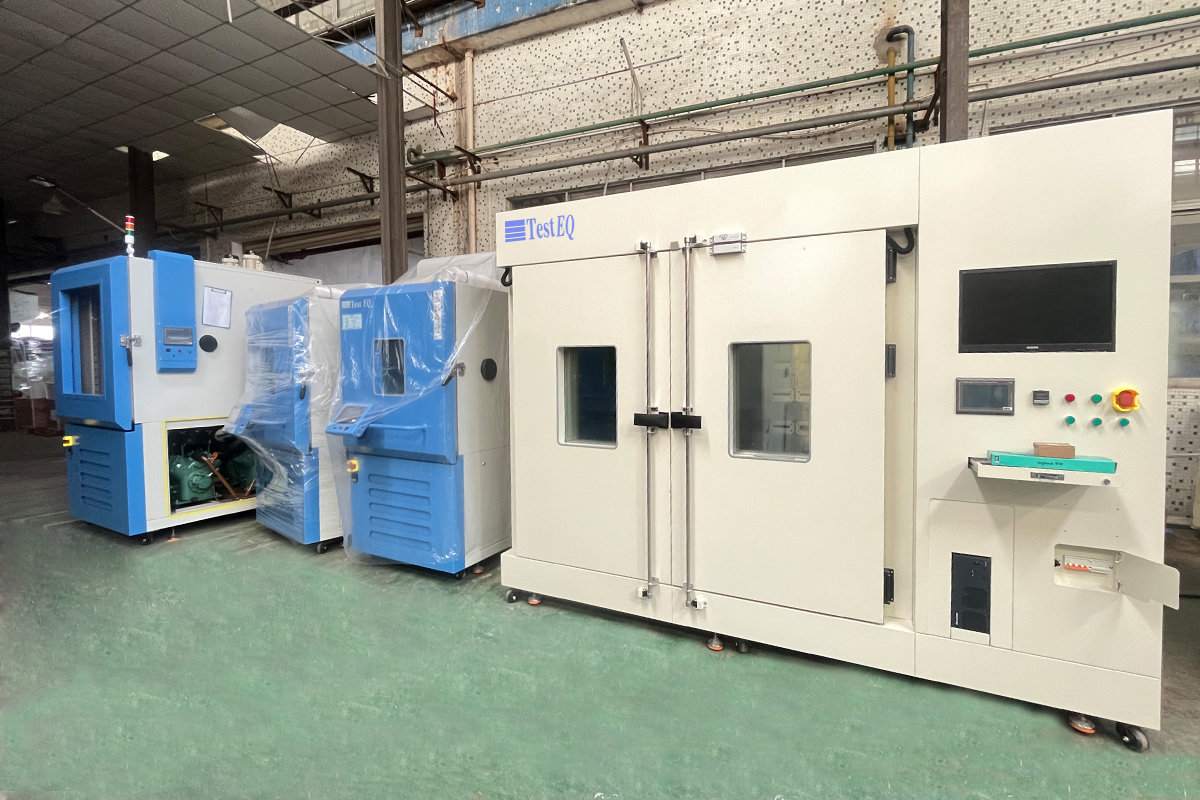
TestEQ provides advanced environmental simulation solutions for UN38.3 battery testing, including altitude simulation chambers, temperature test chambers, thermal shock chambers and customized battery reliability testing systems to support safe and compliant lithium battery transportation.
What is the UN38.3 Standard?
UN38.3 is a lithium battery safety testing requirement established in Section 38.3 of the United Nations Manual of Tests and Criteria. It defines a series of environmental, mechanical and electrical tests used to evaluate whether lithium-ion cells, lithium-metal cells and battery packs can maintain safety and reliability during transportation.
The purpose of UN38.3 testing is to simulate the extreme conditions that batteries may experience throughout global logistics processes, including changes in air pressure, temperature fluctuations, vibration, mechanical impacts and abnormal electrical conditions. These evaluations help identify potential safety risks such as leakage, deformation, overheating or thermal runaway before lithium batteries enter international transportation channels.
The UN38.3 standard applies to various lithium battery applications, including electric vehicle (EV) batteries, battery energy storage systems (ESS), power tools, portable electronics and industrial battery products. Battery manufacturers, suppliers and transportation companies commonly rely on UN38.3 compliance testing to meet international shipping requirements.
UN38.3 testing includes multiple test procedures covering environmental stress and safety validation. Typical evaluations include altitude simulation under reduced pressure conditions, thermal cycling between extreme temperatures, vibration testing to reproduce transportation environments, mechanical shock testing, external short circuit testing, impact or crush testing, overcharge testing and forced discharge testing.
By completing UN38.3 testing, manufacturers can verify that lithium battery products are capable of withstanding transportation hazards while maintaining structural integrity and operational safety. Environmental simulation equipment, including altitude test chambers, temperature chambers and thermal shock chambers, plays an important role in performing these reliability evaluations.
UN38.3 Test Methods T1-T8: Lithium Battery Safety Testing Requirements
The UN38.3 standard defines eight mandatory test procedures to evaluate the safety and reliability of lithium-ion cells, lithium-metal cells, and battery packs during transportation. These tests simulate the environmental, mechanical, and electrical stresses that batteries may experience during air, sea, rail, or road transportation.
The UN38.3 testing process covers altitude simulation, temperature exposure, vibration, mechanical shock, external short circuit, impact, overcharge, and forced discharge conditions. These tests are designed to identify potential safety risks such as leakage, deformation, fire, explosion, and thermal runaway.
For battery manufacturers, electric vehicle (EV) companies, and energy storage system (ESS) suppliers, UN38.3 compliance is an essential requirement before lithium batteries can enter global transportation channels.
TestEQ provides environmental simulation equipment for UN38.3 testing, including altitude test chambers, temperature chambers, thermal cycling systems, and customized battery reliability testing solutions.
T1: Altitude Simulation Test (Low Pressure Test)
Purpose of UN38.3 T1 Altitude Simulation
UN38.3 T1 evaluates whether lithium batteries can withstand low-pressure conditions similar to those experienced during high-altitude air transportation.
During air shipment, battery products may be exposed to reduced atmospheric pressure. The altitude simulation test verifies whether cells and battery packs maintain structural integrity and electrical safety under these conditions.
Test Conditions
Typical test conditions include:
Low pressure environment simulation
Pressure approximately equivalent to high-altitude flight conditions
Room temperature exposure
Evaluation of leakage, venting, deformation, and failure
Testing Equipment
UN38.3 T1 testing usually requires an:
Altitude Test Chamber
The chamber provides controlled low-pressure environments to simulate aircraft transportation conditions.
TestEQ altitude simulation chambers are designed for:
Low-pressure testing
Temperature and pressure combination testing
Battery safety validation
EV battery transportation evaluation
Related product:
Altitude Test Chamber
T2: Thermal Test (Temperature Cycling Test)
Purpose of UN38.3 T2 Thermal Testing
UN38.3 T2 evaluates battery performance under extreme temperature variations. Lithium batteries transported globally may experience significant temperature changes during storage and transportation.
The thermal test verifies whether battery materials, seals, internal structures, and safety protection systems can withstand repeated temperature exposure.
Test Conditions
The thermal cycling process typically includes:
High-temperature exposure
Low-temperature exposure
Multiple temperature transitions
Observation of physical damage and safety risks
The test helps identify:
Electrolyte leakage
Cell expansion
Internal damage
Thermal instability
Testing Equipment
Typical equipment includes:
Temperature Test Chamber
Thermal Cycling Chamber
Environmental Test Chamber
TestEQ provides temperature simulation systems capable of precise temperature control for lithium battery reliability testing.
Related product:
Temperature Humidity Chamber
T3: Vibration Test
Purpose of UN38.3 T3 Vibration Testing
UN38.3 T3 simulates vibration conditions that lithium batteries may experience during transportation.
Batteries transported by trucks, trains, ships, and aircraft are exposed to continuous mechanical vibration. The vibration test evaluates whether battery structures, terminals, packaging, and internal components remain safe.
Test Evaluation
The vibration test checks:
Mechanical durability
Battery connection reliability
Structural stability
Risk of internal short circuit
Testing Equipment
UN38.3 vibration testing normally uses:
Vibration Test System
Transportation Simulation Equipment
For complete reliability validation, vibration testing is often combined with temperature and environmental tests.
T4: Shock Test
Purpose of UN38.3 T4 Mechanical Shock Testing
UN38.3 T4 evaluates battery resistance against sudden mechanical impacts during transportation and handling.
Lithium batteries may experience unexpected impacts during loading, unloading, and transportation. Shock testing verifies whether cells and battery packs can maintain safety after mechanical stress.
Test Evaluation
The test focuses on:
Housing strength
Internal component stability
Protection structure reliability
Prevention of internal damage
Testing Equipment
Shock testing systems simulate mechanical impact forces and evaluate battery durability.
For large battery packs, customized shock and environmental testing solutions may be required.
T5: External Short Circuit Test
Purpose of UN38.3 T5 Testing
UN38.3 T5 evaluates battery safety under external short circuit conditions.
An external short circuit can cause rapid temperature increases and may lead to thermal runaway if battery protection systems fail.
Test Evaluation
The test examines:
Maximum surface temperature
Leakage
Fire risk
Explosion risk
Safety protection performance
This test is especially important for:
EV batteries
Energy storage batteries
High-capacity lithium battery systems
T6: Impact and Crush Test
Purpose of UN38.3 T6 Mechanical Abuse Testing
UN38.3 T6 evaluates battery safety when exposed to mechanical damage.
During transportation or accidents, batteries may experience crushing forces or impacts. This test verifies whether the battery design can prevent dangerous reactions.
Test Evaluation
The impact and crush test examines:
Cell deformation
Internal short circuit risk
Thermal runaway possibility
Safety response
This method is commonly applied to lithium battery cells and battery modules.
T7: Overcharge Test
Purpose of UN38.3 T7 Overcharge Testing
UN38.3 T7 evaluates rechargeable lithium batteries under abnormal charging conditions.
Overcharging may cause excessive heat generation, gas formation, or thermal instability. The test verifies battery protection mechanisms and safety design.
Test Evaluation
The test checks:
Charging protection performance
Temperature increase
Battery damage
Fire or explosion risk
This test is important for rechargeable lithium-ion battery applications including EVs and energy storage systems.
T8: Forced Discharge Test
Purpose of UN38.3 T8 Forced Discharge Testing
UN38.3 T8 evaluates battery safety when a cell is forced to discharge beyond normal operating conditions.
This test helps determine whether battery cells can withstand abnormal electrical conditions without creating safety hazards.
Test Evaluation
The test examines:
Internal damage
Leakage
Temperature changes
Fire or explosion risks
Forced discharge testing is commonly used for rechargeable and non-rechargeable lithium battery validation.
UN38.3 Test Equipment and Environmental Simulation Solutions
Successful UN38.3 compliance requires accurate environmental simulation and reliable test equipment. Depending on the battery type and test method, manufacturers may require different environmental testing systems.
TestEQ provides:
Altitude Simulation Chambers for UN38.3 T1 testing
Temperature Chambers for UN38.3 T2 thermal testing
Thermal Cycling Chambers for battery reliability validation
Customized environmental chambers for EV battery and ESS applications
By combining environmental simulation technology with battery reliability testing experience, TestEQ supports battery manufacturers in developing safer and more reliable lithium battery products.
UN38.3 Testing Applications
EV battery packs require UN38.3 testing to verify transportation safety before entering global supply chains.Electric Vehicle Battery
EV battery testing
Electric Vehicle Battery
battery pack testing
Energy Storage Systems
ESS battery testing
energy storage safety
Consumer Electronics
lithium battery safety testing
Why UN38.3 Compliance Matters
For Engineers:
UN38.3 testing provides pre-market safety validation, ensuring batteries perform reliably under real-world transport conditions.
For Procurement Teams:
Selecting high-quality testing equipment reduces retesting cycles, minimizes total cost of ownership, and accelerates certification approvals.
For Laboratories:
Reliable environmental simulation chambers with integrated data logging provide documented evidence to ISO/IEC accredited certification bodies.
TestEQ Environmental Simulation Solutions
TestEQ offers certified environmental simulation systems optimized for UN38.3 compliance:
Thermal Chambers – ±0.5°C temperature accuracy for thermal cycling tests.
Altitude Simulation Chambers – Low-pressure testing replicating air transport conditions.
Vibration & Shock Chambers – Multi-axis simulation for mechanical durability.
Programmable Test Profiles – Automated sequences and remote monitoring.
Data Logging & Reporting – ISO/IEC-compliant documentation for certification.
TestEQ solutions are trusted by EV manufacturers, battery pack suppliers, and third-party labs, delivering high repeatability and compliance efficiency.
EEAT – Expertise, Authority & Trustworthiness
Expertise: TestEQ engineers have 20+ years experience in environmental simulation and battery safety testing.
Authority: Systems deployed in ISO/IEC accredited laboratories worldwide.
Trustworthiness: Fully compliant with UN38.3, IEC 62133, and ISO 9001 standards.
Conclusion
The UN38.3 lithium battery transport testing standard is a global compliance requirement for battery safety. Leveraging TestEQ’s certified environmental simulation solutions ensures higher pass rates, reduces re-testing cycles, and accelerates market access.
By emphasizing expertise, authority, and trustworthiness, this page positions TestEQ as a leading reference for UN38.3 compliance, optimizing SEO ranking and B2B conversion for international markets.
FAQ
Q1: Is UN38.3 required for lithium battery shipping?
Yes. UN38.3 compliance is mandatory for international transport of lithium-ion and lithium-metal batteries to ensure safety and regulatory approval.
Q2: How long does UN38.3 testing typically take?
Typically 1–3 weeks depending on battery type, number of cells, and laboratory testing capacity.
Q3: What equipment is required for UN38.3 testing?
Thermal chambers, vibration and shock systems, altitude simulation chambers, overcharge and short-circuit testers, and data acquisition systems.
Q4: Can one system complete all UN38.3 tests?
Most laboratories use multiple integrated systems; however, TestEQ modular solutions allow workflow optimization and higher efficiency.
Q5: Are both cells and battery packs required to undergo UN38.3 testing?
Yes. UN38.3 mandates testing both individual cells and assembled battery packs to ensure complete transportation safety.
Q6: Where can official UN38.3 documentation be accessed?
The official documentation is available in the UN Recommendations on the Transport of Dangerous Goods Manual.
Q7: What tests are included in UN38.3 testing?
UN38.3 testing includes eight major test procedures: altitude simulation, thermal test, vibration, shock, external short circuit, impact/crush, overcharge, and forced discharge. These tests evaluate whether lithium batteries can withstand transportation-related environmental and mechanical stresses.
Q8: How should manufacturers prepare for UN38.3 battery testing?
Manufacturers should prepare complete battery specifications, safety documentation, charging and discharging conditions, and sample units before testing. Proper preparation helps laboratories perform accurate evaluations and reduces delays during the certification process.
Internal Linking Modules
Recommended Equipment
TestEQ provides environmental simulation chambers designed for lithium battery safety and reliability testing. These systems help battery manufacturers verify performance under temperature, altitude, humidity and mechanical stress conditions required by UN38.3 testing.
Rapid temperature transition system for lithium battery stress testing.
Simulates low-pressure air transport conditions.
Provides precise temperature and humidity control for battery environmental testing, including thermal cycling and climate reliability evaluations.
Related Standards
In addition to UN38.3, lithium batteries may require compliance with additional safety and reliability standards depending on their applications, including electric vehicles, energy storage systems and consumer electronic.
Framework for environmental reliability and stress testing.
Technical Resources
Explore TestEQ technical resources to understand lithium battery environmental testing methods, chamber selection and reliability validation strategies.
Methodology for battery thermal stress validation.
Overview of lifecycle and safety testing methods.
CTA
Get a Customized UN38.3 Battery Testing Solution
Looking for an environmental test chamber to support UN38.3 lithium battery transport testing?
TestEQ designs and manufactures reliability testing systems for lithium-ion batteries, EV battery packs, and energy storage applications.
Our engineering team can help you select the right altitude, temperature, humidity, or thermal shock testing equipment based on your required test methods.
"Contact TestEQ for a technical consultation or quotation today"