What Is JESD22-A104?
Developed by the JEDEC Solid State Technology Association, JESD22-A104 defines accelerated temperature cycling procedures intended to evaluate long-term reliability of electronic components.
Typical devices tested include:
IC packages
BGA and CSP devices
Semiconductor modules
Automotive electronics
PCB assemblies
Power devices
MEMS sensors
The purpose is to accelerate thermo-mechanical stress and reveal latent defects before products enter the market.
Typical Temperature Cycling Conditions
Several test conditions are specified within JESD22-A104, with severity depending on application requirements.
| Condition | Low Temperature | High Temperature |
|---|---|---|
| A | 0°C | +100°C |
| B | -10°C | +85°C |
| C | -65°C | +150°C |
| D | -55°C | +125°C |
| G | -40°C | +125°C |
Common requirements include:
Dwell time: 10–15 minutes
Transition time: ≤10 minutes
Total cycles: 100 to 2000+
Air-to-air temperature cycling
Automotive and AEC-Q100 qualification programs frequently use Condition G (-40°C to +125°C).
Failure Mechanisms Evaluated
Temperature cycling repeatedly subjects materials with different coefficients of thermal expansion (CTE) to stress.
Common failure modes include:
Solder Joint Fatigue
Repeated expansion and contraction may cause solder cracks and electrical discontinuity.
Package Cracking
Plastic encapsulation materials may crack after prolonged thermal stress.
Delamination
Interfaces between mold compounds and lead frames may separate.
Wire Bond Failure
Bond wires can experience fatigue due to cyclic mechanical strain.
Die Cracking
Extreme temperature differences may induce stress within semiconductor dies.
These failures directly impact product reliability and lifetime.
JESD22-A104 vs JESD22-A106: Key Differences in Reliability Testing
Although both standards belong to JEDEC reliability testing methods, JESD22-A104 (thermal cycling) and JESD22-A106 (thermal shock) serve different engineering purposes. Understanding this difference is critical for selecting the correct environmental test strategy.
1. Stress Mechanism Difference
JESD22-A104: Gradual thermal transition to simulate real-world operating conditions
JESD22-A106: Rapid transfer between extreme temperatures to induce sudden stress
2. Failure Mode Focus
Thermal cycling: solder fatigue, material expansion mismatch, long-term degradation
Thermal shock: brittle fracture, interface cracking, sudden mechanical failure
3. Engineering Selection Logic
For automotive electronics, semiconductor packaging, and long-term reliability validation, JESD22-A104 is the preferred standard because it better simulates field operation conditions.
JESD22-A104 Test Procedure
A typical test process consists of:
1. Sample Preparation
Devices are mounted according to intended application conditions.
2. Temperature Cycling Exposure
Samples are repeatedly transferred between low and high temperatures.
Typical profile:
−40°C
Dwell 15 min
Ramp to +125°C
Dwell 15 min
Repeat for 500–1000 cycles
3. Electrical Measurements
Parameters are checked before, during, and after testing.
4. Failure Analysis
Cross-sectioning, X-ray inspection, and microscopy are performed on failed samples.
Chamber Requirements for JESD22-A104
To achieve JEDEC compliance, thermal cycling chambers should provide:
Wide Temperature Range
-70°C to +180°C or wider.
Accurate Temperature Control
Uniformity and stability are essential for repeatable results.
Fast Transition Capability
Transition times must satisfy JEDEC requirements.
Long-Term Continuous Operation
Many tests require thousands of cycles lasting several weeks.
Programmable Controller
Automatic cycle programming and data logging improve efficiency.
Industries Using JESD22-A104
The standard is widely applied in:
Semiconductor manufacturing
Automotive electronics
EV battery management systems
Aerospace electronics
Telecommunications
Consumer electronics
Medical devices
Research laboratories
As electronic packaging becomes increasingly complex, temperature cycling testing has become a critical reliability qualification step.
How Engineers Select JESD22-A104 Test Conditions
Selecting thermal cycling parameters is not arbitrary. It is based on product application, material system, and expected field lifecycle.
Key Selection Factors:
• Application environment: automotive (-40°C to +125°C) vs aerospace (-55°C to +150°C)
• Package type: BGA, QFN, flip-chip
• Failure sensitivity: solder joint vs substrate cracking
• Cycle count requirement: 100 to 2000+ cycles
Incorrect test condition selection may lead to under-testing (false reliability) or over-testing (unnecessary cost increase).
Why Choose TestEQ Thermal Cycling Chambers?
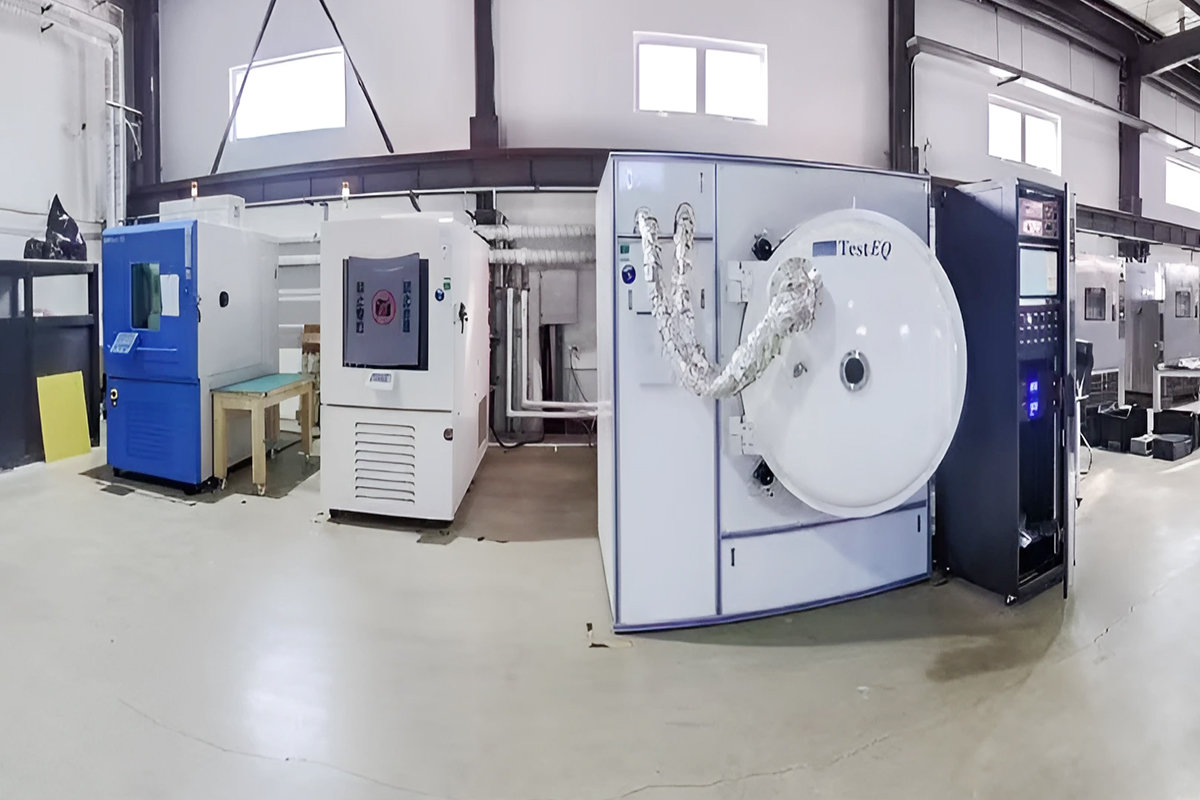
TestEQ designs and manufactures high-performance thermal cycling chambers for JEDEC reliability testing.
Key Features
Temperature range from -70°C to +180°C
Linear ramp rates up to 25°C/min
Excellent temperature uniformity
Long-life refrigeration systems
Continuous operation for 1000+ cycle tests
Custom chamber volumes available
CE and ISO-certified manufacturing
Suitable for JEDEC, IEC, MIL-STD and AEC-Q100 requirements
TestEQ systems are widely used for semiconductor, automotive, aerospace, and reliability laboratory applications worldwide.
Frequently Asked Questions
1.What is JESD22-A104?
JESD22-A104 is a JEDEC standard that defines temperature cycling procedures used to evaluate semiconductor package and electronic component reliability under repeated thermal stress.
2.What temperature range is commonly used?
The most common profile is:
-40°C to +125°C
Automotive applications often follow Condition G.
3.How many cycles are required?
Depending on qualification requirements:
100 cycles
500 cycles
1000 cycles
2000 cycles or more
4.Which chamber is suitable for JESD22-A104 testing?
A thermal cycling chamber capable of:
Fast transitions
Stable temperature control
Long-duration operation
JEDEC-compliant programming
is recommended.
Internal Linking Module
Related Products
Supports linear ramp rates from 5°C/min to 25°C/min for accelerated reliability testing and JEDEC temperature cycling applications.
General-purpose environmental chambers designed for temperature, humidity, and reliability testing across semiconductor, automotive, aerospace, and electronics applications.
Related Standards
A comprehensive guide to JEDEC reliability standards, including JESD22-A104, JESD22-A108, JESD22-A110, HAST, HTOL, and temperature cycling tests for semiconductor qualification.
Understand HAST testing methods for moisture-induced failure analysis.
Explore automotive semiconductor qualification requirements.
Related Resources
Discover the common causes of solder fatigue and reliability failures during temperature cycling tests.
Compare the differences, standards, and applications of thermal cycling and thermal shock testing.
Request a Quote
Looking for a JESD22-A104 compliant thermal cycling chamber?
TestEQ provides standard and custom thermal cycling systems with temperature ranges down to -70°C and linear ramp rates up to 25°C/min.
"Contact TestEQ today to" receive technical consultation, chamber selection assistance, and competitive pricing for your semiconductor reliability testing projects.