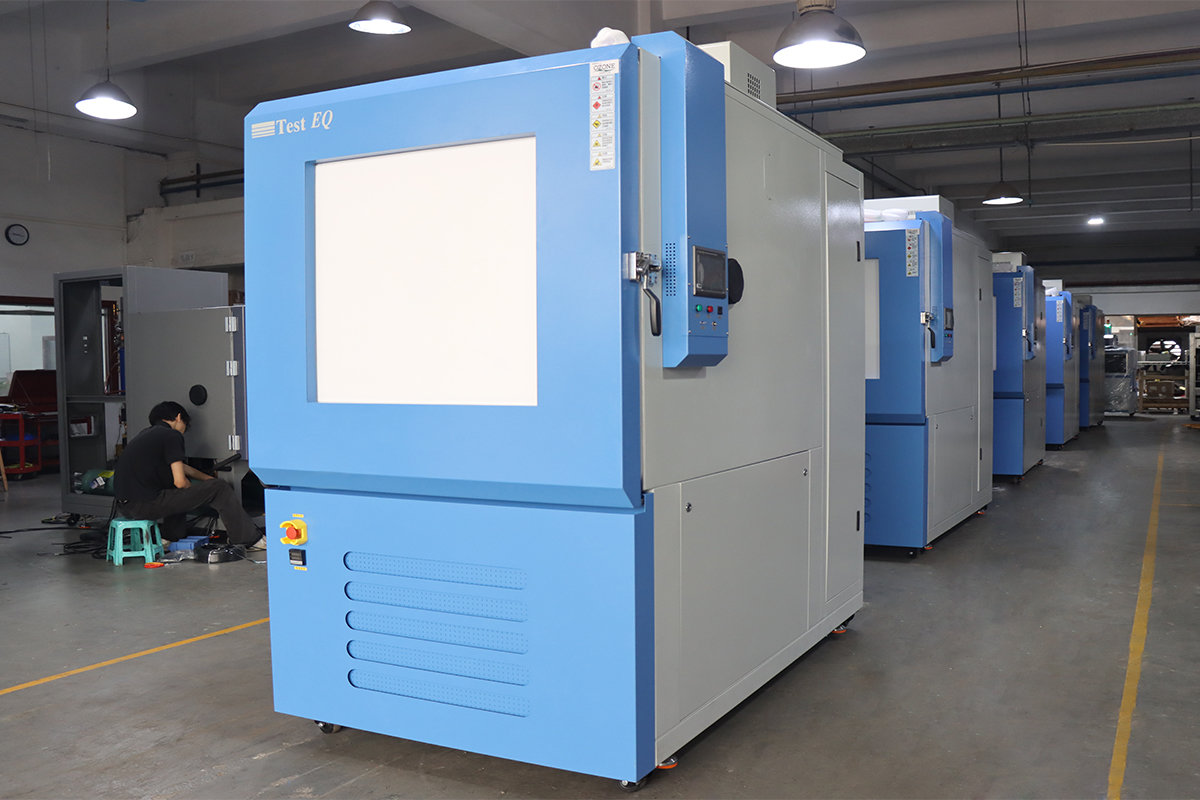
IEC 60068-2-14 Temperature Change Test Guide
IEC 60068-2-14 is one of the most widely recognized environmental testing standards for evaluating how products withstand rapid temperature changes. It is commonly used across the electronics, automotive, aerospace, military, medical device, telecommunications, and semiconductor industries to verify product reliability under thermal stress.
The purpose of this standard is to simulate the thermal expansion and contraction that occurs during transportation, storage, or real operating conditions. These repeated temperature transitions can reveal hidden defects such as solder joint fatigue, material cracking, seal failure, delamination, or electrical malfunction before products reach the market.
For manufacturers seeking global compliance, IEC 60068-2-14 provides a standardized procedure to ensure repeatable and comparable temperature change testing.
What is IEC 60068-2-14?
IEC 60068-2-14 belongs to the IEC 60068 Environmental Testing series and specifies procedures for temperature change testing.
Unlike simple high-temperature or low-temperature exposure tests, this standard evaluates how quickly a specimen responds to temperature transitions and whether rapid changes create mechanical or electrical failures.
Typical products tested include:
Electronic assemblies
PCB and solder joints
Automotive ECUs
EV battery components
Aerospace electronics
Optical devices
Connectors and cables
Communication equipment
The test helps engineers understand long-term reliability before mass production.
Test Methods
IEC 60068-2-14 defines several testing approaches depending on product characteristics.
Test Na — Rapid Change of Temperature
The specimen is transferred between high and low temperature environments within specified transfer times.
Suitable for:
Electronic components
Semiconductor devices
PCB reliability testing
Automotive electronics
Controlled Temperature Transition
The chamber changes temperature continuously at a controlled ramp rate.
Common applications include:
Complete electronic equipment
Battery systems
Industrial products
Mechanical assemblies
This method better simulates real operating environments where temperatures change gradually rather than instantaneously.
Typical Test Parameters
Although actual test conditions depend on product specifications, common examples include:
| Parameter | Typical Range |
|---|---|
| Low Temperature | -40°C to -70°C |
| High Temperature | +85°C to +180°C |
| Dwell Time | 30–120 minutes |
| Number of Cycles | 10–1000+ |
| Transition Time | According to IEC requirements |
Actual severity should always be selected according to the product specification or applicable industry standard.
IEC 60068-2-14 vs MIL-STD-810 Temperature Testing
| Comparison | IEC 60068-2-14 | MIL-STD-810 |
|---|---|---|
| Organization | International Electrotechnical Commission | U.S. Department of Defense |
| Primary Purpose | General environmental reliability testing | Military equipment environmental verification |
| Application Scope | Commercial and industrial products | Defense, aerospace, rugged systems |
| Test Focus | Temperature change performance | Real-world battlefield/environment simulation |
| Typical Users | Electronics manufacturers, laboratories | Military suppliers, aerospace companies |
For commercial electronics and industrial qualification, IEC 60068-2-14 is commonly selected. For defense and aerospace products requiring military environmental validation, MIL-STD-810 temperature methods may be required.
Common Failure Modes
Temperature change testing can expose many hidden reliability issues, including:
PCB solder joint cracking
CTE mismatch between different materials
Plastic housing deformation
Adhesive failure
Connector loosening
Moisture seal leakage
Display malfunction
Internal stress fractures
Electrical parameter drift
These failures often appear only after repeated thermal cycling, making IEC 60068-2-14 an essential qualification test.
How to Select the Right Temperature Change Chamber
Choosing the correct environmental chamber directly affects test repeatability and compliance.
Engineers should evaluate:
Temperature range
Heating and cooling rate
Temperature uniformity
Temperature stability
Chamber volume
Airflow design
Controller accuracy
Data recording capability
International calibration support
For laboratories conducting frequent IEC qualification testing, precise temperature control and repeatable ramp rates are more important than simply achieving extreme temperatures.
How TestEQ Supports Different Temperature Reliability Tests
TestEQ provides a complete range of temperature testing solutions covering IEC 60068-2-14, thermal cycling, thermal shock, and customized reliability testing requirements.
Engineers can select suitable equipment based on:
Required temperature range
Transition speed
Product size
Test cycles
Industry standards
Data recording requirements
With advanced temperature control technology and customized chamber design capabilities, TestEQ helps manufacturers improve product reliability and reduce field failure risks.
Why TestEQ for IEC 60068-2-14 Testing?
TestEQ designs environmental test chambers specifically for international reliability testing standards.
Key advantages include:
Temperature range up to -70°C to +180°C
Fast linear temperature ramp rates
High temperature uniformity
Stable programmable control system
Custom chamber sizes available
Compliance with IEC, MIL-STD, JEDEC, ISO and other international standards
Suitable for electronics, EV batteries, aerospace and semiconductor testing
Whether you require R&D verification, production quality control, or third-party laboratory testing, TestEQ provides customized temperature change testing solutions designed for long-term reliability evaluation.
Frequently Asked Questions
1.Is IEC 60068-2-14 the same as Thermal Cycling?
Not exactly. IEC 60068-2-14 defines standardized temperature change procedures. Thermal cycling is a broader testing concept, and many thermal cycling tests are performed according to IEC 60068-2-14.
2.What is the difference between Temperature Change and Thermal Shock?
Temperature Change typically uses controlled chamber transitions, while Thermal Shock rapidly transfers specimens between hot and cold environments, creating much higher thermal stress.
3.Which industries commonly use IEC 60068-2-14?
The standard is widely adopted in automotive, aerospace, electronics, semiconductor, telecommunications, medical devices, military equipment, and consumer electronics.
4.What products can be tested according to IEC 60068-2-14?
IEC 60068-2-14 can be applied to a wide range of products, including electronic components, automotive parts, EV battery modules, aerospace equipment, semiconductor devices, connectors, sensors, and industrial control systems. The test helps manufacturers evaluate whether products can maintain performance after repeated temperature changes.
5.What is the difference between IEC 60068-2-14 and IEC 60068-2-1 / IEC 60068-2-2?
IEC 60068-2-1 focuses on cold temperature testing, while IEC 60068-2-2 evaluates dry heat conditions. IEC 60068-2-14 specifically evaluates the effect of changing temperatures between different temperature levels, making it more suitable for analyzing thermal stress caused by expansion and contraction.
6.How many temperature cycles are required for IEC 60068-2-14 testing?
The number of cycles depends on the product specification, industry requirement, and reliability target. Common qualification tests may involve 10, 50, 100, or even thousands of temperature change cycles for high-reliability applications such as automotive electronics, aerospace systems, and semiconductor components.
7.What environmental test chamber is required for IEC 60068-2-14 testing?
IEC 60068-2-14 testing typically requires a temperature change chamber or thermal cycling chamber capable of providing accurate temperature control, stable airflow, fast temperature transitions, and reliable data recording.
For applications requiring rapid temperature transitions, a Rapid Temperature Change Chamber or Thermal Shock Chamber may be selected depending on the required test severity.
8.Why is IEC 60068-2-14 important for EV battery and semiconductor reliability testing?
EV batteries and semiconductor devices contain multiple materials with different coefficients of thermal expansion (CTE). Repeated temperature changes can create internal mechanical stress, leading to cracks, connection failures, or performance degradation.
IEC 60068-2-14 testing helps engineers identify these potential reliability risks before products enter mass production.
Internal Linking Module
Recommended Equipment
TestEQ Temperature Cycling Chamber is designed for repeated high and low temperature cycling tests to evaluate product reliability under thermal stress. It is widely used for electronics, automotive components, semiconductor devices, and battery reliability verification according to IEC 60068 and other international testing standards.
TestEQ Rapid Temperature Change Chamber provides fast and controlled temperature transitions for evaluating material expansion, contraction, and thermal fatigue performance. It is suitable for demanding applications such as EV batteries, aerospace electronics, and high-reliability components requiring accurate temperature ramp control.
TestEQ Thermal Shock Chamber performs rapid transfer between extreme hot and cold environments to identify hidden defects caused by severe thermal stress. It is commonly used for electronic components, automotive parts, military products, and reliability qualification testing.
Recommended Standards
Explore the complete IEC 60068 environmental testing standard series covering temperature, humidity, vibration, shock, and other reliability tests. This guide helps engineers select the appropriate testing method for different products and applications.
JESD22 provides semiconductor reliability testing methods for evaluating thermal cycling performance of electronic devices. It is widely referenced by semiconductor manufacturers and laboratories for package reliability verification.
MIL-STD-810 defines environmental test methods for military and aerospace equipment. The standard evaluates product durability under extreme temperature, humidity, vibration, altitude, and operational conditions.
Recommended Resources
Learn the differences between thermal cycling and thermal shock testing, including test methods, thermal stress levels, applications, and how engineers select the right reliability testing approach.
A practical guide for engineers and purchasing teams to select an environmental test chamber based on temperature range, cooling rate, chamber size, accuracy, standards compliance, and application requirements.
Understand how differences in coefficient of thermal expansion (CTE) between materials can cause cracks, solder failures, and mechanical stress during temperature cycling tests.
CTA
Need an IEC 60068-2-14 Compliant Temperature Change Test Solution?
Selecting the right temperature change test chamber is critical for achieving reliable and repeatable IEC 60068-2-14 testing results.
TestEQ provides customized temperature change test chambers, thermal cycling chambers, and environmental testing systems designed for electronics, automotive components, EV batteries, aerospace systems, semiconductor devices, and industrial products.
Our engineering team can help you evaluate:
IEC 60068-2-14 test requirements
Temperature range and transition rate selection
Chamber size and configuration
Test profile programming
Data monitoring and reliability evaluation solutions
Whether you are developing a new product, validating supplier quality, or building a reliability testing laboratory, TestEQ can provide a customized environmental testing solution based on your application requirements.
"Contact TestEQ today" to discuss your IEC 60068-2-14 temperature change testing requirements and receive a professional technical recommendation.