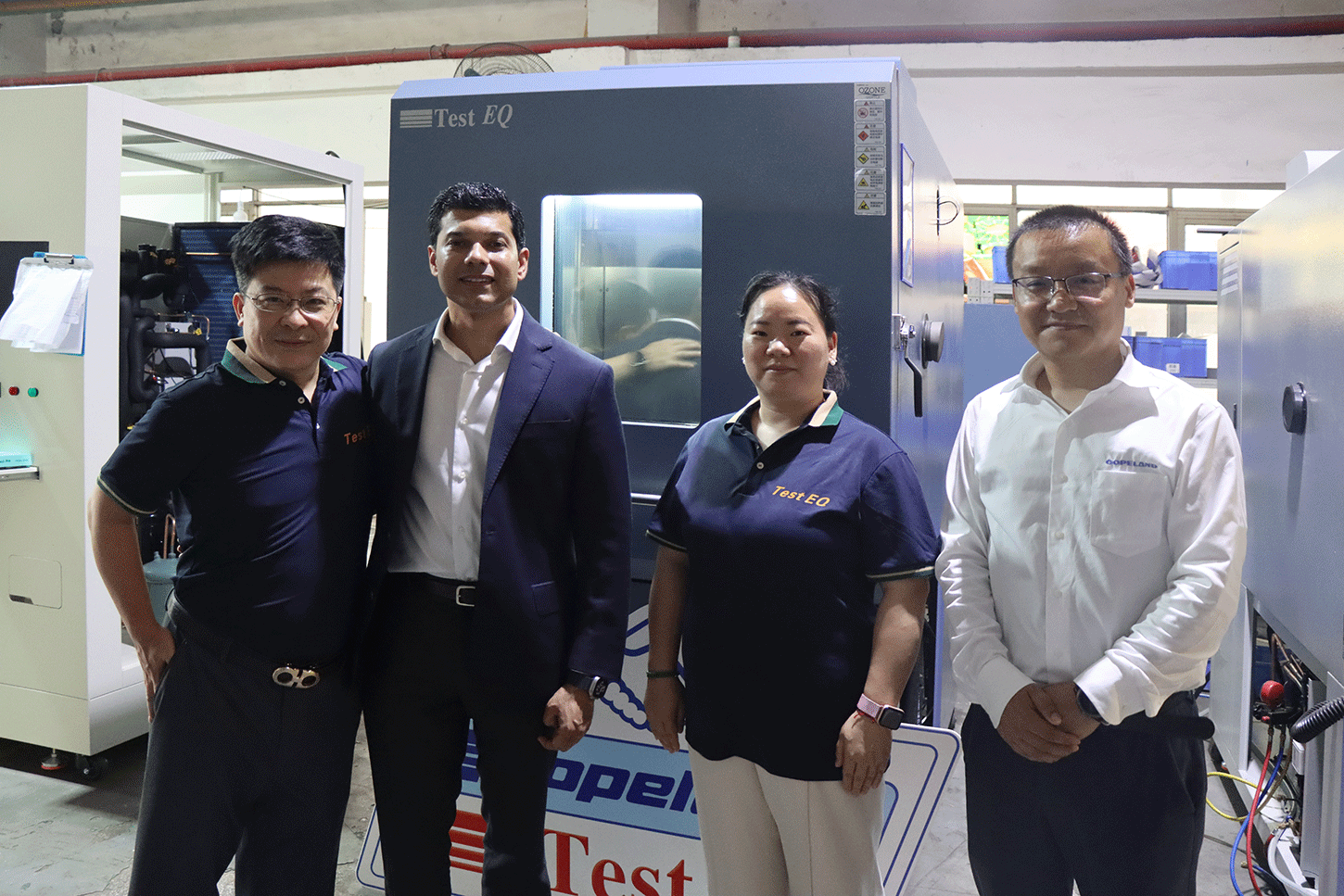
Compressor Environmental Testing: Test Methods, Failure Mechanisms and Reliability Validation
Compressors used in HVAC, refrigeration, heat pump, and industrial cooling systems are expected to operate reliably across changing environmental conditions and extended service periods. Temperature extremes, moisture, repeated thermal transitions, and continuous operation can introduce stresses that may not be visible during conventional laboratory evaluation.
Environmental testing provides engineers with a controlled method to reproduce these conditions and examine how compressor systems respond to environmental stress.
This technical case study examines the engineering considerations behind compressor environmental testing, including test conditions, potential failure mechanisms, test planning, and environmental chamber selection.
What Is Compressor Environmental Testing?
Compressor environmental testing is the controlled evaluation of compressor performance and reliability under defined environmental conditions.
Unlike a simple functional test performed under normal laboratory conditions, environmental testing introduces controlled external stresses that may influence compressor operation over time.
Depending on the application, an environmental test program may evaluate:
Operation at elevated temperatures
Operation at low temperatures
Temperature transitions
Humidity exposure
Condensation-related conditions
Repeated thermal cycling
Extended environmental exposure
Startup and restart behavior
Stability during environmental changes
The purpose is not simply to confirm whether a compressor operates at a specific temperature. A well-designed test program helps engineers understand how environmental stress affects system stability, component durability, and long-term reliability.
Why Environmental Conditions Matter to Compressor Reliability
Compressor systems are composed of multiple mechanical, electrical, thermal, and control components. These components may respond differently when environmental conditions change.
For example, temperature variation can influence material expansion and contraction, while moisture may affect electrical insulation or create condensation on sensitive surfaces.
During repeated environmental exposure, engineers may need to investigate:
Thermal expansion and contraction
Material interface stress
Electrical insulation performance
Moisture-related degradation
Seal and connector behavior
Control system stability
Component fatigue
Startup performance at temperature extremes
The interaction between these factors can become more significant during long-duration operation or repeated environmental cycling.
For this reason, environmental validation should be designed around the actual operating environment and the expected service conditions of the compressor system.
Key Environmental Test Conditions for Compressors
There is no single environmental test profile suitable for every compressor application. The appropriate conditions depend on the product design, intended market, installation environment, and validation objectives.
High-Temperature Exposure
High-temperature testing evaluates compressor behavior when ambient or surrounding environmental temperatures increase beyond normal laboratory conditions.
Engineers may monitor:
Startup behavior
Operating stability
Temperature response
Electrical performance
Thermal management
Component temperature distribution
The objective is to identify potential performance limitations or thermal weaknesses before field deployment.
Low-Temperature Exposure
Low-temperature testing can be used to evaluate compressor operation during cold starts and extended exposure to low ambient conditions.
Potential areas of evaluation include:
Startup reliability
Temperature stabilization
Control response
Mechanical behavior
Electrical system performance
For outdoor HVAC and refrigeration applications, low-temperature validation can be particularly important when equipment is expected to operate in cold climates.
Temperature Cycling
Temperature cycling exposes the test specimen to repeated changes between defined temperature conditions.
Repeated temperature transitions may introduce mechanical and material stresses caused by differences in thermal expansion and contraction.
Engineers may use temperature cycling to investigate:
Material fatigue
Interface stress
Component connections
Sealing systems
Electrical assemblies
Structural durability
The test profile should be selected according to the product's intended environment and the objectives of the validation program.
Humidity and Moisture Exposure
Humidity testing evaluates how moisture-rich environments may affect compressor systems and associated components.
Potential concerns include:
Condensation
Electrical insulation degradation
Corrosion
Connector reliability
Moisture penetration
Surface contamination
For equipment installed in humid climates or environments with significant temperature fluctuations, moisture exposure may be an important part of the reliability evaluation.
Long-Duration Environmental Exposure
Short-duration testing may identify immediate problems, but some reliability issues only become visible after extended operation.
Long-duration environmental exposure can help engineers monitor:
Performance drift
Temperature stability
Control behavior
Repeated startup cycles
Component degradation
Abnormal operating conditions
Continuous data collection during extended testing can provide additional information for reliability analysis.
Common Failure Mechanisms Investigated During Environmental Testing
Environmental testing is most valuable when the test program is connected to specific engineering failure mechanisms.
Thermal Fatigue
Repeated temperature changes can create cyclic stress in materials and component interfaces.
Over time, this may contribute to fatigue-related degradation.
Condensation and Moisture-Related Failure
Temperature changes can create conditions where moisture condenses on surfaces or enters vulnerable areas.
Potential consequences include insulation degradation, corrosion, and electrical instability.
Component Interface Stress
Different materials may have different thermal expansion characteristics.
Repeated environmental transitions can therefore create stress at interfaces between components or materials.
Seal and Connector Degradation
Environmental exposure may influence seals, connectors, and other interfaces that require long-term environmental stability.
Control System Instability
Temperature and humidity changes can also affect sensors, control electronics, and system response.
Monitoring control behavior during environmental testing can help identify issues that may not be visible during normal operation.
How to Develop a Compressor Environmental Test Plan
A reliable environmental testing program should begin with clearly defined objectives.
Step 1: Define the Operating Environment
Identify the environmental conditions expected during the compressor's intended service life.
Consider:
Ambient temperature
Humidity
Temperature variation
Installation environment
Expected operating duration
Seasonal conditions
Step 2: Identify Potential Failure Mechanisms
Determine which components or interfaces may be most sensitive to environmental stress.
This step helps engineers select appropriate test conditions instead of applying a generic test profile.
Step 3: Define Test Severity
The test severity should be based on the intended application and validation objectives.
Relevant parameters may include:
Minimum temperature
Maximum temperature
Humidity level
Temperature transition rate
Exposure duration
Number of cycles
Recovery conditions
Step 4: Define Monitoring Requirements
Environmental testing should include appropriate measurement and data acquisition.
Depending on the project, monitoring may include:
Chamber temperature
Product temperature
Humidity
Operating parameters
Electrical signals
Alarm conditions
Test cycle status
Step 5: Establish Acceptance Criteria
Before testing begins, engineers should define the criteria used to determine whether the compressor has successfully completed the validation program.
Acceptance criteria may include:
Stable operation
No abnormal alarms
No visible damage
Performance within defined limits
Successful restart
No unacceptable degradation
Selecting an Environmental Test Chamber for Compressor Testing
Selecting a chamber for compressor testing requires more than simply matching the required temperature range.
Engineers should evaluate the complete test load and operating conditions.
Chamber Volume
The internal dimensions should accommodate the compressor, fixtures, instrumentation, and required clearance.
Heat Load
Operating compressors can generate significant heat. The chamber must be capable of removing or managing the heat generated by the test specimen.
Temperature Range
The chamber's temperature range should cover the complete validation profile, including required high- and low-temperature conditions.
Temperature Transition Rate
If the test includes repeated temperature changes, the required ramp rate should be considered when selecting the chamber.
Humidity Capability
For moisture or humidity testing, the chamber should provide the required humidity control and stability.
Instrumentation
The chamber should support the required sensors, electrical connections, data acquisition systems, and monitoring equipment.
Test Fixture Integration
Large or specialized compressor assemblies may require customized fixtures and interfaces.
The chamber design should therefore consider how the test specimen will be installed, operated, monitored, and maintained throughout the test.
Environmental Testing and Reliability Data
Environmental testing generates more value when test data can be connected to specific engineering decisions.
During a test program, engineers may analyze:
Temperature stability
Environmental exposure history
Operating performance
Abnormal events
Test cycle behavior
Performance changes over time
The resulting data can support:
Design verification
Failure analysis
Product improvement
Reliability assessment
Supplier qualification
Validation documentation
For engineering teams, repeatable test conditions and reliable data acquisition are essential for making meaningful comparisons between prototypes or product revisions.
Environmental Testing for HVAC and Refrigeration Applications
Environmental testing can support compressor-related applications across multiple industries.
Typical applications include:
HVAC systems
Commercial refrigeration
Industrial refrigeration
Heat pump systems
Air-conditioning equipment
Cold-chain equipment
Outdoor cooling systems
Industrial thermal management
The required test profile should always be determined by the product's intended use, applicable technical requirements, and the manufacturer's validation strategy.
From Environmental Simulation to Reliability Validation
Environmental testing should be considered part of a broader reliability engineering process.
A typical validation strategy may connect:
Environmental Conditions
↓
Test Profile
↓
Controlled Environmental Exposure
↓
Performance Monitoring
↓
Failure Mechanism Analysis
↓
Design Improvement
↓
Reliability Validation
This approach helps engineering teams move beyond simple pass-or-fail testing and use environmental data to understand product behavior under controlled stress conditions.
For complex compressor systems, the value of environmental testing lies in creating repeatable conditions that allow engineers to identify weaknesses, compare design changes, and improve confidence before products enter demanding operating environments.
TestEQ Environmental Testing Engineering
TestEQ develops environmental test chambers and customized testing systems for engineering teams requiring controlled environmental simulation.
Depending on the application, TestEQ systems can be configured for:
Temperature testing
Humidity testing
Thermal cycling
Rapid temperature change
Long-duration environmental exposure
Customized test fixtures
Temperature and humidity monitoring
Data acquisition
Remote monitoring
TestEQ's engineering approach focuses on matching the environmental test system to the actual test profile, product dimensions, heat load, instrumentation requirements, and validation objectives.
For compressor-related applications, the appropriate test system should be defined according to the required environmental conditions and the intended reliability validation program.
Frequently Asked Questions
1.What is compressor environmental testing?
Compressor environmental testing evaluates compressor performance and reliability under controlled environmental conditions such as high temperature, low temperature, humidity, temperature cycling, and extended exposure.
2.What is the purpose of temperature cycling for compressors?
Temperature cycling is used to investigate the effects of repeated temperature transitions and associated thermal stress on materials, components, interfaces, and assemblies.
3.Why is humidity testing important for HVAC equipment?
Humidity testing can help evaluate potential moisture-related issues such as condensation, corrosion, electrical insulation degradation, and connector reliability.
4.How do engineers select a chamber for compressor testing?
Engineers should consider chamber volume, temperature range, humidity requirements, heat load, transition rate, instrumentation, test fixtures, and the required test profile.
5.Why is compressor heat load important when selecting a test chamber?
An operating compressor generates heat that can influence chamber performance. The environmental test system should be capable of managing the expected heat load while maintaining the required environmental conditions.
6.What data should be monitored during environmental testing?
Depending on the validation objectives, engineers may monitor chamber conditions, product temperature, humidity, operating parameters, electrical signals, alarms, and test cycle status.
7.Can environmental testing identify compressor failure mechanisms?
Yes. Properly designed environmental testing can help engineers investigate potential failure mechanisms related to thermal stress, moisture, component interfaces, seals, connectors, and control systems.
8.How does environmental testing support product reliability?
Environmental testing provides controlled and repeatable conditions that allow engineering teams to evaluate product behavior, identify weaknesses, compare design changes, and support reliability validation.
Internal Linking Module
Recommended Test Systems
Explore TestEQ environmental testing systems designed for temperature, humidity, thermal cycling, and reliability validation applications.
Provides controlled temperature and humidity conditions for evaluating product performance and reliability under changing environmental conditions.
Designed for repeated temperature transitions to evaluate thermal stress, material fatigue, and reliability risks caused by environmental temperature changes.
Designed to expose test specimens to rapid transitions between high- and low-temperature zones, helping evaluate thermal shock resistance, material stress, component durability, and potential failure caused by sudden temperature changes.
Related Testing Standards
Explore international environmental and reliability testing standards relevant to temperature, humidity, thermal cycling, and product validation.
Covers a broad range of environmental test methods, including cold, dry heat, damp heat, temperature change, and other environmental stresses used for product reliability evaluation.
Explore the JESD22 series of reliability test methods used to evaluate semiconductor devices and electronic components under environmental, mechanical, and accelerated stress conditions.
Provides an environmental engineering and laboratory testing framework for evaluating equipment under a wide range of demanding environmental conditions.
Technical Resources
Learn more about environmental test methods, chamber performance, and reliability validation strategies for engineering applications.
Understand the key differences between thermal cycling and thermal shock testing, including temperature transition rates, test objectives, and typical engineering applications.
Explore common causes of temperature ramp instability and learn how chamber performance, heat load, and control systems can affect test repeatability.
Learn how to select an environmental test chamber based on temperature range, humidity requirements, chamber volume, heat load, ramp rate, instrumentation, and testing objectives.
Request an Environmental Testing Solution
If your engineering team is developing or validating compressors, HVAC equipment, refrigeration systems, or thermal management products, TestEQ can help define an environmental testing system based on your product requirements.
Share your required temperature range, humidity conditions, chamber volume, heat load, test profile, and monitoring requirements with the TestEQ engineering team.
"Request a Technical Solution & Quotation"
Talk to a TestEQ Environmental Testing Engineer