What Is IEC 62660?
IEC 62660 is a series of international standards for secondary lithium-ion cells used for the propulsion of electric road vehicles, including battery electric vehicles (BEVs) and hybrid electric vehicles (HEVs).
The series contains three main parts:
• IEC 62660-1 — Performance Testing: Evaluates cell characteristics such as capacity, power capability, energy-related characteristics, storage life and cycle life.
• IEC 62660-2 — Reliability and Abuse Testing: Examines cell and cell-block reliability and behavior under specified abuse conditions.
• IEC 62660-3 — Safety Requirements: Defines test procedures and acceptance criteria for cell safety under intended use and reasonably foreseeable misuse or incidents.
These parts address different engineering questions and should not be treated as interchangeable. The applicable edition and individual test procedures must be confirmed against the project's requirements.
What Products Does IEC 62660 Apply To?
IEC 62660 primarily addresses secondary lithium-ion cells used for electric road vehicle propulsion.
Typical applications include:
• Lithium-ion cells for BEVs
• Hybrid electric vehicle battery cells
• Plug-in hybrid electric vehicle cells, subject to the applicable battery-system design and agreed test procedure
• Automotive traction battery cell development
• Cell characterization and qualification laboratories
• Battery research and automotive engineering programs
An important scope distinction is that IEC 62660 is primarily a cell-level standard. Testing a complete battery pack may require additional standards, vehicle-level requirements or OEM-specific procedures.
IEC 62660 Test Requirements
IEC 62660 testing is organized around the purpose of the evaluation rather than a single universal environmental test.
IEC 62660-1: Performance and Life Testing
Performance testing establishes essential cell characteristics under specified conditions.
Depending on the applicable procedure, evaluations can include:
• Cell capacity
• Power capability
• Energy-related characteristics
• Current-voltage behavior
• Storage life
• Cycle life
Engineers should control the test temperature, state of charge, charging and discharging conditions, rest periods and measurement procedure. Differences in these parameters can affect comparisons between cells.
IEC 62660-2: Reliability and Abuse Testing
Reliability and abuse testing investigates how cells or cell blocks behave under specified stress conditions.
The test program may include temperature cycling and defined electrical or mechanical abuse procedures, depending on the applicable clauses. These tests help engineers characterize failure behavior and generate data for battery-system design.
IEC 62660-3: Safety Requirements
Safety testing evaluates cell behavior under defined operating conditions and reasonably foreseeable misuse or incidents.
The test plan must follow the applicable procedures and acceptance criteria. A temperature chamber alone cannot perform every IEC 62660 safety test; electrical test equipment, measurement systems and dedicated safety infrastructure may also be required.
IEC 62660 Environmental Test Conditions
Temperature control can significantly affect the validity and repeatability of battery cell measurements.
Before selecting equipment, laboratory engineers should identify the environmental conditions specified by the applicable test procedure and the cell manufacturer's operating limits.
Key parameters include:
Parameter | Engineering Consideration |
|---|---|
Test Temperature | Required temperature setpoints and operating limits |
Temperature Stability | Permissible temperature variation during measurement and exposure |
Temperature Uniformity | Temperature differences across the test area |
Ramp Rate | Required heating and cooling rates or temperature transition profile |
Cell Operating State | Charging, discharging, resting, or storage conditions |
Test Duration | Exposure time, rest periods, and cycle duration |
Cell Quantity | Number of specimens tested simultaneously and fixture arrangement |
Measurement System | Voltage, current, temperature, and data logging requirements |
Feedthroughs | Electrical cable, sensor wiring, and communication connections |
Safety Provisions | Independent protection systems, alarms, interlocks, and laboratory risk controls |
Important: IEC 62660 does not establish one universal temperature range or ramp rate for every test. Exact conditions must be taken from the applicable part, clause, edition and test plan.
IEC 62660 Temperature Testing
Temperature-controlled testing helps engineers understand how lithium-ion cells respond to different thermal conditions.
Low-temperature testing can help characterize cold-temperature capacity and power capability. Elevated-temperature exposure and cycling can support investigations into temperature-dependent performance, degradation and reliability.
For meaningful results, the chamber must maintain the specified environmental condition without introducing excessive temperature variation or interfering with the cell test system.
Engineers should consider:
• Temperature range required by the test program
• Temperature recovery after opening the chamber
• Cell fixture thermal mass
• Number and spacing of test specimens
• Sensor location and calibration
• Electrical cable routing
• Charging and discharging heat generation
• Data synchronization between the chamber and battery cycler
The chamber's empty-space performance may differ from its performance under the actual test load. Qualification should therefore reflect the intended specimen arrangement and operating conditions.
Battery Test Chamber Requirements for IEC 62660
A suitable environmental test chamber should be selected according to the required test conditions, not simply the lowest and highest temperatures shown in a catalogue.
Temperature Control
The chamber should maintain the specified temperature profile throughout the test. Required stability, uniformity and ramp rate should be defined before quotation.
Integration With Battery Cyclers
Battery cyclers and measurement systems may require power cables, voltage-sensing wires, thermocouples and communication interfaces. The chamber should provide appropriate cable ports and a practical routing arrangement.
Heat-Load Assessment
Charging and discharging may introduce additional heat into the chamber. Engineers should provide the expected operating current, power profile, specimen count and estimated heat load so that refrigeration capacity can be assessed.
Monitoring and Data Integrity
A laboratory may need synchronized records of chamber temperature, cell surface temperature, voltage, current, state of charge and test status. The integration design should support the required data acquisition and traceability workflow.
Safety and Laboratory Integration
The appropriate safety configuration depends on cell chemistry, stored energy, test procedure and local laboratory risk assessment. Depending on the application, the system may require independent over-temperature protection, alarms, interlocks, remote shutdown, gas monitoring or exhaust interfaces.
These measures should be engineered for the specific test program. No single chamber configuration automatically covers every IEC 62660 test.
How to Select an IEC 62660 Test Chamber
Before requesting a quotation, prepare a clear equipment specification.
Selection Item | Information to Provide |
|---|---|
DUT | Cell type, chemistry and dimensions |
Specimen Quantity | Number of cells tested simultaneously |
Temperature Range | Minimum and maximum setpoints |
Ramp Rate | Required heating and cooling rates |
Test Profile | Cycling, storage, performance or other procedure |
Electrical Operation | Charge/discharge current and power |
Heat Load | Estimated heat generated during testing |
Measurement | Voltage, current and temperature channels |
Chamber Capacity | Required internal working dimensions |
Feedthroughs | Cable quantity, size and location |
Safety | Required alarms, interlocks and protection |
Compliance Scope | Applicable IEC 62660 part and edition |
For cell characterization, a compact chamber may be sufficient. For larger specimen quantities, multiple cyclers or specialized fixtures, a larger chamber or customized configuration may be more appropriate.
The final selection should consider the complete test system, including the chamber, battery cycler, sensors, fixtures, data acquisition and safety provisions.
IEC 62660 vs UN 38.3 vs IEC 62619
These standards serve different purposes and should not be used as substitutes for one another.
Standard | Main Focus | Typical Application |
|---|---|---|
IEC 62660 | Performance, reliability, abuse, and safety testing of EV propulsion lithium-ion cells | Automotive traction cell development and evaluation |
UN 38.3 | Transport-related testing of lithium cells and batteries | Transport qualification and dangerous-goods shipment |
IEC 62619 | Safety requirements for secondary lithium cells and batteries used in industrial applications | Industrial batteries and applicable stationary systems |
Engineering takeaway: IEC 62660 addresses EV propulsion cells, UN 38.3 addresses transport-related testing, and IEC 62619 focuses on industrial battery safety. The applicable requirements depend on the product, intended use and compliance objective.
IEC 62660 vs ISO 12405
IEC 62660 and ISO 12405 address different levels of automotive battery evaluation.
IEC 62660 focuses on secondary lithium-ion cells used for electric road vehicle propulsion. ISO 12405 addresses test specifications for electrically propelled road vehicle lithium-ion traction battery packs and systems.
The distinction matters when planning laboratory equipment. Cell-level characterization and pack-level validation may involve different specimen sizes, electrical power levels, fixtures, measurement interfaces and environmental test requirements.
A project may require both standards at different stages of battery development. The applicable ISO 12405 part and edition should be confirmed for the intended battery application.
What Test Chamber Does TestEQ Provide?
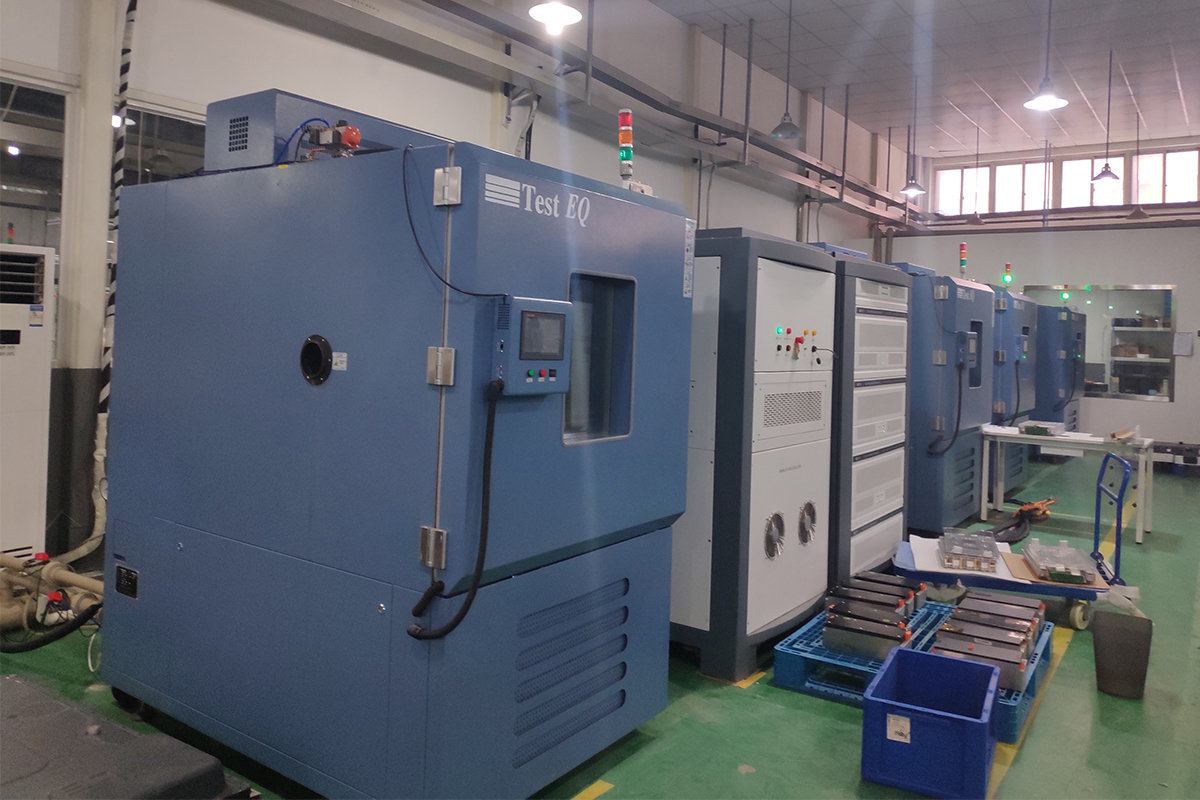
TestEQ provides configurable environmental test chambers for automotive components, lithium-ion battery development and reliability laboratories.
Depending on the test program, available configurations can support:
• High- and low-temperature exposure
• Temperature cycling and thermal stress
• Programmable environmental profiles
• Battery cell and module environmental testing
• Customized chamber dimensions and fixtures
• Cable ports for sensors and battery test equipment
• Integration planning for data acquisition and safety systems
For IEC 62660-related applications, the chamber configuration should be matched to the actual cell test procedure and electrical operating conditions. Battery cyclers, abuse-test equipment and specialized safety systems may need to be specified separately.
Explore the TestEQ Battery Test Chamber for configurable solutions for EV battery and lithium-ion battery testing.
Why Choose TestEQ for IEC 62660 Battery Testing?
TestEQ provides customized environmental simulation systems for automotive testing, battery development and reliability laboratories.
• Application-Based Engineering: Chamber configurations are tailored to the required temperature profile, specimen dimensions and test conditions.
• Flexible Customization: Temperature range, chamber volume, cable ports and instrumentation interfaces can be configured according to project requirements.
• Laboratory Integration: Design considerations include battery cyclers, temperature sensors, data acquisition and applicable safety interfaces.
• Automotive Testing Experience: TestEQ supports environmental testing applications for automotive components and reliability engineering.
From battery cell temperature testing to customized environmental simulation, TestEQ helps laboratories identify chamber configurations that match their testing objectives.
Final equipment specifications depend on the applicable IEC 62660 procedure, DUT characteristics and laboratory requirements.
Applications
IEC 62660-related testing supports engineering activities across the automotive battery development lifecycle.
EV battery cell development: Characterize capacity, power capability and temperature-dependent behavior.
Automotive R&D laboratories: Generate consistent data for cell comparison and battery-system design.
Battery manufacturers: Evaluate cell performance, storage behavior and cycle-life characteristics.
Reliability laboratories: Investigate cell behavior under specified environmental and abuse conditions.
Automotive OEMs and suppliers: Support development and validation programs using applicable international and customer-specific requirements.
Research institutions: Conduct controlled experiments on lithium-ion cell behavior under defined thermal conditions.
Frequently Asked Questions About IEC 62660
1. What Is IEC 62660 and What Is It Used For?
IEC 62660 is a series of international standards for secondary lithium-ion cells used in electric road vehicle propulsion, including battery electric vehicles (BEVs) and hybrid electric vehicles (HEVs). It covers cell performance and life testing, reliability and abuse testing, and safety requirements. It helps battery manufacturers, automotive engineers and laboratories evaluate cell characteristics under defined test conditions.
2. What Is the Difference Between IEC 62660-1, IEC 62660-2 and IEC 62660-3?
The three parts address different testing objectives:
IEC 62660-1: Performance and life testing, including capacity, power capability, energy-related characteristics, storage life and cycle life.
IEC 62660-2: Reliability and abuse behavior of lithium-ion cells and cell blocks.
IEC 62660-3: Safety testing procedures and acceptance criteria for lithium-ion cells and cell blocks.
The applicable part depends on the validation objective and the requirements of the battery manufacturer or automotive customer.
3. Does IEC 62660 Apply to EV Battery Cells or Complete Battery Packs?
IEC 62660 primarily addresses lithium-ion propulsion cells and, in relevant parts, cell blocks. Complete EV battery packs and systems may require additional standards and vehicle-specific validation procedures. Engineers should confirm the required test level before selecting equipment or defining a compliance program.
4. What Tests Are Included in IEC 62660?
The required tests depend on the applicable part and test program. IEC 62660-1 addresses performance and life characteristics; IEC 62660-2 addresses reliability and abuse behavior; and IEC 62660-3 addresses cell safety. Temperature-related testing may form part of the program, but IEC 62660 should not be interpreted as a single temperature test or one universal test sequence.
5. What Temperature Conditions Are Required for IEC 62660 Testing?
IEC 62660 does not establish one universal temperature range for every test. Required temperatures, exposure periods, operating states and measurement conditions depend on the applicable test procedure, standard edition and agreed test plan. Laboratories should define the required temperature profile and cell operating limits before specifying an environmental test chamber.
6. What Environmental Test Chamber Is Suitable for IEC 62660?
A suitable chamber should meet the specified temperature range, stability, uniformity and ramp-rate requirements under the intended test load. Engineers should also consider specimen quantity, fixture thermal mass, charging and discharging heat generation, cable feedthroughs, sensor placement and data acquisition. The final selection should be based on actual test conditions rather than nominal temperature range alone.
7. Can an Environmental Chamber Perform All IEC 62660 Tests?
No. An environmental chamber provides controlled environmental conditions for applicable tests, but it does not replace battery cyclers, electrical measurement equipment, mechanical abuse systems or dedicated safety-test facilities. The required equipment depends on whether the laboratory is performing performance, life, reliability, abuse or safety testing.
8. How Do You Select an IEC 62660 Battery Test Chamber for Procurement?
Prepare an RFQ that specifies the applicable IEC 62660 part and edition, cell dimensions, specimen quantity, temperature range, ramp rate, charging and discharging conditions, estimated heat load, measurement interfaces and safety requirements. These details help suppliers assess chamber capacity, refrigeration performance, feedthrough design and integration requirements more accurately.
9. What Is the Difference Between IEC 62660 and UN 38.3?
IEC 62660 addresses performance, reliability, abuse behavior and safety testing of lithium-ion cells used for electric road vehicle propulsion. UN 38.3 addresses transport-related testing of lithium cells and batteries. The standards serve different purposes, so compliance with one does not automatically establish compliance with the other.
10. Can TestEQ Provide a Customized Environmental Test Chamber for IEC 62660 Testing?
TestEQ provides configurable environmental test chambers for automotive battery development and reliability laboratories. Depending on the application, configurations can be tailored to the required temperature profile, specimen arrangement, chamber volume, electrical and sensor feedthroughs, and laboratory integration needs. Contact TestEQ with your test conditions and DUT specifications to discuss a suitable chamber configuration.
Internal Linking Module
Related Standards
Description: Explore safety testing requirements for secondary lithium cells and batteries used in industrial applications.
Description: Understand EV battery assembly safety evaluation and the environmental test equipment that may be needed
Related Test Equipment
Description: Configurable temperature testing systems for battery cells, modules and packs, with options for safety and laboratory integration.
Description: Evaluate product behavior under programmed high- and low-temperature cycles.
Description: Controlled temperature and humidity simulation for components and assemblies requiring climatic evaluation.
Engineering Resources
Description: Compare key battery testing standards and understand their different roles in automotive battery validation.
Description: Learn how temperature mapping, calibration and performance verification support reliable environmental testing.
Description: Compare the test objectives and equipment considerations for temperature cycling and thermal shock applications.
CTA
Need an IEC 62660 Battery Test Chamber?
TestEQ provides customized environmental test chambers for EV battery cell performance testing, temperature cycling and reliability evaluation. Our engineers can help configure a solution based on your test temperature range, ramp rate, specimen quantity, heat load and measurement requirements.
Share your IEC 62660 test requirements to discuss a chamber configuration tailored to your automotive battery testing application.