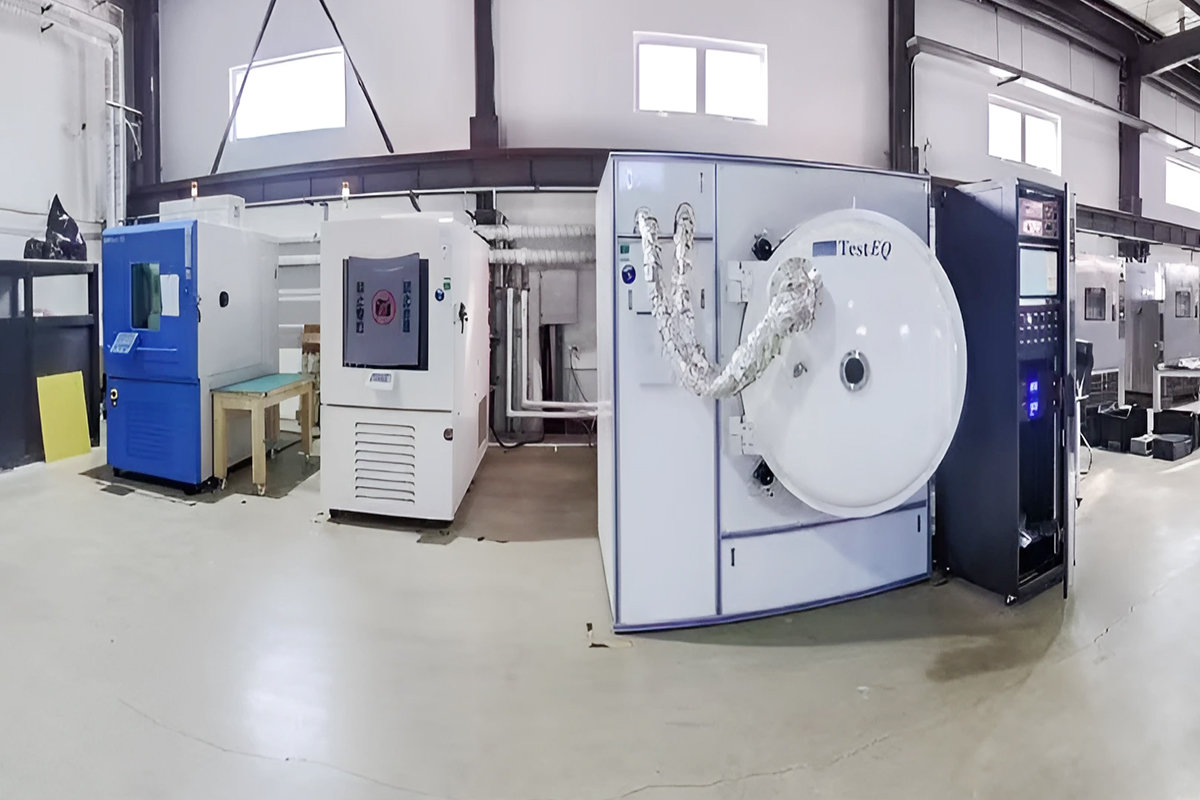
Introduction: Understanding JESD22-A106 Thermal Shock Testing
For semiconductor devices, IC packages, electronic components, and automotive electronics, rapid temperature transitions can create significant mechanical stress inside materials and assemblies.
The JESD22-A106 Thermal Shock Standard is one of the important JEDEC reliability testing methods used to evaluate whether electronic components can withstand repeated exposure to extreme temperature changes.
Thermal shock testing helps engineers identify:
Package cracking
Solder joint fatigue
Internal material stress
Wire bonding failures
Delamination problems
Electrical performance degradation
A reliable thermal shock test chamber is essential to achieve accurate temperature transition control, repeatable test results, and compliance with semiconductor reliability requirements.
TestEQ provides advanced thermal shock and thermal cycling test chamber solutions designed for semiconductor, automotive electronics, aerospace, and reliability laboratories.
What Is JESD22-A106 Thermal Shock Standard?
JESD22-A106 is a JEDEC Solid State Technology Association standard that defines accelerated thermal shock testing procedures for semiconductor devices.
The purpose of JESD22-A106 testing is to evaluate the ability of electronic components to survive rapid temperature changes between high and low temperature environments.
Unlike conventional temperature cycling tests, thermal shock testing focuses on:
Extremely fast temperature transitions
Thermal stress caused by sudden temperature differences
Material expansion and contraction effects
This makes it especially valuable for:
Semiconductor packages
Integrated circuits (IC)
Automotive electronic modules
Power electronics
Battery management systems
Aerospace electronics
JESD22-A106 Thermal Shock Test Method
A typical JESD22-A106 thermal shock test involves transferring test samples between two temperature-controlled zones.
The testing process includes:
| Test Step | Description |
|---|---|
| High Temperature Exposure | Samples are placed in a high-temperature zone |
| Low Temperature Exposure | Samples are transferred to a low-temperature zone |
| Rapid Transfer | The temperature changes quickly to create thermal stress |
| Cycling Process | Multiple thermal shock cycles are performed |
| Electrical Verification | Devices are inspected for failures |
The main evaluation factors include:
Temperature range
Exposure time
Transfer time
Number of cycles
Device performance before and after testing
JESD22-A106 vs Thermal Cycling Testing
Although thermal shock testing and thermal cycling testing are related, they simulate different reliability conditions.
| Comparison | JESD22-A106 Thermal Shock | Thermal Cycling Test |
|---|---|---|
| Main Purpose | Evaluate sudden thermal stress | Evaluate repeated temperature changes |
| Temperature Change Rate | Very fast transition | Controlled temperature ramp |
| Stress Type | Thermal shock stress | Expansion/contraction fatigue |
| Application | IC packages, semiconductor reliability | Automotive, electronics durability |
| Equipment | Thermal Shock Chamber | Thermal Cycling Chamber |
For semiconductor reliability validation, engineers often combine both thermal shock and thermal cycling tests to achieve comprehensive reliability analysis.
Key Requirements for JESD22-A106 Thermal Shock Chamber
Selecting the correct thermal shock chamber directly affects testing accuracy.
A professional JESD22-A106 thermal shock test system should provide:
1. Fast Temperature Transfer Capability
Rapid transfer between hot and cold zones ensures that samples experience actual thermal shock conditions.
TestEQ thermal shock chambers are engineered for:
High-speed temperature switching
Stable temperature control
Repeatable cycling performance
2. Accurate Temperature Control
Semiconductor testing requires precise temperature management to prevent unreliable results.
Important performance parameters include:
Temperature uniformity
Temperature recovery time
Sensor response speed
Control stability
TestEQ chambers use advanced refrigeration and control systems to maintain stable testing environments.
3. Reliable Long-Term Operation
Semiconductor reliability laboratories often require thousands of test cycles.
A qualified thermal shock chamber should provide:
Continuous operation capability
Low maintenance design
Data recording functions
Alarm protection system
Applications of JESD22-A106 Thermal Shock Testing
Semiconductor Industry
Thermal shock testing helps semiconductor manufacturers evaluate:
IC package reliability
Lead frame performance
Encapsulation materials
Internal connection durability
Automotive Electronics
For electric vehicles and automotive electronics, JESD22-A106 testing supports validation of:
ECU modules
Power semiconductors
Battery control systems
Sensor electronics
Aerospace and Defense Electronics
Extreme environmental reliability is required for aerospace applications.
Thermal shock testing helps verify:
Electronic module durability
Material reliability
Mission-critical component performance
Why Choose TestEQ Thermal Shock Chambers for JESD22-A106 Testing?
TestEQ focuses on providing environmental reliability testing systems for global engineering laboratories.
Engineering Advantages
Advanced Thermal Control Technology
TestEQ thermal shock chambers provide:
Rapid temperature transition capability
High stability control
Uniform temperature distribution
Designed for Reliability Testing
Solutions support:
Semiconductor qualification testing
Automotive component validation
Aerospace environmental simulation
Customized Chamber Solutions
TestEQ provides customized systems based on:
Sample size
Testing standards
Temperature requirements
Laboratory layout
From compact laboratory thermal shock chambers to customized reliability test systems, TestEQ supports different testing requirements.
JESD22-A106 Thermal Shock vs Thermal Cycling Test
Thermal shock focuses on rapid temperature transitions and extreme thermal stress, while thermal cycling evaluates long-term durability under repeated tem.
Engineers usually select the appropriate method based on product application, failure risks, and reliability requirements.
| Comparison Item | JESD22-A106 Thermal Shock Test | Thermal Cycling Test |
|---|---|---|
| Primary Purpose | Evaluate component resistance to sudden temperature changes | Evaluate product durability under repeated temperature variation |
| Main Stress Mechanism | Rapid thermal expansion and contraction stress | Long-term material fatigue caused by repeated temperature cycles |
| Temperature Transition | Extremely fast transfer between hot and cold zones | Controlled temperature ramp and gradual change |
| Temperature Change Rate | High-speed thermal transition | Lower and controlled ramp rate |
| Typical Equipment | Two-zone or three-zone thermal shock chamber | Thermal cycling chamber / environmental chamber |
| Test Focus | Detect cracks, delamination, solder failures, and internal package defects | Evaluate fatigue life, material reliability, and connection durability |
| Typical Samples | Semiconductor packages, IC devices, electronic components | Automotive electronics, PCB assemblies, battery components |
| Common Applications | Semiconductor qualification, IC reliability testing, aerospace electronics | Automotive validation, EV components, consumer electronics |
| Failure Detection | Early detection of thermal stress-related failures | Long-term reliability and lifetime evaluation |
| Testing Standard Examples | JESD22-A106, JEDEC reliability testing | JESD22-A104, IEC 60068-2-14 |
How to Select a JESD22-A106 Thermal Shock Test Chamber?
Engineers and purchasing teams should evaluate:
| Selection Factor | Key Questions |
|---|---|
| Temperature Range | Does the chamber meet required high/low temperature conditions? |
| Transfer Performance | Is the temperature transition fast enough? |
| Test Capacity | Can it handle required sample volume? |
| Control Accuracy | Can it maintain stable testing conditions? |
| Supplier Capability | Does the manufacturer provide technical support? |
Choosing the right manufacturer helps reduce testing risks and improves product reliability.
Which Test Should Engineers Choose?
The selection depends on the reliability objective:
| Testing Requirement | Recommended Test Method |
|---|---|
| Need to verify semiconductor package reliability | JESD22-A106 Thermal Shock Test |
| Need to detect solder joint cracking | Thermal Shock + Thermal Cycling Combined Testing |
| Need long-term automotive durability validation | Thermal Cycling Test |
| Need rapid failure screening during development | Thermal Shock Testing |
| Need qualification according to JEDEC standards | JESD22-A106 / JESD22-A104 Testing |
For high-reliability industries such as semiconductor, automotive electronics, aerospace, and EV battery syst
Why TestEQ Supports Both Thermal Shock and Thermal Cycling Testing
TestEQ provides integrated environmental reliability testing solutions, including:
JESD22-A106 thermal shock testing systems
Thermal cycling chambers
Rapid temperature change chambers
Customized reliability validation equipment
By combining advanced temperature control technology with application-specific chamber design, TestEQ helps engineers improve failure detection accuracy, reduce development risks, and accelerate product qualification.
FAQ: JESD22-A106 Thermal Shock Testing
1.What is JESD22-A106 used for?
JESD22-A106 is used to evaluate semiconductor and electronic component reliability under rapid temperature changes.
2.What equipment is required for JESD22-A106 testing?
A thermal shock test chamber capable of controlling high and low temperature zones with rapid transfer capability is required.
3.What is the difference between thermal shock and thermal cycling?
Thermal shock uses rapid temperature transitions to create extreme thermal stress, while thermal cycling evaluates durability through repeated temperature changes.
4.Can TestEQ provide customized thermal shock chambers?
Yes. TestEQ designs customized thermal shock testing systems based on customer requirements, sample dimensions, testing standards, and laboratory applications.
5.What temperature ranges are commonly used in JESD22-A106 thermal shock testing?
JESD22-A106 thermal shock testing typically evaluates components under extreme high and low temperature conditions to simulate real-world thermal stress environments. The specific temperature range depends on device type, application requirements, and customer qualification specifications.
6.How many cycles are required for JESD22-A106 thermal shock testing?
The number of thermal shock cycles depends on the product category, reliability requirements, and applicable qualification procedures. Engineers usually define cycle quantity based on device specifications, failure analysis objectives, and industry requirements.
7.What types of failures can JESD22-A106 thermal shock testing detect?
JESD22-A106 testing can help identify reliability issues such as package cracks, solder joint failures, material delamination, wire bonding problems, and electrical performance degradation caused by repeated thermal stress.
8.How should engineers select a thermal shock chamber for JESD22-A106 testing?
Engineers should consider factors including temperature transition speed, chamber temperature uniformity, test capacity, control accuracy, data recording capability, and long-term operational reliability when selecting a thermal shock chamber.
Internal Linking Module
Related Test Equipment
Recommended Thermal Testing Systems
Designed for rapid temperature transition testing, TestEQ thermal shock chambers help engineers evaluate semiconductor packages, electronic components, and automotive modules under extreme thermal stress conditions.
TestEQ thermal cycling chambers provide accurate temperature cycling control for evaluating material fatigue, solder joint durability, and long-term electronic component reliability.
TestEQ temperature humidity chambers provide precise temperature and humidity control for semiconductor devices, automotive electronics, batteries, and electronic components. Designed for environmental reliability validation, these systems help engineers evaluate moisture resistance, thermal stability, and long-term product durability under controlled climate conditions.
Related Reliability Standards
Semiconductor & Environmental Testing Standards
Learn how JESD22-A108 evaluates semiconductor reliability under temperature, humidity, and electrical bias conditions using accelerated environmental stress testing.
Explore JESD22-A104 requirements for temperature cycling tests used to detect mechanical fatigue and reliability risks in electronic components.
A complete overview of IEC 60068 environmental testing methods covering temperature, humidity, vibration, shock, and climate simulation requirements.
Technical Resources
Engineering Guides & Testing Knowledge
A practical engineering guide explaining thermal shock testing principles, procedures, failure mechanisms, and chamber selection considerations.
Understand the differences between thermal cycling and thermal shock testing, including applications, stress mechanisms, and equipment selection.
A purchasing guide helping engineers and laboratories select the right environmental test chamber based on testing standards, performance requirements, and applications.
CTA
Validate Semiconductor Reliability with TestEQ Thermal Shock Chambers
TestEQ provides advanced thermal shock and environmental testing solutions for semiconductor, automotive electronics, aerospace, and reliability laboratories.
From JESD22-A106 thermal shock testing to customized reliability validation systems, TestEQ helps engineers achieve:
✔ More accurate reliability evaluation
✔ Faster failure detection
✔ Stable long-term testing performance
"Contact TestEQ for a customized thermal shock chamber solution."