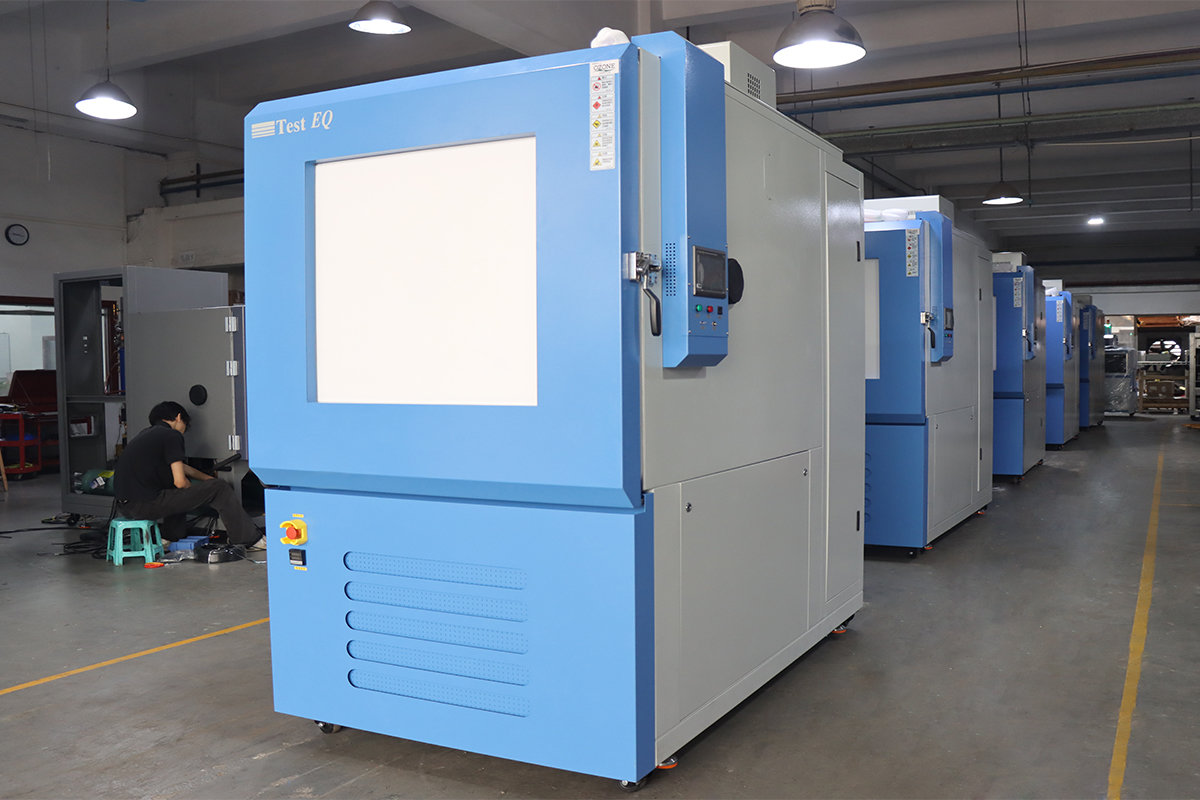
What is JESD22-A110 HAST Testing?
HAST (Highly Accelerated Stress Test) under JESD22-A110 is designed to evaluate device reliability under:
High temperature (typically 110°C–130°C)
High humidity (85% RH or higher equivalent conditions)
High pressure (to accelerate moisture penetration)
Electrical bias applied during exposure
This combination creates an accelerated aging environment that simulates years of field operation in just a few days or weeks.
The primary objective is to identify:
Moisture ingress failures
Corrosion and electrochemical migration
Dielectric breakdown
Package delamination
Leakage current instability
Standard Test Conditions Under JESD22-A110
Typical HAST configurations include:
Temperature: 110°C / 120°C / 130°C
Relative Humidity: ~85% RH (equivalent under pressure)
Pressure: ~2 atm to 3 atm
Bias: Applied DC voltage depending on device specification
Duration: 48–96 hours (depending on qualification level)
The use of pressure is what differentiates HAST from traditional THB (Temperature Humidity Bias) testing, allowing faster moisture penetration and failure acceleration.
HAST vs THB: Key Engineering Differences
Understanding the difference between HAST and THB is critical for selecting the correct reliability strategy.
THB (Temperature Humidity Bias):
Lower stress level
Longer test duration (500–1000 hours)
Natural humidity diffusion
Suitable for baseline reliability validation
HAST (JESD22-A110):
High pressure + high temperature
Rapid moisture penetration
Short duration (48–96 hours)
Designed for accelerated failure detection
In short:
HAST is a fast screening tool, while THB is a long-term stability validation method.
For advanced semiconductor packaging and automotive-grade ICs, both tests are often used in combination.
Key Failure Mechanisms Detected in HAST Testing
JESD22-A110 HAST is particularly effective in revealing:
Ionic contamination leading to corrosion
Metal migration between conductors
Package seal failures
Passivation layer breakdown
Wire bonding degradation
Moisture-induced leakage paths
These failure modes are critical in high-density packaging such as BGA, QFN, and flip-chip designs.
Industrial Applications of JESD22-A110 HAST
HAST testing is widely used in:
Semiconductor wafer fabs
IC packaging validation
Automotive electronics qualification (AEC-Q100 support)
Aerospace-grade electronics testing
Power semiconductor validation (SiC, GaN devices)
Consumer electronics reliability assurance
Any product exposed to humid or harsh environments benefits from HAST validation.
TestEQ HAST Testing Chamber Solutions
TestEQ environmental simulation systems are engineered to meet and exceed JESD22-A110 HAST requirements, providing stable, repeatable, and highly controlled test environments.
Key advantages include:
Precise pressure and humidity control stability
Fast ramp temperature systems for accelerated cycles
Multi-channel bias integration capability
Uniform chamber distribution for repeatability
Compliance-ready data logging for qualification reports
These systems are widely used in semiconductor R&D labs, third-party reliability testing centers, and OEM production environments.
Internal Linking Modules
Related Standards
Technical Applications
Recommended Products
Conclusion
The JESD22-A110 HAST testing standard is a foundational methodology for modern semiconductor reliability engineering. By simulating extreme humidity, temperature, and pressure conditions, it enables fast and accurate failure detection that supports product qualification, risk reduction, and long-term performance assurance.
For engineering teams and procurement decision-makers, integrating HAST testing into reliability workflows is no longer optional—it is essential for competitive product design and global market acceptance.
FAQ – JESD22-A110 HAST Testing Standard
Q1: What is JESD22-A110 HAST testing used for?
JESD22-A110 HAST testing is used to accelerate moisture-related failure mechanisms in semiconductor devices. It evaluates package reliability under high temperature, humidity, pressure, and electrical bias conditions to simulate long-term field exposure in a short time.
Q2: What is the difference between HAST and THB testing?
HAST uses high pressure and higher temperature to accelerate moisture penetration, significantly reducing test time (typically 48–96 hours). THB (Temperature Humidity Bias) operates at lower stress levels and requires much longer durations (500–1000 hours), making it more suitable for long-term reliability validation.
Q3: What failure mechanisms can HAST detect?
HAST testing can reveal critical reliability issues such as:
Corrosion of metal interconnects
Electrochemical migration
Package delamination
Dielectric breakdown
Leakage current instability
Wire bonding degradation
Q4: What are the standard test conditions for JESD22-A110?
Typical test conditions include:
Temperature: 110°C / 120°C / 130°C
Relative humidity: ~85% RH equivalent
Pressure: 2–3 atm
Electrical bias: Applied depending on device type
Duration: 48–96 hours
These conditions accelerate moisture diffusion and failure mechanisms.
Q5: Which industries commonly use HAST testing?
HAST testing is widely used in:
Semiconductor manufacturing and packaging
Automotive electronics (AEC-Q100 qualification)
Aerospace and defense electronics
Power semiconductor devices (SiC / GaN)
Consumer electronics reliability validation
It is essential for any high-reliability electronic application.
Q6: Why is HAST testing important for product qualification?
HAST testing helps manufacturers identify early-life failures before products reach the market. It reduces field failure risk, improves product reliability, supports supplier qualification, and ensures compliance with global reliability standards.
Recommended CTA:
Get a custom HAST testing chamber solution that meets JESD22-A110 standards for your semiconductor reliability validation needs.
JEDEC-compliant HAST test systems
Fast humidity & pressure stress simulation
Support for IC, SiC, GaN, automotive electronics
OEM & customized chamber configurations available