What Is MIL-STD-883?
MIL-STD-883 is a standardized reliability testing framework developed for microelectronic devices used in mission-critical environments such as aerospace, defense systems, and advanced computing.
It defines uniform test procedures to evaluate:
Structural integrity of IC packages
Electrical stability under stress
Long-term reliability under environmental extremes
In semiconductor manufacturing, MIL-STD-883 is often combined with JEDEC and IEC 60068 standards for full qualification.
Key MIL-STD-883 Reliability Test Methods
1. Thermal Cycling (Method 1010)
Thermal cycling evaluates material fatigue caused by repeated temperature expansion and contraction.
Typical conditions:
Temperature range: -65°C to +150°C
Cycle count: 100–1000+ cycles
Dwell time: 10–30 minutes
Used to detect:
Solder joint cracking
Wire bond fatigue
Package delamination
2. Thermal Shock Test
Thermal shock exposes devices to extreme temperature transitions in seconds, simulating sudden environmental changes.
Key effects:
Rapid mechanical stress
Immediate defect detection
High acceleration factor for failure analysis
3. Environmental Stress Screening (ESS)
ESS is used to identify latent defects before product deployment.
It combines:
Rapid thermal cycling
Optional vibration stress
Electrical loading
ESS is widely used in:
Aerospace electronics
Semiconductor production screening
Defense component validation
4. Burn-in Testing
Burn-in removes early-life failures by operating devices under:
High temperature
Electrical stress
Extended duration
MIL-STD-883 Test Methods Overview
| Method | Test | Purpose |
|---|---|---|
| Method 1000 | Hermetic Seal Test | Package sealing reliability |
| Method 1010 | Temperature Cycling | Thermal fatigue evaluation |
| Method 1011 | Thermal Shock | Rapid temperature transition stress |
| Method 1012 | Thermal Characteristics | Thermal performance evaluation |
| Method 2007 | Vibration | Mechanical reliability |
| Method 2002 | Mechanical Shock | Structural durability |
| Method 1014 | Moisture Resistance | Environmental durability |
| Method 5005 | Qualification Testing | Device qualification |
MIL-STD-883 vs JEDEC Reliability Testing
| MIL-STD-883 | JEDEC JESD22 | |
|---|---|---|
| Main Application | Military semiconductor | Commercial semiconductor |
| Target | Defense/high reliability | Electronics qualification |
| Thermal Cycling | Method 1010 | JESD22-A104 |
| Moisture Testing | Environmental methods | HAST/THB |
| Industry | Aerospace, Defense | Automotive, Consumer |
MIL-STD-883 Chamber Requirements
To meet MIL-STD-883 compliance, environmental test chambers must provide:
Temperature Performance
Range: -70°C to +180°C
Stability: ±0.5°C ~ ±1°C
Uniformity: ≤2°C
Thermal Control
Linear ramp rate: 5–25°C/min
Programmable multi-step cycles
Fast recovery control
System Reliability
24/7 continuous operation
Industrial-grade compressor system
Data logging + test traceability
Why MIL-STD-883 Matters for Semiconductors
Modern electronics operate in high-risk environments:
Satellite systems
Aircraft control electronics
Automotive ADAS & ECU
High-performance IC chips
Defense communication modules
A single micro-defect may cause system-level failure, making MIL-STD-883 essential for reliability assurance.
How TestEQ Supports MIL-STD-883 Testing
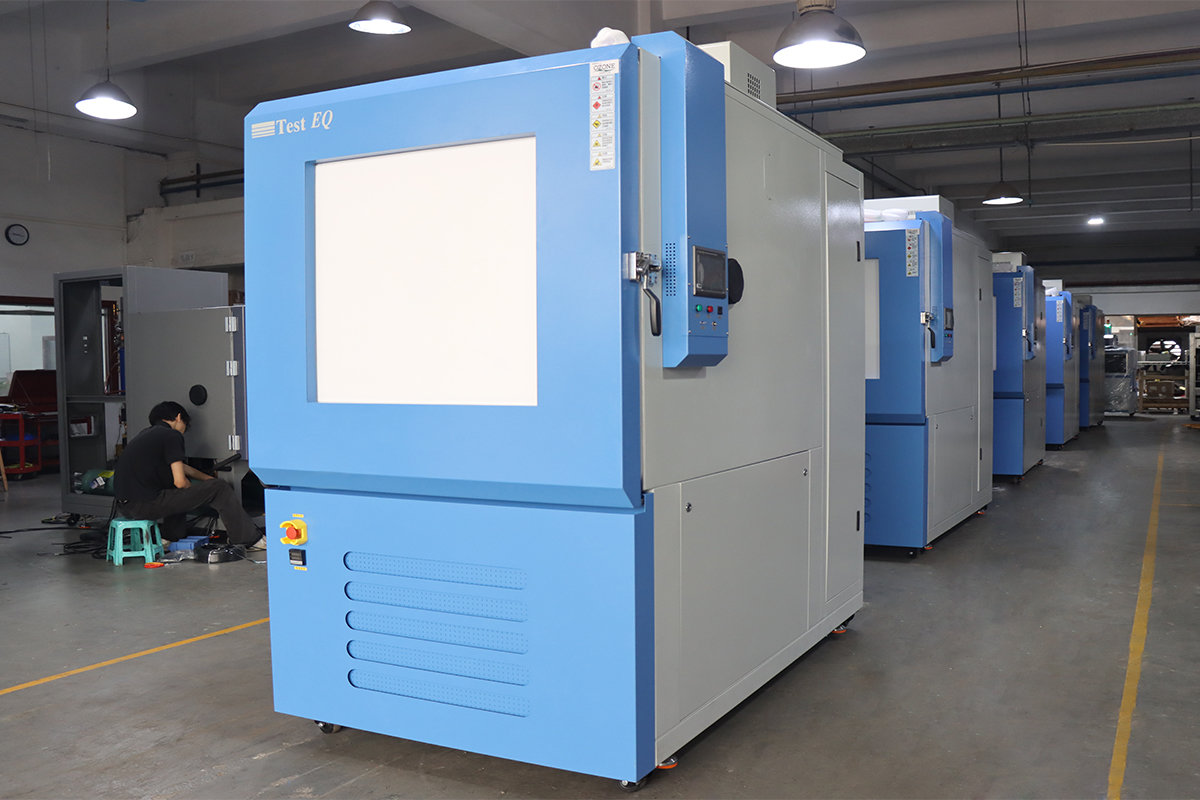
TestEQ provides advanced environmental simulation systems designed for semiconductor and aerospace reliability validation.
Core advantages:
High-speed thermal cycling systems (up to 25°C/min linear control)
Ultra-stable temperature accuracy (±0.1°C lab configuration)
ESS rapid failure screening chambers
AI-based predictive maintenance system
Energy-efficient Cold-Hot Balance Technology
TestEQ systems are widely used in:
Semiconductor labs
Aerospace reliability centers
Automotive electronics validation
IC packaging and wafer testing facilities
Engineering Review
This MIL-STD-883 reliability testing guide is reviewed by TestEQ engineering team with experience in semiconductor, aerospace and electronic reliability validation systems.
Application Industries:
Semiconductor manufacturing & packaging
Aerospace electronics testing
Defense reliability laboratories
Automotive electronics validation (EV/ADAS)
Research & certification institutions
Conclusion
MIL-STD-883 is a foundational reliability standard that defines how semiconductor devices must be tested before deployment in mission-critical environments. From thermal cycling to environmental stress screening, each test method ensures product durability, safety, and performance stability.
For laboratories and manufacturers seeking compliance-ready systems, selecting a high-precision environmental test chamber is essential.
With advanced engineering capabilities and customization experience, TestEQ provides reliable, high-performance solutions for MIL-STD-883 and semiconductor reliability testing applications worldwide.
FAQ :
1.What is MIL-STD-883 testing used for?
MIL-STD-883 is used to evaluate the reliability of semiconductor and microelectronic devices under extreme environmental and mechanical stress conditions.
2.What tests are included in MIL-STD-883?
It includes thermal cycling, thermal shock, burn-in testing, environmental stress screening (ESS), vibration, and hermeticity tests.
3.Why is thermal cycling important in MIL-STD-883?
Thermal cycling identifies fatigue failures such as solder joint cracking and wire bond degradation caused by repeated temperature changes.
4.What equipment is needed for MIL-STD-883 testing?
High-precision environmental test chambers capable of temperature cycling, rapid thermal transition, and long-term stability control are required.
5.Which industries use MIL-STD-883 standards?
It is widely used in aerospace, defense, semiconductor manufacturing, automotive electronics, and high-reliability research labs.
6. What is MIL-STD-883 Method 1010 Temperature Cycling Test?
MIL-STD-883 Method 1010 is a temperature cycling test method used to evaluate semiconductor device reliability under repeated high and low temperature exposures. It helps identify failures caused by thermal expansion mismatch, package stress, solder fatigue, and internal material degradation.
7. What is the difference between MIL-STD-883 and JEDEC reliability testing?
MIL-STD-883 is mainly designed for military and high-reliability microelectronic applications, while JEDEC standards such as JESD22 are widely used for commercial semiconductor qualification. Both standards evaluate reliability performance but differ in target industries, test requirements, and qualification approaches.
8. How long does MIL-STD-883 testing take?
The duration of MIL-STD-883 testing depends on the selected test method, temperature conditions, cycle numbers, and device requirements. Some environmental stress tests may require several hours, while qualification testing involving multiple methods can take several days or longer.
Internal Linking Module
Recommended Equipment
Key testing equipment for MIL-STD-883 environmental and reliability testing, covering test conditions such as temperature cycling, damp heat, and rapid changes.
is used for MIL-STD-883 Method 1010 temperature cycling testing, simulating alternating high and low temperature environments to verify the thermal stress reliability of chips.
is used for rapid thermal shock testing (Method 1011), creating extreme thermal transient environments to assess the risk of package failure.
Related Standards
MIL-STD-883 is often used in conjunction with reliability standards for aerospace, semiconductors, and automotive electronics for a complete verification system.
is used for system-level environmental adaptability testing, forming a device + system-level verification link with MIL-STD-883.
A JEDEC semiconductor reliability standard, commonly used for benchmarking tests against MIL-STD-883 (temperature cycling/ESD/HAST).
Related Resources
Gain a deeper understanding of reliability testing methods, failure mechanisms, and standard application guidelines to enhance engineering design and testing decision-making capabilities.
provides a detailed analysis of the MIL-STD-883 temperature cycling test method, parameter settings, and common failure modes.
This comparison highlights the differences between thermal shock and temperature cycling tests, helping engineers choose the appropriate reliability testing approach.
CTA:
Not Sure Which Test Chamber You Need for MIL-STD-883?
Different semiconductor applications require different test strategies:
Thermal Cycling---fatigue & long-term reliability
ESS Testing---early failure screening
Burn-in---infant mortality elimination
Our engineers will help you identify the correct configuration based on your product type and test standard.