What Is AEC-Q101?
AEC-Q101, "Failure Mechanism Based Stress Test Qualification for Discrete Semiconductors in Automotive Applications," defines qualification requirements for:
Power MOSFETs
IGBTs
Diodes
Rectifiers
Transistors
Protection devices
Discrete power semiconductors
The objective is to identify potential failure mechanisms before products enter mass production and ensure reliable operation under real-world automotive conditions.
AEC-Q101 qualification is widely required by:
Automotive OEMs
Tier-1 suppliers
Semiconductor manufacturers
Reliability laboratories
EV and battery system suppliers
Key Reliability Tests in AEC-Q101
1. Temperature Cycling Test (TCT)
Temperature cycling evaluates resistance to thermal expansion and contraction caused by repeated temperature changes.
Typical Conditions
-55°C to +150°C
Hundreds to thousands of cycles
Controlled transition rates
Failure Mechanisms
Die cracking
Solder fatigue
Bond wire degradation
Package delamination
2. Thermal Shock Test (TST)
Thermal shock testing subjects devices to rapid temperature transitions between extreme hot and cold environments.
Purpose
Accelerated stress simulation
Package integrity verification
Material compatibility assessment
Common Range
-65°C to +150°C
3. High Accelerated Stress Test (HAST)
HAST accelerates moisture-related failure mechanisms through elevated temperature and humidity conditions.
Typical Parameters
130°C
85% RH
Pressurized environment
Evaluates
Corrosion resistance
Moisture ingress
Insulation integrity
4. Power Cycling Test
Power cycling repeatedly applies electrical load to semiconductor devices.
Evaluates
Junction temperature fatigue
Wire bond reliability
Die attach performance
This test is particularly important for EV power electronics and high-current applications.
5. High Temperature Reverse Bias (HTRB)
HTRB evaluates long-term reliability under reverse bias voltage and elevated temperature.
Typical Conditions
150°C or higher
Extended test durations
Purpose
Detect leakage current growth
Assess dielectric integrity
Verify long-term stability
6. Highly Accelerated Environmental Testing
Additional environmental evaluations may include:
Humidity resistance
Mechanical shock
Vibration testing
Terminal strength testing
Package integrity verification
AEC-Q101 Qualification Test Requirements
| Test Category | Purpose | Typical Evaluation |
|---|---|---|
| Environmental Stress Testing | Evaluate durability under harsh environments | Temperature, humidity |
| Temperature Cycling | Detect package stress failures | Thermal expansion |
| High Temperature Reverse Bias (HTRB) | Verify electrical reliability | Leakage current |
| High Temperature Gate Bias (HTGB) | Evaluate gate oxide stability | MOSFET reliability |
| HAST | Detect moisture-related failures | Corrosion and leakage |
| Power Cycling | Verify thermal fatigue resistance | Die attach and bond wire |
AEC-Q101 vs AEC-Q100: Key Differences
| AEC-Q100 | AEC-Q101 | |
|---|---|---|
| Device Type | ICs | Discrete Semiconductors |
| Application | Integrated circuits | MOSFET, diode, transistor |
| Industry | Automotive electronics | Automotive power devices |
| Main Concern | IC reliability | Package and semiconductor stress |
Environmental Chambers Required for AEC-Q101 Testing
Successful AEC-Q101 qualification depends heavily on precise environmental control.
Key equipment includes:
Temperature Cycling Chambers
Used for long-duration thermal cycling qualification with highly uniform temperature distribution.
Thermal Shock Chambers
Provide rapid transfer between hot and cold zones to accelerate package stress testing.
HAST Chambers
Generate high-temperature, high-humidity, pressurized environments required for moisture resistance evaluation.
Reliability Burn-In Systems
Support long-term electrical stress and life testing programs.
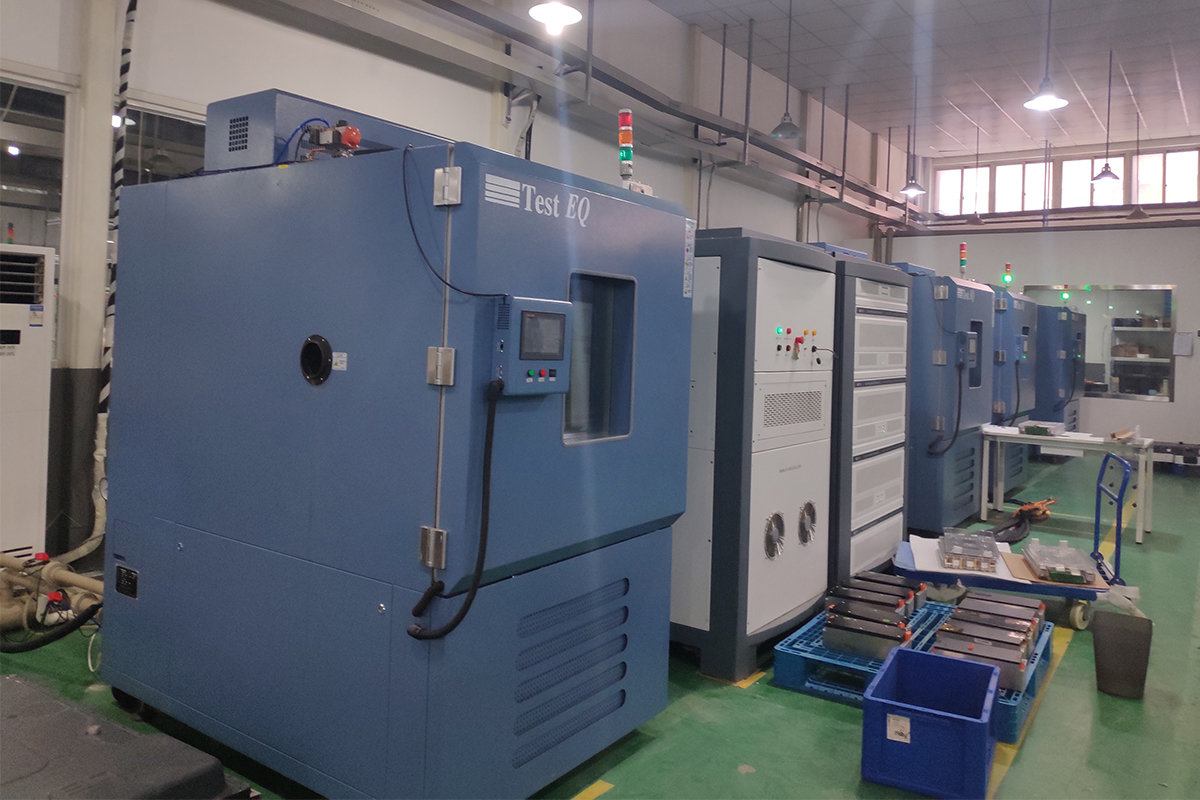
TestEQ chambers are engineered for:
Automotive semiconductor qualification
Third-party laboratory testing
Reliability validation programs
Failure analysis investigations
Why AEC-Q101 Matters for Automotive Electronics
Modern vehicles may contain thousands of semiconductor devices controlling:
Battery management systems
ADAS modules
Powertrain electronics
Charging systems
Infotainment platforms
Safety-critical controls
A single semiconductor failure can lead to system malfunction, warranty claims, or safety risks.
AEC-Q101 provides a proven framework for identifying reliability risks before products reach production, helping manufacturers improve quality, reduce field failures, and meet automotive customer requirements.
Why Choose TestEQ for AEC-Q101 Testing Solutions?
TestEQ provides environmental testing equipment designed to support semiconductor qualification laboratories worldwide.
Advantages:
Wide temperature range environmental chambers
Thermal shock systems for automotive qualification
HAST chambers for moisture resistance testing
Stable long-duration cycling performance
Custom solutions for semiconductor reliability programs
Global technical support and application guidance
Whether you are qualifying a new automotive semiconductor platform or expanding laboratory capability, TestEQ can help deliver accurate, repeatable, and standards-compliant testing.
Common Failure Mechanisms in AEC-Q101 Testing
In the AEC-Q101 automotive semiconductor reliability testing process, the tests are primarily used to identify potential failures that may occur in devices under temperature, electrical, humidity, and mechanical stress environments. Common failure mechanisms include:
1. Bond Wire Fatigue
Repeated thermal cycling and power cycling can create mechanical stress on internal bond wires, leading to wire fatigue, cracks, or electrical connection failures. AEC-Q101 testing helps evaluate package reliability under repeated temperature changes.
Corresponding test:
Temperature Cycling Test
Power Cycling Test
2. Die Cracking
Thermal expansion differences between semiconductor dies, substrates, and packaging materials may generate internal stress, causing die cracks that affect electrical performance and long-term reliability.
Corresponding test:
Thermal Shock Test
Temperature Cycling Test
3. Package Delamination
Moisture penetration and thermal stress can cause separation between semiconductor layers and packaging materials. Delamination may accelerate corrosion and reduce device lifetime.
Corresponding test:
HAST (Highly Accelerated Stress Test)
Humidity Test
4. Electrical Parameter Degradation
High temperature and electrical stress may cause changes in key semiconductor parameters, including leakage current, threshold voltage, and switching performance. AEC-Q101 qualification verifies electrical stability under harsh conditions.
Corresponding test:
High Temperature Reverse Bias (HTRB)
High Temperature Gate Bias (HTGB)
5. Corrosion and Moisture-Induced Failure
Automotive semiconductor devices may operate in high humidity and temperature environments. Moisture ingress can cause corrosion, insulation degradation, and unexpected electrical failures.
Corresponding test:
HAST
Temperature Humidity Bias (THB)
6. Thermal Fatigue Failure
Continuous temperature fluctuations during vehicle operation can create repeated expansion and contraction stress inside semiconductor packages, leading to solder joint fatigue and reduced service life.
Corresponding test:
Thermal Cycling Test
Thermal Shock Test
Frequently Asked Questions
1.Is AEC-Q101 mandatory for automotive semiconductors?
While not legally mandatory, AEC-Q101 qualification is widely expected by automotive OEMs and Tier-1 suppliers and is considered an industry benchmark.
2.What products fall under AEC-Q101?
Discrete semiconductor devices such as MOSFETs, IGBTs, diodes, transistors, and power devices are covered by the standard.
3.What is the difference between AEC-Q100 and AEC-Q101?
AEC-Q100 applies to integrated circuits (ICs), while AEC-Q101 focuses on discrete semiconductor components.
4.Which environmental chambers are required for AEC-Q101 testing?
Common equipment includes temperature cycling chambers, thermal shock chambers, HAST chambers, and reliability life-testing systems.
5.What tests are included in AEC-Q101 qualification?
AEC-Q101 qualification includes various reliability stress tests to evaluate semiconductor durability under automotive operating conditions. Typical tests include high temperature reverse bias (HTRB), high temperature gate bias (HTGB), temperature cycling, power temperature cycling, humidity stress testing, and electrical characterization before and after testing.
6.How long does AEC-Q101 qualification testing take?
The duration of AEC-Q101 qualification depends on the device type, test requirements, sample quantity, and selected stress conditions. Some reliability tests may require hundreds or thousands of hours to verify long-term performance under automotive environmental conditions.
7.What failures can AEC-Q101 testing detect?
AEC-Q101 testing helps identify potential semiconductor reliability issues including package cracking, bond wire fatigue, die damage, electrical parameter degradation, leakage current increase, and failures caused by thermal or environmental stress.
8.Why is AEC-Q101 important for electric vehicle semiconductor components?
AEC-Q101 is especially important for electric vehicle (EV) semiconductor devices because power components such as MOSFETs, IGBTs, and diodes experience high electrical loads, temperature fluctuations, and thermal cycling during operation. Qualification helps ensure long-term reliability in demanding automotive environments.
Recommended Internal Links
Related Standards
Learn how AEC-Q100 temperature cycling requirements are applied to automotive integrated circuits (ICs), including test conditions, qualification procedures, and common reliability failure mechanisms.
Explore the JEDEC JESD22 temperature cycling methodology widely used for semiconductor reliability evaluation and package durability verification.
Recommended Equipment
Designed for AEC-Q101 qualification testing, these chambers provide precise temperature control, excellent uniformity, and long-term cycling stability for semiconductor reliability programs.
Simulate rapid temperature transitions required by automotive semiconductor standards and accelerate the detection of package, solder, and material failures.
Related Resources
Understand the differences between HAST and THB testing methods, including acceleration factors, test objectives, and how each method supports semiconductor reliability qualification.
Discover how thermal shock testing helps identify package cracking, bond wire fatigue, and other common semiconductor failure mechanisms in automotive applications.
Inquiry CTA
Validate Automotive Semiconductor Reliability with AEC-Q101 Testing Solutions
Meeting AEC-Q101 qualification requirements requires reliable environmental simulation equipment capable of reproducing automotive operating conditions and detecting potential semiconductor failures before mass production.
TestEQ provides advanced reliability test chambers designed for automotive semiconductor qualification, including temperature cycling, thermal shock, humidity stress, HAST, and customized environmental testing solutions for MOSFETs, IGBTs, power modules, and discrete semiconductor devices.
Our engineering team can help you select the right test system based on your device type, test requirements, temperature range, cycle profile, and reliability validation goals.
"Contact TestEQ today" to discuss your AEC-Q101 testing requirements and receive a customized solution recommendation.