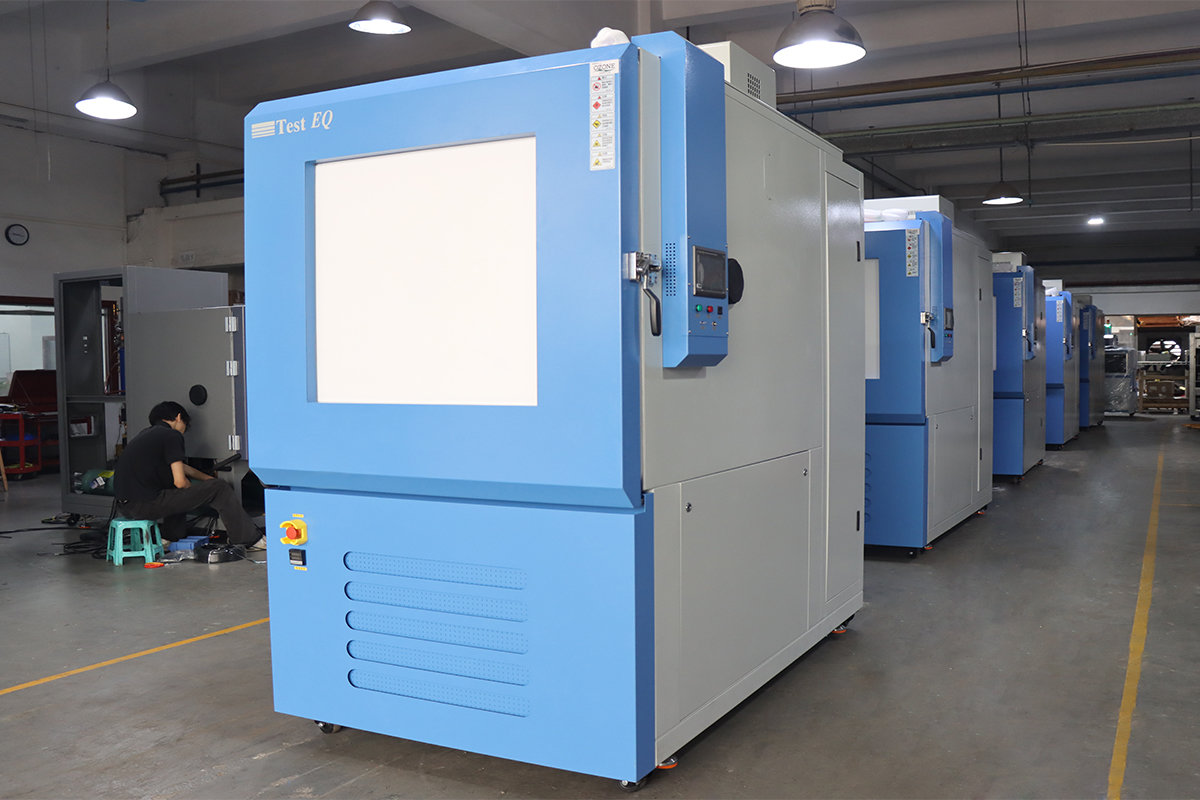
What Is ISO 16750?
ISO 16750, formally titled Road vehicles — Environmental conditions and testing for electrical and electronic equipment, addresses environmental stresses that automotive electrical and electronic components may experience during their service life.
Unlike a single test method, ISO 16750 is a multi-part standard series. Test conditions depend on factors such as:
Component installation location
Vehicle operating environment
Temperature exposure
Humidity and water exposure
Mechanical loads
Electrical operating conditions
Chemical exposure
Required functional status during testing
This installation-location approach is important because an engine-compartment ECU, battery-related electronic component, exterior sensor, and passenger-compartment control module can experience very different environmental stresses.
ISO 16750-1:2023 provides the general framework, terminology, and requirements for the series and applies to electrical and electronic systems and components for vehicles, including electric propulsion systems within the specified voltage scope.
ISO 16750 Parts and Test Scope
| ISO 16750 Part | Test Scope | Key Environmental / Reliability Factors | Typical Automotive Applications |
|---|---|---|---|
| ISO 16750-1 | General | Environmental conditions, installation locations, general requirements | ECUs, sensors, electronic modules, vehicle electrical systems |
| ISO 16750-2 | Electrical Loads | Electrical stress, voltage fluctuations, overvoltage, electrical operating conditions | ECUs, control modules, power electronics, automotive sensors |
| ISO 16750-3 | Mechanical Loads | Vibration, mechanical shock, mechanical stress | Sensors, connectors, ECUs, electronic control units |
| ISO 16750-4 | Climatic Loads | High/low temperature, temperature cycling, humidity, water and other climatic stresses | Automotive electronics, sensors, lighting, ECUs, power electronics |
| ISO 16750-5 | Chemical Loads | Exposure to automotive fluids and chemical agents | Connectors, housings, sensors, engine-compartment components |
ISO 16750-3:2023 addresses mechanical loads, while ISO 16750-5:2023 addresses chemical loads.
For environmental chamber applications, ISO 16750-4 is particularly important because it addresses climatic loads for automotive electrical and electronic equipment. The 2023 edition is the current published edition and replaced ISO 16750-4:2010.
ISO 16750-4 Climatic Testing
ISO 16750-4 covers climatic loads that automotive electrical and electronic components may experience according to their vehicle installation location.
Depending on the component and applicable test requirement, climatic testing may involve conditions such as:
High-temperature exposure
Low-temperature exposure
Temperature cycling
Rapid temperature changes
Damp heat and humidity
Water-related testing
Thermal shock
Other climatic environmental stresses
The objective is not simply to expose a component to extreme temperature. Engineers must determine the appropriate environmental profile based on the component's intended vehicle location, operating condition, functional status, and applicable specification.
For this reason, selecting an environmental test chamber based only on its temperature range may lead to an unsuitable test system.
ISO 16750 Test Methods and Recommended Environmental Test Chambers
| ISO 16750 Test Requirement | Main Purpose | Recommended Test Equipment |
|---|---|---|
| High / Low Temperature | Evaluate component performance under extreme temperatures | Temperature Test Chamber |
| Temperature & Humidity | Evaluate moisture and humidity resistance | Temperature Humidity Chamber |
| Temperature Cycling | Evaluate repeated thermal expansion and contraction | Thermal Cycling Chamber |
| Rapid Temperature Change | Evaluate reliability under fast temperature transitions | Rapid Temperature Change Chamber |
| Thermal Shock | Evaluate resistance to sudden hot/cold transitions | Thermal Shock Test Chamber |
| Water / Climatic Exposure | Evaluate resistance to water and environmental exposure | Specialized Environmental Test System |
ISO 16750 climatic testing covers different environmental stresses, so the required test equipment depends on the specific test method and DUT conditions. Engineers should consider temperature range, ramp rate, humidity, specimen load, chamber volume, and functional monitoring when selecting an environmental test chamber.
What Equipment Is Used for ISO 16750 Testing?
The appropriate test equipment depends on the ISO 16750 part and the specific test sequence.
Temperature and Humidity Testing
A Temperature Humidity Chamber can be used for controlled temperature and humidity exposure of automotive electronic components.
Typical applications include:
• Automotive ECU testing
• Sensor reliability testing
• Electronic module testing
• Connector and control-unit testing
• High/low temperature exposure
• Humidity and damp-heat testing
Temperature Cycling
A Thermal Cycling Chamber is suitable when the test program requires repeated transitions between defined temperature conditions.
Thermal Cycling Chamber
Temperature cycling can help evaluate material expansion and contraction, solder joints, seals, connectors, housings, and electronic assemblies under repeated thermal stress.
Rapid Temperature Change Testing
For applications requiring high temperature transition rates, a Rapid Temperature Change Chamber provides faster controlled temperature transitions.
This can be particularly valuable when the customer's test specification requires a defined temperature ramp rate rather than conventional chamber transition performance.
Thermal Shock Testing
For applications requiring abrupt transfer between hot and cold environments, a Thermal Shock Test Chamber can provide controlled hot-zone/cold-zone testing.
The correct chamber should always be selected according to the actual ISO 16750 test method, required temperature profile, specimen mass, operating condition, and customer specification.
ISO 16750 Test Planning: What Engineers Should Define
Before purchasing or configuring an environmental test chamber, engineers should define the complete test profile rather than selecting equipment from temperature range alone.
1. Define the DUT
Identify:
• Component type
• Dimensions and mass
• Electrical connections
• Heat generation
• Operating condition
• Number of specimens
• Installation orientation
2. Define the Environmental Profile
Determine:
• Minimum temperature
• Maximum temperature
• Temperature transition requirements
• Humidity requirements
• Exposure duration
• Number of cycles
• Water or climatic exposure
• Required operating state
3. Define Performance Requirements
Important chamber specifications may include:
• Temperature range
• Temperature stability
• Temperature uniformity
• Ramp rate
• Humidity range
• Recovery performance
• Load capacity
• Control accuracy
• Data acquisition
• DUT power feedthroughs
4. Verify the Actual Test Method
ISO 16750 is a standard series rather than a single universal chamber setting. The actual test parameters should be established from the applicable part, vehicle installation location, customer specification, and test plan.
ISO 16750 vs. Automotive Reliability Testing
ISO 16750 is frequently used as part of a broader automotive reliability validation program.
Depending on the product, manufacturers may also need to consider standards such as:
• AEC-Q100
• AEC-Q101
• IEC 60068
• ISO 16750
• OEM-specific validation specifications
For automotive electronic components, combining environmental testing with electrical functional monitoring can provide a more representative reliability assessment.
For EV and automotive electronics, environmental testing may also be integrated into validation programs involving battery systems, power electronics, sensors, ECUs, connectors, and vehicle control systems.
Why Choose TestEQ for ISO 16750 Environmental Testing?
TestEQ designs and manufactures environmental simulation systems for automotive electronics, EV components, semiconductor devices, and industrial reliability testing.
Our chamber solutions can be configured around the actual test profile rather than a generic catalog specification.
Engineering-Focused Configuration
TestEQ can evaluate:
• Required temperature range
• Temperature transition rate
• Humidity requirements
• DUT dimensions and loading
• Electrical feedthrough requirements
• Functional testing requirements
• Data acquisition requirements
• Customer-specific test sequences
Applications
TestEQ environmental test systems are suitable for:
• Automotive electronics
• EV components
• ECU testing
• Sensors
• Power electronics
• Semiconductor components
• Connectors
• Automotive lighting
• Control modules
• Battery-related electronics
For laboratories and automotive suppliers, the goal is not simply to provide a chamber that reaches the required temperature. The system should provide stable, repeatable, controllable environmental conditions that support reliable test execution.
ISO 16750 Environmental Test Chamber Selection Checklist
Before requesting a quotation, engineers and procurement teams should confirm:
☐ Applicable ISO 16750 part
☐ Required test method
☐ Temperature range
☐ Temperature ramp or transition requirement
☐ Humidity requirement
☐ Number and size of specimens
☐ DUT heat load
☐ DUT power supply and feedthroughs
☐ Required functional monitoring
☐ Chamber volume
☐ Uniformity and stability requirements
☐ Data recording requirements
☐ Calibration requirements
☐ Safety requirements
☐ Installation and facility conditions
Providing these parameters to the chamber manufacturer can significantly reduce specification gaps and help procurement teams compare technically equivalent systems.
Frequently Asked Questions
1.What is ISO 16750?
ISO 16750 is a series of standards covering environmental conditions and testing for electrical and electronic equipment used in road vehicles.
2.What does ISO 16750-4 cover?
ISO 16750-4 covers climatic loads for automotive electrical and electronic equipment. The 2023 edition is the current published edition and addresses climatic environmental stresses associated with vehicle installation conditions.
3.Does ISO 16750 require a temperature humidity chamber?
Not every ISO 16750 test requires the same equipment. Temperature, humidity, climatic cycling, water exposure, and other environmental tests may require different chamber configurations depending on the applicable test method.
4.What is the difference between ISO 16750 and AEC-Q100?
ISO 16750 focuses on environmental conditions and testing for automotive electrical and electronic equipment, while AEC-Q100 is a qualification standard for integrated circuits. They may be used within different stages of an automotive component reliability program.
5.Can TestEQ customize an ISO 16750 test chamber?
Yes. TestEQ can configure environmental test chambers according to required temperature range, ramp rate, humidity, chamber volume, DUT loading, electrical feedthroughs, monitoring requirements, and customer-specific test profiles.
6.How should an ISO 16750 test program be defined?
An ISO 16750 test program should be based on the component's intended vehicle installation location, environmental exposure, operating condition, and applicable test method. Engineers should define the required temperature profile, exposure duration, number of cycles, functional status, specimen configuration, and monitoring requirements before testing. The final test conditions should follow the applicable ISO 16750 part and customer or OEM specification.
7.What should engineers consider when selecting an ISO 16750 test chamber?
Engineers should evaluate more than the chamber's temperature range. Important factors include temperature stability, uniformity, transition rate, chamber volume, DUT heat load, specimen quantity, electrical feedthroughs, humidity control, data acquisition, and recovery performance. The chamber should be capable of reproducing the required test profile under the actual DUT load rather than only meeting unloaded chamber specifications.
8.How are ISO 16750 test results evaluated?
ISO 16750 test results are evaluated according to the applicable test method and the specified performance requirements of the component. Depending on the application, evaluation may include functional performance, electrical characteristics, physical condition, appearance, mechanical integrity, or other defined acceptance criteria before, during, and after environmental exposure. Engineers should establish measurable acceptance criteria before testing to ensure consistent and traceable reliability assessment.
Recommended Internal Links
Recommended Products
Controlled temperature and humidity testing for automotive electronics, sensors, ECUs, connectors, and industrial components.
Designed for repeated temperature cycling to evaluate thermal stress, material durability, solder joints, seals, and electronic assemblies.
Rapid hot-to-cold and cold-to-hot environmental transitions for demanding thermal shock reliability applications.
Recommended Standards
Explore IEC 60068 environmental testing methods for temperature change, humidity, vibration, shock, and other reliability tests.
Understand AEC-Q100 qualification requirements for automotive integrated circuits and semiconductor reliability testing.
Description: Explore JEDEC JESD22 reliability test methods for semiconductor devices, including temperature cycling, humidity, and accelerated reliability testing.
Recommended Resources
Learn how thermal cycling evaluates automotive electronics and other components under repeated temperature changes.
Compare thermal cycling and temperature cycling methods, test objectives, standards, and environmental chamber requirements. This resource already specifically references ISO 16750, AEC-Q100, IEC 60068-2-14, and JESD22-A104.
Explore common automotive thermal cycling failures, including solder fatigue, PCB delamination, connector failure, and temperature-related reliability issues.
CTA
Need an ISO 16750 Environmental Test Chamber?
Planning automotive electronics testing according to ISO 16750 or ISO 16750-4?
TestEQ provides configurable environmental test chambers for automotive electronics, EV components, ECUs, sensors, power electronics, connectors, and other reliability testing applications.
Tell Us Your Test Requirements
Send us your:
• Applicable ISO 16750 part or test method
• Required temperature range and cycle profile
• Temperature ramp or transition rate
• Humidity requirements
• DUT dimensions, weight, and quantity
• Electrical feedthrough and functional monitoring requirements
• Chamber volume and installation requirements
Our engineering team can help you select or customize the appropriate environmental test chamber for your ISO 16750 testing program.
"Request a TestEQ ISO 16750 Chamber Solution →"
Tell us your test profile. We will recommend a suitable chamber configuration based on your actual DUT and testing requirements.
TestEQ — Environmental Test Chamber Manufacturer for Automotive & Reliability Testing