What Is the MIL-STD-810 Temperature Method?
MIL-STD-810 is a U.S. military environmental engineering and laboratory test standard used to evaluate how materiel may perform under environmental stresses throughout its service life.
For temperature-related validation, MIL-STD-810H primarily uses Method 501.7 for High Temperature and Method 502.7 for Low Temperature. These methods provide engineering guidance for exposing test items to temperature conditions representative of their intended life cycle.
Importantly, MIL-STD-810 does not simply prescribe one universal temperature profile for every product. The standard emphasizes environmental tailoring, meaning engineers should select appropriate test conditions based on the item's intended operational environment, storage conditions, transportation profile, and performance requirements.
For aerospace, defense electronics, vehicle systems, communication equipment, batteries, sensors, and ruggedized electronics, temperature testing can reveal failures that may not appear during normal laboratory operation.
MIL-STD-810 Temperature Test Methods
The temperature portion of MIL-STD-810 is generally divided into high-temperature and low-temperature methods.
Method 501.7 – High Temperature
MIL-STD-810 Method 501.7 evaluates the effects of elevated temperature on equipment and components.
High-temperature exposure can affect:
Electronic components and circuit assemblies
Batteries and power systems
Displays and control interfaces
Seals, adhesives, and encapsulation materials
Mechanical assemblies and lubrication
Electrical insulation
Sensors and communication equipment
Structural and enclosure materials
Depending on the application, engineers may evaluate the test item under storage or operational conditions.
The objective is not simply to determine whether a product survives a hot chamber. Engineers should verify whether the product continues to meet its specified functional and performance requirements after or during exposure.
Method 502.7 – Low Temperature
MIL-STD-810 Method 502.7 evaluates the effects of low-temperature exposure on equipment and materials.
Typical concerns include:
Battery capacity reduction
Increased material brittleness
Lubricant viscosity changes
Mechanical contraction
Display and electronic malfunction
Seal performance degradation
Starting and operating difficulties
Changes in electrical characteristics
Low-temperature testing can be particularly important for aerospace equipment, military vehicles, outdoor electronics, battery systems, and products deployed in cold climates.
MIL-STD-810 High vs. Low Temperature Testing
| Comparison | MIL-STD-810 High Temperature Testing | MIL-STD-810 Low Temperature Testing |
|---|---|---|
| MIL-STD-810 Method | Method 501.7 – High Temperature | Method 502.7 – Low Temperature |
| Primary Objective | Evaluate the effects of elevated temperature on equipment, materials, and components | Evaluate the effects of low temperature on equipment, materials, and components |
| Main Environmental Stress | Heat exposure and elevated operating/storage temperature | Cold exposure and low operating/storage temperature |
| Typical Failure Risks | Overheating, material softening, seal degradation, electronic malfunction, thermal aging | Brittleness, battery capacity loss, lubricant viscosity changes, contraction, startup failure |
| Electronic Components | Evaluates thermal degradation, electrical drift, overheating, and functional instability | Evaluates cold-start performance, electrical changes, display problems, and component malfunction |
| Mechanical Components | Evaluates deformation, lubrication problems, dimensional changes, and material degradation | Evaluates contraction, increased mechanical resistance, brittleness, and lubrication problems |
| Battery Systems | Evaluates thermal stress, capacity changes, and temperature-related safety/performance risks | Evaluates reduced capacity, increased internal resistance, cold-start performance, and operating limitations |
| Materials & Seals | May reveal softening, expansion, aging, adhesive degradation, or seal deterioration | May reveal embrittlement, contraction, cracking, and sealing problems |
| Test Condition | High-temperature exposure based on the product's intended environmental profile and applicable requirements | Low-temperature exposure based on the product's intended environmental profile and applicable requirements |
| Operating / Storage Evaluation | Can be tailored to evaluate storage and/or operational performance | Can be tailored to evaluate storage and/or operational performance |
| Recommended Equipment | Environmental test chamber / high-temperature test chamber | Environmental test chamber / low-temperature test chamber |
| Engineering Focus | Thermal resistance, functional stability, material durability, and high-temperature reliability | Cold resistance, startup capability, mechanical integrity, battery performance, and low-temperature reliability |
| Typical Applications | Aerospace electronics, military equipment, automotive electronics, sensors, batteries, industrial equipment | Aerospace systems, military electronics, EV batteries, outdoor electronics, sensors, communication equipment |
| TestEQ Solution | Environmental chambers with high-temperature capability and programmable test profiles | Environmental chambers with low-temperature capability and programmable test profiles |
Engineering Note: MIL-STD-810 does not prescribe one universal high or low temperature for every product. The applicable temperature, duration, operating condition, and test sequence should be established through environmental tailoring based on the product's intended life-cycle environment and applicable requirements.
What Does MIL-STD-810 Temperature Testing Evaluate?
A properly designed temperature test can identify failure mechanisms associated with thermal exposure before products enter field deployment.
1. Functional Performance
Engineers can monitor whether the product starts, operates, communicates, measures, switches, or performs its intended function at the specified temperature.
2. Material Reliability
Temperature exposure can reveal cracking, deformation, embrittlement, softening, delamination, seal degradation, and other material-related problems.
3. Electrical Reliability
Temperature can change resistance, capacitance, insulation characteristics, battery behavior, and electronic component performance.
4. Mechanical Performance
Repeated exposure to high and low temperatures can produce dimensional changes and mechanical stress between materials with different coefficients of thermal expansion.
5. Thermal Aging and Life-Cycle Risk
Long-duration temperature exposure can accelerate degradation mechanisms and help engineers identify weaknesses before field deployment.
How to Select a MIL-STD-810 Temperature Test Chamber
Selecting the chamber should begin with the test profile, not the chamber model.
Engineers and procurement teams should evaluate at least the following parameters.
Temperature Range
The chamber must provide sufficient margin beyond the required test temperatures.
TestEQ environmental chambers can be configured for wide temperature ranges, including models operating from approximately -70°C to +180°C, with higher-temperature options available for selected configurations.
Temperature Stability
Stable control is essential when the test requires extended exposure or precise functional measurements.
Temperature Uniformity
Uniformity across the working space helps prevent different test items from experiencing substantially different thermal conditions.
Chamber Working Volume
Select the chamber according to:
Product dimensions
Fixture dimensions
Number of samples
Airflow requirements
Electrical feedthroughs
Production throughput
For large aerospace systems, vehicle components, battery systems, or military equipment, a walk-in environmental chamber may be more appropriate than a benchtop or standard floor-standing chamber.
Ramp Rate
Ramp rate becomes important when the test program includes thermal cycling or rapid temperature transitions.
TestEQ thermal cycling systems offer configurable temperature-change rates up to 30°C/min, depending on chamber configuration and test requirements.
Data Acquisition and Monitoring
For engineering validation, the chamber should support reliable temperature measurement, test recording, alarms, programmable profiles, and integration with external measurement systems where required.
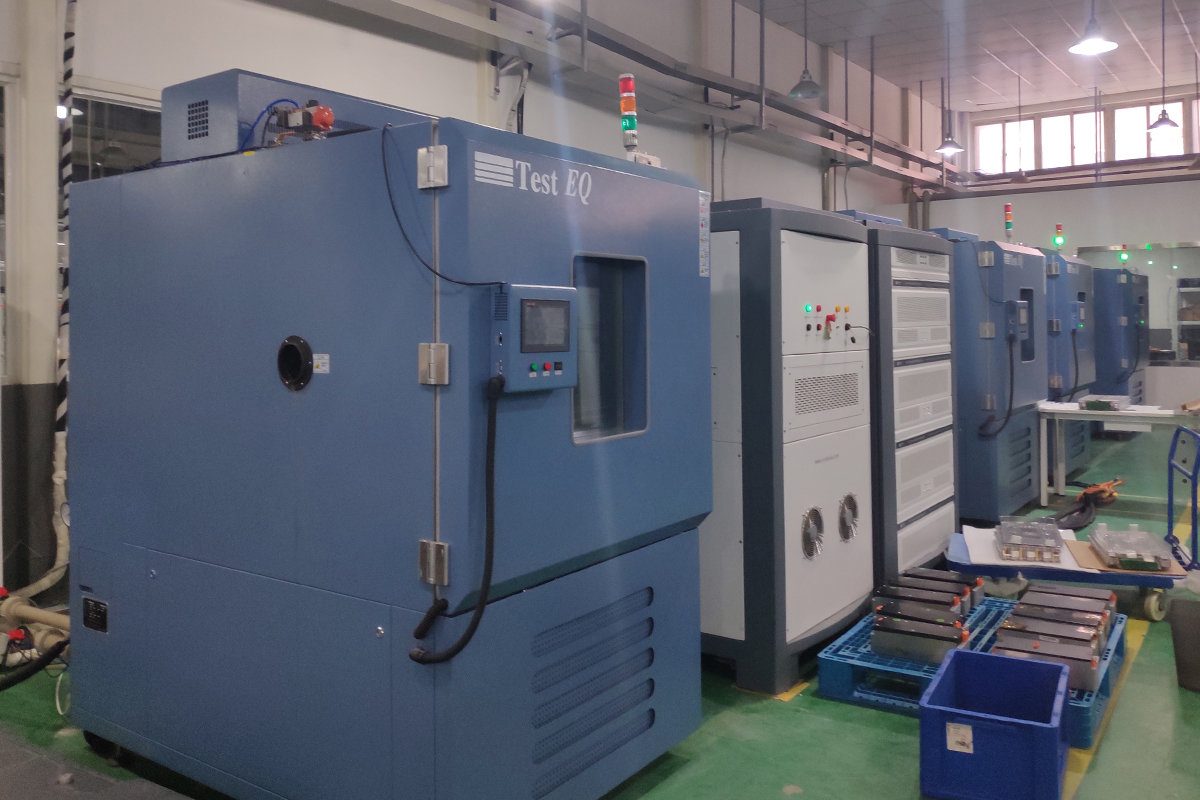
MIL-STD-810 Temperature Test Chamber for Engineering Laboratories
TestEQ designs environmental simulation systems for aerospace, defense, automotive, EV battery, semiconductor, electronics, and industrial reliability testing.
Its environmental test chambers are designed around application-specific temperature profiles rather than a one-size-fits-all configuration.
Typical configurations include:
• Standard environmental test chambers
• Thermal cycling chambers
• Rapid temperature change chambers
• Walk-in environmental chambers
• Temperature-vibration chambers
• Combined environmental simulation systems
For projects requiring temperature plus mechanical vibration, TestEQ also provides combined temperature-vibration systems supporting MIL-STD-810-related environmental testing requirements.
MIL-STD-810 Temperature Testing: Recommended Engineering Workflow
A practical test-development process should follow these steps:
Step 1 – Define the operational environment
Determine where and how the product will be stored, transported, operated, and deployed.
Step 2 – Identify temperature-related failure risks
Consider electronic, mechanical, material, battery, sealing, and structural failure mechanisms.
Step 3 – Apply environmental tailoring
Select the applicable high- or low-temperature method and establish appropriate test conditions based on the product requirement.
Step 4 – Define the chamber configuration
Specify temperature range, working volume, uniformity, stability, ramp rate, electrical feedthroughs, monitoring, and data acquisition.
Step 5 – Define the test sequence
Establish stabilization, exposure, operational checks, measurements, recovery, and post-test inspection according to the applicable test plan.
Step 6 – Evaluate product performance
Compare functional and physical results against predefined acceptance criteria.
This approach provides significantly more meaningful reliability data than simply placing a product inside a chamber and exposing it to an arbitrary temperature.
Applications of MIL-STD-810 Temperature Testing
MIL-STD-810 temperature testing is particularly relevant to products exposed to demanding environmental conditions.
Aerospace
Avionics, flight electronics, communication systems, sensors, power electronics, and aircraft components can require temperature validation before qualification or deployment.
Defense and Military Electronics
Rugged computers, communication equipment, electronic modules, control systems, sensors, and field equipment may experience severe temperature conditions during transportation, storage, and operation.
Automotive and EV
Battery systems, ECUs, sensors, power electronics, connectors, and vehicle electronics can benefit from temperature and thermal cycling validation.
Semiconductor and Electronics
Temperature testing helps identify package, solder, interconnect, material, and component reliability risks.
Industrial Equipment
Outdoor instrumentation, telecommunications equipment, controllers, power systems, and industrial electronics may require environmental qualification for harsh operating locations.
MIL-STD-810 Temperature Testing vs. Thermal Cycling
MIL-STD-810 temperature testing and thermal cycling are related but should not be treated as identical.
Temperature testing can focus on the effects of exposure to defined high- or low-temperature conditions.
Thermal cycling testing repeatedly transitions a product between temperature conditions to evaluate thermal expansion, contraction, fatigue, and cumulative stress.
For applications requiring repeated temperature transitions, TestEQ thermal cycling chambers provide programmable temperature profiles and ramp rates up to 30°C/min depending on configuration.
For rapid transitions where the engineering objective is to create a severe thermal shock, a dedicated thermal shock chamber may be more appropriate.
Why TestEQ for MIL-STD-810 Temperature Testing?
TestEQ is an environmental test chamber manufacturer and reliability testing system provider supporting customized environmental simulation projects.
Key capabilities include:
• Temperature ranges extending to approximately -70°C to +180°C on selected systems
• Rapid temperature-change configurations up to 30°C/min
• Standard and customized chamber sizes
• Walk-in environmental test systems
• Temperature and humidity simulation
• Temperature-vibration combined testing
• Application-specific chamber engineering
• Support for aerospace, defense, automotive, EV battery, semiconductor, and electronics testing
TestEQ's environmental chambers are designed to support internationally recognized environmental testing requirements, including MIL-STD-810, IEC 60068, and JEDEC-related reliability testing.
FAQ: MIL-STD-810 Temperature Testing
1.What is the MIL-STD-810 Temperature Method?
MIL-STD-810 temperature testing evaluates how equipment and materials respond to high- and low-temperature environmental conditions. Method 501.7 addresses high temperature, while Method 502.7 addresses low temperature.
2.What is MIL-STD-810 Method 501.7?
Method 501.7 is the high-temperature test method used to evaluate the effects of elevated temperature on equipment and materials under appropriately tailored test conditions.
3.What is MIL-STD-810 Method 502.7?
Method 502.7 is the low-temperature test method used to evaluate equipment and materials under cold environmental conditions.
4.Does MIL-STD-810 specify one temperature for every product?
No. MIL-STD-810 emphasizes environmental tailoring. Test conditions should reflect the product's intended life-cycle environment and applicable performance requirements.
5.What type of chamber is required for MIL-STD-810 temperature testing?
The chamber should be selected based on the required temperature range, stability, uniformity, working volume, test duration, product operating condition, ramp rate, monitoring requirements, and applicable test profile.
6.Can one chamber perform both high- and low-temperature testing?
Yes. A properly configured environmental test chamber can provide programmable high- and low-temperature exposure. For thermal cycling or rapid temperature transitions, a dedicated thermal cycling or thermal shock configuration may provide better performance.
7.What should engineers provide when requesting a MIL-STD-810 temperature test chamber quotation?
When requesting a quotation, engineers should provide the applicable MIL-STD-810 method, required temperature profile, test item dimensions and weight, number of specimens, operating or non-operating test conditions, required temperature ramp rate, exposure duration, chamber working volume, electrical load, cable or signal feedthrough requirements, and laboratory installation conditions. Providing these parameters allows the chamber manufacturer to determine the appropriate refrigeration capacity, airflow configuration, control system, and chamber size instead of recommending an oversized or unsuitable system.
8.Can TestEQ customize a MIL-STD-810 temperature test chamber?
Yes. TestEQ provides standard and engineered-to-order environmental simulation systems. Configuration can be adapted to product size, temperature range, ramp rate, monitoring, laboratory space, and application-specific testing requirements.
Internal Linking Module
Related Products
TestEQ thermal cycling chambers are designed for repeated high- and low-temperature transitions, helping engineers evaluate thermal fatigue, component reliability, and product performance under demanding temperature profiles.
Environmental test chambers provide controlled temperature and environmental simulation for aerospace, defense, automotive, semiconductor, EV battery, and electronics reliability testing.
Temperature and humidity chambers simulate combined climatic conditions to help engineers evaluate corrosion, insulation, material degradation, and long-term product reliability.
Related Standards
Explore MIL-STD-810H environmental testing requirements and understand how environmental simulation chambers can support temperature, humidity, vibration, altitude, and other qualification programs.
Learn how IEC 60068 environmental testing methods are applied to temperature, humidity, thermal cycling, vibration, and other reliability evaluations for electronic and industrial products.
JESD22 provides widely used semiconductor reliability test methods. This resource helps engineers connect temperature, humidity, thermal cycling, and other environmental stresses with semiconductor qualification programs.
Related Resources
Learn how to develop a thermal cycling test procedure, including temperature profiles, stabilization, dwell time, ramp rate, sample monitoring, and post-test evaluation.
Understand the differences between thermal cycling and temperature cycling, including test objectives, temperature transition profiles, failure mechanisms, and appropriate chamber selection.
A practical guide for engineers and procurement teams covering temperature range, humidity control, chamber volume, uniformity, stability, ramp rate, monitoring, safety, and customization requirements.
Request a MIL-STD-810 Temperature Test Chamber Solution
Need to develop a MIL-STD-810 temperature test chamber for aerospace, defense electronics, automotive components, EV batteries, or industrial equipment?
TestEQ engineering teams can help define the chamber configuration according to your:
• MIL-STD-810 test method
• High/low temperature requirements
• Product dimensions and quantity
• Operating or storage test conditions
• Temperature ramp requirements
• Monitoring and data acquisition requirements
• Laboratory installation conditions
• Custom chamber or walk-in requirements
"Contact TestEQ for" a customized environmental simulation solution and technical quotation.