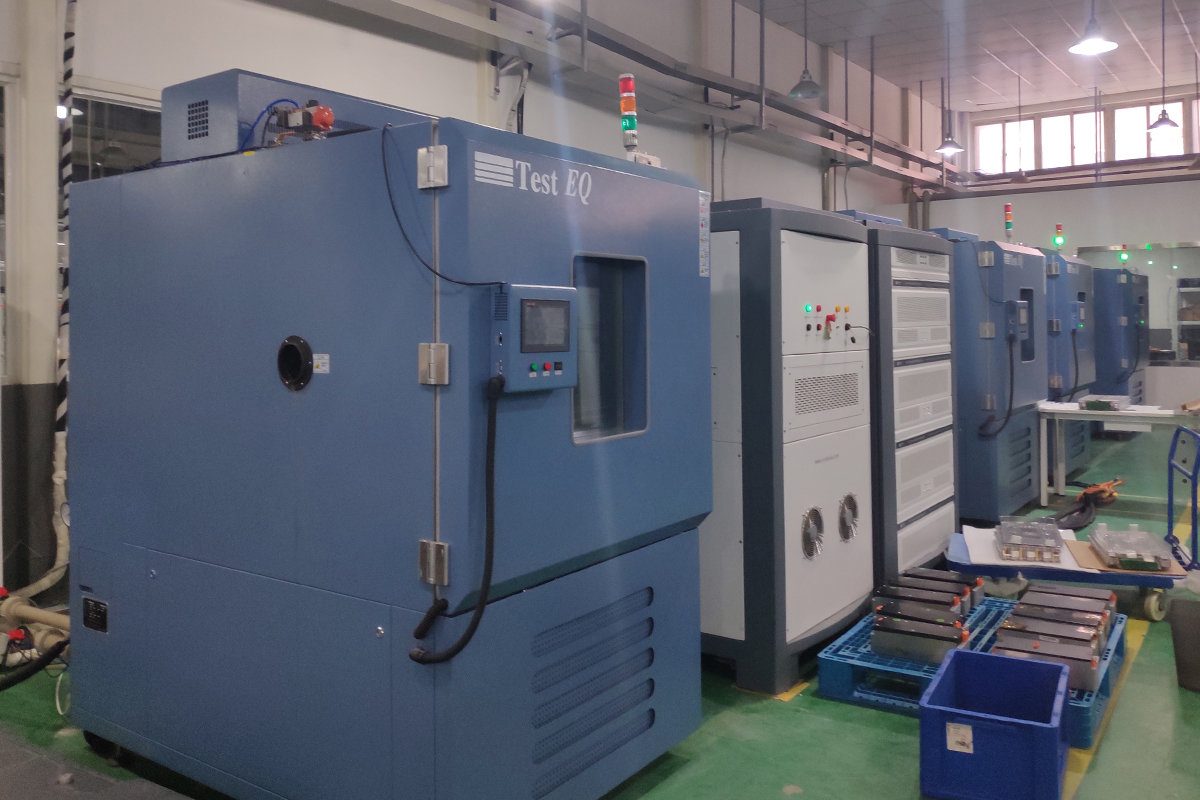
What is RTCA DO-160 Temperature Testing?
RTCA DO-160 is an internationally recognized environmental testing standard developed for airborne equipment. The temperature testing section verifies that electronic systems continue to function correctly when exposed to:
High operating temperatures
Low operating temperatures
Storage temperature extremes
Rapid temperature transitions
Temperature cycling
Ground survival conditions
The objective is to identify potential failures caused by thermal expansion, material fatigue, solder joint cracking, seal degradation, and electronic instability before products enter service.
Typical applications include:
Flight Control Computers
Avionics Systems
Navigation Equipment
Radar Modules
Aircraft Displays
Power Distribution Units
Aircraft Sensors
Aerospace Communication Equipment
Why RTCA DO-160 Temperature Testing Matters
Aircraft components experience continuous environmental stress throughout their service life.
Without proper qualification testing, manufacturers may encounter:
Electronic component failure
PCB solder fatigue
Connector deformation
Display malfunction
Plastic housing cracking
Seal leakage
Material aging
Reduced operational reliability
RTCA DO-160 temperature testing helps engineers validate long-term durability while reducing maintenance costs and improving flight safety.
Typical RTCA DO-160 Temperature Test Procedures
Although test profiles vary depending on equipment category and installation location, a typical temperature qualification includes:
High Temperature Test
The equipment operates continuously under elevated temperatures to verify electrical performance and thermal stability.
Validation includes:
Functional operation
Power consumption
Output accuracy
Temperature recovery
Structural integrity
Low Temperature Test
The specimen is exposed to low-temperature conditions before functional verification.
Engineers evaluate:
Startup capability
Electronic stability
Material contraction
Display performance
Mechanical movement
Temperature Variation Test
Products experience repeated heating and cooling cycles to simulate operational conditions.
This procedure evaluates:
Thermal fatigue
Expansion and contraction stress
PCB reliability
Connector durability
Seal performance
Storage Temperature Test
Equipment is stored under extreme temperatures without operation before returning to ambient conditions for functional verification.
The objective is to identify irreversible damage after long-term storage.
Key Environmental Challenges During Testing
Successful RTCA DO-160 qualification depends on precise environmental simulation.
Critical factors include:
| Parameter | Importance |
|---|---|
| Temperature Accuracy | Ensures repeatable results |
| Temperature Uniformity | Eliminates chamber hot/cold spots |
| Ramp Rate Control | Prevents excessive thermal overshoot |
| Recovery Time | Improves testing efficiency |
| Airflow Distribution | Maintains specimen consistency |
| Data Recording | Supports certification documentation |
RTCA DO-160 vs MIL-STD-810 vs IEC 60068 Temperature Testing Comparison
Different industries use different environmental testing standards depending on application requirements. Understanding the differences helps engineers select the correct qualification method and environmental test equipment.
| Comparison | RTCA DO-160 Temperature Testing | MIL-STD-810 Temperature Testing | IEC 60068 Temperature Testing |
|---|---|---|---|
| Main Application | Aircraft and avionics equipment qualification | Military and defense equipment environmental testing | Electronic components and industrial products testing |
| Primary Industry | Aerospace, aviation, avionics, UAV | Military, defense, aerospace, rugged electronics | Electronics, automotive, semiconductor, industrial equipment |
| Standard Organization | RTCA (Radio Technical Commission for Aeronautics) | U.S. Department of Defense | International Electrotechnical Commission |
| Main Purpose | Verify airborne equipment reliability under aircraft environments | Verify equipment durability under military operating conditions | Evaluate product resistance to environmental stress |
| Typical Products | Flight computers, navigation systems, cockpit electronics, aircraft sensors | Military communication systems, vehicles, weapons electronics, field equipment | PCB, semiconductor devices, automotive electronics, consumer electronics |
| Temperature Testing Focus | Aircraft operating temperature, ground survival, altitude-related thermal conditions | Extreme temperature exposure, operational and storage durability | High/low temperature, temperature cycling, thermal shock |
| Temperature Cycling | Included for aircraft environmental qualification | Included with mission profile simulation | Widely used for electronic reliability testing |
| Temperature Range | Depends on aircraft equipment category and installation location | Depends on military application requirements | Depends on test method requirements |
| Testing Environment | Aircraft cabin, external aircraft locations, avionics compartments | Battlefield, outdoor, transportation, storage environments | Laboratory-controlled environmental simulation |
| Common Test Equipment | Aerospace temperature chamber, thermal cycling chamber | Military environmental chamber, climatic chamber | Temperature chamber, humidity chamber, thermal shock chamber |
| Typical Users | Aircraft manufacturers, avionics suppliers, aerospace labs | Defense contractors, military research organizations | Electronics manufacturers, reliability laboratories |
RTCA DO-160 Temperature Testing vs Thermal Shock Testing
Many engineers confuse temperature cycling testing with thermal shock testing. Although both evaluate thermal reliability, the stress mechanisms are different.
| Item | RTCA DO-160 Temperature Testing | Thermal Shock Testing |
|---|---|---|
| Main Objective | Verify aircraft equipment performance under temperature environments | Evaluate sudden extreme temperature transition resistance |
| Temperature Change Speed | Controlled temperature variation | Very rapid temperature transfer |
| Stress Type | Thermal aging and expansion/contraction stress | Severe thermal shock stress |
| Typical Application | Avionics qualification, aircraft electronics | Semiconductor, PCB, automotive electronics |
| Test Duration | Usually longer environmental exposure | Short repeated transfer cycles |
| Equipment Required | Temperature test chamber / thermal cycling chamber | Two-zone or three-zone thermal shock chamber |
Engineering Insight:
For avionics qualification, RTCA DO-160 temperature testing is usually the primary requirement. Thermal shock testing may be added when components contain sensitive materials, solder joints, or multi-material structures requiring accelerated failure evaluation.
Recommended Environmental Test Equipment
Depending on product size and qualification requirements, manufacturers typically use:
Temperature Test Chambers
Temperature Humidity Chambers
Rapid Temperature Change Chambers
Thermal Cycling Chambers
Thermal Shock Chambers
Walk-in Environmental Chambers
For avionics qualification, precise temperature control and long-term operational stability are more important than simply achieving extreme temperatures.
How TestEQ Supports RTCA DO-160 Testing
TestEQ supplies customized environmental simulation systems for aerospace manufacturers, laboratories, universities, and research institutes.
Key Advantages
Wide temperature range suitable for aerospace qualification
Excellent temperature uniformity for repeatable testing
Fast recovery after door opening
Stable long-duration operation
Programmable temperature cycling profiles
PLC and touch-screen intelligent control
Remote monitoring and data logging
Custom chamber sizes available
Our engineering team can also customize chamber configurations according to RTCA DO-160 qualification requirements, specimen dimensions, cable routing, observation windows, and automation needs.
Industries That Benefit from RTCA DO-160 Testing
RTCA DO-160 temperature qualification is widely used across:
Commercial Aviation
Military Aviation
UAV Systems
Space Electronics
Aerospace Manufacturing
Aircraft Maintenance Organizations
Defense Electronics
Flight Instrument Development
Research Laboratories
Certification Centers
Choosing the Right RTCA DO-160 Test Chamber
When selecting an environmental chamber, engineers should consider:
Required temperature range
Heating and cooling rate
Chamber volume
Temperature uniformity
Controller accuracy
Automation capability
Data acquisition functions
Compliance documentation
Calibration services
Long-term reliability
Selecting the appropriate chamber improves testing efficiency while reducing lifecycle operating costs.
Why Choose TestEQ for RTCA DO-160 Temperature Testing?
TestEQ provides advanced environmental test chambers designed to support RTCA DO-160 temperature qualification requirements for aerospace electronics, avionics systems, and airborne equipment.
Our temperature testing solutions help engineers verify product reliability under extreme thermal conditions while improving testing accuracy, repeatability, and certification efficiency.
Key Advantages:
Aerospace-Focused Environmental Simulation Technology
TestEQ chambers are engineered for demanding aerospace reliability applications, including avionics, aircraft electronics, UAV systems, and defense equipment testing.
Precise Temperature Control and Uniformity
Advanced PID control technology ensures stable temperature regulation, excellent chamber uniformity, and reliable test repeatability during RTCA DO-160 qualification procedures.
Customized RTCA DO-160 Test Solutions
From compact benchtop chambers to large walk-in environmental chambers, TestEQ provides customized solutions based on specimen size, temperature range, airflow requirements, and testing profiles.
Reliable Long-Term Testing Performance
Designed for continuous operation, TestEQ environmental chambers provide stable performance during extended aerospace qualification testing and laboratory validation.
Complete Engineering Support
TestEQ supports customers with chamber selection, test configuration, installation guidance, calibration coordination, and technical service.
Frequently Asked Questions (FAQ)
1.What is RTCA DO-160 Temperature Testing?
RTCA DO-160 Temperature Testing evaluates whether airborne equipment can operate safely and reliably under extreme high and low temperatures encountered during aircraft operation and storage.
2.Which products require RTCA DO-160 testing?
Typical products include avionics, aircraft electronics, navigation systems, communication equipment, radar modules, sensors, cockpit displays, and power control units.
3.Does RTCA DO-160 include temperature cycling?
Yes. The standard includes temperature variation testing to simulate repeated environmental changes that may cause thermal fatigue and long-term reliability issues.
4.Which environmental chamber is best for RTCA DO-160 testing?
A programmable temperature chamber or thermal cycling chamber with excellent temperature uniformity, stability, and precise control is generally recommended for aerospace qualification testing.
5.Can TestEQ customize RTCA DO-160 environmental chambers?
Yes. TestEQ provides customized environmental test chambers designed to meet aerospace testing requirements, including chamber size, temperature range, cable ports, data logging, and automation functions.
6. What temperature ranges are typically required for RTCA DO-160 testing?
RTCA DO-160 temperature testing requirements depend on aircraft installation conditions and equipment categories. Aerospace test programs commonly evaluate equipment performance under extreme cold and high-temperature environments to simulate conditions such as high-altitude operation, ground exposure, and enclosed aircraft locations. TestEQ environmental chambers can be configured with wide temperature ranges and precise control systems to support different aerospace qualification requirements.
7. How long does an RTCA DO-160 temperature test usually take?
The duration of an RTCA DO-160 temperature test depends on the equipment category, test procedure, temperature profile, stabilization requirements, and customer qualification plan. Testing may include temperature exposure, stabilization periods, functional checks, and recovery evaluations. A high-performance environmental chamber with fast temperature recovery and stable operation can help laboratories improve testing efficiency and maintain consistent qualification results.
8. What features should an RTCA DO-160 compliant test chamber have?
An RTCA DO-160 temperature test chamber should provide accurate temperature control, excellent uniformity, reliable long-term operation, programmable test profiles, and comprehensive data recording capabilities. Important features include precise PID control, fast temperature transition performance, calibration support, safety protection systems, and customizable configurations for different aerospace equipment sizes.
Internal Linking Module
Related Products
Designed for RTCA DO-160 temperature variation and reliability testing of aerospace electronics.
Supports programmable fast temperature transitions for aerospace qualification and accelerated reliability testing.
Simulates combined temperature and humidity environments for avionics and electronic equipment validation.
Related Standards
International environmental testing methods covering temperature, humidity, vibration, and mechanical stress.
U.S. military environmental qualification standard for defense and aerospace equipment.
Comprehensive guide explaining RTCA DO-160 categories, procedures, and aerospace qualification strategies.
Related Resources
Compare testing principles, applications, and chamber selection for aerospace and electronics reliability.
Learn how engineers select the right chamber based on standards, specimen size, and testing objectives.
Explore environmental simulation technologies for aircraft, avionics, UAVs, and defense electronics.
CTA
Validate Aerospace Reliability with TestEQ RTCA DO-160 Environmental Test Chambers
TestEQ designs high-performance environmental test chambers for RTCA DO-160 temperature testing, thermal cycling, and aerospace qualification. Our customized solutions deliver precise temperature control, excellent uniformity, reliable long-duration operation, and programmable test profiles for avionics, aircraft electronics, defense systems, and aerospace laboratories.
"Contact TestEQ today" to discuss your RTCA DO-160 testing requirements and receive a customized environmental testing solution.