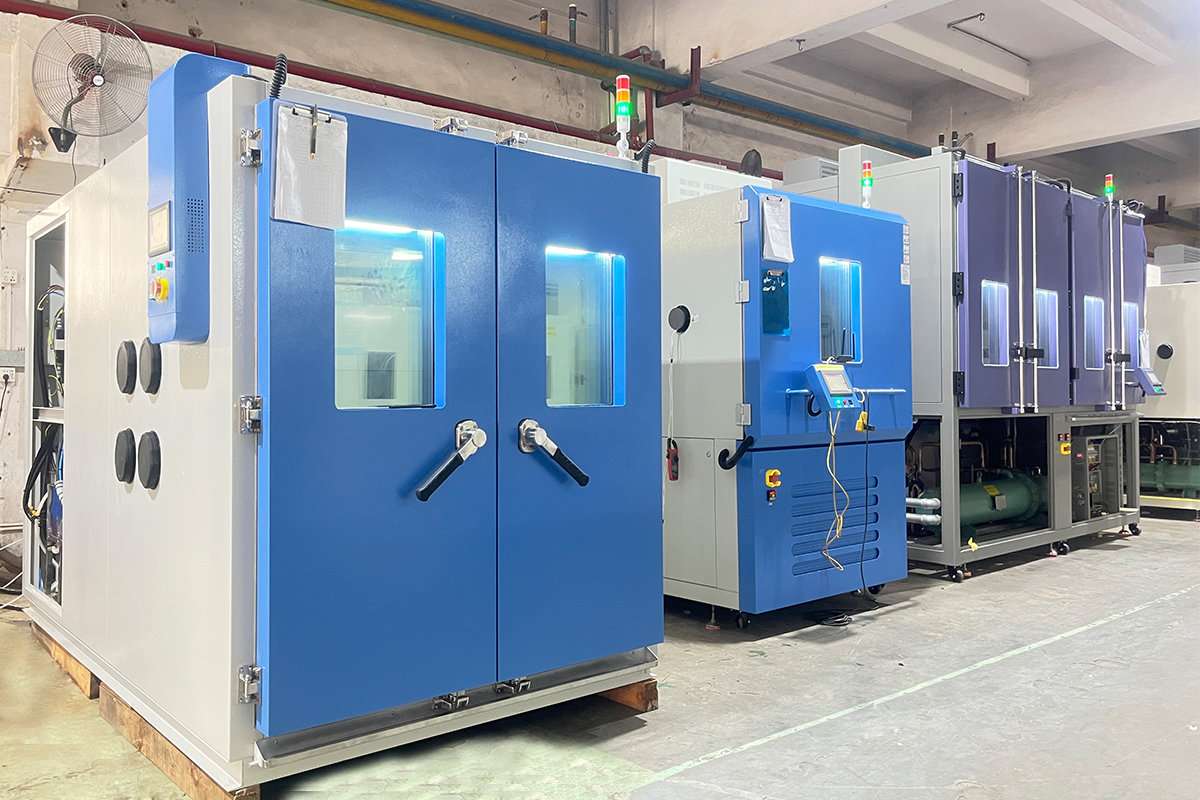
What Is RTCA DO-160 Environmental Test Standard?
RTCA DO-160, Environmental Conditions and Test Procedures for Airborne Equipment, is an aerospace qualification standard developed by RTCA.
It provides standardized environmental and electromagnetic test procedures for airborne equipment and avionics systems. The purpose is to demonstrate that equipment can perform reliably when exposed to environmental conditions representative of its intended aircraft application.
The standard is not a single environmental test. Instead, it contains multiple sections covering different physical, climatic, mechanical, electrical, electromagnetic, and fire-related stresses.
RTCA currently identifies DO-160G as the published version on its DO-160 standards page, while RTCA's SC-135 committee continues work on environmental testing standards. FAA AC 21-16G identifies DO-160G as an acceptable environmental qualification document and strongly encourages its use for new articles.
RTCA DO-160G: Complete Section Overview
DO-160G contains 26 numbered sections. The sections cover environmental conditions as well as electromagnetic and electrical effects.
| DO-160 Sections | Test Area | Main Testing Focus |
|---|---|---|
| Sections 1–3 | General Requirements | Purpose and applicability, definitions, test conditions, procedures, and general requirements for RTCA DO-160 testing. |
| Sections 4–6 | Climatic & Temperature Testing | Temperature and altitude, temperature variation, and humidity testing for airborne equipment under controlled environmental conditions. |
| Sections 7–8 | Mechanical Testing | Operational shock, crash safety, and vibration testing to evaluate equipment under mechanical stresses encountered during aircraft operation. |
| Sections 9–15 | Environmental Exposure Testing | Explosion proofness, waterproofness, fluids susceptibility, sand and dust, fungus resistance, salt spray, and magnetic effect testing. |
| Sections 16–23 | Electrical, EMC & Lightning Testing | Power input, voltage spikes, conducted and induced susceptibility, RF susceptibility and emissions, lightning-induced transients, and lightning direct effects. |
| Sections 24–26 | Specialized Safety & Environmental Testing | Icing, electrostatic discharge, fire, and flammability testing for applicable airborne equipment and qualification programs. |
The most relevant DO-160 sections for environmental chamber testing are Sections 4, 5, and 6, covering temperature and altitude, temperature variation, and humidity. Section 8 may also require integration with vibration test systems depending on the qualification program.
What Equipment Is Required for RTCA DO-160 Testing?
The required test equipment depends on the applicable DO-160 sections and the equipment category.
Common environmental test equipment includes:
Temperature and Altitude Test Chamber
Used for combined temperature and pressure/altitude simulation associated with Section 4.
Temperature Variation Test Chamber
Used for controlled temperature transition and cycling requirements associated with Section 5.
Temperature Humidity Chamber
Used for controlled humidity exposure under Section 6.
Vibration Test System
Used for mechanical vibration qualification associated with Section 8.
Combined Environmental Test System
Used when temperature, altitude, humidity, or vibration conditions need to be integrated into a coordinated test system.
For complex aerospace programs, a customized environmental simulation platform may be more appropriate than several independent chambers.
RTCA DO-160 Environmental Test Standard: Complete Guide for Aerospace Qualification Testing
Overview of RTCA DO-160 Standard
The RTCA DO-160 environmental test standard is one of the most widely recognized qualification benchmarks for avionics equipment used in commercial and military aerospace systems. It defines a comprehensive set of environmental conditions under which airborne electronic equipment must be tested to ensure safety, reliability, and operational performance.
Published by RTCA (Radio Technical Commission for Aeronautics), DO-160 is not a single test but a structured framework covering multiple environmental categories including:
• Temperature and thermal cycling
• Humidity resistance
• Vibration and shock
• Altitude simulation
• Waterproofing and dust resistance
• Power input variation
• Electromagnetic interference (EMI)
For aerospace manufacturers, compliance with DO-160 is often a mandatory requirement before equipment can be certified for flight use.
Why RTCA DO-160 Testing is Critical for Aerospace Systems
Avionics systems operate under extreme and unpredictable environmental conditions. From high-altitude low-pressure environments to rapid temperature transitions during ascent and descent, equipment must maintain stable performance without failure.
Key reasons DO-160 testing is essential:
• Ensures flight safety and operational reliability
• Reduces risk of in-flight electronic failure
• Validates performance under real-world aerospace conditions
• Required for FAA/EASA certification processes
• Standardizes testing across global aerospace suppliers
For procurement teams and engineering departments, compliance is not optional—it is a gateway requirement for market entry.
Key Environmental Test Categories in DO-160
Temperature & Thermal Cycling Testing
Equipment is exposed to extreme high and low temperatures, often from -55°C to +70°C or higher. Thermal cycling evaluates material expansion, solder joint reliability, and electronic stability.
Humidity Resistance Testing
High humidity environments simulate condensation, corrosion, and insulation degradation risks.
Vibration Testing
Aircraft vibration profiles simulate engine, airframe, and aerodynamic stress conditions across multiple frequency ranges.
Altitude Simulation Testing
Low-pressure environments are simulated to test equipment behavior at high altitudes up to 50,000+ feet equivalent conditions.
Combined Environmental Stress Testing
Modern aerospace qualification increasingly requires multi-stress simulation such as:
• Temperature + vibration
• Humidity + thermal cycling
• Altitude + temperature variation
How to Choose a DO-160 Environmental Test Chamber
Before selecting a chamber, aerospace engineers and procurement teams should define:
Applicable DO-160 sections
Required temperature range
Temperature transition rate
Altitude or pressure requirements
Humidity range
Test volume and specimen dimensions
Equipment operating condition during testing
Vibration integration requirements
Data acquisition and recording requirements
Required test profile and qualification documentation
The chamber should be selected according to the actual test profile rather than simply purchasing equipment advertised as "DO-160 compliant."
RTCA DO-160 vs MIL-STD-810
RTCA DO-160 and MIL-STD-810 are both widely referenced for environmental qualification, but they serve different primary applications.
| Parameter | RTCA DO-160 | MIL-STD-810 |
|---|---|---|
| Primary application | Airborne equipment | Military equipment |
| Typical users | Aerospace and avionics manufacturers | Defense and military suppliers |
| Temperature testing | Yes | Yes |
| Altitude testing | Yes | Yes |
| Humidity | Yes | Yes |
| Vibration | Yes | Yes |
| Shock | Yes | Yes |
| EMC/electrical tests | Extensive | Depends on applicable method |
| Aircraft qualification | Strong focus | Not specifically aircraft-focused |
DO-160 should therefore be selected when the qualification program specifically requires the environmental and electromagnetic conditions defined for airborne equipment.
Why TestEQ for RTCA DO-160 Environmental Testing?
TestEQ designs and manufactures environmental test chambers and customized environmental simulation systems for aerospace and avionics applications.
Our solutions can support qualification programs involving:
Temperature and altitude testing
Temperature variation testing
Humidity testing
Vibration-integrated environmental testing
Rapid temperature change testing
Customized aerospace environmental simulation
Automated test profile control
Test data logging and monitoring
Depending on the required DO-160 sections, TestEQ can engineer the chamber configuration around the required temperature range, pressure/altitude profile, specimen dimensions, ramp rate, humidity conditions, vibration interface, and operating mode.
For laboratories and aerospace manufacturers with non-standard test requirements, customized system engineering can provide greater flexibility than a standard chamber configuration.
Engineering Challenges in DO-160 Compliance Testing
Meeting RTCA DO-160 requirements is not simply about testing—it requires precise control of environmental conditions.
Common engineering challenges include:
• Achieving fast and stable temperature ramp rates
• Maintaining uniform humidity distribution
• Simulating accurate low-pressure altitude conditions
• Synchronizing multi-stress test profiles
• Ensuring repeatability for certification audits
This is where advanced environmental test systems become essential.
TestEQ Aerospace Environmental Test Solutions
TestEQ specializes in designing and manufacturing advanced environmental test chambers tailored for aerospace and avionics applications requiring RTCA DO-160 compliance.
Our systems support:
1.Temperature Test Chambers
• Wide range: -70°C to +180°C
• High stability ±0.5°C control
• Rapid thermal cycling capability
2. Humidity Test Chambers
• 20% to 98% RH precision control
• Anti-condensation system design
3. Vibration Integrated Systems
• Combined thermal-vibration test platforms
• Multi-axis mechanical stress simulation
4. Altitude Test Chambers
• Simulated altitude up to aerospace-grade requirements
• Vacuum and pressure control systems
5. Customized DO-160 Test Platforms
• Modular system integration
• Aerospace-grade data logging and compliance reporting
• Engineering customization for defense and avionics labs
Why Engineers and Procurement Teams Choose TestEQ
For aerospace manufacturers, selecting the right environmental test equipment supplier directly impacts certification success and product reliability.
TestEQ provides:
• Deep engineering customization capability
• Full compliance support for DO-160 test profiles
• Stable long-term operation for qualification labs
• High accuracy control systems for repeatable testing
• Global support for aerospace and defense projects
Unlike standard chamber suppliers, TestEQ focuses on high-end non-standard environmental simulation systems, designed specifically for aerospace qualification requirements.
Aerospace Applications for DO-160 Testing
RTCA DO-160 testing is commonly associated with:
Avionics
Aircraft electronic equipment
Flight control electronics
Navigation equipment
Communication systems
Aerospace sensors
UAV and drone electronics
Military aircraft equipment
Aircraft power electronics
Aerospace research laboratories
The applicable DO-160 sections should always be determined according to the equipment's intended aircraft installation and qualification requirements.
Conclusion
The RTCA DO-160 environmental test standard remains a critical benchmark for aerospace equipment qualification worldwide. As aerospace systems become more complex, the demand for precise, reliable, and multi-stress environmental testing continues to increase.
TestEQ supports aerospace engineers, laboratories, and procurement teams with advanced environmental test chamber solutions designed specifically for DO-160 compliance, helping ensure product reliability from lab validation to real flight conditions.
Frequently Asked Questions About RTCA DO-160
1. What is the RTCA DO-160 environmental test standard?
RTCA DO-160 Environmental Test Standard is the globally recognized aerospace testing standard used to evaluate how airborne equipment performs under environmental conditions such as temperature, humidity, vibration, altitude, shock, waterproofness, EMI/EMC, and power input variations. It is widely used for commercial aircraft, military aviation electronics, and avionics qualification programs.
2. Why is RTCA DO-160 testing important for aerospace qualification?
RTCA DO-160 testing helps aerospace manufacturers verify that avionics and airborne systems can operate safely and reliably in extreme flight environments. Passing DO-160 qualification reduces certification risk, improves product reliability, and supports compliance with aviation authority requirements including FAA and EASA expectations.
3. What environmental tests are included in RTCA DO-160?
The RTCA DO-160 standard covers multiple aerospace environmental tests, including:
Temperature & Altitude Testing
Rapid Decompression Testing
Humidity Testing
Vibration & Shock Testing
Waterproofness & Fluid Susceptibility
Sand & Dust Testing
Salt Fog Corrosion Testing
EMI / EMC Testing
Power Input & Voltage Spike Testing
These tests simulate real aircraft operating conditions to ensure airborne equipment reliability and durability.
4. What industries use RTCA DO-160 qualification testing?
RTCA DO-160 qualification testing is widely used across aerospace and aviation industries, including:
Commercial Aircraft Manufacturing
Military & Defense Aviation
Avionics Electronics
Satellite & Space Components
UAV / Drone Systems
Aerospace Research Laboratories
Manufacturers use DO-160 compliant environmental test chambers to validate electronic systems before flight certification and production deployment.
5. How do you choose the right environmental test chamber for RTCA DO-160 testing?
Selecting the right RTCA DO-160 environmental test chamber depends on the required test sections, temperature range, altitude simulation capability, vibration levels, humidity control accuracy, and aerospace compliance requirements. Many aerospace laboratories prefer customized environmental test systems that support combined temperature, altitude, vibration, and rapid thermal change testing for full DO-160 qualification coverage.
6. What is the difference between RTCA DO-160 and MIL-STD-810 environmental testing?
RTCA DO-160 and MIL-STD-810 are both widely used environmental qualification standards, but they target different applications. RTCA DO-160 is specifically designed for airborne equipment and avionics systems used in aircraft, focusing on aviation certification requirements. MIL-STD-810 is mainly used for military equipment to evaluate durability under harsh environmental conditions such as temperature, vibration, shock, and humidity. Aerospace suppliers often select DO-160 for aircraft electronics qualification and MIL-STD-810 for defense-related equipment reliability testing.
7. How long does RTCA DO-160 qualification testing take?
The duration of RTCA DO-160 qualification testing depends on the equipment type, selected test categories, environmental conditions, and required test severity levels. Simple environmental tests may take several days, while complete qualification programs involving temperature, altitude, vibration, humidity, and electromagnetic compatibility testing may require several weeks. Proper test planning and selecting suitable environmental simulation equipment can help improve testing efficiency and reduce qualification time.
8. What equipment is required for RTCA DO-160 environmental testing?
RTCA DO-160 testing typically requires specialized environmental simulation equipment capable of accurately reproducing aircraft operating conditions. Common equipment includes temperature humidity chambers, altitude test chambers, thermal shock chambers, vibration test systems, and combined environmental test systems. TestEQ provides customized environmental test chamber solutions designed to support aerospace laboratories, avionics manufacturers, and reliability testing programs.
Internal Linking Module
Recommended Test Equipment
Designed for aerospace and avionics qualification testing, this chamber simulates combined temperature and altitude conditions required by RTCA DO-160 Sections 4 and 5. It is widely used for aircraft electronics, sensors, communication systems, and airborne equipment validation.
Thermal shock chambers help verify equipment reliability under rapid temperature transitions specified in aerospace environmental testing programs. Ideal for avionics modules, PCB assemblies, and aerospace electronic components.
Related Standards
MIL-STD-810 defines environmental engineering considerations and laboratory test methods for military equipment. It is one of the most frequently referenced standards alongside RTCA DO-160 for defense and aerospace qualification projects.
IEC 60068 provides internationally recognized environmental test procedures covering temperature, humidity, vibration, shock, and corrosion testing for electronic and industrial products.
Related Resources
Learn how temperature altitude chambers simulate high-altitude environments and extreme temperatures to evaluate aerospace, defense, and electronics reliability.
A practical guide explaining RTCA DO-160, MIL-STD-810, vibration testing, thermal cycling, altitude simulation, and how to select the right environmental test chamber for aerospace applications.
Call to Action
Need a Customized RTCA DO-160 Test Chamber?
Whether you are testing avionics, aerospace electronics, communication systems, sensors, or airborne components, selecting the right environmental test chamber is critical for achieving reliable RTCA DO-160 qualification results.
TestEQ provides customized environmental test chamber solutions for RTCA DO-160 testing, including:
• Temperature & Altitude Test Chambers
• Temperature Variation Test Chambers
• Temperature Humidity Chambers
• Vibration-Integrated Environmental Systems
• Rapid Temperature Change Chambers
• Customized Aerospace Environmental Test Systems
Tell us your applicable DO-160 sections, temperature range, altitude or pressure requirements, specimen size, ramp rate, and test profile.
"Contact TestEQ today to discuss your aerospace environmental testing project." customized RTCA DO-160 test chamber solution.