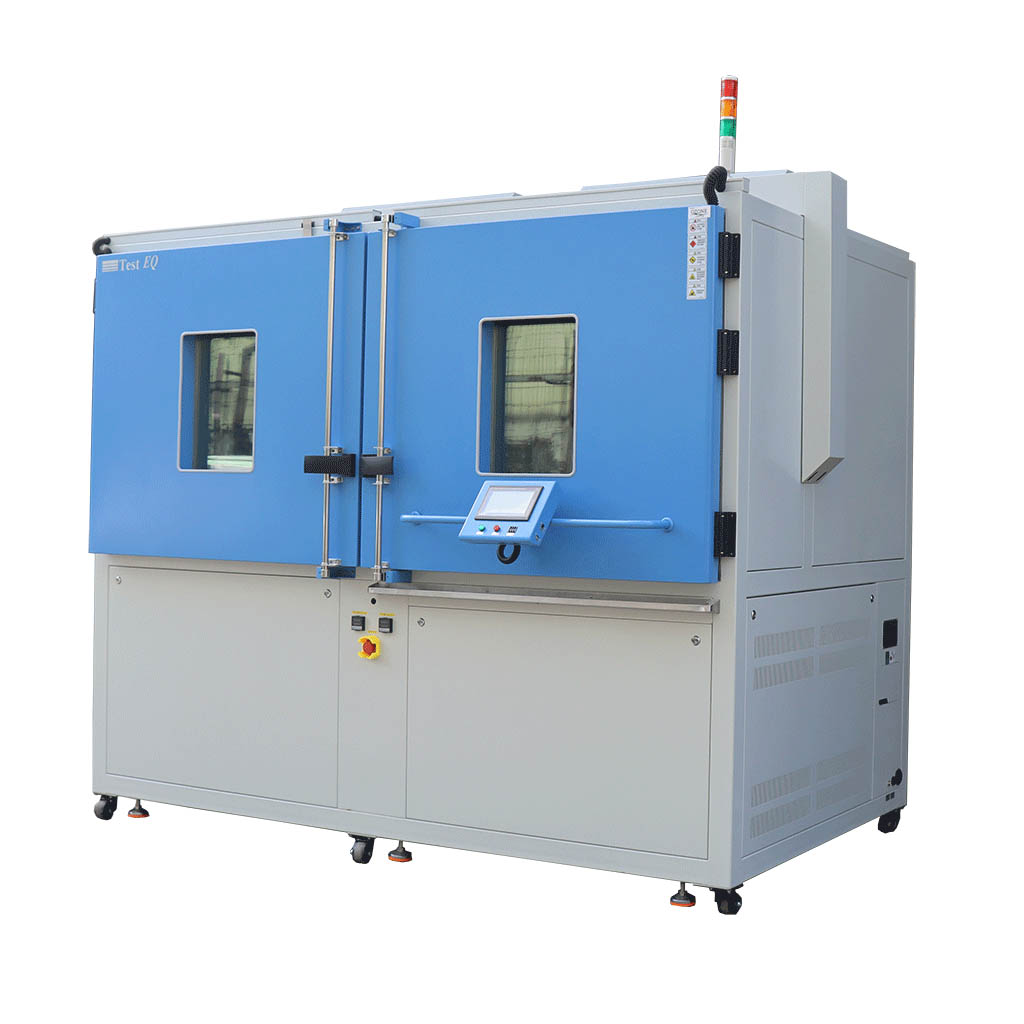
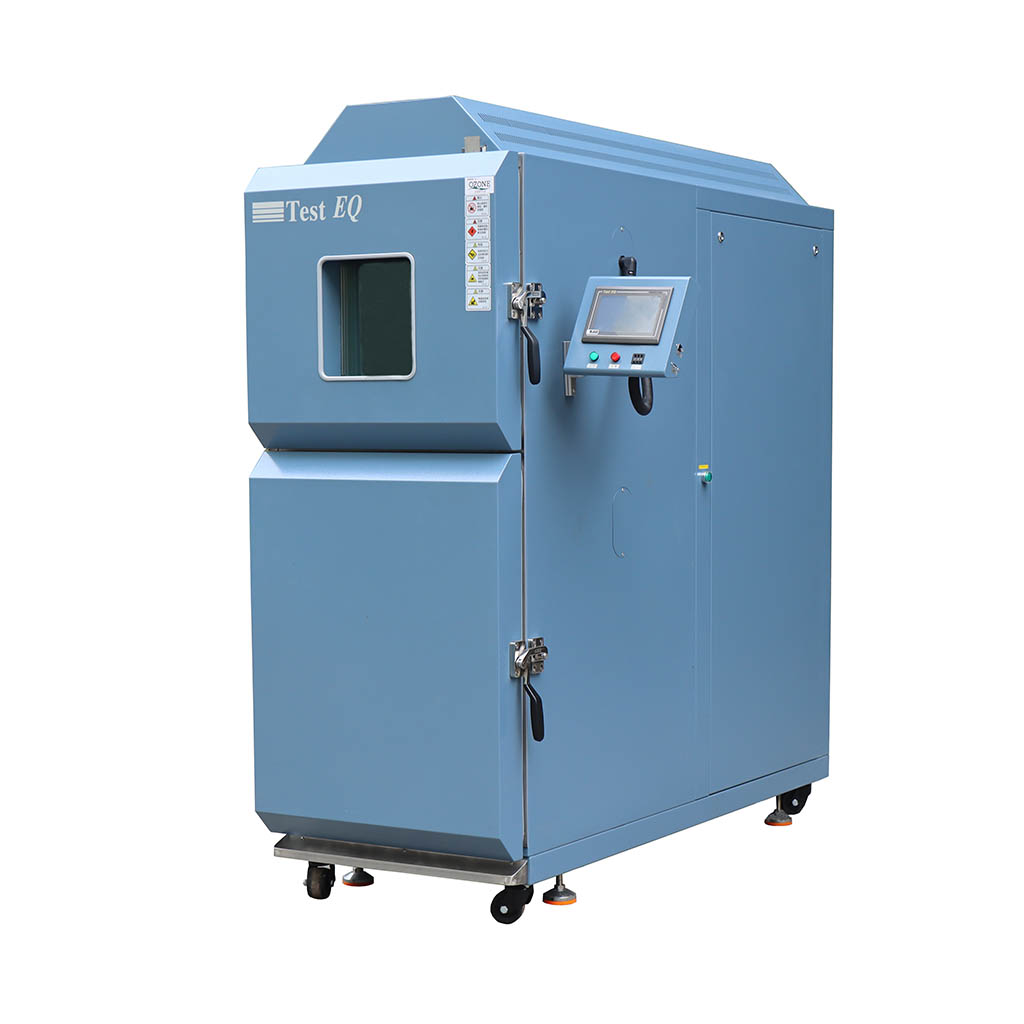
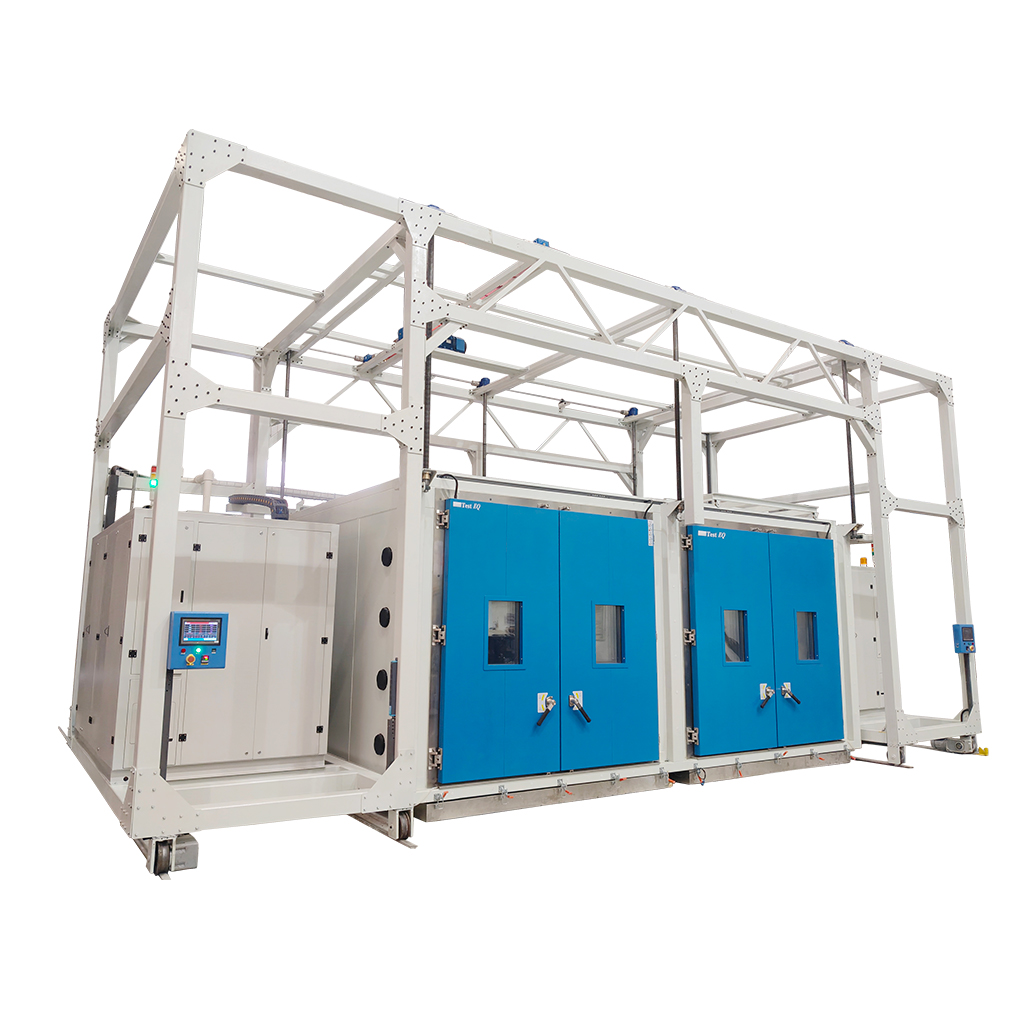
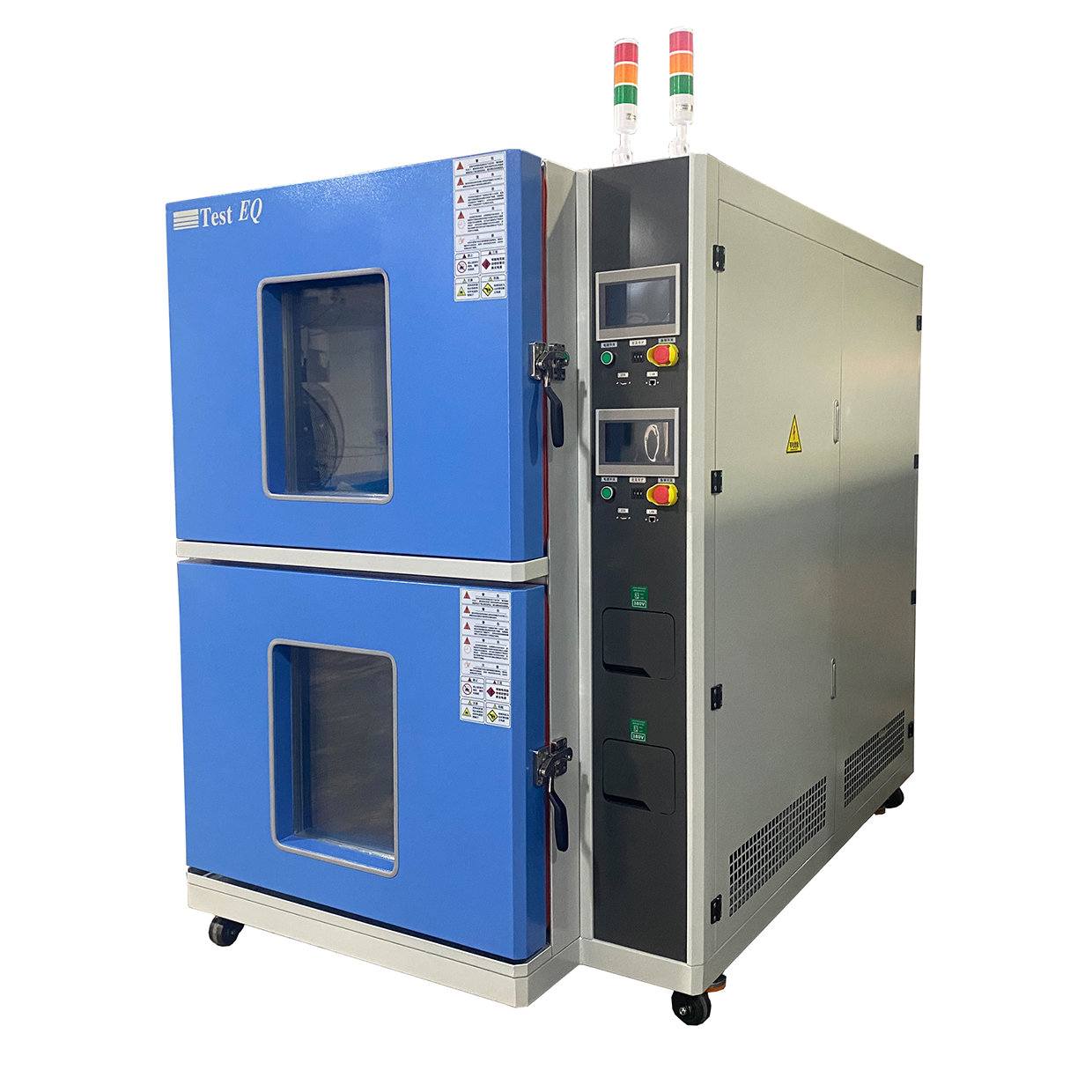
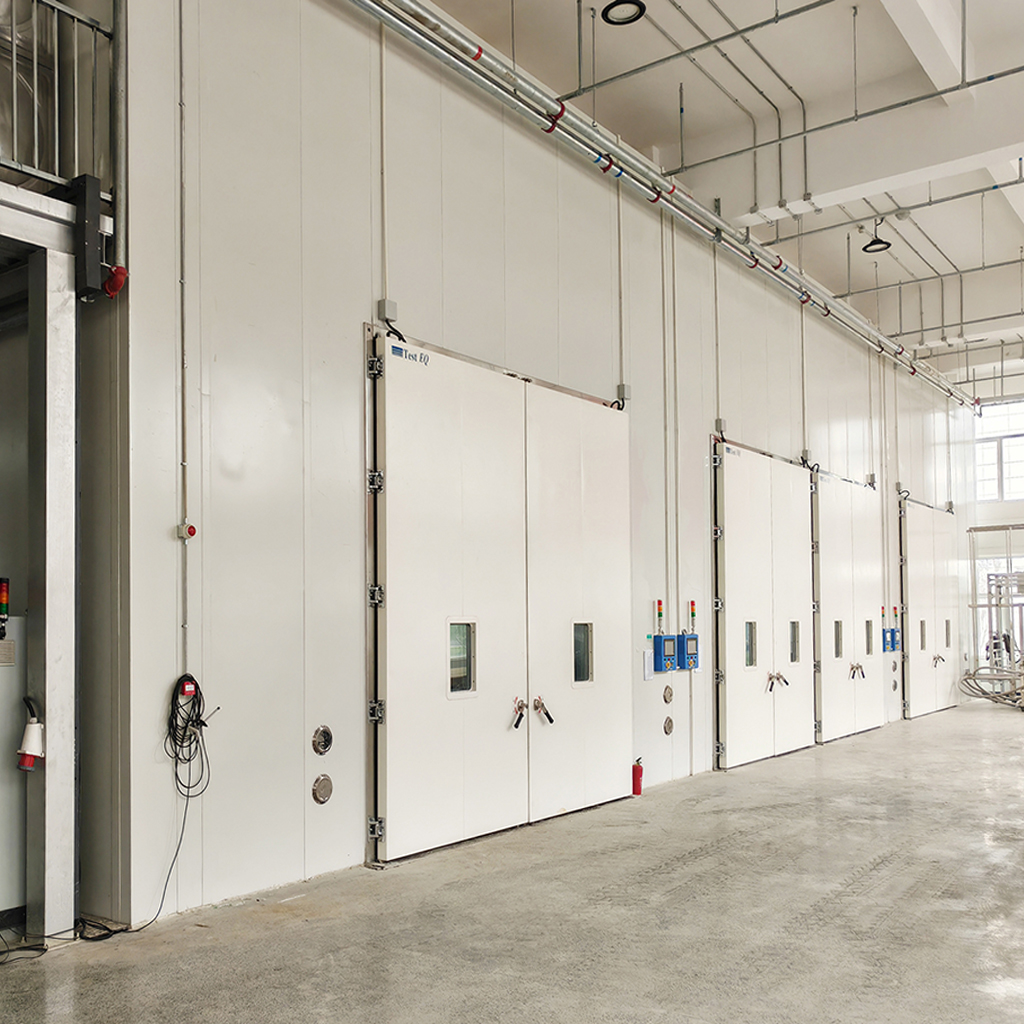
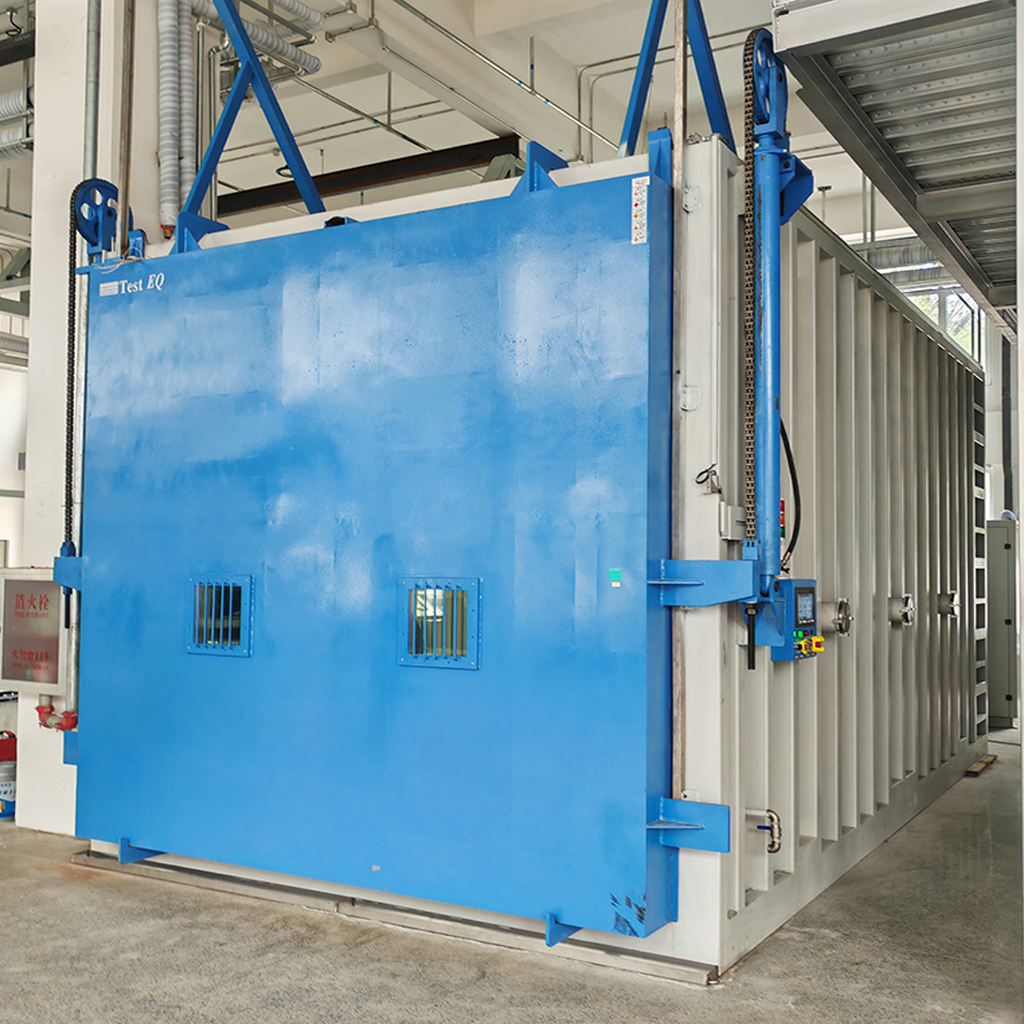
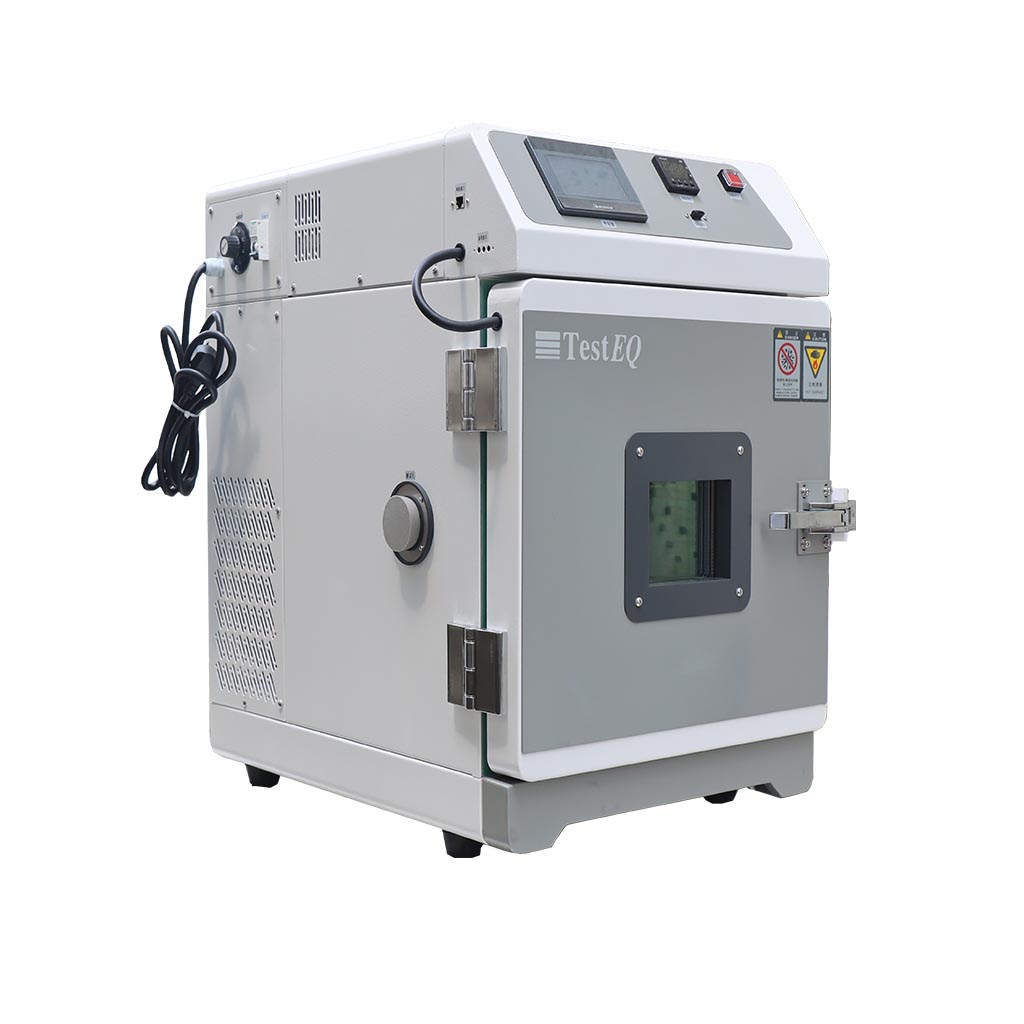
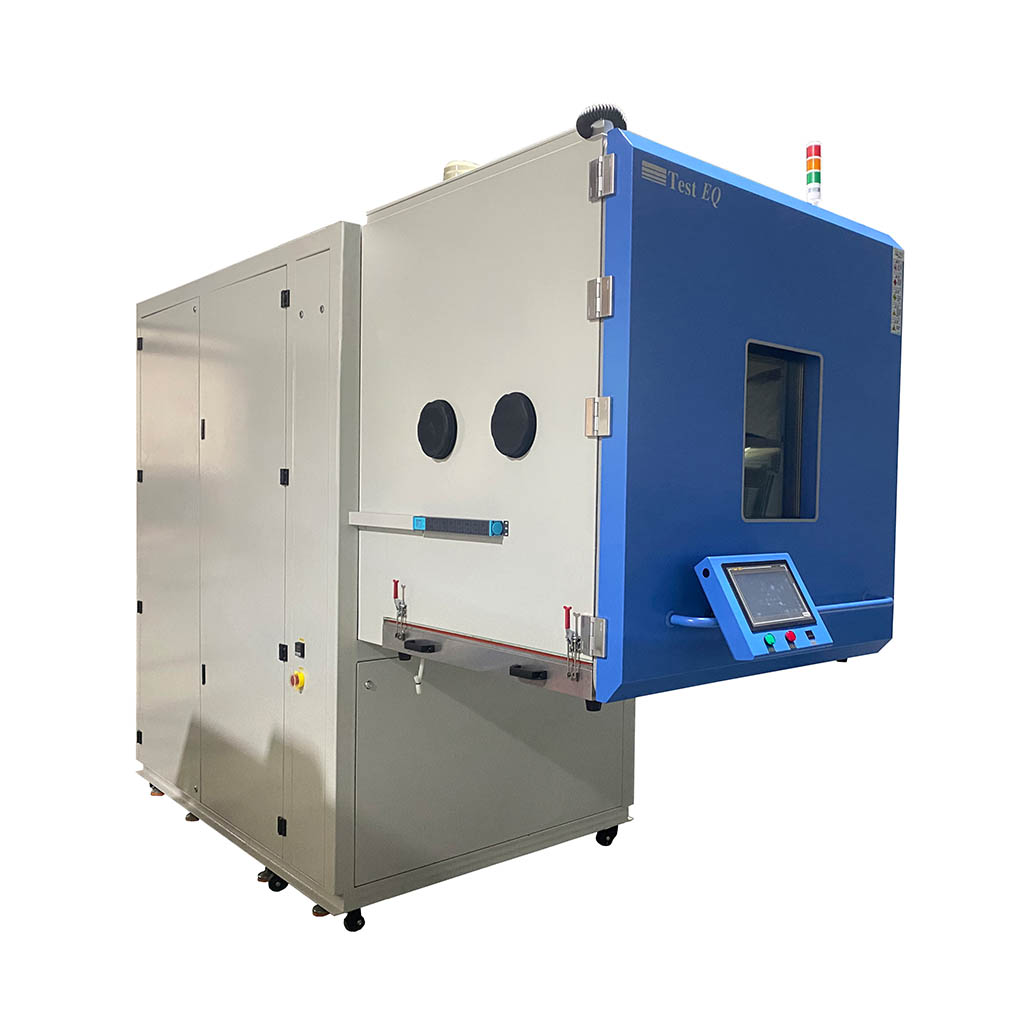
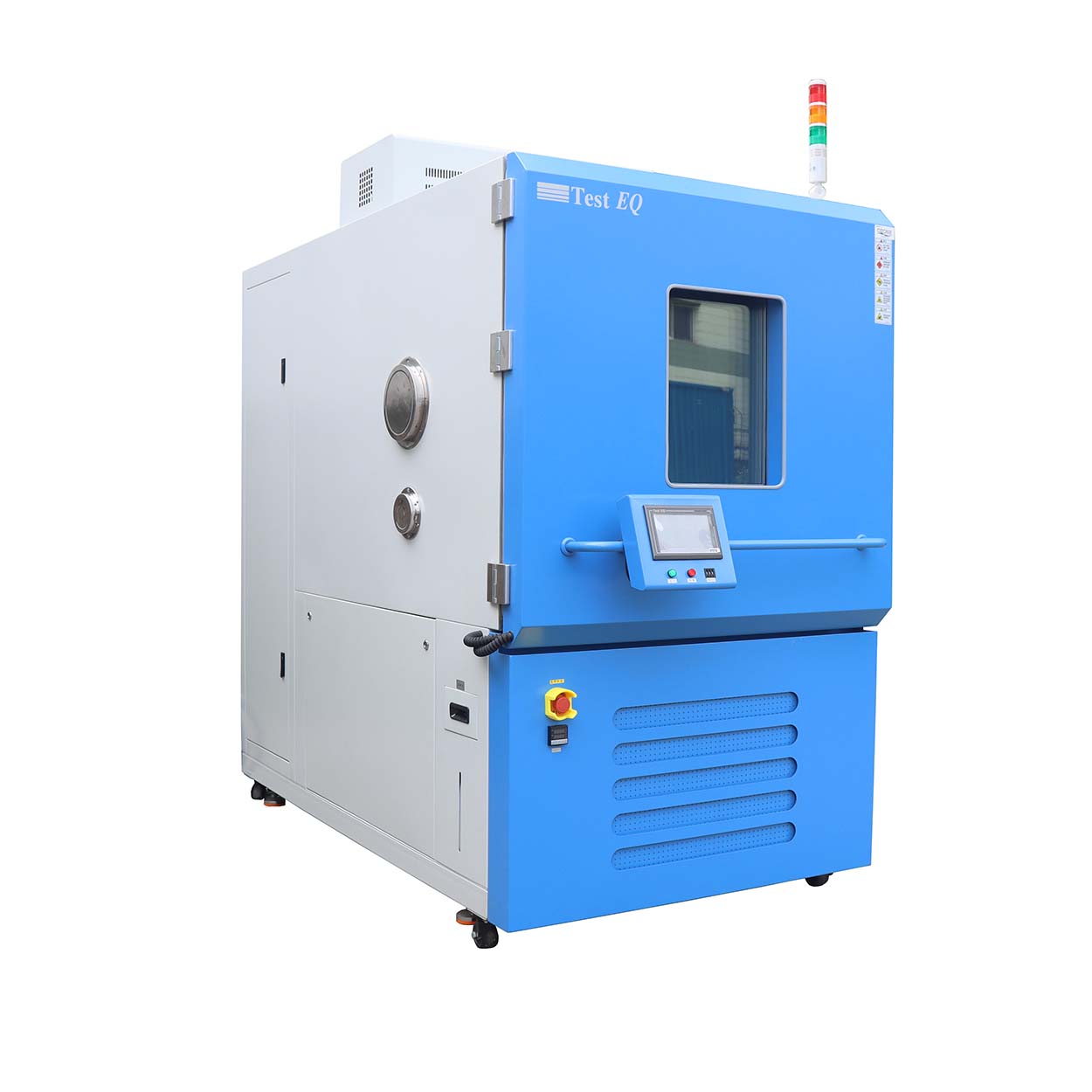
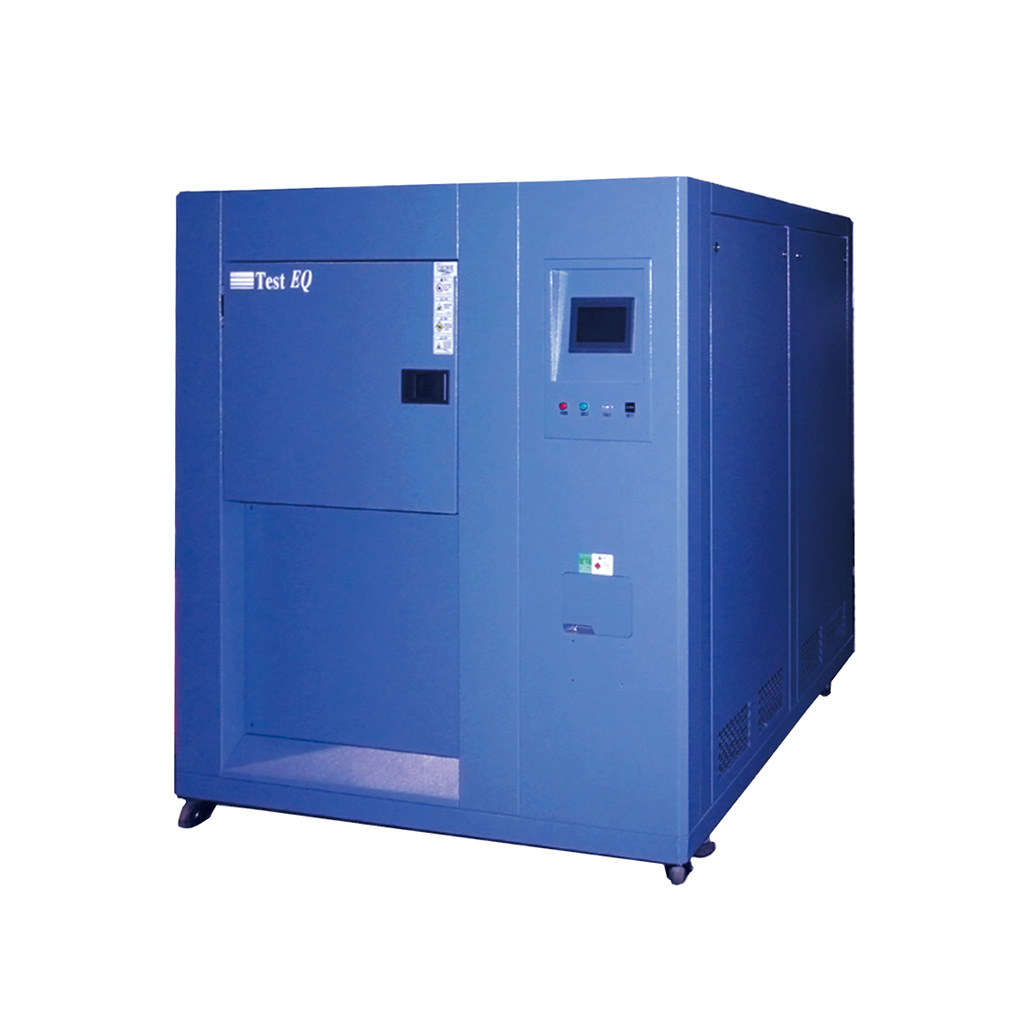
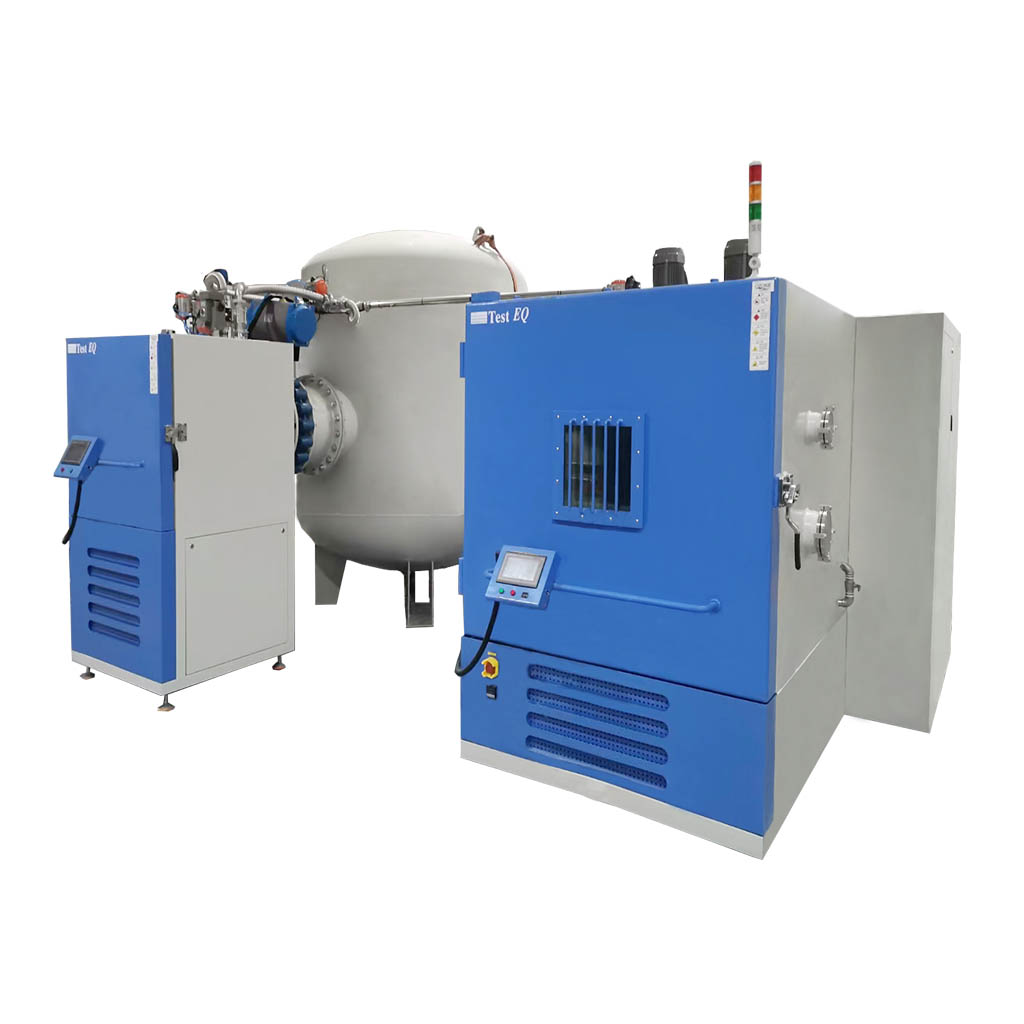
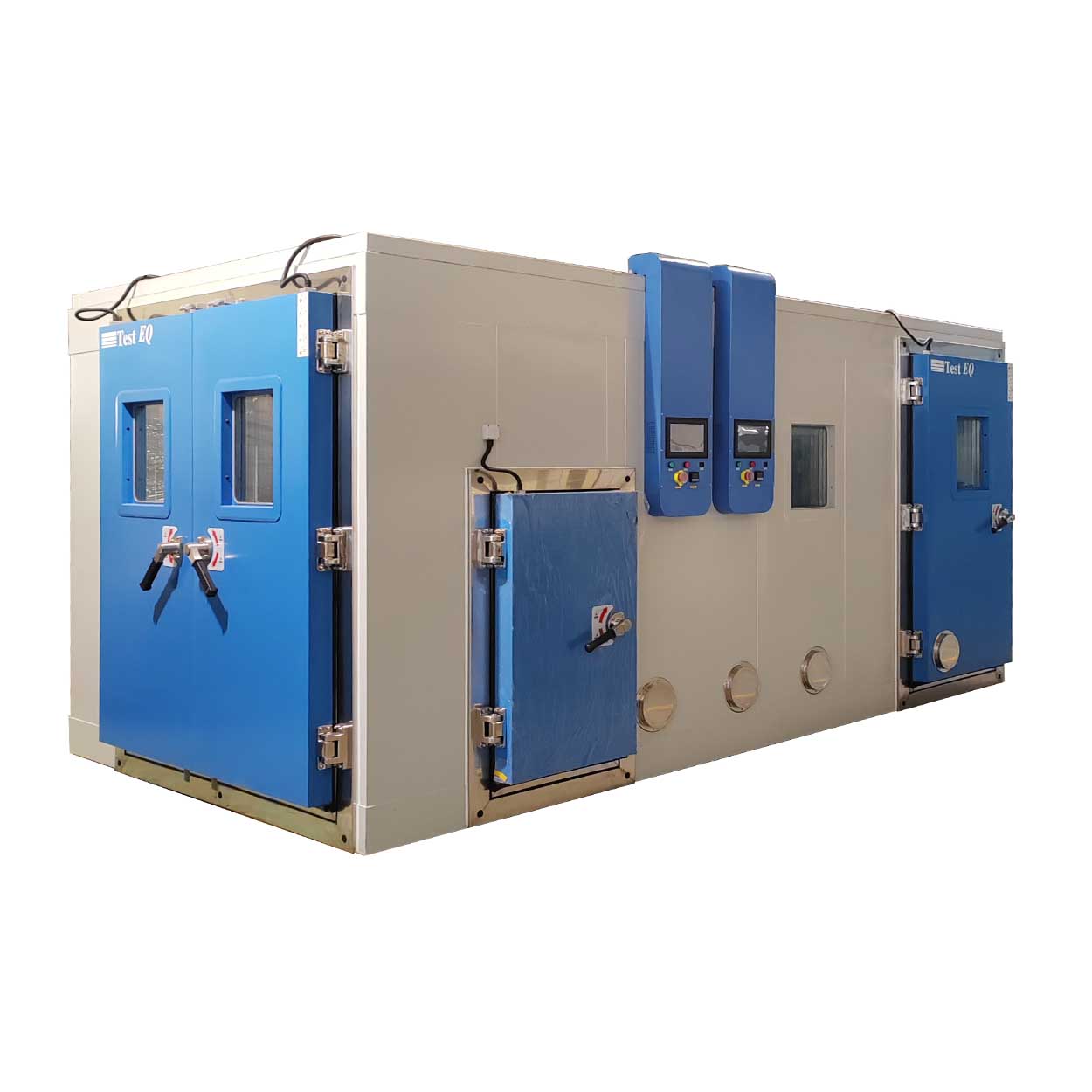
Temperature Altitude Chamber for Combined Temperature and Altitude Testing:
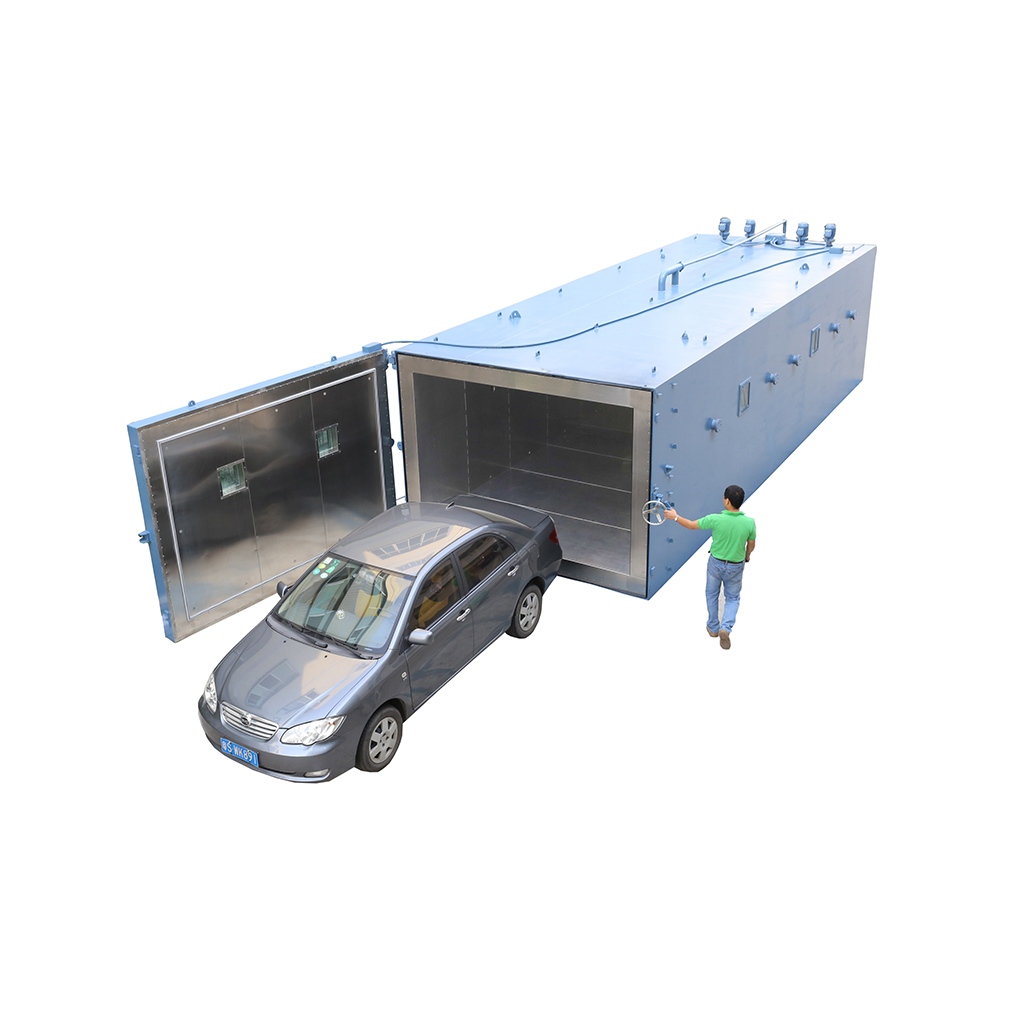
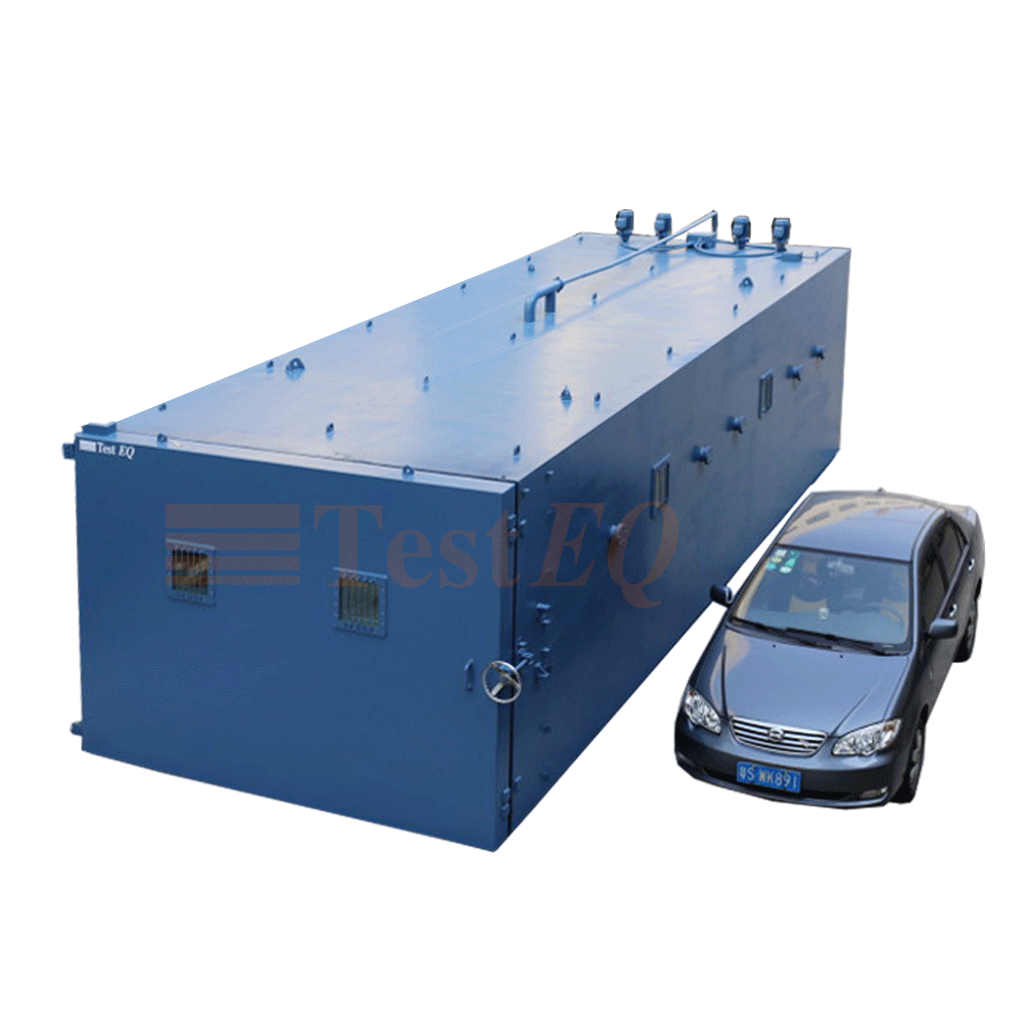
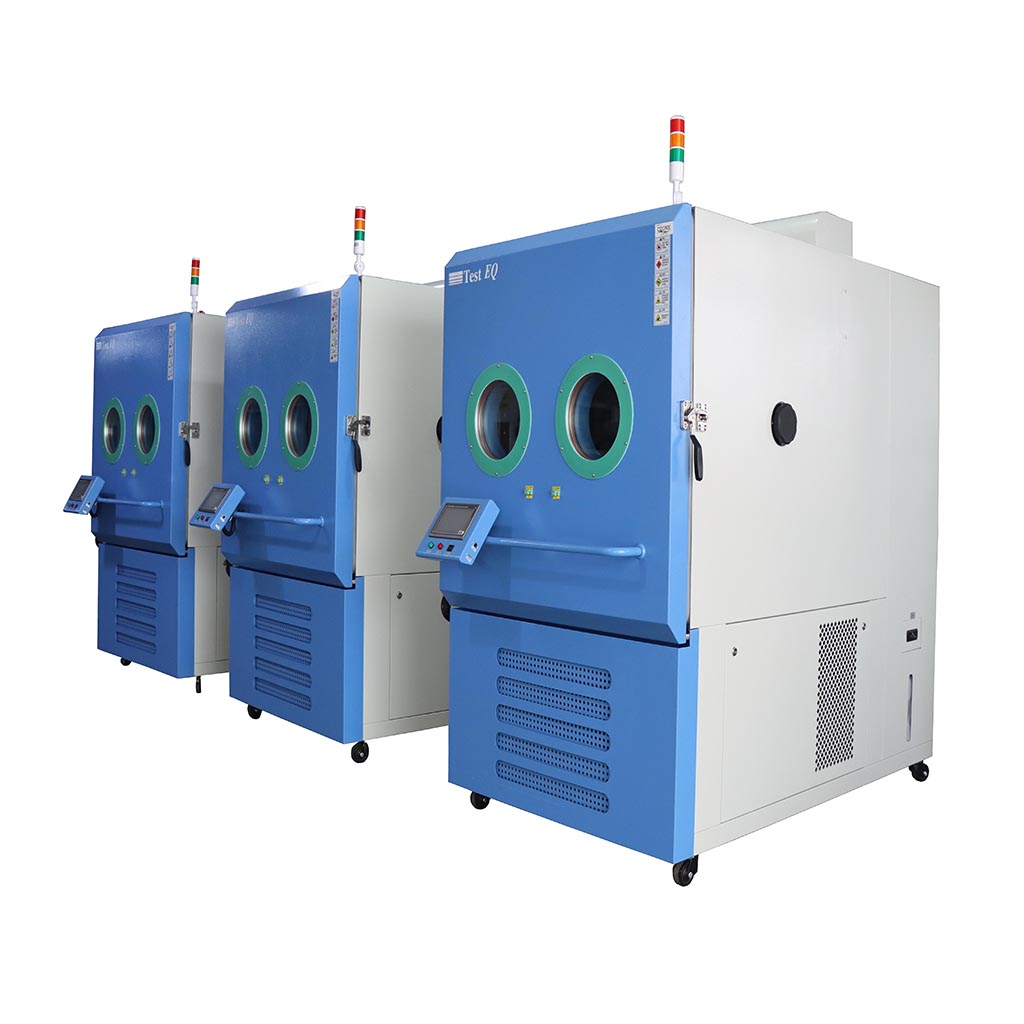
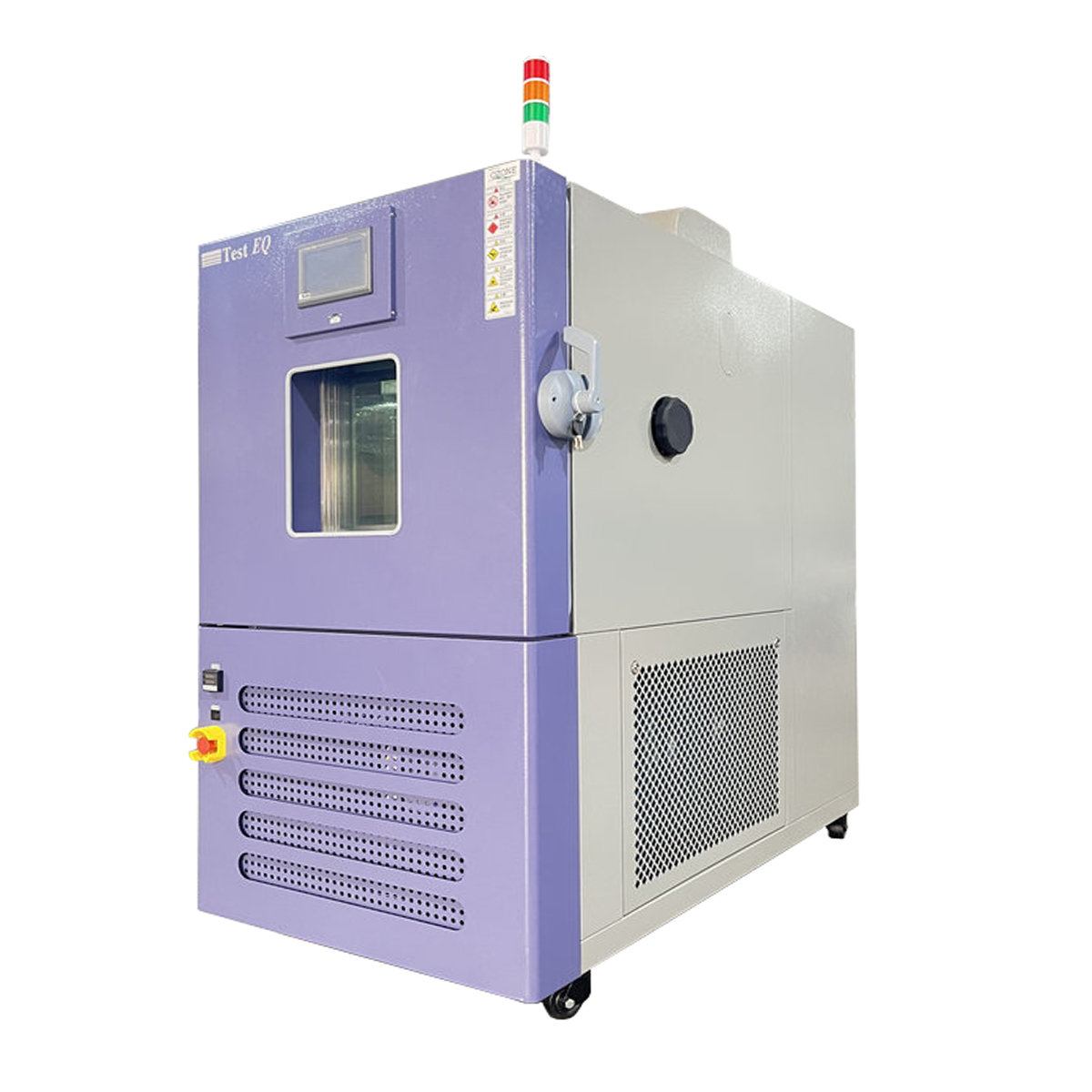
A temperature altitude chamber combines controlled temperature with reduced atmospheric pressure to reproduce environmental conditions associated with high-altitude operation.
Unlike a pressure-only altitude test chamber, a temperature altitude chamber allows engineers to evaluate products under simultaneous thermal and low-pressure stress.
TestEQ temperature altitude chambers are designed for aerospace, avionics, automotive electronics, batteries, communication equipment, electronic components and other products requiring combined temperature-altitude qualification.
Programmable temperature and pressure profiles allow engineers to reproduce controlled environmental sequences such as temperature exposure, altitude operation, pressure transitions and return to normal atmospheric conditions.
What Is a Temperature Altitude Chamber?
A temperature altitude chamber is an environmental test chamber that combines temperature control with simulated high-altitude atmospheric pressure.
The chamber uses a thermal control system to regulate temperature and a pressure-control or vacuum system to regulate absolute pressure.
This combination is useful when a product may experience both thermal stress and reduced atmospheric pressure during operation, transportation or flight.
Typical controlled parameters include:
• Temperature
• Absolute pressure
• Equivalent altitude
• Temperature ramp rate
• Pressure transition rate
• Exposure duration
• Temperature-pressure sequence
• Product operating condition
• Test data
The required conditions should be determined from the applicable product specification or test standard.
Why Combine Temperature and Altitude Testing?
Testing temperature and altitude independently does not always reproduce the combined environmental stress experienced during actual operation.
At high altitude, atmospheric pressure and air density decrease. This can influence heat transfer, cooling performance, electrical behavior and mechanical pressure differences.
When temperature changes occur at the same time, the product may experience additional thermal and environmental stress.
Combined temperature-altitude testing can therefore help engineers evaluate:
• Reduced cooling performance under low pressure
• Seal and enclosure integrity
• Temperature-dependent electrical performance
• Battery thermal behavior
• Sensor stability
• Electronic component operation
• Power electronics performance
• Material and structural response
• Product operation during altitude transitions
For aerospace equipment, RTCA DO-160 Section 4 specifically addresses temperature and altitude environmental testing. The applicable category depends on the aircraft installation environment and qualification requirements.
Temperature Altitude Chamber Working Principle
A temperature altitude chamber controls two primary environmental variables.
Temperature Control
The refrigeration and heating system establishes the required thermal condition around the test article.
Pressure Control
A vacuum or pressure-control system changes the absolute pressure inside the sealed chamber.
Coordinated Control
The control system coordinates temperature and pressure according to a programmed test profile.
This allows engineers to reproduce sequences such as:
Normal Pressure → Temperature Change → Altitude Simulation → Temperature Exposure → Pressure Recovery
The exact sequence depends on the applicable qualification specification.
Temperature Altitude Chamber vs Altitude Test Chamber
| Engineering Factor | Altitude Test Chamber | Temperature Altitude Chamber |
|---|
| Primary Stress | Reduced pressure | Temperature + reduced pressure |
| Pressure Control | Yes | Yes |
| Temperature Control | Optional / configuration-dependent | Core function |
| Primary Purpose | High-altitude and low-pressure testing | Combined temperature and altitude qualification |
| Main Application | High-altitude / low-pressure testing | Combined environmental qualification |
| Typical Users | Environmental test labs | Aerospace, electronics, battery and R&D labs |
| Key Selection Factor | Required pressure or simulated altitude | Required temperature range + pressure conditions |
Engineering Note: The correct configuration depends on the test article, test method, temperature range, pressure requirement and qualification standard.
Why Temperature Altitude Testing Matters
At high altitudes:
Air density decreases → reduced cooling efficiency
Pressure drops → affects sealing and structure
Temperature varies drastically → causes material stress
These factors can lead to:
Therefore, it is necessary to identify problems in advance through environmental simulation.
Temperature Altitude Testing Standards
Common standards and specifications may include:
• RTCA DO-160 Section 4 — Temperature and Altitude
• MIL-STD-810 Method 500 — Low Pressure
• IEC 60068-2-13 — Low Air Pressure
• Customer-specific aerospace or environmental qualification specifications
IEC 60068-2-13:2021 specifies low-air-pressure testing for specimens exposed to low pressure during transportation, storage or service.
RTCA states that DO-160 provides environmental test procedures for airborne equipment, and its current published material identifies DO-160G as the current listed version while noting work toward a DO-160H revision.
How to Choose a Temperature Altitude Chamber
1. Define Temperature Requirements
Identify the minimum and maximum operating or survival temperature required by the test program.
2. Define Pressure Requirements
Specify the required absolute pressure and corresponding altitude condition.
3. Define Combined Test Sequence
Determine whether temperature and pressure change simultaneously, sequentially or according to a defined aircraft or product profile.
4. Calculate Test Load
The size, mass and heat generation of the test article can affect thermal performance and recovery time.
5. Confirm Chamber Volume
Allow sufficient space for fixtures, airflow and instrumentation without selecting a chamber based only on external product dimensions.
6. Confirm the Applicable Standard
The test category and conditions should be established before the equipment is specified.
7. Plan Data Acquisition
Pressure and temperature should be monitored together so that the final test record can demonstrate the actual environmental condition.
Why TestEQ Temperature Altitude Chambers?
TestEQ develops environmental test systems around the actual engineering requirement rather than a single standard chamber size.
Configuration options can be developed around:
• Temperature range
• Pressure range
• Equivalent altitude
• Chamber volume
• Temperature ramp
• Pressure transition
• Test article
• Test standard
• Data acquisition
• Laboratory installation
For applications requiring more complex environmental profiles, TestEQ can integrate temperature and pressure control into a programmable testing system.
FAQ:
1.What is a temperature altitude chamber?
A temperature altitude chamber is an environmental test chamber that combines controlled temperature with reduced atmospheric pressure to reproduce high-altitude environmental conditions.
2.Why combine temperature and altitude testing?
Combined testing can reproduce environmental conditions that cannot be fully represented by temperature-only or pressure-only testing.
3.Can temperature and pressure be controlled simultaneously?
Yes. A properly configured system can coordinate thermal control and pressure control according to a programmed test profile.
4.What products require temperature-altitude testing?
Typical applications include aerospace equipment, avionics, electronic components, automotive electronics, batteries, sensors and communication equipment.
5.What is the difference between a temperature altitude chamber and a low-pressure chamber?
A low-pressure chamber primarily focuses on reduced atmospheric pressure. A temperature altitude chamber adds controlled temperature as a core test parameter.
6.What should I provide when requesting a quotation?
Provide the required temperature range, pressure or altitude range, chamber volume, test article, test sequence, applicable standard and any required pressure-transition or temperature-ramp conditions.
7.What products require temperature altitude chamber testing?
Temperature altitude chamber testing is commonly used for aerospace components, aircraft electronics, EV batteries, automotive electronic systems, communication devices, sensors and semiconductor components that may experience high-altitude temperature and pressure variations during operation or transportation.
8.How do I choose the right temperature altitude chamber?
Selecting a temperature altitude chamber depends on required altitude range, pressure level, temperature range, chamber volume, test standards and application requirements. Engineers should consider test specimens, cycling profiles, control accuracy and future testing needs when selecting a system.
Internal Linking Module
Recommended Equipment
Used for standalone low-pressure/high-altitude environment simulation testing, suitable for aerospace and electronic reliability verification, and supports MIL-STD and IEC 60068 standard testing.
For customized and large-volume high-altitude environmental simulation.
Used for temperature and humidity cycling and stability testing, it is a basic environmental reliability verification device and is widely used in electronics, automotive and materials testing laboratories.
Related Standards (Testing Standards)
Temperature and altitude testing for airborne equipment.
Internationally recognized environmental testing standards cover testing methods for temperature, humidity, low pressure, and comprehensive environmental stress.
The U.S. military environmental reliability testing standard is applicable to the verification of aerospace, military, and high-reliability products.
Technical Resources
This book provides an in-depth analysis of the principles, application scenarios, and failure mechanisms of high-altitude, low-pressure testing, helping engineers understand the purpose and methods of testing.
This article provides a detailed introduction to application cases and test solution designs for temperature and low-pressure combined environmental testing in the aerospace, automotive, and electronics industries.