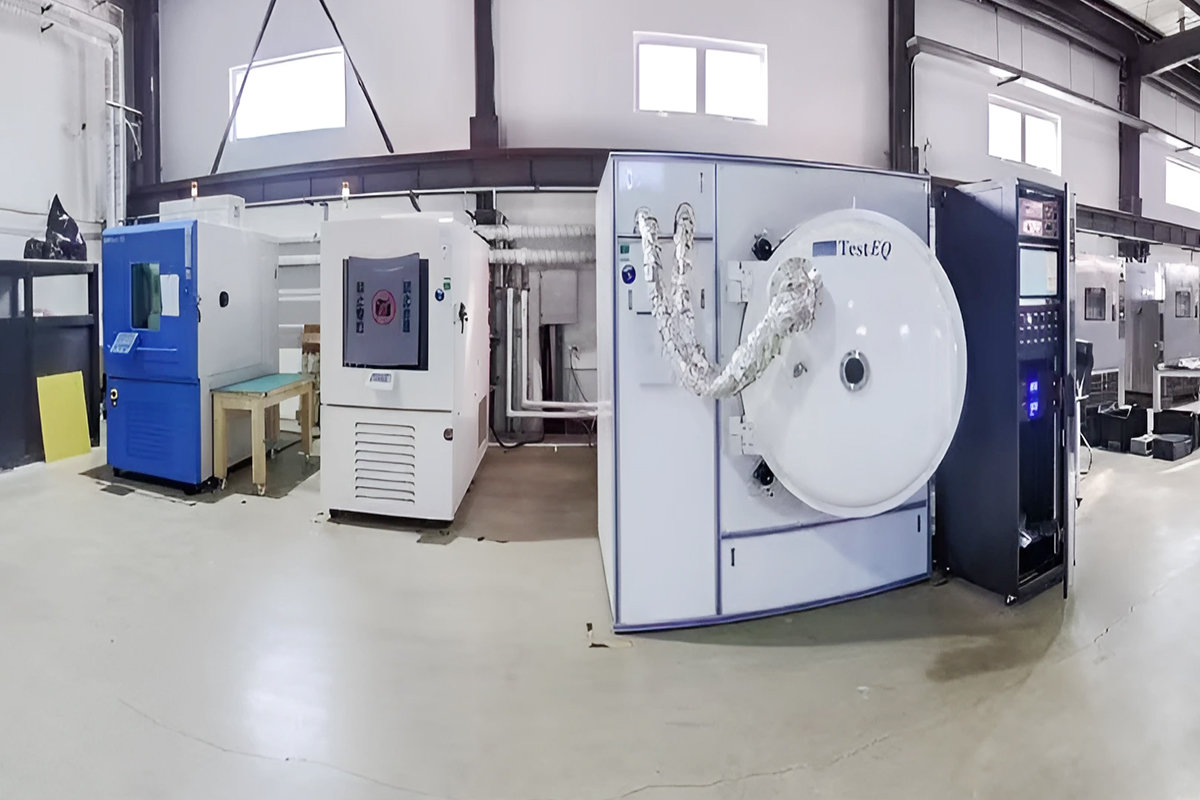
What Is an IEC 60068-2-14 Thermal Cycling Test?
The IEC 60068-2-14 standard defines environmental tests for evaluating how components, equipment, and other products respond to specified changes in ambient temperature.
For engineers, the important point is that thermal cycling is not simply a high-temperature or low-temperature exposure test. The reliability risk comes from the repeated transition between temperature conditions and from the difference between the temperature of the chamber air and the actual temperature response of the test specimen.
IEC 60068-2-14:2023 is the seventh edition of the standard and replaces the 2009 edition. The current edition defines Test N: Change of Temperature and includes Test Na, Test Nb, and Test Nc.
Thermal cycling testing can be used to investigate problems associated with repeated thermal stress, including:
• Solder joint fatigue
• Material cracking
• Delamination
• Seal degradation
• Connector failures
• CTE mismatch
• Mechanical deformation
• Electrical instability
The appropriate test method should be selected according to the product specification, test objective, specimen characteristics, and required environmental severity.
Why Thermal Cycling Creates Product Reliability Stress
A product does not always reach the programmed chamber temperature at the same rate as the chamber air.
The thermal response of a specimen depends on factors such as:
• Mass
• Geometry
• Material
• Thermal conductivity
• Heat capacity
• Surface area
• Mounting configuration
• Airflow around the specimen
Consequently, two products tested under the same chamber temperature profile may experience different internal thermal stresses.
This is particularly important for assemblies containing materials with different coefficients of thermal expansion.
For example, an electronic assembly may contain:
• Silicon devices
• Copper conductors
• Solder joints
• PCB materials
• Plastic housings
• Adhesives
• Metal frames
Repeated expansion and contraction can create mechanical stress at interfaces between these materials.
This is why an IEC 60068-2-14 thermal cycling test should be designed around the specimen and the intended failure mechanism rather than around chamber temperature alone.
Why Thermal Cycling Testing Matters:
Thermal cycling is critical for assessing product reliability over time. When materials expand and contract under temperature variation, mechanical stress builds up at interfaces, solder joints, and structural components.
Key benefits include:
• Detecting early-life failures and latent defects
• Evaluating thermal fatigue resistance
• Ensuring product compliance with global standards
• Improving long-term durability and safety
For manufacturers and laboratories, complying with IEC 60068-2-14 is often a prerequisite for market entry and customer qualification.
IEC 60068-2-14 Test Methods Explained:
The standard defines several test methods depending on the severity and application scenario:
Method Na – Gradual Temperature Change
Used when the specimen experiences slow transitions between temperature extremes. It simulates natural environmental changes.
Method Nb – Rapid Temperature Change (Thermal Shock)
Applies fast transitions between high and low temperatures. This method introduces higher stress levels and is ideal for detecting structural weaknesses.
Method Nc – Controlled Air-to-Air Cycling
Focuses on controlled cycling conditions within a chamber, ensuring repeatability and accuracy for laboratory testing.
Each method specifies parameters such as:
Temperature range (e.g., -70°C to +150°C)
Dwell time at each extreme
Transition rate between temperatures
Number of cycles
Selecting the correct method depends on product application, material properties, and required reliability level.
What Does an IEC 60068-2-14 Test Chamber Need to Achieve?
To meet IEC 60068-2-14 compliance, testing systems must achieve precise control and repeatability. Critical performance factors include:
• Temperature uniformity to ensure consistent exposure
• Rapid ramp rates for dynamic thermal stress simulation
• Accurate dwell time control at extreme temperatures
• Stable airflow design to minimize gradients
• Data acquisition and monitoring systems for traceability
Any deviation can lead to unreliable test results, making equipment performance a decisive factor.
IEC 60068-2-14:2023 Test Methods and Equipment
| IEC 60068-2-14 Method | Temperature Change | Chamber / Equipment | Best Suited For | Related TestEQ Equipment |
|---|---|---|---|---|
| Na – Rapid Change of Temperature | Rapid transition between high and low temperatures | Two-chamber or rapid temperature-change system | Rapid environmental temperature changes and thermal stress evaluation | Thermal Shock Chamber / Rapid Temperature Change Chamber |
| Nb – Specified Rate of Temperature Change | Controlled temperature change at a specified rate | Programmable thermal cycling chamber | Electrical and mechanical performance during temperature changes | Thermal Cycling Chamber / Rapid Temperature Change Chamber |
| Nc – Two-Fluid-Bath Method | Rapid transfer between hot and cold liquid baths | Two-fluid-bath system | Severe thermal shock for applicable specimens | Two-Fluid-Bath Thermal Shock System |
Thermal Cycling vs. Thermal Shock Testing
| Comparison Factor | Thermal Cycling Testing | Thermal Shock Testing |
|---|---|---|
| Primary Purpose | Evaluates product reliability under repeated and controlled temperature changes | Evaluates product resistance to severe, rapid temperature transitions |
| Temperature Change | Controlled temperature transition, often at a specified rate | Very rapid temperature transition between hot and cold conditions |
| Typical Equipment | Thermal Cycling Chamber / Rapid Temperature Change Chamber | Thermal Shock Chamber |
| Chamber Configuration | Usually a single programmable chamber or rapid temperature-change system | Typically uses separate hot and cold zones or chambers |
| Temperature Transition Control | Controlled ramp rate, such as a specified °C/min | Controlled by rapid transfer time between temperature zones |
| Main Thermal Stress | Repeated expansion and contraction over multiple cycles | High thermal gradients caused by rapid temperature changes |
| Specimen Thermal Response | More gradual and controllable specimen temperature change | Larger temperature gradients may develop within the specimen |
| Typical Test Profile | High temperature → controlled transition → low temperature → controlled transition → repeat | High temperature → rapid transfer → low temperature → rapid transfer → repeat |
| Typical Failure Mechanisms | Solder fatigue, CTE mismatch, delamination, seal degradation, material fatigue | Cracking, delamination, solder failure, seal damage, interface separation |
| Test Method Focus | Temperature change rate, exposure time, cycle count, temperature stability | Transfer time, hot/cold exposure temperature, cycle count |
| Common Applications | Electronics, automotive electronics, semiconductor components, EV systems, industrial equipment | Aerospace, military electronics, automotive components, electronic assemblies and ruggedized products |
| Relevant IEC 60068-2-14 Methods | Test Nb — Change of Temperature with Specified Rate of Change is particularly relevant | Test Na — Rapid Change of Temperature may be applicable depending on the test requirement |
| Equipment Selection Priority | Temperature range, ramp rate, uniformity, specimen load and thermal response | Hot/cold zone temperature, transfer time, specimen load and recovery capability |
| Best Used When | The objective is to evaluate reliability during repeated controlled temperature changes | The objective is to evaluate resistance to rapid and severe temperature transitions |
| Typical Commercial Equipment | Thermal Cycling Chamber / Rapid Temperature Change Chamber | 2-Zone Thermal Shock Chamber / 3-Zone Thermal Shock Chamber |
| Key Engineering Question | “Can the chamber achieve the required temperature profile under the actual specimen load?” | “Can the system transfer the specimen between temperature zones within the required time?” |
IEC 60068-2-14 contains different methods that address different temperature-change conditions. Test Na concerns rapid temperature change, while Test Nb concerns temperature change with a specified rate. Test Nc uses two fluid baths.
Therefore, engineers should identify the required IEC method before selecting a thermal cycling or thermal shock chamber.
TestEQ Thermal Cycling Chamber Solutions:
TestEQ provides advanced thermal cycling chambers engineered to meet IEC 60068-2-14 requirements across multiple industries.
Core advantages include:
• High-performance temperature control systems for precise cycling
• Optimized airflow design ensuring uniform temperature distribution
• Fast temperature transition capabilities for demanding test profiles
• Intelligent control systems with real-time monitoring and data logging
• Customizable chamber sizes for components, modules, or full systems
Our chambers are designed not only for compliance but also for long-term stability and operational efficiency in high-frequency testing environments.
Applications Across Industries:
IEC 60068-2-14 testing is essential for a wide range of applications:
• Electronics: PCB reliability, solder joint fatigue, semiconductor validation
• Automotive: EV battery systems, sensors, control units
• Aerospace: avionics, communication modules, structural components
• Energy: solar inverters, power electronics, storage systems
By simulating real-world thermal stress, manufacturers can significantly reduce failure risks and improve product lifecycle performance.
How to Design an IEC 60068-2-14 Thermal Cycling Test
A reliable test plan should define more than the upper and lower temperature limits.
The test specification should normally establish the relevant parameters, including:
1. High Temperature
Define the upper conditioning temperature based on the product specification and intended environmental exposure.
2. Low Temperature
Define the lower conditioning temperature according to the product's operating, storage, transportation, or qualification requirements.
3. Temperature Change Rate
For rate-controlled testing, specify the required change rate and verify that the chamber and specimen can achieve the intended profile.
4. Exposure Time
The specimen may need sufficient exposure at the conditioning temperature to achieve the required thermal condition.
The appropriate exposure period depends on the specimen's thermal characteristics and the relevant specification.
5. Number of Cycles
The number of temperature cycles should be established by the applicable product specification or qualification program.
6. Specimen Configuration
Mounting, spacing, airflow, electrical connections, and fixture design can affect the actual thermal response of the specimen.
7. Initial and Final Measurements
Electrical, mechanical, visual, or functional measurements should be defined according to the test objective.
IEC 60068-2-14:2023 includes dedicated provisions for initial measurements, final measurements, test cycle, recovery, and test reporting.
What Should an IEC 60068-2-14 Thermal Cycling Chamber Provide?
A chamber should be selected according to the actual test profile rather than only its advertised temperature range.
Important engineering parameters include:
Temperature Range
The chamber must reach and maintain the required high and low conditioning temperatures under the actual specimen load.
Temperature Change Rate
The chamber must provide the required programmed temperature transition rate with appropriate control stability.
Temperature Uniformity
Uniform temperature distribution helps prevent different specimens or different areas of the same specimen from receiving significantly different thermal exposure.
Control Accuracy
The control system should maintain the programmed temperature profile within the required tolerance.
Specimen Load Capacity
A chamber that achieves its rated ramp rate without load may behave differently when loaded with large or thermally massive specimens.
Airflow
Airflow design influences heat transfer and temperature uniformity around the specimen.
Data Recording
Test data should be recorded for traceability and post-test analysis.
How Specimen Thermal Response Affects Thermal Cycling Results
One of the most important engineering considerations is the difference between:
Chamber Air Temperature
and
Actual Specimen Temperature
A chamber may reach a target temperature rapidly while the internal temperature of a large or thermally insulated specimen changes more slowly.
This thermal lag can affect:
• Actual thermal stress
• Effective exposure time
• Temperature gradients
• Failure initiation
• Comparison between different test programs
IEC 60068-2-14:2023 recognizes the importance of specimen thermal response and includes guidance concerning temperature change, specimen characteristics, and thermal responsiveness.
For demanding qualification programs, engineers should therefore consider specimen temperature measurement rather than evaluating chamber performance only from the programmed air-temperature curve.
Common Failure Mechanisms Revealed by Thermal Cycling
Repeated temperature transitions can reveal defects that may not appear during a single high- or low-temperature exposure.
Solder Joint Fatigue
Repeated expansion and contraction can create mechanical strain in solder connections.
CTE Mismatch
Different materials expand at different rates, producing stress at material interfaces.
Delamination
Thermal stress can contribute to separation between bonded or laminated materials.
Seal and Gasket Failure
Repeated thermal movement can affect sealing interfaces.
Connector Degradation
Temperature cycling can expose mechanical and electrical weaknesses in connectors.
Housing Cracking
Plastic and composite materials may develop cracks after repeated thermal transitions.
Electrical Instability
Some electronic products may experience intermittent electrical failures during or after thermal cycling.
Failure analysis should connect the observed failure to the thermal profile, specimen construction, and test objective rather than assuming that every failure is caused by temperature alone.
How to Select the Right Thermal Cycling Chamber
Before purchasing equipment, engineers and procurement teams should prepare a test requirement sheet.
At minimum, define:
1. High temperature
2. Low temperature
3. Required temperature change rate
4. Specimen dimensions
5. Specimen mass
6. Number of specimens
7. Required exposure time
8. Number of cycles
9. Electrical operation requirements
10. Data acquisition requirements
11. Required standards
12. Future testing requirements
For high-throughput laboratories, the actual loaded performance of the chamber is often more important than the unloaded specification.
For example, a chamber advertised with a high temperature ramp rate may not maintain the same performance when the chamber contains a large thermal mass.
TestEQ can engineer thermal cycling systems according to temperature range, ramp-rate requirements, specimen load, chamber volume, and application-specific testing profiles.
Conclusion:
IEC 60068-2-14 thermal cycling testing plays a critical role in modern product validation. As industries demand higher reliability under extreme conditions, precise and compliant testing solutions become essential.
TestEQ combines engineering expertise with advanced environmental simulation technology to deliver reliable, standard-compliant thermal cycling chambers. Whether for R&D validation or production quality assurance, we help ensure your products perform under the most demanding thermal conditions.
IEC 60068-2-14 Thermal Cycling Test FAQ
1.Is IEC 60068-2-14 the same as thermal cycling?
IEC 60068-2-14 is the IEC environmental testing standard for Test N: Change of Temperature. Thermal cycling is commonly used to describe repeated temperature transitions performed under an applicable method, but the exact test configuration should be identified by the applicable IEC method.
2.Which IEC 60068-2-14 method is used for a specified temperature ramp?
Test Nb is the method for change of temperature with a specified rate of change. The applicable rate, temperatures, exposure conditions, tolerances, and cycles should be defined by the relevant test specification.
3.Is IEC 60068-2-14 the same as thermal shock testing?
No. IEC 60068-2-14 includes different temperature-change methods. Test Na addresses rapid temperature change, Test Nb uses a specified temperature-change rate, and Test Nc uses a two-fluid-bath method.
4.What equipment is used for IEC 60068-2-14 testing?
Depending on the selected method, equipment can include a programmable thermal cycling chamber, rapid temperature change system, two-zone or two-chamber system, or two-fluid-bath equipment.
5.Does the chamber ramp rate determine the actual specimen temperature rate?
Not necessarily. Specimen mass, geometry, material, thermal conductivity, mounting, and airflow can affect the thermal response of the specimen.
6.Which edition of IEC 60068-2-14 should new test programs use?
IEC 60068-2-14:2023 is the current seventh edition and replaces the 2009 edition. Existing qualification programs should follow the edition specified by the applicable product or customer requirement.
7.Can IEC 60068-2-14 be used for automotive electronics?
Yes. Temperature-change testing can be applied to automotive electronic components and assemblies when required by the applicable product specification or qualification program.
8.How do I choose between a thermal cycling chamber and a thermal shock chamber?
Start with the required test method. If the test requires a specified temperature-change rate within one chamber, a thermal cycling chamber may be appropriate. If the specification requires rapid transfer between hot and cold zones, a thermal shock or rapid-transfer configuration may be required.
Internal Linking Module
Recommended Equipment (Thermal Cycling Test Solutions)
This standard is typically used to assess the reliability of products under rapid temperature changes, and therefore requires high-precision temperature cycling and thermal shock testing equipment.
is used to simulate extreme high and low temperature switching environments, suitable for testing electronic components, PCBs, and high-reliability materials.
supports controlled heating and cooling rates (5–30°C/min) and is suitable for temperature cycling reliability testing according to standards such as IEC and JEDEC.
provides controlled temperature and humidity conditions for environmental reliability testing and can support broader qualification programs where temperature and humidity exposure are evaluated together.
Relevant Testing Standards
IEC 60068-2-14 belongs to the environmental reliability testing standard system and is often used together with other international standards for product verification and certification.
provides an in-depth analysis of thermal shock and temperature change testing methods, failure modes, and application scenarios.
is applicable to reliability testing of semiconductor and IC packages and is one of the core standards in the electronics industry.
covers environmental laboratory testing methods for military and aerospace-related equipment and provides a useful reference when evaluating products under temperature, humidity, shock, vibration, altitude, and other environmental stresses.
Technical Resources
To help engineers understand testing methods and equipment selection, we provide more in-depth technical guidance and application analysis.
provides detailed information on thermal cycling test parameters, application industries, and equipment selection methods, making it suitable for R&D and quality engineering teams.
helps users choose the appropriate type of environmental test chamber (temperature/humidity/thermal shock/cyclic testing).
explains the differences between temperature cycling and thermal shock testing, including temperature transition mechanisms, test objectives, equipment configurations, and typical applications.
CTA
Need an IEC 60068-2-14 Thermal Cycling Test Chamber?
TestEQ provides thermal cycling and environmental simulation systems for electronics, automotive, semiconductor, aerospace, EV, and industrial reliability testing.
Tell us your required temperature range, temperature change rate, chamber volume, specimen load, cycle profile, and applicable standard.
"Discuss a Custom Environmental Test System"