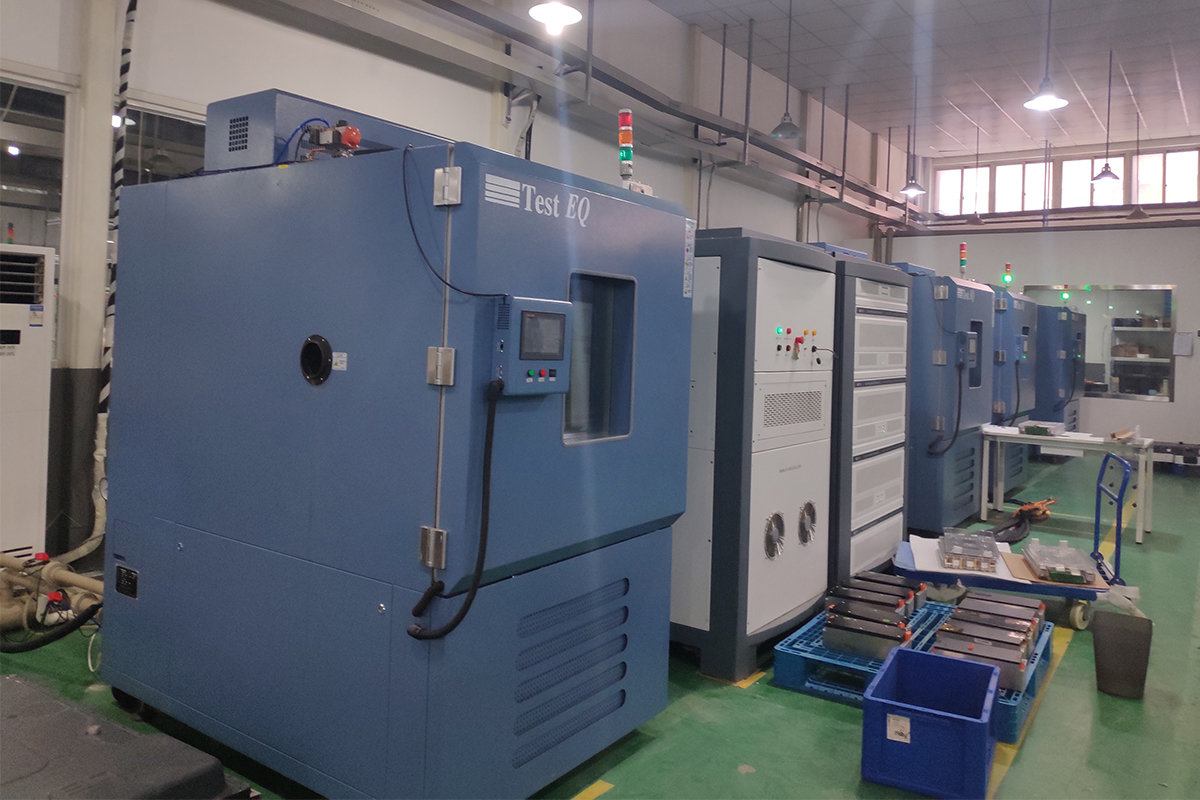
What Is JESD22-A118 UHAST Testing?
JESD22-A118 uses elevated temperature and humidity to accelerate moisture penetration into non-hermetic packages.
The test environment is designed to remain non-condensing, helping reduce test artifacts associated with external condensation while accelerating moisture-related degradation mechanisms.
Typical applications include:
Semiconductor packages
IC and integrated circuit devices
Non-hermetic electronic packages
Plastic-encapsulated semiconductor devices
Automotive electronics
Power semiconductor devices
Electronic component qualification
Package and material reliability evaluation
UHAST can help engineers investigate moisture-induced mechanisms such as corrosion, leakage, insulation degradation and package-related reliability problems.
Typical JESD22-A118 Test Conditions
JESD22-A118 defines elevated temperature and humidity conditions for accelerated moisture resistance testing. Historical A118 test conditions include 130°C / 85% RH and 110°C / 85% RH, with typical durations of 96 hours and 264 hours, respectively, depending on the selected condition and qualification requirement.
| Parameter | Typical A118 Condition |
|---|---|
| Test method | Unbiased HAST / UHAST |
| Temperature | 110°C or 130°C |
| Relative humidity | 85% RH |
| Electrical bias | None |
| Environment | Non-condensing |
| Typical duration | 96 h or 264 h |
| Main purpose | Accelerated moisture resistance |
JESD22-A118 vs JESD22-A101 vs JESD22-A110
These three JEDEC methods are closely related but should not be treated as interchangeable.
JESD22-A101 — Temperature, Humidity, Bias (THB) uses elevated temperature and humidity together with electrical bias. A commonly used qualification condition is 85°C / 85% RH for 1000 hours.
JESD22-A110 — Highly Accelerated Temperature and Humidity Stress Test (HAST) increases the temperature and pressure-related stress to accelerate moisture-related failure mechanisms while electrical bias may be applied.
JESD22-A118 — UHAST evaluates moisture resistance under accelerated temperature and humidity conditions without electrical bias.
For reliability laboratories, selecting the correct method is important because THB, HAST and UHAST do not create identical stress conditions or failure mechanisms.
What Does a UHAST Chamber Need to Control?
A reliable JESD22-A118 test system must provide stable control of the environmental parameters throughout the exposure period.
Key engineering requirements include:
Temperature Stability
The chamber must maintain the specified elevated temperature across the usable test area with controlled temperature uniformity and stability.
Relative Humidity Control
High humidity must be maintained consistently without uncontrolled condensation. Humidity generation and measurement accuracy are therefore critical to repeatable UHAST testing.
Non-Condensing Environment
A118 testing requires careful control of temperature and humidity transitions to prevent unintended condensation on DUTs.
Long-Term Operation
UHAST qualification can involve continuous operation for 96 or 264 hours. Chamber reliability, water management, sensor stability and alarm functions are important for minimizing interruptions.
DUT Placement
Device placement should allow adequate environmental exposure and vapor circulation. The A118 procedure also specifies requirements intended to minimize temperature gradients and interference with vapor circulation.
Why Choose TestEQ for JESD22-A118 UHAST Testing?
Selecting a UHAST chamber is not simply a matter of achieving a specified temperature and relative humidity. For semiconductor reliability laboratories, the test system must provide stable environmental control, repeatable test conditions, reliable long-duration operation and a configuration matched to the DUT and qualification workflow.
TestEQ combines environmental simulation equipment engineering with application-focused customization to support JESD22-A118 UHAST testing.
1. Engineered for Semiconductor Reliability Testing
TestEQ develops environmental testing systems for semiconductor, electronics, automotive, aerospace and research applications.
For JESD22-A118 applications, the chamber configuration can be developed around the required temperature, humidity, working volume, DUT quantity, fixture arrangement and monitoring requirements.
This allows the system to be designed around the actual reliability test workflow rather than relying only on a standard chamber configuration.
2. Stable Temperature and Humidity Control
UHAST testing requires consistent environmental conditions during extended exposure.
TestEQ systems are engineered for controlled:
Temperature
Relative humidity
Environmental stability
Air circulation
Water management
Test monitoring
Alarm protection
Stable environmental control helps laboratories improve test repeatability and data consistency during semiconductor qualification and R&D testing.
3. Support for Customized DUT Fixtures
Semiconductor reliability testing often involves different package sizes, device quantities and fixture configurations.
TestEQ can customize the internal chamber configuration according to:
DUT dimensions
Sample quantity
Fixture requirements
Rack configuration
Cable routing
Monitoring points
Laboratory loading and unloading workflow
For laboratories with non-standard samples or higher-capacity testing requirements, this engineering flexibility can be particularly important.
4. Designed for Long-Duration Reliability Testing
UHAST qualification may require extended continuous operation.
TestEQ focuses on the complete testing system, including temperature and humidity control, water circulation, sensors, alarms, chamber construction and control software, to support reliable long-duration testing.
For procurement teams, this means evaluating not only the initial equipment price but also operational reliability, maintenance requirements and long-term testing efficiency.
5. Standard-Focused Engineering Support
Choosing the correct chamber starts with understanding the applicable test method.
TestEQ engineers can help customers distinguish between related semiconductor environmental reliability methods such as:
JESD22-A118 UHAST
Unbiased accelerated moisture resistance testing.
JESD22-A110 HAST
Highly Accelerated Temperature and Humidity Stress Test.
JESD22-A101 THB
Temperature, Humidity and Bias testing.
This distinction helps customers avoid selecting equipment based only on similar temperature and humidity specifications when the actual test methodology is different.
6. Custom Environmental Simulation Solutions
Not every semiconductor reliability laboratory has the same testing requirements.
TestEQ supports engineered-to-order environmental simulation systems when customers require non-standard chamber dimensions, larger working volumes, special DUT fixtures, monitoring configurations or integration with laboratory test systems.
This is particularly useful for:
Semiconductor manufacturers
OSAT facilities
Automotive electronics suppliers
University and R&D laboratories
Independent reliability laboratories
New production and qualification facilities
7. From Equipment Selection to Project Delivery
For procurement teams, purchasing a UHAST system involves more than comparing specifications.
TestEQ can support the project from:
Test requirement → Chamber configuration → Engineering design → Manufacturing → Testing & validation → Delivery → Technical support
This project-oriented approach helps engineering and procurement teams reduce communication gaps between the test requirement and the final equipment configuration.
8. One Supplier for Related Reliability Testing
As reliability laboratories expand their testing capabilities, they may require multiple environmental simulation systems.
TestEQ can provide solutions covering:
UHAST / HAST
Temperature Humidity
THB
Temperature Cycling
Thermal Shock
Rapid Temperature Change
Altitude / Low Pressure
Walk-in Environmental Testing
Battery Environmental Testing
This allows customers to develop a more consistent environmental testing platform instead of sourcing every test system from a different supplier.
JESD22-A118 Applications
JESD22-A118 UHAST testing is particularly relevant to:
Semiconductor & IC
Moisture resistance evaluation of non-hermetic packages and integrated circuits.
Automotive Electronics
Reliability evaluation of electronic components exposed to elevated temperature and humidity environments.
Power Electronics
Environmental stress testing of semiconductor packages and electronic assemblies.
OSAT & Packaging
Package-level reliability and moisture resistance evaluation.
R&D Laboratories
Accelerated environmental testing during new package, material and process development.
Related JEDEC Reliability Standards
Recommended TestEQ Standards
JESD22-A101 — Temperature, Humidity, Bias (THB)
For steady-state temperature, humidity and electrical bias reliability testing.
JESD22-A110 — HAST Testing Standard
For highly accelerated temperature and humidity stress testing.
JESD22-A104 — Temperature Cycling
For evaluating reliability under repeated temperature transitions.
JESD22-A113 — Preconditioning of Nonhermetic Surface Mount Devices
Relevant to moisture sensitivity and preconditioning before selected reliability tests.
JESD22-A118 UHAST Testing: Frequently Asked Questions
1.What is JESD22-A118?
JESD22-A118 is a JEDEC test method for Accelerated Moisture Resistance using Unbiased HAST (UHAST). It evaluates moisture-related reliability of non-hermetic semiconductor packages under elevated temperature and humidity without electrical bias.
2.Is JESD22-A118 the same as THB?
No. JESD22-A118 and THB are different reliability test methods. A118 is an unbiased HAST/UHAST method, while THB is covered by JESD22-A101 and applies electrical bias during temperature and humidity exposure. The appropriate method depends on the qualification requirement.
3.What is the difference between HAST and UHAST?
The primary difference is electrical bias. UHAST, such as JESD22-A118, performs accelerated temperature and humidity exposure without electrical bias. HAST testing may apply electrical bias depending on the selected test method, device configuration and qualification requirements.
4.What are common JESD22-A118 UHAST conditions?
Common JESD22-A118 conditions include 110°C/85% RH and 130°C/85% RH, with typical exposure durations of 264 hours and 96 hours respectively. The final temperature, humidity and duration should always follow the applicable qualification plan and standard revision.
5.What type of chamber is required for JESD22-A118?
JESD22-A118 requires a reliable UHAST testing system capable of maintaining elevated temperature and high humidity under controlled, non-condensing conditions. Temperature stability, humidity control, vapor circulation, monitoring and long-duration operation are critical.
6.Can TestEQ customize a UHAST chamber for JESD22-A118?
Yes. TestEQ can provide customized UHAST and accelerated temperature-humidity testing systems based on chamber volume, DUT quantity, fixture configuration, test conditions, monitoring requirements and laboratory workflow, helping semiconductor teams build reliable qualification capacity.
7. How should devices be prepared before JESD22-A118 UHAST testing?
Before UHAST exposure, test samples should be prepared and inspected according to the applicable device qualification plan. Engineers typically document the device condition, package type, sample quantity and electrical or physical inspection requirements before testing. After exposure, samples may undergo visual inspection, electrical testing or other specified failure analysis to determine whether moisture-related degradation has occurred.
8. How do laboratories verify UHAST chamber performance?
Laboratories should verify that the UHAST chamber can consistently maintain the specified temperature and relative humidity throughout the test. Temperature and humidity sensors should be appropriately calibrated, while chamber uniformity, stability, alarms and long-duration operating performance should be evaluated as part of equipment qualification. For production or qualification laboratories, documented calibration and performance verification can help improve test repeatability and traceability.
Internal Linking Module
Related JEDEC Standards
Explore JESD22-A110 HAST testing, accelerated temperature and humidity stress conditions, applications and chamber requirements for semiconductor reliability qualification.
Understand JESD22-A104 temperature cycling testing and how repeated temperature transitions are used to evaluate semiconductor package and electronic component reliability.
Recommended Test Equipment
TestEQ HAST and UHAST chambers provide controlled high-temperature and high-humidity environments for accelerated moisture resistance and semiconductor reliability testing.
Temperature humidity chambers provide stable temperature and humidity control for environmental reliability testing, component qualification and long-duration laboratory testing.
Related TestEQ Resources
Compare HAST and THB testing methods, environmental conditions, electrical bias and typical applications to determine which reliability test is appropriate for your device.
A practical engineering guide to THB testing, including temperature and humidity conditions, electrical bias, reliability mechanisms and semiconductor applications.
Explore major semiconductor reliability tests, JEDEC standards, environmental stress methods and test equipment used for IC, package and electronic component qualification.
TestEQ Reliability Testing Solution
Need a JESD22-A118 UHAST chamber for semiconductor reliability testing?
TestEQ provides temperature-humidity, HAST, UHAST and customized environmental simulation systems for semiconductor manufacturers, laboratories, R&D centers and reliability qualification teams.
Tell us your test standard, temperature/RH condition, DUT quantity, chamber volume and qualification requirements. Our engineering team can recommend a suitable chamber configuration and customized testing solution.