Introduction:
The MIL-STD-810 altitude test is a critical environmental qualification method used to evaluate whether equipment can operate reliably under low-pressure and high-altitude conditions.
Developed by the U.S. Department of Defense (DoD), MIL-STD-810 defines environmental testing methods for military equipment, aerospace electronics, vehicles, communication systems, and mission-critical components.
During altitude testing, products are exposed to reduced atmospheric pressure conditions to verify:
Functional performance at high altitude
Structural integrity under low pressure
Thermal management capability
Electrical insulation reliability
Sealing performance
Resistance to pressure-related failures
For aerospace, defense, automotive electronics, semiconductor, and communication industries, MIL-STD-810 altitude testing is an essential step in product reliability verification.
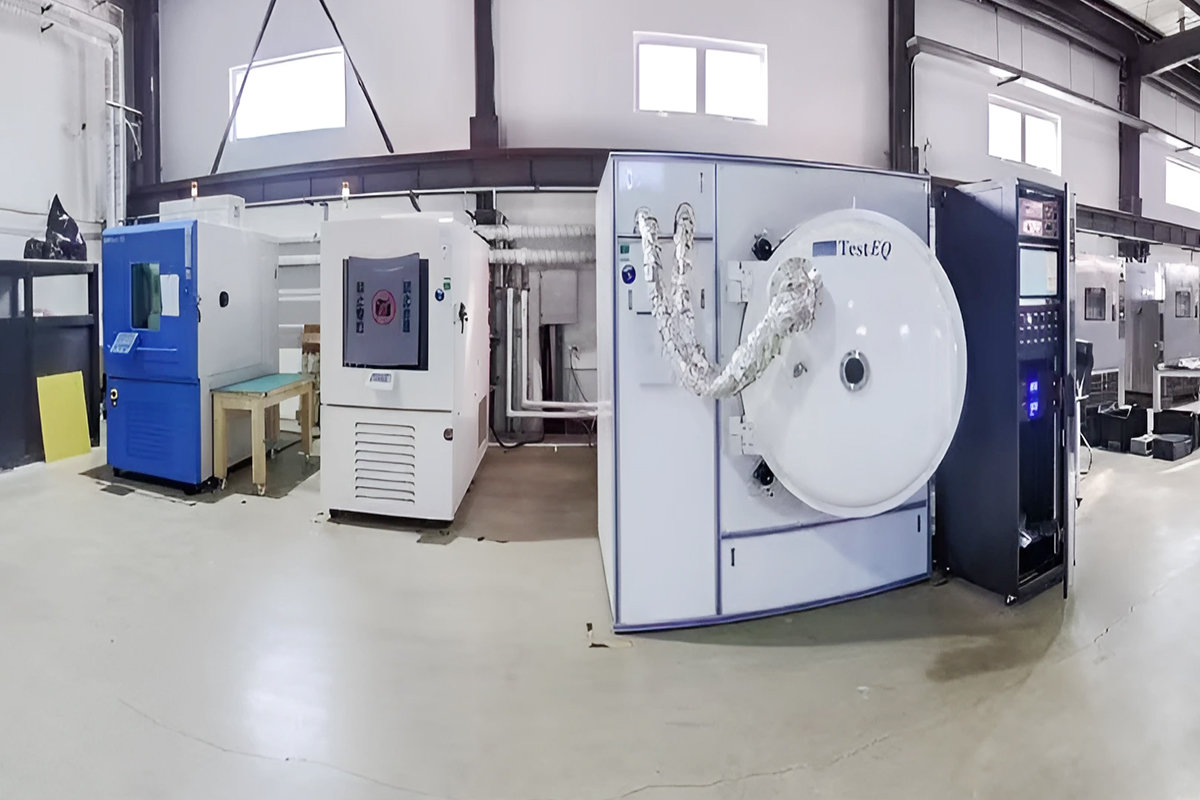
TestEQ provides customized altitude test chambers and environmental simulation systems designed to support MIL-STD-810 qualification testing requirements.
What Is MIL-STD-810 Altitude Test?
MIL-STD-810 altitude testing simulates atmospheric conditions experienced by equipment operating at high elevations.
As altitude increases, atmospheric pressure decreases, which can affect:
Cooling performance
Mechanical components
Battery systems
Electronic circuits
Sensors and communication modules
Sealing materials
The purpose of the test is to determine whether equipment maintains normal operation when exposed to low-pressure environments.
Typical applications include:
Aircraft avionics
Military electronics
UAV systems
Satellite communication equipment
EV battery systems
Automotive electronic modules
Industrial control systems
MIL-STD-810 Altitude Test Method Overview
MIL-STD-810 includes several environmental test methods. Altitude testing is mainly performed according to:
MIL-STD-810 Method 500 – Low Pressure (Altitude)
The latest commonly referenced version is:
MIL-STD-810H Method 500.6
The test evaluates equipment performance under simulated altitude environments.
The main test procedures include:
Storage / Transportation
This procedure evaluates equipment during transportation or storage at high altitude conditions.
Typical evaluation includes:
Packaging integrity
Mechanical deformation
Material expansion
Seal performance
Operation
This procedure verifies whether equipment can operate normally under low-pressure conditions.
Engineers evaluate:
Startup performance
Electrical operation
Functional stability
Cooling capability
Communication reliability
Rapid Decompression
Rapid decompression testing simulates sudden pressure loss scenarios.
Typical applications:
Aircraft cabins
Aerospace systems
Pressurized equipment
The test evaluates whether components can survive sudden atmospheric pressure changes.
MIL-STD-810 Altitude Test Parameters
A MIL-STD-810 altitude test chamber typically controls multiple environmental parameters:
| Parameter | Typical Capability |
|---|---|
| Altitude Simulation | Sea level to high altitude conditions |
| Pressure Control | Low-pressure vacuum simulation |
| Temperature Range | Customized according to test requirements |
| Humidity Control | Optional |
| Decompression Rate | Programmable control |
| Data Monitoring | Real-time recording |
For aerospace and defense applications, altitude testing is often combined with:
Temperature testing
Humidity testing
Vibration testing
Shock testing
Thermal cycling
MIL-STD-810 Altitude Test vs RTCA DO-160 Altitude Test
Both MIL-STD-810 and RTCA DO-160 include altitude simulation testing, but they serve different industries and qualification purposes.
| Comparison | MIL-STD-810 Altitude Test | RTCA DO-160 Altitude Test |
|---|---|---|
| Main Application | Military and defense equipment | Commercial aircraft avionics |
| Standard Organization | U.S. Department of Defense | RTCA / EUROCAE |
| Typical Products | Military electronics, vehicles, communication systems | Aircraft electronic equipment |
| Altitude Testing Method | Method 500 Low Pressure (Altitude) | Section 4 Altitude |
| Focus | Battlefield and military environmental reliability | Aircraft operational qualification |
| Industries | Defense, aerospace, automotive, electronics | Civil aviation and avionics |
Why MIL-STD-810 Altitude Testing Is Important?
1. Ensures Aerospace Reliability
Aircraft and aerospace electronics must operate safely under extreme atmospheric conditions.
Altitude testing helps identify:
Component overheating
Insulation breakdown
Pressure-related damage
Performance degradation
2. Improves Military Equipment Durability
Military systems often operate in unpredictable environments.
MIL-STD-810 altitude testing verifies equipment reliability for:
Field deployment
Aircraft applications
Communication systems
Defense electronics
3. Supports Product Qualification
Many global manufacturers require MIL-STD-810 testing before products enter aerospace or defense supply chains.
Compliance with MIL-STD-810 helps companies:
Reduce field failures
Improve product reliability
Meet customer qualification requirements
MIL-STD-810 Altitude Test Chamber Solutions from TestEQ
TestEQ designs and manufactures advanced environmental simulation equipment for MIL-STD-810 altitude testing.
Our altitude test chamber solutions provide:
High Precision Pressure Simulation
Advanced vacuum control systems simulate high-altitude atmospheric conditions with stable pressure control.
Integrated Environmental Testing
Altitude chambers can be combined with:
Temperature control
Humidity simulation
Thermal cycling testing
Customized Testing Solutions
TestEQ supports:
Aerospace laboratories
Defense manufacturers
Automotive R&D centers
Semiconductor reliability laboratories
Applications include:
Avionics qualification
Military electronics testing
UAV reliability testing
Battery system validation
Communication equipment testing
MIL-STD-810 Altitude Test Chamber Applications
Aerospace Industry
Used for:
Aircraft electronics
Navigation systems
Flight control components
Avionics modules
Automotive and EV Industry
Altitude testing helps evaluate:
Battery management systems
Power electronics
Vehicle control units
Semiconductor Industry
Low-pressure testing supports:
Electronic reliability evaluation
Package performance testing
Thermal management verification
Defense Industry
Applications include:
Military communication equipment
Radar systems
Portable defense electronics
Why Choose TestEQ for MIL-STD-810 Testing Equipment?
TestEQ is a professional environmental testing equipment manufacturer specializing in reliability simulation solutions.
Advantages include:
Engineering Capability
Customized environmental test chamber design
Advanced refrigeration and control technology
Complete reliability testing solutions
Industry Experience
TestEQ solutions are used in:
Aerospace laboratories
Automotive manufacturers
Semiconductor companies
Research institutions
Global Compliance Support
TestEQ chambers support international testing requirements including:
MIL-STD-810
IEC 60068
RTCA DO-160
ISO 16750
For companies requiring reliable altitude simulation equipment, TestEQ provides complete solutions from chamber design to validation support.
FAQ: MIL-STD-810 Altitude Test
1.What is MIL-STD-810 altitude testing?
MIL-STD-810 altitude testing evaluates whether equipment can operate reliably under reduced atmospheric pressure conditions that simulate high-altitude environments.
2.Which MIL-STD-810 method covers altitude testing?
Altitude testing is covered under MIL-STD-810 Method 500 – Low Pressure (Altitude).
3.What equipment requires MIL-STD-810 altitude testing?
Common products include aerospace electronics, military systems, UAV components, automotive electronics, batteries, and communication equipment.
4.What is an altitude test chamber?
An altitude test chamber is an environmental simulation system that creates controlled low-pressure conditions to evaluate product reliability at high altitudes.
5.Can altitude testing be combined with temperature testing?
Yes. Many aerospace and military applications combine altitude simulation with temperature, humidity, vibration, and thermal cycling tests.
6.How is MIL-STD-810 altitude testing performed?
MIL-STD-810 altitude testing is performed by placing the test specimen inside an altitude test chamber where atmospheric pressure is reduced according to specified test profiles. Engineers monitor equipment performance, functional behavior, temperature conditions, and possible failures throughout the test cycle to verify reliability under simulated high-altitude environments.
7.What is the difference between altitude testing and vacuum testing?
Altitude testing focuses on simulating atmospheric pressure conditions experienced at high elevations, while vacuum testing generally creates a near-zero pressure environment for specific applications.
MIL-STD-810 altitude testing typically represents realistic operational conditions for aircraft, aerospace systems, and military equipment rather than extreme vacuum environments used in space simulation or specialized research.
8.How long does a MIL-STD-810 altitude test take?
The duration of a MIL-STD-810 altitude test depends on the equipment type, test procedure, altitude profile, and customer qualification requirements.
Testing may include pressure stabilization, altitude exposure, functional checks, and performance monitoring. Complex aerospace and defense qualification programs may require multiple test cycles combined with temperature, humidity, vibration, or shock testing.
Internal Linking Module
Recommended Test Equipment
Help engineers and purchasing personnel quickly select suitable environmental simulation equipment for MIL-STD-810 altitude testing.
TestEQ altitude test chambers simulate high-altitude low-pressure environments for aerospace, defense, electronics and reliability qualification testing. Customized pressure and temperature control solutions are available for MIL-STD-810 applications.
Integrated temperature and altitude simulation chambers combine low-pressure environments with temperature control to evaluate avionics, aerospace components and electronic systems under extreme conditions.
Thermal vacuum chambers simulate space-like vacuum and temperature conditions for satellite components, aerospace electronics and advanced reliability testing programs.
Related Environmental Testing Standards
Gain a deep understanding of the relevant testing standards of MIL-STD-810 to help engineers establish a complete reliability verification system.
Explore MIL-STD-810 test methods covering altitude, temperature, humidity, vibration, shock and other environmental qualification requirements for military and aerospace equipment.
RTCA DO-160 defines environmental qualification requirements for airborne equipment, including altitude simulation, temperature variation, vibration and EMI testing.
IEC 60068 provides internationally recognized environmental testing methods for electronic products, including temperature, humidity, shock and vibration reliability testing.
Technical Resources & Engineering Guides
We provide engineering and technical expertise to help clients select testing solutions and evaluate equipment.
Learn how altitude testing simulates high-altitude low-pressure environments and why it is critical for aerospace, military and electronic product reliability verification.
A practical selection guide for engineers and purchasing teams comparing chamber specifications, testing requirements, standards compliance and customization options.
Understand aerospace reliability testing requirements, including altitude, temperature, vibration and thermal cycling tests for aircraft components and avionics systems.
CTA
Need a MIL-STD-810 Altitude Test Chamber Solution?
Reliable altitude simulation requires precise pressure control, stable environmental performance, and equipment designed for your qualification requirements.
TestEQ provides customized MIL-STD-810 altitude test chambers for aerospace, defense, automotive electronics, semiconductor and research applications.
Our engineering team supports customers with:
✓ Altitude simulation chamber selection
✓ MIL-STD-810 Method 500 testing requirements
✓ Temperature-altitude combined testing solutions
✓ Customized chamber design and validation support
Whether you are developing aerospace electronics, military equipment, EV components, or advanced electronic systems, TestEQ can help you build a reliable environmental testing solution.
Contact TestEQ Engineering Team Today — Get a Customized Altitude Test Chamber Proposal