Altitude Simulation Chamber for High-Altitude Environmental Testing
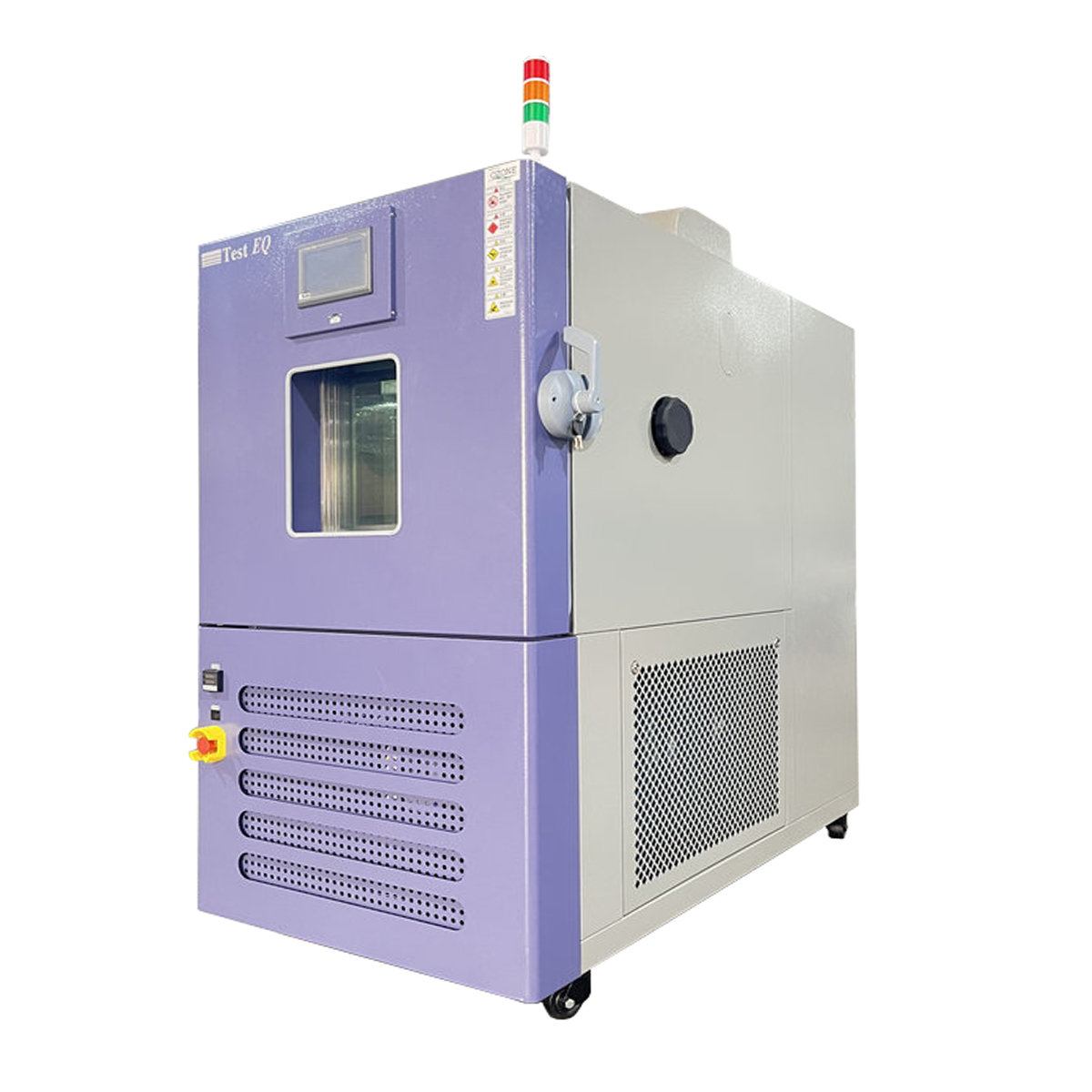
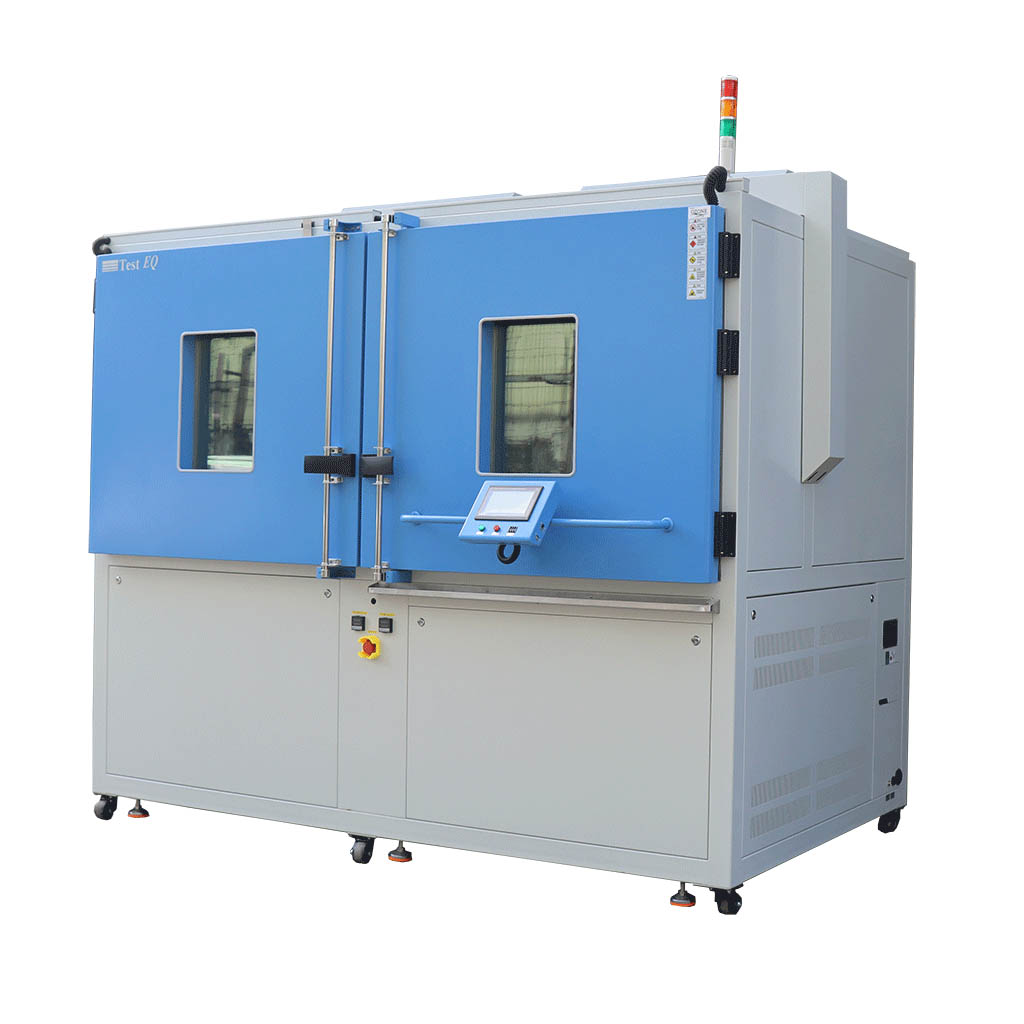
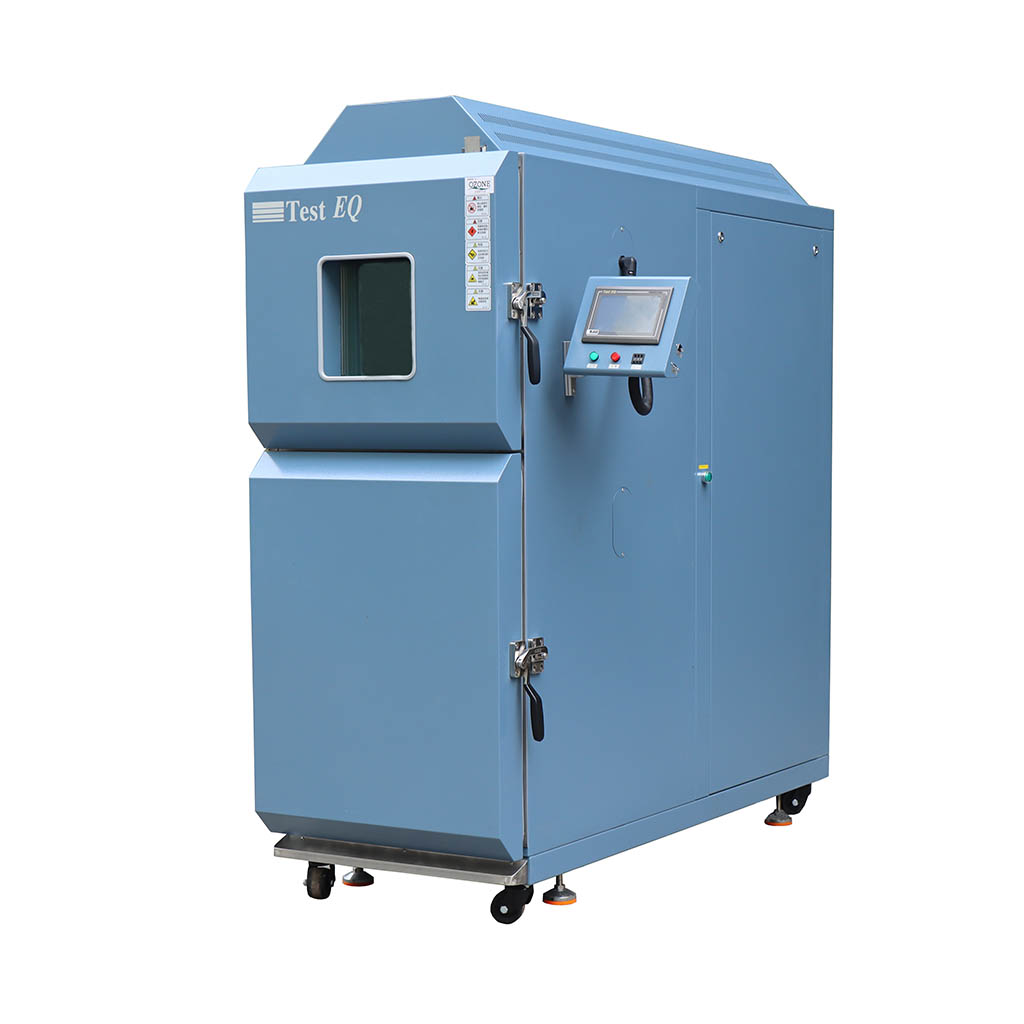
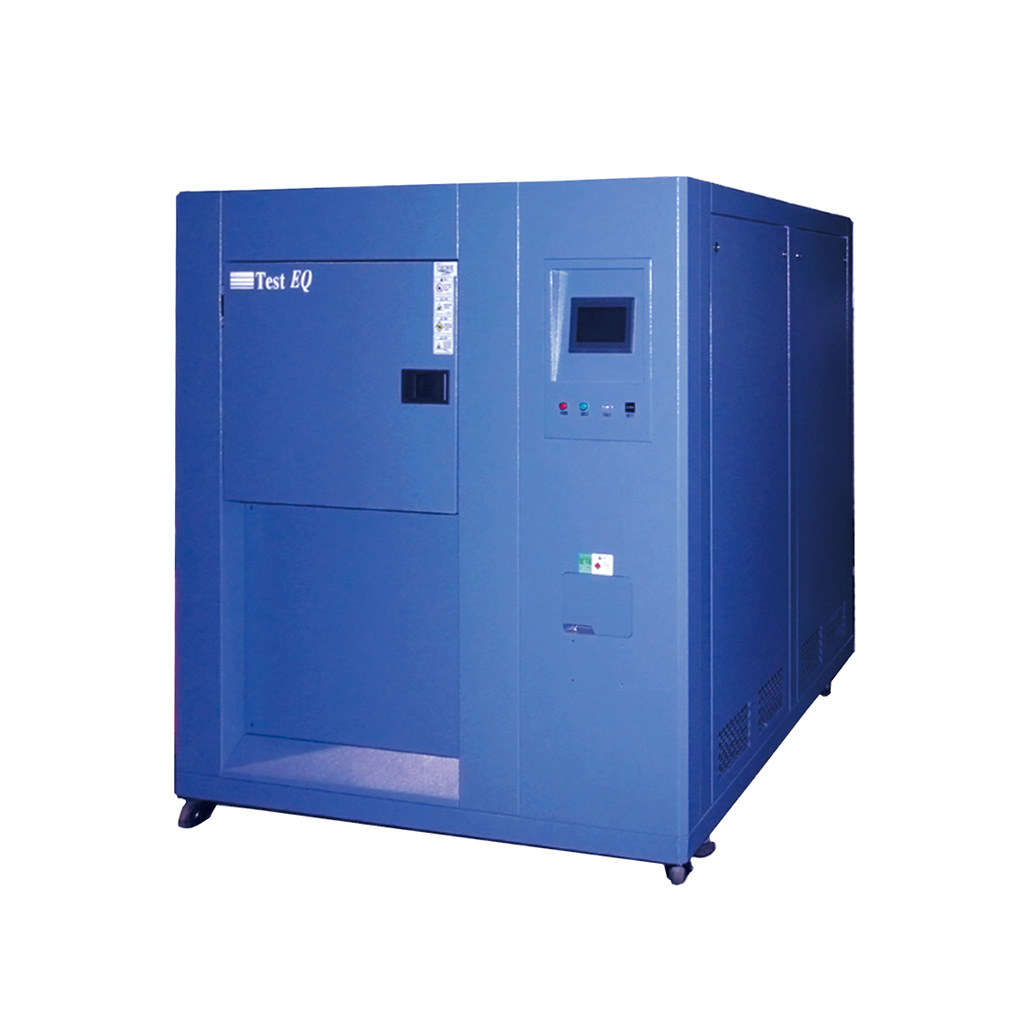
An altitude simulation chamber reproduces controlled high-altitude environmental conditions for product development, qualification, reliability testing and research.
Instead of conducting testing at an actual high-altitude location, the chamber creates a controlled laboratory environment by reducing atmospheric pressure to a defined condition.
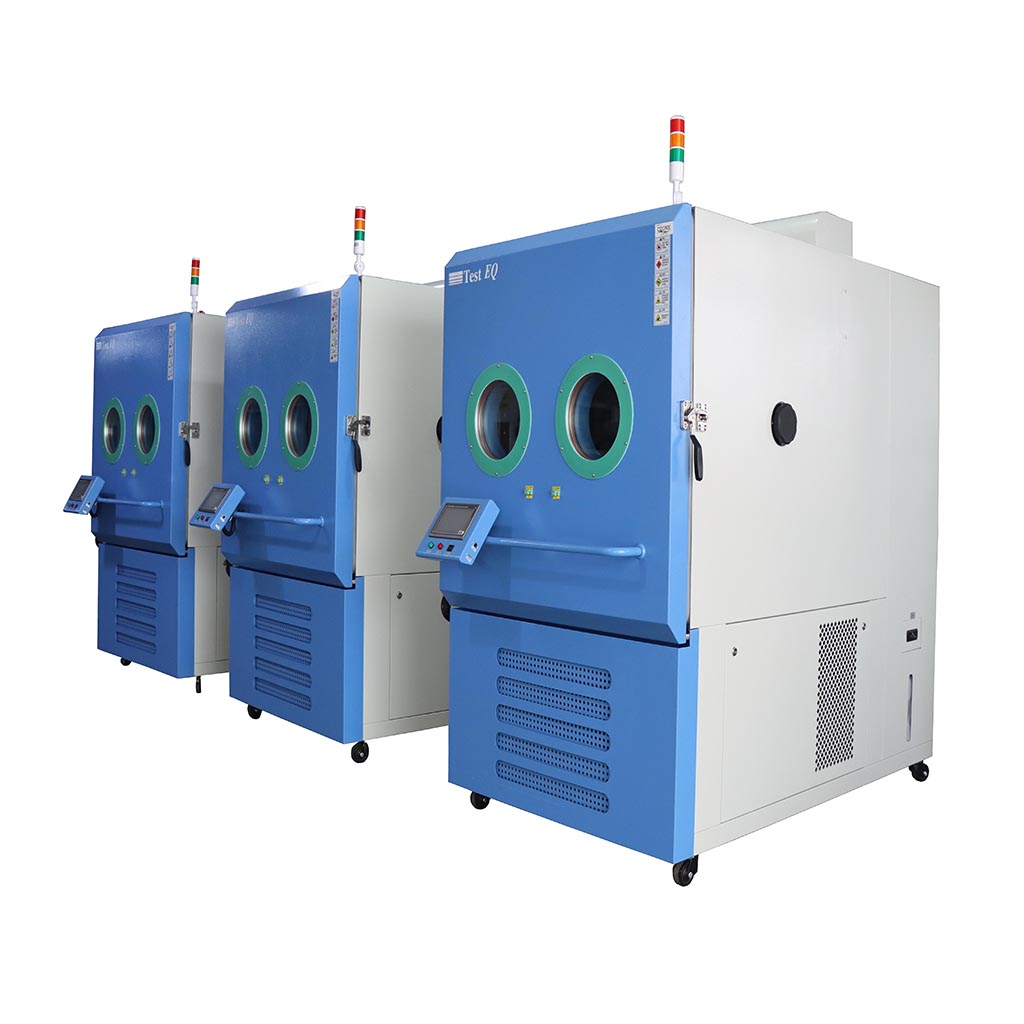
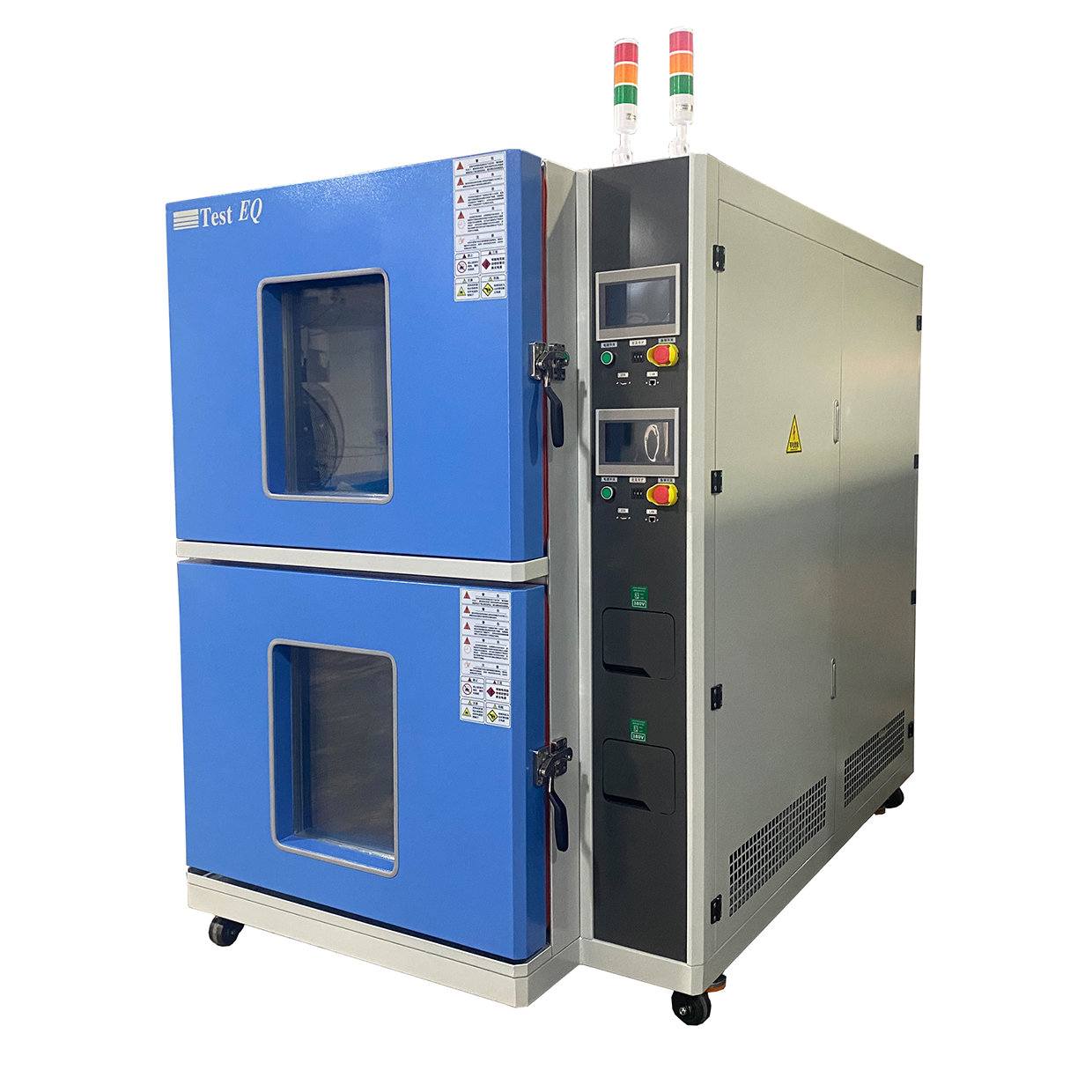
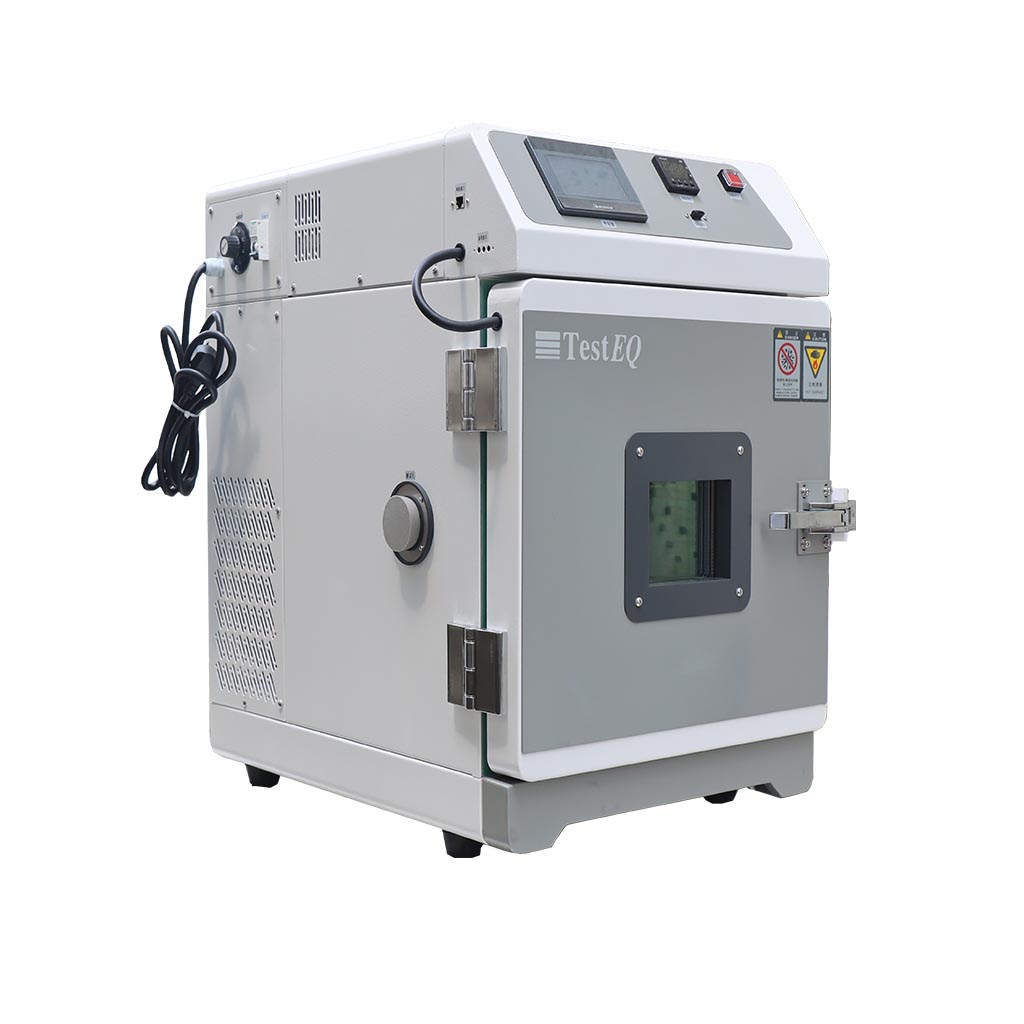
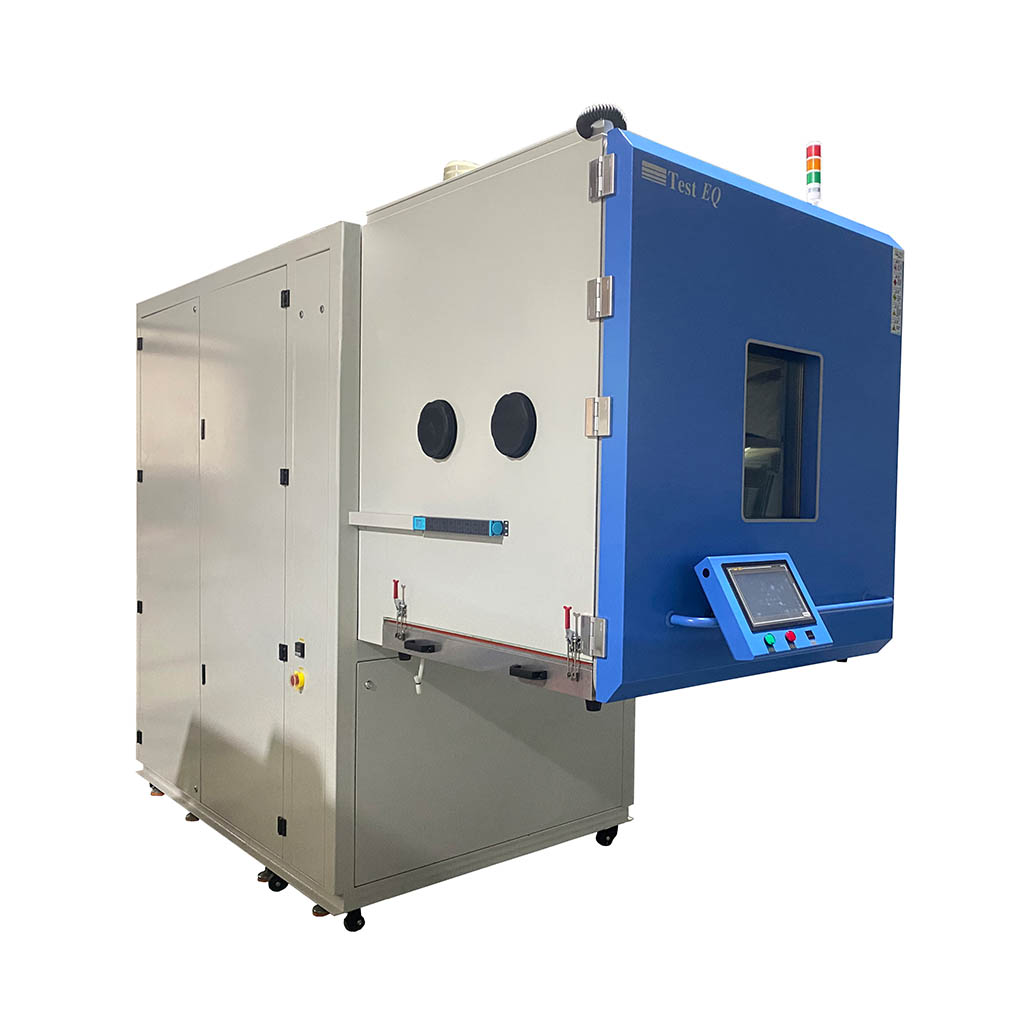
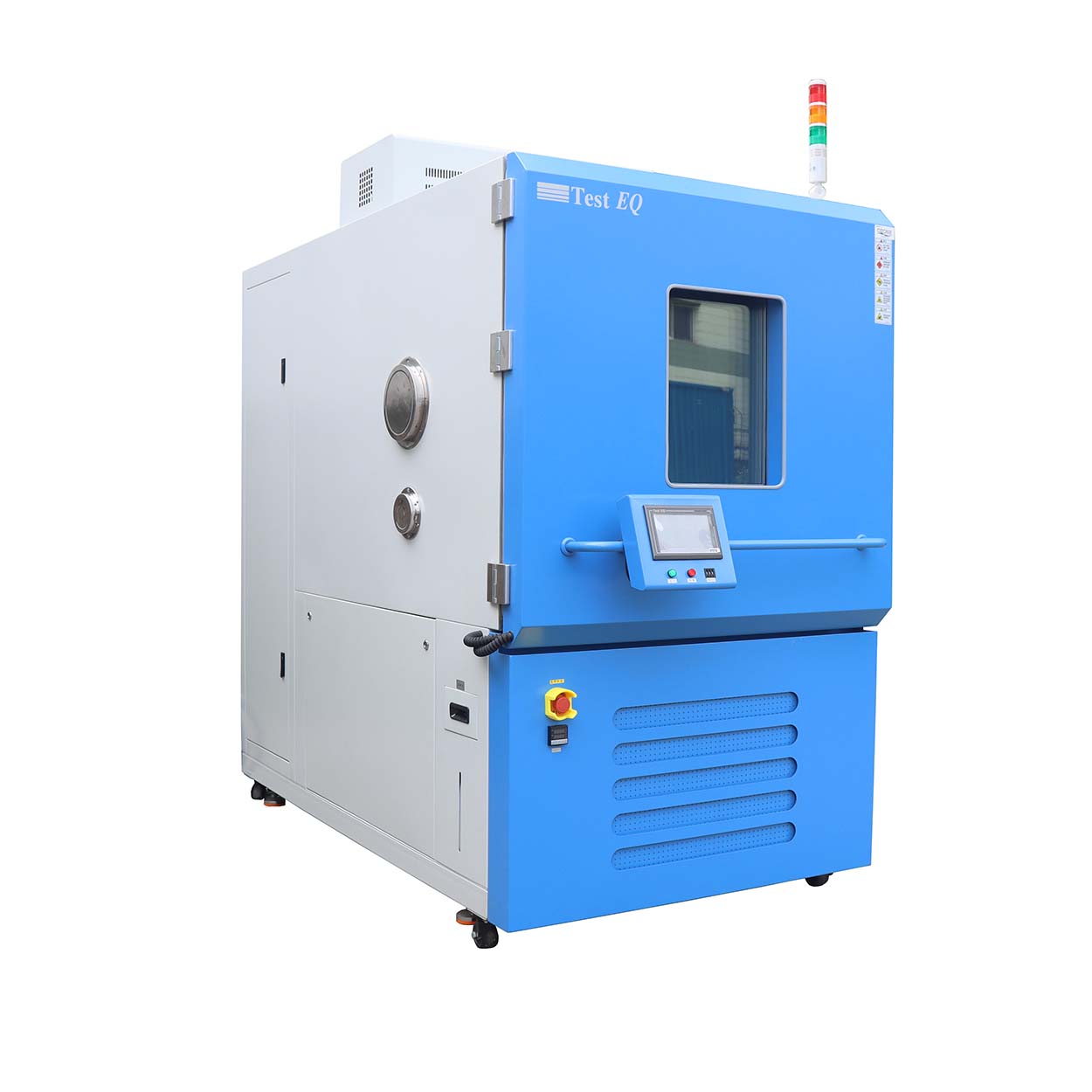
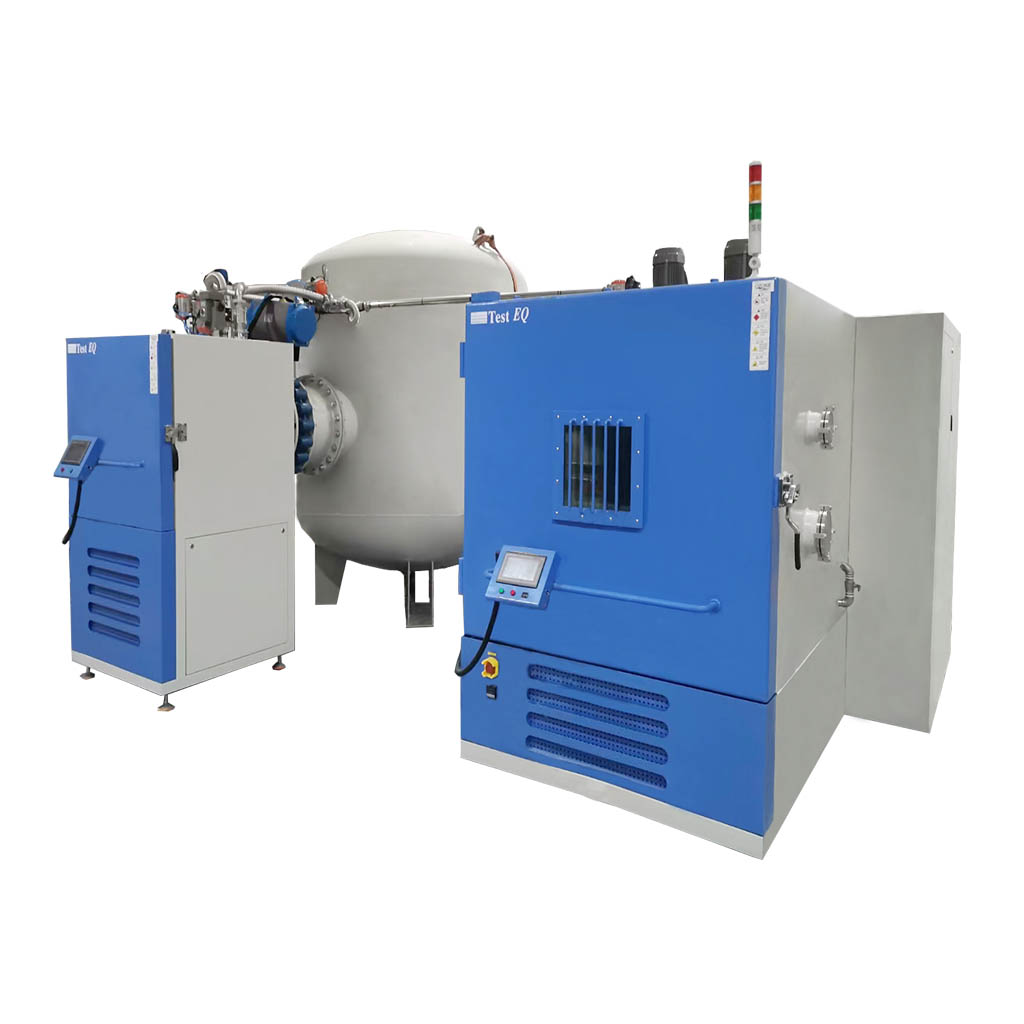
TestEQ altitude simulation chambers can be configured for pressure simulation and, where required, combined temperature and humidity control.
The systems are suitable for aerospace, aviation, defense, automotive, electronics, battery, communication and research applications.
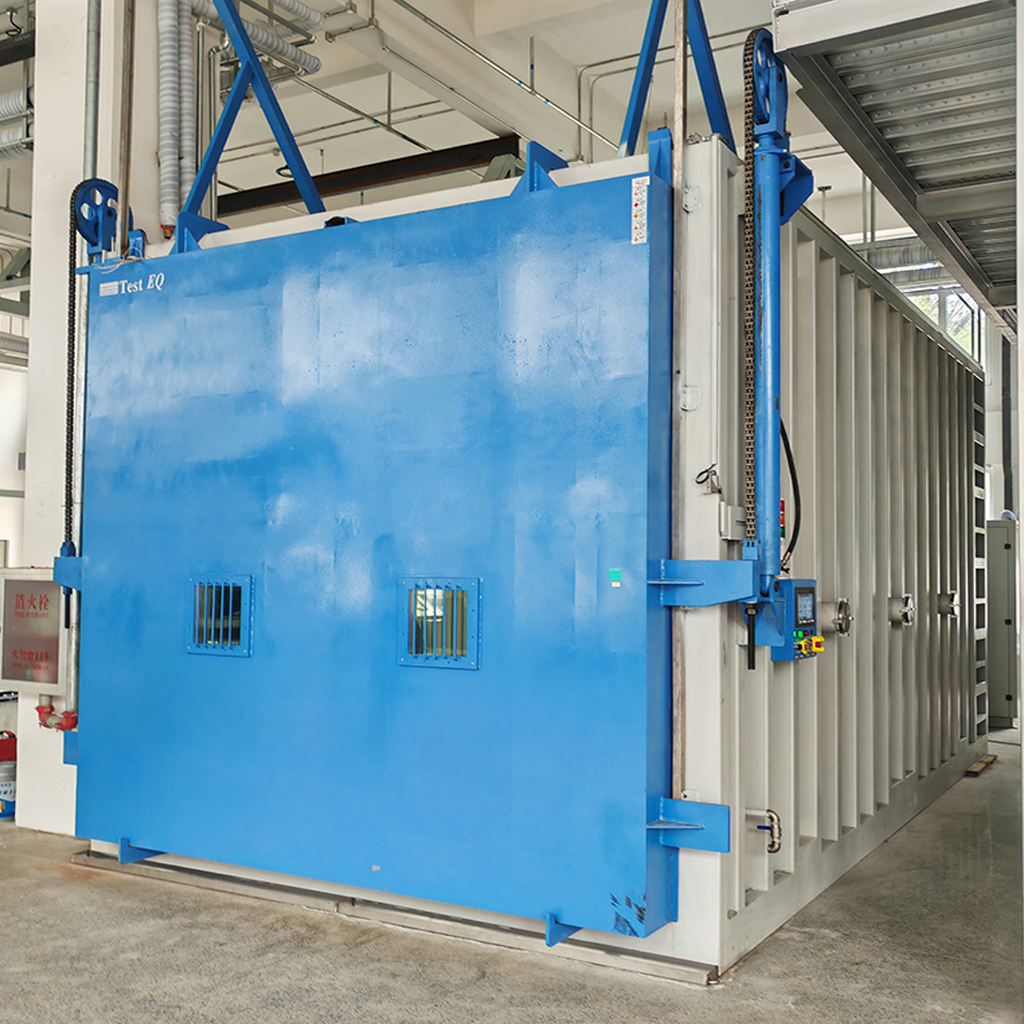
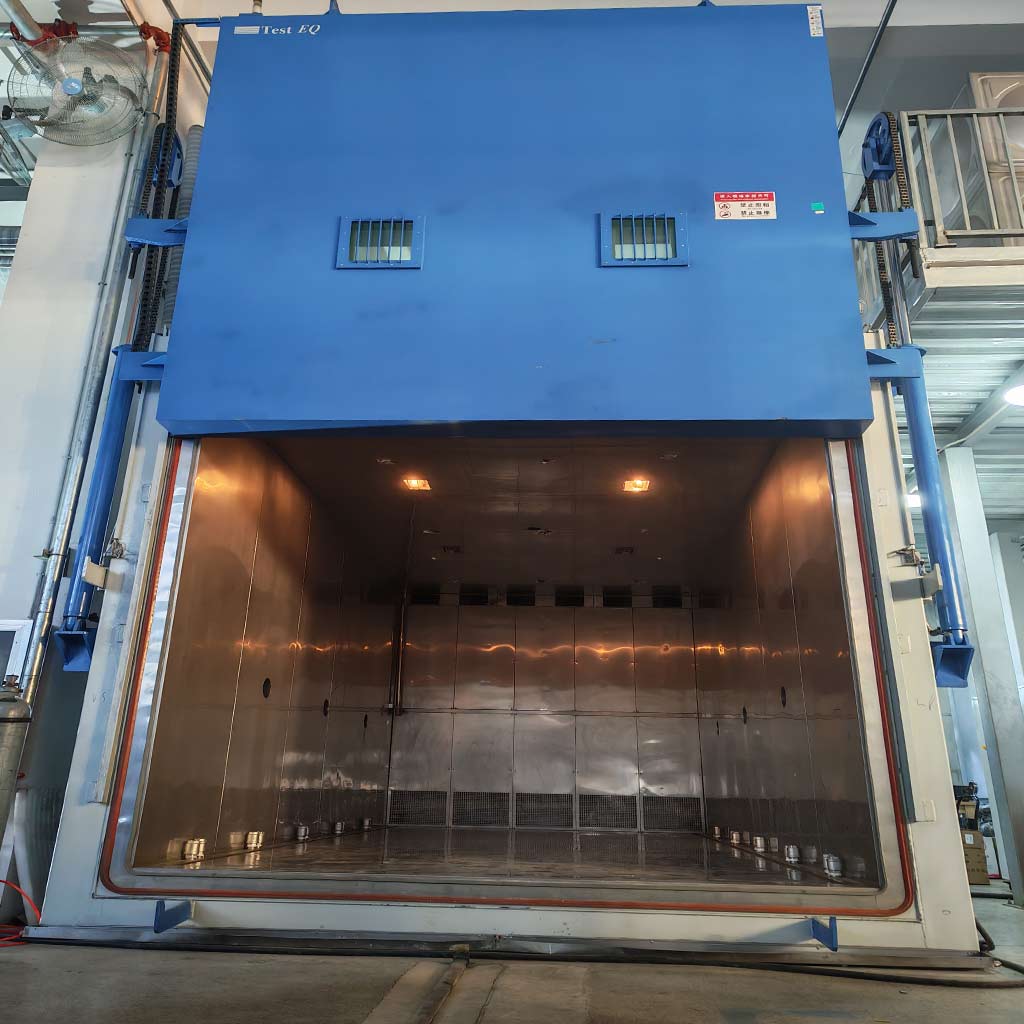
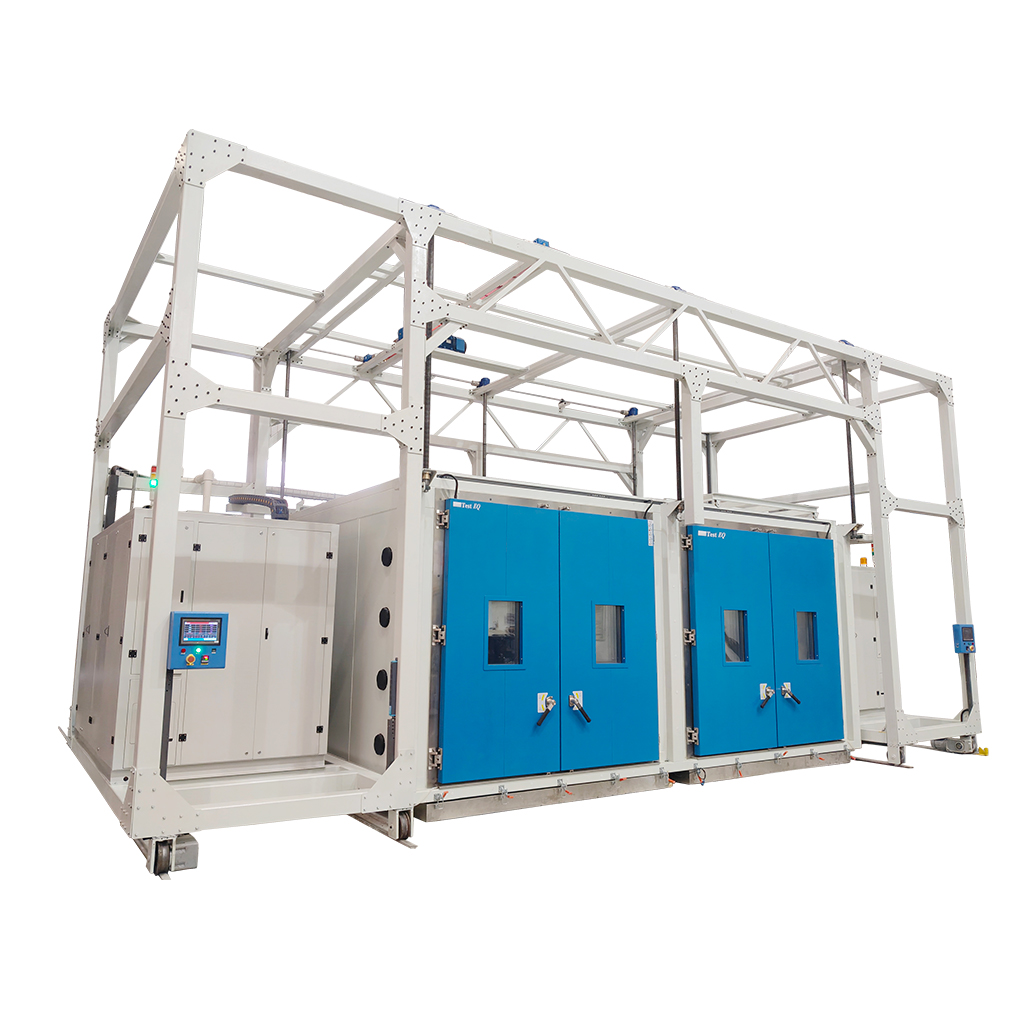
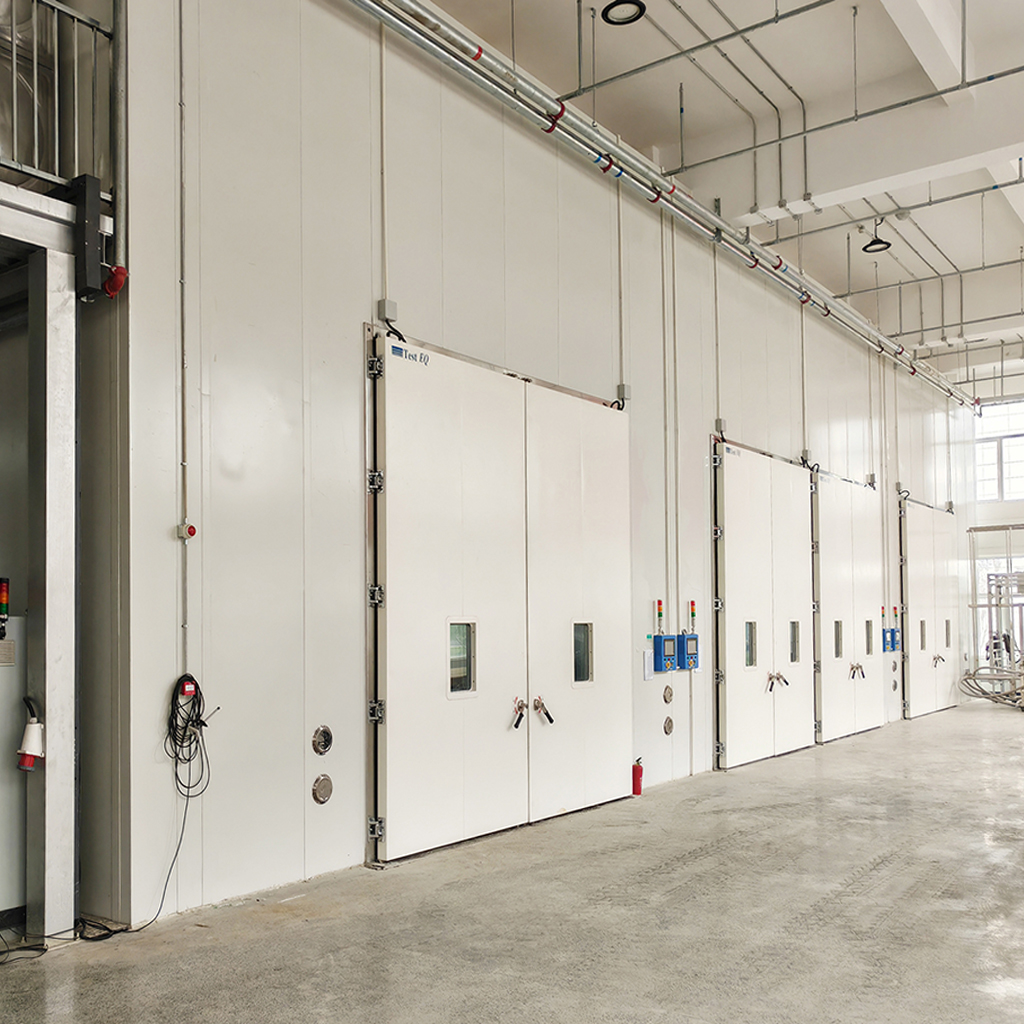
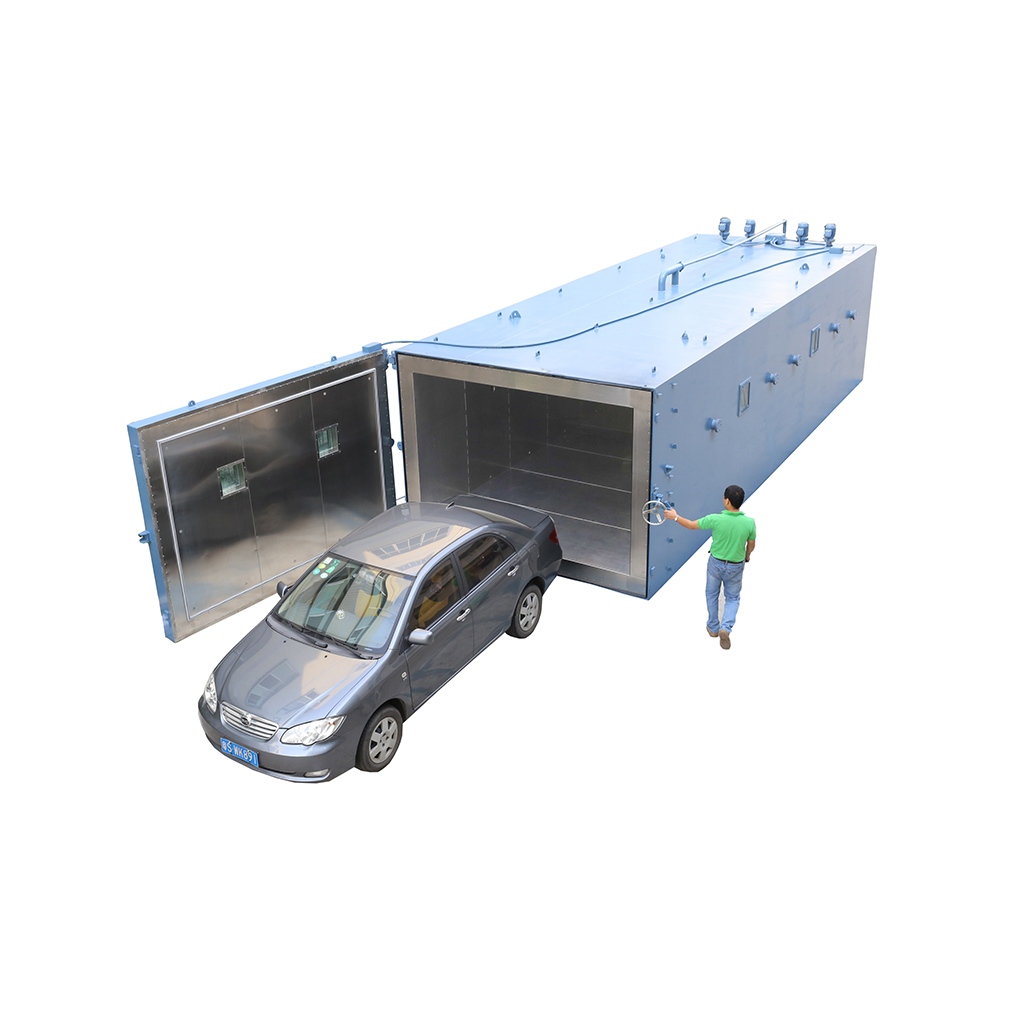
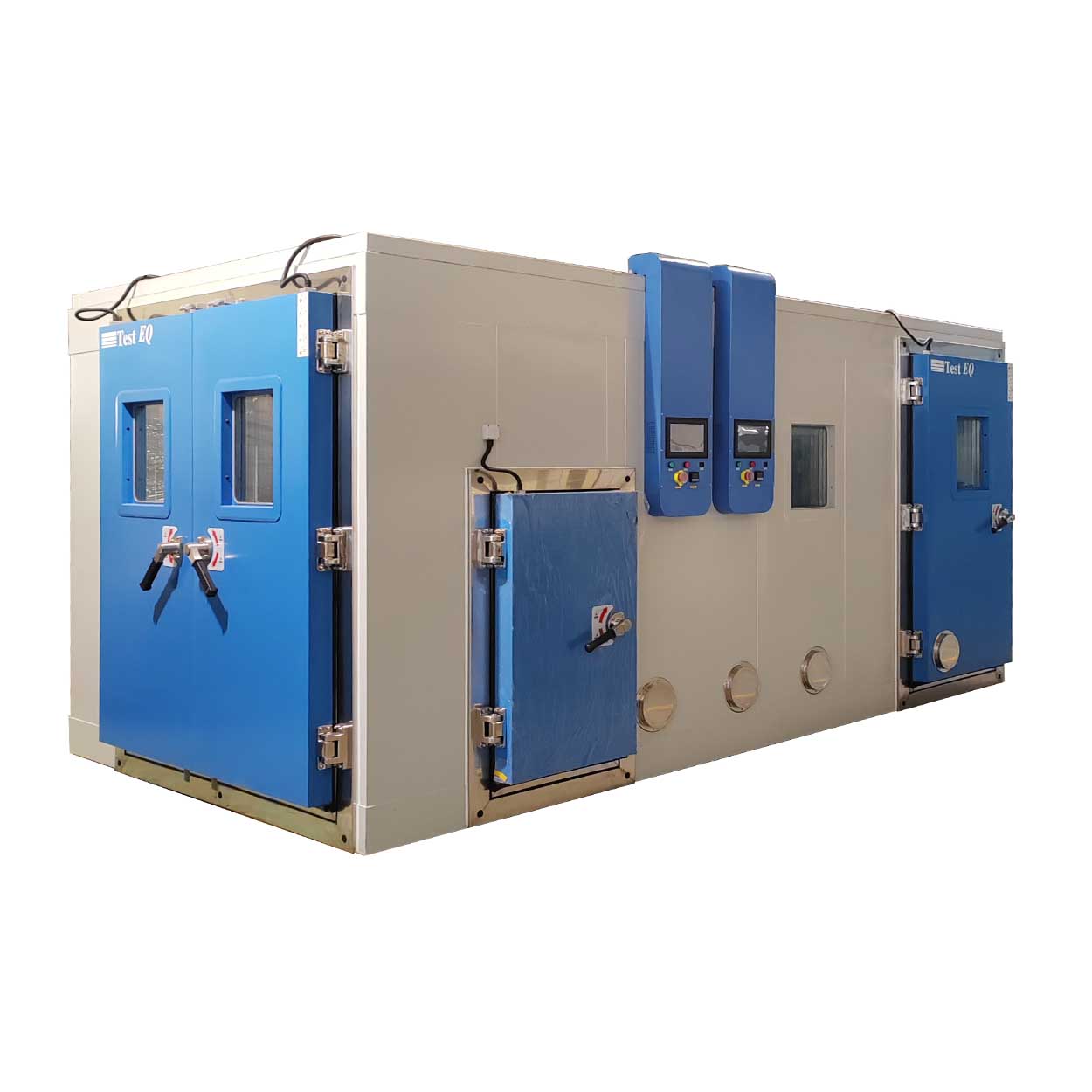
For large products, assemblies and system-level test articles, TestEQ can develop customized and walk-in altitude simulation chambers around the required test volume, pressure range, temperature conditions, monitoring system and laboratory workflow.
What Is an Altitude Simulation Chamber?
Altitude simulation is the controlled reproduction of atmospheric conditions associated with a specified elevation.
At increasing elevation, atmospheric pressure decreases. An altitude simulation chamber reproduces this environmental condition in a controlled laboratory by regulating the absolute pressure inside a sealed chamber.
The actual chamber control parameter is pressure, while altitude is normally used as an equivalent environmental reference.
Depending on the test program, altitude simulation can include:
• Reduced atmospheric pressure
• Equivalent altitude
• Temperature variation
• Humidity control
• Controlled depressurization
• Controlled pressurization
• Programmable environmental profiles
• Continuous pressure and temperature monitoring
The required pressure and exposure duration should be established from the applicable product specification or test standard.
How Does an Altitude Simulation Chamber Work?
An altitude simulation system generally consists of a sealed test chamber, pressure-control equipment, environmental control equipment, sensors and a programmable control system.
Step 1 — Load the Test Article
The product or assembly is installed inside the chamber using an appropriate fixture.
Step 2 — Establish the Initial Condition
The chamber establishes the required starting temperature and atmospheric pressure.
Step 3 — Reduce Pressure
The pressure-control system reduces the internal pressure according to the programmed altitude profile.
Step 4 — Maintain the Simulated Altitude
The system maintains the required pressure for the specified exposure duration.
Step 5 — Monitor the Test
Pressure, temperature and product operating conditions can be monitored and recorded throughout the test.
Step 6 — Restore Pressure
At the end of the test, the chamber returns toward normal atmospheric pressure according to the defined recovery procedure.
This controlled sequence allows engineers to reproduce repeatable high-altitude environmental conditions without relying on outdoor or geographically remote testing.
Working Principle:
The altitude simulation chamber uses an integrated vacuum and pressure control system:
Vacuum Pump: Reduces air pressure to simulate high altitudes.
Heating/Cooling System: Controls temperature within the chamber during pressure changes.
Humidity Control (optional): Maintains desired moisture levels to simulate realistic atmospheric conditions.
This ensures simultaneous environmental control—critical for realistic aerospace and defense testing scenarios.
Altitude Simulation vs Altitude Testing
Although the terms are closely related, their use can indicate different engineering priorities.
Altitude testing generally emphasizes evaluating a product at a defined low-pressure or high-altitude condition.
Altitude simulation emphasizes reproducing an altitude-related environmental profile in a controlled laboratory system.
For a compact component test, a standard altitude test chamber may be sufficient.
For large assemblies, customized environmental profiles or system-level testing, an altitude simulation chamber may require a more application-specific design.
Altitude Simulation vs Temperature Altitude Testing
Altitude simulation can focus primarily on pressure-altitude reproduction.
Temperature altitude testing adds controlled temperature as a core environmental variable.
| Requirement | Altitude Simulation | Temperature Altitude Testing |
|---|
| Pressure Simulation | Core function | Core function |
| Equivalent Altitude | Yes | Yes |
| Temperature Control | Optional / Configuration-Dependent | Core function |
| Large Chamber | Available | Available |
| Main Purpose | High-altitude environmental simulation | Combined thermal and pressure stress |
| Typical Application | System-level testing / Altitude simulation | Aerospace / Combined environmental qualification |
The appropriate configuration depends on the actual test profile and qualification requirement.
Large-Scale Altitude Simulation
Large products and system-level assemblies may require more than a conventional laboratory altitude chamber.
TestEQ can develop larger altitude simulation systems for applications such as:
• Aircraft equipment
• Aerospace assemblies
• UAV systems
• Vehicle components
• Battery systems
• Communication equipment
• Large electronic assemblies
• Research programs
• Specialized qualification projects
For large chambers, the design should consider the complete test workflow rather than chamber volume alone.
Important engineering inputs include:
• Test article dimensions
• Test article mass
• Fixture requirements
• Required pressure
• Temperature range
• Heat load
• Access requirements
• Instrumentation
• Cable routing
• Product operation
• Chamber installation space
• Safety requirements
For walk-in systems, the chamber can be engineered around the product loading method, operator access and test-laboratory layout.
Common Failure Modes During Altitude Testing
Seal Leakage:
Low pressure can expose sealing defects and cause air or moisture leakage.
Battery Performance Degradation:
Reduced pressure may affect battery capacity, safety, and thermal behavior.
Electrical Insulation Failure:
High-altitude conditions can increase risks of arcing and insulation breakdown.
Sensor Accuracy Drift:
Pressure changes may impact sensor stability and measurement accuracy.
Mechanical Deformation:
Pressure differences can stress housings, connectors, and structural parts.
Cooling Performance Issues:
Low-pressure environments can reduce heat transfer efficiency and affect thermal control.
How to Select an Altitude Simulation Chamber
1. Define the Simulated Altitude
Identify the maximum equivalent altitude required by the test program.
2. Convert the Requirement to Absolute Pressure
The chamber should be specified using the required absolute pressure rather than altitude alone.
3. Determine Chamber Size
Measure the test article and determine fixture, access and instrumentation requirements.
4. Determine Temperature Requirements
If temperature must be controlled together with pressure, specify the required temperature range and thermal load.
5. Define the Pressure Profile
Determine whether the test requires steady-state altitude, controlled ascent, descent, decompression or other pressure transitions.
6. Define Product Operation
Determine whether the test article must operate during altitude exposure and identify power, signal and data connections.
7. Confirm the Applicable Standard
The standard and test procedure should be established before finalizing the chamber configuration.
8. Consider Future Expansion
For research laboratories and multi-product test facilities, additional flexibility in chamber volume, control and instrumentation can reduce future equipment limitations.
Why Choose TestEQ for Altitude Simulation?
TestEQ develops environmental test systems for reliability qualification, product validation and engineering research.
Altitude simulation systems can be configured around:
• Pressure requirements
• Temperature requirements
• Chamber volume
• Test article dimensions
• Pressure transition profile
• Product operation
• Instrumentation
• Data acquisition
• Applicable standards
• Laboratory installation
For large or specialized projects, TestEQ can develop a customized altitude simulation solution instead of limiting the project to a standard chamber configuration.
Altitude Simulation Standards
Depending on the application, altitude simulation programs may reference:
• IEC 60068-2-13 — Low Air Pressure
• MIL-STD-810 Method 500 — Low Pressure
• RTCA DO-160 Section 4 — Temperature and Altitude
• Customer-specific aerospace, military or environmental specifications
IEC 60068-2-13:2021 defines methods for low-air-pressure environmental testing and specifies that test severity is established in terms of air pressure and exposure duration.
For airborne equipment, RTCA DO-160 Section 4 covers temperature and altitude testing, including altitude-related environmental conditions, with the applicable test category determined by the equipment installation and qualification requirements.
Frequently Asked Questions About Altitude Simulation Chambers :
1.What is an altitude simulation chamber?
An altitude simulation chamber is a controlled environmental testing system that reproduces reduced atmospheric pressure corresponding to a specified high-altitude condition.
2.How is altitude simulated in a chamber?
Altitude is simulated primarily by reducing and controlling the absolute pressure inside a sealed chamber. The resulting pressure condition can be represented as an equivalent altitude.
3.Can an altitude simulation chamber control temperature?
Yes. Depending on the system configuration, temperature control can be integrated with pressure simulation to reproduce combined environmental conditions.
4.What is a walk-in altitude simulation chamber?
A walk-in altitude simulation chamber is a large environmental system designed to accommodate large products, assemblies or system-level test articles that cannot be tested in conventional laboratory chambers.
5.What industries use altitude simulation chambers?
Typical applications include aerospace, aviation, defense, automotive, batteries, electronics, communication equipment and research.
6.What information is required for a customized altitude simulation chamber?
Important information includes test article dimensions, chamber volume, required pressure, equivalent altitude, temperature range, test sequence, operating condition, applicable standard and laboratory installation requirements.
7.What is the difference between an altitude simulation chamber and a thermal vacuum chamber?
An altitude simulation chamber mainly focuses on reproducing reduced atmospheric pressure and altitude conditions, while a thermal vacuum chamber combines high-vacuum environments with extreme temperature control for space and satellite applications. The right choice depends on the required test conditions, product application, and qualification standards.
8.How does altitude testing improve product reliability?
Altitude testing helps detect potential failures caused by low-pressure environments, including overheating, electrical breakdown, leakage, and component performance degradation. By identifying these risks during laboratory testing, manufacturers can improve product design, reduce field failures, and increase reliability for aerospace, automotive, and electronic applications.
Internal Linking Module
Recommended Equipment
Designed for aerospace, avionics, automotive, and defense testing, this chamber combines low-pressure simulation with temperature control from -70°C to +180°C, enabling reliable performance validation under extreme altitude conditions.
Combines altitude, temperature, and optional humidity testing in one system. Ideal for electronics, batteries, aerospace components, and reliability qualification under combined environmental stress conditions.
Related Testing Standards
Low-pressure environmental testing for applicable military and aerospace programs.
Defines environmental engineering and laboratory test methods for military equipment, including low-pressure (altitude) testing procedures used in aerospace and defense applications.
Widely used for avionics qualification, RTCA DO-160 specifies altitude, decompression, and temperature-altitude test requirements for airborne equipment.
Technical Resources
Learn how to choose the right altitude simulation chamber based on pressure range, temperature capability, chamber volume, decompression rate, and industry compliance requirements.
Understand the differences between standard altitude testing and combined temperature-altitude testing, including applications, standards, and equipment selection recommendations for aerospace and electronics reliability testing.