What Is MIL-STD-810H Method 503.7?
MIL-STD-810H Method 503.7 Temperature Shock is an environmental test method used to determine whether materiel can withstand sudden changes in surrounding air temperature without physical damage or unacceptable deterioration in performance.
The standard defines a sudden temperature change as an air temperature change greater than 10°C (18°F) within one minute. The method is intended for equipment that may experience rapid transitions between extreme environmental conditions during transportation, deployment, operation, or other lifecycle events.
Unlike a conventional temperature cycling test, Method 503.7 focuses on the thermal shock produced by rapid environmental transfer. The thermal gradient can generate mechanical stress because different materials and components respond to temperature changes at different rates.
Typical effects may include cracking, delamination, seal failure, leakage, changes in electrical characteristics, and other physical or functional degradation.
For engineers and test laboratories, the key question is therefore not simply:
“Can the chamber reach the required temperature?”
It is:
Can the complete test system reproduce the required temperature transition, transfer time, stabilization condition, test-item configuration, and repeatability defined by the approved test plan?
MIL-STD-810H Method 503.7 Key Requirements
Method 503.7 emphasizes tailoring. Test temperatures, transfer conditions, stabilization periods, number of shocks, and test-item configuration should be established according to the item's actual lifecycle environment rather than applying one universal temperature profile.
Important engineering parameters include:
| Test Parameter | MIL-STD-810H Method 503.7 Requirement | Simple Description |
|---|---|---|
| Temperature Shock | Air temperature change >10°C within 1 minute | Defines a sudden temperature change that can produce thermal shock. |
| Temperature Conditions | Based on tailored T1 and T2 conditions | High and low temperatures should be selected according to the product's actual service environment. |
| Transfer Time | Generally no more than 1 minute | The test item should be transferred between temperature environments rapidly enough to reproduce the required shock condition. |
| Stabilization | Test item must be sufficiently stabilized | Stabilization should be based on the test item's thermal characteristics and the specified test plan. |
| Temperature Transition | Hot-to-cold and/or cold-to-hot | The transition direction depends on the anticipated service exposure. |
| Number of Shocks | Determined through tailoring | Cycle/shock count should reflect expected lifecycle exposure rather than using one universal value. |
| Test Configuration | Based on actual service configuration | Equipment should be tested in a configuration representative of its intended use. |
| Temperature Monitoring | Monitor chamber/test-item conditions | Temperature sensors and data acquisition help verify the actual test profile. |
| Performance Evaluation | Before, during, and/or after testing as applicable | Inspect the test item for physical damage and verify operational performance. |
| Chamber Selection | Must reproduce the specified test profile | Temperature range alone is insufficient; transfer time, recovery, thermal load, stabilization, and control performance should also be considered. |
Important: MIL-STD-810H Method 503.7 is a tailored test method. The exact temperature limits, stabilization criteria, shock sequence, and number of cycles should be established according to the item's intended lifecycle and approved test plan.
MIL-STD-810H Method 503.7 Test Procedures
Method 503.7 Procedure I provides several variations for temperature shock from constant extreme temperatures.
Procedure A — One-Way Shock
The test item is stabilized at the specified extreme temperature. It is then transferred in no more than one minute to the second temperature environment that produces the required thermal shock.
After stabilization and evaluation, additional one-way shocks may be performed if required by the test plan.
The item is subsequently returned to standard ambient conditions, with the return temperature adjustment rate not exceeding 3°C/min.
Procedure B — Single-Cycle Shock
This procedure introduces a complete temperature shock cycle.
The general sequence is:
T1 stabilization → rapid transfer → T2 stabilization → evaluation → rapid transfer back to T1 → stabilization → evaluation
The transfer between environments is specified as no more than one minute.
Procedure C — Multi-Cycle Temperature Shock
For applications where repeated thermal shock is expected, Procedure I-C uses multiple transfers between the two temperature extremes.
The standard provides a minimum of three shocks at each condition in the absence of better service-life information, while emphasizing that the actual number of shocks should be determined through tailoring and anticipated service events.
Procedure D — Shock To or From Controlled Ambient
This variation begins from controlled ambient temperature and transfers the test item to one of the specified temperature extremes.
It can be tailored to incorporate a single shock, a single cycle, or multiple cycles depending on the test plan.
Why Temperature Stabilization Matters
Temperature stabilization is one of the most frequently misunderstood parts of temperature shock testing.
The objective is not necessarily to make every internal component reach exactly the chamber-air temperature. Method 503.7 recognizes that the critical point of interest may be close to the surface of the test item.
The test plan should therefore determine how long stabilization is required based on the thermal characteristics and intended application of the equipment. Any shortened stabilization period should be technically justified.
For complex assemblies containing metals, polymers, ceramics, electronics, batteries, seals, coatings, and composite materials, thermal response can vary significantly across the test item.
This is why engineering teams should monitor:
• Chamber air temperature
• Test-item surface temperature
• Critical component temperature
• Temperature difference between measurement points
• Transfer time
• Temperature recovery
• Stabilization time
• Pre-test and post-test operating condition
Temperature Shock Chamber vs. Standard Temperature Chamber
| Comparison | Temperature Shock Chamber | Standard Temperature Chamber |
|---|---|---|
| Primary Purpose | Tests rapid transitions between extreme temperatures | Tests controlled temperature exposure and cycling |
| Temperature Transition | Designed for rapid hot-to-cold or cold-to-hot transitions | Typically uses controlled heating and cooling ramps |
| Transfer Time | Can support very fast environmental transfer, depending on chamber design | Usually does not provide rapid physical transfer between zones |
| Thermal Shock | Specifically designed to create severe thermal gradients | Mainly evaluates gradual or programmed temperature changes |
| Typical Application | MIL-STD-810H Method 503.7, thermal shock, defense and aerospace reliability testing | Temperature cycling, component qualification, environmental aging |
| Chamber Configuration | Often uses two-zone or rapid-transfer architecture | Usually single-zone construction |
| Test Item Requirement | Suitable for products requiring rapid temperature transitions | Suitable for products requiring controlled temperature exposure |
| Key Selection Factor | Transfer time, temperature recovery, thermal load, and test profile | Temperature range, uniformity, ramp rate, chamber volume |
| Best For | Rapid temperature shock and extreme environmental transitions | General temperature testing and controlled cycling |
How to Select a MIL-STD-810H Temperature Shock Test Chamber
Before purchasing a temperature shock chamber, engineers and procurement teams should define the following:
Step 1 — Define T1 and T2
Identify the actual high- and low-temperature extremes from the approved test plan.
Step 2 — Define the Required Transfer
Determine whether the test requires cold-to-hot, hot-to-cold, or bidirectional temperature shock.
Step 3 — Define the Test Item
Record:
• Dimensions
• Weight
• Thermal mass
• Material composition
• Operating condition
• Fixture requirements
• Instrumentation requirements
Step 4 — Determine Stabilization
Establish the stabilization criteria for the test item or critical point of interest.
Step 5 — Determine the Number of Cycles
Use lifecycle and service-environment information rather than selecting an arbitrary cycle count.
Step 6 — Select Chamber Architecture
For frequent temperature-shock testing, evaluate whether a two-zone thermal shock chamber, rapid-transfer system, or other configuration provides the most suitable approach.
Step 7 — Verify Actual Performance
Ask the manufacturer for measurable performance data under representative loading conditions rather than relying only on an empty-chamber specification.
Temperature Shock Chamber for MIL-STD-810H Testing
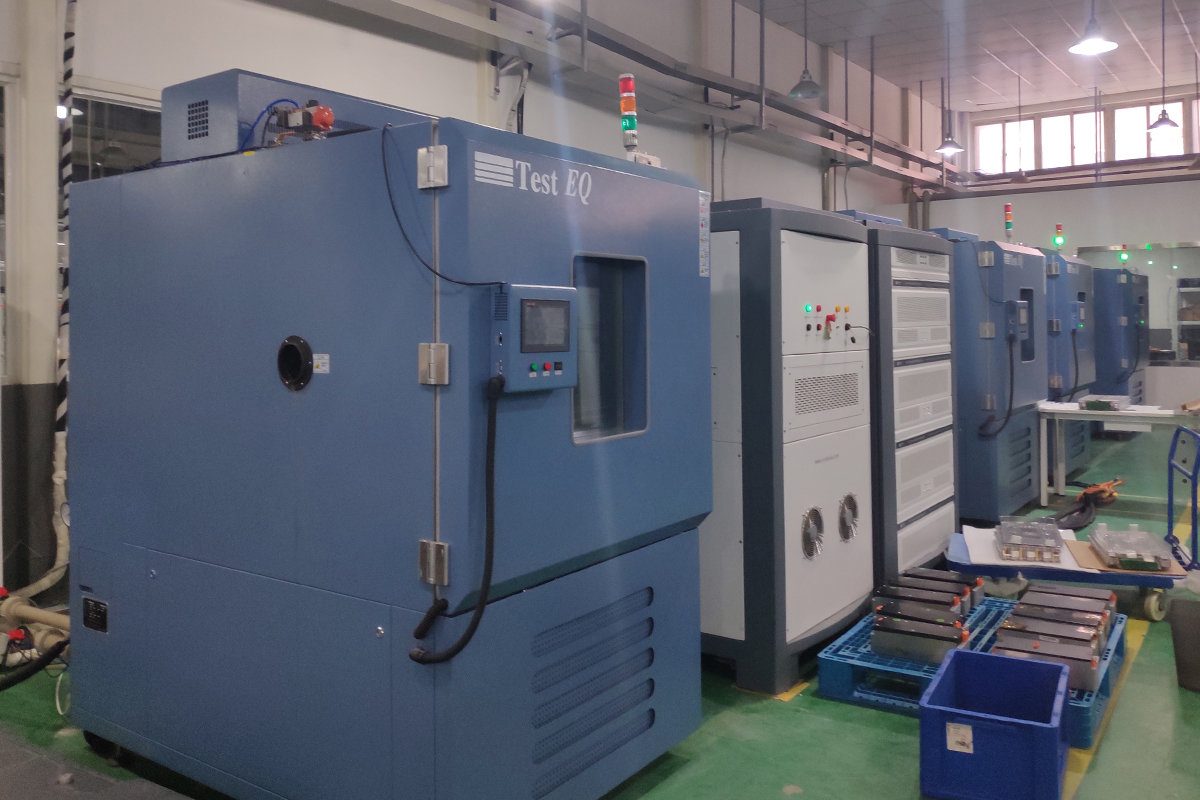
TestEQ designs and manufactures environmental simulation systems for temperature shock, thermal cycling, rapid temperature change, and military environmental testing.
Depending on the application, TestEQ can configure temperature shock systems around:
Required high/low temperature limits
Rapid transfer requirements
Test-item dimensions and thermal mass
Automatic test profiles
Temperature sensor channels
Data acquisition
Safety interlocks
Custom fixtures
Production or laboratory testing requirements
For laboratories and defense contractors, the chamber should be engineered around the actual Method 503.7 test profile, rather than simply selecting a chamber based on nominal temperature range.
Important: MIL-STD-810H itself requires tailoring. Therefore, a chamber should not be described as “MIL-STD-810H compliant” solely because it can reach a particular temperature range. The final test configuration, procedure, parameters, instrumentation, and acceptance criteria should be established in the applicable test plan.
MIL-STD-810H Method 503.7 Applications
Temperature shock testing can be relevant to products exposed to rapid environmental transitions, including:
Defense electronics
Avionics
Aerospace equipment
Military communication systems
Electronic assemblies
Automotive electronics
Sensors
Optical equipment
Battery systems
Outdoor electronics
Sealed enclosures
Composite structures
Reliability test samples
The method is particularly useful where differences in thermal expansion between materials may create mechanical or functional failure mechanisms.
MIL-STD-810H Method 503.7 vs. Thermal Cycling
Temperature shock and temperature cycling are related but should not be treated as identical tests.
Temperature cycling generally evaluates product performance across controlled temperature transitions over a defined profile.
Temperature shock places greater emphasis on the effect of a sudden environmental transition and the resulting thermal gradients.
For procurement and laboratory planning, the correct chamber architecture should therefore be selected based on the actual standard, test profile, transfer mechanism, test-item thermal response, and required cycle structure.
Why Choose TestEQ for MIL-STD-810H Method 503.7 Testing?
TestEQ provides engineered temperature shock chamber solutions tailored to MIL-STD-810H Method 503.7 test requirements. Our systems can be configured around temperature range, rapid transfer requirements, test-item thermal mass, stabilization conditions, cycle profiles, instrumentation, and laboratory space. With experience in environmental simulation and reliability testing, TestEQ helps engineers and laboratories build repeatable temperature shock test systems rather than selecting equipment based only on nominal temperature specifications.
Key advantages include:
Engineering-based customization
Chamber configuration based on your actual test profile and test-item requirements.
Rapid temperature transition capability
Systems designed for demanding temperature shock and rapid temperature change applications.
Test-item focused design
Chamber volume, airflow, refrigeration capacity, and recovery performance can be matched to the product's thermal load.
Multi-point temperature monitoring
Supports temperature sensors and data acquisition for detailed test verification.
Reliability testing expertise
Solutions for aerospace, defense, automotive electronics, semiconductor, EV battery, and research applications.
Global standards support
Equipment can be engineered for MIL-STD-810H and other applicable environmental testing requirements.
Looking for a MIL-STD-810H Method 503.7 temperature shock chamber? Contact TestEQ to discuss your temperature range, transfer time, test-item size, and cycle requirements.
FAQ: MIL-STD-810H Method 503.7 Temperature Shock
1.What is MIL-STD-810H Method 503.7?
It is the Temperature Shock test method within MIL-STD-810H, used to evaluate whether materiel can withstand sudden changes in surrounding air temperature without physical damage or unacceptable performance deterioration.
2.What temperature change is considered a temperature shock?
MIL-STD-810H Method 503.7 defines a sudden change as an air temperature change greater than 10°C (18°F) within one minute.
3.Does Method 503.7 specify a fixed temperature range?
No. The method uses a tailoring approach. T1 and T2 should be established based on the actual lifecycle environment and approved test plan.
4.How many cycles are required?
The number depends on the applicable procedure and test tailoring. For multi-cycle testing, the standard provides a minimum of three shocks at each condition when better service-life information is unavailable.
5.Is a thermal shock chamber required?
The appropriate chamber configuration depends on the test plan. For severe and repeated temperature transitions, a dedicated temperature shock or rapid-transfer system may provide better control than a conventional single-zone environmental chamber.
6.What should I provide when requesting a temperature shock chamber quotation?
Provide the required T1/T2 temperatures, transfer direction, transfer-time requirement, test-item dimensions and weight, thermal mass, cycle count, stabilization requirements, instrumentation requirements, and applicable MIL-STD-810H procedure.
7.What should be monitored during a MIL-STD-810H Method 503.7 test?
Temperature shock testing should be monitored using calibrated temperature sensors and a suitable data acquisition system. In addition to chamber air temperature, laboratories may monitor test-item surface temperature or other critical measurement points when required by the test plan.
Important test records can include temperature profiles, transfer time, stabilization status, cycle number, alarms, test-item operating condition, and any abnormal observations. Maintaining complete test data helps engineers verify that the intended temperature-shock profile was actually achieved and supports qualification and failure analysis.
8.How should a temperature shock chamber be verified before laboratory acceptance?
Before accepting a temperature shock chamber, the laboratory should verify its actual performance against the agreed technical specification and applicable test profile. Key checks may include temperature accuracy, uniformity, recovery performance, transfer time, control stability, sensor calibration, data-recording functionality, safety interlocks, and performance under representative test-item loading.
For procurement teams, factory acceptance testing (FAT) and site acceptance testing (SAT) can be useful for confirming that the chamber performs as specified before routine qualification testing begins.
Internal Linking Module
Recommended TestEQ Products
Designed for rapid transitions between high and low temperature environments, this chamber can be configured around temperature range, transfer requirements, test-item thermal load, and reliability testing conditions.
Programmable thermal cycling systems for repeated high- and low-temperature exposure, suitable for electronics, automotive, aerospace, semiconductor, and component reliability testing.
Environmental chambers for controlled temperature and humidity testing, including reliability qualification, accelerated aging, environmental stress testing, and component validation.
Recommended MIL-STD & Reliability Standards
Learn how the IEC 60068 series addresses environmental testing conditions such as temperature change, thermal cycling, humidity, vibration, shock, and other reliability stresses.
Technical guidance for semiconductor thermal cycling and reliability qualification, helping engineers understand test conditions, temperature transitions, and component-level reliability requirements.
A practical reference for automotive IC qualification and reliability testing, including environmental stress conditions relevant to automotive electronics and semiconductor components.
Recommended Environmental Testing Resources
A practical guide covering temperature range, chamber volume, ramp rate, recovery performance, test-item load, standards, instrumentation, and key purchasing considerations.
Explains the technical differences between thermal cycling and temperature cycling and helps engineers select the appropriate environmental testing method and chamber configuration.
Explains common causes of unstable temperature transitions, including excessive thermal load, refrigeration capacity, airflow, control algorithms, sensor response, and chamber configuration.
Need Help Selecting a MIL-STD-810H Test Chamber?
If your laboratory needs to perform MIL-STD-810H Method 503.7 Temperature Shock Testing, the chamber should be selected according to the actual test profile rather than temperature range alone.
TestEQ engineers can evaluate your:
• Required high and low temperatures
• Hot-to-cold / cold-to-hot transfer
• Required transfer time
• Test-item dimensions and weight
• Thermal mass
• Stabilization requirements
• Number of temperature shock cycles
• Instrumentation requirements
• Laboratory installation conditions
"Request a Customized Temperature Shock Chamber Solution →"
Contact TestEQ to discuss your MIL-STD-810H Method 503.7 requirements and receive an engineering-based chamber configuration.