What Is ANSI EIA-364-32C?
ANSI EIA-364-32C is a thermal shock (temperature cycling) test procedure developed for evaluating the reliability and durability of electrical connectors and sockets under extreme temperature changes.
The standard defines a method to determine whether connectors and socket assemblies can withstand repeated exposure to high and low temperature conditions without degradation of electrical or mechanical performance. The purpose of this test is to simulate severe environmental conditions that may occur during product storage, transportation, and real-world operation.
Unlike general environmental testing standards that cover a wide range of products, ANSI EIA-364-32C is specifically focused on electrical connectors and sockets, where thermal stress can affect contact resistance, insulation performance, mechanical integrity, and long-term connection reliability.
Purpose of ANSI EIA-364-32C Thermal Shock Testing
Electrical connectors are frequently exposed to temperature fluctuations in demanding applications such as automotive electronics, aerospace systems, communication equipment, and industrial control systems.
Rapid temperature changes can create thermal stress caused by:
Different thermal expansion rates between materials
Mechanical stress on connector structures
Changes in contact pressure
Potential increases in electrical resistance
Insulation or sealing degradation
ANSI EIA-364-32C testing helps engineers verify whether connectors can maintain stable performance after repeated thermal cycling exposure.
Typical evaluation items include:
Contact resistance stability
Dielectric strength performance
Insulation resistance
Physical damage inspection
Mechanical reliability after temperature exposure
ANSI EIA-364-32C Test Principle
The basic principle of ANSI EIA-364-32C is to expose connector samples to alternating high and low temperature environments and evaluate their performance after thermal stress.
A typical thermal shock test process includes:
1. Initial Inspection and Measurement
Before testing, connector samples are inspected and baseline electrical measurements are recorded.
2. High Temperature Exposure
The samples are placed in a controlled high-temperature environment for a specified duration.
3. Low Temperature Exposure
The samples are transferred to a low-temperature environment to create thermal shock stress.
4. Temperature Cycling Repetition
The high and low temperature exposure sequence is repeated for a defined number of cycles.
5. Final Performance Evaluation
After testing, engineers evaluate whether the connectors maintain required electrical and mechanical characteristics.
Applications of ANSI EIA-364-32C Testing
ANSI EIA-364-32C thermal shock testing is widely used for high-reliability connector applications, including:
Automotive Electronics
Modern vehicles contain numerous electrical connectors exposed to:
Engine compartment temperature changes
Battery system temperature variations
Outdoor environmental conditions
Thermal shock testing helps validate connector reliability in automotive and EV applications.
Aerospace and Defense Electronics
Aircraft and defense systems require connectors capable of operating under severe environmental conditions.
ANSI EIA-364-32C testing helps evaluate connector durability for:
Avionics systems
Communication equipment
Mission-critical electronics
Semiconductor and Electronic Equipment
High-performance electronic systems require stable electrical connections.
Thermal shock testing helps identify potential failures caused by:
Material expansion mismatch
Contact degradation
Thermal fatigue
ANSI EIA-364-32C Test Chamber Requirements
To perform ANSI EIA-364-32C thermal shock testing, laboratories typically require a reliable thermal shock testing system capable of creating rapid temperature transitions.
A suitable thermal shock chamber should provide:
Wide Temperature Range
The system should support both high and low temperature conditions required for connector evaluation.
Fast Temperature Transfer Capability
Rapid movement between hot and cold zones is important to generate thermal stress similar to actual operating environments.
Stable Temperature Control
Precise temperature control ensures repeatable and reliable test results.
Long-Term Reliability
Because connector qualification testing may require many thermal cycles, the chamber must maintain stable operation during extended testing periods.
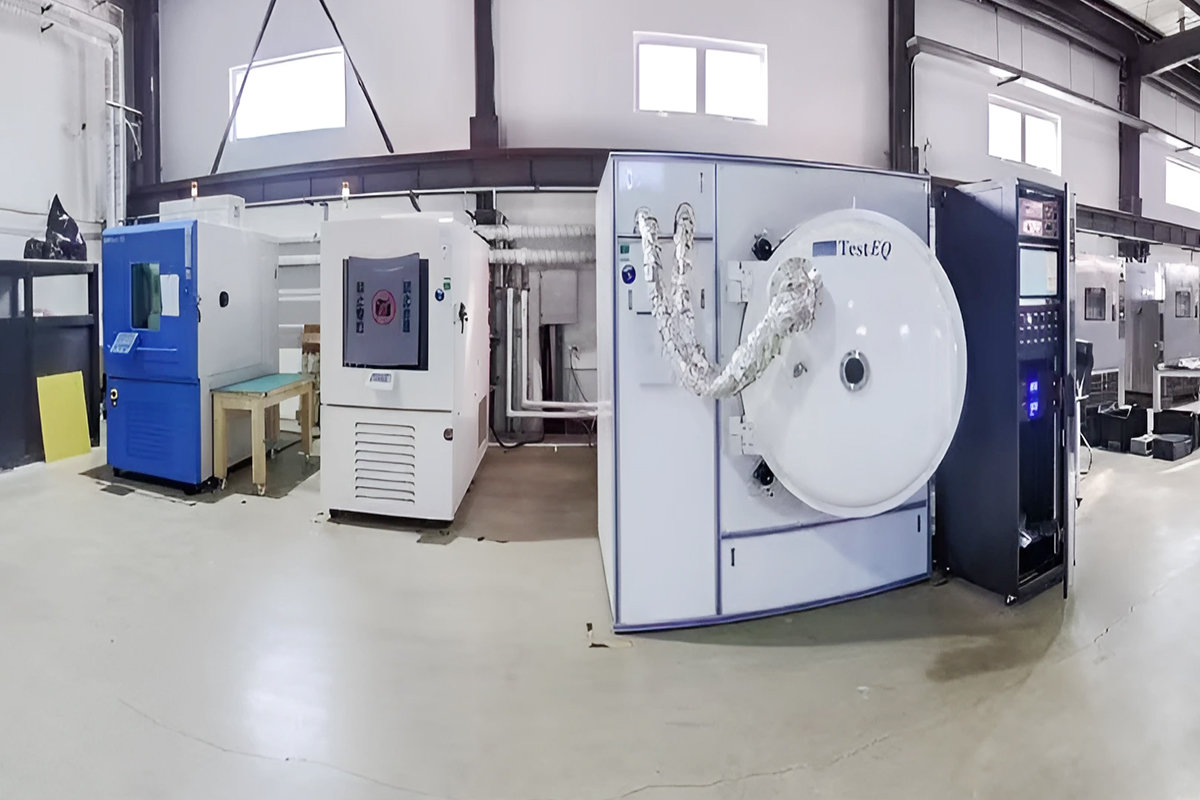
TestEQ thermal shock chambers are designed for high-reliability environmental testing applications, supporting industries including automotive, aerospace, semiconductor, and electronic component manufacturing.
ANSI/EIA-364-32C Test Conditions
| Parameter | Requirement |
|---|---|
| Temperature extremes | High / Low temperature exposure |
| Cycle number | 5,25,50 or 100 cycles |
| Transfer method | Hot and cold chamber transfer |
| Sample | Connector or socket assemblies |
ANSI EIA-364-32C vs IEC 60068-2-14
Although both standards involve temperature change testing, their application focus is different.
| Standard | Main Application | Testing Focus |
|---|---|---|
| ANSI EIA-364-32C | Electrical connectors and sockets | Connector thermal shock reliability |
| IEC 60068-2-14 | General products and components | Temperature change resistance |
ANSI EIA-364-32C is commonly selected when validating connector performance, while IEC 60068-2-14 is often used for broader environmental qualification testing.
ANSI/EIA-364-32C vs MIL-STD-810H Method 503
| Comparison | ANSI/EIA-364-32C | MIL-STD-810H Method 503 |
|---|---|---|
| Main Purpose | Evaluates thermal shock resistance and reliability of electrical connectors and sockets | Evaluates the ability of equipment to withstand rapid temperature changes in military environments |
| Main Application | Electrical connectors, terminals, sockets, electronic components | Military equipment, aerospace systems, vehicles, electronic devices |
| Testing Focus | Electrical performance stability after thermal shock exposure | Functional and structural reliability after sudden temperature changes |
| Typical Test Samples | Connectors, interconnection systems, electrical components | Complete equipment, assemblies, and components |
| Temperature Change | Rapid transfer between extreme hot and cold conditions | Rapid temperature transitions based on equipment operating environment |
| Key Evaluation | Contact resistance, insulation resistance, mechanical damage, electrical continuity | Operational performance, physical damage, material stress, system reliability |
| Industry Usage | Automotive electronics, EV connectors, semiconductor sockets, aerospace connectors | Defense, aerospace, military electronics, rugged equipment |
| Related Test Chamber | Thermal Shock Chamber / Temperature Cycling Chamber | Thermal Shock Chamber / Environmental Test Chamber |
| Main Standard Focus | Connector reliability under thermal shock conditions | Environmental durability of military equipment |
ANSI/EIA-364-32C Test Procedure
The ANSI/EIA-364-32C thermal shock test procedure evaluates the reliability of electrical connectors and sockets when exposed to repeated extreme temperature changes.
The typical test process includes the following steps:
1. Sample Preparation
The connector or electrical component under test is inspected and measured before testing. Initial electrical performance, such as contact resistance, is recorded as a reference value.
2. Temperature Exposure
The test specimen is placed in a thermal shock chamber and exposed to specified high and low temperature conditions according to the test requirements.
Typical conditions include:
High temperature exposure
Low temperature exposure
Controlled transition between temperature extremes
3. Thermal Cycling
The specimen undergoes repeated temperature cycles between hot and cold environments. The number of cycles depends on the product specification and reliability requirements.
During cycling, the connector experiences thermal expansion and contraction stresses to simulate real operating conditions.
4. Post-Test Inspection
After completing the required thermal shock cycles, the specimen is removed and evaluated for:
Contact resistance changes
Mechanical damage
Cracks or deformation
Electrical performance stability
5. Test Result Evaluation
The test results are analyzed to determine whether the connector maintains acceptable electrical and mechanical reliability after thermal stress exposure.
Equipment Used for ANSI/EIA-364-32C Testing
ANSI/EIA-364-32C testing typically requires a thermal shock chamber or temperature cycling system capable of providing rapid and controlled temperature transitions.
The testing system should provide:
Accurate temperature control
Stable thermal cycling performance
Fast temperature transfer capability
Reliable long-term operation
Why Choose TestEQ for ANSI EIA-364-32C Testing Solutions?
TestEQ provides advanced thermal shock and environmental testing equipment designed for reliability validation across multiple industries.
Our testing solutions support:
Electrical connector reliability testing
Automotive component qualification
EV electronics validation
Semiconductor reliability testing
Aerospace environmental simulation
By combining precise temperature control technology with advanced thermal management systems, TestEQ helps laboratories and manufacturers perform reliable thermal shock testing according to industry requirements.
FQA:
1.What is ANSI EIA-364-32C used for?
ANSI EIA-364-32C is used to evaluate the thermal shock reliability of electrical connectors and sockets under extreme temperature changes.
2.What products require EIA-364-32C testing?
Electrical connectors, sockets, automotive components, aerospace electronics and high reliability assemblies commonly require this test.
3.What chamber is used for ANSI EIA-364-32C testing?
A thermal shock chamber or separate hot and cold thermal chambers can be used depending on the test configuration.
4.What is the difference between EIA-364-32C and IEC 60068-2-14?
EIA-364-32C focuses on connectors and sockets, while IEC 60068-2-14 applies to broader temperature change testing.
5. What are the main parameters evaluated during ANSI EIA-364-32C testing?
ANSI EIA-364-32C testing evaluates the ability of electrical connectors and sockets to maintain performance after repeated exposure to high and low temperature conditions. Typical evaluations include contact resistance changes, electrical continuity, mechanical damage, insulation performance, and visible physical defects.
6. How many thermal cycles are required for ANSI EIA-364-32C testing?
The number of thermal cycles for ANSI EIA-364-32C testing depends on the product specification and customer requirements. Common test conditions may include multiple temperature exposure cycles to verify connector durability and reliability under repeated thermal stress.
7. What failures can ANSI EIA-364-32C thermal shock testing identify?
ANSI EIA-364-32C thermal shock testing can help identify potential failures such as contact degradation, loss of electrical continuity, material expansion and contraction issues, sealing failures, and mechanical stress damage caused by temperature variations.
8. How do engineers select a thermal shock chamber for EIA-364-32C testing?
Engineers typically consider temperature range, transition speed, chamber recovery performance, temperature uniformity, specimen size, and control accuracy when selecting a thermal shock chamber for ANSI EIA-364-32C testing.
Internal Linking Module
Recommended Equipment
Designed for rapid temperature transition testing, TestEQ thermal shock chambers help engineers evaluate connector, electronic component, and material reliability under extreme temperature changes according to standards such as ANSI EIA-364-32C and IEC 60068-2-14.
Thermal cycling chambers provide controlled temperature cycling environments for evaluating product durability, solder joint reliability, and electronic component performance under repeated thermal stress conditions.
Temperature humidity chambers simulate combined temperature and humidity conditions for reliability testing of electrical connectors, automotive components, and electronic assemblies in demanding environments.
Related Standards
IEC 60068-2-14 defines temperature change testing methods for evaluating product resistance to rapid temperature variations and is widely applied in environmental reliability testing.
MIL-STD-810H Method 503 provides thermal shock test procedures for military and aerospace equipment exposed to sudden temperature transitions during operation and storage.
JESD22 thermal cycling standards are widely used in semiconductor reliability testing to evaluate package integrity, solder connections, and component durability under temperature cycling stress.
Related Resources
Learn the key differences between thermal shock and thermal cycling tests, including temperature transition speed, applications, and how engineers select the appropriate reliability test method.
A practical guide for selecting thermal shock chambers based on temperature range, transition rate, testing standards, sample size, and reliability requirements.
Explore major environmental reliability testing standards, including IEC, MIL-STD, JESD22, and automotive testing requirements for global engineering applications.
CTA:
Need a Thermal Shock Chamber for ANSI EIA-364-32C Testing?
Ensuring connector reliability under extreme temperature changes requires accurate thermal shock testing equipment that meets industry testing requirements.
TestEQ provides advanced Thermal Shock Chambers and customized environmental testing solutions for ANSI EIA-364-32C, IEC 60068-2-14, and other temperature change reliability tests.
Our engineering team can help you select the right testing system based on your test requirements, including temperature range, cycle conditions, specimen size, and application needs.
Contact TestEQ today to discuss your thermal shock testing requirements and receive a customized solution.