What Is IEC 60068-2-39?
IEC 60068-2-39 is part of the IEC 60068 environmental testing series.
The 2015 edition is titled:
Environmental testing – Part 2-39: Tests – Tests and guidance: Combined temperature or temperature and humidity with low air pressure tests.
The purpose of the test is to determine whether equipment or components experience electrical, mechanical, physical, or functional changes when exposed to combined environmental stresses.
Unlike a basic altitude test that primarily simulates reduced atmospheric pressure, IEC 60068-2-39 addresses the interaction between low air pressure and temperature or temperature/humidity conditions.
Typical applications include aerospace electronics, avionics, defense equipment, electronic assemblies, automotive electronics, communication equipment, and other products intended for low-pressure operating environments.
IEC 60068-2-39 Test Z/AMD
IEC 60068-2-39:2015 is associated with the updated Test Z/AMD approach for combined environmental testing.
The standard provides preferred combinations of temperature, low air pressure, humidity where applicable, and exposure duration. The actual test severity should be selected according to the applicable IEC 60068 series requirements and the product specification.
This distinction is important when defining a chamber specification:
IEC 60068-2-39 is a combined environmental test method, not simply an altitude-equivalent pressure test.
The chamber and test profile should therefore be specified according to the required temperature, pressure, humidity, specimen operating state, exposure duration, and recovery conditions.
What Does IEC 60068-2-39 Test?
IEC 60068-2-39 evaluates equipment under combinations of:
• Temperature
• Low air pressure
• Temperature and humidity
• Exposure duration
• Operating or non-operating conditions
• Recovery conditions
The objective is to identify environmental effects that may not appear when temperature, humidity, or pressure are evaluated independently.
Potential failure mechanisms may include:
• Electrical insulation degradation
• Seal or enclosure leakage
• Mechanical deformation
• Material property changes
• Electronic malfunction
• Changes in electrical performance
• Functional instability under reduced pressure
• Failure after combined environmental exposure
The exact test severity should always be defined by the applicable product specification or relevant IEC 60068 test requirement.
IEC 60068-2-39 Test Conditions
The standard provides preferred combinations of temperature, low air pressure, and exposure duration.
Depending on the applicable test sequence, the environmental condition may involve:
Temperature + Low Air Pressure
The specimen is stabilized at the specified temperature before the chamber pressure is reduced to the required low-pressure condition.
Temperature + Humidity + Low Air Pressure
Where humidity exposure is required, the test combines controlled temperature and humidity conditions with reduced air pressure.
The selected condition depends on the product, intended operating environment, and applicable specification.
IEC 60068-2-39 Test Requirements
IEC 60068-2-39 testing requires products to be evaluated under combined environmental stresses where reduced air pressure is applied together with temperature and humidity conditions. The purpose of this test is to determine whether equipment can maintain its performance and reliability when exposed to high-altitude environments or low-pressure operating conditions.
Compared with standard altitude testing that mainly focuses on pressure reduction, IEC 60068-2-39 emphasizes the combined effects of multiple environmental factors. The test conditions are selected according to the product application, operating environment, and required reliability level.
Key Test Parameters of IEC 60068-2-39
| Test Parameter | Description |
|---|---|
| Low Air Pressure | Simulates reduced atmospheric pressure conditions experienced at high altitudes |
| Temperature Condition | Applies cold or high-temperature environments combined with low pressure |
| Humidity Condition | Evaluates product performance under moisture-related stress when required |
| Pressure Control | Requires stable and accurate adjustment of chamber pressure |
| Exposure Duration | Maintains specified environmental conditions for a defined testing period |
| Recovery Condition | Allows the specimen to return to normal atmospheric conditions before evaluation |
Key IEC 60068-2-39 Chamber Requirements
A chamber used for IEC 60068-2-39 testing should be evaluated according to the complete test profile rather than temperature range alone.
| Engineering Requirement | Why It Matters |
|---|---|
| Low Air Pressure Control | Reproduces the required reduced atmospheric pressure conditions. |
| Pressure Stability | Maintains stable and repeatable test conditions throughout the exposure period. |
| Controlled Pressure Ramp | Prevents uncontrolled pressure transitions and supports repeatable testing. |
| Temperature Control | Provides the required thermal stress for the specified test condition. |
| Temperature Uniformity | Ensures consistent temperature exposure across the test specimen. |
| Humidity Control | Supports applicable test sequences that combine temperature, humidity, and low air pressure. |
| Programmable Test Profiles | Enables automated multi-stage temperature, pressure, and humidity sequences. |
| Pressure & Temperature Monitoring | Provides real-time monitoring and improves test traceability. |
| Data Recording | Records critical test parameters for qualification, verification, and reporting. |
| Specimen Operating Capability | Allows the DUT to remain operational when functional testing is required. |
| Recovery Control | Supports controlled pressure and temperature recovery for consistent post-test evaluation. |
For procurement, engineers should define the chamber from the required test sequence instead of selecting equipment only from a nominal altitude rating.
What Pressure Range Is Required?
IEC 60068-2-39 does not mean that every application requires the same fixed pressure level.
The required low-air-pressure condition should be selected from the applicable test severity and product specification.
Therefore, a chamber specification should define:
• Required minimum pressure
• Normal atmospheric pressure
• Pressure control accuracy
• Pressure change rate
• Pressure recovery rate
• Required exposure duration
• Required temperature range
• Humidity range when applicable
• Specimen volume and load
• Operating condition of the specimen
This approach avoids selecting a chamber based only on an advertised altitude number.
Products Commonly Tested According to IEC 60068-2-39
IEC 60068-2-39 testing is commonly applied to products that may operate in high-altitude or low-pressure environments, including:
Aerospace electronic equipment
Avionics systems
Military electronic components
Automotive electronic modules
Communication equipment
Semiconductor devices
Industrial control systems
These products require verification to ensure reliable operation when exposed to combined environmental stresses.
IEC 60068-2-39 Test Procedure
IEC 60068-2-39 testing follows a controlled environmental simulation process to evaluate product performance under combined low air pressure, temperature, and humidity conditions. The typical test procedure includes the following six steps:
1. Specimen Preparation
Install the specimen according to the applicable product specification.
The specimen may be tested unpacked and either operating or non-operating depending on the required test condition.
2. Temperature Stabilization
The chamber is adjusted to the specified temperature.
The specimen is allowed to reach temperature stability before the low-pressure stage begins.
IEC 60068-2-39 specifies that the temperature change rate should not exceed 1 K/min during the applicable test sequence.
3. Low Air Pressure Reduction
After temperature stabilization, chamber pressure is reduced to the specified low-air-pressure condition.
The pressure change rate should not exceed 15 kPa/min for the applicable procedure.
Stable pressure control is important because uncontrolled pressure changes can affect test repeatability and specimen response.
4. Combined Environmental Exposure
The required temperature and low-pressure conditions are maintained for the specified exposure duration.
Where applicable, humidity is also controlled according to the selected test condition.
The exposure period is measured from the required temperature stability condition under low air pressure.
5. Functional or Intermediate Measurements
For electrically operated specimens, functional checks and intermediate measurements may be performed according to the relevant product specification.
Typical monitored parameters may include:
• Chamber pressure
• Temperature
• Humidity where applicable
• Specimen operating status
• Electrical parameters
• Functional performance
6. Pressure Recovery
After the required exposure period, chamber pressure is restored toward normal atmospheric pressure.
The pressure recovery rate should remain within the applicable standard requirement.
7. Temperature Recovery and Final Evaluation
The specimen remains in the chamber until the required recovery condition is achieved.
Final electrical, mechanical, dimensional, or functional measurements can then be compared with the initial condition.
IEC 60068-2-39 vs Altitude Test Chamber
Altitude testing and IEC 60068-2-39 are related but should not be treated as identical.
| Item | Altitude Testing | IEC 60068-2-39 |
|---|---|---|
| Primary Purpose | Simulate reduced atmospheric pressure and altitude conditions | Evaluate equipment under combined environmental conditions |
| Low Pressure | Yes | Yes |
| Temperature | May be combined depending on the test requirement | Core test parameter |
| Humidity | Depends on the test requirement | Included where applicable |
| Main Focus | Altitude and reduced-pressure environment | Temperature or temperature/humidity combined with low air pressure |
| Typical Applications | Aerospace, aviation, electronics | Aerospace, electronics, defense, industrial equipment |
| Typical Equipment | Altitude Test Chamber | Combined Low-Pressure Environmental Chamber |
For a product that only requires low-pressure or altitude simulation, an altitude test chamber may be appropriate.
For a qualification program involving temperature or temperature/humidity together with low air pressure, the chamber should be specified for the complete IEC 60068-2-39 test sequence.
IEC 60068-2-39 vs IEC 60068-2-40 and IEC 60068-2-41
These standards belong to the same family of combined environmental testing methods but address different combinations.
IEC 60068-2-39
Focuses on:
Temperature or temperature + humidity with low air pressure
IEC 60068-2-40
Addresses:
Low temperature + low air pressure
IEC 60068-2-41
Addresses:
Dry heat + low air pressure
The correct standard should therefore be selected according to the environmental stress that the product specification requires.
For multi-standard qualification programs, the chamber should be configured to support the complete required test matrix.
How to Select an IEC 60068-2-39 Test Chamber
For B2B procurement, the following parameters should be confirmed before requesting a quotation.
1. Required Pressure Range
Specify the minimum pressure and normal atmospheric pressure required for the test.
2. Temperature Range
Define the required cold and/or dry-heat conditions.
3. Humidity Requirement
If the qualification program includes humidity, specify the required humidity range and temperature/humidity operating envelope.
4. Chamber Working Volume
Select the internal working volume based on:
• DUT dimensions
• Fixture dimensions
• Number of specimens
• Required airflow
• Heat load
• Maintenance access
5. Pressure Control and Ramp Rate
Ask the supplier to specify pressure control accuracy, stability, reduction rate, and recovery rate.
6. Temperature Uniformity
Temperature uniformity should be evaluated under the actual chamber loading condition rather than under an empty chamber.
7. Data Acquisition
For qualification testing, pressure, temperature, humidity, alarms, test time, and specimen status should be recorded for traceability.
8. Custom Integration
Large aerospace or industrial specimens may require custom chamber dimensions, electrical feedthroughs, observation windows, cable ports, specimen fixtures, or integrated monitoring systems.
TestEQ Solution for IEC 60068-2-39 and Altitude Testing
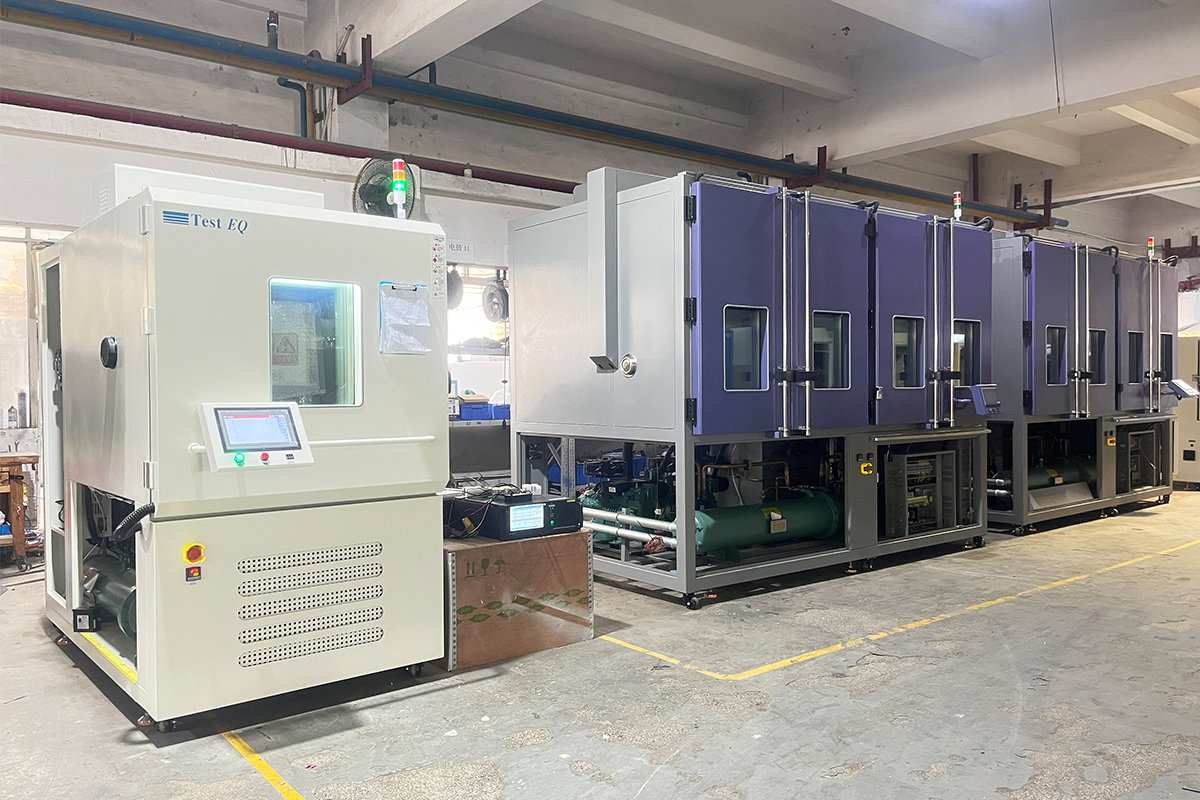
TestEQ hypobaric altitude chambers are designed to support advanced environmental simulation requirements, including:
Low air pressure simulation
Temperature control
Humidity testing capability
Combined environmental stress testing
These systems help engineers perform reliable validation for aerospace, defense, automotive electronics, semiconductor, and other high-reliability applications.
TestEQ IEC 60068-2-39 Low Air Pressure Test Chamber
TestEQ provides customized environmental test systems for applications requiring controlled low air pressure combined with temperature and humidity conditions.
The system can be configured for:
Low air pressure simulation
Temperature control
Humidity control where required
Programmable pressure profiles
Temperature and pressure monitoring
Combined environmental testing
Data acquisition and test recording
Custom specimen fixtures
Custom chamber dimensions
A typical TestEQ configuration supports a pressure adjustment range of approximately 5 kPa to 100 kPa, with the final specification determined by the required test profile and chamber configuration.
The system can be engineered for applications including aerospace electronics, avionics, defense equipment, automotive electronics, semiconductor components, communication equipment, and laboratory reliability testing.
Why Choose TestEQ for IEC 60068-2-39 Low Air Pressure Testing?
1. Combined Environmental Simulation
TestEQ designs environmental test systems around the complete test condition rather than pressure simulation alone.
2. Engineering-Based Chamber Configuration
Chamber size, temperature range, pressure range, humidity capability, specimen loading, and monitoring can be configured according to the customer's qualification requirements.
3. Multi-Standard Testing
The same environmental testing platform can be configured to support applicable IEC 60068, MIL-STD, RTCA DO-160, and other qualification requirements where the chamber specification permits.
4. Pressure and Temperature Control
Controlled pressure reduction, temperature regulation, monitoring, and recovery help engineers achieve repeatable environmental conditions.
5. Custom Test Systems
TestEQ can provide customized chamber dimensions, fixtures, electrical interfaces, monitoring systems, and test-control configurations for specialized applications.
6. Reliability Testing Applications
TestEQ environmental testing systems are used for demanding applications in aerospace, automotive electronics, semiconductor, defense, and industrial research.
7. Engineering Support
TestEQ supports the chamber selection process from test-condition definition and system configuration through installation and technical support.
IEC 60068-2-39 Applications
Aerospace and Avionics
Evaluate avionics, aircraft electronics, sensors, communication equipment, and other airborne systems under reduced pressure and thermal conditions.
Defense Electronics
Verify equipment performance under combined environmental conditions specified by military or product qualification programs.
Automotive Electronics
Evaluate electronic controllers, sensors, communication modules, and other components where altitude and temperature conditions may affect reliability.
Semiconductor and Electronic Components
Investigate functional stability and environmental response of electronic assemblies and components under controlled low-pressure and temperature conditions.
Industrial Equipment
Test measurement instruments, control systems, and specialized equipment intended for operation in reduced-pressure environments.
Frequently Asked Questions About IEC 60068-2-39 Low Air Pressure Testing
1.What is IEC 60068-2-39?
IEC 60068-2-39:2015 is an environmental testing standard for evaluating equipment and components under combined temperature or temperature and humidity with low air pressure conditions.
2.Is IEC 60068-2-39 an altitude test?
It can be used to reproduce reduced-pressure conditions associated with altitude, but the standard is broader than a basic altitude simulation test because it addresses combined temperature or temperature/humidity with low air pressure.
3.What is Test Z/AMD?
Test Z/AMD refers to the combined environmental testing approach associated with IEC 60068-2-39. The applicable temperature, low-pressure, humidity, and exposure conditions should be selected according to the relevant specification.
4.Does IEC 60068-2-39 require humidity?
Not every test condition requires humidity. IEC 60068-2-39 covers temperature with low air pressure and temperature/humidity with low air pressure. The applicable sequence depends on the product specification.
5.What chamber is used for IEC 60068-2-39?
A low-pressure environmental chamber, hypobaric chamber, or altitude simulation chamber can be configured for IEC 60068-2-39 when it provides the required pressure, temperature, humidity, monitoring, and test-sequence capabilities.
6.What pressure should an IEC 60068-2-39 chamber reach?
There is no single pressure value applicable to every IEC 60068-2-39 application. The required pressure should be selected from the applicable test severity and product specification.
7.What is the pressure change rate in IEC 60068-2-39?
For the applicable test procedure, the pressure change rate should not exceed 15 kPa/min. The complete test specification should be reviewed before configuring the chamber.
8.What is the temperature change rate?
For the applicable test sequence, the temperature change rate should not exceed 1 K/min. The actual test profile should be established from the applicable standard requirements and product specification.
9.Can TestEQ customize an IEC 60068-2-39 chamber?
Yes. TestEQ can configure low-pressure environmental testing systems according to required pressure, temperature, humidity, chamber volume, specimen fixtures, monitoring, data acquisition, and other engineering requirements.
Internal Linking Module
Recommended Equipment
Related Test Equipment for IEC 60068-2-39 Low Pressure Testing
Simulates high-altitude and low-pressure environments for aerospace, defense, electronics, and reliability testing applications.
2. Temperature Humidity Chamber
Provides precise temperature and humidity control for environmental reliability tests based on IEC 60068 and other international standards.
Designed for repeated temperature cycling tests to evaluate product reliability under changing environmental conditions.
Related Standards
Related Environmental Testing Standards
1. IEC 60068 Environmental Testing Standard
Provides an overview of IEC 60068 environmental testing methods, including temperature, humidity, vibration, and combined environmental tests.
2. MIL-STD-810H Environmental Testing Standard
Explains military environmental testing requirements for equipment exposed to extreme temperature, altitude, humidity, vibration, and shock conditions.
3. RTCA DO-160 Environmental Testing Standard
Covers environmental qualification testing requirements for airborne equipment and avionics systems.
Technical Resources
Related Guides for Low Pressure and Environmental Testing
1. What Is Altitude Testing? Complete Guide for Reliability Testing
Explains altitude simulation testing methods, applications, and how low-pressure environments affect product reliability.
2. How to Choose an Environmental Test Chamber
Provides guidance on selecting environmental test chambers based on temperature range, humidity control, testing standards, and applications.
3. MIL-STD-810H Altitude Test Method Guide
Introduces MIL-STD-810H altitude testing procedures and explains the differences between military and commercial environmental testing requirements.
CTA
Need an IEC 60068-2-39 Test Chamber?
If your qualification program requires low air pressure combined with temperature or temperature and humidity, TestEQ can help configure an environmental test chamber around the required test sequence.
Provide your required:
• Pressure range
• Temperature range
• Humidity range
• Chamber working volume
• Specimen dimensions
• Test duration
• Applicable standards
• Required monitoring and data acquisition
Contact TestEQ engineers for an IEC 60068-2-39 chamber configuration and technical quotation.